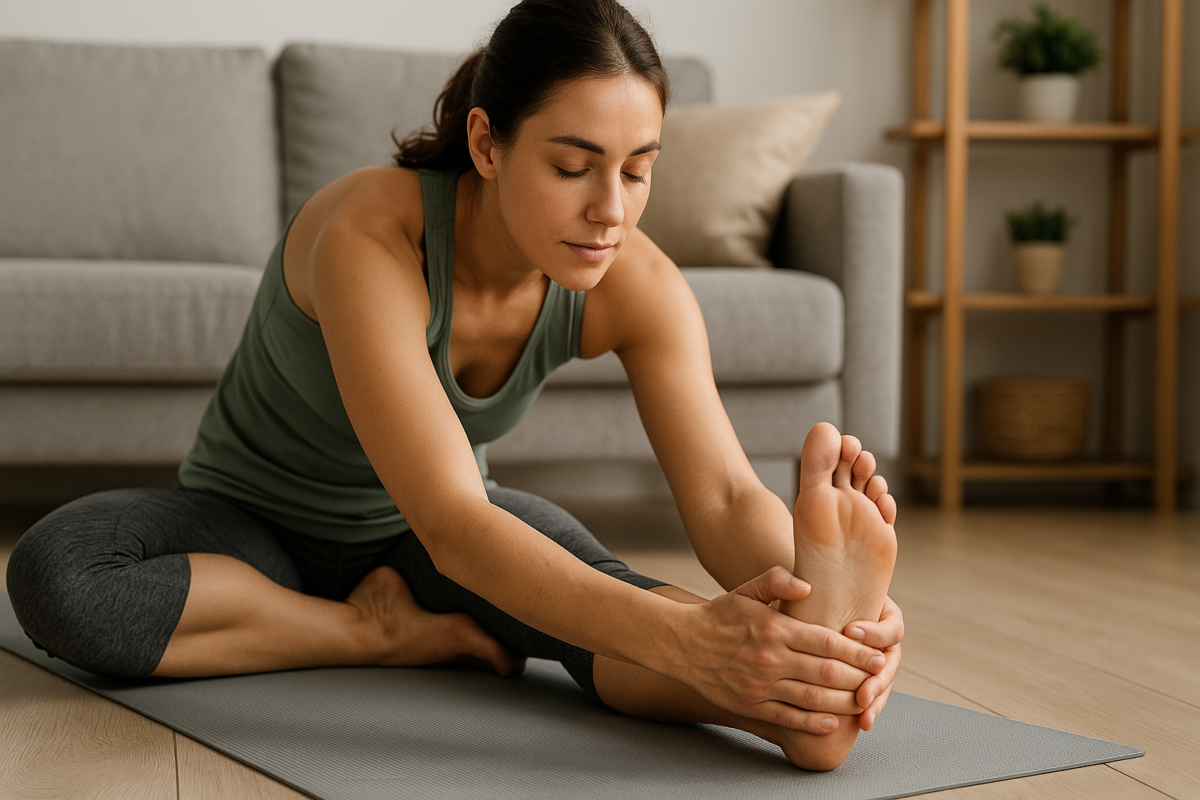
Foot pain affects millions of people every day, whether from standing for long hours, intense exercise, or simply the natural wear and tear that comes with an active life. The human foot contains 26 bones, 33 joints, and more than 100 muscles, tendons, and ligaments, making it a complex structure that absorbs impact with every step. When any of these components become tight or inflamed, discomfort can radiate from your toes to your heels and even up into your ankles and calves.
Stretching offers one of the most accessible and effective ways to address foot pain at home. Regular stretching improves flexibility, increases blood flow to tight areas, and helps prevent injuries from recurring. This guide covers targeted stretches for common sources of foot discomfort, along with practical tips for incorporating them into your daily routine.
Understanding the Causes of Foot Pain
Before starting any stretching routine, it helps to understand what might be causing your discomfort. Plantar fasciitis, one of the most common causes of heel pain, occurs when the thick band of tissue running across the bottom of your foot becomes inflamed. This condition often causes stabbing pain during your first steps in the morning or after long periods of sitting.
Achilles tendinitis affects the tendon connecting your calf muscles to your heel bone, typically causing pain and stiffness along the back of your leg near your heel. Flat feet or high arches can contribute to pain by altering how weight distributes across your foot. Tight calf muscles often pull on the heel and foot, creating tension that leads to discomfort in the arch and toes.
Other common culprits include Morton’s neuroma, which causes pain between the third and fourth toes; bunions, which create pain at the base of the big toe; and general overuse from activities like running, dancing, or standing on hard surfaces for extended periods. Wearing shoes that lack proper support or don’t fit correctly can exacerbate all of these conditions.
Preparing for Your Stretching Routine
Effective stretching requires some preparation to get the most benefit and avoid injury. Start by choosing a comfortable space where you can sit or stand safely, preferably on a carpeted floor or yoga mat. Loose, comfortable clothing allows for a full range of motion.
Warm muscles stretch more effectively than cold ones, so consider taking a short walk, soaking your feet in warm water for 5-10 minutes, or doing gentle foot circles before beginning. Never force a stretch to the point of sharp pain. You should feel a gentle pulling sensation, but intense pain indicates you’re pushing too far.
Breathe deeply and consistently throughout each stretch. Holding your breath can cause muscles to tense rather than relax. Most stretches should be held for 15-30 seconds and repeated 2-3 times on each side. Consistency matters more than intensity, so aim to stretch daily rather than doing longer sessions sporadically.
Calf Stretches to Reduce Foot Tension
Tight calf muscles place significant strain on your feet, particularly the plantar fascia and Achilles tendon. Addressing calf tightness often provides relief for foot pain even when the discomfort itself is located in the arch or heel.
Wall Calf Stretch: Stand facing a wall with your hands pressed against it at shoulder height. Step one foot back about 12-18 inches while keeping your back leg straight and your heel flat on the floor. Bend your front knee until you feel a stretch in the calf of your back leg. Hold for 30 seconds, then switch sides. This stretch targets the gastrocnemius, the larger calf muscle.
Seated Calf Stretch: Sit on the floor with one leg extended in front of you. Loop a towel or resistance band around the ball of your extended foot and gently pull toward you, keeping your knee straight. You should feel the stretch along the back of your calf and into your heel. Hold for 30 seconds and repeat on the other side.
Stair Calf Stretch: Stand on a step with your heels hanging off the edge. Hold a railing or wall for balance. Slowly lower your heels below the level of the step until you feel a stretch in your calves and Achilles tendons. This deeper stretch can be particularly helpful for chronic tightness.
Plantar Fascia Stretches for Heel Pain
The plantar fascia runs along the bottom of your foot from heel to toes, supporting your arch and absorbing shock with each step. When this tissue becomes tight or irritated, stretching can help relieve tension and promote healing.
Seated Plantar Fascia Stretch: Sit in a chair and cross one ankle over the opposite knee. Grasp your toes and gently pull them backward toward your shin until you feel a stretch along the bottom of your foot. Hold for 15-30 seconds. This stretch can be particularly effective first thing in the morning before you take your first steps.
Towel Scrunch: Place a small towel flat on the floor and sit in a chair with your foot resting on it. Use your toes to scrunch the towel toward you, engaging the intrinsic muscles of your foot. Repeat 10-15 times, then switch feet. This exercise strengthens the foot while improving flexibility.
Frozen Water Bottle Roll: Freeze a water bottle and place it on the floor. While seated, roll your foot over the bottle from heel to toe for 5-10 minutes. This combines the benefits of stretching with cold therapy to reduce inflammation.
Toe and Forefoot Stretches
The toes and forefoot bear significant pressure during walking and standing. Keeping these areas flexible helps prevent conditions like hammer toes, bunions, and Morton’s neuroma.
Toe Extension: Sit in a chair with your feet flat on the floor. Lift all your toes off the ground while keeping the balls of your feet pressed down. Spread your toes as wide as possible, then lower them. Repeat 10 times. This stretch improves toe mobility and strengthens the muscles that control toe movement.
Toe Curls with Marble Pick-Up: Place several marbles or small objects on the floor. Use your toes to pick up each marble and drop it into a bowl. This exercise strengthens the muscles in your toes and forefoot while improving dexterity. If you don’t have marbles, simply practice curling and uncurling your toes against resistance.
Big Toe Stretch: Sit with one ankle crossed over the opposite knee. Use your fingers to gently pull your big toe away from the second toe, creating space between them. Then pull the big toe upward toward your shin. Hold each position for 15 seconds. This stretch can help relieve bunion pain and improve big toe mobility.
Ankle Mobility Exercises
Stiff ankles contribute to foot pain by forcing the foot to compensate for limited range of motion. Improving ankle mobility helps distribute forces more evenly throughout the foot and lower leg.
Ankle Circles: Sit in a chair or lie on your back with one leg extended. Lift your foot slightly off the ground and rotate your ankle in slow circles, moving from the ankle joint rather than the foot itself. Make 10 circles in each direction, then switch feet. This exercise warms up the joint and improves synovial fluid circulation.
Alphabet Trace: Using the same starting position, trace each letter of the alphabet with your big toe. This exercise takes your ankle through its full range of motion in varied directions, improving mobility more comprehensively than simple circles.
Dorsiflexion Stretch: Kneel on one knee with your front foot flat on the floor. Lean forward over your front knee, keeping your heel on the ground. This stretches the ankle in dorsiflexion, the position where your toes point toward your shin. Limited dorsiflexion can contribute to plantar fasciitis and Achilles problems.
Massaging Techniques to Complement Stretching
Self-massage enhances the benefits of stretching by releasing tension in tight muscles and fascia. You don’t need expensive equipment to achieve meaningful relief.
Manual Foot Massage: Sit comfortably and rest one foot on the opposite thigh. Use both hands to apply pressure along the arch of your foot, working from the heel toward the toes. Use your thumbs to apply deeper pressure to any tender spots. Spend 2-3 minutes on each foot.
Tennis Ball Massage: Place a tennis ball or lacrosse ball on the floor and roll your foot over it, applying as much pressure as feels comfortable. Pause on any tight or tender spots for 15-30 seconds before moving on. This technique works well for the arch and can reach areas difficult to target with your hands.
Golf Ball for Targeted Relief: For more focused pressure on specific trigger points, a golf ball provides a firmer, smaller surface than a tennis ball. Use this with caution and avoid areas with acute inflammation or injury.
When to Seek Professional Care
While stretching helps many cases of foot pain, some situations warrant professional evaluation. Seek medical attention if you experience severe pain that doesn’t improve with rest and stretching, pain accompanied by significant swelling, redness, or warmth, inability to bear weight on the affected foot, numbness, tingling, or loss of sensation, pain that developed after a specific injury or trauma, or foot pain associated with diabetes or circulatory conditions.
A podiatrist, physical therapist, or sports medicine physician can diagnose the underlying cause of persistent foot pain and recommend targeted treatment. They may prescribe custom orthotics, night splints, or specific exercises tailored to your condition. In some cases, imaging studies like X-rays or MRIs help identify structural problems that stretching alone cannot address.
Professional guidance becomes particularly important if your foot pain interferes with daily activities, prevents you from exercising, or continues to worsen despite consistent stretching. Early intervention often prevents chronic problems from developing.
Maintaining Long-Term Foot Health
Stretching works best as part of a comprehensive approach to foot health. Choose footwear that provides adequate arch support, cushioning, and room for your toes to move freely. Replace athletic shoes regularly, as worn-out shoes lose their supportive properties. Gradually increase the intensity and duration of physical activity to give your feet time to adapt.
Maintain a healthy weight to reduce the load on your feet. Consider cross-training to avoid overuse injuries from repetitive activities. If you stand for long periods at work, take regular breaks to sit and stretch. Use orthotic inserts if recommended by a healthcare professional to address specific biomechanical issues.
Pay attention to early warning signs of foot problems. Mild discomfort that appears after activity often responds well to stretching and rest. Ignoring these signals allows minor issues to develop into chronic conditions that require more intensive treatment.
Nerve Gliding Exercises for Foot and Ankle Relief
Nerve tension often contributes to foot pain in ways that standard muscle stretching cannot address. The tibial nerve branches through the tarsal tunnel near your inner ankle, supplying sensation to the bottom of your foot. When surrounding tissues become tight or inflamed, they can compress this nerve, causing burning, tingling, or shooting pain that may be mistaken for plantar fasciitis. Similarly, the sciatic nerve originates in your lower back and travels down your leg; tightness anywhere along this pathway can manifest as foot discomfort without any actual foot problem.
Nerve gliding exercises, also called neural mobilization, gently move nerves through their surrounding tissues without overstretching them. Unlike muscle stretches where you hold a position, nerve glides involve controlled, repetitive movements that encourage nerves to slide smoothly. These exercises prove particularly valuable for people experiencing numbness, tingling, or burning sensations alongside their foot pain.
Sciatic Nerve Glide: Sit tall in a chair with both feet flat on the floor. Straighten one leg in front of you while simultaneously tilting your head backward, looking toward the ceiling. Hold briefly, then bend your knee to lower your foot back to the floor while bringing your chin toward your chest. Repeat 10-15 times on each leg. You should feel a gentle pulling sensation along the back of your leg, but stop if you experience sharp pain or increased tingling. This exercise encourages the sciatic nerve to move freely through your thigh and calf, which can relieve tension that contributes to heel and arch pain.
Tibial Nerve Glide: Sit with your affected leg crossed over the opposite knee. Hold your foot with one hand and slowly move your foot into a pointed position while keeping your toes relaxed. Then pull your foot into a flexed position while extending your toes upward. Move slowly through this sequence 10-12 times, avoiding any position that causes sharp or electrical sensations. This glide specifically targets the nerve supplying sensation to your heel and arch, making it valuable for those with tarsal tunnel syndrome or unexplained burning in the sole of the foot.
Peroneal Nerve Glide: The peroneal nerve runs along the outside of your knee and down into your foot. To mobilize it, sit with your affected leg extended. Rotate your foot inward so your big toe points toward the floor, then slowly straighten your knee while maintaining this foot position. You may feel a stretch along the outside of your lower leg. Return to the starting position and repeat 8-10 times. This exercise helps address pain or numbness on the outer foot and ankle.
Perform nerve glides gently and stop immediately if symptoms worsen or spread. These exercises work best when done frequently throughout the day in short sessions rather than long, intensive bouts. Most people benefit from 2-3 repetitions several times daily, always staying within a comfortable range. Unlike muscle stretching, more pressure does not yield better results with nerve glides and can actually aggravate symptoms.
Stretching Protocols for Specific Activities and Occupations
Different activities place distinct demands on your feet, and understanding these patterns helps you target your stretching more effectively. A runner’s foot pain often differs from a nurse’s or a construction worker’s, both in cause and in the most effective approach to relief.
For Runners and Athletes: Running generates impact forces up to 2.5 times your body weight with each stride, creating repetitive stress through your feet. Pre-run stretching should focus on dynamic movements that prepare tissues for load, while post-run stretching emphasizes sustained holds to restore length to tightened muscles. Before running, perform ankle circles, toe spreads, and gentle calf bounces for 30-60 seconds each. After running, hold your calf stretches and plantar fascia stretches for 45-60 seconds per side when tissues are warm and most receptive to lengthening. Runners should also pay attention to their footwear mileage; most running shoes lose significant cushioning after 300-500 miles, and stretching cannot compensate for worn-out support.
For Healthcare and Retail Workers: Standing for 8-12 hour shifts on hard surfaces creates static loading through your feet that differs from the dynamic stress of athletics. Your calves and plantar fascia remain under constant tension, leading to fluid accumulation and muscle fatigue by shift’s end. During breaks, elevate your feet above heart level for 5 minutes when possible to promote venous return. Perform seated toe curls and ankle pumps to encourage circulation without placing additional load on tired tissues. After your shift, prioritize the stair calf stretch and frozen water bottle roll to address the accumulated tension. Compression socks worn during shifts can reduce swelling and fatigue when combined with consistent stretching protocols.
For Office Workers: Prolonged sitting with feet flat on the floor creates a different set of problems. The plantar fascia remains shortened, and the Achilles tendon operates in a relaxed position, leading to stiffness when you finally stand and move. Keep a resistance band or small towel in your desk drawer and perform seated calf stretches and towel scrunches during conference calls or reading tasks. Set a timer to remind yourself to remove your shoes and perform toe spreads and ankle circles every 90 minutes. The transition from sitting to standing proves particularly challenging for office workers; taking 30 seconds to stretch your calves before standing can prevent that initial discomfort when you walk to the break room.
For Construction and Manual Labor: Uneven terrain, heavy lifting, and steel-toed boots combine to create unique foot stress. The rigid soles of protective footwear limit natural foot motion, while climbing ladders and walking on gravel demand constant stabilization from intrinsic foot muscles. Before your shift, warm up with dynamic ankle movements and toe spreads to activate these stabilizers. During lunch, remove your boots briefly if safety permits and perform towel scrunches barefoot to restore foot mobility. After work, the golf ball massage proves particularly valuable for releasing tension in feet that have been confined in stiff boots all day.
The Connection Between Hip Strength and Foot Pain
Foot pain rarely exists in isolation. The kinetic chain connecting your foot to your hip means that weakness or imbalance upstream can overload tissues downstream. Research consistently demonstrates that people with plantar fasciitis often exhibit hip abductor weakness on the affected side, and addressing this weakness can accelerate recovery more than foot stretching alone.
Your gluteus medius, located on the outer surface of your pelvis, stabilizes your pelvis during single-leg stance. When this muscle weakens, your pelvis drops during walking, causing your femur to rotate internally. This internal rotation travels down your leg, causing your foot to roll inward excessively with each step. This overpronation stretches the plantar fascia beyond its normal range and creates repetitive strain on your Achilles tendon.
Clamshell Exercise: Lie on your unaffected side with your knees bent to 45 degrees and your feet stacked. Keeping your feet together, lift your top knee toward the ceiling like a clam opening. Pause briefly at the top, then lower slowly. Perform 15-20 repetitions, focusing on the sensation in your outer hip rather than speed. To increase difficulty, add a resistance band around your knees. Strong hip abductors reduce the collapsing forces that contribute to arch strain and heel pain.
Side-Lying Leg Lift: Lie on your unaffected side with your bottom leg bent for stability. Straighten your top leg and lift it to hip height, leading with your heel and keeping your foot parallel to the ground. Lower slowly and repeat 15-20 times. This exercise targets the gluteus medius in a lengthened position, building endurance for the sustained stabilization required during walking and standing.
Single-Leg Balance: Stand on your affected foot near a wall for support if needed. Lift your opposite foot off the ground and hold for 30 seconds, focusing on keeping your pelvis level and your standing knee aligned over your second toe. Progress by closing your eyes or standing on an unstable surface like a pillow. This exercise trains your hip stabilizers to fire automatically, correcting the alignment issues that contribute to foot pain.
Integrate hip strengthening into your routine 3-4 times per week. These exercises complement rather than replace foot stretching; addressing both ends of the kinetic chain produces more lasting relief than focusing solely on the site of pain. Most people notice improvements in their foot symptoms within 2-3 weeks of consistent hip strengthening, even when their foot stretching routine remains unchanged.
Advanced Plantar Fascia Techniques for Persistent Heel Pain
When basic plantar fascia stretches fail to provide adequate relief, more targeted techniques can address the chronic tissue changes that develop over months or years. The plantar fascia consists of three distinct bands: the medial, central, and lateral portions. Standard stretches often address only the central band, leaving tension in the other portions unaddressed.
Medial Band Stretch: Sit with your affected ankle crossed over the opposite knee. Grasp your big toe and pull it toward your shin while simultaneously pulling it toward the inside of your foot. This combination movement targets the medial band, which attaches to your big toe and often contributes to pain at the inside of your heel. Hold for 20-30 seconds, repeating 3 times. People with flat feet or those who overpronate often carry excessive tension in this band.
Lateral Band Stretch: From the same seated position, pull your small toes toward your shin while simultaneously pulling them toward the outside of your foot. This targets the lateral band, which can cause pain on the outer heel. High-arched feet or those who supinate often develop tension here. Hold for 20-30 seconds, repeating 3 times. Combining this with the medial stretch ensures comprehensive coverage of the entire plantar fascia.
Contract-Relax Technique: This proprioceptive neuromuscular facilitation approach achieves greater lengthening than static stretching alone. Sit with your ankle crossed over your knee. Pull your toes toward your shin until you feel moderate tension along your plantar fascia. Hold this position. Then push your toes away from your shin into your hand, contracting the plantar fascia for 6 seconds at about 50% effort. Relax and immediately pull your toes further toward your shin. You should find you can achieve a deeper stretch. Repeat this cycle 3-4 times.
Instrument-Assisted Soft Tissue Mobilization: For chronic plantar fasciopathy where the tissue has developed thickening or degenerative changes, gentle scraping with a rounded tool can stimulate blood flow and remodel scar tissue. A smooth-edge tool like a stainless steel instrument or even the rounded edge of a credit card can be used with gentle pressure. Apply a thin layer of lotion and scrape along the plantar fascia from heel to toe with 30-45 degree pressure. Work progressively lighter to avoid bruising. This technique should cause mild discomfort but never sharp pain. Limit sessions to 2-3 minutes per foot, 2-3 times weekly.
Advanced techniques work best when rotated rather than performed all at once. Choose 2-3 techniques per session and allow 48 hours between intensive sessions to let tissues recover. Persistent heel pain that doesn’t respond to these approaches within 6 weeks warrants professional evaluation for possible corticosteroid injection, shockwave therapy, or other medical interventions.
Environmental and Lifestyle Factors Affecting Foot Health
Beyond stretching, numerous environmental and lifestyle factors influence foot pain, often in overlooked ways. Addressing these factors can enhance the effectiveness of your stretching routine and prevent recurrence.
Floor Surfaces in Your Home: Hard tile, concrete, and hardwood floors provide no shock absorption, transmitting every step directly into your feet. If you spend significant time standing in the kitchen or bathroom, consider adding anti-fatigue mats in areas where you stand frequently. These cushioned mats reduce the static loading that contributes to plantar fascia irritation. For homes with extensive hard flooring, wearing supportive house shoes with arch support provides more consistent cushioning than bare feet or flat slippers.
Temperature and Seasonal Changes: Cold weather causes tissues to stiffen, making morning foot pain more pronounced in winter. Sleeping with socks on or using a heating pad on your calves for 10 minutes before getting out of bed can reduce that painful first step. Conversely, summer heat can increase foot swelling, particularly for those on their feet all day. In warmer months, elevate your feet for 10 minutes during breaks and perform gentle ankle pumps to encourage circulation.
Weight Fluctuations: Even modest weight gain increases the load on your feet disproportionately. Each extra pound translates to additional force through your arch and heel with every step. While stretching helps manage symptoms, addressing weight through sustainable approaches provides mechanical relief. The reverse also holds true: losing even 5-10 pounds often noticeably reduces foot pain, particularly in weight-bearing areas like the heel and metatarsal heads.
Sleep Positions: Sleeping on your stomach with your feet pointed off the end of the bed keeps your plantar fascia and Achilles tendon in a shortened position for hours. Many people with plantar fasciitis sleep with their feet plantarflexed, then experience sharp pain when they stand and suddenly stretch these tissues. Consider sleeping with a pillow under your ankles to keep your feet in a neutral position, or use a night splint that maintains gentle dorsiflexion. Side sleepers should avoid tucking the blankets too tightly, which can force feet into pointed positions.
Hormonal Influences: Pregnancy, menopause, and menstrual cycles all affect foot health through hormonal changes that influence ligament laxity and fluid retention. The hormone relaxin, which increases during pregnancy, loosens the ligaments that support your arch, often causing flat feet and associated pain. During these periods, focus on supportive footwear and reduce stretching intensity to avoid overstretching already-lax tissues. Post-menopausal women often experience decreased tissue elasticity, requiring longer warm-up periods before stretching.
Medication Side Effects: Certain medications, including some diuretics, beta-blockers, and calcium channel blockers, can cause foot swelling as a side effect. If you notice new or worsening swelling after starting a medication, discuss alternatives with your physician. Swollen tissues stretch less effectively and are more susceptible to injury, requiring modified stretching approaches during periods of fluid retention.
Building a Sustainable Daily Foot Care Routine
Knowing which stretches to perform matters little without a sustainable system for actually doing them. Most people abandon foot care routines because they try to do too much at once or fail to integrate stretches into existing habits. A realistic routine takes 5-7 minutes and links naturally to activities already in your day.
Morning Protocol (2 minutes): Before getting out of bed, pull your toes toward your shin 10 times while lying on your back. This prepares your plantar fascia for weight-bearing. When you stand, perform 10 ankle circles in each direction before taking your first steps. Keep a resistance band by your bedside and perform one set of seated calf stretches while sitting on the edge of your bed. This minimal routine addresses the stiffness that develops overnight and reduces the likelihood of sharp pain with those first morning steps.
Midday Reset (2 minutes): Whether at a desk or on your feet, remove your shoes during lunch and perform towel scrunches with a napkin or paper towel. Follow with 10 toe spreads while seated. If you sit for work, use this time for the seated plantar fascia stretch. If you stand for work, take 60 seconds to perform a standing calf stretch against a wall. These brief interruptions prevent the accumulation of tension throughout the day.
Evening Recovery (3 minutes): While relaxing after dinner, roll a frozen water bottle or tennis ball under each foot for 60-90 seconds. Perform a set of wall calf stretches, holding each side for 30 seconds. Finish with the golf ball massage on any tender spots for 60 seconds per foot. This addresses the cumulative stress of the day while you are already seated and relaxed.
Weekly Deep Session (10 minutes): Once weekly, perform a more comprehensive routine including hip strengthening exercises, the contract-relax plantar fascia stretch, and extended massage with particular attention to any areas that have bothered you during the week. This deeper session maintains progress without requiring daily time investment.
Track your consistency rather than your symptoms initially. A simple calendar checkmark for each day you complete your routine builds momentum more effectively than fixating on whether today’s pain rates a 4 or a 5. After 4 weeks of consistent practice, assess your symptoms and adjust accordingly. Most people find that their foot pain decreases significantly with this minimal daily investment, and the routine becomes self-reinforcing once they experience the difference in how their feet feel.
Frequently Asked Questions About Foot Stretches
How often should I stretch my feet if I have chronic foot pain?
For chronic foot pain, aim to stretch 2-3 times per day, particularly first thing in the morning and before bed. Morning stretches help address the stiffness that develops overnight, while evening stretches relieve tension accumulated during the day. Consistency matters more than session length, so even 5-minute sessions provide benefit when done regularly.
Can stretching make foot pain worse?
Stretching can temporarily increase discomfort if you push too hard or stretch an acutely inflamed area. Always stretch gently and stop if you feel sharp or increasing pain. Mild soreness after stretching is normal, but significant pain suggests you need to reduce intensity or rest the affected area. If stretching consistently increases your pain, consult a healthcare provider to ensure you don’t have an injury that requires different treatment.
What’s the best time of day to do foot stretches?
The best time depends on your specific condition and schedule. For plantar fasciitis, stretching before taking your first steps in the morning helps prevent the intense pain many people experience upon waking. For general maintenance, any consistent time works well. Many people find that stretching while watching television, reading, or winding down for bed helps them maintain the habit.
How long does it take for foot stretches to provide relief?
Timeline varies based on the cause and severity of your foot pain. Some people notice improvement within a few days, while chronic conditions may require 4-6 weeks of consistent stretching to show significant progress. Conditions like plantar fasciitis often take several months to fully resolve. Be patient and consistent, and track your symptoms to monitor progress. If you don’t see improvement after 4-6 weeks of regular stretching, professional evaluation can help identify whether additional interventions are needed.
Are there any stretches I should avoid with specific foot conditions?
People with acute injuries, stress fractures, or severe inflammation should avoid aggressive stretching until cleared by a healthcare provider. Those with plantar fasciitis should avoid stretches that place excessive pressure on a inflamed heel, instead focusing on gentle calf and plantar fascia stretches. If you have diabetes or peripheral neuropathy, check your feet regularly for any cuts or sores, as reduced sensation can mask injuries. Always follow specific guidance from your healthcare provider for diagnosed conditions.
Related posts:
 Mandy Moore’s CBD Oil Secret for High Heels
 Best Stretch for Foot Pain Relief
 Smart Shoe Shopping Tips Everyone Should Know
 How to Stretch Safely Without Going Too Far
 Fall Boots That Don’t Sacrifice Comfort for Style
 Essential Bedtime Stretches
 Anabolic Stretching Claims to Build Muscle While You Stretch
 Wedding-Ready Sandals