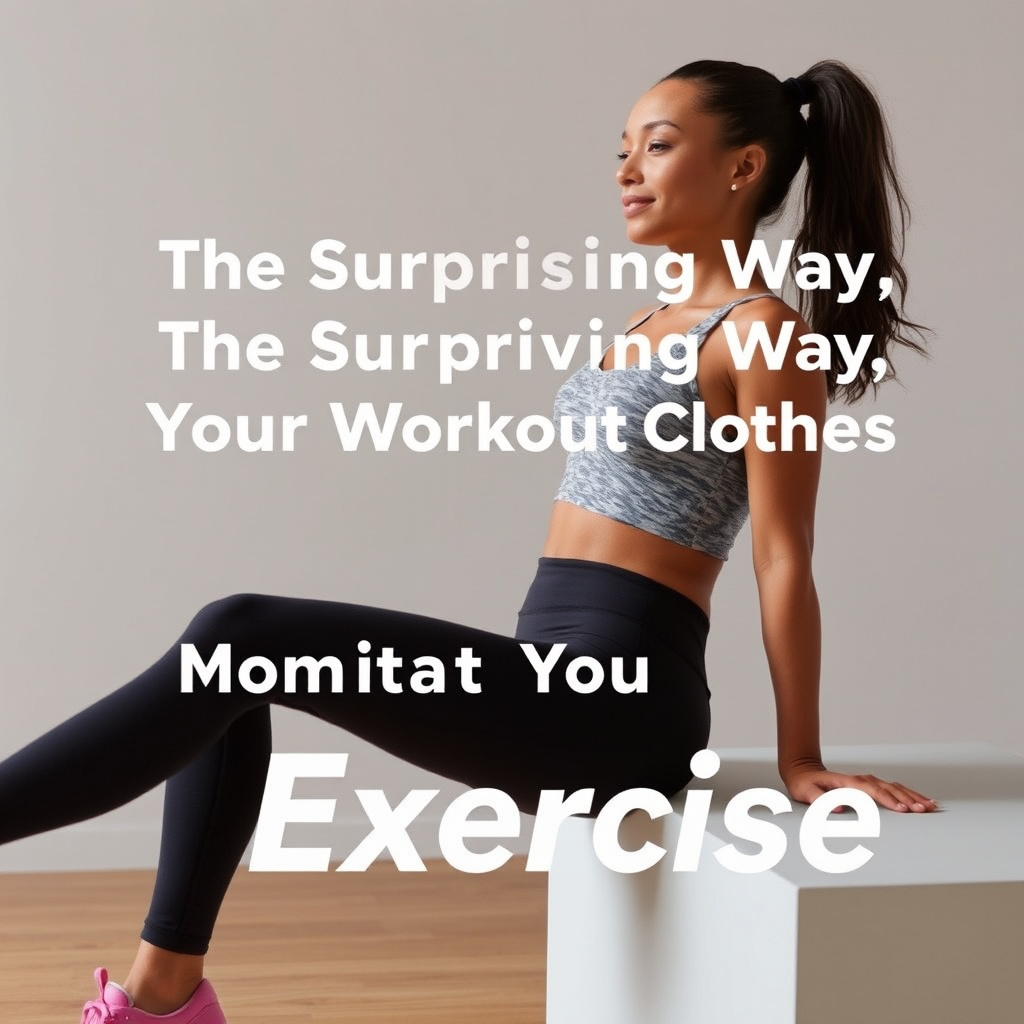
Have you ever noticed that you are significantly more likely to head to the gym when you are already wearing your favorite leggings or high-performance sneakers? This phenomenon is not merely a coincidence or a product of clever marketing. It is a well-documented psychological concept known as enclothed cognition. The clothes we wear do more than just cover our bodies; they fundamentally change how we think, feel, and behave. When it comes to fitness, the right gear acts as a powerful trigger that primes your brain for physical exertion.
The Psychology of Enclothed Cognition
Enclothed cognition refers to the systematic influence that clothes have on the wearer’s psychological processes. Research suggests that when we put on specific attire, we adopt the associated characteristics of that clothing. For example, wearing a lab coat can increase focus and attention to detail, while wearing athletic gear can trigger a mindset geared toward movement and discipline. When you pull on your workout clothes, your brain receives a subconscious signal that it is time to transition from a state of rest or work into a state of performance. This shift helps bridge the intention-action gap, making the transition to exercise feel more like a natural progression rather than a chore.
Building a Ritualized Fitness Identity
Consistency in exercise often comes down to habit formation, and rituals play a crucial role in cementing these habits. By creating a consistent “pre-workout uniform,” you are essentially building a ritual that cues your body for action. This is particularly effective for those who exercise first thing in the morning. Laying out your clothes the night before reduces the friction of decision-making. When you wake up and see your gear ready, you bypass the “should I or shouldn’t I?” mental debate. Over time, the act of putting on your sneakers becomes an automatic behavior that initiates your workout routine, requiring less willpower to get started.
The Role of Comfort and Performance Tech
It is impossible to ignore the physical influence of modern activewear. The evolution of moisture-wicking fabrics, four-way stretch materials, and compression technology is designed to support the body during strenuous activity. When you feel physically comfortable and supported, your focus shifts away from potential distractions—like chafing, overheating, or restricted movement—and toward the exercise itself. This physical comfort creates a positive feedback loop: you feel good in your clothes, you perform better during your workout, and you are subsequently more likely to associate exercise with a positive experience, which encourages you to return to it.
Visual Cues and the “Look Good, Feel Good” Effect
There is a undeniable psychological boost that comes from feeling confident in your appearance. While the primary purpose of workout gear is functionality, the aesthetic appeal of your clothing plays a role in your motivation. Wearing clothes that make you feel strong, stylish, or prepared can provide a confidence surge that carries over into your training session. This is often referred to as the “look good, feel good” effect. When you feel confident, you are more likely to push yourself harder, try new exercises, and maintain better form, knowing that you look the part of someone dedicated to their health.
The Transition Gear Strategy
For many, the biggest hurdle to exercise is the transition time between work and the gym. If your workday ends and you immediately sink into the couch, the motivation to get back up often vanishes. This is where the “transition gear” strategy comes into play. By changing into your workout clothes immediately after work—or even wearing a “athleisure” outfit that allows for movement throughout the day—you keep your body in a state of physical readiness. This prevents the psychological “shut down” that occurs when you put on pajamas or loungewear, keeping your intention to exercise at the forefront of your mind.
Overcoming the “All-or-Nothing” Mentality
Sometimes, we avoid exercise because we feel we don’t have the time or energy for a full, intense session. However, wearing workout clothes can actually help you break free from the all-or-nothing trap. If you are already dressed in your gear, you might find yourself performing a quick 10-minute stretch or a short walk around the block, even if you didn’t plan on a full gym session. This lowers the barrier to entry. Simply being dressed for activity makes movement feel more accessible, and often, starting with ten minutes is all you need to gain the momentum required to complete a full workout.
Choosing Gear That Aligns With Your Goals
Not all workout clothes are created equal, and the type of gear you choose should align with the specific activities you enjoy. If you practice yoga, soft, seamless fabrics that allow for deep stretching are essential. If you are a runner, high-visibility, moisture-wicking materials provide the safety and comfort you need. By investing in gear that is specifically suited to your preferred form of exercise, you are signaling to yourself that you are serious about your goals. This intentionality reinforces your identity as someone who values their health and prioritizes their physical well-being.
Investing in Your Future Self
Ultimately, treating your workout wardrobe as a tool for motivation is an investment in your future self. It is not about vanity or keeping up with trends; it is about creating an environment that supports your success. When you curate a selection of workout clothes that you love and that function well for your needs, you are removing obstacles and setting the stage for consistent habit building. The next time you feel a lack of motivation, try putting on your favorite workout set before you even decide whether to exercise. You might be surprised by how quickly the desire to move follows the act of dressing for it.
The Neurobiology of Sensory Cues in Sport
Beyond the abstract psychological concept of enclothed cognition, there is a tangible neurobiological component to how we interact with our gear. When you wear fabric that has been specifically engineered for high-intensity movement, you are providing your nervous system with a constant stream of sensory feedback. For instance, the tactile sensation of compression fabric against your skin provides proprioceptive input—the body’s ability to sense its position in space. This sensory feedback can heighten your awareness of your posture and muscle engagement. Research into athletic performance shows that when athletes wear gear that provides this ‘tight’ sensory feedback, they often exhibit improved kinetic awareness, which leads to better form during weightlifting or complex movements. By selecting gear that fits your specific sensory preferences—whether that is the ‘second-skin’ feel of compression or the breathable, loose-fit sensation of performance mesh—you are essentially ‘tuning’ your sensory input to favor focus and alignment over lethargy.
Tactical Preparation and the ‘Deployment’ Mindset
Military and emergency response training often utilizes the concept of a ‘pre-mission brief’ to get personnel into the right headspace. You can apply this same logic to your fitness routine by treating your workout clothes as a tactical uniform. When you organize your gear—folding your socks into your sneakers, laying out your towel, and checking your water bottle—you are performing a ‘deployment sequence.’ This tactical preparation serves as a cognitive anchor. The act of gathering and arranging your gear forces you to consciously acknowledge the upcoming effort. By the time you actually step into the fabric, the decision to work out has already been made hours or days in advance. This removes the ‘decision fatigue’ that often plagues people at the end of a long workday, effectively automating the start of your training session.
The Impact of Specialized Footwear on Biomechanical Intent
While clothing influences our mindset, footwear acts as the primary interface between our intent and the ground. Choosing the right shoe for the specific task at hand—a rigid-soled shoe for heavy lifting or a cushioned, responsive shoe for distance running—is a physical manifestation of your exercise goal. When you lace up a pair of weightlifting shoes, the physical stability they provide communicates to your brain that you are about to engage in a heavy, controlled effort. Conversely, wearing running shoes signals a need for mobility and cardiovascular output. This ‘footwear-as-a-signal’ effect is a powerful way to prime your brain for the specific type of stress you are about to place on your body. If you frequently struggle with ‘gym paralysis,’ where you arrive at the facility and don’t know what to do, ensure your footwear matches your intended training block. The physical feedback of the sole will nudge your brain toward the correct movement patterns.
Managing the ‘Athleisure’ Threshold
A common pitfall in the modern era is the ubiquity of athleisure. Because we wear yoga pants and athletic tops to coffee shops, grocery stores, and meetings, the ‘trigger’ effect of this clothing can become diluted. To maintain the psychological potency of your gear, consider creating a clear ‘threshold’ between your lifestyle clothes and your training clothes. You might do this by designating one specific brand or color scheme strictly for sweat-inducing, hard-effort sessions, while keeping your casual athleisure for errands. By reserving a ‘high-performance’ kit for your actual workouts, you prevent the brain from becoming habituated to the clothes. When you put on that specific, designated training shirt, your brain recognizes it as a ‘work-only’ signal, effectively bypassing the desensitization that occurs when you wear your workout clothes all day while sitting at a desk.
Environmental Contextualization of Your Gear
Your brain is an expert at context-dependent learning. If you only ever wear your workout gear while at home, your brain will eventually associate those clothes with domestic comfort, which may actually *decrease* your motivation to go to the gym. To combat this, try to engage in your gear in the environment where you intend to perform. If you are a gym-goer, changing into your gear at the gym locker room, rather than at home, creates a powerful environmental association. The smell of the gym, the sound of the equipment, and the act of changing clothes in that specific space create a ‘triangulation’ of motivation: the clothes, the location, and the activity all become linked in your neural circuitry. This makes it significantly harder for your brain to justify skipping the workout, as the environment itself is pushing you toward action.
Leveraging Social Accountability through Aesthetics
There is an often-overlooked social dimension to your workout attire that can serve as a form of accountability. When you wear gear that makes you look and feel like a dedicated athlete, you are signaling to others—and importantly, to yourself—that you are a participant in a specific community. This is often called ‘identity signaling.’ When you walk into a gym wearing high-quality, functional gear, you are subconsciously projecting an image of someone who is ‘in the process’ of training. This self-projection creates a psychological pressure to live up to that image. If you are struggling with consistency, don’t shy away from wearing gear that makes you look like the version of yourself you aspire to be. By ‘faking it’ until you become it, you utilize the social pressure of the gym environment to force yourself to maintain the standard of work that your outfit implies.
Frequently Asked Questions
Q: Does the color of my workout clothes affect my motivation?
A: While individual color preference is subjective, color psychology suggests that vibrant colors like red or orange can stimulate energy and alertness, while blues and greens may promote a sense of calm and focus. Choose colors that evoke the mood you want to bring to your workout.
Q: Is it okay to wear workout clothes even if I don’t plan on exercising?
A: Yes, wearing activewear for daily tasks can help normalize the idea of movement. However, be mindful that if you wear your gym clothes for too long without exercising, you might eventually desensitize the “trigger” effect. Try to reserve specific outfits for your actual workout times.
Q: How do I choose the right fit for motivation?
A: The “right” fit is whatever makes you feel capable and comfortable. If you feel self-conscious in tight clothing, opt for looser, high-performance fabrics. If you prefer the feeling of support, compression gear is an excellent choice. The goal is to eliminate any physical discomfort that might distract you from your workout.
Q: Can wearing expensive gear make me work out harder?
A: While price doesn’t dictate performance, investing in quality gear can provide a psychological boost because it signals a commitment to your fitness journey. When you spend money on your health, you are more likely to justify the effort required to maintain that investment.
Q: What if I still don’t want to work out after putting on my clothes?
A: That is perfectly normal. If you have dressed for the workout and still feel resistance, try a “five-minute rule”: commit to just five minutes of light activity. If you want to stop after five minutes, you are allowed to. Often, the hardest part is the start, and once you are moving, you will find the motivation to continue.
Related posts:
 Nina Dobrev Teams Up With Reebok for the Ultimate Les Mills Experience
 Gyms Are Actually Banning Sexy Workout Clothes and Here’s Why
 This CrossFit Cat Has Better Workout Motivation Than You
 Brain-Boosting Foods
 Just 10 Minutes of Weekly Exercise Boosts Happiness
 Understanding Gym Equipment
 Oops Moments: What to Do When You Forget Your Sports Bra at the Gym
 Gym Flirt Guide: How to Slide Into Someone’s DMs at the Squat Rack