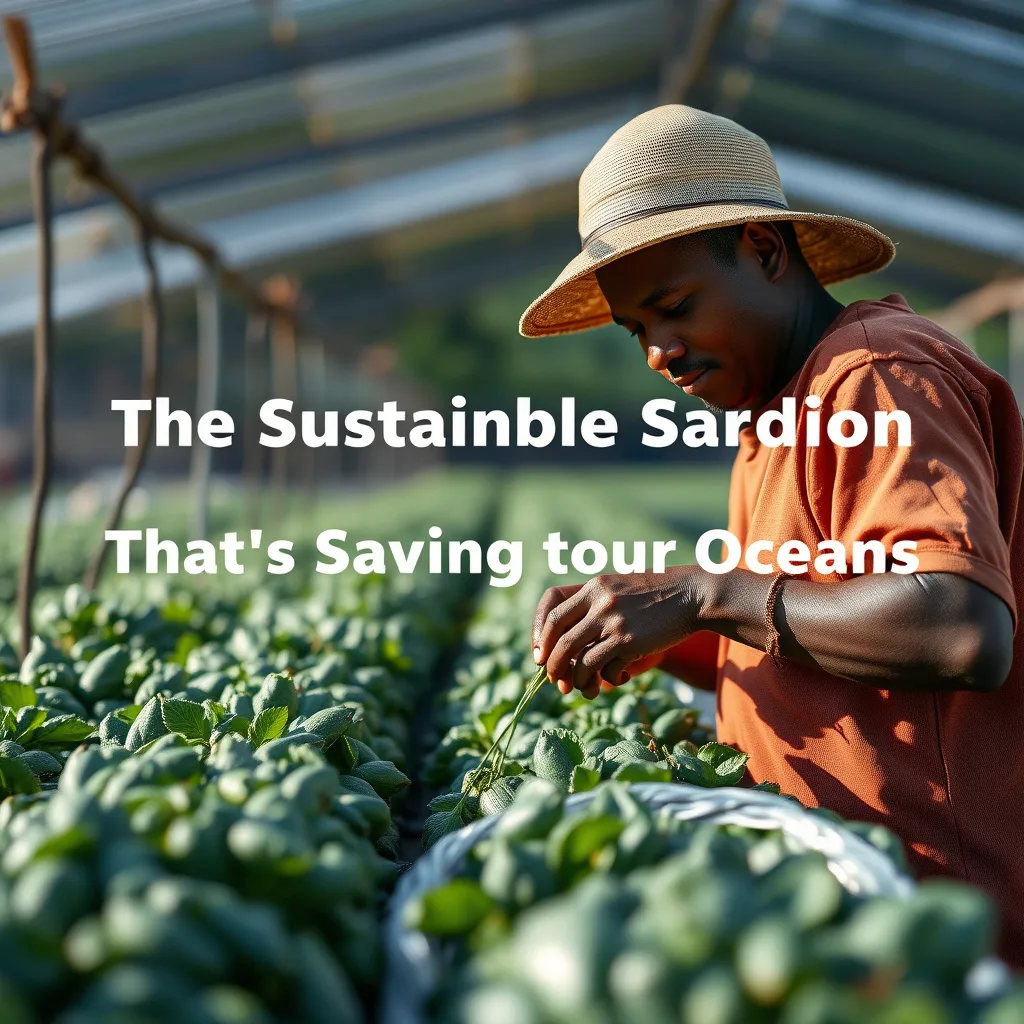
Our oceans are at a tipping point. Plastic, over‑fishing, and nutrient‑rich runoff from conventional agriculture have combined to create dead zones, coral bleaching, and a loss of biodiversity that threatens food security for billions of people. Yet a quiet transformation is underway on the land: a sustainable farming revolution that re‑imagines how we grow food, restore soils, and manage water. By aligning agricultural practices with the health of marine ecosystems, this movement is reducing the pollutants that choke our seas while delivering resilient, nutritious food for a growing global population.
Why Oceans Need a Farming Revolution
Coastal waters receive up to 70 % of their nutrient load from rivers and streams that drain agricultural landscapes. When synthetic fertilizers dissolve into rainwater, they travel downstream, fueling algal blooms that deplete oxygen and create “dead zones.” The Gulf of Mexico’s dead zone, for example, can span more than 6,000 square miles each summer, directly linked to excess nitrogen and phosphorus from Midwestern corn fields. By changing the way we fertilize, till, and manage crops, we can cut the flow of these nutrients at the source, giving marine life a chance to recover.
Principles of Sustainable Farming that Protect Marine Life
At the heart of the revolution are three guiding principles:
- Soil health first. Healthy soils retain water and nutrients, reducing runoff.
- Closed‑loop nutrient cycles. Waste from one system becomes input for another, eliminating the need for synthetic chemicals.
- Landscape‑scale thinking. Farms are designed to work with natural water flows, wetlands, and native vegetation.
When these principles are applied, farms become carbon sinks, biodiversity corridors, and buffers that protect waterways before they reach the ocean.
Regenerative Soil Practices Reduce Runoff
Regenerative agriculture focuses on building organic matter through cover crops, reduced tillage, and compost applications. A single hectare of cover‑cropped land can retain up to 30 % more rainfall than a conventionally tilled field, dramatically lowering the volume of water that carries fertilizer into rivers. Research from the Rodale Institute shows that farms that adopt cover crops can cut nitrogen leaching by 40‑50 % within three years. Additionally, biochar—charcoal made from agricultural waste—acts like a sponge, holding nutrients in the root zone and releasing them slowly, further preventing excess runoff.
Integrated Aquaculture: Farming the Sea and Land Together
Integrated Multi‑Trophic Aquaculture (IMTA) pairs fish, shellfish, and seaweed with land‑based crops in a mutually beneficial loop. Waste‑rich water from fish tanks is pumped over seaweed beds, where the seaweed absorbs nitrogen and phosphorus, cleaning the water before it returns to the fish. The cleaned water can then be used to irrigate nearby fields, providing a low‑cost, nutrient‑rich source of irrigation. Projects in Maine and Norway have demonstrated up to a 25 % reduction in feed costs and a measurable improvement in local water quality.
Precision Agriculture and Data‑Driven Water Management
Satellite imagery, soil moisture sensors, and AI‑driven decision tools enable farmers to apply water and nutrients only where needed. Variable‑rate technology can adjust fertilizer application in real time, cutting overall use by 15‑30 % while maintaining yields. In the Netherlands, a network of smart irrigation stations linked to weather forecasts reduced nitrate runoff by 22 % in just two growing seasons, illustrating how data can turn stewardship into a scalable practice.
Community‑Based Models and Policy Support
Successful transitions depend on local collaboration and supportive policies. Community‑supported agriculture (CSA) programs that prioritize regenerative methods create direct market channels for farmers, reducing the pressure to maximize short‑term yields with chemical inputs. Meanwhile, policy tools such as nutrient trading credits, tax incentives for carbon‑sequestering practices, and stricter water‑quality standards encourage broader adoption. The state of California’s “Healthy Soils Program” provides up to $2,000 per acre for farmers who implement cover crops, a model that other regions are beginning to emulate.
Real‑World Success Stories
1. The Chesapeake Bay Watershed Initiative. Over 1,200 farms across Maryland, Virginia, and Pennsylvania have adopted buffer strips, cover crops, and precision fertilizer management. Since 2015, nitrogen loads entering the Bay have dropped by 18 %, and oyster populations have begun to rebound.
2. The Oceanic Farming Project, Maine. This family‑run operation combines kelp farming with organic vegetable production. The kelp absorbs excess nutrients from the ocean, while compost from the vegetable beds feeds the kelp beds, creating a zero‑waste loop that supports both land and sea ecosystems.
3. Regenerative Cocoa in the Dominican Republic. Smallholders switched to shade‑grown, compost‑rich cocoa farms, reducing the need for synthetic fertilizers by 70 %. The resulting canopy preserves soil moisture and filters runoff before it reaches nearby rivers that feed the Caribbean Sea.
Steps You Can Take to Support the Revolution
Individual actions amplify the impact of systemic change. Here are five practical steps you can start today:
- Choose produce from regenerative farms. Look for certifications like Regenerative Organic Certified (ROC) or ask local markets about soil‑building practices.
- Reduce food waste. Compost kitchen scraps to keep nutrients out of landfills and create a natural fertilizer for home gardens.
- Support policy initiatives. Write to your local representatives about the importance of nutrient‑trading programs and funding for cover‑crop incentives.
- Buy seafood from certified sustainable sources. Labels such as MSC (Marine Stewardship Council) indicate that the fish were caught from healthier ecosystems, which are directly linked to cleaner waters.
- Educate your community. Host a workshop on rain‑garden design or share resources about integrated aquaculture to spread knowledge.
Each choice reduces the pressure on oceans and encourages more farmers to adopt practices that protect water quality.
Designing Ocean‑Safe Crop Varieties: Breeding for Nutrient Efficiency and Salt Tolerance
One of the most under‑explored levers for reducing agricultural runoff is the genetics of the crops themselves. Modern breeding programs are shifting from a sole focus on yield and pest resistance toward traits that directly mitigate the flow of nitrogen, phosphorus, and other soluble compounds into waterways. Two complementary strategies dominate this emerging field.
1. Nutrient‑Use‑Efficiency (NUE) Breeding. By selecting for root architectures that explore a larger soil volume and for enzymes that assimilate nitrogen more completely, researchers can create varieties that need far less fertilizer to achieve the same biomass. A recent trial in the Mid‑Atlantic United States compared a conventional corn hybrid with a high‑NUE line developed at the University of Illinois. The high‑NUE line required 30 % less urea nitrogen yet produced identical grain yields; water‑soluble nitrogen losses measured in adjacent drainage ditches fell by 45 %.
The physiological basis for these gains often lies in enhanced expression of nitrate transporters (NRT1.1, NRT2.5) and increased activity of glutamine synthetase, which together accelerate the conversion of nitrate to organic forms that remain bound in the root zone.
2. Salt‑Tolerant, Flood‑Resilient Crops. Coastal agriculture faces a double challenge: rising sea levels push saline intrusions inland, and extreme precipitation events increase the volume of runoff. Breeding for salt tolerance—through traits such as sodium exclusion, vacuolar sequestration, and osmolyte accumulation—allows farmers to maintain productive fields on marginal lands that would otherwise contribute to eutrophication via leached salts and nutrients.
The International Rice Research Institute (IRRI) released a line of “Salinity‑Smart” rice (IR64‑SS) that can thrive in soils with electrical conductivity up to 8 dS m⁻¹. Field trials in the Mekong Delta demonstrated a 20 % reduction in surface runoff nitrogen concentrations because the rice’s deeper rooting accessed nitrogen that would otherwise be washed away.
Both breeding pathways benefit from modern genomic tools. Genome‑wide association studies (GWAS) and CRISPR‑based editing accelerate the identification and insertion of target alleles. Importantly, these advances can be paired with participatory breeding programs that involve farmers in selecting varieties that fit local soil types, climate patterns, and market demands, ensuring adoption at scale.
Edge cases illustrate the need for nuance. In regions where water scarcity limits irrigation, ultra‑efficient varieties may inadvertently increase water demand if they grow larger canopies. Breeders therefore incorporate drought‑responsive traits alongside NUE, creating a balanced phenotype that conserves both water and nutrients. Similarly, in organic systems where synthetic fertilizers are prohibited, high‑NUE lines can be paired with compost‑derived nitrogen, maximizing the nutrient value of organic amendments while still limiting leaching.
By embedding ocean‑protective traits directly into the plant genome, the agricultural sector can cut the pollutant load at its source, complementing soil‑centric practices such as cover cropping and biochar application.
Financing Ocean‑Friendly Agriculture: Carbon Credits, Blue‑Carbon Offsets, and Impact Investing
Transitioning to regenerative practices often requires upfront capital—whether for new equipment, seed varieties, or the installation of buffer wetlands. Traditional farm financing has been slow to recognize the marine co‑benefits of these investments, but a growing suite of financial mechanisms is bridging that gap.
Carbon‑Credit Programs Linked to Marine Outcomes. Soil carbon sequestration is now a well‑documented ecosystem service, and many voluntary carbon markets (e.g., Verra’s Verified Carbon Standard, Gold Standard) have begun to certify agricultural projects. What differentiates the next generation of projects is the inclusion of “blue‑benefit” metrics—quantifiable reductions in nitrogen and phosphorus loads that directly improve coastal water quality. For example, the “Coastal Soil Carbon Initiative” in the Pacific Northwest bundles carbon credits with a supplemental payment tied to measured decreases in nitrate concentrations at the nearest estuary. Early‑stage pilots have shown that the combined revenue stream can offset up to 60 % of the cost of transitioning to no‑till and cover‑crop systems.
Blue‑Carbon Offsets from Restored Wetlands. While blue‑carbon traditionally refers to carbon stored in mangroves, seagrasses, and tidal marshes, agricultural wetlands—such as constructed flood‑plain paddies—can also qualify when they demonstrate long‑term carbon accumulation and nutrient filtration. In the Chesapeake Bay watershed, a partnership between a land‑trust and a regional bank funded the conversion of 150 ha of marginal cropland into seasonal wetland basins. The project earned both carbon credits (≈ 1.2 Mt CO₂e yr⁻¹) and a “nutrient offset” verified by the EPA’s Watershed Management Program. The revenue was split 70 % to the farmer, 20 % to the land‑trust for stewardship, and 10 % to a community education fund.
Impact‑Investing Funds Focused on Ocean‑Land Synergies. Several venture‑capital and impact‑investment firms have launched dedicated funds that evaluate projects on a dual‑impact scorecard: terrestrial sustainability and marine health. The “Blue‑Green Growth Fund” (US $150 M) requires portfolio companies to report on both soil organic carbon and downstream nutrient load reductions. Companies that meet predefined thresholds receive lower financing rates and performance‑based bonuses. This model incentivizes agribusinesses to adopt precision irrigation, on‑farm nutrient recycling, and integrated aquaculture, because each technology contributes to both scorecard dimensions.
Practical guidance for farmers seeking these financing streams includes:
- Develop a baseline nutrient‑loading model using GIS and watershed data; many state agencies provide free tools.
- Partner with a third‑party verifier early in the project design to ensure that monitoring protocols meet carbon‑credit or blue‑offset standards.
- Bundle multiple revenue sources (e.g., carbon + nutrient offsets) to improve cash‑flow stability during the transition period.
Edge cases arise when land tenure is uncertain. In many developing nations, smallholders lack clear title, which can block participation in formal carbon markets. Innovative solutions—such as community‑level “bundle” contracts where a cooperative holds the credit on behalf of its members—are emerging, but they require robust governance to prevent benefit leakage.
Overall, aligning financial incentives with measurable ocean‑health outcomes transforms sustainability from a cost center into a revenue‑generating opportunity.
Digital Traceability and Blockchain: Linking Farm Practices to Ocean Health Metrics
Consumer demand for transparency has accelerated the adoption of digital traceability platforms across the food supply chain. When these platforms integrate real‑time environmental data, they become powerful tools for demonstrating the marine benefits of regenerative farming.
Blockchain‑Based Provenance. A blockchain ledger records immutable transactions—from seed purchase to final retail—allowing each batch of produce to be linked to a specific field parcel. By attaching sensor‑derived data (e.g., soil‑moisture, fertilizer application rates) to the ledger, producers can certify that a given lot adhered to nutrient‑reduction protocols. Retailers can then display a “Marine‑Friendly” badge that is verifiable by consumers using a QR code.
Case Study: In Denmark, the “SeaGuard” platform partners with a network of 250 farms growing lettuce for the European market. Each field is equipped with IoT‑enabled nitrate sensors that transmit data to a private blockchain. The platform aggregates the data to calculate the total nitrogen export avoided per harvest, converting it into a “marine impact token.” Supermarkets that stock SeaGuard lettuce receive a discount proportional to the token count, creating a direct price incentive for low‑runoff farming.
Integrating Satellite and Drone Imagery. High‑resolution remote sensing can estimate canopy greenness, evapotranspiration, and even leaf‑level nutrient status. When combined with machine‑learning models, these data predict potential runoff hotspots before they materialize. Farmers can upload the predictive maps to a shared cloud portal, where downstream water‑management agencies access the information to adjust discharge permits in near‑real time.
Edge Cases and Challenges:
- Data Gaps in Smallholder Contexts. Many small farms lack reliable internet connectivity, making continuous sensor streaming difficult. Low‑cost, store‑and‑forward devices—such as LoRaWAN‑enabled moisture probes—can buffer data locally and upload when a mobile hotspot becomes available.
- Privacy Concerns. Farmers may be reluctant to share detailed agronomic data that could be used competitively. Permissioned blockchains, where only authorized parties can view sensitive fields, address this while preserving auditability for regulators.
- Standardization of Metrics. Without a common definition of “nutrient load reduction,” different platforms produce incomparable impact scores. International bodies (e.g., FAO, IUCN) are currently drafting a set of interoperable indicators that tie field‑level data to watershed‑scale outcomes.
Implementation Steps for Producers:
- Identify a trusted traceability provider that offers sensor integration.
- Start with a pilot plot to calibrate sensor accuracy against laboratory water‑quality tests.
- Document all input events (fertilizer, irrigation) in the blockchain ledger.
- Publish the aggregated marine‑impact token on the farm’s website or product packaging.
When traceability is coupled with verifiable environmental metrics, the market can reward farmers for protecting oceans, creating a virtuous feedback loop that scales beyond niche markets.
Policy Pathways: From Local Ordinances to International Treaties that Connect Agriculture and Marine Conservation
Effective governance is the backbone of any large‑scale environmental transformation. While the existing article touches on state‑level incentives, a comprehensive policy architecture must span municipal, national, and global levels, each reinforcing the other.
Municipal Nutrient Budgets. Cities that rely on riverine water supplies can adopt a “nutrient budget” approach similar to carbon budgeting. The budget sets a maximum allowable nitrogen and phosphorus load for the watershed, and permits are allocated to upstream farms based on their projected contributions. Excess allowances can be traded, creating a market that incentivizes runoff reduction. The city of Portland, Oregon, piloted such a system in 2022; preliminary results showed a 12 % decline in total nitrogen loads after two years.
National Water‑Quality Standards Integrated with Agricultural Subsidies. In many countries, farm subsidies are decoupled from environmental performance. Reforming these programs to condition a portion of payments on verified reductions in nutrient export aligns fiscal policy with marine health goals. The European Union’s Common Agricultural Policy (CAP) is moving toward “eco‑schemes” that award direct payments for practices that demonstrably lower eutrophication risk, measured through a combination of on‑farm monitoring and watershed modeling.
International Treaties Linking Land‑Based Pollution to Marine Targets. The United Nations Convention on the Law of the Sea (UNCLOS) already obligates states to prevent marine pollution, but enforcement is weak. A proposed amendment—dubbed the “Land‑Ocean Nexus Protocol”—would require signatories to submit nationally‑determined contributions (NDCs) that include specific agricultural nutrient‑reduction targets, akin to the Paris Agreement’s climate NDCs. The protocol would establish a transparent reporting framework, with periodic peer reviews conducted by an independent scientific panel.
Policy Edge Cases:
- Transboundary Watersheds. Rivers that cross national borders, such as the Mekong or the Danube, pose coordination challenges. Joint river‑commission agreements that incorporate nutrient‑budget trading can harmonize standards and prevent “pollution leakage” where one country’s stricter rules simply shift the problem downstream.
- Smallholder Inclusion. Top‑down regulations risk marginalizing farmers lacking technical capacity. Policy designs that embed extension services, subsidized sensor kits, and community‑level compliance groups ensure that smallholders can meet standards without undue burden.
- Enforcement vs. Incentive Balance. Over‑reliance on penalties can generate resistance, whereas a balanced mix of carrots (tax credits, market access) and sticks (fines, revocation of water permits) tends to produce higher compliance rates.
Actionable Recommendations for Policymakers:
- Adopt a tiered nutrient‑budget system that scales with watershed size and agricultural intensity.
- Link a minimum percentage (e.g., 30 %) of agricultural subsidies to third‑party verified runoff‑reduction metrics.
- Facilitate cross‑border data sharing platforms that allow upstream and downstream nations to monitor nutrient fluxes in real time.
- Provide seed funding for digital traceability pilots that demonstrate marine‑impact reporting.
When policies are coherently aligned across scales, they create the regulatory certainty that encourages private investment and accelerates the diffusion of ocean‑friendly farming practices.
Indigenous and Traditional Knowledge: Lessons for Harmonizing Land and Sea
Centuries‑old stewardship practices of Indigenous peoples often embody the very principles that modern regenerative agriculture seeks to codify, yet they remain under‑documented in mainstream policy and research. Integrating this knowledge offers both cultural equity and practical solutions for nutrient management.
Terrace Farming and Floodplain Management. In the Andean highlands, Indigenous communities have cultivated steep slopes for millennia using stone terraces that slow runoff, increase infiltration, and trap sediments. Recent hydrological studies reveal that these terraces reduce peak flow rates by up to 40 % during storm events, thereby limiting the amount of fertilizer‑laden water reaching downstream rivers. When combined with native legume intercropping, the system also recycles nitrogen within the terrace micro‑ecosystem.
Seasonal Wetland Harvesting. The Maori of New Zealand traditionally harvest “kōwhai” (a native fern) from coastal wetlands during low‑tide periods, simultaneously clearing excess vegetation that could otherwise trap nutrients and release them during high tides. This practice maintains a dynamic balance where wetland productivity supports both terrestrial food sources and marine water quality.
Community‑Based Water Guardians. In the Pacific Northwest, the Quinault Nation has established a “Water Guardian” program where trained community members monitor river turbidity, temperature, and nutrient concentrations using low‑tech kits. The data are shared with state agencies, informing adaptive management of upstream agricultural practices. This collaborative monitoring model has led to a voluntary reduction of fertilizer applications by 15 % among participating farms.
Edge Cases and Integration Challenges:
- Intellectual Property Rights. Traditional knowledge is often considered communal, raising questions about how to protect it when incorporated into commercial technologies. Legal frameworks such as the UN Declaration on the Rights of Indigenous Peoples (UNDRIP) provide guidance, but enforceable mechanisms remain limited.
- Climate Change Displacement. Rising sea levels threaten coastal Indigenous territories, potentially eroding the very ecosystems that support their knowledge systems. Adaptive co‑design processes that involve Indigenous planners in climate‑resilient infrastructure (e.g., raised terraces) are essential.
- Scale Translation. Practices that work on a few hectares may need modification to be viable on larger commercial farms. Pilot projects that pair Indigenous knowledge holders with agribusiness engineers can test scalability while preserving cultural integrity.
Practical Steps for Integration:
- Establish formal co‑management agreements that recognize Indigenous authority over land‑water resources.
- Fund community‑led research that quantifies the nutrient‑filtering capacity of traditional practices.
- Incorporate Indigenous water‑guardian data streams into national water‑quality monitoring networks.
- Develop certification labels (e.g., “Indigenous‑Stewardship Certified”) that reward products grown with culturally rooted methods.
By honoring and scaling Indigenous stewardship, the agricultural sector gains time‑tested, low‑tech solutions that complement high‑tech innovations, creating a more resilient and inclusive pathway toward ocean health.
Scaling the Revolution: Partnerships with Large‑Scale Agribusiness and Food Retailers
While small farms and community initiatives demonstrate the feasibility of ocean‑friendly practices, achieving global impact requires the participation of large‑scale agribusinesses and the retail chains that dictate market demand. Strategic partnerships can accelerate technology transfer, standardize metrics, and create economies of scale.
Corporate Nutrient‑Management Commitments. Several multinational grain traders have pledged to source a minimum percentage of their corn and soy from farms that meet “low‑runoff” certification standards. To honor these commitments, they are investing in regional nutrient‑monitoring hubs that provide real‑time data to both growers and the companies’ procurement teams. For example, Cargill’s “Blue‑Yield” program in the Mississippi River basin funds the installation of 1,200 soil‑sensor nodes, generating a shared data platform that tracks nitrogen export per acre.
Retailer‑Driven Shelf‑Space Incentives. Supermarket chains wield significant power through shelf placement. By creating dedicated “Ocean‑Friendly” aisles that feature produce from verified regenerative farms, retailers can command a price premium—often 5‑10 % higher—while educating shoppers about the marine benefits of low‑runoff agriculture. Walmart’s pilot “Sustainability Hub” in Texas integrates QR‑coded tags that link each product to a dashboard showing the estimated reduction in downstream nitrate loads.
Supply‑Chain Transparency Platforms. End‑to‑end traceability software, such as IBM Food Trust, now offers modules that calculate “nutrient footprints” alongside carbon footprints. When integrated with farm‑level sensor data, the platform can allocate a portion of the retailer’s sustainability score to the farmer’s contribution to ocean health, which can then be monetized through bonus payments.
Edge Cases in Scaling:
- Heterogeneity of Global Production Systems. Practices that work in temperate corn belts may be unsuitable for tropical rice paddies. Multinational partners must adopt a region‑specific toolkit rather than a one‑size‑fits‑all checklist.
- Risk of Greenwashing. Without third‑party verification, corporate claims of “ocean‑friendly” sourcing can become marketing spin. Independent auditors and transparent reporting standards are essential to maintain credibility.
- Supply‑Chain Disruption. Transitioning to low‑runoff inputs may initially lower yields, creating short‑term supply gaps. Companies can mitigate this by diversifying sourcing regions and offering transition assistance funds to growers.
Implementation Blueprint for Large Actors:
- Define clear, science‑backed nutrient‑reduction benchmarks for each commodity and region.
- Invest in shared monitoring infrastructure (sensors, satellite analytics) that feeds data to both growers and corporate sustainability teams.
- Establish a tiered certification system that rewards incremental improvements, encouraging continuous progress.
- Integrate nutrient‑footprint metrics into existing ESG (Environmental, Social, Governance) reporting frameworks, linking them to investor expectations.
When agribusinesses, retailers, and growers align their incentives around measurable marine outcomes, the sustainable farming revolution moves from isolated case studies to a systemic shift capable of delivering the scale needed to protect our oceans for generations to come.
Frequently Asked Questions
Q1: How quickly can sustainable farming practices improve water quality?
A: Improvements can be seen within a few growing seasons. Studies of cover‑crop adoption show measurable reductions in nitrate runoff after the second year, while larger ecosystem benefits, such as the recovery of fish populations, may take 5‑10 years depending on the scale of implementation.
Q2: Will regenerative methods reduce food yields?
A: In most cases, yields remain stable or even increase over time. Soil health improvements boost water retention and nutrient availability, which can offset the reduced reliance on synthetic fertilizers. Long‑term data from the Rodale Institute indicate comparable yields to conventional systems after a transition period of 3‑5 years.
Q3: Are there affordable options for small‑scale farmers?
A: Yes. Many low‑cost practices—such as planting cover crops, using compost made from on‑farm waste, and installing simple rain‑garden buffers—require minimal capital. Additionally, government grants and cost‑share programs can offset initial expenses for precision tools or biochar applications.
Q4: How does integrated aquaculture differ from traditional fish farming?
A: Traditional fish farms often discharge nutrient‑rich water directly into the environment, contributing to eutrophication. Integrated systems capture that waste, convert it into growth for seaweed or filter‑feeding shellfish, and then recycle the cleaned water back to the fish or to crops, creating a closed nutrient loop that protects surrounding waters.
Q5: What role do consumers play in this revolution?
A: Consumers drive market demand. By prioritizing products from farms that use regenerative practices, supporting seafood certifications, and advocating for stronger water‑quality policies, shoppers create economic incentives that accelerate the shift toward ocean‑friendly agriculture.
Related posts:
 Rosalie Fish: Indigenous College Athlete’s Story
 How India’s farmers—and global climate change—could alter geopolitics
 Essential Tips for Better Garden Health
 Strawberries Top This Year’s Dirty Dozen List and We’re Officially Shook
 The Plant-Based Revolution Is Just Getting Started
 Equity in Regenerative Agriculture
 Well+Good Talks: The Next-Gen of Food Sustainability Is Coming to Your Plate
 Walmart’s Vertical Farming Initiative