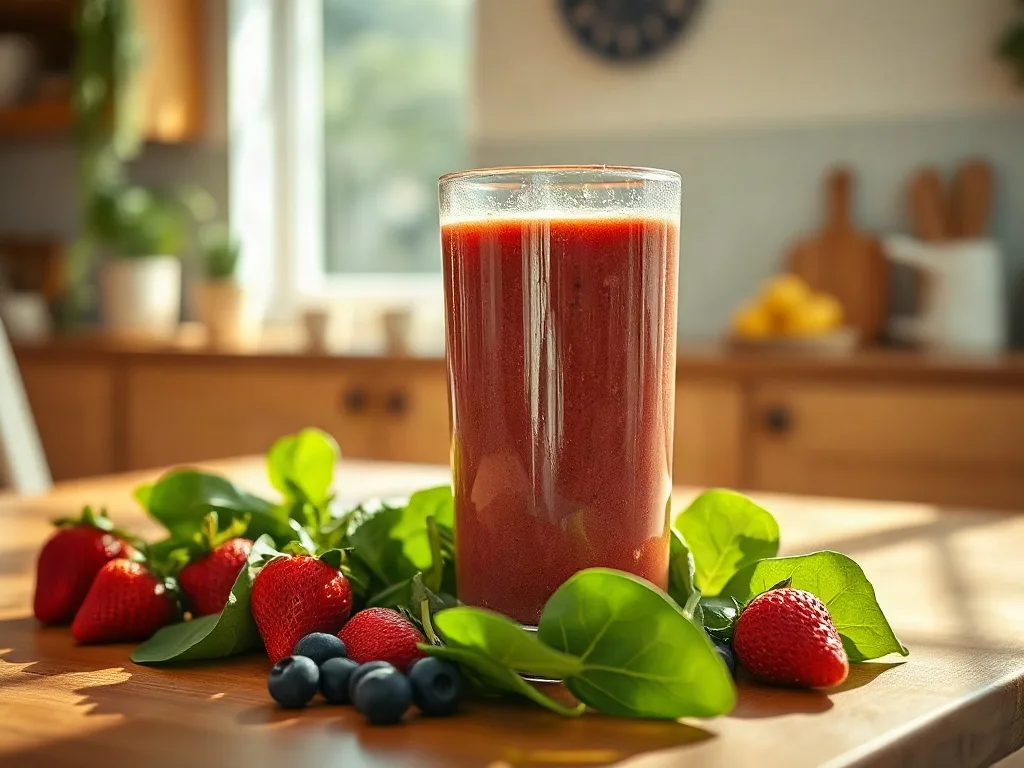
Smoothies have become a staple in health-conscious kitchens, promising quick nutrition in a drinkable form. Yet many people reach for their blender only to experience an energy crash an hour later, leaving them hungry and fatigued. The culprit is often hidden sugar—whether from fruit juice, sweetened yogurt, or added syrups—that causes blood sugar spikes followed by inevitable dips. The good news is that delicious, satisfying smoothies without the sugar crash are entirely achievable with the right approach.
Key takeaways
- Include 15-25g of protein and 5-8g of fiber to slow digestion and stabilize blood glucose.
- Limit fruit to one cup maximum and prioritize low-glycemic options like berries over tropical fruits.
- Add 1-2 tablespoons of healthy fats like avocado or nut butter to promote lasting satiety.
- Swap sugary juices for water or unsweetened plant-based milks to avoid unnecessary glucose spikes.
Understanding how to build a balanced smoothie is the foundation of sustained energy and genuine nutrition. Rather than viewing smoothies as a vehicle for fruit and sweetness, think of them as an opportunity to combine protein, healthy fats, fiber, and complex carbohydrates in proportions that keep your blood sugar stable. This shift in perspective transforms smoothie-making from a sugary indulgence into a genuine wellness practice.
Understanding Blood Sugar and Energy Crashes
When you consume a smoothie loaded with fruit juice, honey, or sugary yogurt, your digestive system rapidly absorbs the carbohydrates, causing blood glucose levels to spike. Your pancreas responds by releasing insulin to bring blood sugar back down. In some people, this response overshoots, causing blood sugar to drop below baseline levels. This dip is what triggers the energy crash, brain fog, and sudden hunger that often appears 60 to 90 minutes after consuming a high-sugar smoothie.
The severity of this crash depends on several factors: how much sugar was consumed, whether you ate anything else with the smoothie, your individual metabolic sensitivity, and your overall insulin response. People with prediabetes, those prone to mood swings, or anyone who has noticed they feel more sluggish after sweet drinks are particularly susceptible to these crashes. The key to avoiding them is choosing ingredients and proportions that provide a more gradual, steady release of glucose into the bloodstream.
The Role of Fiber in Stable Blood Sugar
Fiber is perhaps the single most important tool in preventing sugar crashes. Unlike simple sugars, fiber passes through your digestive system largely undigested, slowing the absorption of other nutrients and creating a gentler rise in blood glucose. Whole fruits contain fiber in their flesh and skin; juice does not. This is why a smoothie made from whole berries stabilizes blood sugar far better than one made from berry juice.
Aim to include at least 5 to 8 grams of fiber in your smoothie. Whole fruits like raspberries and blackberries (8 grams per cup), pears, and apples with the skin intact are excellent sources. You can also add a tablespoon of ground flaxseed (2.4 grams of fiber), chia seeds (10 grams per ounce), or psyllium husk powder (7 grams per tablespoon). Leafy greens like spinach or kale add fiber along with valuable minerals and phytonutrients. If you’re adding grains, rolled oats or steel-cut oats provide both fiber and sustained-release carbohydrates.
Protein: The Stabilizing Powerhouse
Protein is equally critical for preventing blood sugar crashes. It slows gastric emptying—the rate at which food leaves your stomach—which means other nutrients, including carbohydrates, are absorbed more slowly. Protein also triggers the release of hormones that promote satiety and stable energy, and it requires more energy to digest than carbohydrates alone, keeping you satisfied longer.
Aim for 15 to 25 grams of protein per smoothie. Greek yogurt (plain, unsweetened) provides about 15 to 20 grams per cup and is an excellent base. Cottage cheese (around 14 grams per half cup) adds creaminess and protein while being less sugary than regular yogurt. For those avoiding dairy, silken tofu contributes protein without added sugar, though it may require more flavoring. Plant-based protein powders (whey, pea, hemp, or blended options) are convenient, though check that they contain minimal added sugars. Unsweetened nut butters like almond or peanut butter (8 grams per two tablespoons) add protein, healthy fats, and a satisfying richness.
Choosing Fruits Wisely Without Abandoning Them
The assumption that smoothies require large quantities of fruit is a common misconception that leads to sugar-loaded drinks. Whole fruits absolutely belong in smoothies, but in measured amounts combined with other components. A balanced smoothie might contain half to one cup of fruit rather than two or three cups.
Some fruits are naturally lower in sugar relative to their volume and higher in fiber. Berries—blackberries, raspberries, strawberries, and blueberries—are excellent choices, offering antioxidants, fiber, and a modest sugar load. A cup of raspberries contains only 12 grams of carbohydrates and 8 grams of fiber, meaning the net digestible carbohydrate impact is minimal. Citrus fruits like grapefruit and oranges provide vitamin C and fiber but can be higher in natural sugars; use smaller quantities. Avoid smoothies composed primarily of tropical fruits like mango, pineapple, or banana unless paired with adequate protein and fat—these fruits are delicious but sugar-dense. If you love bananas, use half a banana and pair it with substantial protein and healthy fat.
Healthy Fats for Satiety and Absorption
Dietary fats, contrary to outdated nutrition myths, are essential for satiety, hormone production, and the absorption of fat-soluble vitamins like A, D, E, and K. Adding healthy fats to your smoothie slows digestion and prevents the rapid glucose absorption that causes crashes. Fats also make smoothies more satisfying, meaning you’ll feel fuller longer and less likely to reach for another snack soon after.
Include one to two servings of healthy fat per smoothie. Half an avocado (about 12 grams of fat) provides a creamy texture and nutrient density. One to two tablespoons of nut butter—almond, cashew, or peanut—adds fat alongside protein. Coconut oil or MCT oil (one tablespoon) can work, though they lack the micronutrient profile of whole-food options. Nuts and seeds like hemp seeds (10 grams of fat per three tablespoons), flax seeds, or a small handful of almonds contribute both fat and fiber. Unsweetened almond milk or other plant-based milks made with added fat often work well as a base, though full-fat coconut milk or whole dairy milk are also viable depending on your preferences.
Smart Base Liquid Choices
The liquid you choose sets the foundation for your smoothie’s nutritional profile. Fruit juice—even freshly squeezed or 100% juice—provides minimal fiber and maximum sugar impact, making it unsuitable for blood sugar stability. The same applies to sweetened plant-based milks laden with added sugars and syrups.
Unsweetened plant-based milks (almond, oat, cashew, or hemp) provide volume without added sugars, though check labels for added oils and thickeners if those concern you. Regular dairy milk contains natural lactose (a milk sugar), so while not inherently problematic in a balanced smoothie, it contributes carbohydrates you’ll want to account for. Full-fat coconut milk adds fat and richness. Water or unsweetened broth (yes, bone broth or vegetable broth) are neutral options that won’t interfere with blood sugar. A combination of milk and water can stretch ingredients while controlling calorie density.
Building Your First Balanced Smoothie
Here’s a practical formula to follow: one serving of protein (15 to 20 grams), half to one cup of low-glycemic fruit (berries, half a green apple, or citrus), one to two tablespoons of healthy fat (nut butter, seeds, or avocado), one cup of liquid (unsweetened milk or water), and optional additions like spinach, a tablespoon of chia seeds, or unsweetened cocoa powder. This might look like: one cup of plain Greek yogurt, three-quarters cup of blackberries, one tablespoon of almond butter, one cup of unsweetened almond milk, and a handful of spinach. Blend until smooth.
The macronutrient breakdown of a smoothie built this way is roughly 20 to 25 grams of protein, 15 to 20 grams of fat, and 20 to 30 grams of carbohydrates, with at least 6 to 8 grams from fiber. This ratio promotes steady energy and satiety. You may want to adjust quantities based on your personal hunger level, activity, and metabolic needs—this is a foundation, not a rigid prescription.
Flavor Without Sugar or Artificial Sweeteners
Smoothies don’t need added sweeteners to taste delicious. Natural flavoring from whole foods creates complexity and satisfaction. Unsweetened cocoa powder adds depth and antioxidants without sugar. Half a teaspoon of vanilla extract provides sweetness perception without carbohydrates. A pinch of cinnamon triggers slight sweetness perception while stabilizing blood sugar through its chromium content. Nutmeg, ginger, or cardamom add warmth and interest. Cocoa nibs, if you enjoy them, provide chocolatey flavor with minimal added sugar.
If you prefer sweetness beyond what whole fruits provide, consider erythritol or monk fruit sweetener in small quantities. These sugar alcohols and plant-derived sweeteners don’t significantly impact blood glucose for most people, though some are sensitive to certain types. Stevia is another option, though it has a slightly bitter aftertaste some find unpleasant. Avoid high-fructose corn syrup, agave nectar, and regular sugar entirely; the goal is stable blood sugar, not just fewer calories. Start with less sweetener than you think you need; many people find their taste preferences shift toward less sweet drinks over time.
When and How to Consume Your Smoothie
Timing and context matter. Consuming a balanced smoothie alongside a small amount of movement or activity—a walk, light stretching, or even just remaining upright rather than sitting immediately—helps your muscles absorb glucose more efficiently, further stabilizing blood sugar. A smoothie consumed first thing in the morning on an empty stomach, by contrast, can still cause a spike even if well-balanced, though less dramatic than a sugary version.
If you’re using your smoothie as a meal replacement, ensure it contains enough calories and nutrients to function as a complete meal. A lightweight smoothie might be 250 to 350 calories, suitable as a snack or light breakfast addition, but if it’s your only breakfast, you likely need 400 to 500 calories with robust protein and fat for lasting satisfaction. Some people find sipping a smoothie slowly, or eating it with a spoon as a smoothie bowl (topped with granola, nuts, or seeds), provides better satiety than drinking it quickly.
Troubleshooting Common Smoothie Pitfalls
If you’ve tried balanced smoothies and still experience energy crashes, consider these issues: you may be consuming too much fruit relative to other components—try reducing fruit to half a cup and see if energy stabilizes. You might need more protein; try adding another 5 to 10 grams and assess the difference. Some people do better with smaller smoothie volumes consumed more slowly rather than large quantities gulped quickly. If you’re using protein powder, check the ingredient list for added sugars; some brands market themselves as “healthy” while containing 10 to 15 grams of added sugar per serving. Finally, eating a smoothie as your only food intake, rather than as part of a meal or alongside something else, may increase crash risk; pairing it with nuts, cheese, or another protein source can help.
Recipe Examples for Getting Started
Berry and Almond Smoothie: one cup of plain Greek yogurt, three-quarters cup of mixed berries (frozen or fresh), one tablespoon of almond butter, one cup of unsweetened almond milk, and a handful of spinach. Blend until smooth. Macros: approximately 22g protein, 18g fat, 25g carbs, 8g fiber.
Chocolate Avocado Smoothie: half an avocado, one scoop of unsweetened chocolate protein powder, one tablespoon of unsweetened cocoa powder, three-quarters cup of full-fat coconut milk, one-quarter cup of water, and a small pinch of vanilla extract. Macros: approximately 25g protein, 20g fat, 16g carbs, 6g fiber.
Green Protein Smoothie: one cup of unsweetened Greek yogurt or silken tofu, one tablespoon of peanut butter, one cup of fresh spinach, half a green apple (skin on), one tablespoon of ground flaxseed, and one cup of unsweetened almond milk. Macros: approximately 20g protein, 12g fat, 22g carbs, 7g fiber.
Advanced Macronutrient Ratios for Different Goals
While the foundational approach of 20-25g protein, 15-20g fat, and 20-30g carbs works well for most people, individual needs vary significantly based on activity level, metabolic rate, and specific health goals. Someone training for endurance may benefit from slightly higher carbohydrate content with the same protein and fat anchoring blood sugar stability, whereas a person focused on weight management might prioritize higher protein and fat ratios to extend satiety between meals. Understanding how to adjust these macros without sacrificing blood sugar control opens up a wider range of smoothie applications.
For high-intensity athletes or very active individuals, increasing carbohydrates to 35-45g while maintaining 20-25g protein can support performance without triggering crashes, since muscle activity rapidly absorbs glucose. The key is including these additional carbs as low-glycemic sources: rolled oats, steel-cut oats, or a larger serving of berries rather than adding juice or honey. A post-workout smoothie for someone who just completed strength training might include one and a half cups of Greek yogurt, one cup of blueberries, one tablespoon of almond butter, half a banana, one tablespoon of ground oats, and one cup of unsweetened almond milk—delivering approximately 28g protein, 16g fat, and 42g carbs with substantial fiber to moderate absorption.
Conversely, someone managing metabolic syndrome, prediabetes, or simply seeking maximum satiety might reduce carbs to 15-20g while increasing fat to 20-25g and protein to 25-30g. This ultra-stable profile requires very disciplined fruit portions—perhaps just half a cup of berries—and compensation through additional fat sources like avocado or coconut milk. The trade-off is less sweetness from fruit, which some people adapt to quickly while others find less palatable long-term. Experimenting within these parameters and tracking energy, hunger, and mood over two to three weeks helps identify your personal optimal ratio.
Incorporating Adaptogenic and Functional Ingredients Thoughtfully
Beyond basic macronutrients, certain botanical and functional ingredients have research suggesting they support stable energy and metabolic resilience, though claims should be evaluated skeptically and integrated cautiously. Adaptogens like rhodiola, ashwagandha, and maca are marketed as stress-buffering compounds; while evidence is mixed, adding a modest amount (typically 500-1000mg per serving) to a balanced smoothie is unlikely to cause harm and may provide subtle benefits for some users. The critical point is that these ingredients are supplements to a solid macronutrient foundation, not replacements for it.
Cinnamon deserves particular mention because it has genuine research support for modest blood sugar modulation. Ceylon cinnamon (the true variety, distinct from common cassia cinnamon) contains compounds that may enhance insulin sensitivity. A half to one teaspoon per smoothie provides both flavor and potential metabolic benefit without downside risk. Similarly, chromium—present in small amounts in whole foods like broccoli and mushrooms—plays a role in glucose metabolism; if you’re including mushroom powder or broccoli sprouts in a savory smoothie variant, you’re getting this benefit naturally.
Ingredients like MCT oil (medium-chain triglycerides), collagen peptides, and resistant starch—all marketed as metabolic enhancers—can be incorporated but should not displace whole-food protein and fat sources that offer more complete micronutrient profiles. One to two teaspoons of MCT oil might be added alongside a tablespoon of nut butter and avocado for a genuinely satiating drink, rather than MCT oil serving as the sole fat source. Collagen peptides can boost protein content to 30-35g total per smoothie when combined with other sources, providing additional gut health benefits through their glycine and proline content. The principle is complementary layering rather than replacing foundational elements with trendy additives.
Addressing Common Digestive and Absorption Concerns
Some people report bloating, digestive discomfort, or reduced nutrient absorption from smoothies despite careful ingredient selection. This often stems from several remediable issues. First, consuming very large volumes of liquid rapidly can overwhelm digestive capacity; a 24-32 ounce smoothie consumed in two minutes places considerable demand on your system. Reducing to 16-20 ounces per serving or sipping over 10-15 minutes instead of gulping typically resolves this. The stomach can process roughly 1 liter per hour comfortably; exceed that rate and temporary bloating or discomfort results.
Second, high fiber intake from smoothies can cause gas and bloating if your digestive system isn’t accustomed to it. Someone transitioning from a low-fiber diet who suddenly consumes 10g of fiber from chia seeds, ground flax, and spinach may experience temporary distension and gas as beneficial bacteria ferment the fiber. Gradually increasing fiber over 2-3 weeks allows your microbiome to adapt. Simultaneously, including fermented foods elsewhere in your diet (yogurt, sauerkraut, kimchi) introduces beneficial bacteria that facilitate fiber fermentation and reduce uncomfortable gas production.
Blending itself can affect nutrient bioavailability. Thoroughly blending breaks down cell walls and fibrous structures, theoretically making nutrients more accessible. However, blending also oxidizes some heat-sensitive vitamins and creates a liquid form that your stomach empties faster than whole foods, potentially increasing glucose absorption rate despite identical macronutrients. If you notice pronounced energy crashes from smoothies but not from eating whole foods with similar macro ratios, try eating half your smoothie ingredients as a whole-food bowl (Greek yogurt, berries, nuts) and drinking only the liquid portion, or use a lower blending speed and shorter blending time to preserve some fibrous structure.
Seasonal Variation and Year-Round Consistency
Ingredient availability and quality shift dramatically across seasons, affecting both taste and nutritional consistency. Summer abundance of berries, stone fruits, and fresh herbs creates smoothies that are naturally delicious and stable. Winter often forces reliance on frozen berries, imported tropical fruits, and stored produce—all viable, but requiring intentional choices to maintain blood sugar stability. A winter smoothie might feature frozen raspberries and blackberries instead of fresh, compensate for reduced fresh herb availability with dried herbs or extracts, and lean more heavily on shelf-stable protein sources and fats.
Rotating through seasonal produce also provides nutritional diversity that monoculture consumption misses. Spring greens like sorrel and young spinach offer different mineral profiles than winter storage cabbage; summer stone fruits provide different phytonutrients than fall apples. Building three to four seasonal smoothie templates—one for each season featuring local, peak produce—ensures you’re capitalizing on nutritional density while supporting local food systems and managing cost.
Storage also affects consistency. A frozen berry purchased in June will oxidize and lose some vitamin C by December. Produce purchased fresh seasonally and frozen immediately retains more nutrient density than commercial frozen produce that’s been stored for months, though commercial frozen is still nutritionally superior to out-of-season fresh produce that’s been cold-stored and shipped across continents. If you have access to a farmer’s market or CSA, purchasing and freezing peak-season fruit for later use provides both nutritional optimization and cost efficiency.
Creating Savory and Umami-Forward Smoothies
The assumption that smoothies must taste sweet limits their utility. Savory smoothies—built around vegetable bases with minimal or no fruit—can serve as nutrient-dense light lunches or post-workout recovery drinks, particularly beneficial for people who find themselves tired of sweet breakfast drinks or who prefer savory flavors. These drinks are typically higher in trace minerals and lower in carbohydrates while still maintaining blood sugar stability through their protein and fat content.
A basic template might feature one cup of silken tofu or Greek yogurt (protein and creaminess), one to two cups of raw or steamed vegetables (spinach, kale, cucumber, celery, or even avocado), one tablespoon of miso paste (umami depth and fermented probiotics), one teaspoon of low-sodium vegetable broth concentrate or nutritional yeast (savory complexity), one tablespoon of olive oil or avocado oil, and one-half cup of unsweetened almond milk or water. Optional additions include fresh herbs (cilantro, parsley, basil), a squeeze of lemon juice for brightness, a small pinch of sea salt, and even a tiny amount of ginger for subtle heat. The result is a 250-300 calorie drink with 18-22g protein, 12-15g fat, and 8-12g carbs—entirely stable for blood sugar.
Some people find this transition from sweet to savory smoothies reinvigorating after months of berry blends. Others use them strategically: a sweet smoothie for breakfast, a savory version as an afternoon light meal or post-workout beverage. The umami depth of miso, nutritional yeast, or a trace amount of low-sodium soy sauce creates satisfaction that sweet smoothies, even well-balanced ones, sometimes lack. Experimenting with different vegetable and herb combinations creates variety and prevents palate fatigue.
Troubleshooting Persistent Energy Crashes Despite Balanced Ingredients
After implementing macronutrient balance and all recommended strategies, some individuals still experience energy crashes or cravings within 60-90 minutes. This persistent pattern warrants investigating factors beyond the smoothie itself. First, assess meal timing and overall eating patterns. A well-balanced smoothie consumed as your sole breakfast, with no food again until 12:30 PM lunch, may stabilize blood sugar in isolation but leave you depleted by 11 AM because the smoothie’s calories and nutrients are insufficient for a four-hour fasting window. Adding a small snack—a small handful of almonds or a hard-boiled egg—30-60 minutes after the smoothie may resolve apparent crashes that are actually delayed hunger.
Second, examine hydration status. Dehydration mimics fatigue and sluggishness remarkably well; someone who’s mildly dehydrated will experience what feels like an energy crash regardless of smoothie composition. Ensuring adequate water intake throughout the day, particularly if you live in a dry climate or exercise, can resolve perceived crashes that aren’t blood-sugar related. A useful diagnostic: if you feel better within 20-30 minutes of drinking water after the alleged crash, hydration was likely the culprit.
Third, sleep quality and stress levels dramatically affect glucose metabolism and subjective energy perception. Someone chronically sleep-deprived or under sustained stress exhibits dysregulated cortisol and glucose patterns; no smoothie formula completely overrides this dysfunction. If crashes persist despite multiple smoothie optimization attempts, broader lifestyle assessment—sleep hygiene, stress management, exercise patterns—may be necessary alongside or instead of further smoothie refinement.
Finally, individual insulin response varies considerably. Some people are exquisitely sensitive to even modest carbohydrate loads; others metabolize 50g of carbs without incident. If you’ve tried multiple well-formulated smoothie templates and consistently experience crashes while others using identical recipes report stable energy, you may have elevated insulin sensitivity requiring even lower carb ratios or different macronutrient distribution entirely. In this case, consulting with a registered dietitian familiar with metabolic health can help identify your individual optimal approach rather than relying solely on general guidelines.
Integrating Smoothies Into Complex Meal Plans and Intermittent Fasting Protocols
Many people use smoothies within structured eating patterns like intermittent fasting, time-restricted eating, or specific macro-cycling protocols. A smoothie consumed during a permitted eating window within an intermittent fasting schedule functions identically from a macronutrient perspective as any other food, so blood sugar stability principles remain unchanged. However, smoothies offer particular advantages and disadvantages in these contexts. Advantage: a balanced smoothie provides substantial calories and nutrients in a compact form, helpful for someone who needs to consume maintenance or surplus calories within a compressed eating window. Disadvantage: liquids are absorbed rapidly compared to solid foods, potentially causing faster glucose spikes even with balanced macros, and liquid calories trigger less satiety hormones than chewed food, potentially leading to overconsumption if someone drinks multiple smoothies in succession.
For someone practicing time-restricted eating (eating within an 8-hour window, fasting 16 hours), consuming a balanced smoothie as the first meal after the fasting window often works well. The protein and fat trigger satiety hormones that carry through the feeding window, and eating immediately upon beginning the eating phase ensures calories are distributed rather than frontloading, which supports stable energy. Alternatively, some people find that breaking a fast with a smoothie triggers subsequent cravings; in that case, beginning the feeding window with solid food—eggs, Greek yogurt with nuts—and consuming smoothies later in the window may work better.
For macro-cycling approaches where carb intake varies by day or workout status, smoothies offer flexible macronutrient adjustment. A lower-carb day smoothie features very minimal fruit, maximum fat (avocado, coconut milk, nut butter), and high protein. A higher-carb day (typically following intense training) incorporates additional berries, perhaps a small amount of oat flour, and maintains protein while reducing fat slightly. This flexibility makes smoothies useful tools within structured plans rather than obstacles to them.
FAQs
Q: Can I make smoothies ahead of time without affecting their blood-sugar impact?
A: Yes, with caveats. Smoothies can be made and refrigerated for 24 to 48 hours, though they may separate and require re-blending. What matters for blood sugar is the ingredients and proportions, not the timing of blending. If you’re concerned about nutritional degradation, note that some vitamins oxidize over time, particularly vitamin C, but the macronutrients and fiber that stabilize blood sugar remain intact. Freezing smoothies in portions and thawing before consumption is also viable.
Q: Is it okay to use frozen fruit instead of fresh?
A: Absolutely. Frozen fruit is often picked at peak ripeness and flash-frozen, preserving nutrients. From a blood-sugar perspective, frozen and fresh fruit are equivalent. Frozen fruit can actually make smoothies thicker and creamier without adding ice, which can dilute the drink. Choose plain frozen fruit without added sugars or syrups.
Q: What’s the difference between a smoothie and a smoothie bowl, and do they affect blood sugar differently?
A: The primary difference is texture and consumption speed. A smoothie is drinkable; a smoothie bowl is thick, eaten with a spoon, and often topped with granola, nuts, or seeds. Drinking a smoothie quickly can cause more rapid nutrient absorption and potentially a more pronounced blood sugar spike, while eating a smoothie bowl slowly and chewing toppings naturally slows digestion. From a pure ingredients standpoint, they’re equivalent, but consumption method does matter for blood sugar response.
Q: Are protein powders necessary, or can I rely entirely on Greek yogurt and nut butter?
A: They’re not necessary. Greek yogurt and nut butter can absolutely provide adequate protein; the advantage of protein powder is convenience and the ability to boost protein without adding volume or changing flavor significantly. If you prefer whole foods, you can absolutely build balanced smoothies without powder. Just ensure your total protein reaches 15 to 25 grams through food sources.
Q: How do I know if my smoothie is truly stabilizing my blood sugar?
A: The most reliable indicator is how you feel 60 to 90 minutes after consumption. You should feel sustained energy, not a crash. Your hunger level should be reasonably managed; if you’re ravenous an hour later, your smoothie may need more protein, fat, or fiber. If you have access to a continuous glucose monitor or can test blood sugar, you could track objective data, but subjective energy levels are a practical indicator for most people. Keep a simple food and energy journal for a week or two to identify patterns.
Related posts:
 The Coconut Pudding That Tastes Like Dessert But Isn’t
 Smoothie Reality Check: Are Your Healthy Drinks Actually Healthy?
 Post-Run Nutrition Guide
 Is Peanut Butter Actually a Healthy Snack?
 Managing Fiber Intake with IBS
 Sleep-Boosting Bedtime Smoothie Recipe
 Choosing the Healthiest Granola Bar
 High-Protein Foods That Pack a Serious Nutritional Punch