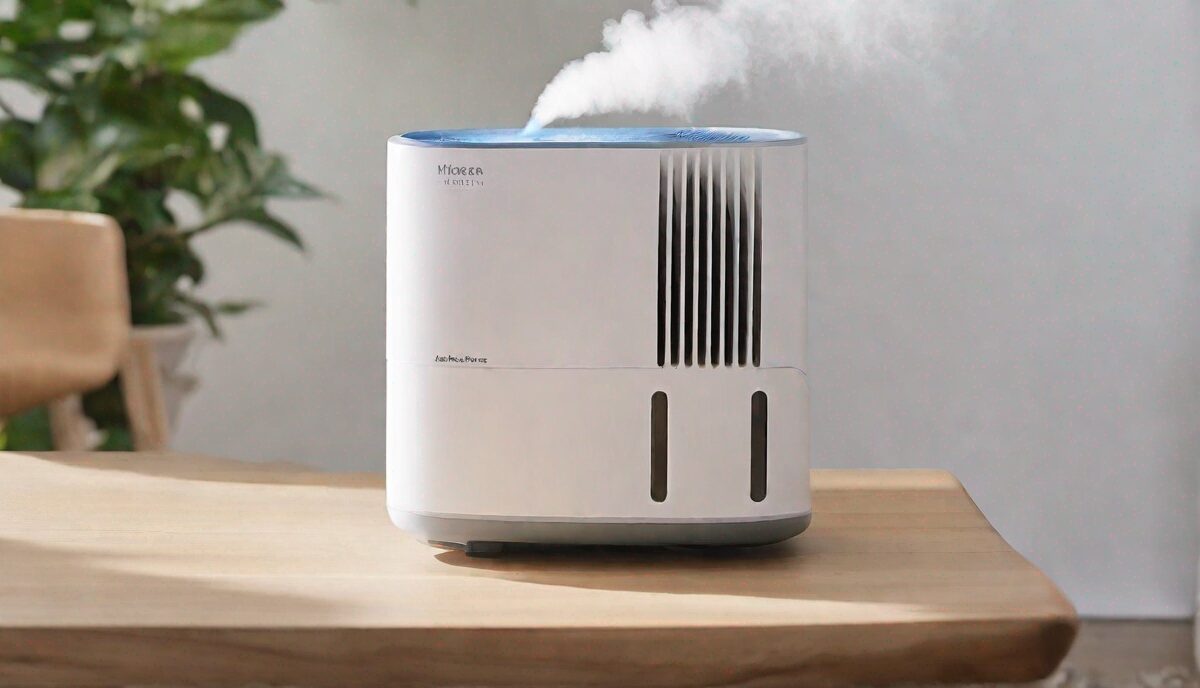
Humidifiers add a much-needed moisture to dry indoor air, but some models have an unfortunate tendency to spew watery mist in directions you don’t want. If your home has hardwood or laminate floors, stray spray can even cause damage over time. When shopping for a humidifier, durability and mist control should be priorities.
Key takeaways
- Select models with directional nozzles or vents to control exactly where the mist is released into your living space.
- Use units with variable fan speeds to dissipate mist rapidly and prevent localized damp zones or heavy fog.
- Place your humidifier on a non-porous stand 24 to 36 inches above the floor to improve air circulation and prevent condensation.
- Use distilled water or demineralization filters to prevent mineral buildup that causes units to spit heavy water droplets.
- Utilize remote humidistats to balance humidity across the entire room rather than just the air surrounding the device.
Understand the Basics of Humidifier Types
There are a few main types of humidifiers to choose from:
- Ultrasonic models use high-frequency vibrations to generate mist.
- Evaporative humidifiers have wicking filters that absorb and release water.
- Warm mist humidifiers boil water to create steam.
In general, evaporative and warm mist options have more focused mist, while ultrasonic humidifiers can disperse water over a wider area. Consider the size and layout of your space when deciding which type will suit your needs.
Look for Directional Vents and Nozzles
Many humidifiers now come with mist outlets designed to channel moisture in a specific direction, rather than haphazardly spewing it out. If mist control is a priority for you, choose an option with directional vents or mist nozzles.
Consider Smart Humidistats
Smart humidifiers have built-in sensors that detect relative humidity levels and automatically adjust mist output. This helps prevent over-humidifying and excess moisture. Smart humidifiers tend to be more expensive but can save energy and provide better whole-home coverage.
Position Your Humidifier Strategically
No matter how advanced your humidifier, placement plays a key role in avoiding unwanted moisture. Put your humidifier in a spot central to the area you want to humidify, away from walls, vents, and valuables. This helps mist circulate properly.
Clean and Replace Filters Regularly
Dirty filters and mineral buildup affect humidifier performance and mist direction. Follow the manufacturer’s instructions for cleaning and replacing filters. This maintenance keeps your model working efficiently.
The Science of Droplet Size and Surface Condensation
To truly prevent your humidifier from saturating surfaces, you must understand the physics of droplet size. Ultrasonic humidifiers, while quiet, generate incredibly fine, cool-mist particles that are easily caught by ambient air currents. If the humidity level in the room is already approaching 50%, or if the air temperature near the unit is low, these tiny droplets fail to evaporate and instead coalesce on cold surfaces like hardwood floors or window sills. This results in the “wet spot” phenomenon. To mitigate this, look for units with adjustable mist height settings. By lowering the output during high-humidity periods, you prevent the air from reaching its saturation point, ensuring the moisture evaporates before it ever touches your furniture or flooring.
Evaluating Internal Fan Velocity and Airflow Patterns
The internal fan speed is often the unsung hero of precision humidification. A powerful internal fan forces the mist to travel further and dissipate into the room’s atmosphere more rapidly, preventing a localized “cloud” around the device. Conversely, a weak fan leads to the mist falling straight down like a heavy fog. When testing units, prioritize those that offer variable fan speeds independent of the mist output. This allows you to push the humidity into the center of the room, away from walls and sensitive upholstery, effectively using the room’s natural convection currents to distribute moisture evenly without creating heavy, liquid-laden zones.
The Role of Tank Geometry in Preventing Spills and Leaks
While mist direction is critical, the structural integrity of the water reservoir is equally vital for protecting your home. Top-fill tanks have become the industry standard, but they often present a hidden risk: condensation buildup on the lid that drips down the exterior of the unit once the tank is removed for refilling. Look for designs with “drip-catch” rims or integrated seals that prevent water from running down the sides of the chassis and pooling on your floor. Furthermore, units with transparent water level indicators allow you to monitor intake without opening the tank, reducing the frequency of “wet hands” maneuvers that inevitably lead to accidental spills.
Utilizing Dedicated Humidity Zones with Remote Sensors
One of the most effective ways to stop excessive misting is to decouple the sensor from the humidifier itself. Many high-end units now include remote Bluetooth or Wi-Fi-enabled humidistats that you can place across the room. By placing the sensor 10 to 15 feet away from the unit, the humidifier will continue to run until the *entire room* is balanced, rather than shutting off prematurely because the air immediately surrounding the unit has reached the target humidity. This prevents the humidifier from short-cycling and keeps the mist output consistent, preventing the damp, uneven microclimates that occur when a unit’s onboard sensor is fooled by its own output.
Water Quality: The Hidden Cause of “Spitting” and Clogging
Hard water is the enemy of precise mist control. When minerals like calcium and magnesium build up on the ultrasonic transducer or inside the nozzle, they create jagged surfaces that disrupt the laminar flow of the mist. This disruption causes the mist to “spit” out large, heavy water droplets instead of a fine vapor, leading to damp spots on nearby surfaces. If you live in an area with hard water, consider a unit with an integrated demineralization cartridge or a pre-filter system. Regularly soaking the nozzle assembly in a mild vinegar solution is not just a cleaning task—it is a performance requirement to ensure the mist remains a vapor rather than a liquid spray.
Strategic Elevation and Surface Protection
Even the best-designed humidifier should never sit directly on a hardwood floor or a carpeted surface. Carpets can trap moisture and harbor mold, while hardwood can warp or discolor under constant exposure to heavy, cool mist. Always utilize a dedicated, water-resistant stand or a non-porous tray. Ideally, elevate the unit at least 24 to 36 inches above the floor level. This elevation utilizes gravity to assist the room’s airflow, allowing the mist to dissipate into the warmer, moving air at mid-level rather than sinking into the colder, stagnant air near the floorboards where it is most likely to condense.
Assessing Nozzle Design for Room-Specific Needs
Not all mist nozzles are created equal. For small bedrooms, a 360-degree rotating nozzle is ideal, as it allows you to aim the mist away from your bed and curtains toward the open center of the room. However, for larger open-concept living areas, look for “dual-port” nozzles. These allow you to split the output in two directions, effectively doubling the surface area the humidifier covers without increasing the density of the mist in any single direction. By spreading the vapor out, you significantly lower the chance of localized condensation, ensuring your indoor climate feels comfortable without the risk of damaging your home’s finishes.
FAQ
What are the quietest humidifiers?
Ultrasonic and evaporative humidifiers tend to be quieter than warm mist options. Look for models marketed as “whisper quiet” and check decibel ratings.
Where should I place my humidifier?
Place humidifiers centrally in the room or area you want to humidify, at least a few feet away from walls, vents, and electronics. Avoid direct sunlight and sources of heat.
How do I stop white dust from my humidifier?
White dust is caused by mineral deposits in water. Use distilled or demineralized water, clean scale buildup regularly, and replace filters as needed to prevent white dust.
Can humidifiers help with congestion?
Yes, by adding moisture to the air, humidifiers can help ease congestion from colds, allergies, and dry air. Aim for 30-50% humidity for congestion relief.
Are humidifiers safe for babies?
Humidifiers are generally safe for babies when used properly, cleaned, and monitored. Keep humidifiers out of baby’s reach and adjust mist levels to 30-50% humidity. Avoid cold mist for young infants.
Related posts:
 Your Dirty Air Conditioner Could Be Sabotaging Your Lung Health
 Humidifier Benefits for Skin
 The Surprising Benefits of Using a Humidifier for Healthy Hair
 The Benefits of Using a Humidifier During the Summer
 This Portable Humidifier is a Must-Have for Dry Skin and Stuffy Sinuses
 Tatcha Dewy Mist Review
 Canopy Humidifier Review: Elevate Your Home’s Air Quality
 Touchland Power Mist: Portable Sanitizing Solution