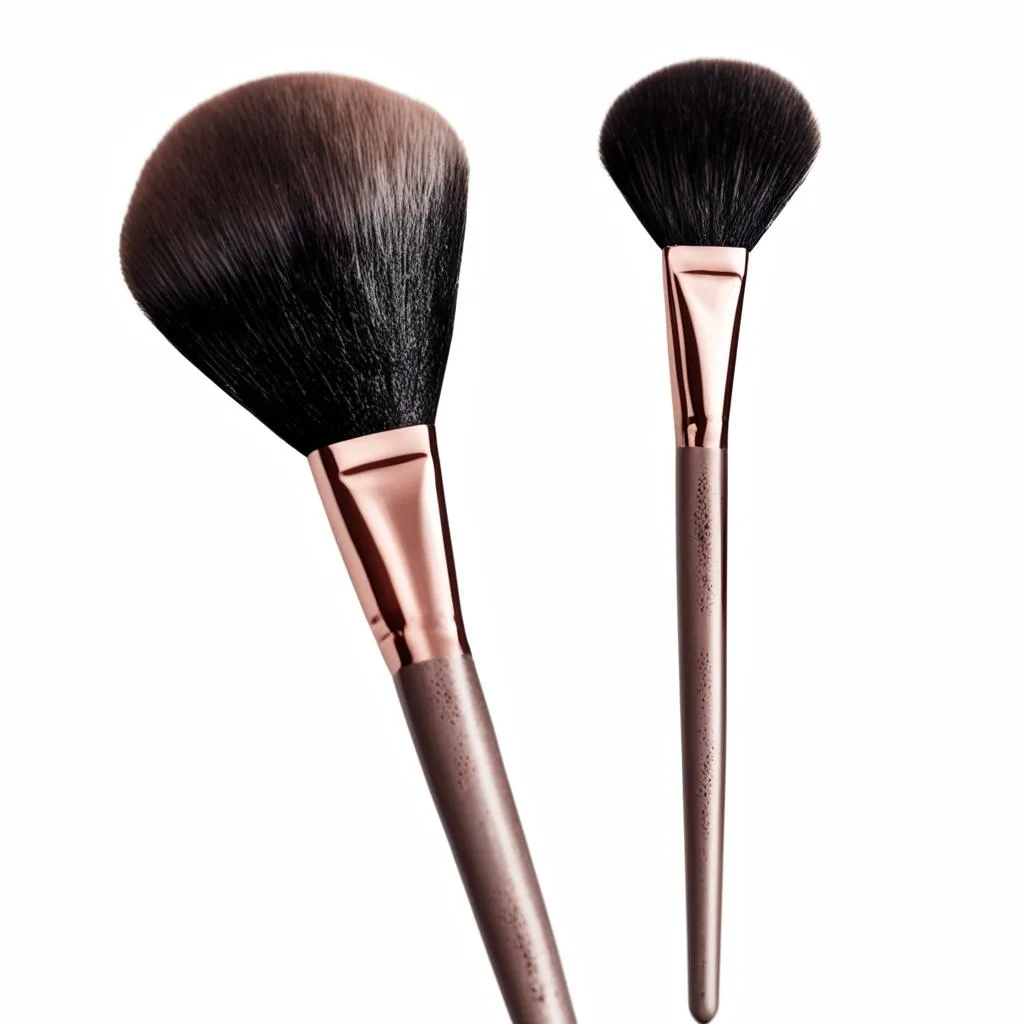
Finding Makeup Brushes That Suit Your Needs
When embarking on your makeup brush search, remember that there is no universally “best” brush. The right makeup brushes for you depend on your personal needs and preferences.
Tips for Choosing Quality Makeup Brushes
- Opt for soft, densely packed bristles that feel gentle on your skin.
- Look for sturdy, ergonomic handles that allow you to easily maneuver the brushes.
- Consider brush hair types – synthetic and natural fibers have different qualities.
- Choose brushes suited for your particular makeup products.
- Research brands and read reviews to guide your selection.
Caring For Your Makeup Brushes
With regular upkeep, you can prolong the life of your makeup brushes.
- Clean brushes weekly using brush cleanser or a gentle shampoo.
- Rinse thoroughly and allow brushes to air dry, keeping bristles facing downwards.
- In between washes, wipe brushes with a lint-free cloth to remove excess product buildup.
- Store brushes upright in a jar or flat in a zip pouch to maintain brush shape.
The Anatomy of a Shed-Resistant Ferrule
The ferrule—the metal cylinder connecting the bristles to the handle—is the primary site of structural failure in low-quality brushes. When evaluating a brush, look for a double-crimped ferrule. This process involves pressing the metal at two distinct points, creating a vice-like grip on the bristle base. A single crimp often allows the glue inside to flex and break over time, leading to shedding. Furthermore, check for a seamless design; visible gaps or sharp edges at the seam indicate mass-produced manufacturing that often skips the essential internal bonding step. High-end brushes often use copper or brass ferrules, which are more durable and resistant to corrosion from water and makeup solvents compared to cheaper aluminum alternatives.
The Science of Adhesive Integrity
Many consumers blame bristle quality for shedding, but the culprit is frequently the adhesive used to anchor the tuft. Industrial brushes utilize epoxy resins that are waterproof and flexible, allowing the bristles to move without snapping the bond. In contrast, budget brushes often use water-soluble or brittle glues. You can test this by gently tugging on the bristles before purchasing; if you see movement at the base or the bristles feel stiff as if they are glued together in a clump, put it back. A quality brush should have a distinct “tuft” that feels flexible from the very point it enters the ferrule. If you notice a milky residue on your brush after washing, that is a sign of degrading glue, which is a major red flag for imminent shedding.
Synthetic Fiber Innovation: Beyond Polyester
The industry has moved beyond basic polyester fibers. Look for brushes labeled with “PBT” (Polybutylene Terephthalate) or “nanofiber” technology. These advanced synthetic filaments are chemically engineered to mimic the microscopic scales of natural hair, allowing them to hold onto pigment while maintaining a non-porous surface that doesn’t harbor bacteria. Because these fibers are extruded rather than cut, they are much less prone to breakage. When a synthetic brush sheds, it is almost always a failure of the assembly rather than the fiber itself. Always check if the bristles are “tapered” or “flagged” at the tips; this indicates a premium manufacturing process that results in a softer application and a more secure hold within the ferrule’s resin bed.
The Impact of Drying Habits on Longevity
The most common cause of premature shedding in otherwise high-quality brushes is improper drying. When you wash a brush and leave it standing upright while wet, gravity pulls the water into the ferrule. This moisture breaks down the glue bond and encourages the growth of mold or mildew, which further compromises the structural integrity of the fibers. Always use a brush drying rack that holds the brushes upside down or tilted at a 45-degree angle. Alternatively, lay them flat on a towel with the brush heads slightly over the edge of a counter to ensure airflow. Never use a hairdryer or place brushes near a radiator to speed up the process, as excessive heat can melt the adhesive or warp the handle material.
Handling the “Break-In” Period
It is a misconception that all shedding is a sign of a bad brush. Natural hair brushes, in particular, often go through a “shedding phase” during their first two or three uses. This is caused by loose hairs trapped in the center of the bundle during the manufacturing process that were not caught by the final trimming shears. To safely clear these out, give your new brushes a gentle “grooming” before their first use. Hold the brush by the handle and flick the bristles firmly with your finger, or gently brush them against a clean, textured surface. If the shedding continues beyond the third or fourth use, however, the brush is likely defective. Distinguishing between initial loose hairs and ongoing structural failure is key to managing your collection effectively.
Storage Solutions for Shape Retention
How you store your brushes when not in use is just as important as how you clean them. Overcrowded brush jars can cause bristles to splay, which puts uneven tension on the ferrule and leads to snapping at the base. Use a brush roll or a dedicated brush case with individual slots to ensure that the bristles are not being flattened against one another. If you prefer to keep your brushes on your vanity, invest in a jar that is wide enough to prevent the heads from touching. For travel, always use a protective sleeve or a hard-shell case. A brush that is constantly being crushed in a makeup bag will inevitably lose its shape and start shedding as the fibers reach their breaking point from constant friction.
FAQ
What are the softest makeup brushes?
Synthetic brush bristles made with taklon or polyester tend to be the softest. Natural hair bristles like sable and squirrel are also prized for their soft, silky feel.
Why do some makeup brushes shed?
All brushes shed a few hairs initially, but excessive shedding usually results from poor quality materials or craftsmanship. Look for tightly bound bristles and sturdy ferrules.
How often should you clean makeup brushes?
Cleaning every 1-2 weeks is best for removing makeup, oils, and bacteria. Spot clean in between with brush wipes as needed.
What is the most versatile makeup brush?
A medium sized, fluffy blending brush can be used to apply eyeshadow, blush, bronzer, and powder. The tapered shape works well for contouring too.
Which brush brands do professional MUAs use?
Many pro makeup artists love tried and true brands like MAC, Bobbi Brown, and Makeup Forever for their high quality brushes across all makeup mediums.
Related posts:
 Supermodel Hair Blow-Drying Tips
 Silk Hair Ties: Gentle on Hair, Tough on Tangles
 Zoe Kravitz’s Coconut Oil Hair Care Secret
 Gray Hair Treatment Options
 Blow Drying Hair Without Damage: Expert Tips
 Hair Dryer Disasters: The Blow-Dry Mistakes Sabotaging Your Style
 Hair Accessory Hygiene: The Gross Truth About Dirty Hair Ties
 L’Oreal’s No Haircut Cream: Maintain Your Style Between Trims