Keeping Cookware Clean
Cooking delicious meals often comes with the tradeoff of having to scrub pots and pans afterwards. However, with the right tools and techniques, cleaning up doesn’t have to be a chore.
Key takeaways
- Use cream of tartar for enamel stains and a salt and potato mixture for cast iron rust.
- Restore copper with vinegar, salt, and flour; buff stainless steel in the direction of the grain.
- Remove calcium deposits by simmering a mixture of one part distilled white vinegar to three parts water.
- Avoid green scouring pads on ceramic coatings; use silicone scrubbers or melamine sponges instead.
- Prevent scratches and corrosion by using pan protectors and ensuring cookware is completely dry before storage.
Using Non-stick Cookware
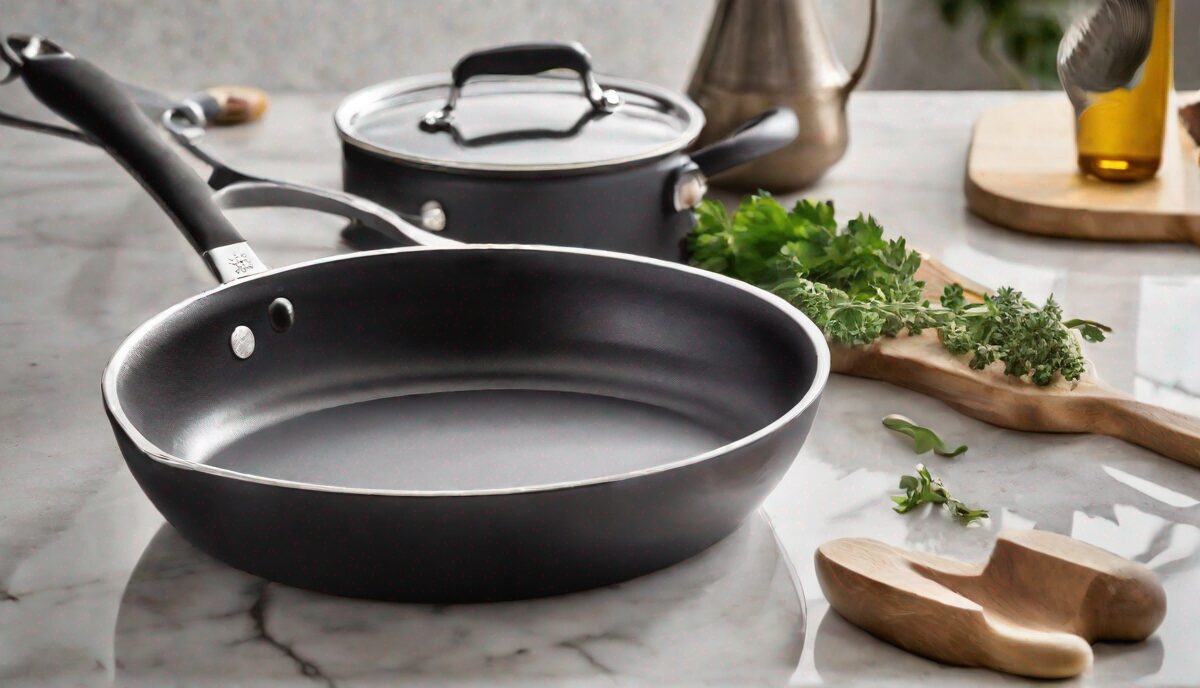
Non-stick pots and pans can make washing up much easier. Food is less likely to stick, meaning less elbow grease required. Be sure to use wooden or plastic utensils to avoid scratching the coating.
Soaking Cookware
For dishes with cooked-on residue, try filling the pot or pan with hot soapy water and letting it soak for 30 minutes before washing. This allows the grime to soften for easier removal.
Eco-Friendly Scrubbing
When scrubbing is required, use a brush or sponge made of sustainable materials like bamboo or silicone. Avoid products containing plastic microbeads which pollute waterways.
Deep Cleaning Techniques for Enamel and Cast Iron
While non-stick surfaces require gentle care, enameled cast iron and raw cast iron demand specialized attention to maintain their integrity. For enameled Dutch ovens that have developed stubborn brown rings or scorched bottoms, avoid abrasive steel wool which can dull the glossy finish. Instead, create a thick paste using cream of tartar and a few drops of warm water. Apply this paste to the stained area and let it sit for several hours. The acidity in the cream of tartar gently lifts organic stains without damaging the enamel. For raw cast iron, if you notice rust spots, scrub the affected area with a mixture of coarse kosher salt and a sliced potato. The oxalic acid in the potato combined with the mild abrasion of the salt works to lift rust without stripping the essential polymerized oil layer, or “seasoning,” that protects the metal from further corrosion.
The Science of Degreasing with Enzymatic Cleaners
Grease buildup on the exterior of pots and pans—often caused by smoke or oil spatter—can become tacky and attract dust if not addressed correctly. Traditional dish soap is designed to emulsify surface fats, but it often struggles with polymerized oils that have hardened over repeated heating cycles. Enzymatic cleaners, typically sold as heavy-duty kitchen degreasers, utilize biological catalysts to break down the molecular structure of these hardened fats. To use these effectively, spray the exterior of a cool pan, allow the solution to dwell for ten minutes, and wipe away with a microfiber cloth. This method prevents the need for aggressive scouring that can scratch the finish of copper-bottomed pans or anodized aluminum, keeping the exterior heat-conductive surfaces clean for maximum efficiency on the stovetop.
Restoring Polished Copper and Stainless Steel Brilliance
Copper pots are prized for their thermal conductivity, but they tarnish rapidly when exposed to air and humidity. To restore a mirror finish without harsh commercial tarnish removers, use a paste of equal parts white vinegar, salt, and flour. The vinegar dissolves the oxidation, the salt acts as an abrasive, and the flour provides the necessary body to keep the mixture in contact with vertical surfaces. Apply the paste, let it sit until it begins to dry, and then buff it off with a clean, dry cloth in a circular motion. For stainless steel, if you notice “rainbow” discoloration—often caused by overheating—avoid throwing the pan away. A specialized stainless steel polish containing aluminum oxide can buff out the heat tint. Always buff in the direction of the “grain” of the metal to avoid creating visible swirl marks that catch grease in the future.
Managing Mineral Deposits from Hard Water
If you live in an area with hard water, your pots and pans may develop a cloudy, chalky white film even after thorough washing. This is calcium carbonate buildup, and it is notoriously difficult to remove with standard surfactants. The most effective way to combat this is through a periodic acid bath. Fill your affected pots with a solution of one part distilled white vinegar to three parts water and bring it to a gentle simmer for 10-15 minutes. The heat accelerates the chemical reaction between the acetic acid and the calcium deposits, effectively dissolving them. After the bath, rinse the pans thoroughly and immediately dry them with a lint-free towel. For pots that cannot be filled, such as the exterior of a frying pan, soak a paper towel in vinegar and wrap it around the sides, securing it with a rubber band for an hour to achieve the same descaling effect.
Specialized Scrubbing Tools for Delicate Surfaces
The choice of scrubber is just as important as the cleaning agent. For high-end cookware with delicate ceramic coatings, avoid green scouring pads, which contain aluminum oxide particles that can create micro-scratches, eventually causing food to stick more frequently. Instead, opt for melamine sponges (often called magic erasers) for light residue. For heavier debris, use non-scratch nylon mesh pads or silicone scrubbers with raised nubs. These tools provide enough friction to dislodge food particles without compromising the surface tension of the coating. If you are cleaning copper or stainless steel, a copper-mesh pad is superior to steel wool; because copper is softer than stainless steel, it will scour the surface without leaving permanent gouges, effectively acting as a polisher rather than an abrasive.
Preventative Maintenance and Proper Storage
The longevity of your cookware is often dictated by how it is stored. Stacking pots and pans directly on top of one another is the primary cause of scratched non-stick coatings and dented edges. Invest in felt or silicone pan protectors, which are inexpensive inserts placed between pans during storage. Furthermore, avoid the common mistake of “nesting” pans while they are still slightly damp. Trapped moisture between stacked pans can lead to localized corrosion, especially on the rims of stainless steel or carbon steel pans. Always ensure your cookware is completely bone-dry before putting it away. If you have limited cabinet space, consider installing a wall-mounted pot rack. Hanging your pans not only prevents surface-to-surface contact but also allows for better airflow, ensuring that any residual moisture evaporates completely after washing.
FAQ
What is the most effective pot and pan cleaner?
Bar Keepers Friend is highly effective at removing stubborn stains from pots and pans without harsh chemicals. Bon Ami and Cameo stainless steel cleaners also work well.
Should I hand wash or dishwasher pots and pans?
Hand washing is generally recommended to preserve non-stick coatings and avoid warping. Use low heat drying to prevent damage.
How can I prevent build up on pots and pans?
Proper cleaning after each use prevents build up over time. Occasionally boiling water with lemon juice can help remove mineral deposits and stains.
What cleans burnt pans?
For burnt on food, boiling a mixture of baking soda, dish soap, and water in the pan allows the buildup to soften for easier removal. White vinegar also helps cut through grime.
How do you make pots and pans shine?
After washing, buff the inside and outside of pots and pans with a soft cloth and a small amount of olive oil. The oil seals the surface helping water bead up instead of leaving spots.
Related posts:
 Nordstrom Fall Sale: Upgrade Your Kitchen with These Cookware Deals
 Understanding Cookware Materials
 Perfect Egg Frying Pan Guide
 Forget Bleach: This Kitchen Staple Cleans Everything
 Keep Bugs Out of Your House Using This Kitchen Staple
 High Heat and Nonstick Pans
 HexClad: Gordon Ramsay’s Choice
 Readers’ Favorite Kitchen Buys