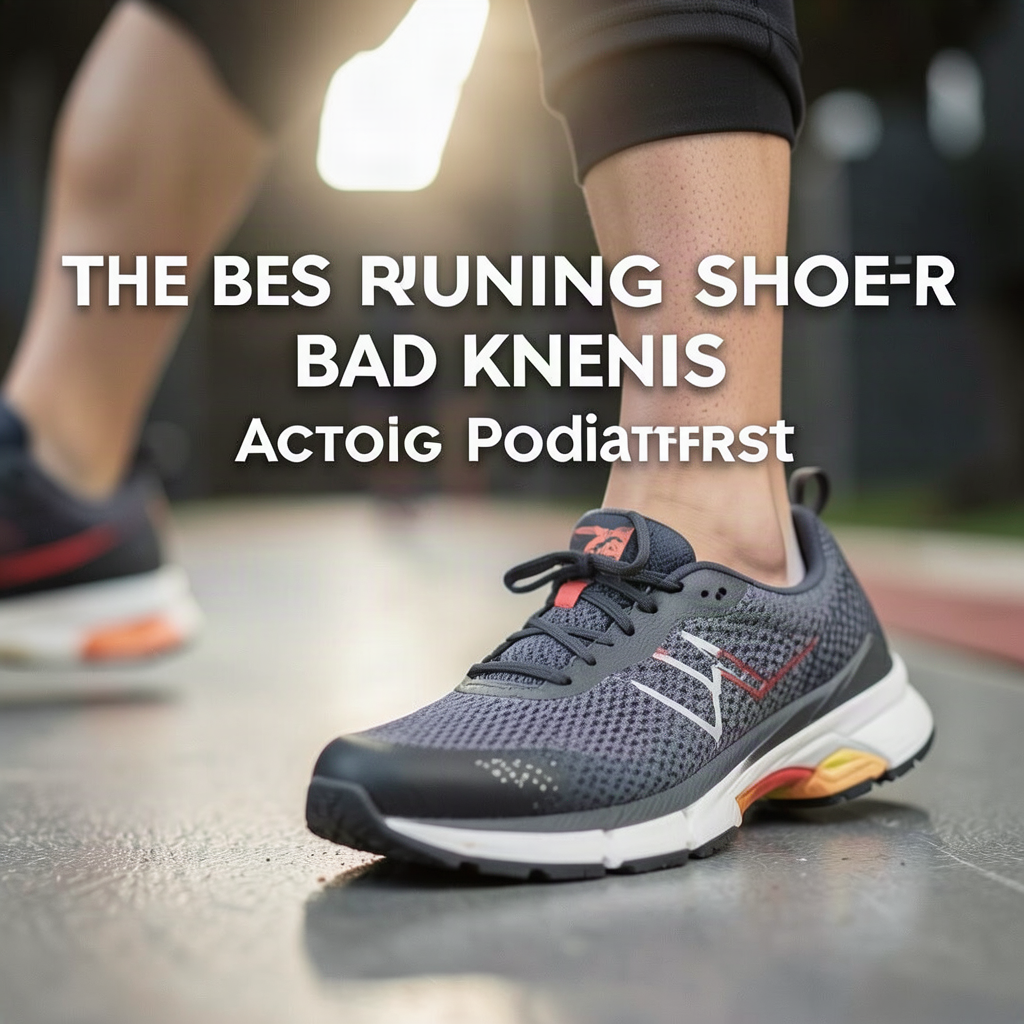
Running with knee pain can feel like a constant negotiation between the love of the sport and the fear of further damage. Podiatrists who specialize in sports medicine see countless runners who struggle to find footwear that absorbs shock, guides alignment, and still feels responsive. This guide distills their clinical insight into practical steps you can take today, from understanding the biomechanics of knee stress to selecting a shoe that matches your gait and training goals.
Why Knee Pain Matters for Runners
The knee joint bears forces up to three times body weight with each stride. When the foot lands, the impact travels up the kinetic chain, and any mismatch in cushioning, stability, or alignment can amplify stress on the patellofemoral compartment and the medial collateral ligament. Chronic overload often shows up as anterior knee pain, iliotibial band irritation, or meniscal wear. Podiatrists emphasize that the right shoe does not cure structural problems but it can reduce the repetitive load that fuels inflammation.
Key Shoe Features for Knee Support
Three design elements consistently appear in podiatrist recommendations.
- Midsole cushioning u2013 a thick, responsive foam that spreads impact forces over a larger area.
- Medial posting or guide rails u2013 firmer material on the inner side that limits excessive pronation, a common contributor to medial knee strain.
- Heelu2011tou2011toe drop u2013 a moderate drop of 8 to 10 millimetres encourages a slightly more upright posture, reducing patellar tendon load.
Additional details such as a wide toe box, a secure heel counter, and a flexible forefoot rocker also help the foot move naturally while protecting the knee.
Cushioning Technologies Explained
Brands market proprietary foams, but the underlying physics is similar. EVA blends provide a soft yet durable ride, while newer nitrogenu2011infused foams such as Nike React or Brooks DNA LOFT deliver higher energy return with less weight. Podiatrists often point to shoes that combine a plush heel zone for impact attenuation with a firmer forefoot for propulsion. When testing, press the midsole with your thumb; a gradual, even compression indicates a balanced cushioning profile.
Stability vs Neutral: Choosing the Right Category
Runners with mild to moderate overpronation benefit from stability models that incorporate medial posts or guide rails. Those with a neutral gait or slight supination usually do better in neutral shoes that rely on cushioning alone. A simple wetu2011foot test at home can give a rough idea: step on a piece of cardboard after wetting the sole; a full imprint suggests low arch and potential overpronation, while a narrow band indicates a higher arch. For a definitive assessment, a gait analysis at a specialty running store or a podiatry clinic is ideal.
Top Podiatristu2011Recommended Models
Below are five shoes that repeatedly appear in clinical footwear prescriptions. Each entry notes the primary kneeu2011friendly feature.
- Brooks Adrenaline GTS 24 u2013 GuideRails holistic support system that keeps excess motion in check without feeling stiff.
- ASICS Gelu2011Kayano 31 u2013 Dualu2011density midsole with a pronounced medial post and Gel units in heel and forefoot for shock dispersion.
- New Balance Fresh Foam X 860v13 u2013 Fresh Foam X cushioning paired with a medial post designed for moderate overpronators.
- Saucony Guide 17 u2013 PWRRUN cushioning and a hollowedu2011out medial frame that guides the foot while preserving a smooth ride.
- Hoka Arahi 7 u2013 Ju2011Frame technology that offers stability through a firmer foam sidewall, plus a metau2011rocker for efficient transition.
All five are available in wide widths, a crucial option for runners whose forefoot expands under load.
How to Test Fit and Breaku2011In Period
Fit testing should mimic race conditions. Wear the socks you plan to run in, lace the shoes snugly but not tight, and walk for five minutes on a hard surface. Check for:
- Heel lock u2013 the heel should not slip more than a few millimetres.
- Toe wiggle room u2013 at least a thumbu2019s width between the longest toe and the shoe tip.
- Midfoot security u2013 the arch area feels supported without pressure points.
Most podiatrists advise a breaku2011in of 20 to 30 kilometres at easy pace before introducing speed work. During this window, monitor any new knee discomfort; a slight increase in soreness is normal, but sharp pain signals a mismatch.
Complementary Strategies: Strength, Form, and Surface
Shoes are one piece of the puzzle. Podiatrists routinely prescribe:
- Hip and glute strengthening u2013 clamshells, singleu2011leg bridges, and banded lateral walks improve pelvic control, reducing knee valgus.
- Cadence drills u2013 aiming for 170u2011180 steps per minute shortens stride length and lowers peak knee load.
- Surface variation u2013 alternating between soft trails, treadmill, and firm road distributes repetitive stress.
Integrating two strength sessions per week and a weekly form check can extend the life of both your knees and your shoes.
When to Replace Shoes and Signs of Wear
Even the best midsole loses its protective properties after 600 to 800 kilometres. Visual cues include:
- Compression lines or creasing in the heel foam.
- Uneven outsole wear, especially on the medial edge.
- Loss of rebound u2013 the shoe feels u201cdeadu201d when you press the midsole.
Track mileage in a running app or a simple notebook. Replacing shoes before they fully degrade prevents the gradual increase in knee load that often goes unnoticed until pain appears.
Matching Shoe Features to Common Knee Diagnoses
Different knee pathologies load the joint in distinct ways, so a single stability feature cannot address every complaint. Patellofemoral pain syndrome often improves with a moderate heel‑to‑toe drop (8‑10 mm) and a forefoot rocker that reduces patellar tendon strain during push‑off. Iliotibial band syndrome, by contrast, benefits from a slightly firmer lateral midsole and a wider platform that limits excessive hip adduction. Medial compartment osteoarthritis responds well to pronounced medial posting or guide‑rails that curb overpronation, while a meniscal tear may require maximal cushioning with a low‑profile heel to keep joint compression low. Patellar tendinopathy often tolerates a lower drop (4‑6 mm) combined with a responsive forefoot that encourages a quicker cadence. When you know the primary diagnosis, prioritize the shoe attribute that directly unloads the stressed structure rather than chasing the most cushioned model on the market.
Integrating Custom Orthotics and Over‑the‑Counter Insoles with Running Shoes
Many runners with chronic knee issues already wear orthotics, yet the interaction between insert and shoe is frequently overlooked. A full‑length custom orthotic adds 3‑5 mm of stack height, effectively raising the heel‑to‑toe drop and reducing forefoot flexibility. Choose a shoe with a removable sockliner and a generous internal volume (often labeled “wide” or “high‑volume”) to accommodate the insert without crushing the medial post. Over‑the‑counter insoles with a deep heel cup can improve rearfoot control, but they may conflict with a shoe’s built‑in guide‑rails, creating a “double‑post” effect that feels rigid. Test the combination on a treadmill at easy pace for 10 minutes; watch for excessive medial pressure or a feeling of the foot being locked in one position. If the shoe’s midsole feels overly stiff, consider a neutral model with a softer forefoot and let the orthotic provide the stability.
Shoe Rotation Strategies for Load Management
Rotating between two or three pairs of shoes spreads repetitive stress across slightly different biomechanical environments, a tactic podiatrists liken to cross‑training for the foot‑knee chain. A practical rotation might pair a high‑cushion neutral trainer (e.g., 30 mm stack) for long easy runs with a moderate‑stability model (e.g., 24 mm stack, medial post) for tempo work, and a lightweight race‑day shoe (low drop, minimal posting) for intervals. Aim to keep each pair under 400 km before retirement, and log mileage per shoe in a spreadsheet or app. Rotating also reveals subtle fit issues: a shoe that feels fine on fresh legs may expose a medial pressure point after 15 km, signalling a mismatch for that specific workload. For ultra‑distance athletes, add a trail‑specific model with a rock‑plate and aggressive lugs; the altered ground reaction forces can reduce knee load on technical descents.
Gender‑Specific Biomechanics and Shoe Selection
Research shows that female runners typically exhibit a larger Q‑angle, greater hip internal rotation, and higher joint laxity during certain menstrual phases, all of which increase valgus stress at the knee. Shoe lasts built on a women’s specific last often feature a narrower heel, wider forefoot, and a slightly lower heel‑to‑toe drop to accommodate these traits. However, not every woman fits the “women’s” last; a runner with a high arch and narrow forefoot may do better in a men’s neutral model with a custom insole. Podiatrists recommend a gait analysis that captures frontal‑plane knee motion rather than relying solely on gendered marketing. If a female runner demonstrates excessive medial collapse, a stability shoe with a firm medial post (or guide‑rails) can be more effective than a gender‑specific neutral shoe. Conversely, a male runner with a naturally low Q‑angle and strong hip abductors may thrive in a lighter neutral trainer, avoiding unnecessary medial posting that could stiffen the gait.
Advanced Midsole Technologies: Carbon Plates, PEBA Foams, and Their Knee Implications
Carbon‑fiber plates and PEBA‑based super‑foams have migrated from elite racing into daily trainers. The plate creates a lever effect that stiffens the forefoot, reducing the work of the calf‑Achilles complex but increasing the moment arm at the knee during late stance. For runners with patellofemoral pain, this can exacerbate anterior knee load if cadence does not increase proportionally. PEBA foams (e.g., Nike ZoomX, Saucony PWRRUN PB) deliver high energy return with low weight, allowing a softer heel strike without bottoming out. Podiatrists suggest reserving plated shoes for speed sessions under 10 km and using a non‑plated, moderately cushioned trainer for the bulk of mileage. When testing a plated model, monitor knee flexion angle at mid‑stance via video or a wearable sensor; a sudden increase of >5° compared with your regular trainer may indicate excessive knee loading.
Long‑Term Knee Health: Periodization, Strength Progression, and Monitoring Tools
Shoe choice is a moving target as strength, mileage, and goals evolve. A 12‑week periodization block might start with a high‑cushion stability shoe while building hip‑abductor strength (clamshells, banded monster walks, single‑leg RDLs). As pelvic control improves, transition to a lighter neutral trainer for tempo runs, keeping the stability model for long runs where fatigue re‑introduces valgus. Use a simple spreadsheet to track weekly knee pain scores (0‑10), shoe model, mileage, and key strength metrics (e.g., single‑leg squat depth). Wearable inertial measurement units (IMUs) can quantify peak knee acceleration; a rising trend >10 % over three weeks flags a need to reassess footwear or training load. Schedule a formal gait re‑analysis every 6‑12 months or after any injury, as biomechanics shift with age, weight change, or surgical history.
Edge Cases: Heavy Runners, Ultra‑Distance, Trail vs Road, and Post‑Surgical Return
Runners above 95 kg (210 lb) generate ground‑reaction forces that exceed standard midsole design envelopes. Look for models with a reinforced heel counter, a denser EVA/PEBA blend in the rearfoot, and a wide base (≥110 mm) to distribute load. Ultra‑marathoners benefit from a “dual‑stack” approach: a plush 35 mm heel for early‑stage comfort paired with a firmer 25 mm forefoot for late‑race efficiency. Trail shoes add a rock plate and aggressive lugs; the irregular terrain forces shorter strides, which naturally reduces peak knee force, but the stiffer forefoot can increase patellar tendon load on steep descents — consider a trail model with a moderate drop (6‑8 mm) and a flexible forefoot rocker. After ACL reconstruction or meniscectomy, the first 3‑6 months demand a shoe that limits tibial internal rotation: a stability model with a firm medial post, a secure heel lock, and a low‑profile forefoot. Gradually reintroduce neutral trainers only after a physiotherapist clears dynamic valgus control during single‑leg hop testing.
Frequently Asked Questions
Can a single shoe model fix all types of knee pain?
No. Knee pain stems from varied sources such as patellofemoral syndrome, IT band friction, or meniscal irritation. A shoe that controls pronation helps medial knee stress but may not address lateral issues. A comprehensive assessment by a podiatrist or sports physiotherapist guides the most appropriate footwear choice.
Are maximalist shoes always better for bad knees?
Not necessarily. Very thick midsoles can alter proprioception and increase instability for some runners. Moderate cushioning with targeted stability features often provides a safer balance. Try a few stack heights during a gait analysis to see what feels most controlled.
How important is the heelu2011tou2011toe drop for knee health?
Drop influences loading patterns. A higher drop shifts load toward the knee extensors, while a lower drop encourages more ankle dorsiflexion and
Related posts:
 Why Your Knees Hurt on Inclines and How to Fix It
 Hoka Bondi 8: Maximum Cushioning Review
 Fall Boots That Don’t Sacrifice Comfort for Style
 Why Virgo Season Is Your Cue for a Complete Health Reset
 Can You Really Wear Street Sneakers at the Gym?
 Smart Shoe Shopping Tips Everyone Should Know
Finding the Right Running Shoe Width
Smart Shoe Shopping Tips Everyone Should Know
Finding the Right Running Shoe Width
 Best Shoes for Hot Girl Walks