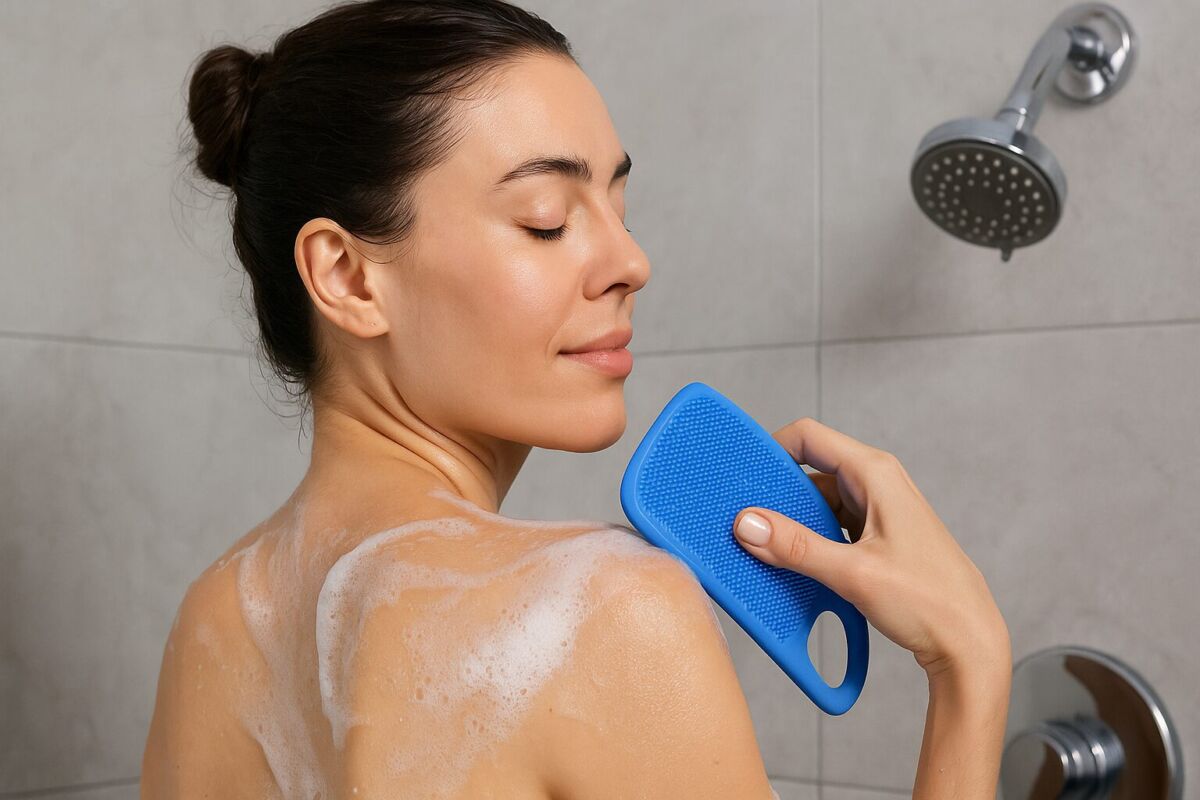
For many of us, the shower is a sanctuary—a place to wash away the stress of the day and refresh our bodies. However, a hidden contradiction exists in almost every bathroom: the shower loofah. While we use these tools to get clean, the traditional porous sponge or mesh puff is often a breeding ground for the very bacteria we are trying to eliminate. Enter the Boie revolution. By reimagining the basic architecture of the bath scrubber, Boie has introduced a tool that prioritizes hygiene, sustainability, and skin health in a way that traditional options simply cannot match.
p>
The shift toward Boie isn’t just about a new product; it’s about a fundamental change in how we perceive bathroom hygiene. For decades, we have been conditioned to believe that a soft, porous texture is the gold standard for exfoliation. But when we look closer at the science of moisture and microbial growth, it becomes clear that our traditional tools are outdated. The Boie scrubber represents a leap forward, utilizing medical-grade materials to create a bathing experience that is as clean as the water flowing from the showerhead.
p>
The Hidden Danger of the Traditional Loofah
To understand why the Boie scrubber is revolutionary, we must first examine the flaws of the traditional loofah. Whether it is a natural sea sponge, a plastic mesh puff, or a cellulose sponge, these tools share a common characteristic: porosity. Porous materials are designed to absorb water and soap, which seems beneficial for lathering. However, this same quality creates a perfect storm for bacterial colonization.
Bathrooms are naturally humid environments. When a damp loofah hangs in a shower, it stays moist for hours, providing an ideal habitat for mold, mildew, and bacteria such as Staphylococcus aureus. Because the material is porous, these microbes penetrate deep into the fibers where they are shielded from the rinsing process. Over time, a “biofilm” develops—a slimy layer of bacteria that adheres to the surface of the sponge.
When you use a traditional loofah, you aren’t just scrubbing your skin with soap; you are potentially rubbing a concentrated colony of bacteria back into your pores. For individuals with sensitive skin, acne-prone backs, or compromised skin barriers, this can lead to breakouts or irritation. The industry standard recommendation is to replace plastic loofahs every three to four weeks, but few people adhere to this schedule, leading to the prolonged use of contaminated tools.
What Exactly is Boie? Understanding the Material Science
The core of the Boie revolution lies in its material. Unlike the nylon or natural fibers found in traditional scrubbers, Boie utilizes a specialized thermoplastic elastomer (TPE). This is a medical-grade material that combines the properties of plastic and rubber, resulting in a tool that is flexible, durable, and, most importantly, non-porous.
The non-porous nature of TPE is the “secret sauce” of the Boie scrubber. Because the material does not absorb water, it does not provide the damp, internal sanctuary that bacteria require to thrive. Water and soap glide across the surface and are easily rinsed away, meaning there is no internal reservoir for mold or mildew to grow. This fundamental shift in material science transforms the scrubber from a potential contaminant into a genuinely hygienic tool.
Furthermore, the design of the Boie scrubber is engineered for efficiency. Instead of a chaotic mesh of plastic strings, Boie uses precisely spaced bristles. These bristles provide a consistent level of exfoliation across the entire surface of the tool, ensuring that dead skin cells are removed without the harsh, irregular scratching that can occur with lower-quality sponges. This precision allows for a more controlled cleaning experience that is gentle enough for daily use but effective enough to leave the skin feeling polished.
The Hygiene Advantage: Why Non-Porous Matters
The practical implication of using a non-porous scrubber is a drastic reduction in the maintenance burden and a significant increase in safety. When you use a Boie scrubber, you are utilizing a surface that is inherently resistant to the growth of microorganisms. This doesn’t mean the scrubber never gets dirty—after all, it is removing dead skin and oils—but the way it gets dirty is different.
On a traditional loofah, grime is trapped inside the material. On a Boie scrubber, grime sits on the material. This makes the cleaning process straightforward and effective. A simple rinse with warm water and a bit of soap is usually enough to sanitize the surface. Because there are no hidden pockets or absorbent fibers, you can be confident that the tool is clean every time it touches your skin.
This hygiene advantage is particularly beneficial for households with multiple users or for those who struggle with skin sensitivities. The peace of mind that comes from knowing your scrubbing tool isn’t a colony for bacteria allows you to focus on the relaxation of the bath rather than the worry of contamination. It effectively eliminates the “gross factor” associated with the damp sponge hanging in the corner of the shower.
Sustainability in the Shower: Reducing Plastic Waste
Beyond the personal health benefits, the Boie revolution is a victory for the planet. The traditional loofah industry is a nightmare for sustainable living. Most mesh puffs are made from virgin plastics that are not recyclable. Because they degrade quickly and harbor bacteria, they are treated as disposable items, with millions ending up in landfills and oceans every year.
Boie approaches this problem through the lens of longevity and circularity. First, Boie scrubbers are designed to last significantly longer than traditional sponges. While a loofah might lose its shape or become too contaminated to use within a month, a Boie scrubber can maintain its integrity and hygiene for several months or even years. By extending the lifecycle of the product, the overall volume of waste is drastically reduced.
Second, Boie has implemented a commitment to recyclability. Unlike the mixed-material construction of many bath products, the TPE used in Boie tools is 100% recyclable. The company encourages users to send back their old scrubbers to be recycled properly, ensuring that the material does not end up in a landfill. This shift from a “linear economy” (buy, use, toss) to a “circular economy” (buy, use, recycle) is a cornerstone of the Boie philosophy.
Choosing the Right Boie Tool for Your Skin Type
Not all skin is created equal, and the Boie ecosystem acknowledges this by offering different textures and tools. Choosing the right one depends on your specific goals—whether you are looking for deep exfoliation, gentle cleansing, or targeted facial care.
- The Body Scrubber: This is the flagship tool, featuring a medium-firm bristle design. It is ideal for the arms, legs, and torso, providing enough friction to remove dead skin cells and stimulate circulation without causing micro-tears in the skin.
- The Face Scrubber: The skin on the face is significantly thinner and more sensitive than the skin on the body. Boie offers a facial version with much softer, finer bristles. This tool is designed to gently lift impurities and makeup residues from the pores without irritating the delicate facial barrier.
- The Targeted Tools: Some users prefer a handle for hard-to-reach areas like the back. Boie’s ergonomic designs ensure that you can maintain a thorough cleaning routine without straining your shoulders or missing spots.
For those with extremely sensitive skin, the key is to use the tool in a circular motion with plenty of lubrication from a gentle body wash. For those seeking a more invigorating experience, slightly more pressure can be applied to the Boie bristles to increase the exfoliating effect. Because the material is consistent, you don’t have to worry about a stray piece of plastic mesh scratching your skin.
How to Integrate Boie into Your Daily Wellness Routine
Switching to a Boie scrubber is a simple change, but maximizing its benefits requires a mindful approach to your bathing ritual. To get the most out of your new tool, consider the following actionable steps:
1. The Lathering Phase: Because Boie is non-porous, it doesn’t “soak up” soap the way a sponge does. Instead, apply your favorite body wash or soap directly to the bristles. You will find that you actually use less product because the soap stays on the surface and is distributed more efficiently across your skin rather than being absorbed into the scrubber.
2. The Scrubbing Technique: Use gentle, circular motions. Start with your extremities and move toward your heart; this helps stimulate lymphatic drainage and promotes a feeling of overall wellness. Focus on areas prone to dryness, such as elbows and knees, where the TPE bristles can effectively lift dry patches.
3. The Post-Shower Rinse: After you finish bathing, rinse the scrubber thoroughly under warm water. Ensure all soap residue is gone. Because it doesn’t hold water, you can simply shake it out and hang it up. It will dry almost instantly, preventing the growth of any surface residue.
4. Pairing with Other Sustainable Products: To complete the revolution, pair your Boie scrubber with a bar soap or a refillable body wash. This reduces your reliance on single-use plastic bottles and aligns your entire shower routine with a sustainable, low-waste lifestyle.
Maintenance and Care: Making Your Scrubber Last
While Boie scrubbers are designed for durability, a little bit of care goes a long way in ensuring they remain in peak condition. The goal is to maintain the structural integrity of the bristles while keeping the surface pristine.
For daily maintenance, a simple rinse is sufficient. However, once every few weeks, it is a good practice to give the scrubber a “deep clean.” You can do this by washing it with a mild soap and warm water, or by wiping it down with a diluted isopropyl alcohol solution. Since TPE is a medical-grade material, it can withstand these cleaning agents without degrading, ensuring that the tool remains sterile.
Storage is also key. Although Boie doesn’t harbor bacteria like a loofah, it is still best to hang it in a place where air can circulate freely. Avoid leaving it flat on a shower shelf where water can pool around the base. Using the built-in hanging loop allows the scrubber to air-dry completely in minutes, maintaining the hygiene advantage that makes the product so appealing.
Real-World Impact: The Shift Toward Conscious Consumption
The popularity of the Boie scrubber is a symptom of a larger cultural shift toward conscious consumption. Consumers are no longer satisfied with products that simply “work”; they want products that work without compromising their health or the health of the planet. This movement is characterized by a transition away from the “disposable mindset” that dominated the late 20th century.
When we choose a tool like the Boie scrubber, we are making a statement about value. We are choosing quality over quantity and longevity over convenience. This mindset extends beyond the bathroom. It manifests in the way we choose our clothing, the food we eat, and the energy we use. The “Boie Revolution” is, in essence, a microcosm of the sustainable living movement.
By replacing a monthly disposable plastic loofah with a long-term, recyclable tool, the average person can prevent dozens of pieces of plastic from entering the waste stream over a few years. When multiplied by thousands of users, the environmental impact is substantial. It proves that small, intuitive changes in our daily habits can lead to significant collective benefits for the Earth.
Boie vs. The Silicone Wave: Understanding the TPE Difference
As consumers move away from the traditional mesh loofah, many naturally gravitate toward silicone scrubbers. On the surface, silicone and Boie’s thermoplastic elastomer (TPE) seem similar—both are non-porous, durable, and easy to clean. However, the functional difference lies in the material’s “give” and tactile response. Silicone is often rigid or overly slippery, which can make it difficult to maintain a grip when covered in soap, or conversely, too hard on the skin, leading to a sensation of rubbing rather than exfoliating.
TPE is a hybrid material that blends the stability of plastic with the flexibility of rubber. In a practical sense, this means Boie bristles have a “snap-back” quality. When you press the scrubber against your skin, the bristles bend to contour to your body’s unique curves—like the arch of the foot or the curve of the shoulder—and then spring back instantly. This creates a dynamic exfoliation process that is more effective at lifting dead skin than the static surface of a silicone brush.
Furthermore, when compared to exfoliating mitts or washcloths, the Boie revolution solves the “laundry loop” problem. While cloth options are washable, they frequently remain damp for long periods in the laundry hamper or on a drying rack, creating their own microbial ecosystems. Unlike a cloth that requires a high-heat dryer cycle to be truly sanitized, a Boie scrubber is sanitized in seconds with a simple rinse. For the user, this means the transition from a “dirty” tool to a “clean” tool is instantaneous, removing the logistical burden of maintaining a rotating stock of clean washcloths.
Protecting the Acid Mantle: The Science of Gentle Exfoliation
To appreciate why the Boie design is a leap forward, one must understand the skin’s acid mantle. This is the thin, slightly acidic film on the surface of the skin that acts as a primary barrier against bacteria, pollutants, and moisture loss. Traditional loofahs, with their irregular and often abrasive plastic edges, can cause micro-tears in this delicate layer. While these tears are often invisible to the naked eye, they compromise the skin’s integrity, allowing irritants to penetrate deeper and triggering an inflammatory response.
Boie’s medical-grade bristles are engineered to provide a consistent level of friction. Because every bristle is uniform, the pressure is distributed evenly across the skin’s surface. This prevents the “hot spots” of abrasion common with mesh puffs, where a single sharp piece of plastic might scrape the skin. By maintaining the integrity of the acid mantle, Boie allows the skin to retain its natural oils and moisture while still removing the buildup of dead keratinocytes.
This is particularly critical for those who exfoliate daily. Over-exfoliation with a harsh tool can lead to a “stripped” feeling, leaving the skin tight, red, and prone to breakouts. Because TPE is inherently gentler, it transforms exfoliation from a weekly “deep scrub” into a sustainable daily habit. Users often find that their skin becomes less reactive over time because they are no longer putting their skin barrier through a cycle of trauma and repair.
The Travel Advantage: Hygiene Beyond the Home Bathroom
One of the most overlooked benefits of the Boie revolution is its utility for the frequent traveler, athlete, or gym-goer. The traditional loofah is a liability in a travel bag. Packing a damp sponge into a plastic toiletry kit creates a dark, moist, anaerobic environment—essentially a petri dish for mold and bacteria. By the time you reach your hotel or gym shower, the tool you are using to get clean may be more contaminated than the skin you are scrubbing.
Boie scrubbers eliminate this risk entirely. Because the TPE material does not absorb water, the scrubber doesn’t stay “soggy.” A quick shake after use removes the vast majority of surface water, and the non-porous surface prevents the deep-seated moisture that fuels bacterial growth during transit. For those who use gym showers, where the environment is often shared and humidity is high, having a tool that can be quickly sanitized and dried is a significant health advantage.
Consider the edge case of the “overnight bag.” When a traditional washcloth is tossed into a bag, it holds onto the soap and skin cells from the previous use, which can then transfer to other items in the bag. A Boie scrubber, once rinsed, remains inert. It doesn’t leach moisture into your luggage or develop the musty smell associated with damp fabric. This makes it the ideal companion for anyone whose bathing routine extends beyond a single, controlled environment.
Combatting “Bacne” and Chronic Skin Conditions
Body acne, particularly on the back and shoulders (commonly known as “bacne”), is often exacerbated by the tools we use to treat it. Many people attempt to scrub away acne with traditional loofahs, believing that more aggression equals more cleanliness. In reality, this often does the opposite. The porous nature of a loofah can trap the very bacteria (such as Cutibacterium acnes) that cause breakouts, effectively redistributing the infection across the back with every scrub.
The Boie scrubber changes this dynamic by providing a sterile surface. Because it doesn’t harbor bacteria, it doesn’t contribute to the cycle of re-infection. For those dealing with acne, the consistent, soft bristles help to clear away the sebum and dead skin cells that clog pores without irritating the inflamed acne lesions. This reduces the risk of scarring and prevents the spread of bacteria from one area of the body to another.
Similarly, for individuals struggling with Keratosis Pilaris (the small, rough bumps often found on the back of the arms), consistency is key. KP requires regular, gentle exfoliation to prevent the keratin plug from forming in the hair follicle. A traditional loofah can be too abrasive, leading to redness and inflammation that makes the bumps more noticeable. The Boie scrubber provides the steady, uniform friction necessary to smooth the skin’s texture without triggering the inflammatory response that often accompanies harsher scrubbing methods.
Ergonomics and Accessibility: Bathing for All Abilities
The revolution isn’t just about material science; it’s about inclusive design. Traditional loofahs can be cumbersome, requiring significant grip strength to squeeze for lather or a wide range of motion to scrub the back. For individuals with limited mobility, arthritis in the hands, or sensory processing sensitivities, the traditional bathing experience can be frustrating or even painful.
Boie’s ergonomic approach addresses these challenges. The flexibility of the TPE material means that the scrubber conforms to the hand more naturally than a rigid plastic brush. The lightweight nature of the tool reduces fatigue during use, and the integrated hanging loop allows for easy retrieval without needing to reach deep into a shower caddy or bend over to pick a tool up from the floor.
From a sensory perspective, the tactile feedback of Boie is far more predictable than that of a mesh puff. For those who are sensitive to the “scratchy” feeling of nylon, the smooth, consistent texture of TPE provides a calming, controlled sensation. This makes the bathing process more accessible for children or adults with sensory sensitivities, turning a potentially overstimulating experience into one of comfort and cleanliness.
The Long-Term Skin Cycle: What to Expect After the Switch
Transitioning from a traditional loofah to a Boie scrubber often results in a noticeable evolution of skin health over a period of several months. This isn’t an overnight change, but rather a gradual restoration of the skin’s natural balance. Understanding this timeline helps users stay committed to the new routine.
Phase One: The First Two Weeks. During the initial transition, users often notice a reduction in post-shower redness. The absence of micro-tears means the skin doesn’t feel as “tight” or irritated. Those with sensitive skin may find that they no longer experience the slight stinging sensation that often follows a heavy scrub with a nylon puff.
Phase Two: The One-Month Mark. By the end of the first month, the skin’s barrier begins to stabilize. Because the exfoliation is consistent and gentle, the skin’s natural shedding process (desquamation) becomes more regular. This often manifests as a smoother skin texture and a more natural glow, as the skin is no longer fighting to repair the damage caused by abrasive tools.
Phase Three: Three Months and Beyond. In the long term, the cumulative effect of using a hygienic, non-porous tool becomes apparent. Users often report a decrease in occasional breakouts and a reduction in dry, flaky patches on elbows and knees. The psychological benefit also kicks in; the “gross factor” of the damp loofah is replaced by the confidence of a tool that is visibly and scientifically clean. This shift fosters a more mindful approach to skincare, where the focus moves from “scrubbing away” problems to “nurturing” the skin’s health.
Frequently Asked Questions
Does the Boie scrubber actually exfoliate as well as a loofah?
Yes, but in a different way. Traditional loofahs rely on a rough, irregular mesh to scrape the skin. Boie uses thousands of small, medical-grade TPE bristles that provide a consistent, uniform exfoliation. This removes dead skin cells effectively while reducing the risk of over-scrubbing or creating micro-tears in the skin, making it safer for daily use across all skin types.
How often do I actually need to replace my Boie scrubber?
Unlike traditional loofahs that need replacing every few weeks, a Boie scrubber is designed to last for many months. While there is no strict expiration date, we recommend replacing it when you notice the bristles beginning to wear down or lose their firmness. Because the material is 100% recyclable, you can send your old one back to Boie for proper processing.
Is it safe for people with very sensitive skin or eczema?
Generally, yes. Because the material is non-porous and medical-grade, it is far more hygienic than a traditional sponge, which reduces the risk of triggering inflammation from bacteria. However, those with extremely sensitive skin or active eczema should always start with the gentlest pressure and consider the facial scrubber for more delicate areas. As always, consult a dermatologist if you have severe skin conditions.
Do I need a special kind of soap to use with the Boie scrubber?
No, the Boie scrubber works with any soap, whether it is a traditional bar, a liquid body wash, or a natural castile soap. In fact, many users find that they use less soap overall because the non-porous surface doesn’t absorb the product, allowing the lather to stay on the skin where it is needed.
How do I know if my Boie scrubber is clean?
Because the material is non-porous, you can visually inspect your scrubber. If it looks clean and is free of soap residue, it is likely clean. Unlike a loofah, where bacteria grow deep inside the fibers where you can’t see them, Boie’s surface is transparent in its cleanliness. A quick rinse with warm water and soap is usually enough to maintain its hygienic state.
Related posts:
 White Sneaker Cleaning Hack
 Lush’s Revolutionary Shower Bombs
 Sharing Bar Soap: Is It Hygienic or a Big No-No?
 Ultimate Ulta Shower Products Guide
 Choosing the Perfect Body Scrubber
 Proper Use of Exfoliating Mitts
 Shower Sheets: The Innovative Solution for Staying Fresh on the Go
 Choosing the Perfect Body Scrubber