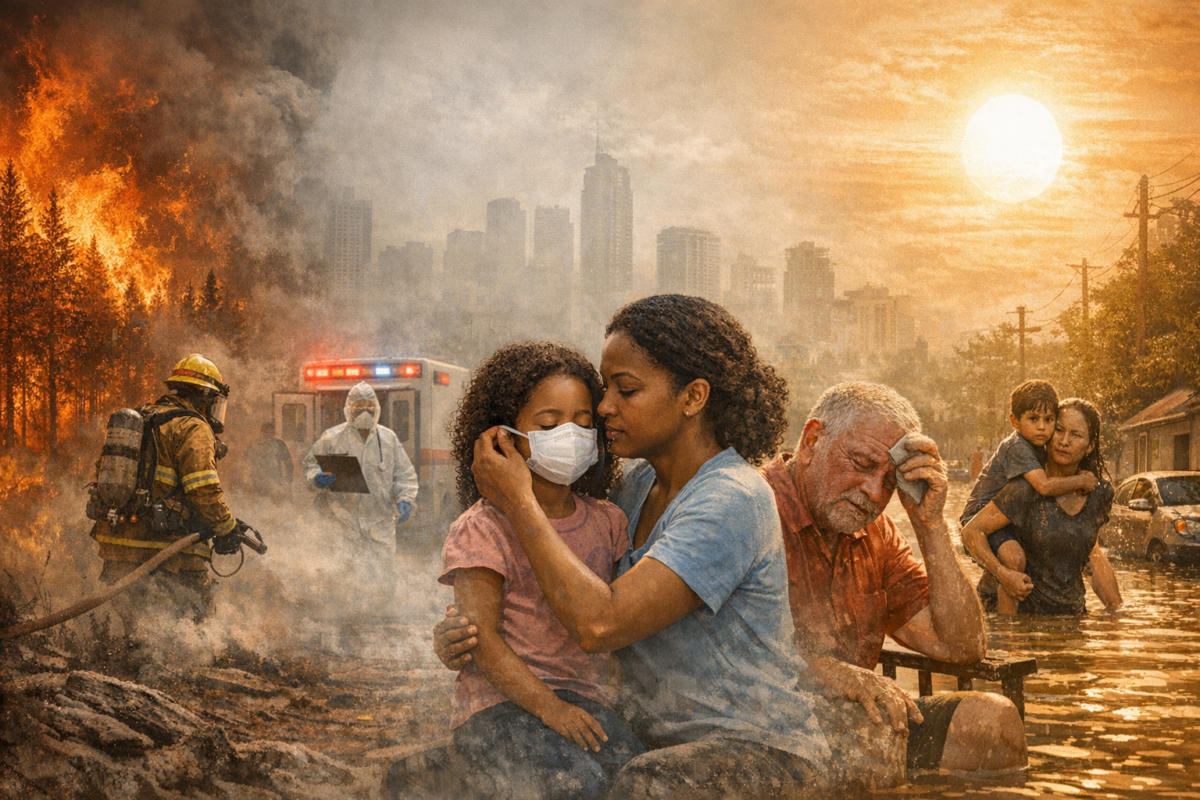
Air pollution, extreme heat, and unstable weather are no longer abstract warnings about the future. They are daily conditions that shape how safely a person can breathe, sleep, work, play, and recover from illness. Recognizing the climate crisis as a public health emergency reframes the conversation from polar bears and ice caps to ambulances, emergency rooms, and the well-being of neighbors, children, and older adults.
This shift matters because it changes who is responsible, what counts as progress, and how resources are allocated. When a mayor, a hospital administrator, or a school board treats climate change as a health threat, decisions about housing, transit, parks, and emergency planning begin to look different. The goal of this article is to make that reframing practical. It explains the pathways through which a warming planet damages human health, identifies who is most exposed, and offers concrete actions that individuals, families, communities, and institutions can take right now.
How a Changing Climate Damages Human Bodies
Climate change is not a single hazard; it is a multiplier that intensifies familiar risks and creates new ones. Understanding the main pathways helps demystify a topic that often feels overwhelming.
Extreme heat. Heat is the deadliest weather-related hazard in most countries. Prolonged exposure to high temperatures stresses the cardiovascular system, strains kidneys, worsens chronic lung disease, and interferes with sleep architecture. Urban heat islands, where concrete and asphalt absorb and re-radiate heat, can be 5 to 10 degrees Fahrenheit hotter than surrounding green areas on the same day. For outdoor workers, older adults living in uninsulated housing, and athletes practicing on hot fields, the margin between safe and dangerous narrows quickly.
Air pollution. Warmer temperatures accelerate the formation of ground-level ozone and fine particulate matter. Wildfires, fueled by drier landscapes, send smoke across entire regions, sometimes for weeks. Children exposed to high levels of particulate pollution show measurable reductions in lung development, and adults with asthma or COPD experience more frequent exacerbations. Air pollution is also linked to higher rates of heart attack, stroke, and adverse birth outcomes.
Water and food systems. Heavy rainfall overwhelms aging sewer systems, contaminating drinking water with bacteria and chemicals. Drought reduces crop yields, raises food prices, and concentrates nutrients in produce in ways that can stress metabolism. Warming coastal waters expand the range of Vibrio bacteria and harmful algal blooms, increasing the risk of seafood-borne illness.
Infectious disease. Mosquitoes that carry dengue, malaria, and West Nile virus are expanding their range as winters become milder. Ticks that transmit Lyme disease are active earlier in spring and later in fall. Flooding and displacement create conditions where respiratory and diarrheal illnesses spread quickly.
Mental health. Climate-related disasters cause acute trauma, grief, and displacement. Slow-moving impacts such as drought, sea-level rise, and chronic uncertainty about the future produce eco-anxiety, depression, and a sense of loss, particularly among young people.
Who Bears the Greatest Burden
Climate health risks are not evenly distributed. The same heat wave that is uncomfortable in a leafy suburb can be lethal in a low-income neighborhood with few trees, poor housing stock, and limited access to cooling.
Children. Their lungs are still developing, they breathe faster relative to body weight, and they spend more time outdoors. Heat also affects cognitive performance and learning.
Older adults. Aging reduces the body’s ability to regulate temperature, and many older adults live alone, have chronic conditions, or take medications that impair heat tolerance.
Outdoor workers. Construction, agricultural, delivery, and warehouse employees often perform strenuous tasks in the hottest hours. Heat stroke is a leading cause of occupational death in many regions.
Pregnant people. Exposure to high heat and air pollution is associated with preterm birth, low birth weight, and hypertensive disorders of pregnancy.
Low-income communities. Lower-income households are more likely to live near highways, industrial sites, and flood-prone areas, and less likely to have air conditioning, insurance, or the flexibility to evacuate.
Communities of color. Historical disinvestment, discriminatory housing policy, and proximity to polluting infrastructure mean that Black, Brown, and Indigenous communities often face compounded climate and pollution burdens.
People with chronic illness or disability. Conditions such as heart disease, diabetes, multiple sclerosis, and mobility limitations make it harder to escape heat, evacuate quickly, or access information during disasters.
Recognizing these patterns is essential for any equitable response.
Climate Change Inside the Healthcare System
Hospitals, clinics, and emergency services are on the front lines, and many are already adapting.
Surge capacity. Heat waves and wildfire smoke routinely drive surges in emergency department visits. Some systems have implemented heat-response protocols that include extra staff, extended hours of cooling centers, and proactive outreach to high-risk patients.
Resilient infrastructure. After severe storms knocked out power and forced evacuations, several health systems have invested in backup generation, elevated critical equipment, and hardened facilities against flooding.
Decarbonization. The healthcare sector itself is a significant emitter, through energy use, anesthetic gases, and supply chains. Many institutions are now tracking emissions and committing to net-zero targets, recognizing that caring for patients while accelerating the problem is no longer acceptable.
Climate-informed care. Clinicians are beginning to incorporate air quality indices, heat alerts, and pollen counts into routine counseling, particularly for patients with asthma, COPD, heart disease, or pregnancy.
What Individuals and Families Can Do
Personal choices matter most when they are supported by systems, but households can take meaningful steps today.
Prepare for heat. Know the signs of heat illness, which include dizziness, nausea, confusion, and absence of sweating in extreme cases. Create a cool-room plan with curtains, fans, and a list of nearby cooling centers. Check on neighbors during heat waves, especially older adults and those without air conditioning.
Protect indoor air. Use a properly sized MERV-13 or higher filter in the HVAC system. A portable HEPA filter in the bedroom can substantially reduce indoor particulate matter during wildfire events. Avoid indoor sources of pollution such as gas stoves used for heating or unvented combustion appliances.
Choose lower-carbon transportation when possible. Walking, cycling, transit, carpooling, and electric or hybrid vehicles reduce both personal exposure to traffic pollution and overall emissions. When driving is necessary, keeping windows closed and using recirculated air lowers in-cabin pollution.
Eat thoughtfully. Shifting some meals toward plant-based proteins, reducing food waste, and choosing locally produced food when feasible all reduce the emissions associated with food, which accounts for a meaningful share of household footprints.
Prepare for disasters. Maintain a go-bag with medications, copies of prescriptions, water, and chargers. Keep insurance documents current. Know evacuation routes and have a written family communication plan.
Talk with your clinician. Ask how your conditions interact with heat, smoke, and storms. Some medications, including common blood pressure and psychiatric drugs, increase heat sensitivity. Planning ahead can prevent crises.
What Communities and Local Governments Can Do
Local action is where climate and health meet most directly. Cities, counties, school districts, and employers can all reduce risk.
Tree canopy and green space. Planting trees in heat-vulnerable neighborhoods can lower surface temperatures by several degrees. Parks, green roofs, and pocket parks provide cooling and gathering spaces during heat waves.
Cooling centers and resilience hubs. Libraries, community centers, and faith-based facilities can serve as designated cool spaces with extended hours during alerts. Stocked supplies, water, and trained staff transform a building into a true resilience hub.
Heat standards for workers. Local jurisdictions can adopt enforceable heat-stress protections for outdoor and indoor workers, with rest, water, shade, and training requirements.
Building codes and retrofits. Requiring cool roofs, reflective pavements, and high-performance insulation in new construction pays for itself through energy savings and reduced heat-related illness.
Air quality alerts and communication. Clear, multilingual messaging about smoke, ozone, and heat saves lives. Partnerships with schools, employers, and clinics ensure alerts reach those most at risk.
Climate-smart land use. Updating zoning to limit new development in floodplains and wildfire interface zones, and preserving wetlands and forests, reduces long-term vulnerability.
Communicating Climate and Health Effectively
One barrier to action is the way the topic is usually framed. Talking about climate as primarily an environmental or future problem makes it easy to defer. Framing it as a present health issue with local, tangible consequences tends to mobilize support.
Lead with the local. People respond to what they can see: the asthma rates in their zip code, the number of hot days their children will experience, the hospital admissions during last summer’s heat wave.
Use trusted messengers. Physicians, nurses, school counselors, faith leaders, and local sports coaches often have more credibility on health than distant experts. Equipping them with clear talking points multiplies reach.
Avoid both doom and denial. Honest acknowledgment of risk paired with concrete, evidence-based solutions maintains engagement. Fear without agency produces paralysis; reassurance without honesty produces complacency.
Name the co-benefits. Walking and cycling improve cardiovascular health. Plant-rich diets lower chronic disease risk. Cleaner indoor air reduces asthma attacks. Framing climate action as health action aligns with what people already want.
Policy Levers That Matter Most
Individual and community action is essential, but the scale of the crisis demands structural change.
Clean energy standards. Phasing out fossil fuel combustion in electricity generation is the single largest lever to reduce both greenhouse gases and the co-pollutants that drive asthma, heart disease, and premature death.
Clean transportation investment. Expanding transit, electrifying buses and fleets, and building safe bicycle networks reduce emissions while improving mobility and air quality.
Housing and weatherization. Programs that insulate homes, seal ducts, and replace dangerous heating systems reduce energy bills and prevent carbon monoxide exposure, winter cold, and summer heat.
Public health funding. Sustained investment in environmental health tracking, community health workers, and disaster preparedness strengthens response capacity.
Just transition planning. As economies shift, workers and communities dependent on fossil fuel industries need retraining, income support, and local investment. Health depends on economic security as well as environmental quality.
Building a Climate-Ready Future
Calling the climate crisis a public health emergency is not a slogan; it is an operational decision. It means that health agencies lead, not follow. It means that emergency planning budgets reflect the rising frequency of compound events. It means that the same urgency applied to infectious disease outbreaks is applied to heat domes, wildfire seasons, and flood recovery.
There is real reason for hope. Renewable energy is now cost-competitive in most regions. Urban heat strategies are being implemented in cities on every continent. Healthcare systems are decarbonizing. The tools to prevent the worst outcomes are available; what is needed is alignment, speed, and political will.
Every heat-related death that does not happen, every asthma attack avoided, every family that evacuates safely, and every community that emerges stronger from a disaster is a measure of progress. Climate change is a public health emergency, and public health is how we respond.
Climate and Health Data: What the Numbers Actually Reveal
Public health has always depended on measurement, and climate-related illness is no exception. Understanding what surveillance systems capture, and what they miss, helps translate the abstract scale of the crisis into operational reality for clinicians, planners, and residents.
Heat-related mortality is the cleanest illustration. Death certificate coding and emergency department records both undercount heat as a cause, because heat typically aggravates an underlying condition rather than appearing as a direct cause. Studies that compare excess deaths during heat waves to baseline periods suggest that the true toll can be several times higher than official statistics indicate. This undercounting has consequences: when cities report relatively low heat death numbers, elected officials sometimes conclude that heat is a manageable problem rather than an urgent one. Improving surveillance through heat-attributable mortality models, syndromic surveillance, and real-time mortality tracking is a foundational step.
Wildfire smoke offers a second window. Satellite-derived particulate matter data, combined with ground monitors, allow public health agencies to estimate exposure across entire regions, including rural areas without monitors. After major fire seasons, researchers have documented increases in respiratory hospitalizations, asthma medication refills, and preterm births, sometimes hundreds of miles from the flames. These findings make it possible to argue for proactive clean air measures rather than reactive emergency response.
Flood-related health impacts are tracked through different systems: waterborne disease reporting, mold-related asthma claims, and injury surveillance. Post-flood mental health outcomes often emerge months later, with spikes in anxiety, depression, and post-traumatic stress disorder. Integrating climate hazards into existing public health dashboards, rather than treating them as a separate category, helps institutions respond faster.
For community organizations and journalists, the data landscape is increasingly accessible. Federal environmental justice screeners, state-level heat vulnerability indices, and hospital community health needs assessments all publish maps that residents can use to understand their own exposure. Knowing how to read these tools, and how to ask local officials for the underlying analysis, is itself a form of climate literacy.
The Pharmacy, the Clinic, and the Heat Risk Few People Discuss
Few healthcare conversations address the ways common medications interact with extreme heat, even though the relationships are well documented and clinically significant. Filling this gap is one of the most concrete ways clinicians can protect patients during warming summers.
Several widely prescribed drug classes reduce the body’s ability to dissipate heat. Beta blockers slow the heart and limit the cardiac output needed to direct blood to the skin. Diuretics, used for heart failure and hypertension, can lead to dehydration faster than healthy individuals would experience. Anticholinergic medications, including some antihistamines, bladder control drugs, and certain psychiatric medications, reduce sweating, the body’s most efficient cooling mechanism. Stimulants used for attention deficit hyperactivity disorder can raise core temperature and mask fatigue signals. Antipsychotics can interfere with thermoregulation directly. Even common over-the-counter medications such as decongestants can elevate blood pressure and stress the cardiovascular system during heat exposure.
The practical implication is not that patients should stop these medications during summer, which can be dangerous. Rather, clinicians should counsel patients on hydration, timing of doses, signs of heat illness, and the need to avoid outdoor activity during peak hours. Pharmacists, often the most frequently contacted health professionals, can flag heat-sensitive regimens when filling prescriptions during heat alerts. Electronic health record systems can be configured to prompt clinicians during heat advisories, much as they prompt for influenza vaccination during flu season.
Insulin storage is another underappreciated issue. Insulin degrades when exposed to high temperatures, and people with diabetes who lack reliable refrigeration, including those experiencing homelessness or housing instability, may use insulin that has lost potency. Heat waves can therefore drive both hyperglycemic crises and increased complication rates. Similarly, people using inhalers for asthma or chronic obstructive pulmonary disease need to know that heat and humidity can affect device performance and that smoke exposure may require more frequent use of rescue medications.
Bringing these conversations into routine care reframes climate preparedness as medication safety, a domain clinicians already understand. It also gives patients something actionable to do with their next refill or annual visit.
Schools, Children, and the Case for Climate-Smart Education
Children spend roughly seven hours a day in schools, and the conditions they encounter there shape both their immediate health and their long-term resilience. Schools are also among the institutions most directly accountable to families, which makes them powerful entry points for climate-health action.
Heat is the most visible issue. Many older school buildings lack air conditioning, and classrooms in upper floors can reach temperatures well above outdoor readings. Studies have linked hot classrooms to reduced test performance, slower cognitive processing, and increased disciplinary incidents. Replacing failing ventilation systems with heat pump-based cooling and high-efficiency filtration, where feasible, addresses both indoor air quality and thermal comfort. Where full upgrades are not yet possible, low-cost measures such as window films, exterior awnings, ceiling fans, adjusted school start times, and hybrid schedules during peak heat days can reduce risk.
Air quality is the second front. Schools near highways or in wildfire-exposed regions routinely have elevated indoor particulate matter. Upgrading to MERV-13 filters, sealing gaps around doors and windows, and creating clean-air shelters in gymnasiums or auditoriums give students a refuge during smoke events. Outdoor activities should follow a documented air quality index protocol rather than ad hoc decisions, so that coaches and parents share the same thresholds.
Beyond the building itself, schools can integrate climate-health literacy into curricula at every grade. Younger students can learn about tree planting and local heat mapping. Middle schoolers can analyze their school’s carbon footprint and propose reductions. High school students can examine the social determinants of climate vulnerability in their own neighborhoods. Such projects build both knowledge and agency, which mental health researchers have identified as protective against eco-anxiety.
School nurses, often the only consistent healthcare provider for many children, are uniquely positioned to track climate-related symptoms. Headache complaints during heat waves, asthma flare-ups correlated with smoke events, and rising counts of students with allergies or heat illness can be aggregated into patterns that justify infrastructure investment. Districts that have formalized this role report faster identification of building-related health issues and stronger parent engagement.
Finally, schools serve as community resilience hubs during disasters. Opening gymnasiums as cooling or clean-air shelters, distributing meals during heat waves, and providing supervised phone access during evacuations extend the institution’s value well beyond the academic day. Funding these roles requires sustained budgets, not only emergency grants, and recognizing schools as critical health infrastructure is a meaningful step toward climate-ready communities.
The Hidden Health Costs of Climate-Driven Displacement
When disasters destroy homes, the health consequences extend well beyond the immediate event. Displacement, whether brief or prolonged, disrupts medication regimens, fractures continuity of care, and exposes families to new environmental hazards.
People with chronic conditions such as diabetes, asthma, heart failure, and kidney disease are particularly vulnerable. Refrigerated medications, dialysis schedules, oxygen supplies, and durable medical equipment all require stable power and infrastructure that shelters often struggle to provide. After major hurricanes, hospital readmissions spike in displaced populations for reasons that have little to do with the original storm and everything to do with interrupted care.
Mental health consequences compound over time. Children who lose their schools and social environments experience measurable setbacks in academic achievement and social development. Adults who lose jobs or businesses face economic stress that translates into depression, substance use, and family conflict. Indigenous communities, often displaced from culturally significant land, experience layered grief that includes the loss of place-based identity.
Shelters themselves can become health hazards. Overcrowding drives respiratory and gastrointestinal outbreaks. Inadequate sanitation, limited privacy, and poor ventilation affect both physical and psychological well-being. Designing shelters to public health standards, with separate spaces for vulnerable groups, on-site clinical capacity, and culturally appropriate staff, dramatically reduces secondary morbidity.
Longer-term displacement creates a different set of problems. Families who relocate to rental housing in unfamiliar neighborhoods often face higher rents, longer commutes, and reduced social support. Children switch schools repeatedly. Adults may take lower-paying jobs in sectors with fewer benefits. Health outcomes decline gradually and are often invisible to traditional disaster metrics, which focus on the acute phase.
Policies that address these patterns include pre-positioned medication caches in disaster-prone regions, mobile clinics that track displaced patients, and reconstruction funds that prioritize health infrastructure in addition to housing. Recognizing displacement as a long-tail health event rather than a temporary inconvenience is essential for equitable recovery.
Workplace Heat and Smoke: Beyond Outdoor Labor
Public discussion of climate-related occupational risk often focuses on agriculture and construction, and rightly so. But warming temperatures affect nearly every workplace, and the regulations and protections have not kept pace.
Warehouse workers in non-climate-controlled facilities face heat stress that rivals outdoor exposure, especially when physical exertion is required. Distribution centers, fulfillment warehouses, and manufacturing plants frequently measure indoor temperatures above recommended thresholds during summer. Without enforceable heat standards, workers resort to improvised cooling, hydration, and pace adjustments, sometimes at the cost of productivity and safety.
Restaurant kitchens have always been hot environments, but climate change is raising baseline temperatures in cities where outdoor dining is expanding. Kitchen workers, dishwashers, and line cooks face compounded heat loads that affect hydration, alertness, and injury risk. Some jurisdictions now require kitchens to provide cooled rest areas and access to electrolyte fluids, but coverage is uneven.
Smoke exposure is the other growing concern. Even workers in office buildings can be exposed when windows are opened for ventilation or when HVAC systems pull in unfiltered outdoor air. During heavy wildfire seasons, indoor air quality in offices, schools, and transit hubs can match outdoor readings for hours or days. Employers that do not communicate air quality alerts or provide respiratory protection contribute to preventable illness.
Delivery and rideshare drivers occupy a precarious position. They are classified as independent contractors in many jurisdictions, which often exempts them from occupational safety protections. Their vehicles become mobile workplaces subject to extreme cabin temperatures and unfiltered air. Labor organizations, app-based worker collectives, and some state regulators have begun to address these gaps, but consistent standards remain elusive.
The strongest interventions combine enforceable standards with employer-provided resources: paid rest breaks, access to water and shade, training in recognizing heat illness, and access to clean-air spaces. Where unions are present, contract negotiations increasingly include climate protections. Where they are not, community-based worker centers and mutual aid networks fill the gap, distributing supplies, sharing information, and advocating for policy change.
The Intersection of Climate, Nutrition, and Chronic Disease
Food systems are simultaneously drivers of climate emissions and conduits through which climate change affects health. The connections run deeper than grocery prices.
Carbon dioxide itself alters crop nutrition. Elevated atmospheric concentrations reduce the protein, zinc, and iron content of staple grains such as rice, wheat, and soybeans, while raising carbohydrate levels. For populations that depend on these staples, the result is what nutritionists call “hidden hunger”: adequate calories but inadequate micronutrients. Over decades, this shift can contribute to anemia, impaired child development, and weakened immune function, particularly in low-income regions with limited dietary diversity.
Heat stress affects livestock and agricultural workers alike. Dairy cows produce less milk in高温 conditions; pigs gain weight more slowly; chickens experience higher mortality. These effects ripple into meat and dairy prices and availability. Workers in food production face the same heat risks as other outdoor laborers, with the added hazard of operating heavy machinery in heat-stressed conditions.
Climate-driven changes in foodborne illness deserve attention. Vibrio bacteria thrive in warmer coastal waters, contaminating shellfish and causing severe wound infections. Salmonella and Campylobacter infections rise with ambient temperature, partly because refrigeration is less reliable and partly because bacterial growth accelerates. Produce irrigated with contaminated water after floods can carry pathogens long after the waters recede.
Dietary guidance that incorporates climate considerations can improve both personal and planetary health. The plate-friendly shift toward plant-rich meals, often framed as “the planetary health diet,” reduces emissions while lowering risks of heart disease, type 2 diabetes, and certain cancers. Reducing ultra-processed food, which carries a heavy carbon footprint and contributes to chronic disease, delivers co-benefits. Food waste reduction at the household level is one of the most accessible individual actions, with measurable climate and resource benefits.
Community-level interventions amplify these gains. School meal programs that serve plant-forward menus, hospital food service contracts that prioritize local and seasonal sourcing, and food assistance programs that include fresh produce all contribute to climate-aligned nutrition. Urban agriculture, including community gardens, rooftop farms, and indoor vertical farms, can shorten supply chains, reduce emissions, and improve food security in neighborhoods with limited grocery access.
Climate, Migration, and the Health of Communities on the Move
Climate is already a driver of human movement, both within countries and across borders. The health implications for migrants, receiving communities, and the systems that serve them are profound and underdiscussed.
People fleeing drought, sea-level rise, and crop failures often undertake journeys that expose them to injury, dehydration, infectious disease, and violence. Along migration routes, access to medical care is patchy at best. Migrants may arrive at destinations with untreated chronic conditions, incomplete vaccination records, and significant psychological trauma. Without language-concordant care and culturally responsive providers, even available services may go unused.
Border regions themselves experience public health strain. Clinics in border towns see surges in volume when migration increases. Local hospitals may absorb unreimbursed costs of emergency care. Water and sanitation infrastructure can be overwhelmed. Public health agencies that plan for these surges, rather than treating migration as a security issue alone, are better positioned to protect both migrants and long-term residents.
Within countries, climate-related displacement creates internal migrants who move from rural to urban areas, often into informal settlements. These settlements frequently lack safe housing, clean water, and reliable power, magnifying climate vulnerability. Children miss school, immunizations are interrupted, and maternal health suffers. Conversely, well-planned urban expansion that incorporates climate resilience can absorb these populations more safely.
Receiving communities have a stake in welcoming migrants well. Migration can offset workforce shortages, particularly in agriculture and elder care, sectors already stressed by climate impacts. Integration programs that provide language classes, job training, and health navigation support both newcomers and host communities. Public health agencies that partner with community-based organizations to deliver culturally tailored care build trust and improve outcomes.
Climate-driven migration will grow. Treating it as a humanitarian and public health challenge, rather than primarily a political one, opens the door to solutions that protect human dignity and population health simultaneously. International frameworks that recognize climate migrants, expand protected statuses, and fund adaptation in sending regions can reduce the scale and severity of displacement.
Financing Climate-Health Resilience at Scale
None of the interventions described above reach their potential without funding. Climate-health resilience competes with other priorities for constrained public dollars, and winning that competition requires clear economic cases and sustainable financing models.
The economic case for prevention is strong. Every dollar invested in weatherization reduces energy bills, prevents carbon monoxide poisoning, and avoids heat-related illness, with returns that economists routinely estimate at three to seven dollars per dollar spent. Cooling centers that prevent a single heat stroke hospitalization save far more than their annual operating cost. Air filtration in schools reduces asthma-related absences, which translate into improved educational outcomes and higher lifetime earnings.
Yet prevention budgets remain chronically underfunded. Public health departments, the agencies most directly responsible for climate-health preparedness, have lost a significant share of their workforce over recent decades. Hospital capital budgets prioritize revenue-generating equipment over resilience upgrades. School districts struggle to fund basic maintenance, let alone climate adaptation. Bridging these gaps requires new revenue sources.
Federal and state climate adaptation funds are growing but remain uneven. Communities that apply successfully tend to have technical capacity, planning documents, and political support. Smaller, under-resourced communities are often left behind. Equitable distribution requires technical assistance, simplified application processes, and set-asides for high-vulnerability areas.
Insurance represents both a problem and an opportunity. As climate damages rise, insurance markets are pulling back from high-risk regions, leaving property owners exposed. Public insurance options, community-based risk pools, and parametric insurance products tied to weather thresholds can fill the gap. Health insurers, similarly, can invest in climate resilience as part of population health management, knowing that prevented illness reduces claim costs.
Innovative financing tools are emerging. Green bonds fund infrastructure with climate benefits. Resilience bonds tie returns to verified risk reduction. Pay-for-success contracts reward private providers for achieving measurable health outcomes. Public-private partnerships can accelerate retrofits, electrify fleets, and expand clean energy in healthcare facilities. Each model has trade-offs, and careful design is needed to ensure that savings accrue to communities rather than outside investors.
Ultimately, climate-health financing is a question of political choice. The resources exist; allocation reflects priorities. When hospitals, schools, and public health agencies are funded at levels that reflect the climate risks they face, communities become measurably safer. When they are not, preventable harm continues. Making the financial case visible and compelling is itself a public health intervention.
A Practical Roadmap for the Next Decade
Looking ahead, the most useful planning horizon for climate-health action is roughly ten years. That span is long enough to complete major infrastructure projects and shift institutional practices, yet short enough to align with budget cycles and political accountability.
For individuals, a ten-year roadmap might begin with basic household preparedness: weatherization, emergency supplies, and a written climate-health plan that includes medication lists and evacuation contacts. Mid-decade milestones could include shifting transportation toward electric or active options where feasible, electrifying home heating and cooking, and engaging in community climate-health coalitions. By the end of the decade, household energy systems could be largely decarbonized, transportation patterns transformed, and resilience capacities well established.
For healthcare systems, the decade should begin with vulnerability assessments that map which patients, facilities, and supply chains face climate risk. Early years can focus on immediate adaptations: backup power, cooling capacity, telemedicine for continuity during disruptions, and staff training. Mid-decade milestones include energy retrofits, fleet electrification, and integration of climate indicators into electronic health records. By the end of the decade, leading systems should be operating on largely clean energy, with supply chains audited for climate vulnerability and resilience metrics routinely reported.
For cities and counties, the decade should open with a comprehensive climate-health vulnerability assessment that identifies neighborhoods, populations, and infrastructure at greatest risk. Early-action priorities include tree planting, cooling centers, and worker protections. Mid-decade work focuses on building code updates, transit expansion, and natural infrastructure such as wetlands restoration. By the end of the decade, urban form should reflect climate considerations in zoning, infrastructure, and public space design.
For states and nations, the decade’s work centers on decarbonizing electricity and transportation systems, funding public health workforce expansion, and embedding climate-health metrics into regulatory decision-making. Health agencies should have the authority and resources to lead on climate-related emergencies, not merely advise. Just transition programs should be operational in regions dependent on fossil fuel industries.
None of this happens automatically. It requires sustained advocacy, informed voting, and pressure on institutions to align their stated commitments with their capital budgets. It also requires humility: unexpected events will disrupt the best plans, and adaptive capacity matters as much as initial design. Climate-health resilience is not a destination but a continuous process of learning, adjusting, and protecting the most vulnerable among us.
Why This Moment Demands Public Health Leadership
The unique feature of this climate moment is that the harms are no longer forecasts. They are admissions data, mortality records, and missed school days. Public health professionals have the skills to interpret these signals, the authority to mobilize resources, and the ethical framework to prioritize those most at risk.
Other sectors bring essential tools: engineers design resilient infrastructure, economists model incentives, urban planners shape communities. But the synthesis of evidence, the protection of vulnerable populations, and the communication of risk to the public sit squarely within public health practice. When health agencies lead, climate action gains operational clarity. When they follow, efforts remain abstract.
This does not mean public health should act alone. Partnerships with community organizations, faith groups, businesses, and labor unions extend reach and build trust. Co-design processes that involve residents in planning ensure that interventions fit local contexts. The most successful climate-health initiatives are those in which professionals and communities work as equals.
The decade ahead will be defined by choices. Every heat-related death prevented, every asthma attack avoided, every pregnancy protected from wildfire smoke, and every community that emerges stronger from disaster represents the practical meaning of treating climate change as a public health emergency. The tools, knowledge, and institutions to accomplish this exist. What remains is the collective will to use them at the scale the moment demands.
Frequently Asked Questions
Why is climate change described as a public health emergency rather than just an environmental issue?
Because the consequences are already being measured in lives, hospital admissions, and chronic disease. Treating it as a health issue directs resources, expertise, and authority toward the agencies best equipped to prevent harm and protect vulnerable people.
What are the most immediate climate-related health threats in most regions?
Extreme heat and air pollution from wildfires and traffic are typically the leading near-term risks, followed by flooding and the spread of vector-borne diseases. Local risk depends on geography, infrastructure, and population vulnerability.
How can I tell if my family is at higher risk from heat or smoke?
Age (young children and older adults), pregnancy, chronic heart, lung, or kidney disease, certain medications, outdoor work, and lack of access to cooling or clean indoor air all increase risk. Talking with a clinician about your specific situation is the best way to clarify.
Are individual actions like recycling or driving less really meaningful?
They matter most when they multiply through households, schools, and workplaces, and when they signal demand for better systems. Individual choices become powerful when paired with voting, advocacy, and community organizing for structural change.
What is the most important thing a city or hospital can do right now?
Identify the populations most at risk, map the hazards they face, and build communication and cooling or clean-air infrastructure that reaches them quickly during events. Pairing preparedness with long-term mitigation efforts such as decarbonization and tree planting creates durable protection.
Related posts:
 Managing Asthma in Spring
 Your Dirty Air Conditioner Could Be Sabotaging Your Lung Health
 Summer Workout Survival Guide
 Blow Drying Hair Without Damage: Expert Tips
 Why Heat Waves Are Giving You Nightmares
 How India’s farmers—and global climate change—could alter geopolitics
 WHO Climate Health Recommendations: Protecting Our Planet and Our Health
 Emergency Contraception: What You Need to Know