
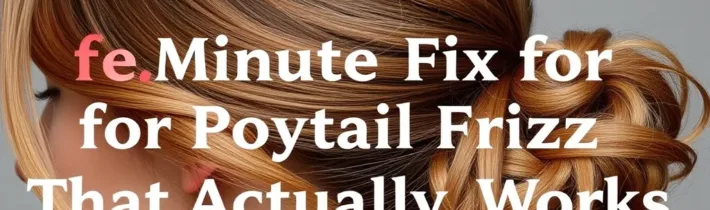
Why Your Ponytail Turns Into a Frizz Bomb Every Morning
There is a particular frustration that comes from pulling your hair back into a sleek ponytail, only to glance in the mirror ten minutes later and see a frizzy, puffy halo forming around your elastic. You are not imagining things, and you are certainly not alone. Ponytail frizz is one of the most common hair complaints, and it affects every hair type from pin-straight to tightly coiled. The good news is that a consistent five-minute routine can dramatically reduce that halo effect and keep your ponytail looking smooth from breakfast to bedtime.
Understanding why ponytail frizz happens is the first step toward solving it. When you pull hair into a ponytail, you are creating tension along the hair shaft. That tension disrupts the cuticle layer, the outermost shield of each strand. Damaged or raised cuticles allow moisture to escape from the cortex while simultaneously letting humidity in from the environment. The result is swelling, which manifests as frizz. Additionally, the friction between your hair and the elastic band creates static electricity, which further lifts the hair shaft and amplifies the frizzy appearance.
Environmental factors play a massive role as well. On humid days, the air is saturated with water molecules that seek out the driest available surface: your hair. A ponytail exposes a significant amount of hair surface area, making it a prime target for moisture absorption. The combination of mechanical tension, friction, and environmental humidity creates a perfect storm for frizz. But with the right preparation and technique, you can short-circuit that storm entirely.
Understanding Hair Porosity and How It Drives Frizz
Hair porosity refers to your hair’s ability to absorb and retain moisture. It is determined by how tightly the cuticle layers lay flat on the hair shaft. Low-porosity hair has a dense, resistant cuticle that repels moisture, while high-porosity hair has gaps and holes in the cuticle that allow moisture to flow in and out freely. Medium-porosity hair falls somewhere in between and tends to be the easiest to manage.
If you have high-porosity hair, you are likely no stranger to frizz. Your hair absorbs humidity from the air almost instantly, and because the cuticle cannot seal that moisture in, the hair swells and frizzes. A ponytail exaggerates this because the gathered strands are pressed together, creating micro-environments where humidity concentrates. Conversely, low-porosity hair can also frizz in a ponytail, but for a different reason: product buildup sits on top of the resistant cuticle and creates a rough texture that catches on the elastic band.
To test your porosity, place a clean strand of hair in a bowl of water. If it sinks within a few minutes, you have high porosity. If it floats for several minutes before sinking, you have low porosity. If it hovers in the middle, you have medium porosity. Knowing your porosity helps you choose the right products and techniques for your five-minute fix, because a high-porosity routine and a low-porosity routine are fundamentally different.
Preparing Your Hair Before the Ponytail
The mistake most people make is reaching for an elastic band before their hair is properly prepped. Preparation is where the real work happens, and it is where the five-minute fix begins. Before you pull any hair back, you need to address the two main sources of frizz: dryness and static.
Start by washing or refreshing your hair with a moisturizing shampoo and conditioner. If you are working with second-day hair, a quick rinse with cool water or a leave-in conditioner spray can rehydrate the cuticle and smooth the surface. After washing, do not towel-rub your hair vigorously. Instead, use a microfiber towel or an old cotton t-shirt to gently squeeze out excess water. Rubbing creates friction that lifts the cuticle and generates static, both of which will worsen frizz once the hair is gathered.
Once your hair is damp but not dripping, apply a heat protectant or a lightweight anti-frizz serum from mid-length to ends. Focus on the areas where the elastic will sit, because that is where friction will be highest. If your hair is already dry, use a small amount of hair oil or a frizz-control cream and distribute it evenly with a wide-tooth comb. The goal is to create a smooth, lubricated surface that the elastic can glide over without catching or snagging.
Choosing the Right Products for Frizz Control
Product selection makes or breaks any frizz-fighting strategy. The market is flooded with anti-frizz products, but not all of them are formulated to address the specific challenges of ponytail hair. You need products that serve three functions: sealing the cuticle, reducing friction, and blocking humidity.
For sealing the cuticle, look for products containing silicones like dimethicone or amodimethicone. These ingredients form a protective film around the hair shaft that prevents moisture from entering and escaping. If you prefer natural alternatives, argan oil and marula oil are excellent sealants that also add shine. For reducing friction, a lightweight silicone-based serum applied to the elastic area will prevent the band from catching on rough cuticles.
Humidity-blocking products typically contain polymers that create a humidity-resistant barrier. Ingredients like PVP/VA copolymer and polyurethane are commonly found in anti-humidity sprays and serums. Apply these as the final step in your routine, after all other products have been distributed. The layering order matters: hydrate first, seal second, and shield third.
It is also worth noting that product weight matters significantly. Heavy butters and thick creams can weigh down fine hair and create a greasy appearance, while they may not provide enough hold for thick or coarse hair. Match the product weight to your hair density and texture for the best results.
The Five-Minute Ponytail Frizz Fix Routine
Here is the complete five-minute routine that addresses every cause of ponytail frizz. Set a timer if you need to, and commit to following each step in order. The routine works whether your hair is freshly washed or you are refreshing second-day hair.
Minute One: Detangle Thoroughly. Starting from the ends, work a wide-tooth comb upward through your hair. Never start at the roots, because that pushes tangles downward and creates breakage. If you encounter a stubborn knot, hold the hair above the tangle with one hand and gently work the knot loose with the other. This step ensures that no hidden tangles will catch on the elastic later.
Minute Two: Apply Your Base Product. Dispense a quarter-sized amount of anti-frizz serum or leave-in conditioner into your palm. Rub your hands together to distribute the product evenly, then run your hands down the length of your hair from roots to ends. Focus on the mid-lengths and ends, where damage and dryness are most concentrated.
Minute Three: Smooth the Ponytail Area. Take a small amount of silicone-based serum or a tiny drop of hair oil and apply it directly to the section of hair where you plan to place the elastic. Use your fingertips to smooth this area in the direction of the ponytail. This targeted application prevents the friction point from becoming a frizz hotspot.
Minute Four: Gather and Secure. Pull your hair back into your desired ponytail position. Use a seamless, fabric-covered elastic band rather than a traditional rubber band. Secure the ponytail gently, without pulling too tightly. If you are using a claw clip or a silk scrunchie, position it so that the grip is firm but not compressive.
Minute Five: Apply the Finishing Shield. Mist the completed ponytail with an anti-humidity spray or lightly smooth a finishing cream over the surface of the ponytail. Avoid touching the ponytail with your hands during this step, as finger contact introduces oil and disrupts the product layer. Allow the product to set for sixty seconds before styling further.
Hair Accessories That Make a Friction Difference
The type of accessory you use to hold your ponytail is not a minor detail. It is a critical variable in the frizz equation. Traditional rubber bands are the worst offenders because they create friction, absorb moisture, and often have rough seams that snag and break hair strands. Every time you pull the band over your hair, it acts like sandpaper on the cuticle.
Fabric-covered elastics are a significant upgrade. The outer layer of fabric eliminates direct hair-to-rubber contact, reducing friction and static. Silk scrunchies take this a step further by providing a smooth, gentle surface that slides over hair without catching. The silk material also absorbs less moisture than cotton or rubber, which means your hair retains its hydration throughout the day.
Invisible elastics, also known as clear bands, are another option, but they should be chosen carefully. Many invisible elastics are still made of rubber with a thin coating that wears off quickly. Look for bands specifically marketed as silicone-coated or fabric-covered, even if they appear clear. The material matters more than the color.
For those who prefer a no-elastic approach, the claw clip and the twist-up clip are excellent alternatives. These accessories hold hair in place without creating a continuous pressure point, which means less tension on the hair shaft and less friction at the base of the ponytail. A fabric-wrapped claw clip in your hair drawer is one of the simplest upgrades you can make.
Overnight and Long-Term Strategies for Frizz-Free Ponytails
The five-minute routine addresses the immediate frizz problem, but long-term hair health is what sustains the results over weeks and months. If you are constantly fighting frizz, it is worth examining your overnight habits and your overall hair care regimen.
Overnight, the friction between your hair and your pillowcase is a major contributor to frizz. Cotton pillowcases create significant friction and absorb moisture from your hair, leaving it dry and prone to frizz the next morning. Switching to a silk or satin pillowcase reduces friction by up to forty percent and helps retain the hair’s natural moisture. If you already have a silk pillowcase, sleeping with your ponytail loosely wrapped in a silk scarf provides an additional layer of protection.
In the long term, regular trims every six to eight weeks remove split ends before they travel up the hair shaft and cause further damage. Damaged ends are the primary source of frizz because the split cuticle layers cannot lay flat. A clean, trimmed end allows products to seal the shaft effectively and keeps the ponytail looking smooth.
Deep conditioning treatments once a week provide intense hydration that regular conditioners cannot match. Look for treatments containing hydrolyzed proteins, which fill in gaps in the cuticle and strengthen the hair from within. Apply the treatment to damp hair, cover with a shower cap, and leave it on for twenty to thirty minutes before rinsing. This weekly ritual dramatically improves your hair’s ability to resist frizz over time.
Common Mistakes That Worsen Ponytail Frizz
Even with the best intentions, certain habits can undermine your efforts to keep a ponytail frizz-free. Identifying and eliminating these mistakes is just as important as adopting the right techniques.
The first common mistake is ponytail placement. Putting the elastic too close to the crown creates excessive tension on the hairline, which lifts the cuticle and causes breakage. It also creates a visible bump at the base of the ponytail that looks frizzy even when the hair itself is smooth. Position the elastic slightly lower, at the nape of the neck or just above it, to reduce tension and create a cleaner line.
The second mistake is using too many products at once. Layering multiple heavy products can create a waxy, crunchy buildup that actually makes frizz worse. Stick to one hydrating product, one sealing product, and one finishing product. If you are unsure whether you have applied too much, run your hands through your hair gently. If they feel sticky or weighed down, you have over-applied.
The third mistake is touching your ponytail throughout the day. Every time you push the ponytail to one side, adjust the elastic, or run your fingers through it, you introduce friction and disrupt the product barrier. If you need to adjust, do so with a brush or a comb rather than your fingertips, and try to limit adjustments to no more than twice per day.
The fourth mistake is using a hot blow dryer on the ponytail area before securing it. Heat without proper protection further damages the cuticle and creates a rough texture that catches on the elastic. If you must use heat, apply a thermal protectant and dry on the lowest setting, always moving the dryer continuously to avoid concentrating heat on one section.
Frequently Asked Questions About Ponytail Frizz
Why does my ponytail frizz even though I have straight hair?
Straight hair is not immune to frizz. In fact, straight hair can be more susceptible to humidity-induced frizz because the cuticle layers are typically flatter and more transparent, allowing moisture to penetrate more easily. When straight hair absorbs humidity, it swells and loses its sleek appearance, especially when gathered into a ponytail where the surface area is exposed. The solution is to use a lightweight anti-humidity product and to ensure your cuticle is sealed with a smoothing serum before gathering the hair.
Can I use coconut oil to prevent ponytail frizz?
Coconut oil can be effective for preventing frizz because it is a small-molecule oil that penetrates the hair shaft rather than just sitting on top. However, it works best for moderate to high-porosity hair and may weigh down fine or low-porosity hair. If you choose to use coconut oil, apply a very small amount to the ends and mid-lengths only, avoiding the roots and the scalp area. Overapplication can lead to buildup that attracts dirt and oil, creating the opposite of the smooth look you want.
How often should I replace my hair elastic bands?
Hair elastic bands lose their elasticity and develop rough surfaces over time, which increases friction and hair damage. As a general guideline, replace your everyday elastic bands every two to three weeks, or sooner if you notice that the band has become sticky, cracked, or discolored. Fabric-covered and silk bands tend to last longer, typically four to six weeks, because the outer layer protects the elastic core from degradation.
Is it better to wear a high ponytail or a low ponytail to avoid frizz?
A low ponytail at the nape of the neck generally creates less tension and less friction at the crown, which can reduce frizz. However, the style itself is not the primary factor. The key variables are the product you apply, the type of elastic you use, and how gently you gather the hair. A high ponytail can be just as frizz-free as a low one if you follow the proper preparation routine and use a fabric-covered elastic.
What should I do if my ponytail frizzes up during the day?
If your ponytail frizzes mid-day, the most effective rescue is a lightweight anti-frizz serum applied with a soft-bristle brush. Dip the brush into a small amount of serum and gently brush the frizzy sections in the direction of the ponytail. Avoid rubbing or pressing, which can flatten the volume you want to preserve. If you do not have serum on hand, a quick mist of water followed by a light smoothing motion with your palm can temporarily tame frizz by reactivating the product layer already on your hair.
Related posts:
 Ariana Grande’s Hair Savior: Why Lavender Coconut Oil Is Her Secret Weapon
 Easy Summer Updos for Every Hair Type
 Blow Drying Hair Without Damage: Expert Tips
 Perfect Curly Hair Routine
 Zoe Kravitz’s Coconut Oil Hair Care Secret
 Hair Slugging Beauty Trend Guide
 The Half-Ponytail Updo Celebrities Can’t Stop Wearing This Season
 Silk Hair Ties: Gentle on Hair, Tough on Tangles