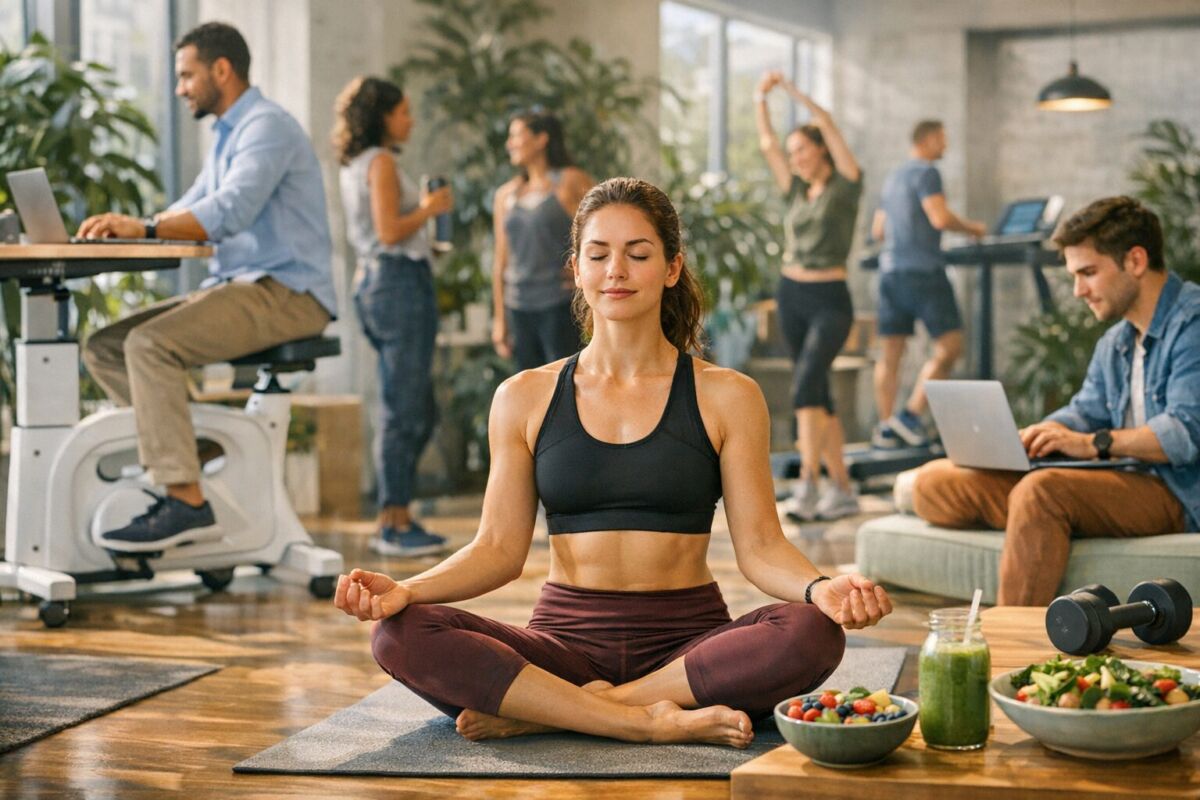
For years, the office environment has been a paradox—a place where we spend the majority of our waking hours, yet often designed in ways that undermine our most basic health needs. From fluorescent lighting and stale air to sedentary postures and communal snack bowls filled with processed foods, the traditional workplace has been a slow-burn antagonist to wellness. But a quiet revolution is taking place, one that reimagines the very foundation of where we work. This is the healthy coworking revolution, a movement that fuses professional productivity with holistic well-being, creating spaces designed not just for output, but for human vitality.
Key takeaways
- Incorporate biophilic design elements like natural light and greenery to reduce stress and improve cognitive function.
- Ensure optimal air quality using HEPA filtration and low-VOC materials to prevent brain fog and fatigue.
- Integrate movement into the workday through active design, dedicated stretching zones, and scheduled physical breaks.
- Establish distinct work zones for deep focus, collaboration, and relaxation to manage cognitive load effectively.
- Prioritize mindful nourishment by replacing processed snacks with healthy options and creating dedicated spaces for meals.
The shift was already underway, fueled by a growing consciousness around work-life integration, but it accelerated dramatically as people reevaluated their relationship with work post-pandemic. Professionals aren’t just looking for a desk and Wi-Fi anymore; they are seeking environments that actively support their physical health, mental clarity, and social connectivity. Healthy coworking spaces are answering that call, transforming from mere real estate solutions into curated ecosystems for thriving. They represent a fundamental belief: that the place you work can be a powerful tool for health, not a detriment to it.
Beyond Ergonomics: The Pillars of a Truly Healthy Workspace
While a good chair is a start, the healthy coworking revolution goes far deeper than ergonomic furniture. It’s built on several interconnected pillars that address the whole person. First is biophilic design—the intentional integration of nature into the built environment. This isn’t just about a potted plant in the corner. It means maximizing natural light with ample windows and skylights, using natural materials like wood and stone, incorporating living walls or interior gardens, and providing views of greenery. Studies consistently show that access to natural elements reduces stress, enhances cognitive function, and improves mood.
The second pillar is air and environmental quality. Premium healthy spaces invest in advanced HVAC systems with HEPA filtration to remove particulates, allergens, and pollutants. They monitor CO2 levels to ensure adequate ventilation, preventing the “stuffy meeting room” brain fog. Many also use low-VOC (volatile organic compound) paints, adhesives, and furnishings to minimize off-gassing and create a truly clean breathing environment.
Nourishment Over Snacks: Reimagining Workplace Nutrition
The classic office pantry stocked with sugary sodas, processed snacks, and stale coffee is antithetical to a healthy culture. Revolutionary spaces flip this model on its head. You might find a curated selection of organic teas and high-quality, locally roasted coffee. Instead of candy bowls, there are bowls of fresh fruit, nuts, and perhaps even a juicing station. Some spaces partner with nutritionists to offer healthy catering options or host workshops on meal prep for busy professionals.
More importantly, these spaces design for mindful eating. They create pleasant, separated café or kitchen areas that encourage people to step away from their screens, enjoy their food, and connect with others. This breaks the cycle of mindless munching at the desk and reinforces the idea that fueling the body is a crucial part of sustaining energy and focus throughout the workday.
Movement Integrated, Not an Afterthought
The sedentary nature of knowledge work is a well-documented health risk. Healthy coworking spaces engineer movement back into the day. This can take many forms:
- Active Design: Encouraging stair use over elevators with attractive, well-lit staircases. Creating “walking paths” within larger spaces or even installing treadmill or cycling desks.
- On-Site Movement Spaces: Many feature a dedicated yoga or movement studio, offering daily classes included in the membership—from morning vinyasa flow to midday stretch sessions or post-work mobility classes.
- Movement Breaks: Programming short, guided movement breaks (5-10 minutes) led by an instructor or via a screen, helping members reset posture and circulation.
- Outdoor Access: Providing easy access to outdoor spaces for walking meetings or fresh-air breaks.
The goal is to make physical activity a seamless, accessible part of the work routine, removing the major barrier of having to travel to a separate gym.
Cultivating Mental Space and Focus
Productivity is not just about hours logged; it’s about the quality of focus within those hours. Healthy coworking spaces prioritize cognitive well-being through intentional design. This includes a variety of worksettings for different needs: quiet, library-like zones for deep focus; sound-masked phone booths for calls; collaborative areas for brainstorming; and relaxation nooks with comfortable seating for mental breaks.
Noise management is critical. Using acoustic panels, sound-absorbing materials, and thoughtful spatial layouts prevents the distracting hum of a typical open office. Furthermore, many spaces incorporate mindfulness directly into their offerings, such as providing access to meditation apps, hosting guided meditation sessions, or creating designated quiet meditation rooms. These practices help members manage stress, reduce anxiety, and return to their work with greater clarity.
The Community of Well-Being
Perhaps the most powerful differentiator is the community these spaces foster. Loneliness and a lack of social support are significant health risks, often exacerbated by remote or fragmented work. A healthy coworking space naturally attracts like-minded individuals who value well-being. This creates a built-in social fabric centered on positive habits.
The community aspect is actively nurtured through events that go beyond networking: nutrition workshops, cooking demos, stress-management seminars, group hikes, or running clubs. This transforms the space from a transactional “desk rental” into a supportive ecosystem where members can share goals, challenges, and successes related to their health and work. The social connection becomes a key ingredient in both professional resilience and personal wellness.
Implementing the Principles in Your Current Setup
Not everyone has access to a purpose-built healthy coworking space, but its principles can be adapted to a home office or traditional workplace. Start with an audit of your environment:
- Light: Can you reposition your desk to face a window? Invest in a high-quality daylight-simulation lamp for dark days.
- Air: Get a portable HEPA air purifier for your immediate area. Make a habit of opening windows regularly, even for just 10 minutes.
- Movement: Set a timer to stand and stretch every 30 minutes. Use a standing desk converter or create a standing station on a high counter. Schedule walking meetings for calls when possible.
- Nourishment: Prep healthy snacks (cut vegetables, hard-boiled eggs, fruit) at the start of the week. Keep a large water bottle at your desk. Designate a specific area away from your computer for eating meals.
- Focus: Use noise-canceling headphones with calm, focus-enhancing music or white noise. Communicate “focus blocks” to housemates or colleagues. Practice a five-minute breathing exercise before starting a complex task.
Small, consistent changes in these areas can collectively shift your work environment from draining to sustaining.
The Future of Work is Holistic
The healthy coworking revolution signals a broader trend: the dissolution of the hard line between “life” and “work.” As we spend so much of our lives working, it is both pragmatic and humane to design those hours to support our overall well-being. This model demonstrates that companies and space providers who invest in human-centric design will attract and retain top talent who are increasingly voting with their feet for environments that help them thrive.
The future of work isn’t just remote or hybrid; it’s holistic. It recognizes that a healthy employee is a more focused, creative, and resilient employee. The coworking spaces leading this charge are proving that the office, reimagined, can be a sanctuary for productivity and a cornerstone of a healthy lifestyle.
Architectural Alchemy: Material Science and Sensory Design
While biophilic design introduces nature, the materials themselves become active participants in well-being. Beyond low-VOC compliance, forward-thinking spaces employ hygroscopic materials like untreated clay plaster or reclaimed wood, which naturally regulate indoor humidity, reducing the survival rates of airborne viruses and mitigating respiratory irritation. Floors might use cork or natural linoleum—resilient, antimicrobial, and providing a gentle, forgiving surface for standing desks. The tactile experience is curated: think of the subtle texture of a woven grasscloth acoustic panel versus the sterile feel of synthetic fabric, engaging the sense of touch to ground and calm.
Acoustic engineering reaches new heights of sophistication. Instead of mere sound absorption, spaces employ masked audio zones. In collaborative areas, a soft, algorithmically generated soundscape—a blend of pink noise and subtle nature sounds—is emitted through discreet speakers. This “acoustic fragrance” raises the auditory baseline just enough to make private conversations unintelligible beyond a few feet, paradoxically increasing privacy and reducing the stress of being overheard. In focus zones, active noise cancellation is built into individual pods or even entire rooms, creating near-anechoic conditions for profound concentration.
The olfactory dimension is also intentionally designed, moving far beyond masking odors with synthetic scents. Through aroma dispersion systems, micro-doses of essential oil blends are released on circadian schedules: invigorating citrus and rosemary during morning energy slumps, calming lavender and cedarwood during post-lunch dips. The science is precise; for instance, peppermint has been shown to enhance alertness and memory, making it ideal for spaces reserved for analytical work. This controlled aromatherapy becomes a non-invasive tool for cognitive and emotional regulation throughout the day.
The Neuroergonomic Workspace: Designing for Cognitive Flow
Modern neuroscience provides a blueprint for environments that minimize cognitive load and promote flow states. This goes beyond offering quiet zones. It involves visual clutter reduction as a core principle. Storage is fully integrated and concealed. Cable management is absolute. Wall colors are muted, natural tones that don’t compete for visual attention. Even artwork is selected for its calming, non-narrative qualities—abstract patterns or serene landscapes—to provide a visual rest stop without triggering associative thought loops.
The layout employs cognitive wayfinding. Different zones are distinguished not just by signage but by subtle, consistent sensory cues: a specific carpet texture for collaborative areas, a distinctive but gentle lighting color temperature for phone booths, a particular wood finish for focus carrels. This reduces the mental energy required to navigate the space and subconsciously primes the brain for the task associated with each environment. The transition from a deep work pod to a brainstorming lounge feels intuitively clear, avoiding the disorienting context-switching penalty of a monolithic office floor.
Lighting is dynamically tuned to the body’s internal clock. Circadian lighting systems automatically adjust color temperature and intensity throughout the day, mimicking the sun’s natural progression. At 9 AM, the light is cool and bright (6500K), suppressing melatonin and boosting alertness. By mid-afternoon, it subtly warms (4500K) to maintain focus without agitation. In the evening, for those working late, it shifts to a very warm, dim glow (2700K) to support the wind-down process and protect sleep cycles, even if a member checks email at 7 PM. This biological alignment combats digital eye strain and mitigates the disruptive impact of artificial light on sleep architecture.
Micro-Recovery Infrastructure: The Science of the Break
High performance is a cycle of stress and recovery. Elite coworking spaces engineer not just for work, but for the quality of the break. This is the concept of micro-recovery—short, potent intervals that reset the nervous system. Dedicated spaces are designed for this sole purpose. A “recharge nook” might feature a zero-gravity chair that elevates the legs above the heart, facilitating a rapid shift into the parasympathetic “rest and digest” state within minutes. Another pod could offer a controlled cold exposure booth (set to a safe 50°F/10°C) for a 2-3 minute session that floods the system with norepinephrine, reducing inflammation and rebooting mental clarity.
Breathing stations are equipped with guided biofeedback devices. A member puts on a heart rate variability (HRV) sensor and follows a paced breathing animation on a tablet; over five minutes, they can consciously increase their HRV, a key marker of resilience and autonomic nervous system balance. Other stations offer non-sleep deep rest (NSDR) pods for 20-minute guided yoga nidra sessions, proven to provide the cognitive benefits of 90 minutes of sleep without sleep inertia.
Even the humble beverage station becomes a recovery tool. Alongside premium coffee, you find adaptogen-infused tonics—drinks with ashwagandha for stress modulation, lion’s mane mushrooms for cognitive support, or electrolytes for hydration—clearly labeled with their intended neurochemical effect. The break is transformed from a passive consumption of caffeine into an active, targeted recovery protocol.
Quantified Self, Quantified Space: The Data Feedback Loop
The pinnacle of the healthy coworking model integrates personal biometrics with environmental data, creating a powerful feedback loop. Members can opt into a system where their wearable device (like an Oura ring or Whoop strap) interfaces with the building’s management system. The space becomes responsive. If the aggregated data from members in a certain zone shows elevated stress biomarkers, the system might automatically slightly lower the lighting intensity and increase the diffusion of a calming aroma blend in that area.
On a personal level, a member receives a weekly “Space Impact Report.” It correlates their time in different zones with their own biometric data: “Your heart rate variability was 15% higher on days you used the focus pod for >2 hours.” Or, “Your deep sleep increased by 30 minutes on evenings you attended the 5 PM mobility class.” This moves wellness from anecdote to actionable insight, allowing members to refine their use of the space for maximum personal benefit.
Environmental data is also transparent. Digital displays show real-time metrics: PM2.5 particulate levels, CO2 concentration (ppm), noise levels (dB) in each zone, and even the dominant light wavelength. This transparency builds trust and educates members on the invisible qualities of their environment, empowering them to choose workspaces that align with their immediate needs—seeking out the zone with the lowest CO2 for a demanding afternoon analysis session, for instance.
Proactive Health Security: Beyond Filtration to Pathogen Mitigation
In a post-pandemic world, health-conscious professionals assess a workspace’s approach to pathogen control with the same rigor as its internet speed. Leading spaces implement a layered defense system. Upper-room ultraviolet germicidal irradiation (UVGI) is installed in high-ceiling common areas. This safe, shielded UV-C light constantly disinfects air in the space above head level, inactivating viruses and bacteria without exposing occupants. For surfaces, photocatalytic oxidation (PCO) coatings are applied to high-touch points; when activated by light, these titanium dioxide-based coatings create a reaction that breaks down organic contaminants, including viruses, into harmless carbon dioxide and water.
The air handling strategy is multi-stage. After HEPA filtration, some systems pass air through a cold plasma or bipolar ionization unit. These technologies release charged particles that seek out and neutralize pathogens, allergens, and volatile organic compounds at a molecular level, further scrubbing the air. Humidity is maintained in the optimal 40-60% range, a zone where studies suggest respiratory droplets fall more quickly and many viruses have reduced survivability.
This creates a profound sense of health security. Members aren’t just relying on a janitor’s nightly cleaning; they are working within an environment that is actively and continuously purifying itself. This reduces the cognitive load of health anxiety, allowing for greater mental immersion in work, especially during cold and flu seasons or for immunocompromised individuals.
The Embedded Expert Network: On-Demand Professional Support
A gym with a trainer is common; a workspace with an integrated professional health network is revolutionary. Membership includes curated, discounted access to a vetted network of practitioners who understand the unique pressures of knowledge work. This isn’t a bulletin board of business cards; it’s a seamless integration. Through the space’s app, a member can book a 25-minute onsite ergonomic assessment with a physiotherapist who will adjust their desk setup in real-time, or a session with a posture coach who uses real-time motion capture feedback.
For mental performance, a cognitive performance coach might offer workshops on techniques like “time blocking for flow” or “digital detox protocols.” A registered dietitian specializing in neuro-nutrition provides consultations focusing on dietary strategies to combat afternoon slumps or improve sleep quality. The space becomes a hub for proactive health optimization, where expert guidance is as accessible as a cup of coffee, lowering the barrier to entry for maintaining peak professional performance.
Regenerative Operations: The Ethical and Ecological Backbone
True well-being extends beyond the individual to the health of the community and planet. Members increasingly seek spaces whose values align with this holistic view. The most advanced models operate on regenerative principles. They generate their own clean energy via rooftop solar arrays and battery storage. They treat and recycle greywater for use in living walls and toilets. Food waste is composted on-site or via local partnerships, with the resulting compost used in the space’s own herb gardens, creating a closed-loop system.
Materials are sourced through a lens of radical transparency and circularity. Furniture is selected from manufacturers that offer take-back programs for refurbishment and reuse. Construction prioritized salvaged materials—beams from a demolished barn, tiles from a decommissioned factory. This ethical foundation is communicated not as marketing, but as part of the member education, fostering a sense of participation in a larger, positive system. Working in such a space provides a psychological benefit: the alleviation of the cognitive dissonance many feel between their personal health practices and their professional footprint, making well-being feel genuinely integrated and sustainable.
Frequently Asked Questions
1. How much more expensive is a healthy coworking space compared to a regular one?
Membership fees at a premium healthy coworking space are typically 20-50% higher than at a standard space. This premium reflects the significant investments in high-quality air filtration systems, biophilic design elements, on-site fitness facilities, and curated wellness programming. For many professionals, this cost is offset by savings on separate gym memberships, wellness apps, and even healthcare costs associated with a preventive, healthy lifestyle. It’s worth viewing the fee not just as rent for a desk, but as an investment in your daily well-being and productivity infrastructure.
2. I’m introverted. Won’t all the wellness activities and community events feel overwhelming?
Absolutely not. A well-run healthy coworking space respects diverse working styles and social batteries. While community events are offered, participation is always optional. The core value lies in the ambient environment—the clean air, natural light, and quiet focus zones. These benefits are passive and enjoyed on your own terms. For introverts, the advantage can be having access to wellness amenities like a meditation room or yoga class without the social pressure of a large gym. You can engage with the community as much or as little as you feel comfortable.
3. Can these spaces realistically improve my long-term health, or is it just a trend?
The interventions employed—improved air quality, increased natural light, reduced sedentary time, access to healthy food, and stress-reducing design—are all backed by substantial public health and environmental psychology research. While individual results vary, consistently spending 40+ hours a week in an environment that promotes movement, clean air, healthy eating, and mental calm can have a cumulative, positive impact on markers like stress hormone levels, sleep quality, musculoskeletal health, and dietary habits. It’s less about a fleeting trend and more about applying established health science to the context where we spend most of our time.
4. What should I look for when touring a potential healthy coworking space?
Go beyond the sales pitch. Ask specific questions: What type of air filtration system is in place? Are the cleaning products used non-toxic? What is the source of the drinking water? Can you see the schedule for movement or mindfulness classes? Sample the food and coffee offered. Most importantly, spend time in the space. Notice how you feel after an hour. Do you feel alert or sluggish? Is your mind calm or distracted? Are there areas where you can genuinely focus? Your subjective feeling in the environment is a critical data point.
5. How can I advocate for healthier practices in my traditional corporate office?
Start with data and small, pilot proposals. Frame suggestions in terms of productivity and talent retention, not just wellness. For example: “Research shows access to natural light improves sleep and focus. Could we pilot a desk rotation policy to give more teams window access?” Or, “Sedentary behavior is linked to increased healthcare costs. Could we install a few standing desks in a common area as a trial?” Propose a healthy snack alternative in the next team meeting order. Champion the use of a quiet room for meditation breaks. Change often happens incrementally, and by championing small wins, you can help shift the culture.
Related posts:
 Mood Makeover: The Office Supplies That Will Transform Your Workday Vibes
 Open Concept Done Right: Design Tips for Spacious Living
 Creative Home Office Desk Ideas
 Your Dirty Air Conditioner Could Be Sabotaging Your Lung Health
 Nap Bars: Is Sleeping Your Way to Wellness the Next Big Thing
 Tiny Green Therapy: How Mini Plants Are Revolutionizing the Workspace
 Desk Yoga for Back Pain Relief
 Airplane Vent Germ Prevention