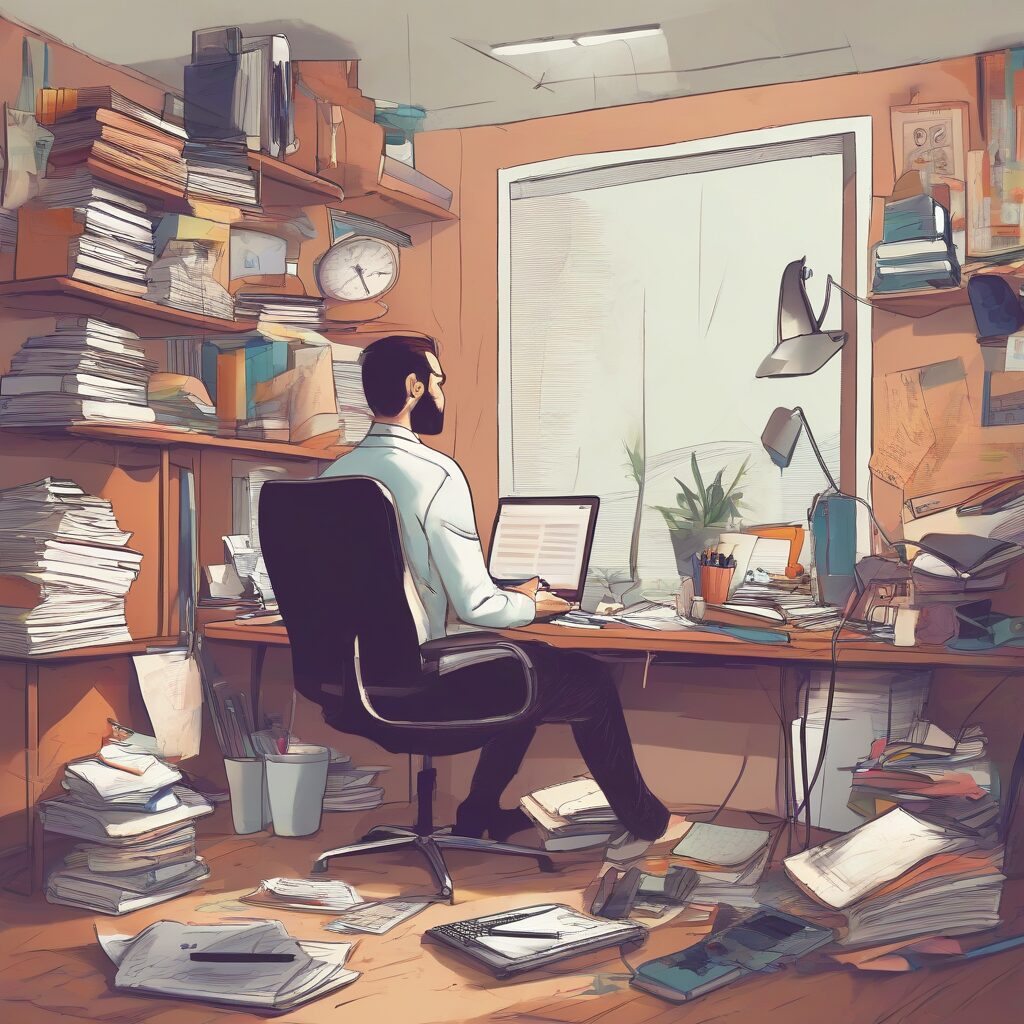
The Hidden Psychology Behind Your Cluttered Desk
Have you ever looked at your cluttered desk and felt a pang of guilt or shame? You’re not alone. Many of us struggle with keeping our workspaces tidy, but what if I told you that your messy desk might actually reveal some fascinating insights about your personality and work style? Let’s explore the hidden psychology behind cluttered desks and what they really say about us – with compassion and understanding rather than judgment.
The Creative Chaos Theory: Embracing Your Messy Side
While conventional wisdom often equates tidiness with productivity, research has shown that a bit of clutter can actually boost creativity. A study by the University of Minnesota found that people in messy rooms came up with more creative ideas than those in tidy spaces. So if your desk is a bit chaotic, you may just be tapping into your innovative side!
Creative types often thrive in environments with some visual stimulation and “organized chaos.” Having materials and inspirations visible can spark new connections and ideas. So instead of feeling bad about your cluttered desk, try reframing it as your “creative zone” where brilliance emerges.
The Busy Bee Syndrome: When Clutter Reflects Productivity
Sometimes a messy desk is simply a sign of a busy, engaged worker. If you’re in the middle of multiple projects, it’s natural for your workspace to accumulate some clutter. Papers, books, and materials related to ongoing tasks can pile up as you juggle priorities.
Rather than seeing this as a character flaw, recognize it as a sign of your dedication and multitasking abilities. Just be mindful that extreme clutter doesn’t start to hinder your productivity. Finding a balance is key.
The Emotional Attachment: What Your Clutter Says About Your Inner World
Our workspaces often reflect our inner emotional states. Clutter can sometimes be a physical manifestation of mental overwhelm, stress, or difficulty letting go. If you find yourself surrounded by old papers, mementos, or items you “might need someday,” it could be worth exploring the emotional reasons behind your attachment to these objects.
Approaching this with self-compassion is crucial. Instead of harshly judging yourself, gently examine what each item means to you. This process of mindful decluttering can be deeply cathartic and revealing about your values, fears, and aspirations.
The Personality Factor: Clutter Styles and What They Reveal
Interestingly, the way we organize (or don’t organize) our spaces can align with certain personality traits:
- Pilers: If you tend to make neat(ish) piles, you might be a big-picture thinker who prefers having information visible and accessible.
- Filers: Those who meticulously file everything away tend to be detail-oriented and appreciate order and structure.
- Free Spirits: If your desk is a colorful hodgepodge of items, you might be spontaneous, creative, and adaptable.
- Minimalists: A sparse desk often indicates someone who values simplicity and can focus intensely on tasks.
Remember, there’s no “right” or “wrong” style – it’s about finding what works best for you and your unique way of thinking and working.
Finding Your Balance: Embracing Your Natural Style While Staying Functional
While it’s important to accept and understand your natural tendencies, it’s also crucial to ensure your workspace supports your productivity and well-being. Here are some compassionate tips for finding your ideal balance:
- Identify your essentials: What items do you truly need daily? Keep these easily accessible.
- Create zones: Designate areas for different activities (e.g., computer work, reading, brainstorming) to contain clutter.
- Schedule regular resets: Set aside time weekly to tidy up, but don’t stress about perfection.
- Embrace your style: If you work best with some clutter, allow for a “creative mess” zone.
- Practice mindfulness: Regularly check in with how your space makes you feel and adjust as needed.
Remember, the goal isn’t a picture-perfect desk, but a space that supports your work and makes you feel good.
Frequently Asked Questions
Q1: Is a cluttered desk always a sign of a cluttered mind?
A1: Not necessarily. While extreme clutter can be stressful, moderate clutter can sometimes indicate creativity and engagement in multiple projects. It’s more important to focus on how your space makes you feel and whether it supports your productivity.
Q2: How can I declutter my desk without feeling overwhelmed?
A2: Start small – tackle one area at a time, like a single drawer or corner. Set a timer for 10-15 minutes and see what you can accomplish. Remember to approach the task with self-compassion rather than judgment.
Q3: Can a messy desk actually boost creativity?
A3: Some studies suggest that a moderately messy environment can enhance creative thinking by encouraging “out of the box” ideas. However, this varies by individual – some people feel more creative in tidy spaces.
Q4: How often should I clean my desk?
A4: There’s no one-size-fits-all answer, but a weekly reset can help maintain a functional space. Daily small tidying habits can also prevent major clutter build-up.
Q5: What if I share a workspace with someone who has a different organization style?
A5: Open communication is key. Discuss your preferences and try to find compromises that work for both of you. Consider designating personal zones within the shared space where each person can maintain their preferred style.
Remember, your desk is a reflection of you – unique, complex, and ever-evolving. Embrace your natural tendencies while gently working towards a space that supports your best self. Your workspace should be a source of comfort and inspiration, not stress and judgment. Be kind to yourself as you navigate the fascinating psychology behind your desk!
Related posts:
 Boss Babes’ Desk Essentials
 Successful Women’s Desk Items
 The Top 20 Positive Psychology Graduate Programs (Online & Campus)
 Positive Psychology Coaching Certification: 11 Opportunities & Options
 What is Positive Psychology & Why is It Important? [Definition + Examples]
 Messy Desk
 Zodiac Workspace Setup
 What is Positive Psychology & Why is it Important?