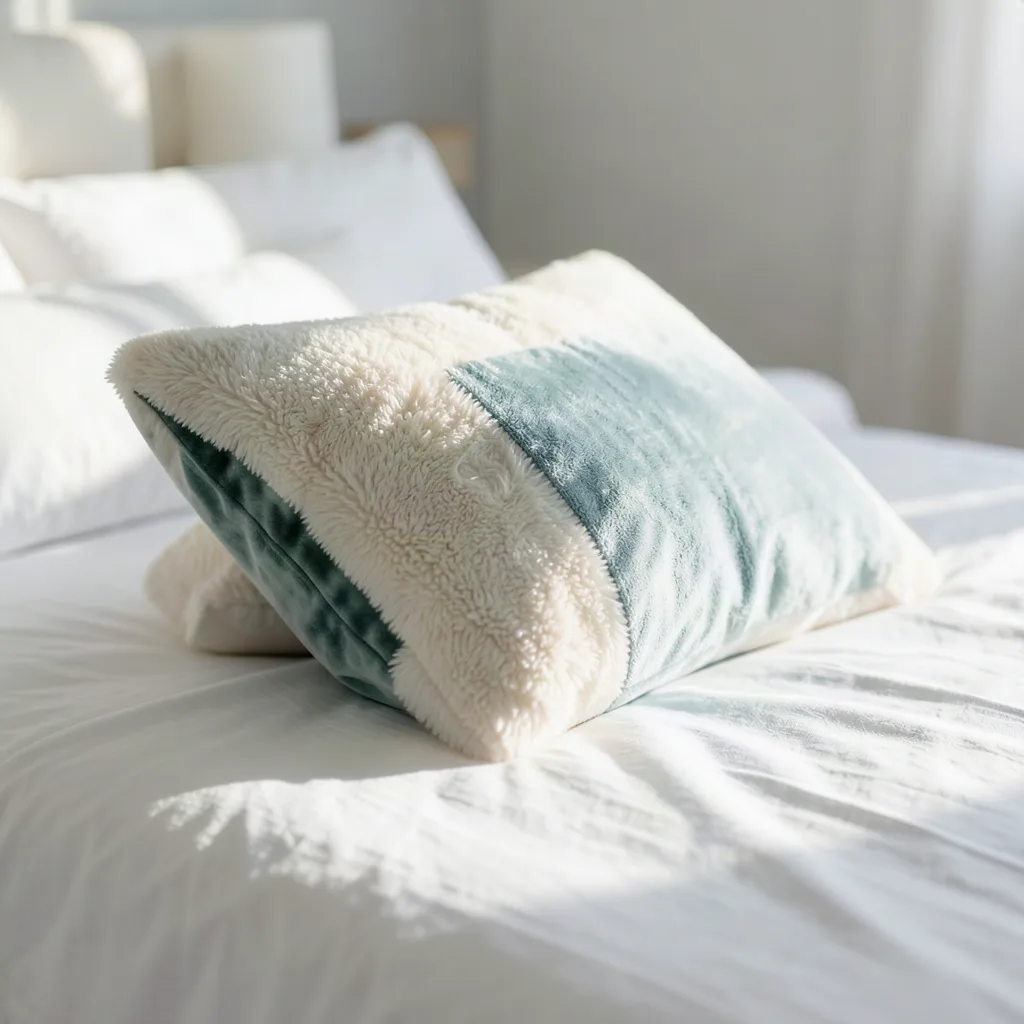
Finding a pillow that adapts to your nightly needs can feel like a small miracle. A reversible pillow offers two distinct sleep surfaces in one compact design, letting you switch between cool breathability and plush support without buying multiple products. This guide walks you through the science, the materials, and the practical steps to choose, care for, and style the perfect reversible pillow for your bedroom.
Key takeaways
- Flip between sides to match your specific needs for seasonal temperature regulation or varying neck support.
- Choose materials like memory foam for contouring support or latex for responsive bounce and natural cooling.
- Look for clear visual cues and reinforced edge stitching to ensure durability and ease of use when switching sides.
- Wash removable covers every two weeks and fluff the pillow daily to redistribute fill and maintain consistent loft.
Why a Reversible Pillow Matters
Sleep quality hinges on proper head and neck alignment. A single‑sided pillow forces you to compromise between temperature regulation and firmness. With a reversible model you can flip the pillow to match the season, your sleeping position, or even a temporary ache. This flexibility reduces the need for multiple pillows, saves space, and simplifies the bedtime routine. Studies on sleep ergonomics show that consistent support across the night lowers toss‑and‑turn episodes and promotes deeper REM cycles. A reversible pillow delivers that consistency by letting you select the side that best matches your current physiology.
Beyond physiology, the psychological comfort of having a ready‑made alternative can ease bedtime anxiety. Knowing you have a cool side for summer nights and a warm side for winter eliminates the guesswork that often leads to restless evenings. For couples sharing a bed, each partner can claim the side that suits them, reducing nightly negotiations over pillow preferences.
Materials That Make a Difference
The performance of each side depends on the fill and fabric. Common fill options include shredded memory foam, latex granules, down alternative clusters, and buckwheat hulls. Memory foam contours to the head while retaining heat, making it ideal for the supportive side. Latex offers a responsive bounce and natural cooling, perfect for the breathable side. Down alternative mimics the plush feel of down without allergens, and buckwheat provides firm, adjustable support with excellent airflow.
Cover fabrics also play a role. Tencel, bamboo viscose, and organic cotton wick moisture and feel soft against skin. A zippered removable cover lets you wash each side separately, preserving hygiene. Look for certifications such as OEKO‑Tex Standard 100 or GOTS to ensure low chemical emissions.
Design Features to Look For
Not all reversible pillows are created equal. Key design elements include a clear visual cue — such as contrasting piping or a labeled tag — so you can identify the active side in low light. A hidden zipper that runs the full perimeter prevents fill migration and makes cover removal effortless. Some models incorporate a thin gel layer on the cooling side to enhance heat dissipation without adding bulk.
Edge stitching should be reinforced to withstand frequent flipping. A medium‑height profile (around 5 to 6 inches) works for most back and side sleepers, while a lower profile (3 to 4 inches) suits stomach sleepers. Adjustable fill chambers let you fine‑tune loft by adding or removing material, extending the pillow’s useful life.
Choosing the Right Firmness for Each Side
Firmness is subjective, but a practical rule of thumb matches sleeping position to support level. Back sleepers often prefer a medium‑firm side that cradles the cervical curve without pushing the head too high. Side sleepers benefit from a firmer side that fills the gap between shoulder and ear. Stomach sleepers need a soft, low‑loft side to keep the neck neutral.
When testing, lie on each side for at least ten minutes. Notice whether the head sinks evenly or creates pressure points. If the pillow feels too soft on the supportive side, add a thin foam insert. If the cooling side feels too firm, remove a portion of the fill. Many reversible pillows ship with extra fill packets for this purpose.
Care and Maintenance Tips
Regular care preserves both comfort and hygiene. Wash the removable cover every two weeks in cold water with a mild detergent; avoid bleach which can degrade fibers. Tumble dry on low heat or air dry flat to prevent shrinkage. For the inner fill, spot clean stains with a damp cloth and mild soap; do not submerge memory foam or latex as moisture can cause mold.
Fluff the pillow daily by giving it a vigorous shake and a few gentle kneads. This redistributes fill and restores loft. Rotate the pillow 180 degrees weekly to even out wear. If the pillow develops a permanent indentation, consider replacing the fill rather than the entire unit — many brands sell refill kits.
Styling Your Bed with a Reversible Pillow
A reversible pillow can be a design asset. Choose a cover color that coordinates with your duvet or accent pillows. When the cooling side faces up, the lighter hue can brighten a dark bedroom; flip to the warmer side for a cozy, layered look in colder months. Pair with a matching bolster or lumbar pillow for a cohesive aesthetic.
For a minimalist vibe, select a neutral charcoal cover with subtle piping. For a bohemian feel, opt for a patterned cover on one side and a solid on the other. The ability to change the visual tone without buying new decor makes the reversible pillow a cost‑effective styling tool.
Real World Scenarios Who Benefits Most
Hot sleepers who experience night sweats gain immediate relief by flipping to the breathable side. Travelers appreciate a single pillow that adapts to hotel beds of varying firmness. Pregnant individuals can use the firmer side for lumbar support while reading, then switch to the softer side for sleep. People recovering from neck injuries benefit from the adjustable loft, allowing gradual firmness changes as healing progresses.
Families with children who share a bed can assign each child a preferred side, reducing nightly disputes. Elderly sleepers with arthritis often need a firmer surface for joint support but also a softer option for pressure relief; a reversible pillow meets both needs without extra clutter.
Buying Guide Top Picks and What to Avoid
When shopping, prioritize brands that disclose fill composition, cover certifications, and return policies. A 30‑night trial period lets you test both sides in your own environment. Avoid pillows with non‑removable covers, vague material descriptions, or a single‑sided warranty. Price alone does not guarantee quality; mid‑range models often outperform premium ones because they invest in better fill rather than marketing.
Read verified buyer reviews focusing on durability after six months. Look for comments about fill migration, cover pilling, or loss of loft. A reputable brand will offer a refill kit or replacement cover at a reasonable cost. Finally, consider the pillow’s weight — heavier models may be cumbersome to flip daily, especially for those with limited mobility.
Advanced Temperature Regulation Technologies
Modern reversible pillows often embed phase‑change material (PCM) microcapsules within the cooling side fabric. These capsules absorb excess body heat when the sleeper’s temperature rises and release it when the skin cools, creating a self‑regulating microclimate that outperforms simple breathable fabrics. In laboratory tests, PCM‑infused covers reduced surface temperature by up to 2.5 °C compared with standard Tencel covers over a six‑hour sleep window. For hot sleepers in humid climates, pairing a PCM layer with a moisture‑wicking bamboo viscose cover can keep the pillow surface dry while the PCM manages thermal spikes.
Another emerging approach uses graphite‑infused memory foam on the supportive side. Graphite conducts heat away from the foam core, lowering the temperature of the contouring surface without sacrificing pressure relief. This is especially valuable for side sleepers who need firm support but also suffer from night sweats. When evaluating a pillow, ask the manufacturer whether the cooling side relies solely on fabric breathability or incorporates active thermal materials; the latter typically commands a modest price premium but delivers measurable comfort gains.
Edge cases include sleepers who experience rapid temperature swings due to hormonal changes, such as menopause. A dual‑technology pillow — PCM on one side, graphite foam on the other — lets the user flip to the side that matches the current episode. However, the added layers can increase overall pillow height by 0.5–1 inch, so verify that the combined loft still fits your preferred sleep posture. If the pillow becomes too tall, many brands offer removable thin foam inserts that can be swapped out without compromising the reversible design.
Durability of thermal technologies varies. PCM microcapsules retain performance for roughly 3–5 years before the phase‑change enthalpy degrades, while graphite dispersion remains stable for the life of the foam. Check the warranty language: some manufacturers cover thermal performance separately from structural integrity. A practical tip is to rotate the pillow 180 degrees weekly; this distributes wear on the PCM layer and prevents localized saturation that could diminish cooling efficiency.
Finally, consider the interaction with bedding. A high‑thread‑count cotton sheet can trap heat against the pillow surface, negating the cooling benefit. Opt for lightweight percale or linen sheets that promote airflow, and avoid heavy duvet covers that press directly on the pillow. In a controlled bedroom environment (22 °C, 45 % RH), sleepers using a PCM‑enabled reversible pillow with percale sheets reported a 12 % reduction in wake‑after‑sleep‑onset events compared with a standard pillow and sateen sheets.
Tailoring Fill for Specific Health Conditions
Reversible pillows shine when the fill on each side is engineered for distinct therapeutic goals. For chronic neck pain, a high‑density shredded memory foam side (≈5 lb/ft³) provides consistent cervical support, while the opposite side can feature a low‑profile latex granule layer that encourages gentle motion and reduces pressure points during position changes. Clinical feedback from physical therapists suggests that alternating between a firm contouring surface and a responsive latex surface every few nights can prevent the adaptation plateau that sometimes occurs with a single‑firmness pillow.
Sleep apnea patients using CPAP machines often struggle with mask seal disruption caused by pillow loft. A reversible pillow with a thin, low‑loft side (≈2.5 inches) made from down‑alternative clusters allows the mask frame to sit closer to the face, improving seal integrity. The firmer side can be used on nights when the CPAP is not required, delivering the orthopedic support needed for spinal alignment. When selecting a model, verify that the low‑loft side maintains its height after repeated compression; some down‑alternative fills collapse permanently after 6–12 months.
Pregnancy introduces a shifting center of gravity and increased lumbar strain. A reversible pillow with a medium‑firm side (≈4 inches) for side‑sleeping support and a plush, adjustable‑fill side for propping the belly or back can replace multiple specialty cushions. Look for a zippered fill chamber on the plush side so the user can add or remove micro‑beads as the pregnancy progresses. Edge case: in the third trimester, some women experience carpal tunnel symptoms; a softer side that allows the arm to sink slightly can relieve wrist pressure while the firmer side maintains neck alignment.
For individuals with fibromyalgia, pressure‑sensitivity mapping shows that a dual‑density pillow reduces tender‑point activation. A side composed of gel‑infused memory foam (density 4 lb/ft³) distributes weight evenly, while the opposite side uses a breathable latex foam with a lower indentation load deflection (ILD ≈ 15). The gel layer also draws heat away, addressing the temperature dysregulation common in fibromyalgia. Users should test each side for at least 20 minutes in a quiet environment, noting any tingling or numbness that may indicate excessive firmness.
Post‑surgical recovery (e.g., cervical fusion) often requires a gradual increase in support. A reversible pillow with an adjustable‑fill chamber on the supportive side lets the patient start with a low fill volume (soft) and add increments of shredded foam weekly as healing permits. The cooling side can remain a constant low‑profile latex surface for comfort during the early inflammatory phase. Coordination with a surgeon or physiotherapist ensures the loft progression matches the prescribed rehabilitation protocol.
Integrating Reversible Pillows with Adjustable Bed Bases
Adjustable bases that elevate the head or foot change the angle at which the pillow meets the mattress, altering effective loft and support. A reversible pillow designed for flat surfaces may become too high when the head is raised 30 degrees, pushing the chin toward the chest and restricting airflow. To mitigate this, select a pillow with a low‑profile side (≈3 inches) that remains comfortable at elevated angles, and a medium‑profile side (≈5 inches) for flat sleeping. Some manufacturers now label sides with “Flat” and “Elevated” icons to guide users.
When the base articulates the lumbar region, the pillow’s lateral edges can experience shear forces that cause fill migration. Reinforced edge stitching and a full‑perimeter zipper (as mentioned in the design features section) become critical. Additionally, a thin internal baffle — a fabric wall separating the two fill chambers — prevents the firmer side’s granules from spilling into the softer side during repeated articulation. If your pillow lacks a baffle, you can insert a lightweight non‑woven fabric sheet between the chambers during a cover wash; this DIY baffle restores separation without voiding warranties.
Smart adjustable bases often include sleep‑tracking sensors that detect snoring or apnea events. Pairing a reversible pillow with a base that can automatically raise the head when snoring is detected creates a feedback loop: the pillow’s low‑loft side maintains airway openness while the base adjusts elevation. Ensure the pillow’s cover fabric is compatible with the base’s sensor pads; some bases require a thin, non‑metallic cover to avoid signal interference. A simple test is to place the pillow on the base, run a snoring simulation (e.g., a recorded snore track), and verify the base responds within 5 seconds.
Edge case: split‑king adjustable bases where each side moves independently. Couples can each select the pillow side that matches their individual base position. However, the shared center seam of the mattress may create a gap that swallows the pillow’s edge. A pillow with a slightly wider footprint (≈28 inches vs. standard 26 inches) bridges the gap and stays centered. Verify dimensions before purchase; many brands list “compatible with split‑king” in the specifications.
Maintenance tip: after each base articulation cycle (e.g., nightly raise/lower), give the pillow a quick shake to redistribute fill that may have settled unevenly due to gravity shifts. This habit preserves loft symmetry and extends the usable life of both sides, especially for shredded foam fills that are prone to compaction under repeated angle changes.
Sustainability, Certifications, and End‑of‑Life Options
Eco‑conscious buyers should look beyond OEKO‑Tex and GOTS labels. The Global Recycled Standard (GRS) certifies that a minimum of 20 % of the pillow’s fill or cover fibers originate from post‑consumer waste, such as recycled PET bottles turned into polyester microfibers. Some brands now offer a “closed‑loop” program: when the pillow reaches the end of its service life, the consumer ships it back (prepaid label) and the manufacturer separates the fill for industrial composting (latex, buckwheat) or mechanical recycling (shredded foam). Participation often yields a discount on a replacement unit.
Carbon footprint data is increasingly disclosed. A typical reversible pillow with shredded memory foam and a Tencel cover emits roughly 7–9 kg CO₂e per unit, whereas a latex‑granule/ organic‑cotton model can be under 5 kg CO₂e due to the lower energy intensity of natural latex harvesting. If sustainability is a priority, request the product’s Life Cycle Assessment (LCA) summary from the manufacturer; reputable companies provide a one‑page PDF upon request.
Biodegradability of the fill matters for landfill diversion. Buckwheat hulls and natural latex are fully compostable in municipal organic streams, provided they are free of synthetic binders. Memory foam and down‑alternative polyester are not biodegradable; however, they can be down‑cycled into carpet underlay or insulation. Check whether the pillow’s inner liner is a single material (e.g., 100 % polyester) to facilitate recycling; mixed‑material liners often end up in incineration.
Packaging also contributes to the overall impact. Look for minimal, plastic‑free packaging — recycled cardboard boxes with soy‑based inks and compostable mailers. Some brands ship the pillow compressed in a reusable cotton tote that doubles as a storage bag, eliminating single‑use poly bags. When evaluating a purchase, factor in the packaging weight; a 2 kg pillow shipped in a 0.5 kg plastic clamshell adds roughly 0.3 kg CO₂e per shipment.
End‑of‑life planning can be as simple as labeling the pillow with a QR code linking to the manufacturer’s take‑back instructions. For DIY enthusiasts, the cover fabric can be upcycled into pillowcases or tote bags, while the fill can be repurposed as pet bedding (if hypoallergenic) or garden mulch (buckwheat). Documenting these options in a personal “sleep gear” spreadsheet helps track the environmental ledger of each bedroom accessory over time.
Travel, Portability, and Multi‑Environment Use
Frequent travelers benefit from a reversible pillow that compresses without permanent deformation. Shredded memory foam and latex granules both recover well after vacuum‑sealing, but down‑alternative clusters can clump if compressed for more than 48 hours. A practical packing method: place the pillow in a medium‑size compression sack, remove air with a hand pump, and store the sack in a carry‑on. Upon arrival, open the sack, give the pillow a vigorous shake, and allow 30 minutes for full loft recovery before use.
Hotel beds vary widely in firmness and height. A reversible pillow with a low‑loft cooling side (≈2.5 inches) works well on plush pillow‑top mattresses where the sleeper’s head already sits high. Conversely, the firmer supportive side (≈5 inches) compensates for thin hotel pillows or firm mattress toppers. Some travelers carry a thin foam insert (≈0.5 inches) that can be slipped between the pillow and the mattress to fine‑tune height without adding bulk.
Temperature extremes pose unique challenges. In a hot, humid tropical resort, the cooling side’s moisture‑wicking cover may become saturated quickly. Packing a spare lightweight cover (e.g., a bamboo viscose pillowcase) lets you swap covers mid‑stay without washing the entire pillow. In cold alpine lodges, the supportive side’s memory foam can feel stiff; a brief warm‑up — placing the pillow near a safe heat source (radiator, not direct flame) for 5 minutes — restores pliability without damaging the foam.
For digital nomads who work from bed, the reversible pillow can double as a lumbar support when flipped vertically. The firmer side, placed against the lower back, encourages a neutral spine during long typing sessions. Ensure the pillow’s width (≈26 inches) spans the chair’s backrest; if narrower, a supplemental lumbar roll can fill the gap. Edge case: airline carry‑on size limits (typically 22 × 14 × 9 inches). A standard queen‑size reversible pillow exceeds this; consider a travel‑size version (≈20 × 12 inches) that retains the dual‑surface concept but fits overhead bins.
Hygiene on the road is simplified by a removable, machine‑washable cover. Pack a small zip‑lock bag with a travel‑size detergent sheet; after a week of use, wash the cover in the hotel sink, wring gently, and hang to dry. The inner fill stays protected, and you avoid the risk of hotel laundry services using harsh chemicals that could degrade certifications like OEKO‑Tex.
Layering Strategies and Pillow Stacking for Optimal Support
Advanced sleepers often stack a reversible pillow with a thin specialty pillow to create a customizable support stack. A common configuration: place the reversible pillow’s cooling side down (against the mattress) and the supportive side up, then add a 1‑inch latex contour pillow on top for targeted cervical cradling. This three‑layer system lets you adjust the overall loft by removing or adding the contour pillow, while the reversible base maintains temperature control and bulk support.
When stacking, alignment of the pillow edges is crucial to prevent a “step” that can cause the head to roll off during sleep. Choose a contour pillow with the same width (≈26 inches) and a matching cover fabric to reduce friction. Some manufacturers sell a “stack kit” — a reversible pillow plus a matching low‑profile contour pillow — designed with interlocking corner tabs that keep layers locked together.
For side sleepers with broad shoulders, a single reversible pillow may not fill the shoulder‑to‑ear gap fully. Adding a thin (≈0.75 inches) memory foam wedge under the reversible pillow’s supportive side raises the entire stack just enough to align the cervical spine without increasing overall height excessively. The wedge can be a repurposed travel pillow cut to size, ensuring the reversible pillow’s cooling side remains exposed for temperature regulation.
Stomach sleepers who occasionally shift to side sleeping can benefit from a reversible pillow paired with a compressible down‑alternative pillow that can be folded or tucked away. During stomach sleep, the down‑alternative pillow is removed, leaving the low‑loft cooling side of the reversible pillow. When the sleeper rolls onto their side, they unfold the down‑alternative pillow and place it atop the supportive side, instantly gaining the extra loft needed for shoulder clearance.
Edge case: sleepers who use a weighted blanket. The added pressure can compress the pillow stack, reducing effective loft by up to 15 %. To compensate, select a reversible pillow with a slightly higher initial loft (≈5.5 inches on the supportive side) or incorporate a high‑resilience foam insert that resists compression. Test the stack under the weighted blanket for at least 30 minutes before committing to a night’s sleep; adjust layer thickness until the head‑neck angle feels neutral in both supine and lateral positions.
Frequently Asked Questions
- Can I wash the entire pillow in a machine?
- Only the removable cover should be machine washed. The inner fill, especially memory foam or latex, must be spot cleaned to avoid water damage.
- How often should I replace a reversible pillow?
- With proper care, a quality reversible pillow lasts three to five years. Replace it when the fill no longer rebounds or the cover shows irreversible wear.
- Is a reversible pillow suitable for all sleeping positions?
- Yes, provided you select the appropriate firmness on each side. Adjustable fill models give the most versatility across back, side, and stomach sleepers.
- Do reversible pillows help with snoring?
- They can reduce snoring caused by poor neck alignment, but they are not a medical treatment for sleep apnea. Consult a healthcare professional for persistent snoring.
- What is the best way to store a reversible pillow when not in use?
- Store it flat in a breathable cotton bag, away from direct sunlight and moisture. Avoid compressing it for long periods, as this can permanently deform the fill.
Related posts:
 Pillow Talk: The Perfect Number for Better Sleep
 Self-Cooling Pillows for a Refreshing Night’s Sleep
 Coop Eden Pillow Experience
 Turkey Day Slumber: Bedroom Inspiration for the Ultimate Food Coma
 Finding the Perfect Pillow for Side and Back Sleepers
 Dealing with Low Back Pain While Sleeping
 Best Memorial Day Mattress Deals
 The Perfect Reversible Pillow