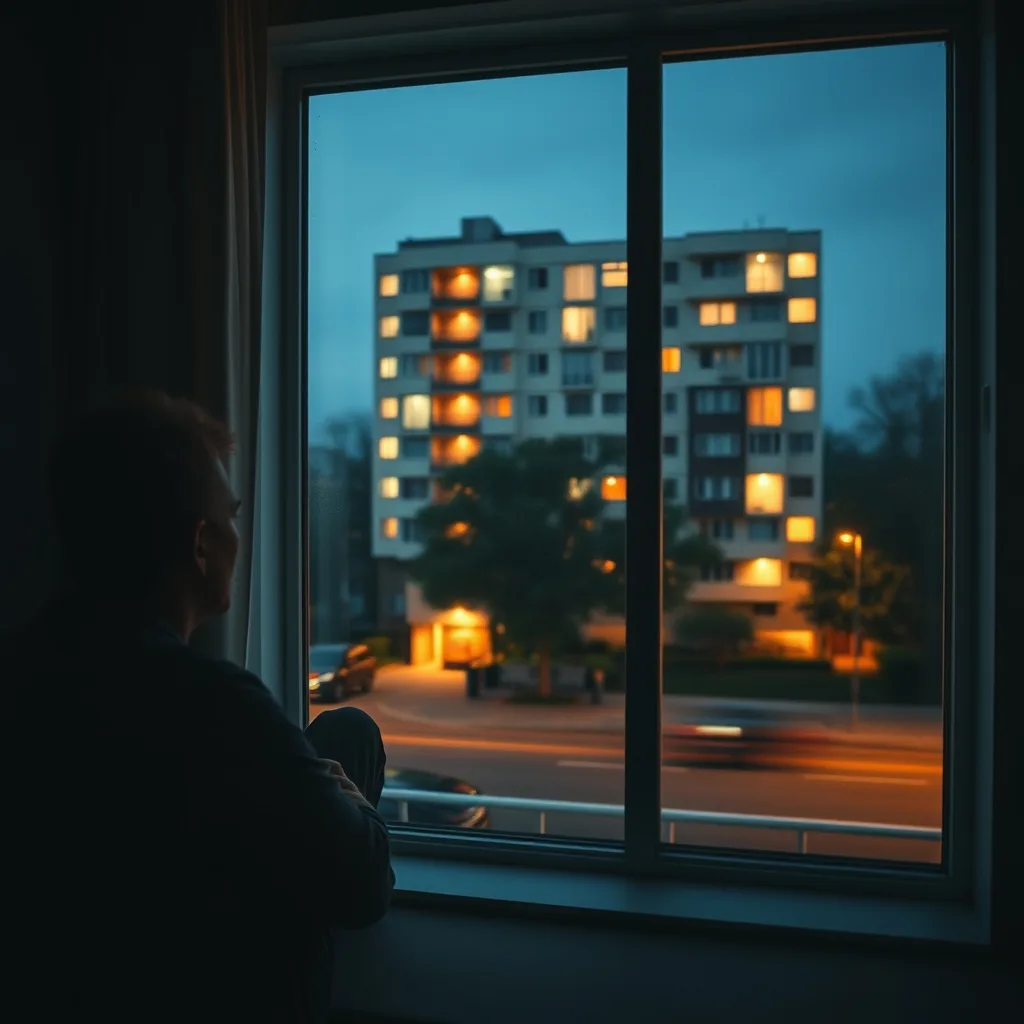
For many, the experience of prolonged isolation—whether during a global pandemic or a personal period of quarantine—is characterized by loneliness, boredom, or anxiety. However, there is a quieter, more shameful emotion that often goes unnamed: quarantine jealousy. This isn’t the romantic jealousy we are familiar with, nor is it a simple desire for someone else’s possessions. Instead, it is a complex form of social comparison triggered by the perceived success, productivity, or stability of others while we feel we are merely surviving.
Key takeaways
- Recognize that social media often displays a distorted, highlight-reel version of life rather than a realistic, behind-the-scenes view.
- Use feelings of jealousy as data to identify your own unmet needs or desires rather than viewing them as personal failures.
- Protect your mental well-being by muting triggering accounts and setting specific time limits for social media consumption.
- Shift from competition to connection by sharing your genuine struggles with others to foster vulnerability and mutual support.
When our physical worlds shrink, our digital worlds expand. We spend hours scrolling through the curated highlights of others, seeing the “home-office hero” who seems to have mastered the art of remote work, the parent who is homeschooling with effortless grace, or the friend who has suddenly attained a fitness goal. In the vacuum of isolation, these images don’t just inspire us; they can act as mirrors reflecting our own perceived failures. This silent resentment can erode our self-esteem and damage our relationships, yet because it feels “petty,” we rarely talk about it.
Defining the Comparison Trap in Isolation
Social comparison theory, first proposed by psychologist Leon Festinger in 1954, suggests that humans have an innate drive to evaluate themselves by comparing their lives to others. In a normal social environment, these comparisons are tempered by real-time interactions. We see our colleagues stressed, we notice our friends’ messy living rooms, and we witness the mundane struggles that humanize everyone.
Isolation removes these tempering factors. When our primary window into the lives of others is a screen, we are engaging in “upward social comparison” almost exclusively. We compare our internal “behind-the-scenes” footage—the pajamas, the anxiety, the unwashed dishes—with everyone else’s “highlight reel.” This creates a distorted reality where it seems as though everyone else has found a secret manual for thriving in quarantine that we somehow missed.
This jealousy is often compounded by a sense of injustice. We may feel that we are working harder or struggling more, yet seeing others appear to glide through the same crisis creates a cognitive dissonance. The result is a simmering resentment that can manifest as irritability toward loved ones or a profound sense of inadequacy.
The Home-Office Divide: Career Envy
One of the most potent triggers for quarantine jealousy is the disparity in professional environments. The “home-office divide” is not just about physical space; it is about the perceived ease of professional existence. You might find yourself feeling a sting of jealousy when a colleague posts a photo of their sleek, dual-monitor setup in a sun-drenched room, while you are balancing a laptop on a kitchen table with a toddler climbing on your leg.
This jealousy often extends to the perception of productivity. There is a specific kind of guilt and envy associated with the “remote work superstar”—the person who seems to be hitting every KPI, attending every Zoom call with perfect lighting, and still finding time for a midday yoga session. When we struggle to focus or find ourselves battling “Zoom fatigue,” seeing someone else’s apparent efficiency can make us feel professionally incompetent.
To navigate this, it is essential to recognize that productivity in isolation is not linear. Many who appear highly efficient are often masking burnout or are sacrificing other areas of their lives to maintain that image. The “perfect” home office is often a carefully cropped photo that excludes the laundry pile just outside the frame.
The “Productivity Porn” Phenomenon
During periods of quarantine, a cultural trend emerged that some call “productivity porn.” This is the glorification of hyper-optimization: learning a new language in three months, starting a successful side hustle from the bedroom, or mastering the art of sourdough fermentation. While these achievements are positive in a vacuum, they become weapons of comparison when broadcasted incessantly on social media.
For the person struggling with clinical depression, chronic fatigue, or the sheer mental load of caregiving, these displays of productivity can feel like an indictment. The jealousy here is not necessarily a desire for the sourdough bread, but a desire for the mental capacity and emotional bandwidth that the other person seems to possess.
It is important to redefine productivity during times of crisis. If your only achievement today was getting out of bed and feeding yourself, that is a victory. The societal pressure to “optimize” a crisis is a fallacy. Survival is, in itself, a productive act. When we stop measuring our worth by the number of new skills acquired, the jealousy associated with others’ achievements begins to lose its power.
Parenting Paradoxes: The Illusion of the Perfect Home
Nowhere is quarantine jealousy more visceral than in the realm of parenting. The “Pinterest Parent” phenomenon—where homes look like curated showrooms and children are engaged in elaborate, educational sensory bins—creates an impossible standard. For the parent who is currently hiding in the bathroom for two minutes of peace while their children scream in the next room, these images can trigger intense feelings of failure and resentment.
This jealousy is often laced with a sense of isolation. We feel that we are the only ones struggling with the chaos, while every other parent has somehow unlocked a level of patience and organization that we lack. This is exacerbated by the lack of “village” support; without the ability to vent to other parents in person, the digital image becomes the only point of reference.
Practical guidance for parents in this position involves seeking out “authentic'” communities. Finding spaces where parents share the messy, unedited truth of isolation can break the spell of the perfect image. Recognizing that the “educational craft project” photo likely took three hours of struggle and ended in a tantrum helps bridge the gap between the image and the reality.
The Psychological Toll of Digital Curated Lives
The constant loop of comparison doesn’t just make us feel bad; it changes our brain chemistry. Every time we see a post that triggers jealousy, our brain may register it as a social threat or a loss of status, triggering a stress response. Over time, this chronic state of “less-than” can lead to anhedonia—the inability to feel pleasure in our own achievements because they don’t measure up to the perceived achievements of others.
Furthermore, this jealousy often leads to “performative productivity.” To combat the feeling of inadequacy, we may start posting our own curated highlights, creating a cycle where everyone is pretending to thrive while everyone is secretly struggling. This creates a collective loneliness; we are all surrounded by people, yet no one is being honest about the difficulty of the experience.
The psychological toll is a gradual erosion of the self. When we define our success by how we compare to a digital ghost, we lose touch with our own internal values and needs. We stop asking, “What do I need to feel okay?” and start asking, “What do they have that I don’t?”
Moving from Resentment to Reflection
Jealousy, while uncomfortable, is actually a powerful piece of emotional data. Instead of suppressing it or feeling ashamed of it, we can use it as a map to discover our own unmet needs. When you feel that sting of quarantine jealousy, ask yourself: What specifically am I jealous of?
If you are jealous of a friend’s new fitness routine, it might not be about the weight loss, but about their discipline or their energy levels. If you are jealous of someone’s home office, it might be a sign that you desperately need boundaries between your work and home life. By shifting the focus from the person to the need, you transform a destructive emotion into a constructive goal.
This process requires a high degree of self-compassion. Acknowledge the feeling without judgment. Say to yourself, “I am feeling jealous right now, and that’s okay. It tells me that I value [X], and I want to find a way to bring more of [X] into my life in a way that is sustainable for me.” This moves the narrative from “I am not enough” to “I have a need that isn’t being met.”
Practical Strategies for Detoxing Your Feed
Since the primary engine of quarantine jealousy is the digital screen, the most effective remedy is a strategic digital detox. This doesn’t necessarily mean deleting all social media, but rather curate your environment to protect your peace.
- The Mute Button is Your Friend: You don’t have to unfollow people, but you can mute accounts that consistently trigger feelings of inadequacy. If a particular “influencer” or even a friend makes you feel worse about your life, remove them from your immediate sight.
- Set “Comparison Windows”: Instead of scrolling throughout the day, designate a specific time (e.g., 20 minutes after dinner) for social media. This prevents the “comparison trap” from bleeding into your morning motivation or your evening wind-down.
- Seek Out “Low-Fi” Content: Actively follow accounts that prioritize authenticity, struggle, and the unedited parts of life. The more you see the “messy middle,” the less power the “perfect end” has over you.
- Practice Active Gratitude: Every time you catch yourself in a spiral of jealousy, force yourself to name three things in your immediate physical environment that you are grateful for. This pulls your brain out of the digital abstract and back into the tangible present.
Rebuilding Connection Without Competition
The final step in overcoming quarantine jealousy is replacing competition with vulnerability. The only way to kill the illusion of the “perfect life” is to admit that your own life is imperfect. This creates a permission slip for others to do the same.
Try initiating conversations that go beyond the surface. Instead of asking, “How is everything going?” (which usually prompts a generic “Good!” response), try asking, “What has been the hardest part of this week for you?” or “I’ve been struggling with [X] lately; have you felt that too?”
When we share our struggles, we move from a state of competition to a state of communion. We realize that the person we were jealous of is likely battling their own invisible demons. This shared humanity is the ultimate antidote to jealousy. It reminds us that while our circumstances differ, our emotional struggles are universal. By building bridges of authenticity, we move from a world of “me vs. them” to a world of “us against the challenge.”
The Socioeconomic Divide: Environmental Envy and Luxury Isolation
While much of the conversation around quarantine jealousy focuses on productivity, there is a deeper, more structural layer rooted in socioeconomic disparity. This is “environmental envy”—the visceral reaction to the physical space in which someone else is isolating. For those living in cramped apartments, shared housing, or unstable living conditions, the digital images of others’ “sanctuaries” can be devastating. It is not merely jealousy of a nice piece of furniture, but a longing for the fundamental psychological safety that space and privacy provide.
Consider the “zoom background” as a modern status symbol. A glimpse of a bookshelf-lined study, a spacious sunroom, or a private balcony during a video call acts as a silent marker of class and stability. For the person working from a shared bedroom or a noisy kitchen, these glimpses trigger a specific kind of resentment: the realization that the “burden” of isolation is not shared equally. The person with the luxury of a dedicated home office isn’t just more productive; they have a physical barrier between their professional stress and their personal sanctuary. To the observer, this looks like a seamless transition into remote life, while for the other, the lack of boundaries leads to a feeling of being “trapped” in their own home.
An edge case of this phenomenon is the “guilt-resentment loop.” Individuals with more space may feel guilty for their privilege, while those without it feel resentful of that privilege. This creates a communicative barrier where neither party feels comfortable discussing their actual living conditions. The person in the mansion doesn’t want to seem boastful, and the person in the studio apartment doesn’t want to seem needy. Consequently, both parties operate under a layer of pretense, further isolating them from genuine human connection and reinforcing the illusion that everyone is coping with the same set of physical constraints.
To mitigate this, we must acknowledge that “home” is not a neutral variable in the equation of mental health. When we feel this environmental envy, it is helpful to decouple the physical space from the emotional state. A large house does not guarantee peace, just as a small apartment does not guarantee chaos. However, acknowledging the systemic unfairness of these disparities allows us to move from a place of personal failure (“I can’t get organized because my house is a mess”) to a place of systemic awareness (“My environment is a limiting factor, and that is a valid struggle”).
Temporal Jealousy: The Intergenerational Theft of Time
Quarantine jealousy often manifests as a conflict over “stolen time,” but the value of that time varies wildly across different life stages. This creates a complex intergenerational tension known as temporal jealousy. A twenty-year-old may feel a profound sense of loss for the “college experience”—the formative years of social exploration and identity building. When they see a peer who managed to find a digital community or a partner during this time, the jealousy is not about the relationship itself, but about the perceived loss of a critical developmental window.
Conversely, a person in their fifties may feel jealousy toward the younger generation’s ability to pivot. They might see a Gen Z freelancer seamlessly transition to a fully remote, global career and feel a sting of resentment for their own tethering to legacy corporate structures or physical workplaces. This is the jealousy of agility. The older adult may feel that their peak earning years or their most active travel years were “robbed,” while the younger person’s life is just beginning. The resentment here is directed at the perceived ease with which some can adapt to a digital-first existence while others feel the weight of an obsolete professional identity.
This tension is further complicated by the “milestone gap.” In a period of isolation, traditional markers of success—weddings, graduations, promotions—are often delayed or digitized. When one person manages to “hack” the system and still achieve a milestone (e.g., a small, socially distanced wedding that looks perfect on Instagram), it can trigger intense jealousy in those whose milestones were completely erased. The jealousy is rooted in the feeling that the other person “cheated” the crisis or was “lucky” enough to bypass the shared trauma of loss.
Navigating temporal jealousy requires a shift in perspective from “who lost more” to “how we each lost differently.” By validating that a lost prom is as emotionally significant to a teenager as a lost retirement trip is to a senior, we break the competitive nature of grief. The goal is to move away from a hierarchy of suffering and toward a mutual recognition that time, once lost, cannot be recovered, but the meaning we derive from that loss can be shared.
The Leisure Lie: “Slow Living” and the Hobbyist Trap
During prolonged isolation, a specific aesthetic trend emerged: the glorification of “slow living.” This includes the curation of cottagecore aesthetics, artisanal bread making, elaborate gardening, and the romanticization of a simplified, analog existence. While these activities are genuinely therapeutic, their digital representation often creates a “leisure lie.” This is the illusion that some people have found a way to exist in a state of permanent, peaceful mindfulness, while others are merely surviving the day.
For the person struggling with the crushing weight of “decision fatigue” or the mental load of managing a household in crisis, the images of someone meticulously pressing wildflowers or reading leather-bound books by a fire can feel like an indictment. The jealousy here is not about the hobby; it is about the *perceived presence* of the other person. We aren’t jealous of the sourdough; we are jealous of the mental quietude that we assume the sourdough-maker possesses. We assume they have reached a state of zen that we are fundamentally incapable of achieving.
This becomes an edge case when the “slow living” is actually a mask for profound boredom or depression. Many who post the most serene images of isolation are actually struggling with the same emptiness as everyone else, but they use the aesthetic of “slow living” as a coping mechanism to give their stagnation a sense of purpose. When we envy the aesthetic, we are envying a curated performance of peace, not actual peace itself. We are comparing our internal turbulence to someone else’s carefully filtered stillness.
To break this cycle, it is useful to practice “de-aestheticizing” our hobbies. Instead of focusing on the end result—the perfect loaf of bread or the beautiful garden—focus on the clumsy, frustrating process. Share the burnt toast and the dead plants. When we expose the friction of the activity, we strip away the leisure lie and replace it with human reality. This transforms the activity from a status symbol of “wellness” back into a simple tool for survival and joy.
Biological Envy: The Health Halo and Vitality Gaps
A less discussed but deeply painful form of quarantine jealousy is “biological envy.” In an environment where the only thing we can truly control is our own body, health and vitality become the ultimate currency. This manifests as jealousy toward those who seem to possess a “health halo”—the people who maintain peak fitness, radiate energy on Zoom calls, or appear to have a natural immunity to the lethargy and “brain fog” that plague so many during isolation.
This jealousy is particularly acute for those living with chronic illness, disability, or mental health struggles. Seeing a friend post a photo of a 5K run or a rigorous home workout can trigger a sense of biological betrayal. The resentment isn’t directed at the friend’s discipline, but at the perceived unfairness of their baseline capacity. It is the feeling of: “I would work just as hard as they are, but my body simply will not allow it.” This is a profound form of isolation because it is a struggle that cannot be solved by a digital detox or a change in mindset; it is a physical reality.
Furthermore, there is the jealousy of “energetic bandwidth.” Some people seem to have an infinite capacity for social interaction, jumping from one virtual happy hour to another without tiring. For the introvert or the person battling clinical depression, this energy feels like a superpower. They may feel a sense of inadequacy, wondering why they are exhausted after one thirty-minute call while others seem to thrive on digital stimulation. This leads to a secondary layer of shame: the feeling that one is “socially failing” because they lack the biological stamina of their peers.
Addressing biological envy requires a radical acceptance of “functional diversity.” We must move away from the idea that there is a “correct” way for a body to respond to crisis. By redefining vitality not as the ability to run a marathon or attend ten Zoom calls, but as the ability to listen to one’s body and provide it with the specific care it needs, we dismantle the health halo. The victory is not in matching someone else’s energy, but in optimizing the energy you actually have.
The Digital Gatekeeper: Social Architecture and Node Envy
In a world where physical gatherings are replaced by group chats and Discord servers, a new social hierarchy emerges. This is the era of the “digital node”—the person who becomes the central hub of communication. The node is the one who organizes the virtual game nights, starts the group threads, and keeps everyone connected. While this role is often exhausting for the person filling it, it creates a powerful form of “node envy” for those on the periphery.
Those who feel excluded or forgotten in the digital shuffle may experience a sharp sting of jealousy toward the node. This isn’t just about popularity; it’s about the perception of *influence* and *belonging*. When you see a screenshot of a separate, smaller group chat that you aren’t a part of, the resulting jealousy is a primitive fear of social death. In isolation, the digital circle is the only circle that exists; to be outside of it is to be invisible. The jealousy is directed at the node’s ability to curate the social landscape and decide who is “in’ and who is “out.”
An edge case occurs when the node is actually struggling with the pressure of maintaining these connections. The person everyone relies on for social cohesion often feels a deep sense of resentment toward the very people who envy them. They may feel that their friendships have become transactional—that they are valued more for their organizational skills than for who they are. This creates a paradoxical dynamic where the most envied person in the group is also the most lonely, as they are performing a role rather than experiencing a connection.
To resolve this, we need to decentralize our social architecture. Instead of relying on a single node, we should encourage “lateral connection.” This means reaching out to individuals one-on-one, rather than waiting for the group organizer to initiate. By building a web of direct connections rather than a hub-and-spoke model, we reduce the power of the node and eliminate the hierarchy that fuels jealousy. The goal is to move from a state of “being included” to a state of “actively including.”p>
The Recovery Race: Residual Comparison and the “Bounce-Back”
As periods of isolation end, quarantine jealousy does not simply vanish; it evolves into “recovery envy.” This is the pressure to return to “normal”—or better yet, to a “new and improved” version of oneself—at the same speed as others. We enter a competitive phase of recovery where we compare our “bounce-back” rates. When a former colleague returns to work with a new promotion, a new wardrobe, and a renewed sense of vigor, it can trigger a feeling of having been “left behind” during the hiatus.
This residual jealousy is often linked to a sense of comparative trauma. If you spent your isolation battling severe depression or grief, seeing someone else treat the period as a “productive sabbatical” can feel like an erasure of your struggle. The resentment is fueled by the discrepancy between the two narratives: the “Growth Narrative” (I used this time to reinvent myself) versus the “Survival Narrative” (I used this time to simply keep breathing). When the Growth Narrative becomes the societal standard for a “successful” quarantine, those with the Survival Narrative feel a profound sense of failure.
The danger of the recovery race is that it encourages a performative return to normalcy. People may hide their lingering anxiety, their diminished social capacity, or their professional setbacks to avoid appearing “broken.” This creates a secondary wave of isolation, where everyone is pretending to have recovered fully, while secretly struggling to reintegrate into a world that feels foreign. The jealousy we feel toward those who seem to have “bounced back” is often a mirror of our own fear that we are permanently changed.
Frequently Asked Questions
Q: Is it normal to feel jealous of people who are struggling more than I am?
A: Yes, this is a variation of quarantine jealousy often linked to “guilt-based comparison.” You might feel jealous of the attention or support someone else receives because of their struggle, even if you wouldn’t want their actual situation. This usually points to a feeling that your own struggles are invisible or undervalued. The key is to validate your own pain without minimizing others’.
Q: How do I stop feeling guilty for being jealous of my friends?
A: First, recognize that jealousy is a primary emotion, not a moral failing. Feeling jealous does not make you a “bad friend”; it makes you human. The guilt comes from the gap between your feeling and your ideal image of yourself. Accept the feeling, investigate the need it’s highlighting, and then consciously choose to act with kindness toward your friend despite the feeling.
Q: Can quarantine jealousy affect my romantic relationship?
A: Absolutely. You might find yourself jealous of your partner’s ability to cope better, their more flexible job, or their seemingly higher energy levels. This can lead to resentment and a lack of empathy. The best approach is to communicate this openly: “I’m struggling with my own feelings of inadequacy right now, and sometimes I feel a bit of jealousy toward how you’re handling things. I’m working on it, but I wanted you to know so you don’t misinterpret my mood.”
Q: What is the difference between healthy inspiration and toxic jealousy?
A: Inspiration feels expansive; it makes you think, “They did it, so maybe I can too!” It gives you energy. Toxic jealousy feels contractive; it makes you think, “They did it, which means I’ve failed.” It drains your energy. If a post makes you feel smaller rather than larger, it is moving from inspiration into toxic comparison.
Q: What should I do if I’m the one being envied, and it’s straining my friendships?
A: If you perceive that others are jealous of your situation, the best approach is humble authenticity. Share your struggles, your mistakes, and the “cost” of your successes. Avoid bragging, but don’t perform a “false struggle” either. Simply be honest about the challenges you face. This humanizes you and reduces the distance that fuels jealousy.
Related posts:
 My Resentment Gems
 The Jealous Person
 What Is Compersion and Why It Might Save Your Relationship
 Vaccine Envy Is Normal—Here’s How to Cope, According to Therapists
 Managing Anger During Quarantine
 From Green Monster to Inner Peace: Transforming Jealousy Into Growth
 Stop Comparing Yourself to Others
 PHA Bodyweight Workout: Efficient Fitness Anywhere, Anytime