The traditional burpee is a staple of high-intensity interval training, loved by coaches for its efficiency and loathed by athletes for its challenge. However, the standard vertical jump burpee can feel repetitive and sometimes harsh on the joints. Enter the Surfer Burpee: a dynamic, flow-oriented variation that incorporates rotational movement, hip mobility, and core engagement. By shifting from a plank position into a lateral, squat-based “pop-up” reminiscent of catching a wave, you transform a standard calisthenic move into a functional athletic drill that mimics the demands of board sports and improves explosive agility.
Understanding the Biomechanics of the Surfer Burpee
Unlike the standard burpee, which focuses on a sagittal plane of motion—moving straight up and down—the Surfer Burpee requires you to transition into the frontal plane. When you perform the “pop-up,” you are landing in a wide, staggered stance. This requires your hips to rotate and stabilize simultaneously. The primary muscles engaged include the pectorals, deltoids, and triceps during the push-up phase, but the magic happens during the transition. Your obliques, hip adductors, and gluteus medius must fire rapidly to catch your body weight as you land in the surfer stance, fostering better balance and coordination.
Step-by-Step Execution for Perfect Form
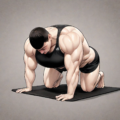
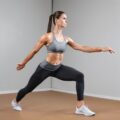
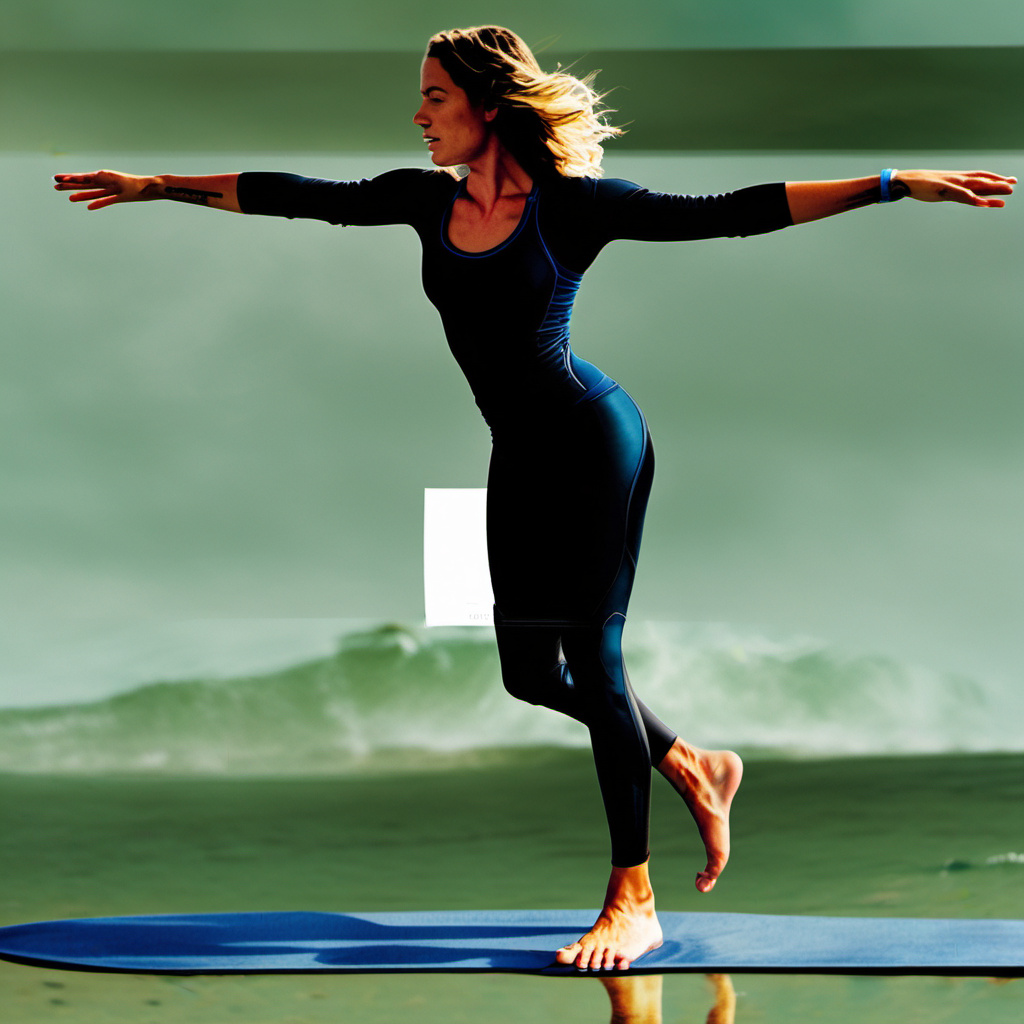
Mastering the Surfer Burpee starts with precision rather than speed. Begin in a standing position with feet hip-width apart. Drop into a squat, placing your hands firmly on the floor. Jump your feet back into a high-plank position, keeping your core braced and spine neutral. Perform a push-up, ensuring your chest touches the floor. As you push back up, jump your feet forward toward your hands, but instead of standing straight up, explosively jump into a wide stance with one foot forward and one foot back, turning your torso to the side as if you are standing on a surfboard. Keep your knees bent and your weight centered. Return to the starting position and repeat, alternating your leading foot each time.
The Benefits of Lateral Movement
Most gym-based training focuses on linear movements like running, lunging, or squatting. While effective, this ignores the lateral plane, which is essential for injury prevention and athletic performance. The Surfer Burpee forces your body to stabilize against side-to-side forces. This is particularly beneficial for runners, cyclists, and team sport athletes who need to change direction quickly. By regularly incorporating this movement, you strengthen the stabilizer muscles around the ankles and knees, creating a more resilient lower body that is better equipped to handle the unpredictable stresses of daily life.
Integrating Surfer Burpees into HIIT Sessions
Because the Surfer Burpee is a high-demand compound movement, it is best placed early in a workout or used as the centerpiece of a HIIT circuit. To create an effective routine, try a 30-second work/30-second rest interval. Start with four rounds of 30 seconds of Surfer Burpees, focusing on the quality of the landing rather than the total count. As you become more comfortable with the flow, you can increase the intensity. Pair these with lower-impact movements like mountain climbers or planks to allow for active recovery while maintaining a high heart rate.
Modifications for Beginners and Advanced Athletes
If you are new to the movement, do not feel pressured to jump immediately. You can perform a “step-back” Surfer Burpee, where you walk your feet back into the plank instead of jumping. You can also skip the push-up initially to focus on the fluidity of the pop-up. For advanced practitioners, add a 180-degree jump during the transition, or hold a pair of light dumbbells to increase the load on your shoulders and core. Always ensure you are working on a non-slip surface, as the lateral jump requires significant traction to prevent injury.
Common Mistakes to Avoid
The most frequent error in the Surfer Burpee is “collapsing” into the landing. If you land with stiff legs, you put excessive stress on your patellar tendons. Always land with a “soft” knee, absorbing the impact through your muscles rather than your joints. Another common mistake is rounding the lower back during the plank phase. Keep your glutes squeezed and your core tight to prevent your hips from sagging. If you find yourself losing balance, widen your stance slightly; a wider base of support provides more stability as you get used to the rotational component.
Improving Mobility for Better Performance
The Surfer Burpee acts as both a workout and a mobility test. If you find it difficult to land in the wide surfer stance, it may indicate tightness in your hip flexors or a lack of thoracic rotation. Supplement your workouts with deep lunges, pigeon pose, and cat-cow stretches. Improving your hip internal and external rotation will make the pop-up feel much more natural. Remember, the goal is not to force the movement but to allow your body to move through its full range of motion fluidly.
Tracking Progress and Consistency
Consistency is more important than intensity when learning a new movement pattern. Start by adding 5 to 10 Surfer Burpees to your warm-up routine three times a week. Use a fitness tracker to monitor your heart rate recovery; as your cardiovascular health improves, you will notice that your heart rate returns to baseline faster after a set of these burpees. Keep a log of your reps, but pay more attention to how “quiet” your landings are. A quiet landing is a sign of good control and muscular engagement, which are the true markers of progress.
Proprioceptive Training and Neuromuscular Efficiency
Beyond simple strength, the Surfer Burpee acts as a sophisticated tool for proprioceptive development—the body’s ability to sense its position in space. When you transition from a symmetrical plank to an asymmetrical, lateral stance, the brain must quickly recalibrate your center of gravity. This rapid-fire communication between the nervous system and the muscular system is what prevents falls and improves agility in chaotic environments. By practicing this movement, you are essentially training your brain to handle sudden shifts in momentum, which translates directly to improved balance when navigating uneven terrain or reacting to external stimuli in sports. To enhance this, try closing your eyes for a split second during the landing phase; this forces your body to rely on internal sensory feedback rather than visual input, creating a deeper level of neuromuscular mastery.
The Role of Thoracic Spine Mobility in the Pop-Up
Many athletes struggle with the Surfer Burpee not because of their legs, but because of a rigid thoracic spine. The rotation required to land in a side-facing stance is heavily reliant on your upper back’s ability to twist relative to your pelvis. If your thoracic spine is locked, your lumbar spine will attempt to compensate, leading to potential lower back discomfort. To unlock this, integrate ‘thoracic openers’—such as thread-the-needle or quadruped rotations—into your warm-up. When performing the pop-up, focus on leading the rotation with your lead shoulder. By initiating the turn from your core and upper back rather than just swinging your hips, you create a more fluid, whip-like motion that reduces the stress on your lower joints and makes the entire movement feel effortless and athletic.
Optimizing the Push-Up Phase for Explosivity
While the push-up in a standard burpee is often treated as a necessary evil, in the Surfer Burpee, it serves as the ‘loading’ phase for your explosive pop-up. To maximize efficiency, do not just drop to the floor; actively ‘pull’ yourself down toward the mat, creating tension in your lats. As your chest makes contact, use a powerful, rhythmic push to launch your upper body upward. By treating the push-up as a plyometric movement rather than a slow grind, you generate the upward momentum needed to snap your feet forward into the surfer stance. This ‘spring-loading’ effect allows you to transition into the landing phase with significantly more speed, effectively turning the entire sequence into a singular, cohesive burst of power rather than three distinct, disjointed segments.
Addressing the ‘Deceleration’ Paradox
The most taxing part of the Surfer Burpee is not the jump, but the deceleration. When you land in that wide, staggered stance, you are essentially slamming on the brakes. Your quadriceps, glutes, and core must work in unison to absorb the kinetic energy of your moving body mass. This eccentric loading is where the real hypertrophy and functional gains are made. To prevent the impact from traveling into the joints, visualize your muscles acting like shock absorbers. Focus on landing ‘quietly’—if you hear a loud slap of your feet on the floor, you are likely failing to engage your glutes and hamstrings early enough in the landing phase. Practice landing by sinking into the hips first, maintaining a vertical torso; this forces the musculature to take the brunt of the load, preserving your knees for the long term.
Structuring Complex Circuits with ‘Flow’ Sequences
To move beyond simple repetition, consider incorporating the Surfer Burpee into a ‘Flow Circuit’ that bridges the gap between cardio and mobility. For example, perform a Surfer Burpee, then immediately move into a side lunge, followed by a lateral crawl. This sequence mimics the movement patterns of martial arts or field sports, where the ability to change levels and directions is paramount. By linking the Surfer Burpee with other lateral-focused exercises, you prevent the workout from becoming a static endurance test. This approach keeps the heart rate elevated while simultaneously improving your overall movement vocabulary, making the Surfer Burpee a ‘hub’ movement around which you can build complex, athletic-focused training sessions that challenge both your lungs and your coordination.
Scaling for Joint Health and Longevity
For those who find the high-impact nature of the explosive jump challenging, there is a ‘low-impact, high-intensity’ modification that maintains the benefits of the rotational movement. Replace the jump with a ‘crawling transition.’ From the plank, bring your feet forward in a wide, sliding motion, maintaining contact with the floor until you reach the surfer stance. While you lose the plyometric vertical force, you gain extended time under tension, which is arguably more effective for building core stability and hip strength. This version allows you to focus purely on the mechanics of the rotation and the depth of the lunge without the jarring impact of a jump. It is an excellent way to maintain high-intensity training during ‘deload’ weeks or when recovering from minor inflammation, ensuring that you can still perform the movement safely regardless of your current recovery status.
The Psychological Component of Athletic Flow
The Surfer Burpee requires a higher level of mental focus than almost any other standard calisthenic. Because the movement is non-linear and requires alternating lead feet, it forces the brain to stay ‘switched on’ throughout the set. This is a form of active meditation; you cannot mindlessly grind through these reps without losing your balance or rhythm. Use this to your advantage. Treat each rep as a chance to practice ‘flow state’—the psychological state where your actions and awareness merge. By concentrating on the transition between the plank and the surfer stance, you cultivate a level of mental presence that carries over into other areas of your training. When you stop worrying about the rep count and start focusing on the perfection of the transition, you will find that the physical fatigue becomes secondary to the mental satisfaction of the movement.
Frequently Asked Questions
Are Surfer Burpees safe for people with knee issues?
If you have pre-existing knee concerns, it is best to consult with a physical therapist before attempting this move. The lateral landing can place torque on the knee joint. If cleared to exercise, focus on low-impact modifications, such as stepping into the stance rather than jumping, to minimize the impact on your cartilage and ligaments.
How many calories does this move burn?
Like any high-intensity compound movement, the calorie burn depends on your body weight, intensity, and metabolic rate. However, because the Surfer Burpee engages the entire body and requires significant coordination, it is generally more metabolically demanding than a standard burpee, making it an excellent tool for increasing total energy expenditure during a workout.
Can I do Surfer Burpees every day?
Because this is a high-intensity, full-body movement, it is not recommended for daily use. Your muscles need time to repair, and your central nervous system needs time to recover from the explosive nature of the exercise. Aim for two to three times per week, allowing for recovery days in between to prevent overtraining and burnout.
What gear do I need for this workout?
Minimal equipment is required. A high-quality, non-slip exercise mat is highly recommended to provide grip and cushioning for your joints. Wear supportive athletic shoes that provide lateral stability. Avoid performing this movement in socks, as the risk of slipping during the wide-stance landing is significant.
How does this compare to a standard burpee?
The standard burpee builds endurance and linear explosive power, while the Surfer Burpee adds a layer of agility, rotational strength, and balance. The Surfer Burpee is more “functional” for sports that require multi-directional movement, making it a superior choice for athletes looking to improve their athletic baseline rather than just their raw cardiovascular output.