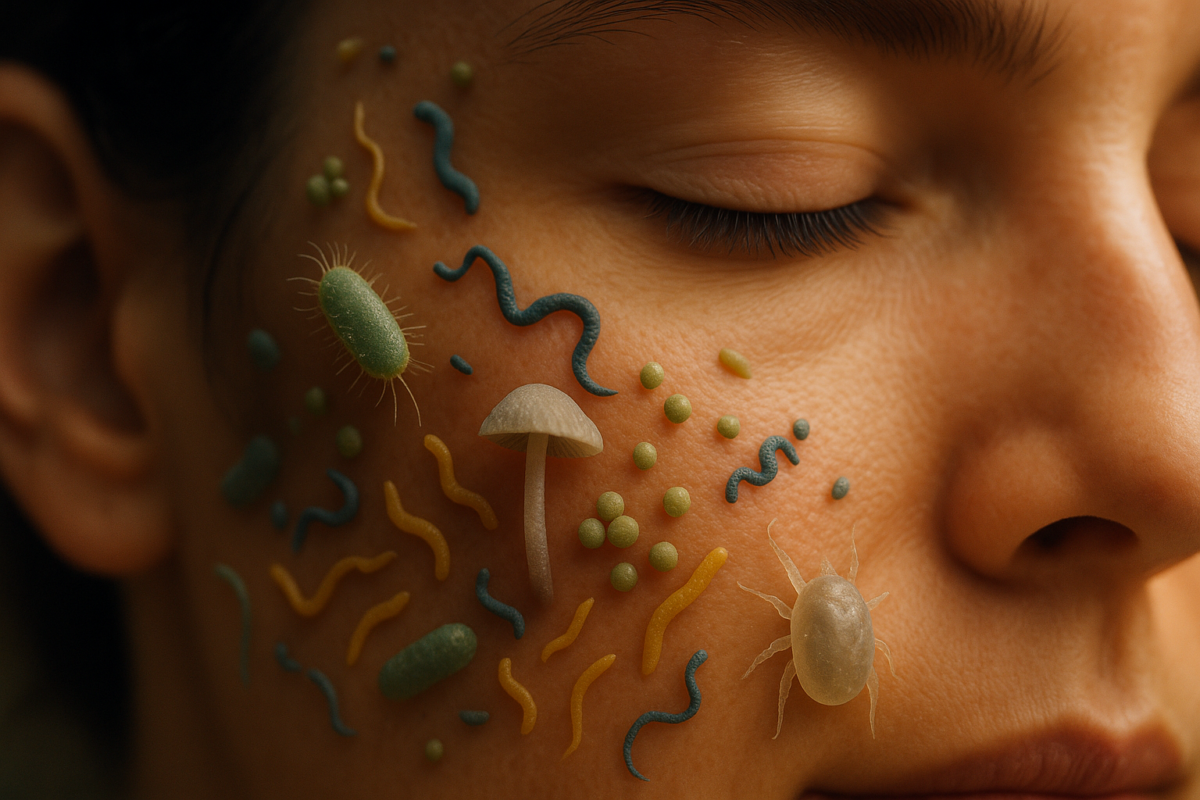
Your body is home to trillions of microorganisms. Long before the word “microbiome” entered everyday conversation, scientists were cataloging the bacteria, fungi, viruses, and archaea that share our skin, gut, mouth, and hair. Today, the term has become almost trendy, splashed across yogurt labels and skincare ads. But behind the marketing lies a genuinely fascinating story about a hidden ecosystem that influences far more about your health than most people realize.
This article takes a practical look at the tiny organisms living on you, what they actually do, and how your daily habits shape the microscopic community you carry from head to toe.
What Lives on Your Skin: Meet the Skin Microbiome
Your skin is the largest organ of your body, and it functions as a living, breathing ecosystem. Estimates suggest that roughly one billion bacteria inhabit every square centimeter of skin, though the exact number varies by location. Some regions, like the oily crease behind your ear or the warm folds of your underarm, host very different communities than the dry skin of your forearm.
Common residents include:
- Cutibacterium acnes (formerly Propionibacterium acnes), which thrives in oily pores and is most associated with acne, though many strains live quietly without causing problems.
- Staphylococcus epidermidis, a friendly species that helps defend against harmful microbes.
- Staphylococcus aureus, which can be harmless on the skin of healthy individuals but may cause infections when the skin barrier is damaged.
- Malassezia, a yeast that feeds on skin oils and is involved in conditions like dandruff and seborrheic dermatitis.
- Corynebacterium and various Micrococcaceae, which prefer moist environments like the feet and groin.
The skin microbiome varies dramatically based on whether the area is dry, moist, oily, or covered by hair. Your eyelids, for instance, host a very different mix than the sole of your foot. Even your left and right hands harbor slightly different microbial communities, shaped by which hand you favor and which surfaces you touch.
Why These Microorganisms Are Not the Enemy
Decades of advertising convinced many people that bacteria are inherently bad, and the goal was to scrub them away. Modern research tells a more nuanced story. Your resident microorganisms are often your first line of defense.
A healthy skin microbiome:
- Competes with harmful microbes for space and nutrients, making it harder for pathogens to settle in.
- Produces antimicrobial compounds that selectively inhibit dangerous bacteria.
- Helps regulate the local pH, which influences which microbes can grow.
- Communicates with immune cells, training them to respond appropriately to threats.
- Aids in wound healing and skin barrier repair.
When this balance is disturbed, the consequences can include eczema, acne, rosacea flares, and increased vulnerability to infections. The skin microbiome is not a collection of germs to eliminate. It is an organ in its own right, woven into the function of your skin.
How Your Daily Habits Shape Your Skin Microbiome
Every shower, every product, and every piece of clothing influences which microbes thrive on your body. Some habits are helpful, while others can quietly deplete beneficial species.
Overwashing and harsh soaps. Antibacterial soaps, hot water, and aggressive scrubbing strip away the oils and microbes that protect your skin. This can leave the skin barrier dry, irritated, and more hospitable to opportunistic organisms.
Frequent use of hand sanitizers. Alcohol-based sanitizers are useful in healthcare settings, but in daily life they wipe out helpful bacteria along with harmful ones. Reserve them for situations where soap and water are unavailable.
Hot water and long baths. Heat disrupts the lipid layer that helps skin retain moisture. Lukewarm water and shorter showers are generally easier on your microbiome.
Tight, non-breathable clothing. Fabrics that trap sweat and heat create ideal conditions for yeast and odor-causing bacteria. Cotton, linen, and moisture-wicking fabrics allow better airflow.
Diet. What you eat influences your gut microbiome, which in turn interacts with your skin through the so-called gut-skin axis. Diets high in fiber, colorful plants, and fermented foods tend to be associated with a more diverse and resilient microbial community.
Stress and sleep. Chronic stress and poor sleep elevate cortisol, which can alter both gut and skin microbial balance. People often notice breakouts or flare-ups during stressful periods, and the microbiome is part of that story.
Skincare Choices That Support, Rather Than Strip
The skincare industry has begun to catch up with microbiome science. Instead of trying to sterilize the skin, the focus is shifting toward supporting its natural ecosystem.
Look for products that:
- Use mild, pH-balanced cleansers rather than high-pH bar soaps that can disrupt the acid mantle.
- Avoid unnecessary preservatives like parabens if you notice irritation, though the science on this is complex.
- Include prebiotics (ingredients that feed beneficial microbes) such as certain sugars, plant extracts, and ferment filtrates.
- Include postbiotics, which are beneficial byproducts of microbial activity, such as short-chain fatty acids and peptides.
- Use probiotics, or live beneficial bacteria, although their stability in skincare is still being studied.
If you deal with persistent skin concerns, a dermatologist can perform a skin microbiome analysis to see which organisms are dominant and which may be missing. This is increasingly available through specialty clinics and even some consumer testing services.
Microbes Beyond the Skin: A Quick Map of Your Body’s Ecosystems
The skin is only one neighborhood in a much larger city. Each region of the body hosts its own unique community.
Gut microbiome. The largest and most studied microbial community, containing roughly 38 trillion bacteria. It influences digestion, immune function, mood, and even sleep. A diverse gut microbiome is generally associated with better health outcomes.
Oral microbiome. Your mouth hosts hundreds of species that live on teeth, gums, tongue, and cheeks. Balanced communities help protect against cavities and gum disease. Disrupting them, for instance by overusing mouthwash, can sometimes backfire.
Vaginal microbiome. Dominated by Lactobacillus species in most healthy individuals, which help maintain a protective acidic environment.
Scalp and hair microbiome. Includes Malassezia and various bacteria that influence dandruff, itch, and oil production.
Foot microbiome. A warm, dark, moist environment that hosts a particularly rich community, including the bacteria responsible for foot odor.
These ecosystems do not operate in isolation. The gut and skin are in constant biochemical conversation, and shifts in one often show up in the other. This is why addressing skin issues from the inside out, through diet, sleep, and stress management, often works better than topical products alone.
Common Myths About the Microorganisms Living on You
Myth 1: All bacteria are harmful. Only a tiny fraction of bacteria cause disease. Most are neutral or actively helpful. Treating your body like a surface to be sterilized is counterproductive.
Myth 2: You need antibacterial soap to stay clean. Regular soap and water remove the vast majority of pathogens through mechanical action. Antibacterial additives offer little extra benefit in daily life and may contribute to antimicrobial resistance.
Myth 3: The microbiome is fixed at birth and never changes. While early life events like birth method, breastfeeding, and antibiotic use have lasting effects, your microbiome remains remarkably plastic throughout life. Diet, exercise, environment, and relationships all shape it.
Myth 4: If a product says “probiotic” on the label, it will work. Probiotic skincare and supplements vary widely in quality. Strain specificity, dose, and delivery method matter enormously. A generic label claim tells you very little.
Myth 5: Showering less is always better. Moderation matters. Heavy exercise, hot climates, and certain jobs require regular washing for both comfort and hygiene. The goal is balance, not avoidance.
Practical Habits for a Healthier Skin Microbiome
If you want to start supporting the tiny organisms living on you, here is a simple, evidence-informed routine.
- Wash with lukewarm water and a fragrance-free, pH-balanced cleanser. Pat dry rather than rubbing.
- Skip the antibacterial soap for everyday use. Reserve it for situations where it is genuinely needed, such as caring for someone who is ill or handling raw meat.
- Moisturize after washing to support the skin barrier. Choose products with ceramides, glycerin, or squalane if your skin tends to be dry.
- Eat the rainbow. A varied, plant-rich diet feeds a diverse gut microbiome, which indirectly benefits the skin.
- Get enough sleep. Aim for seven to nine hours. Your microbes, like the rest of you, do important work while you rest.
- Manage stress through movement, time outdoors, or whatever reliably calms your nervous system. Your skin will thank you.
- Be cautious with antibiotics. Use them when prescribed, but never for viral illnesses, and complete the full course as directed. After a course, focus on rebuilding microbial diversity through diet and, if appropriate, targeted probiotics.
- Change out of sweaty clothes promptly after workouts to avoid giving moisture-loving microbes a head start.
These are not extreme or expensive changes. They are simply the kinds of small daily choices that allow your body’s smallest residents to thrive.
The Gut-Skin Axis: How Your Digestive System Talks to Your Skin
While the skin microbiome receives significant attention, its relationship with the gut microbiome—often called the gut-skin axis—is equally profound yet frequently overlooked. This bidirectional communication network means that imbalances in one domain can ripple outward to affect the other, creating feedback loops that influence everything from acne breakouts to chronic inflammatory skin conditions.
Research has shown that the gut microbiome produces metabolites such as short-chain fatty acids (SCFAs) and bile acids that travel through the bloodstream and modulate immune responses in the skin. When the gut microbiome becomes dysbiosis—shifting toward a more pathogenic profile—the resulting inflammation can trigger systemic effects that manifest as facial redness, cystic acne, or even rosacea. Conversely, a healthy gut environment supports the production of regulatory T cells that can migrate to the skin and help suppress excessive inflammatory reactions.
Consider the case of atopic dermatitis, a chronic inflammatory skin condition that primarily affects children. Studies demonstrate that patients with severe eczema often exhibit distinct differences in their gut bacterial profiles compared to unaffected peers. Specifically, reductions in beneficial Firmicutes and Bifidobacteria—commonly known “good” bacteria—have been correlated with higher levels of pro-inflammatory cytokines circulating in the blood. By nurturing the gut microbiome through fiber-rich diets and minimal antibiotic exposure, we can potentially reduce the severity of atopic symptoms over time.
The reverse direction of the axis also operates. Skin conditions can influence gut health through mechanisms involving the gut permeability pathway, commonly referred to as “leaky gut.” When the skin barrier becomes compromised due to chronic inflammation or frequent antibiotic use, endotoxins leak into the bloodstream, triggering systemic inflammation that can exacerbate gut disorders. This creates a cyclical pattern where skin issues drive digestive dysfunction and, in turn, worsen the skin problems.
For clinicians and individuals alike, understanding this axis offers practical guidance. Dietary interventions that prioritize polyphenolic compounds—such as green tea catechins, cranberry anthocyanins, and garlic-derived sulfur compounds—have demonstrated promise in restoring microbial balance in both directions. Fermented foods like kimchi, sauerkraut, and kefir introduce live beneficial bacteria (lactobacilli and bifidobacteria) that can colonize the gut and subsequently signal the skin through multiple pathways, including the release of neuropeptides that modulate pain perception and itch sensitivity.
Moreover, the gut-skin axis extends beyond simple metabolite exchange. The vagus nerve serves as a direct neural highway connecting the gut to the brain and skin. Activation of this nerve via enteric nerve stimulation—achieved through certain probiotic strains or dietary patterns—can influence cutaneous immune responses. This makes the concept of “gut-directed therapy for skin conditions” not merely theoretical but biologically plausible, offering a rationale for emerging treatments such as vagus nerve stimulation paired with targeted microbiome modulation.
In summary, the gut-skin axis represents one of the most compelling examples of systemic interdependence in human biology. Recognizing that your digestive health is inseparable from your dermal health empowers both researchers and patients to adopt holistic approaches. Rather than viewing the skin and gut as isolated battlegrounds, consider them as communicating partners in a lifelong dialogue that shapes overall wellness.
Infancy and Early Life: The Critical Window for Microbial Colonization
The first few years of life represent a pivotal period during which the infant’s microbial ecosystem is established. Unlike adults whose microbiomes gradually diversify over decades, infants experience rapid colonization following birth—a process profoundly influenced by birth method, mode of delivery, and early environmental exposures. Understanding these early influences provides crucial context for interpreting later developmental trajectories and for identifying intervention points that may prevent future dysbiosis.
Vaginal delivery versus cesarean section emerges as one of the most significant factors shaping neonatal microbiome development. During a vaginal birth, the newborn is exposed to maternal vaginal flora—including Lactobacillus, Firmicutes, and Streptococcus species—that seed the infant’s gut and skin. This early inoculation establishes foundational microbial communities that persist into childhood. In contrast, infants born via caesarean section miss this natural inoculum, leading to lower initial diversity and reduced colonization by key beneficial taxa. Longitudinal studies tracking these cohorts reveal that C-section-born children may exhibit altered immune responses, including increased susceptibility to allergic diseases and autoimmune conditions, partly attributable to delayed and atypical microbiome maturation.
Beyond mode of delivery, the composition of the cord blood and placenta plays a role in early colonization. Recent metagenomic analyses indicate that placental microbiota, though historically underappreciated, contributes low-level colonization to the newborn, particularly in the skin and upper respiratory tract. These primed populations help establish competitive dynamics that prevent pathogen overgrowth, a phenomenon known as ecological succession at play in the developing microenvironment.
Breastfeeding further enhances this process by introducing additional microbial consortia through milk transfer. Human milk contains oligosaccharides that serve as prebiotic substrates for commensal bacteria, promoting their proliferation while inhibiting pathogen growth. Additionally, antibodies and immunomodulatory molecules in breast milk directly shape immune education within the infant’s microbiome. Exclusively breastfed infants demonstrate greater colonization by beneficial Bifidobacterium spp., which correlates with lower rates of colitis and stronger gut barrier function.
However, modern challenges threaten optimal early colonization. Formula feeding replaces human milk’s complex microbial ecosystem with processed alternatives lacking comparable diversity. Premature infants face heightened risks due to immaturity of both gastrointestinal and immune systems, leaving them vulnerable to opportunistic infections. Similarly, infants raised in highly sterile environments—where parents practice strict hygiene protocols—may experience insufficient microbial exposure, contributing to the rising incidence of atopic conditions like asthma and allergic rhinitis.
Intervention strategies targeting early life are therefore gaining momentum. Probiotic supplements given shortly after birth have shown mixed results; while some studies report improvements in gut barrier integrity, others find limited clinical significance. The key appears to be timing and specificity—using strain-matched probiotics that mirror the mother’s endogenous microbiome rather than generic formulations. Parallel to this, breastfeeding promotion initiatives have seen renewed interest as a cost-effective strategy for fostering a healthy microbial foundation.
For parents and caregivers, practical steps include:
– Ensuring vaginal birth when possible, or providing alternative bacterial inoculation through specialized techniques if medically indicated.
– Encouraging exclusive breastfeeding for at least six months to leverage milk-derived prebiotics and immunomodulators.
– Minimizing unnecessary antibiotic use in infancy, recognizing that broad-spectrum drugs can permanently alter the nascent microbiome.
– Reducing household antibiotic exposure by choosing gentler disinfectants and limiting shared items between family members.
– Practicing mindful hygiene that preserves beneficial microbes while maintaining necessary sanitation.
By safeguarding the earliest opportunities for microbial colonization, we lay the groundwork for lifelong health outcomes, reducing the burden of preventable diseases from infancy onward.
Travel, Geography, and Seasonality: External Forces That Reshape Our Microbial Communities
No individual exists in isolation. The human microbiome is constantly adapting to external pressures, and major life events such as relocating, traveling, and changing seasons exert measurable forces on our resident microorganisms. These shifts highlight the remarkable plasticity of our microbial ecosystems and underscore the importance of perspective when evaluating personal health trends or treatment responses.
Cross-cultural migration provides a clear illustration of how geography reshapes microbiome composition. Individuals moving from urban, high-microbe-density environments to rural or desert regions often undergo rapid community turnover. Studies comparing microbiome profiles before and after international relocation reveal shifts in dominant taxonomic groups, with increases in indigenous gut and skin bacteria in newly settled environments and decreases in cosmopolitan species. The mechanism involves both horizontal transmission—where resident microbes encounter new competitors—and vertical transmission, as food sources, water, and housing materials differ substantially between locations.
Seasonal variation adds another layer of complexity. As temperatures fluctuate, microbial communities adapt accordingly. In temperate climates, winter months typically correlate with decreased skin microbial diversity because cold weather reduces sweating and skin hydration, diminishing the substrate that supports diverse resident populations. Conversely, summer and humid months promote increased expression of Malassezia species on the scalp and face, while warmer skin temperatures favor Corynebacterium clusters. These seasonal patterns demonstrate that our bodies are not static vessels but dynamic ecosystems responding to environmental cues.
Air pollution and indoor climate also act as silent architects of microbial ecology. Urban dwellers are exposed to particulate matter and volatile organic compounds that can select for resistant bacterial strains while suppressing sensitive taxa. Indoor heating systems further compound this effect by drying out indoor air and concentrating airborne microbes. Long-term exposure to poor indoor air quality has been linked to elevated systemic inflammation markers and worsened respiratory conditions, suggesting that pulmonary and possibly cutaneous microbiomes may receive indirect but meaningful signals from such exposures.
Extreme experiences, such as prolonged immersion in water or exposure to novel environments like glaciers and deserts, produce dramatic microbial shifts. Scuba divers and polar travelers report altered skin and nasal microbiome compositions during trips, likely due to contact with unique microbial reservoirs found in marine environments or snowpack. Such extreme cases remind us that the boundary between “inside” and “outside” is permeable, and our internal ecosystems continue to evolve through contact with vastly different biomes.
For individuals concerned about their personal microbial resilience, awareness of these external drivers can inform preventive measures. Maintaining consistent daily routines—even when traveling—helps stabilize baseline microbial populations. Packing personal hygiene essentials, using portable UV sanitizers, and preserving familiar dietary patterns can mitigate the disruptive impact of transient lifestyles. Moreover, recognizing that temporary changes in microbial communities are normative responses to life’s inevitable transitions allows for greater patience and realistic expectations when monitoring health metrics.
Finally, these external factors intersect with individual lifestyle choices. Someone living in a tropical climate may naturally cultivate a diverse skin microbiome suited for humidity and warmth, whereas a person who spends most time indoors in controlled environments develops a more sheltered microbial profile. Both orientations are valid adaptations, but they also mean that interventions aimed at balancing the microbiome must account for site-specific baseline conditions. A treatment designed for a sweat-heavy, sun-exposed individual might prove ineffective—or even counterproductive—for someone accustomed to cooler, drier locales.
In sum, travel, geography, and seasonality prove that our microbial inhabitants are responsive citizens of their host bodies, continuously negotiating identity and function in response to the world around them. Acknowledging this fluidity fosters a more compassionate and scientifically grounded approach to personal health maintenance, one that respects the dynamic nature of the microbiome rather than treating it as a fixed set of targets.
Medical Interventions: Probiotics, Prebiotics, and the Frontier of Microbiome Therapy
As scientific understanding of the microbiome deepens, so too do therapeutic applications aimed at harnessing microbial communities for clinical benefit. The field has evolved beyond simplistic claims of “live bacteria” to sophisticated categories of intervention that integrate strain specificity, dosage precision, and delivery innovation. This expansion reflects growing evidence that targeted microbiome modulation can address conditions once considered intractable.
Probiotics—live microorganisms administered to confer health benefits—have transitioned from anecdotal supplementation to evidence-backed clinical tools. Research increasingly focuses on specific strains rather than broad-spectrum formulas. For example, Lactobacillus reuteri DSM 17934 has demonstrated efficacy in reducing behavioral problems in infants with autism spectrum disorder, while Staphylococcus ruminans and Enterococcus faecium have shown promise in mitigating Clostridioides difficile recurrence. The critical lesson is that strain identity is paramount; a probiotic labeled simply “Lactobacillus” may act differently depending on whether it is L. rhamnosus GG or L. acidophilus MC59. Clinical trials emphasizing strain purity and genetic stability yield the most robust outcomes.
Prebiotics complement probiotics by providing selective fuel for beneficial microbes. Indigestible fibers such as inulin, fructooligosaccharides (FOS), and galactose-derived oligosaccharides serve as primary energy sources for Bifidobacteria and certain Lactobacilli. Consuming adequate amounts of prebiotic fiber—typically 25 grams daily from fruits, vegetables, whole grains, and legumes—enhances microbial diversity and SCFA production, which in turn supports gut barrier integrity and immune regulation. The synergy between prebiotics and probiotics, sometimes termed simultaneous administration, mimics natural ecological interactions and may amplify therapeutic effects.
Postbiotics represent perhaps the most promising frontier, referring to bioactive molecules generated by microbial metabolism that can exert physiological effects independently of viable bacteria. Short-chain fatty acids (butyrate, acetate, propionate), bacteriocins, and exopolysaccharides produced by commensals possess anti-inflammatory, antimicrobial, and metabolic benefits. Several commercial postbiotic formulations include fermented dairy hydrolysates, saponin-rich plant extracts, and peptide complexes derived from microbial fermentation. Their stability during storage and the ability to reach systemic circulation make them attractive for targeted applications, especially in contexts where live cultures might be degraded.
Fecal microbiota transplantation (FMT) stands as the most radical and transformative intervention currently available. Originally developed for recurrent Clostridioides difficile infection, FMT involves transferring stool microbiota from a healthy donor into a treated patient, establishing a balanced ecosystem that outcompetes pathogenic invaders. Success rates exceed 90% in clinical trials, with durable remission reported in many recipients. However, logistical hurdles—donor screening, standardized processing, and regulatory approval—limit widespread adoption. Emerging autotransplant techniques and engineered microbial consortia aim to overcome these barriers while maintaining safety.
Beyond conventional therapies, emerging technologies are redefining how we study and manipulate the microbiome. Metagenomics enables unbiased profiling of entire microbial communities from saliva, stool, skin, and tissue samples, revealing previously unknown species and functional capabilities. Single-cell genomics provides insights into rare microbial variants that may hold therapeutic potential. Computational models predict dysbiosis signatures associated with specific diseases, creating biomarkers for early detection and personalized treatment selection.
Nevertheless, several caveats temper enthusiasm. The microbiome is extraordinarily variable between individuals, meaning that interventions effective for one person may fail for another. Quality control of commercial products remains inconsistent, as does subject expertise among practitioners. Furthermore, while large-scale randomized trials are increasing, many findings from observational studies require replication in controlled settings before becoming standard-of-care recommendations. The journey from laboratory discovery to bedside application continues, but the trajectory is undeniably positive.
In conclusion, the landscape of microbiome-based medicine is rapidly evolving. Probiotics, prebiotics, postbiotics, and FMT collectively represent a toolbox that moves beyond simple “cleanliness” toward genuine ecological engineering. For individuals seeking to optimize their health, consulting with microbiome-specialized clinicians and prioritizing strain-specific, evidence-based products may yield meaningful improvements in both skin and systemic wellbeing.
Beyond the Face: The Mouth, Lungs, and Other Unconventional Microbial Fortresses
While the skin microbiome garnered popular attention, numerous other body sites host their own intricate microbial ecosystems, each playing distinct roles in human health. Expanding the scope beyond the visage reveals fascinating parallels, shared vulnerabilities, and unique therapeutic opportunities that deserve dedicated consideration.
The oral cavity harbors roughly 700–800 species of bacteria and fungi, forming a delicate equilibrium on teeth, gingival crevices, and the oral mucosa. Healthy oral microbiomes are predominantly composed of Gram-positive rods and cocci, including Streptococcus mutans, Porphyromonas gingivalis, and Candida albicans (in denture wearers). Dysbiosis in the mouth—which manifests as plaque accumulation, gingivitis, or periodontitis—directly impacts systemic health through mechanisms such as chronic cardiovascular inflammation and respiratory compromise. The link between periodontal disease and heart attack risk, for instance, originates from bacterial translocation into the bloodstream, where these microbes can trigger atherosclerotic plaque instability.
Similarly, the respiratory tract maintains its own microbiome, particularly in the nose and bronchi. Nasal passages are inhabited by Rhinobacterium, Sphingomonas, and various Staphylococcus species that defend against inhaled pathogens. The lung microbiome, though less studied, shows marked seasonal variation tied to pollen and mold exposure. Airborne microbes can seasonally dominate the airway, influencing susceptibility to asthma attacks and chronic obstructive pulmonary disease exacerbations. Interestingly, viral and fungal pathogens can exploit these microbial niches; for example, Aspergillus species thrive in moist, poorly ventilated environments and pose particular risks to immunocompromised individuals.
The genital tract, specifically the vagina, exemplifies another critical interface. A healthy vaginal microbiome is dominated by Lactobacillus species that produce hydrogen peroxide and lactic acid, creating an acidic environment (pH 3.5–4.0) that inhibits the growth of pathogenic organisms like Escherichia coli and Gardnerella vaginalis. Disruption of this acidic milieu—noticeable to many women as vaginal discharge or odor—signals dysbiosis and raises the risk for bacterial vaginosis, pelvic inflammatory disease, and even reproductive cancers. Restoring lactobacillary dominance through balanced probiotic intake or vaginally applied formulations offers tangible relief.
Hair follicles and the scalp form another overlooked arena. Sebum-rich environments foster Malassezia globosa and Malassezia furfur, yeasts that thrive on lipids secreted by sebaceous glands. Overgrowth of these yeasts contributes to dandruff, seborrheic dermatitis, and follicular hyperkeratosis. The interplay between lipids, hormones, and microbial metabolism in the pilosebaceous unit illustrates the intimate connection between skin physiology and microbial ecology.
Even the gastrointestinal tract itself harbors a massive microbiome—estimated at 38 trillion bacterial cells, nearly doubling the cell count of human DNA. This gut ecosystem coordinates nutrient absorption, modulates immune signaling, and even influences behavior through the gut-brain axis. Genetic variations in host genes, dietary patterns, and medication use (notably antibiotics) can drastically alter composition, with implications ranging from obesity to mood disorders.
These peripheral microbiomes are not isolated islands; they communicate extensively with each other through shared metabolites, immune mediators, and host receptor signaling. A disruption in one system propagates through these networks. For example, oral dysbiosis can alter systemic inflammation, potentially worsening gut conditions, while gut alterations may influence skin conditions like psoriasis. Recognizing these interconnectedness encourages a holistic view of health, where interventions targeting one body site can cascade across the entire organism.
For practitioners and patients alike, the implication is clear: maintaining microbial harmony requires a systems-thinking approach. Simple actions like consuming a variety of fermented foods, staying hydrated, avoiding unnecessary antibiotics, and managing stress yield benefits across all microbial communities simultaneously. The challenge lies in tailoring strategies to the specific site of concern while respecting the inherent diversity and resilience of the human ecosystem.
Age and Time: How the Human Microbiome Evolves Throughout Lifetime
One of the most sobering realities is that the human microbiome is not static—it undergoes continuous evolution from childhood through old age. Each phase carries its own microbial signature, shaped by developmental milestones, lifestyle choices, and environmental exposures. Understanding these temporal shifts illuminates why health manifestations often begin earlier or later than expected and provides insight into the longevity of acquired microbial communities.
During infancy and early childhood, the gut microbiome matures rapidly. Newborns possess a relatively sparse and immature microbiota, gradually acquiring diversity as they consume breast milk, solid foods, and environmental antigens. By age two, most children display adult-like microbial profiles, though subtle regional differences persist between arms, legs, and other body sites. This early establishment explains why early-life interventions—such as breastfeeding or gentle antibiotic stewardship—can have enduring consequences.
Adolescence brings another wave of transformation driven by hormonal surges and social behaviors. Puberty triggers blooms of specific bacterial taxa, particularly in the gut, alongside significant shifts in skin microbiome composition due to increased sebum production. The adolescent skin microbiome differs markedly from that of older children, reflecting heightened demand for antimicrobial defense against abundant microbial loads and hormonal-driven changes in skin barrier function.
Young adulthood witnesses the consolidation of adult-like microbial patterns, though variance remains substantial. During this period, lifestyle factors such as diet, exercise, smoking status, and alcohol consumption exert measurable influences. For instance, vegetarians and vegans tend to harbor higher levels of Bifidobacteria, while omnivorous diets skew toward Firmicutes. Importantly, these individual differences are not random; they track closely with self-reported health status, suggesting that microbial composition may serve as a biomarker of overall wellbeing.
In midlife and older age, microbial diversity generally declines—a phenomenon observed across multiple body sites. Confined living spaces, medication regimens (particularly polypharmacy), reduced physical activity, and dietary simplification contribute to this attrition. Concurrently, a subset of individuals demonstrates exceptional resilience, maintaining high diversity well into their seventies and eighties. These “old-growth” microbiome profiles correlate with slower aging phenotypes, improved metabolic health, and enhanced cognitive reserve.
Aging also introduces new vulnerabilities. Immune senescence leads to diminished regulatory capacity, allowing opportunistic pathogens to gain footholds more easily. The gut lining becomes more permeable, facilitating bacterial translocation and systemic inflammation (“inflammaging”). Skin aging accelerates, with thinning epidermis and compromised barrier function creating fertile ground for pathogens. These changes underscore the importance of proactive microbiome preservation through diet, social engagement, and stress management in later life stages.
For clinicians, this evolutionary perspective reframes aging-related health decline. Rather than attributing age-related pathology solely to cellular damage, we might consider contributions from declining microbial diversity and impaired interorgan communication. Interventions targeting the microbiome—such as postbiotic supplementation, personalized dietary advice, or even phage therapy—could complement traditional geriatric care strategies.
In conclusion, the age gradient through the microbiome narrative illustrates both continuity and change. While core microbial lineages persist across the lifespan, their relative abundances and functional capacities shift in concert with developmental demands and environmental circumstances. Recognizing this dynamic nature empowers individuals to make informed longitudinal choices, knowing that the decisions we make today about hygiene, nutrition, and social connection will echo through our microbial heritage years hence.
Emerging Frontiers: Synthetic Biology and Future Directions for Microbiome Medicine
At the cutting edge of microbiome science lies a revolution not of pills or creams, but of molecular engineering. Synthetic biology approaches are enabling the creation of designer microbial communities tailored for specific therapeutic goals, blurring the lines between natural ecology and biomedical design.
Frequently Asked Questions
Are the microorganisms living on me actually beneficial?
Yes, the vast majority are either neutral or beneficial. They help protect you from harmful microbes, train your immune system, and support the normal function of your skin and other organs. Only a small percentage of microorganisms have the potential to cause disease, and even those usually remain harmless when your microbial communities are well balanced.
How long does it take to change my skin microbiome?
Your skin microbiome can shift within days when you change your routine, environment, or diet. However, building a stable, resilient community usually takes weeks to months of consistent habits. Major disruptions, like a course of antibiotics, may take longer to fully recover from.
Is microbiome skincare worth the price?
Some microbiome-focused products contain genuinely helpful ingredients like prebiotics, postbiotics, and gentle formulations. Others rely on the term as a marketing angle. Look for products that disclose their active ingredients, the strains or compounds they contain, and any clinical data behind them. Price alone is not a reliable indicator of quality.
Can I really improve my skin by improving my gut health?
There is meaningful research linking gut health to skin conditions like acne, eczema, and rosacea. While gut-focused changes are not a magic cure, eating a fiber-rich, plant-diverse diet, managing stress, and getting good sleep tend to show up in the skin over time. Topical care still matters, but the two are not separate systems.
Should I get my microbiome tested?
Consumer microbiome tests can be interesting, but the science is still evolving and the results can be hard to interpret without expert guidance. For most healthy people, focusing on the lifestyle habits described above will do more than a test report. If you have a specific, persistent skin or gut condition, talk to a healthcare provider about clinically validated testing rather than a general consumer kit.
Related posts:
 The Gut-Brain Highway: How Your Stomach Controls Your Mood
 The Hidden Gut Connection Behind Chronic Fatigue Syndrome
 Science Says Wine Actually Improves Your Gut Health
 Meet Your Second Brain: The Nervous System in Your Belly You Never Knew Existed
 Gut Health for Longer Life
 PHA Bodyweight Workout: Efficient Fitness Anywhere, Anytime
 New Mom, New Science: How Your Gut Health Could Be the Key to Beating Postpartum Blues
 The Surprising Way Your Gut Controls Your Weight