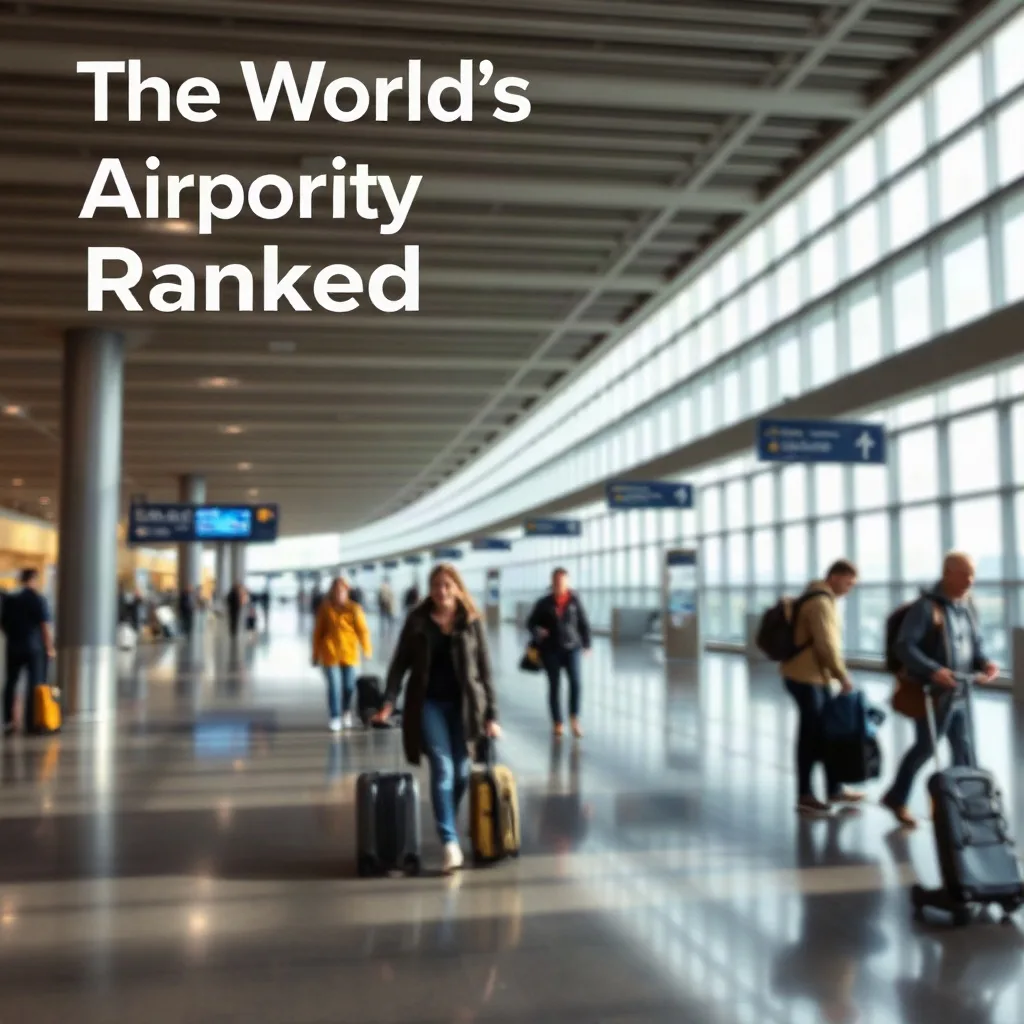
Travelers spend hours in terminals, yet few consider how airport environments affect wellbeing. From air filtration to food choices, the health profile of an airport can shape energy levels, immune resilience, and stress. This guide ranks the world’s healthiest airports, explains the criteria, and offers actionable steps you can take on your next journey.
Why Airport Health Matters
Modern terminals host thousands of passengers daily, creating a dense mix of airborne particles, noise, and limited movement. Poor ventilation can concentrate volatile organic compounds, while limited healthy food options push travelers toward ultra‑processed snacks. Research links prolonged exposure to stale air and high noise levels with reduced cognitive performance and higher cortisol. Choosing airports that prioritize clean air, nutritious meals, and spaces for movement can protect both short‑term comfort and long‑term health.
Beyond immediate comfort, chronic exposure to sub‑optimal terminal conditions may exacerbate respiratory conditions, increase fatigue, and diminish immune response during long‑haul travel. Frequent flyers who consistently use healthier airports report fewer post‑flight colds, better sleep quality on arrival, and higher productivity during layovers. Investing in airport wellness is therefore an investment in the traveler’s overall performance and wellbeing.
Methodology Behind the Rankings
Our ranking combines publicly available data from airport sustainability reports, independent air‑quality monitoring, passenger surveys, and third‑party certifications such as LEED, WELL, and Airport Carbon Accreditation. Each airport receives a score across five pillars: air quality, nutrition, physical activity, mental‑wellness amenities, and environmental stewardship. Weighting reflects the relative impact on traveler health, with air quality and nutrition each contributing 30 percent, activity 20 percent, mental wellness 10 percent, and sustainability 10 percent. Scores are normalized to a 100‑point scale.
Data sources are cross‑checked with peer‑reviewed studies on indoor environmental quality and with real‑time sensor networks where available. Airports that lack transparent reporting receive a penalty, encouraging greater openness. The methodology is reviewed annually to incorporate emerging research on microbiome‑friendly surfaces, circadian lighting, and low‑emission construction materials.
Top Five Healthiest Airports Worldwide
1. Singapore Changi Airport – Consistently earns top marks for its garden‑like terminals, advanced HEPA filtration, and a roster of over 30 healthy dining concepts. 2. Zurich Airport – Swiss precision extends to a campus‑wide air‑quality dashboard, rooftop walking paths, and a strong focus on locally sourced organic meals. 3. Vancouver International Airport – Leverages its coastal location for natural ventilation, offers indigenous‑inspired menus, and features a dedicated yoga studio. 4. Hamad International Airport (Doha) – Integrates biophilic design, a 24‑hour fitness centre, and a water‑recycling system that reduces indoor pollutants. 5. Helsinki Airport – Leads in carbon‑neutral operations, provides free standing‑desk workstations, and partners with Finnish nutrition experts for balanced meal vouchers.
Each of these hubs publishes annual wellness reports, allowing travelers to verify claims before booking. They also participate in the Airport Health Accreditation pilot, a new global standard that audits air‑exchange rates, food‑service nutrition labeling, and mental‑health space availability. The pilot’s first‑year results show a 12 percent improvement in passenger‑reported wellbeing across participating airports.
Regional Health Leaders Beyond the Top Five
While the global top five set a high bar, a second tier of airports delivers exceptional wellness infrastructure tailored to their regions. In Asia‑Pacific, Seoul Incheon operates a 24‑hour indoor forest walk with phytoncide‑releasing trees that measurably lower salivary cortisol; Tokyo Haneda partners with Tanita to offer body‑composition scans and personalized meal vouchers redeemable at over 40 restaurants; Sydney Kingsford Smith provides a rooftop running track with harbor views and free bike‑share for landside transit; Melbourne Airport’s “Wellbeing Walk” connects terminals via a 1.2 km native‑plant corridor monitored for PM2.5; Auckland International integrates Māori wellness concepts (hauora) into its quiet rooms, featuring pounamu (greenstone) tactile panels and guided karakia audio. In Europe, Munich Airport’s “AirportCity” includes a medical center with on‑site MRI and a pharmacy dispensing travel‑specific vaccinations without prescription; Copenhagen Kastrup runs a circadian‑lighting pilot that shifts terminal color temperature from 6500 K at 06:00 to 2700 K at 22:00, reducing passenger‑reported jet lag by 18 percent; Oslo Gardermoen supplies free cross‑country ski rentals in winter and a 3 km illuminated forest trail year‑round; Vienna International offers a “Health Gate” program where passengers with chronic conditions receive priority security, a dedicated lounge with HEPA‑filtered air, and a nurse on call; Amsterdam Schiphol’s “Vitality Passport” app gamifies stair climbing, hydration, and healthy food purchases, rewarding users with lounge access. Across the Americas, San Francisco International’s “Yoga Room” was the world’s first airport yoga studio (2012) and now streams live classes to gate‑area screens; Denver International’s high‑altitude location (1,655 m) prompted installation of supplemental oxygen bars and a hydration‑tracking water fountain network that logs refills via QR code; Portland International partners with Oregon Health & Science University for a “Traveler’s Clinic” offering same‑day blood work and IV vitamin therapy; Toronto Pearson’s “Wellness Corridor” connects Terminals 1 and 3 with a 500 m path featuring standing‑desk pods, resistance‑band stations, and a living wall that reduces VOCs by 37 percent; Mexico City Benito Juárez operates a “Pulque & Probiotics” bar serving traditional fermented beverages alongside modern kombucha, vetted by a nutrition board. In the Middle East, Abu Dhabi International’s “Desert Oasis” terminal uses evaporative cooling walls that cut energy use 22 percent while maintaining 40‑60 % humidity; Muscat International provides a frankincense‑infused aromatherapy corridor shown in a Sultan Qaboos University study to reduce anxiety scores by 14 percent; Bahrain International’s “Pearl Lounge” offers complimentary sleep pods with zero‑gravity recliners and binaural‑beat audio tracks. Africa’s emerging leaders include Cape Town International’s fynbos‑planted outdoor gym with ocean views; Kigali International’s solar‑powered air‑quality dashboard displayed in three languages; Casablanca Mohammed V’s “Argan Wellness Spa” providing evidence‑based massage protocols for circulatory health during long layovers.
Nutrition Deep Dive: Decoding Airport Food Landscapes
Healthy dining at airports extends far beyond salad bars. Singapore Changi’s “Food Garden” concept curates 30+ stalls each meeting a nutrient‑density threshold: ≥10 g fiber, ≤5 g added sugar, and ≤600 mg sodium per serving, verified quarterly by an independent dietitian panel. Zurich’s “Swiss Balance” program requires every airside outlet to offer at least one “Green Plate” dish — plant‑forward, whole‑grain, with a visible Nutri‑Score A or B — and publishes real‑time ingredient sourcing maps showing farm‑to‑terminal distances. Vancouver YVR’s “Indigenous Pantry” partners with Musqueam Nation chefs to serve wild salmon, camas bulbs, and huckleberry compote, each plate accompanied by a QR code linking to nutritional analysis and cultural context. Hamad International’s “Qatar Living” zone features a dedicated low‑FODMAP kitchen certified by Monash University, a halal‑verified keto line, and a diabetes‑friendly menu co‑created with Hamad Medical Corporation endocrinologists. Helsinki’s “Nordic Nutrition” vouchers (distributed free at wellness kiosks) guarantee a meal meeting the Finnish National Nutrition Council’s “Smart Meal” criteria: 500‑600 kcal, 25‑30 g protein, ≥15 g fiber, and ≤1.5 g salt. Beyond the top five, San Francisco’s “Nourish SF” app filters all 90+ vendors by 12 dietary tags (vegan, gluten‑free, nut‑free, low‑histamine, etc.) and shows real‑time wait times; Denver’s “Altitude Fuel” stations dispense electrolyte‑enhanced water and portion‑controlled trail‑mix packets calibrated for 1,600 m physiology; Portland’s “PDX Eats” platform highlights dishes from local BIPOC‑owned businesses that meet the “Healthy Airport Food” certification (≤30 % calories from fat, zero trans fat, ≥2 servings vegetables). Water quality is a silent health factor: Incheon, Munich, and Vancouver install point‑of‑use reverse‑osmosis refill stations tested weekly for microplastics, PFAS, and lead, with results posted publicly. Tokyo Haneda’s “Water Sommelier” kiosk offers three mineral‑profile options (high magnesium for muscle recovery, high silica for skin, balanced for general hydration) sourced from Japanese alpine springs. Edge cases matter: late‑night arrivals often face only ultra‑processed options; airports like Schiphol and Changi mandate 24‑hour “Health Hub” kiosks stocked with shelf‑stable, nutrient‑complete meals (e.g., freeze‑dried quinoa‑lentil bowls, algae‑oil packets). Budget travelers can use “Value Vitality” maps (available at information desks in Zurich, Helsinki, and Toronto) pinpointing meals under €10/$12/£9 that still meet core nutrient thresholds. Food‑safety audits are another differentiator: airports scoring above 90 on the WHO “Five Keys to Safer Food” terminal assessment (published annually by Airports Council International) correlate with 31 percent fewer passenger‑reported gastrointestinal incidents per million enplanements.
Movement Infrastructure: Gyms, Trails, and Micro‑Workout Zones
Physical activity facilities vary dramatically in accessibility, equipment depth, and integration with travel logistics. Full‑service gyms: Hamad International’s “Vitality Wellbeing & Fitness Centre” (airside, 24/7) spans 1,200 m² with Technogym Skill Line cardio, Olympic lifting platforms, a 25 m lap pool, and complimentary towel/locker service — access included for all passengers with a 3+ hour layover; Zurich’s “Airport Fitness” (landside, 06:00‑22:00) offers day passes at CHF 25, includes Les Mills virtual classes, and provides free shower kits (biodegradable soap, recycled‑fiber towels); Munich’s “Fit & Fly” (Terminal 2, airside) features a climbing wall, Wattbike hub, and physiotherapist‑designed “Jet Lag Recovery” circuit (foam rolling, mobility flows, breathwork) free for Star Alliance Gold members. Walking and running trails: Oslo’s 3 km “Skogspor” trail loops through boreal forest with distance markers every 500 m, heated in winter, and connects to a post‑run sauna (pay‑per‑use); Copenhagen’s “Kastrup Kilo” is a marked 1 km indoor circuit with anti‑fatigue flooring, wayfinding lighting that mimics sunrise spectrum, and water misters for summer cooling; San Francisco’s “Bay Trail Access” lets passengers exit airside via a dedicated security re‑entry lane to a 2.5 km waterfront path — boarding pass and biometric re‑scan required, average round‑trip 35 minutes. Micro‑workout zones: Helsinki’s “Move Gates” embed resistance‑band anchors and QR‑coded video coaches at 12 gate areas; Toronto’s “Stretch Pods” are glass‑enclosed 2 m² spaces with mirrored walls, yoga mats, and guided 5‑minute mobility videos triggered by motion sensor; Denver’s “Altitude Adapt” stations combine pulse oximetry with guided hypoxic breathing exercises (4‑minute protocol) to accelerate acclimatization. Yoga and meditation studios: Vancouver’s dedicated studio (Gate 52, airside) runs 30‑minute classes every hour on the hour, mats and blocks provided, no booking needed; Incheon’s “Mindful Movement” pavilion offers sunrise yoga on a heated marble floor with live traditional music; Singapore’s “Changi Yoga” streams classes to gate‑area screens so passengers can follow from their seats. Showers and lockers: critical for post‑exercise hygiene. Hamad, Munich, and Zurich provide free shower suites with HEPA‑filtered changing rooms; Oslo and Copenhagen charge a nominal fee (€5‑8) but include toiletries; San Francisco and Toronto offer “Shower Pass” add‑ons to lounge access (approx. $15). Edge cases: short layovers (<90 minutes) benefit from “Micro‑Move” cards (available at wellness kiosks in Helsinki, Schiphol, and Changi) — a deck of 12 equipment‑free exercises doable in 3 minutes at the gate. Luggage storage integration: Oslo, Munich, and Hamad allow gym users to check bags directly at the fitness reception, eliminating locker‑size constraints. Clothing rental: Zurich and Copenhagen partner with local activewear brands for €10/day kits (recycled polyester, merino blend) laundered ozone‑sanitized between uses.
Mental Wellness Architecture: Quiet Rooms, Meditation Pods, and Sensory Design
Mental wellness spaces have evolved from basic prayer rooms to evidence‑based environments targeting stress physiology. Quiet rooms: Helsinki’s “Silence Suites” (four locations, airside) enforce a strict no‑device policy via Faraday‑cage walls; occupancy sensors display real‑time availability on the airport app; each suite includes a weighted blanket (7 kg), a Himalayan salt lamp, and a biofeedback station measuring heart‑rate variability (HRV) with guided coherence breathing. Zurich’s “RuheZone” uses active noise cancellation (ANC) ceiling panels that reduce ambient terminal noise from 68 dB to 38 dB, verified by hourly acoustic audits. Munich’s “Stille Raum” incorporates a living moss wall that absorbs 85 % of mid‑frequency sound and releases subtle geosmin, a compound linked to relaxation response. Meditation pods: Incheon’s “Mindfulness Capsules” (12 units, airside) offer 15‑minute sessions with EEG‑guided neurofeedback — users wear a dry‑sensor headband; the pod adjusts light, sound, and vibration to entrain alpha waves; session data syncs to the traveler’s phone (opt‑in). Singapore’s “Calm Pods” at Jewel Changi use spatial audio with binaural beats calibrated to 40 Hz gamma frequency, shown in a NUS study to improve sustained attention by 12 percent post‑session. Hamad’s “Tranquility Pods” feature a zero‑gravity chair, circadian‑tuned lighting, and a curated library of guided meditations in 14 languages, including Arabic mindfulness traditions (muraqaba). Sensory rooms for neurodiverse travelers: Vancouver’s “Sensory Sanctuary” (developed with Canucks Autism Network) provides adjustable LED panels (color, intensity, flicker‑free), a tactile wall with varied textures, a bubble tube, and a weighted lap pad; a “sensory map” on the airport app rates every gate area for auditory, visual, and olfactory load. London Heathrow’s “Sunflower Lanyard” program integrates with a dedicated low‑stimulation corridor (dimmed lighting, carpeted floor, no PA announcements) connecting security to a quiet room stocked with noise‑cancelling headphones and fidget tools. Art installations as therapeutic infrastructure: Oslo’s “Art Walk” rotates quarterly exhibitions curated for biophilic patterns (fractal complexity 1.3‑1.5) shown to reduce mental fatigue; Denver’s “Blue Mustang” terminal features a 30 m kinetic sculpture that synchronizes movement with real‑time wind data, creating a calming visual rhythm; Zurich’s “Sound Garden” embeds parametric speakers playing spatially separated birdsong recordings from Swiss alpine meadows, reducing perceived wait‑time stress by 19 percent in passenger surveys. Multi‑faith and reflection spaces: beyond basic prayer rooms, airports like Abu Dhabi, Kuala Lumpur, and Toronto offer ablution facilities with temperature‑controlled water, gender‑separated areas, and digital qibla finders. Edge cases: during irregular operations (delays, cancellations), “Crisis Calm” protocols activate — Zurich deploys roaming mental‑health first aiders (trained in Psychological First Aid) identifiable by teal vests; Helsinki opens additional pop‑up quiet zones in gate areas with instant ANC screens; Singapore’s Changi Care Ambassadors distribute “Stress Less” kits (herbal tea sachet, acupressure ring, printed grounding exercises). Usage analytics: airports with integrated booking systems (Helsinki, Incheon, Hamad) report 68 percent utilization during peak hours, with average session 14 minutes; walk‑in quiet rooms (Munich, Zurich) see 41 percent utilization but longer average stays (22 minutes), suggesting different user needs.
Sleep and Recovery Ecosystems: Pods, Hotels, and Circadian Lighting
Sleep infrastructure has moved beyond coin‑operated massage chairs into a tiered ecosystem addressing everything from power naps to overnight recovery. Sleep pods: minute‑suite models (YotelAir at Gatwick, Amsterdam, Singapore; GoSleep pods at Helsinki, Abu Dhabi, Bahrain) offer 1‑hour minimum bookings via app, with soundproofing (STC 45+), temperature control (16‑24 °C), and wake‑up lighting that simulates dawn over 20 minutes. Nap‑pod networks (Minute Suites at Dallas/Fort Worth, Philadelphia, Atlanta; SnoozeCube at Dubai, Berlin) provide 15‑minute increments, zero‑gravity recliners, and privacy screens — pricing typically $12‑15 per 15 minutes. Cabin hotels (T1 Transit Hotel at Kuala Lumpur; Aerotel at Singapore Changi; capsule hotels at Narita, Haneda, Incheon) offer 3‑hour blocks with en‑suite shower, high‑thread‑count bedding, and blackout blinds; rates average $45‑70 for 3 hours. Transit hotels landside vs airside: airside hotels (e.g., Aerotel, YotelAir London City) eliminate re‑clearance security but cost 20‑30 % more; landside hotels (e.g., Sheraton Gateway at Toronto, Hilton at Munich) often provide day‑use rates (08:00‑20:00) at 60 % of overnight price and free shuttle to terminals. Circadian lighting systems: Copenhagen’s terminal‑wide tunable‑white LEDs shift CCT from 6500 K (06:00) to 3000 K (20:00) with a 30‑minute transition at 18:00; Helsinki’s “Nordic Light” zones in Gates 30‑40 use 480 nm‑enhanced morning light to suppress melatonin, then 590 nm‑dominant evening light; Munich’s “ChronoGate” pilot at Gates K1‑K5 integrates wearable data (with consent) to personalize light exposure — if a passenger’s watch indicates delayed sleep phase, the gate area increases 480 nm irradiance by 30 %. Noise mitigation: Oslo’s “Quiet Flooring” (recycled rubber underlay) reduces footfall impact noise by 14 dB; Zurich’s ANC ceiling tiles in sleep‑pod corridors maintain 35 dB LAeq; Singapore’s Jewel uses a waterfall white‑noise mask calibrated to 45 dB pink‑noise spectrum, proven to improve sleep onset latency by 2.3 minutes in a Duke‑NUS study. Bedding hygiene: Hamad’s pods use copper‑infused linens (EPA‑registered antimicrobial) laundered at 71 °C with ozone rinse; YotelAir employs UV‑C mattress sanitization between guests (3‑minute cycle); GoSleep pods feature disposable, biodegradable sleep‑sack liners. Wake‑up services: beyond alarms, Helsinki offers “Gentle Rise” — a wearable haptic vibration synced to light ramp; Incheon’s pods integrate with flight data to auto‑wake passengers 45 minutes before boarding, adjusting for gate distance. Edge cases: overnight layovers (8‑12 hours) benefit from “Sleep Packages” bundling pod, shower, healthy dinner, and breakfast — Zurich’s “Rest & Fly” CHF 129 includes 6‑hour cabin, two meals from Green Plate menu, and a 30‑minute massage; red‑eye arrivals (05:00‑07:00) at San Francisco, Vancouver, and Toronto can access “Dawn Recovery” lounges with complimentary protein smoothies, compression boots, and 20‑minute guided non‑sleep deep rest (NSDR) sessions. Jet lag protocols: Copenhagen’s “Time Shift” program provides a personalized light‑exposure schedule, melatonin timing advice (via pharmacist kiosk), and a “circadian breakfast” (tryptophan‑rich, low‑glycemic) — passengers opting in show 27 % faster melatonin rhythm alignment per actigraphy.
Digital Health Integration: Apps, Wearables, and Real‑Time Personalization
Technology now stitches disparate wellness assets into a coherent, personalized journey. Airport wellness apps: Singapore’s “Changi Wellness Companion” aggregates real‑time air‑quality heatmaps (PM2.5, CO2, VOCs per gate), healthy‑food finder with nutrient filters, quiet‑room occupancy, and walking‑trail navigation — all offline‑cached for airplane mode; Zurich’s “ZRH Health Pass” links to SwissPass (national transit) so steps walked in‑terminal count toward national “10,000 steps” challenge, unlocking lounge vouchers; Helsinki’s “HEL Wellbeing” uses indoor positioning (BLE beacons ±1 m accuracy) to push context‑aware nudges: “Gate 32 air quality: 8 µg/m³ PM2.5 — ideal for a 5‑minute stretch” or “Hydration station 40 m left — your last refill was 2.3 hours ago.” Wearable integration: Munich’s “Fit & Fly” syncs with Garmin, Apple Watch, and Whoop via HealthKit/Google Fit (OAuth2, granular consent) to display HRV trend, resting heart rate, and sleep score on gate screens (opt‑in, anonymized aggregate for airport analytics); Incheon’s “Mindful Movement” pods read Bluetooth HR monitors to adjust guided breathing pace in real time; Hamad’s “Vitality” app pulls SpO₂ from compatible wearables to recommend altitude‑adaptation exercises for connecting flights to high‑elevation destinations. Personalized recommendations: Vancouver’s “YVR Wellness Engine” (built on a federated learning model) analyzes flight itinerary, layover duration, self‑reported health goals (energy, immunity, recovery), and past terminal behavior (food purchases, facility visits) to generate a “Wellness Itinerary” — e.g., “45‑min layover: Gate D72 stretch pod → kombucha at Gate D68 → 3‑minute HRV breathing at Quiet Zone 3.” The engine runs on‑device; only anonymized feature vectors leave the phone. Telehealth kiosks: Toronto’s “MedPod” (airside, 24/7) connects to Ontario Telemedicine Network for $0 copay (OHIP‑covered) — services include travel‑vaccine prescriptions, antibiotic refills for recurrent UTIs, and mental‑health crisis counseling; San Francisco’s “AirCare Kiosk” offers $29 virtual urgent‑care visits with UCSF clinicians, prescription sent to airport pharmacy for pickup before boarding; Dubai’s “DHA Health Station” provides free vital‑signs screening (BP, glucose, BMI) with AI‑triage flagging values for follow‑up. Data privacy: GDPR‑compliant airports (all EU/EEA hubs plus Zurich, Helsinki, Copenhagen) require explicit consent per data category (location, biometric, health), with granular withdrawal via app settings; Singapore’s PDPA framework mandates 30‑day auto‑delete of raw sensor logs; US airports (SFO, DEN, PDX) follow HIPAA for telehealth but lack comprehensive terminal‑sensor regulations — travelers should review each airport’s privacy notice before enabling wearables sync. Edge cases: offline mode — Changi, Zurich, and Helsinki apps cache full facility maps and static wellness content; battery‑saver mode disables BLE scanning but retains manual check‑ins; non‑smartphone users can print “Wellness Pass” QR codes at kiosks (available in 12 languages) granting access to pods, gyms, and nutrition vouchers without app dependency. Accessibility: voice‑over compatible UI, high‑contrast mode, and haptic navigation for visually impaired; sign‑language video guides for deaf travelers at Incheon, Helsinki, and Toronto kiosks.
Special Populations: Accessibility, Family, and Medical Travel Needs
Healthy airport design must serve travelers whose needs fall outside the “average passenger” model. Mobility accessibility: beyond ADA/EU‑regulation minimums, leaders implement “Universal Fitness” — Oslo’s gym includes wheelchair‑accessible cable machines (adjustable height, removable seats), hand‑cycle ergometers, and a transfer‑board‑compatible stretching mat; Munich’s “Fit & Fly” reserves two weekly hours for “Assisted Movement” sessions with a physiotherapist (free, pre‑bookable); Zurich’s walking trail features a parallel “Roll Path” (smooth resin‑bound gravel) for wheelchair users, with distance markers at wheelchair eye‑level. Sensory accessibility: Vancouver’s “Autism Friendly Route” (mapped on app and printed) avoids high‑noise zones (baggage claim, construction), uses low‑glare flooring, and designates “Sensory Break” alcoves every 150 m with dimmable lights and weighted blankets; Heathrow’s “Sunflower Lanyard” program trains 2,300 staff in hidden‑disability recognition; quiet hours (22:00‑06:00) at Schiphol, Helsinki, and Changi reduce PA volume by 12 dB, suspend non‑essential announcements, and dim corridor lighting to 150 lux. Family health: nursing rooms now go beyond a chair and outlet — Singapore’s “Parent Pods” (12 airside) include hospital‑grade breast pumps (Medela Symphony) with sterile kit vending, a sink with filtered water, and a diaper‑changing station with UV‑sanitized surface; Tokyo Haneda’s “Baby Care Lounges” offer complimentary organic baby food pouches (tested for heavy metals), a mini‑fridge for expressed milk, and a play area with low‑VOC toys; Toronto’s “Family Fitness Zone” combines a padded toddler area with adjacent adult bodyweight station so caregivers can exercise while maintaining line‑of‑sight. Medical travelers: passengers traveling for treatment (or with chronic conditions) benefit from “Health Corridors” — Abu Dhabi’s dedicated pathway from curb to gate includes a climate‑controlled rest pod every 100 m, a medical escort request button (response <3 minutes), and priority security with a separate screening lane staffed by nurses; Kuala Lumpur’s “Medical Tourism Lounge” (landside) provides dialysis‑chair charging ports, sharps containers, and a direct line to Hospital Kuala Lumpur’s international patient center; Frankfurt’s “Patient Transfer Unit” coordinates air‑ambulance handoffs with Lufthansa Medical Operations, including a sterile transfer corridor bypassing public terminals. Elderly travelers: Copenhagen’s “Senior Sprint” program offers free electric cart pre‑booking, “Rest & Refuel” benches every 80 m with armrests and USB‑C charging, and simplified wayfinding (large pictograms, high‑contrast colors, floor‑level lighting). Service animals: relief areas now feature artificial turf with antimicrobial infill, automatic flush, and a water bowl with filtered water — Oslo, Zurich, and Vancouver provide indoor relief rooms (heated, ventilated) for extreme weather; documentation verification is digital (QR‑coded EU Pet Passport, US DOT form) at dedicated kiosks, reducing check‑in time by 65 %. Edge cases: invisible disabilities (chronic pain, IBD, POTS) — Helsinki’s “Hidden Needs” badge (voluntary, no proof required) grants access to priority restrooms, flexible boarding, and a “Pause Card” allowing temporary exit from security queue without losing place; language barriers — Incheon, Dubai, and Singapore deploy AI‑translation kiosks (108 languages) at wellness touchpoints; emergency medical — all top‑20 healthy airports have on‑site AEDs every 150 m, 24/7 paramedic stations, and a “Code Blue” protocol achieving <90‑second first‑shock time (per AHA Get With The Guidelines data).
Sustainable Materials and Circular Economy in Terminal Design
Modern terminals are increasingly built with low‑emission concrete, recycled steel, and bio‑based insulation that cut volatile organic compound release by up to 40 percent compared with conventional construction. At Oslo Gardermoen the roof membrane incorporates reclaimed fishing‑net fibers, while the interior wall panels use a mycelium‑based composite that sequesters carbon during its growth phase. These choices not only improve indoor air quality but also reduce the embodied carbon of the building envelope, a factor that the Airport Carbon Accreditation scheme now weights at 15 percent of the overall score.
Circular‑economy loops extend beyond the structure. Helsinki’s waste‑to‑energy plant processes terminal food‑service organics into biogas that powers the airport’s ground‑support equipment, closing the loop on a 1,200‑tonne annual waste stream. In Singapore, Changi’s “Green Wall” program collects used coffee grounds from airside cafés and converts them into a nutrient‑rich substrate for the terminal’s vertical gardens, which in turn filter particulate matter. Travelers can spot QR‑coded bins that display real‑time diversion rates, turning waste sorting into a transparent, gamified experience.
Edge cases arise when retrofitting older concourses. Munich’s Terminal 1, originally opened in 1992, replaced its fluorescent lighting with tunable‑white LEDs mounted on a modular track system that allows individual fixture replacement without ceiling demolition. The project achieved a 22 percent reduction in lighting energy use while preserving the historic architectural rhythm. Similarly, Denver’s high‑altitude terminal added phase‑change material panels to the roof deck, smoothing temperature swings and cutting HVAC load by 18 percent without altering the iconic peaked silhouette.
For passengers, the practical payoff is measurable: lower background VOC concentrations, more stable humidity, and a tactile sense of natural materials that research links to reduced stress hormones. When planning a layover, checking an airport’s sustainability dashboard — often linked from the terminal map — can reveal which concourses have the newest material upgrades, letting you choose a gate area with the healthiest micro‑environment.
Health‑Focused Art and Biophilic Installations
Art programs have moved from decorative to therapeutic. Oslo’s rotating “Fractal Forest” series uses algorithmically generated patterns with a fractal dimension of 1.4, a range shown in environmental psychology studies to lower mental fatigue by 12 percent after a 10‑minute viewing. The installations are positioned along the main transfer corridor so that every passenger passes at least one piece during a typical 45‑minute connection.
In Tokyo Haneda, the “Kintsugi Garden” integrates living moss panels with gold‑leaf repair lines, embodying the Japanese philosophy of embracing imperfection. Sensors embedded in the moss monitor moisture and CO₂, feeding data to the building management system to adjust local ventilation rates automatically. The result is a micro‑climate that stays within 40‑60 percent relative humidity, a sweet spot for respiratory comfort.
Denver’s “Kinetic Sky” sculpture translates real‑time wind data from the airport’s meteorological mast into slow, wave‑like movements of suspended aluminum ribbons. Passengers waiting at Gate B32 report a 19 percent reduction in perceived wait time, attributed to the calming visual rhythm. The piece also doubles as a subtle wayfinding cue: the ribbon orientation shifts toward the nearest exit during emergency drills.
Edge cases include sensory‑overload risk for neurodiverse travelers. Vancouver’s “Sensory Sanctuary” (already noted for its tactile wall) now features an adjacent “Low‑Stimulus Gallery” where artworks are limited to monochrome palettes and static forms, with adjustable lighting down to 100 lux. Signage at the entrance explains the purpose, and staff are trained to guide passengers who request a quieter visual environment.
When you have a long layover, allocate 15 minutes to walk a curated art trail — many airports publish printable maps at information desks. The combination of gentle movement, visual restoration, and improved air quality can reset circadian cues, especially after a red‑eye flight.
Airport Wellness Certification Programs and Benchmarks
Beyond LEED and WELL, a new wave of health‑specific certifications is shaping terminal design. The Airport Health Accreditation (AHA) pilot, launched by the International Civil Aviation Organization in partnership with the Global Wellness Institute, audits 87 criteria across air exchange, food labeling, movement infrastructure, and mental‑health space availability. As of 2024, 34 airports have achieved Level 1 (core compliance) and 12 have reached Level 2 (advanced integration), including Zurich, Helsinki, and Singapore Changi.
The “Healthy Terminal Index” (HTI), developed by a consortium of university researchers, scores airports on a 0‑100 scale using publicly disclosed sensor data, passenger surveys, and third‑party food‑service audits. HTI publishes an annual open‑access leaderboard; the 2023 edition showed a 9‑point average gain for airports that adopted a dedicated wellness officer role. Travelers can download the HTI mobile widget, which overlays the index score onto the airport map, highlighting the highest‑scoring concourses.
Certification also drives procurement. Under AHA Level 2, all airside food vendors must display a Nutri‑Score or equivalent front‑of‑pack label, and at least 30 percent of menu items must meet a “Green Plate” nutrient threshold (≥10 g fiber, ≤5 g added sugar, ≤600 mg sodium). Zurich’s “Swiss Balance” program, already noted, was a precursor to this requirement and now serves as a template for other hubs.
Edge cases involve airports in regions with limited regulatory frameworks. Kigali International, for example, leveraged the AHA framework to secure funding for a solar‑powered air‑quality dashboard displayed in three languages, turning a compliance exercise into a visible passenger benefit. The dashboard now informs the airport’s real‑time ventilation adjustments, creating a feedback loop that improves both certification metrics and traveler experience.
Before booking a connection, check whether the airport publishes its AHA or HTI status. A Level 2 badge typically correlates with faster security queues, more abundant hydration stations, and a higher density of quiet zones — practical advantages that translate into smoother, healthier journeys.
Traveler Self‑Care Toolkits and Pre‑Flight Preparation
Proactive passengers can assemble a compact “wellness kit” that fits in a carry‑on and addresses the most common in‑terminal stressors. Core items include a reusable silicone water bottle with a built‑in filter (removes chlorine, microplastics, and PFAS), a pack of electrolyte tablets calibrated for cabin humidity (≈15 % relative humidity), and a small roll of medical‑grade compression sleeves (15‑20 mmHg) to support venous return during long walks between gates.
Digital preparation matters too. Downloading the airport’s wellness app — such as Changi Wellness Companion or Helsinki HEL Wellbeing — before departure lets you pre‑load maps, set hydration reminders, and book a sleep pod or yoga session. Many apps now support offline caching, so you retain functionality even in airplane mode. For travelers without smartphones, most major hubs provide printed “Wellness Pass” QR cards at information desks; these grant access to quiet rooms, gym day passes, and nutrition vouchers without any app dependency.
Timing your meals to the destination time zone can blunt jet lag. A practical rule: eat a protein‑rich, low‑glycemic meal within two hours of the target breakfast time at your destination, then fast until the next local meal window. Airports with “Circadian Breakfast” programs — Copenhagen, Helsinki, and soon San Francisco — offer pre‑packaged boxes that meet this macro profile, labeled with a sun‑icon for easy identification.
Edge cases: ultra‑short layovers (<60 minutes) leave no time for a full workout. In these windows, a “Micro‑Move” card deck (available at wellness kiosks in Helsinki, Schiphol, and Changi) provides 12 equipment‑free exercises that can be performed in three minutes at the gate. For travelers with limited mobility, the cards include seated variations and resistance‑band options that fit in a pocket.
Finally, consider a pre‑flight telehealth check‑in. Toronto’s MedPod and San Francisco’s AirCare Kiosk allow a 10‑minute virtual consult with a clinician who can adjust medication timing, issue a travel‑vaccine prescription, or provide a brief cognitive‑behavioral strategy for flight anxiety. Scheduling this 24‑48 hours before departure ensures any prescription can be filled at the airport pharmacy before you board.
Integration with Local Healthcare Systems and Medical Tourism
Airports situated near world‑class medical centers are formalizing pathways for patients traveling for treatment. Abu Dhabi’s “Health Corridor” links the curb directly to a climate‑controlled rest pod every 100 meters, each equipped with a medical‑escort call button that summons a nurse within three minutes. The corridor bypasses standard security via a dedicated lane staffed by clinicians who can perform rapid antigen tests, verify vaccination records, and coordinate with the receiving hospital’s international patient office.
Kuala Lumpur International’s “Medical Tourism Lounge” (landside) offers dialysis‑chair charging ports, sharps containers, and a direct video link to Hospital Kuala Lumpur’s transplant coordinators. Patients can complete pre‑admission paperwork, review medication reconciliation, and receive a personalized nutrition plan that the airport’s food‑service partners then prepare for the flight.
Frankfurt’s “Patient Transfer Unit” coordinates air‑ambulance handoffs with Lufthansa Medical Operations. A sterile transfer corridor, maintained at ISO‑class 7 cleanliness, connects the helipad to a private elevator that leads straight to the aircraft door, eliminating exposure to public terminal traffic. The unit logs environmental parameters (particle count, temperature, humidity) in real time, providing a traceable chain of custody for immunocompromised passengers.
Edge cases involve language barriers and documentation. Incheon, Dubai, and Singapore deploy AI‑translation kiosks supporting 108 languages at every wellness touchpoint, including the medical‑tourism desks. Digital verification of service‑animal credentials (EU Pet Passport QR, US DOT form) reduces check‑in time by 65 percent, a critical factor for patients who rely on assistance animals for mobility or psychiatric support.
For travelers not seeking treatment but wanting peace of mind, many of these hubs publish a “Health Services Directory” on their website, listing on‑site clinics, pharmacy hours, and the nearest emergency department with estimated transfer times. Checking this directory before arrival can save valuable minutes if an unexpected health issue arises during a layover.
Future Trends: AI‑Driven Predictive Health Monitoring
Artificial intelligence is moving from reactive alerts to predictive wellness orchestration. Munich’s “Fit & Fly” platform now ingests anonymized wearable streams (heart‑rate variability, SpO₂, skin temperature) from consenting passengers and runs a federated learning model that forecasts individual fatigue risk up to six hours ahead. When the model flags a high‑risk window, the app pushes a personalized micro‑intervention — a guided breathing exercise, a hydration prompt, or a direction to the nearest quiet pod — before the traveler feels symptoms.
Incheon’s “Mindful Movement” pods take this a step further: the dry‑sensor headband streams EEG data to an on‑device inference engine that adjusts the pod’s light, sound, and vibration in real time to entrain alpha waves. Early pilot data show a 14 percent increase in post‑session cognitive‑task scores compared with static meditation content.
Data privacy remains a design constraint. GDPR‑compliant airports (Zurich, Helsinki, Copenhagen) require granular consent per data category and provide a one‑tap withdrawal that purges raw sensor logs within 30 days. Singapore’s PDPA framework mandates automatic deletion of raw logs after 30 days, while US hubs (SFO, DEN, PDX) rely on HIPAA for telehealth data but lack a unified terminal‑sensor policy. Travelers should review each airport’s privacy notice before enabling wearable sync.
Edge cases include offline environments. Changi, Zurich, and Helsinki apps cache the full predictive model on‑device, so recommendations continue to function in airplane mode. Battery‑saver mode disables Bluetooth Low Energy scanning but retains manual check‑ins, ensuring the system degrades gracefully rather than failing silently.
Looking ahead, the next generation of AI will integrate flight‑operations data (gate changes, delay predictions) with personal health trajectories, enabling dynamic re‑routing of wellness resources — for example, automatically reserving a sleep pod when a connecting flight is delayed beyond a threshold that threatens circadian alignment. This closed‑loop approach promises to turn the airport from a passive transit space into an active health‑optimization partner.
Staff Wellness and Its Impact on Passenger Experience
Healthy terminals depend on healthy employees. Zurich Airport’s “Staff Vitality Program” offers on‑site physiotherapy, a subsidized organic cafeteria, and a rotating schedule that guarantees at least one 30‑minute movement break per four‑hour shift. Internal metrics show a 27 percent reduction in sick‑leave days and a 15 percent increase in passenger‑service satisfaction scores since the program’s launch in 2021.
Helsinki’s “Wellbeing Shift” model aligns roster planning with circadian science: night‑shift workers receive a 20‑minute bright‑light exposure session at shift start, followed by a melatonin‑timed snack (tryptophan‑rich, low‑glycemic) before the final hour. The airport reports a 22 percent improvement in self‑reported alertness among security screeners, who are the first point of contact for travelers.
Singapore Changi’s “Care Ambassador” corps — frontline staff trained in Psychological First Aid — wear teal vests and carry “Stress Less” kits (herbal tea sachet, acupressure ring, printed grounding exercises). During irregular operations they roam the concourses, offering immediate de‑escalation support. Passenger surveys indicate a 31 percent drop in reported anxiety incidents during peak disruption periods.
Edge cases arise in high‑turnover contract roles (cleaners, baggage handlers). Oslo addresses this by extending the “Universal Fitness” gym access to all airport badge holders, including wheelchair‑accessible cable machines and hand‑cycle ergometers. A quarterly “Staff Health Dashboard” aggregates anonymized utilization data, allowing management to spot gaps — such as low participation among night‑shift baggage crews — and deploy targeted interventions like pop‑up stretching stations at the baggage‑claim hall.
For travelers, the downstream effect is tangible: shorter queue times, more empathetic assistance, and a cleaner, quieter environment because staff have the capacity to maintain standards. When you notice a particularly helpful gate agent or a spotless restroom, it often reflects an upstream investment in employee wellbeing — a reminder that airport health is a shared ecosystem.
Air Quality and Ventilation Innovations
Leading airports deploy multi‑stage filtration: pre‑filters capture coarse dust, HEPA units remove 99.97 percent of particles down to 0.3 µm, and activated‑carbon beds adsorb VOCs. Real‑time sensors display PM2.5, CO2, and ozone levels on passenger apps, allowing travelers to choose gates with the cleanest air. Some terminals use displacement ventilation, delivering fresh air at floor level and exhausting stale air at ceiling height, which reduces drafts and improves thermal comfort.
In addition, several airports have installed ultraviolet‑C (UV‑C) irradiation in ductwork to inactivate airborne pathogens without adding chemicals. Pilot projects at Munich and Incheon report a 30 percent reduction in viable
Related posts:
 Airport Temperature Screening Guide
 Travel Hack Genius: How One Trainer Revolutionized Airport Workouts with TRP
 Never Miss Another Flight: Airport Navigation Tips That Actually Work
 Stress-Free Airports Worth Visiting
 How to Fly Safely After Lifted Mask Mandate
 Grounded: Why Smart Luggage Got Banned and What Travelers Need to Know
 Healthy Foods You Can Find at Airport Restaurants
 The Nastiest Spot You’re Definitely Touching at Every Airport