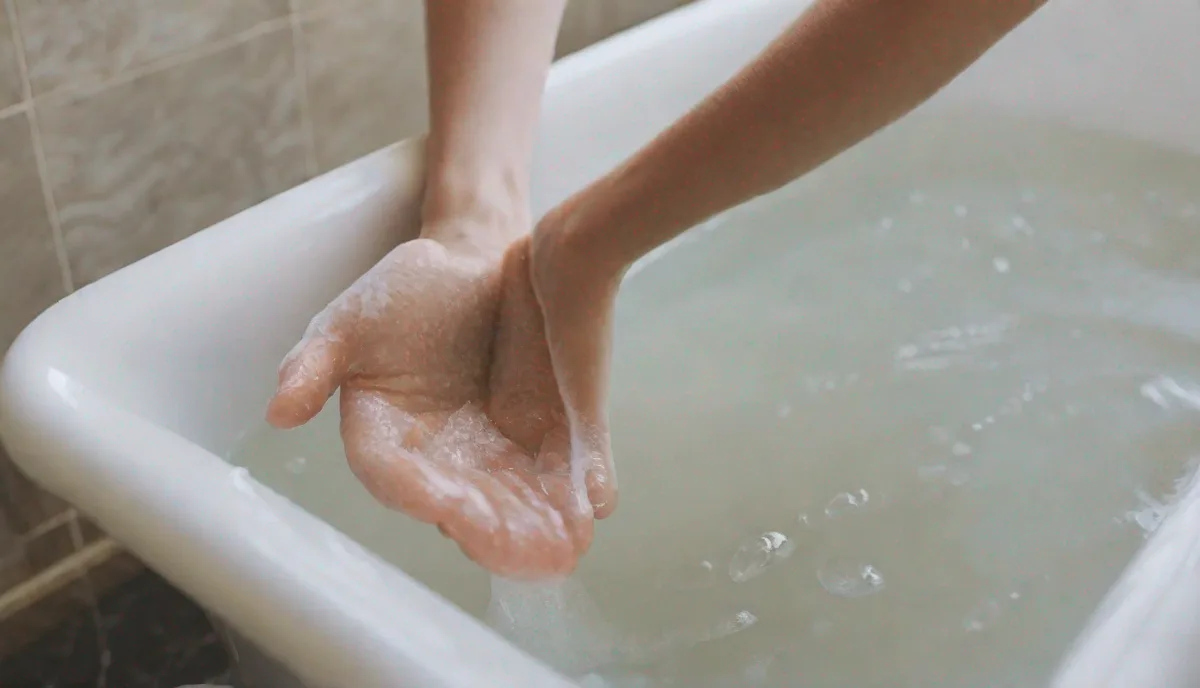
After a tough workout or long day, there’s nothing better than soaking in a hot bath to soothe sore muscles. The warm water helps increase blood flow and relax tight tissues. Adding bath soaks to your routine enhances the therapeutic effects and provides additional benefits.
Key takeaways
- Maintain bath temperatures between 98°F and 102°F to avoid heat stress and rebound inflammation.
- Always dilute essential oils in a carrier oil like coconut or jojoba to prevent skin irritation.
- Soak for 15 to 20 minutes roughly 90 minutes before bed to trigger natural melatonin production.
- Add baking soda to salt blends to balance pH levels and help soften hardened lactic acid deposits.
- Try contrast soaks by finishing a warm bath with a 30-second cool rinse to flush metabolic waste.
What Are Bath Soaks?
Bath soaks, also called bath salts, are products you add to bath water that dissolve and infuse the water with soothing and nourishing ingredients. Common ingredients include Epsom salts, Dead Sea salts, essential oils, herbs, oatmeal, and more.
Benefits of Bath Soaks
- Relieve muscle soreness and tension
- Soothe aches and pains
- Moisturize and nourish skin
- Promote relaxation
- Enhance mood
Best Soaks for Sore Muscles
Epsom Salt Soaks
Epsom salts (magnesium sulfate) are known for easing muscle aches and stiffness. The magnesium absorbs through skin to help relax muscles for a soothing, calming effect after activity or injury. They also help reduce inflammation.
Dead Sea Salt Soaks
Rich in minerals like magnesium, calcium, and potassium, Dead Sea salts deeply nourish skin while easing soreness. The salts also have an anti-inflammatory effect to aid recovery.
Essential Oil Soaks
Adding relaxing and restorative essential oils like lavender, eucalyptus, rosemary, and bergamot enhances the therapeutic benefits of baths. The aromatherapy qualities also aid mental relaxation.
Oatmeal & Herbal Soaks
Colloidal oatmeal softens and soothes dry skin while also easing irritation and inflammation. Herbs like arnica, ginger, and valerian root target muscle pain and stiffness when absorbed into the skin.
Choosing the Best Soak
Consider your main sore muscle goals when selecting a bath soak:
- Muscle relaxation – Epsom salts, Dead Sea salts
- Aromatherapy for mental ease – Essential oil soaks
- Soothing dry/irritated skin – Oatmeal, herbal soaks
Using Bath Soaks Safely
- Avoid using too much product to prevent skin irritation
- Rinse skin after soaking to remove residue
- Stay hydrated and cool down gradually after
- Discontinue use if any discomfort/reactions occur
Ready for a Soothing, Mineral-Rich Soak?
After understanding the benefits of bath soaks, explore products with highest quality Dead Sea salts, pure essential oils, and real colloidal oatmeal. Find an option catered to your sore muscle needs and start relaxing!
The Science of Osmosis and Magnesium Transdermal Absorption
While the sensation of relief is immediate, the physiological mechanism behind Epsom salt baths relies on osmosis. When you submerge your body in a hypertonic solution—a concentration of magnesium sulfate higher than that found in your own cells—the body works to balance the gradient. Magnesium ions are small enough to penetrate the stratum corneum, the outermost layer of the skin. This transdermal delivery system bypasses the digestive tract, which is particularly beneficial for individuals with sensitive stomachs who cannot tolerate oral magnesium supplements. By increasing intracellular magnesium levels, you assist in the regulation of muscle contractions and nerve impulses, effectively turning off the “on” switch for persistent muscle spasms or cramping.
DIY Customization: Creating Your Own Therapeutic Blends
Commercial soaks are convenient, but DIY blends allow for precise control over potency and scent profiles. To create a base, combine two cups of high-grade USP Epsom salt with one cup of coarse Himalayan pink salt. The Himalayan salt provides trace minerals like iron and copper that further support circulatory health. For a targeted recovery blend, add two tablespoons of dried arnica flowers and one tablespoon of freshly grated ginger to a muslin cloth bag; steep this in the bath like a giant tea bag to avoid messy cleanup. For those dealing with post-workout inflammation, adding a half-cup of baking soda to your salt mix helps balance the pH of the water, which can neutralize acidic buildup on the skin’s surface and soften hardened lactic acid deposits.
The Role of Temperature Regulation in Recovery
The temperature of your bath is just as critical as the ingredients you add. A common mistake is soaking in water that is too hot, which can trigger a “rebound effect” where the body experiences increased inflammation due to excessive heat stress. The ideal therapeutic temperature for muscle recovery is between 98°F and 102°F (37°C–39°C). If you are soaking specifically for delayed onset muscle soreness (DOMS), consider a “contrast soak” technique: start with a warm bath for 15 minutes, then finish with a 30-second cool rinse. This rapid temperature change acts as a vascular pump, forcing blood to rush to the periphery and then back to the core, which helps flush metabolic waste products out of the muscle fibers more efficiently than a static hot bath alone.
Targeting Connective Tissue and Fascia
Soreness isn’t always limited to muscle fibers; often, it is the fascia—the connective tissue surrounding the muscles—that feels tight and restricted. Bath soaks containing silica-rich ingredients or clay-based additives like bentonite can help draw out toxins while providing a soothing, “weighted” sensation on the limbs. As the clay begins to settle and the minerals penetrate, the heat helps to hydrate the fascia. Imagine your muscles as a sponge; when dehydrated, they are brittle and prone to tearing. A mineral-rich soak acts as the water that restores elasticity to the fascia, making it easier to perform light stretching or foam rolling immediately after exiting the tub.
Navigating Sensitivities: Essential Oil Safety and Carrier Oils
Many users make the mistake of dropping essential oils directly into the water, where they float on the surface and can cause significant irritation, especially in delicate areas. Because oil and water do not mix, the concentrated droplets cling to your skin as you exit the tub. To prevent this, always emulsify your essential oils in a carrier medium before adding them to the bath. A tablespoon of fractionated coconut oil, jojoba oil, or even full-fat milk acts as a surfactant, dispersing the essential oils evenly throughout the water. If you have sensitive skin, opt for “soothing” essential oils like Roman Chamomile or Sandalwood rather than “hot” oils like Clove or Cinnamon, which can cause a burning sensation even when diluted.
The Timing Factor: Circadian Rhythms and Post-Soak Recovery
To maximize the benefits of your soak, timing is everything. Soaking in the evening, approximately 60 to 90 minutes before bed, leverages the body’s natural circadian cooling process. As you soak, your core body temperature rises; upon stepping out, your body begins to shed that heat rapidly. This internal temperature drop is a biological signal to the brain that it is time to produce melatonin, the sleep hormone. By pairing the muscle-relaxing properties of magnesium with this natural cooling phase, you are not just treating physical soreness, but actively priming your nervous system for the deep, restorative sleep necessary for tissue repair.
Pro-Tips for Apartment and Small-Space Soaking
If you don’t have a full-sized bathtub, you can still reap the benefits of muscle-soaking through localized immersion. A deep plastic foot basin or a large bucket can serve as a “soak station” for the lower extremities, which often bear the brunt of training-related fatigue. Using a higher concentration of salts in a smaller volume of water creates a more potent therapeutic environment for the feet and calves. Additionally, consider using a “bath pillow” or a rolled-up towel to support your neck and shoulders while soaking; muscle tension often travels up the spine, and maintaining a neutral, supported posture while submerged allows the trapezius and rhomboid muscles to fully release their grip, preventing the common “hunching” posture that often accompanies stress-induced soreness.
FAQ
Is it better to soak before or after exercise?
It’s generally better to soak after exercise when muscles are most fatigued and sore. Soaking helps speed recovery.
How often should you use bath soaks?
Using a soak once or twice a week is sufficient for most people. Those with chronic muscle issues may soak more often.
How long should you soak?
Aim for 15-20 minutes to fully reap the benefits. If using hot water, don’t exceed 20 minutes.
Can you soak too much?
Overusing bath soaks, especially with very hot water or too many products, can dry out and irritate skin over time.
Are essential oils safe?
When properly diluted in bath water, most essential oils are safe. Do a patch test before first use and avoid getting oils directly in eyes or mouth.
Related posts:
 Why Coffee and Magnesium Are the Power Couple Your Body Needs
 CBD Bath Salts: Elevating Your Self-Care Routine
 Transform Your Tuesday Night Bath Into a Spa-Level Experience
 The Hidden Magnesium Power of Avocados Will Blow Your Mind
 The Slow Beauty Movement’s Secret Hydration Recipes
 Enhance Your Bath Experience with Epsom Salts Infused with Essential Oils
 The Ancient Salt Water Ritual That’s Trending Again
 These decadent magnesium bath salts are my go-to holiday stress relievers