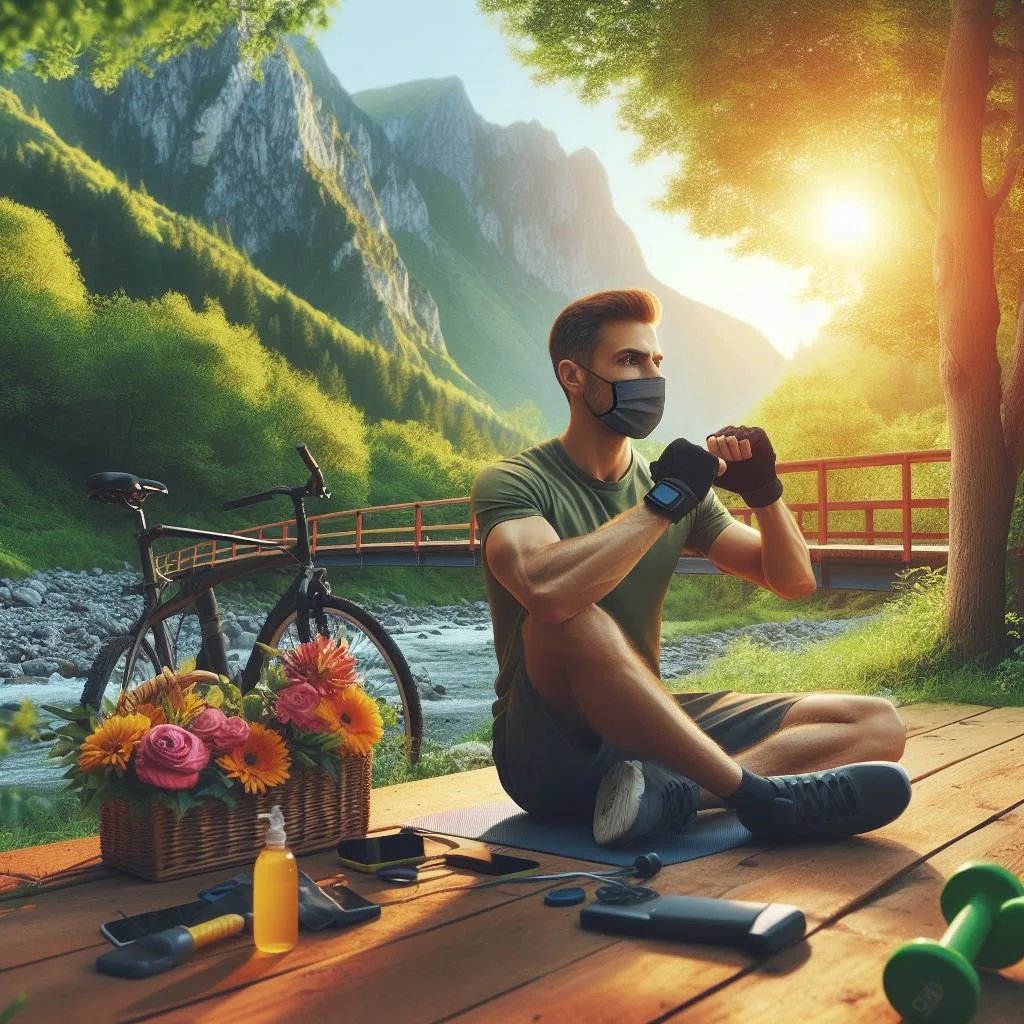
Relieve Stress with Outdoor Exercise
Getting outside in nature is proven to relieve stress and improve mental wellbeing. As the weather warms up, consider taking your workout outdoors for a refreshing change of scenery.
Walking and Hiking
Going for long walks or hikes on local trails is a simple way to soak up some vitamin D while getting your daily dose of cardio. Just be sure to wear supportive shoes, bring water, and apply sunscreen.
Yoga in the Park
Flow through sun salutations surrounded by trees and grass at an outdoor yoga class. Feeling the earth beneath your mat can deepen poses and your mind-body connection.
Cycling
Coast along bike paths or ride through your neighborhood while getting a fun workout. Protect your head by wearing a helmet and be sure to stay hydrated.
Kayaking and Stand Up Paddleboarding
Paddle your way to a full-body workout on a nearby lake or river. Just don’t forget your life jacket! This is a great low-impact activity for cross training.
Calisthenics and Bodyweight Circuits in Public Spaces
Many modern parks now feature “fitness stations” equipped with pull-up bars, dip stations, and monkey bars. Utilizing these installations allows you to integrate strength training without the need for heavy gym equipment. A simple, low-impact circuit involves alternating between incline push-ups against a sturdy bench, step-ups on park stairs, and hanging knee raises for core stability. Because these movements rely on gravity and your own body weight, they are inherently lower impact on the joints than high-intensity plyometric jumps, yet they effectively build functional muscle. When designing your circuit, aim for 3-4 rounds, keeping rest periods short to maintain an elevated heart rate while prioritizing perfect form over explosive speed.
The Therapeutic Benefits of Outdoor Tai Chi and Qigong
If high-intensity movement isn’t your goal, look toward the ancient practices of Tai Chi and Qigong. These disciplines focus on slow, deliberate movements, deep breathing, and weight shifting, which are excellent for improving balance and proprioception in older adults or those recovering from injury. Practicing these in a quiet outdoor space allows you to synchronize your movements with the natural rhythm of your surroundings. The lack of jarring impact makes these ideal for daily practice, helping to lubricate joints and improve circulation. You don’t need formal instruction to begin; simply focus on fluid, circular motions, keeping your knees slightly bent and your spine elongated to maximize energy flow and relaxation.
Mastering Terrain-Specific Balance Training
Moving your workout from a flat gym floor to an uneven outdoor surface—like a dirt trail, sand, or grassy hill—naturally forces your stabilizer muscles to work harder. This is a form of “unconscious training” that builds ankle strength and core stability without requiring additional weights. To safely incorporate this, try walking on slightly uneven grass or sandy paths. The shifting surface requires constant, micro-adjustments from your feet and calves, which significantly reduces the risk of future sprains and strains. Be mindful of roots, rocks, and surface transitions; start by walking on familiar, semi-firm surfaces before progressing to loose sand or steep, rocky inclines to ensure your joints are prepared for the increased demand.
Water-Based Resistance Training: Aqua Aerobics
If you have access to a public pool or a calm, shallow beach, water provides an incredible medium for low-impact resistance training. Water creates 360-degree resistance, meaning every movement you make is working against the water’s density, effectively toning muscles without the heavy impact of gravity. Try performing leg lifts, lateral walking, or arm circles while submerged waist-deep. The buoyancy of the water offloads pressure from your knees and hips, making this an ideal environment for those dealing with arthritis or chronic joint pain. Because the water also acts as a natural heat sink, it helps keep your core temperature stable during intense afternoon sessions, preventing the overheating common in dry-land workouts.
Strategic Use of Inclines for Cardiovascular Efficiency
You can significantly boost the intensity of a low-impact walk by incorporating gentle hills rather than increasing your speed. Walking uphill engages the posterior chain—specifically the glutes and hamstrings—more effectively than flat walking, while the descent requires eccentric muscle control, which builds bone density and tendon strength. To avoid excess strain on the knees while going downhill, take shorter, controlled steps and engage your core to act as a stabilizer. If you are training for endurance, use a “hill repeat” strategy: walk up a moderate incline at a steady, conversational pace, and walk down slowly to recover. This method provides the cardiovascular benefits of a run without the repetitive, high-impact stress of foot-strike on pavement.
Adaptive Stretching and Mobility Work in the Elements
Outdoor mobility work can be more effective than indoor stretching because the slightly warmer or cooler air encourages better blood flow to the extremities. Use natural features like low walls, sturdy tree stumps, or park benches as props for deep stretches. For example, a calf stretch against a tree or a hamstring stretch using a bench allows for a deeper range of motion than floor-based alternatives. Focus on the “active recovery” aspect: perform these movements after your primary activity while your muscles are still warm. The goal is to reach a point of mild tension, not pain, holding each stretch for 30-60 seconds to improve flexibility and aid in muscle recovery. This practice also serves as a grounding technique, allowing you to transition from the physical exertion of the workout back to a state of calm.
Gear Optimization for Variable Outdoor Conditions
To ensure your outdoor routine remains sustainable, your gear must be as adaptable as the environment. Invest in moisture-wicking synthetic or merino wool layers that can be shed or added as your body temperature fluctuates. Footwear choice is critical: if you are transitioning between grass, gravel, and pavement, look for “hybrid” trail shoes that provide superior grip and lateral stability compared to standard road running shoes. Don’t overlook the importance of light-reflective accessories if you exercise during dawn or dusk, and consider a lightweight hydration vest if you plan to be out for more than 45 minutes. By preparing for the specific terrain and weather patterns of your local area, you remove the friction that often leads to skipping workouts, ensuring that your outdoor routine remains a consistent, enjoyable part of your lifestyle.
FAQ
Is outdoor exercise safe?
Exercising outdoors is generally safe if you take proper precautions like wearing sun protection, staying hydrated, dressing for the weather conditions, and knowing your limits.
What are some beginner outdoor workouts?
Great outdoor workouts for beginners include walking, gentle hiking, recreational cycling, outdoor yoga flows, and leisurely kayaking or paddleboarding.
Can I get injured doing outdoor workouts?
As with any exercise, you can get injured doing outdoor workouts. Listen to your body, start slow, use proper gear like supportive footwear, and ease into higher intensity or duration workouts.
How often should I exercise outdoors?
Aim for at least 20-30 minutes of outdoor exercise 3-5 days per week. Enjoy activities you like and mix it up to prevent overuse injuries.
Is outdoor exercise good for mental health?
Yes! Exercising in nature is proven to reduce stress, depression, and anxiety while boosting energy, focus, happiness and overall mental wellbeing.
Related posts:
 Get Stronger with Charlee Atkins
 Understanding Gym Equipment
 PHA Bodyweight Workout: Efficient Fitness Anywhere, Anytime
 Kate Hudson’s Latest Obsession: The High-Energy Workout Called PloyoJam
 Audio Workout Apps Taking Over the Gym Scene
 How to Change Your Fitness Routine to Avoid Plateau
 15-Minute No-Equipment HIIT
 Quick Cardio Fix: Tracy Anderson’s 7-Minute Heart-Pumping Workout Video