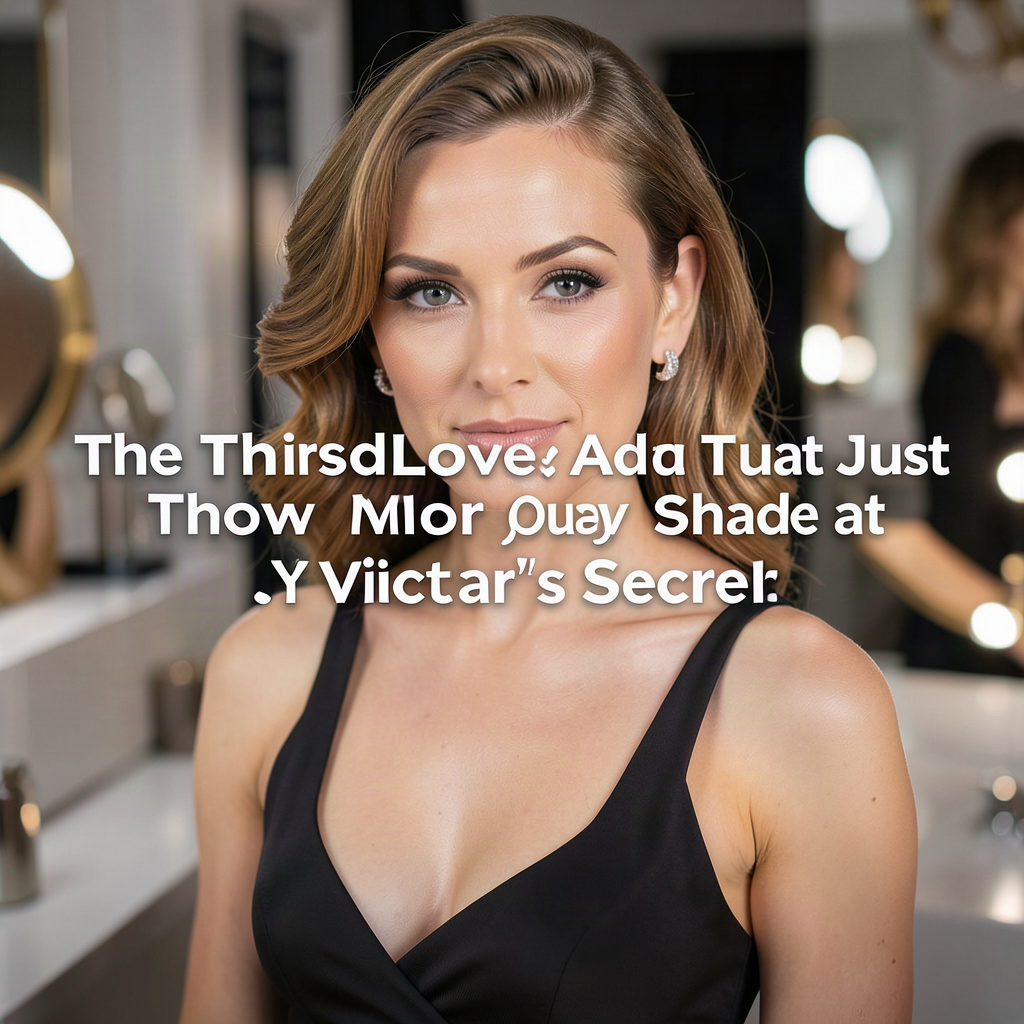
The lingerie industry has always been about more than just undergarments—it’s about identity, confidence, and how brands choose to represent the bodies that wear their products. Recently, ThirdLove released an advertisement that has everyone talking, and for good reason. The ad directly challenges Victoria’s Secret’s long-standing marketing approach, sparking a broader conversation about representation, body diversity, and what modern consumers actually want from the brands they support.
This moment matters because it reflects a significant shift in how companies are approaching marketing in 2026. Rather than continuing to follow the playbook that made Victoria’s Secret dominant for decades, ThirdLove is betting that authenticity and inclusivity resonate more powerfully with today’s audience. Let’s explore what this ad means, why it’s causing such a stir, and what it reveals about the current state of the lingerie industry.
Understanding Victoria’s Secret’s Traditional Marketing Strategy
To appreciate ThirdLove’s shade, it helps to understand what they’re critiquing. Victoria’s Secret built an empire on a very specific aesthetic: tall, extremely thin models, often with a particular body type, wearing highly engineered push-up bras and elaborate styling. The brand’s Fashion Show became iconic, broadcasting an aspirational but narrow version of beauty to millions of viewers annually.
For decades, this approach worked financially. However, it also created a cultural conversation about unrealistic beauty standards and exclusion. Women with different body types, sizes, and shapes often felt that Victoria’s Secret wasn’t designed for them—not because the products couldn’t work for their bodies, but because the marketing made it clear they weren’t the target audience.
The brand’s Angels became symbols of an idealized femininity that, while beautiful, represented only a fraction of actual human diversity. This marketing strategy created both loyal customers who felt represented and many more who felt invisible.
ThirdLove’s Counter-Narrative Approach
ThirdLove’s recent advertisement takes a deliberately different approach. Rather than featuring one body type or specific aesthetic ideal, the ad showcases real diversity—different sizes, shapes, ages, skin tones, and presentations of femininity. The models appear less heavily styled than traditional lingerie advertising, presenting themselves more authentically.
The company’s implicit message is clear: lingerie should work for and be marketed to actual human bodies, not idealized versions that exist primarily in fantasy. This isn’t just a marketing tactic; it represents a genuine business philosophy that ThirdLove has built from its inception.
By positioning themselves as the alternative, ThirdLove is directly addressing what many consumers have been asking for: representation that reflects the real world. This approach acknowledges that beauty, femininity, and the right to feel confident in quality lingerie aren’t limited to a specific body type.
The Shade Within the Messaging
What makes ThirdLove’s ad particularly noteworthy is the subtle but unmistakable criticism embedded in the campaign. Without explicitly naming Victoria’s Secret, the ad questions the entire framework that brand has built. The tagline and visuals essentially say: “Here’s what real people look like, and they deserve beautiful lingerie too.”
This is shade because it doesn’t attack Victoria’s Secret directly—it simply presents an alternative reality that makes the old approach seem outdated and exclusionary. It’s a confidence play, positioning ThirdLove as the evolved choice for modern consumers who’ve moved beyond narrow beauty standards.
The genius of this approach is that it allows viewers to make their own comparison. Rather than ThirdLove saying “Victoria’s Secret is bad,” the ad essentially says “We’re different, and here’s why that matters.” This invites the audience to recognize the contrast themselves, which is often more persuasive than direct criticism.
Industry Context: The Shift in Lingerie Marketing
ThirdLove’s ad doesn’t exist in a vacuum. The entire lingerie industry has been experiencing pressure to evolve. Victoria’s Secret itself recognized this shift, eventually discontinuing its famous Fashion Show in 2019. The company has since attempted to rebrand with more diverse representation, though many observers feel these efforts came late and lack the authenticity that brands like ThirdLove offer from the ground up.
Other brands have also moved toward more inclusive marketing. Aerie (American Eagle’s intimates brand) built its entire brand identity around body positivity and diverse representation. Savage X Fenty disrupted the category by combining inclusive sizing with high fashion aesthetics. These shifts reflect genuine consumer demand, not just corporate virtue signaling.
ThirdLove’s timing is strategic. They’re entering a cultural moment where consumers—particularly younger consumers—actively prefer brands that reflect their values around diversity and authenticity. The company has also invested in direct-to-consumer technology and fit innovation, positioning itself as both more inclusive and more practical than legacy players.
The Technology Behind the Philosophy
Part of ThirdLove’s ability to throw shade effectively is backed by actual product innovation. The company developed a proprietary sizing system and fit assessment process designed to work for diverse body types. Their advertisements showcase this because it’s genuine: the products actually are engineered with broader body diversity in mind from the design stage.
This is different from Victoria’s Secret’s traditional approach, which often felt like the brand was offering the same narrow range of fit solutions with different marketing. ThirdLove’s shade has teeth because it’s connected to real product development philosophy.
By combining inclusive marketing with inclusive product design and genuine fit technology, ThirdLove creates a more coherent brand message. The advertising becomes proof of a larger commitment rather than a surface-level marketing strategy.
Consumer Response and Cultural Impact
The reaction to ThirdLove’s ad has been largely positive among consumers, particularly women who’ve felt excluded by traditional lingerie marketing. Social media conversations have highlighted how the ad made viewers feel seen in ways that typical lingerie advertising hasn’t in the past.
There’s also been recognition that this represents a real generational shift. Younger consumers are less interested in aspirational fantasy marketing and more interested in brands that reflect their actual lives and values. The ad speaks to this directly: “You are enough as you are, and you deserve beautiful lingerie.”
The shade being thrown is ultimately shade against an entire paradigm—the idea that consumers need to look a certain way to deserve quality products and representation. This resonates particularly with women who’ve internalized messages that they don’t fit the mold of conventional beauty standards.
What This Means for Brand Loyalty and Market Share
Competitive dynamics in the lingerie industry are shifting based on these kind of messaging differences. Victoria’s Secret has significant brand recognition and customer loyalty built over decades, but that loyalty is increasingly concentrated among specific demographics. ThirdLove and similar brands are capturing growing market share, particularly among younger consumers and those seeking alternatives to traditional luxury lingerie.
The shade ThirdLove throws isn’t just clever marketing—it addresses a genuine market opportunity. By positioning themselves as the inclusive alternative, they’re appealing to a substantial segment of consumers who feel underserved by existing options.
This dynamic puts pressure on legacy brands like Victoria’s Secret to genuinely transform rather than simply add diverse representation to existing campaigns. The most credible competitors are those who’ve built inclusion into their business model from the beginning, not those who are retrofitting it onto an outdated framework.
The Broader Conversation About Marketing and Values
ThirdLove’s advertisement exists within a larger conversation about what consumers expect from brands in terms of authenticity and values alignment. Modern marketing increasingly requires genuine commitment rather than surface-level gestures.
Consumers can often tell the difference between brands that have always prioritized diversity and those that are simply responding to market pressure. ThirdLove’s shade lands effectively because the company has consistently prioritized inclusive sizing, diverse marketing, and accessible pricing throughout its existence.
This has implications beyond lingerie. Brands across industries are learning that consumers, particularly younger ones, want to support companies whose values align with their own. Marketing that feels authentic and reflects genuine business practices is more persuasive and creates stronger loyalty than campaigns that feel opportunistic.
The Future of Lingerie Industry Marketing
If ThirdLove’s campaign is successful—and early indicators suggest it is—we can expect more brands to move toward similar approaches. This doesn’t necessarily mean Victoria’s Secret is finished, but it does mean the old playbook is no longer viable as a sole strategy.
The lingerie industry is likely heading toward a more fragmented market where different brands appeal to different consumer values and preferences. Some brands may continue focusing on luxury fantasy and aspirational aesthetics, but they’ll be transparent about that positioning rather than claiming universality.
Other brands, like ThirdLove, will continue building market share by serving consumers who want inclusive representation, diverse sizing, and marketing that feels authentic. This isn’t a temporary trend—it reflects fundamental shifts in consumer values and expectations.
The Psychology of Comparison Marketing and Why It Works
ThirdLove’s approach exemplifies a sophisticated marketing psychology known as comparative advertising, where one brand positions itself against competitors without explicitly naming them. This tactic is particularly effective in the lingerie industry because it invites consumers to perform their own mental comparison—a process that often feels more authentic than direct claims. When viewers see ThirdLove’s diverse casting alongside their existing knowledge of Victoria’s Secret’s historical marketing, their brains connect the dots independently, creating a more persuasive argument than if ThirdLove had simply stated their competitor’s shortcomings.
The shade works because it operates at a subconscious level. Rather than triggering defensive reactions that direct criticism might provoke, comparative positioning allows consumers to feel smart for recognizing the difference themselves. This psychological mechanism makes the message more memorable and more likely to influence purchasing decisions. Research in consumer behavior shows that consumers who arrive at conclusions independently tend to exhibit stronger brand loyalty than those who feel persuaded through aggressive messaging.
What makes ThirdLove’s execution particularly clever is the emotional dimension. By showing real people feeling confident and comfortable in lingerie, the brand taps into deeper consumer desires around self-acceptance and belonging. This emotional resonance extends beyond the rational comparison of features and pricing. The implicit message—”you are worthy of beautiful lingerie exactly as you are”—addresses psychological needs that traditional lingerie marketing has historically left unfulfilled, making the shade land even more effectively.
The Economic Reality: Sizing Diversity and Supply Chain Implications
Understanding ThirdLove’s shade requires examining the actual economic challenges behind inclusive lingerie production. Victoria’s Secret’s narrow sizing philosophy wasn’t purely aesthetic—it reflected manufacturing and inventory optimization. Producing lingerie for a specific range of body types required fewer SKUs (stock keeping units), simplified supply chain management, and more predictable demand forecasting. Expanding size ranges means managing exponentially more inventory combinations, higher storage costs, and greater complexity in production planning.
ThirdLove’s business model has been structured from inception to handle this complexity differently. By using direct-to-consumer sales channels rather than maintaining extensive retail floor space, the company can manage diverse inventory more efficiently. Their online-first approach means they’re not constrained by physical retail limitations that forced traditional brands like Victoria’s Secret to maintain narrow size selections on store shelves. This structural advantage is part of why their inclusive sizing isn’t just marketing—it’s economically viable within their operational model.
The shade embedded in ThirdLove’s advertising thus contains a subtle message about business transformation: legacy brands claiming they can’t serve broader size ranges are often bound by outdated operational and retail infrastructure. ThirdLove’s success in inclusive sizing proves that the barrier isn’t technical or economic impossibility—it’s organizational willingness to restructure business models. For Victoria’s Secret, pivoting toward true inclusive sizing would require significant supply chain reorganization, inventory management changes, and potentially accepting lower margins on expanded size ranges. ThirdLove is essentially pointing out that Victoria’s Secret’s previous choices were priorities, not constraints.
Cultural Generational Divide and Marketing Authenticity Expectations
The power of ThirdLove’s shade intensifies when examining generational marketing expectations. Millennial and Gen Z consumers have grown up with internet culture that privileges authenticity and calls out perceived inauthenticity mercilessly. This demographic’s formative years included watching brands attempt superficial diversity initiatives that felt performative rather than genuine. They’ve developed sophisticated bullshit detectors that can distinguish between brands making real structural changes versus brands applying a diversity filter to existing frameworks.
Victoria’s Secret’s attempt to diversify its Fashion Show and marketing in recent years faced skepticism partly because consumers recognized these efforts as reactive rather than foundational. The brand spent decades building a marketing empire on exclusionary aesthetics, then attempted to pivot when market pressure mounted. In contrast, ThirdLove was literally founded on inclusive principles, making its diversity feel built-in rather than bolted-on. The subtle shade in ThirdLove’s advertising acknowledges this distinction: “We didn’t change our story because we had to—this is who we’ve always been.”
This generational divide is particularly pronounced among female consumers aged 18-35, the demographic most targeted by both brands. This cohort has unprecedented access to social media conversations about beauty standards, body image, and brand ethics. They’re more likely to research company values before purchasing and more likely to switch brands if they discover misalignment between stated values and actual practices. ThirdLove’s shade thus resonates more strongly with this demographic not just because of the message content but because of how it validates their sophisticated media literacy and their frustration with performative corporate inclusion.
The Regulatory and Ethical Landscape of Body Representation
Beyond market dynamics and psychology, ThirdLove’s ad exists within an evolving regulatory environment around body representation and advertising standards. Several countries and regions have begun implementing guidelines around body diversity in advertising and restrictions on excessive image manipulation. These regulatory shifts create both constraints and opportunities for lingerie brands competing in global markets.
France has been particularly active in regulating before-and-after advertising images and requiring disclosure when images have been digitally altered. The UK has implemented advertising standards discouraging body-shaming content or unrealistic beauty standards. These regulatory trends suggest that Victoria’s Secret’s historical approach—featuring extensively edited, heavily styled images of extremely thin models—faces increasing friction in some markets. ThirdLove’s comparatively unretouched, diverse representation positions the brand as forward-compliant with emerging regulatory standards.
The shade here operates at a structural level: ThirdLove is essentially advertising that their marketing practices are compliant with where regulations are heading, while implicitly suggesting that Victoria’s Secret’s approach may face increasing regulatory challenges globally. This is particularly relevant for brands operating internationally or planning expansion into markets with stricter advertising standards. A brand that has built authentic diverse representation into its core messaging faces far less adaptation work when regulatory requirements tighten than brands that have relied on aspirational exclusionary aesthetics.
Additionally, there’s an emerging ethical debate about the responsibility corporations bear in shaping body image norms, particularly regarding impacts on young consumers. Mental health organizations increasingly point to unrealistic beauty standards in advertising as contributing to body dysmorphia, eating disorders, and reduced self-esteem, particularly among adolescents. Brands like ThirdLove that explicitly reject these narrow standards position themselves as ethically conscious—a positioning that carries genuine weight with consumers who care about the broader cultural implications of marketing choices.
Competitive Response Strategies and Industry Adaptation
Understanding ThirdLove’s shade requires examining how legacy brands like Victoria’s Secret have attempted to respond to inclusive marketing competition. The brand’s post-2019 repositioning efforts have included featuring more diverse models, launching the “VS Collective” featuring various body types and identities, and attempting to rebrand away from the aspirational fantasy aesthetic. However, these efforts have faced criticism for feeling tokenistic rather than transformative.
The fundamental challenge Victoria’s Secret faces is that consumers recognize these changes as reactive marketing rather than authentic transformation. The brand’s decades of exclusionary marketing created associations that inclusive advertisements struggle to overcome. This is the residual effect of ThirdLove’s shade—it doesn’t just point out current marketing differences; it implicitly references the historical context that makes authentic transformation difficult for legacy brands that built their identity on exclusion.
Other brands have attempted different response strategies. Aerie doubled down on authentic body positivity, essentially meeting ThirdLove on similar ground rather than attempting to maintain a middle position. Savage X Fenty combined inclusive sizing with luxury aesthetics, offering a different value proposition that appeals to consumers seeking both diversity and high fashion. These varied responses suggest the industry recognizes no single solution exists—different brands will succeed by serving different market segments with genuine commitment to their respective positioning.
The most vulnerable position in this competitive landscape is the middle ground: attempting to maintain historical brand identity while incrementally adding diversity. Consumers see through this approach. Brands that either authentically commit to inclusive representation or transparently own their niche aesthetic positioning succeed more effectively than brands appearing to hedge their bets. ThirdLove’s shade thus implicitly criticizes not just Victoria’s Secret’s aesthetics but the brand’s apparent reluctance to choose a clear direction.
International Market Variations and Cultural Context
ThirdLove’s shade-throwing strategy functions differently across global markets, a nuance often overlooked in discussions of the brand’s advertising impact. The criticism of narrow beauty standards resonates most strongly in North American and Western European markets where conversations about body diversity have achieved significant cultural prominence. However, in other markets, aspirational marketing and narrow beauty ideals remain commercially dominant and culturally normalized.
This creates a strategic complexity for both ThirdLove and Victoria’s Secret as they expand internationally. ThirdLove’s inclusive marketing approach is a competitive advantage in markets where consumers actively prefer diverse representation but potentially a disadvantage in markets where consumers still respond to aspirational, exclusive positioning. Victoria’s Secret, conversely, maintains stronger market presence in regions where the traditional aspirational approach hasn’t faced cultural reckoning.
The shade becomes more culturally coded than immediately apparent. When ThirdLove criticizes narrow beauty standards, it’s partly positioning itself within a specific cultural moment concentrated in anglophone markets and Western Europe. The implicit message assumes consumers will recognize and value the diversity on display, an assumption that holds stronger in some markets than others. This suggests that as both brands pursue global expansion, they’ll likely need to maintain different marketing strategies across regions—a complexity that favors brands able to execute localized strategies rather than global campaigns.
Additionally, body diversity means different things culturally across markets. Size diversity carries different associations in different regions; skin tone and ethnicity representation carries different cultural weight; age representation in intimate apparel advertising remains taboo in some markets while increasingly normalized in others. ThirdLove’s shade-throwing thus functions as both a universal message about inclusivity and a specifically localized cultural intervention most impactful in markets where these conversations have already been culturally established.
The Influencer Economy and Grassroots Advocacy Effects
ThirdLove’s shade gains amplification through mechanisms that traditional advertising couldn’t generate independently. The brand’s diverse casting strategy creates organic opportunities for micro-influencers and everyday social media users to feel represented and to advocate for the brand authentically. When someone sees a model who shares their body type or identity in a ThirdLove advertisement, they’re more likely to share that content, discuss it on social media, and recommend the brand to friends.
This grassroots amplification creates compound effects that paid advertising cannot replicate. A single ThirdLove advertisement reaching one hundred thousand views through traditional channels might reach several million through organic social media sharing, user-generated content, and word-of-mouth recommendations. The shade thus spreads exponentially because it invites consumers themselves to participate in the comparison and spread the message through their own networks.
Victoria’s Secret’s historical marketing strategy generated hype primarily through centralized, high-production-value channels like the Fashion Show—impressive spectacles that consumers watched but didn’t feel personally invited to propagate. ThirdLove’s distributed, inclusive representation strategy generates hype through decentralized consumer advocacy. Someone who sees themselves represented in ThirdLove’s advertising becomes a brand ambassador, sharing the ad with their community and explaining why it matters to them personally. This converts individual consumers into active marketers for the brand.
The shade operates partly through this mechanism: by representing actual human diversity, ThirdLove creates thousands of personal moments where individual consumers feel seen and motivated to share. Victoria’s Secret’s approach generated fewer of these moments—the brand’s advertising was something people watched and admired from a distance rather than something they felt personally implicated in or motivated to share because of personal representation.
Long-Term Brand Equity and Prestige Erosion
ThirdLove’s shade carries implications that extend far beyond immediate sales competition into questions of long-term brand equity and prestige. Victoria’s Secret spent decades building an image of luxury, exclusivity, and desirability partly through scarcity and aspirational positioning. The brand’s prestige derived partly from the implication that its products were special because not everyone could see themselves in the marketing—the fantasy was part of the luxury experience.
ThirdLove’s counter-positioning undermines this luxury construction. By arguing that everyone deserves beautiful lingerie and should see themselves represented in advertising, ThirdLove essentially redefines what luxury means: not exclusivity and aspiration but quality, inclusivity, and authenticity. This is a fundamental competitive threat to Victoria’s Secret’s prestige positioning because it questions the entire framework that made the brand valuable historically.
Over extended time horizons, prestige erosion becomes economic erosion. If consumers increasingly define luxury lingerie as inclusive, diverse, and authentic rather than exclusive and aspirational, then Victoria’s Secret’s historical identity becomes a liability rather than an asset. The brand would need complete repositioning rather than incremental adjustment—essentially becoming a different brand entirely. ThirdLove’s shade points out that this transformation may be impossible because the new definition of luxury contradicts the foundational logic that built Victoria’s Secret’s brand equity initially.
This creates a strategic trap for legacy brands: they cannot simultaneously maintain their historical prestige positioning and authentically adopt inclusive representation. They must choose one or the other. ThirdLove’s shade succeeds partly because it highlights this impossible choice, positioning ThirdLove as the brand that made the choice consumers increasingly prefer while suggesting Victoria’s Secret remains stuck defending an outdated definition of luxury. The economic consequence is that Victoria’s Secret’s brand equity, accumulated over decades, becomes less relevant to consumer preferences shifting toward different definitions of prestige and value.
FAQ: Lingerie Marketing and Industry Evolution
Q: Is ThirdLove actually better quality than Victoria’s Secret?
A: Quality comparisons depend on specific products and personal preferences. Both brands offer quality lingerie across different price points. ThirdLove tends to emphasize comfort and inclusive fit design, while Victoria’s Secret emphasizes varied aesthetics and fashion elements. The real difference is often in sizing diversity and marketing philosophy rather than baseline quality.
Q: Why did Victoria’s Secret’s marketing strategy work for so long if it was exclusionary?
A: For decades, most lingerie marketing followed similar narrow aesthetics, so there wasn’t a visible alternative. Additionally, many consumers internalized beauty standards and aspirated to them rather than demanding representation. As alternatives emerged and cultural conversations evolved, the limitations of that original approach became more apparent.
Q: Is inclusive marketing just a trend or a lasting change?
A: Current evidence suggests it’s a lasting shift, particularly among younger consumers who’ve grown up with greater diversity representation. However, different market segments have different preferences, so both inclusive and more niche aesthetic approaches will likely coexist. The key difference is transparency about positioning rather than claiming to be universal.
Q: What should consumers look for when choosing between lingerie brands?
A: Consider your priorities: sizing range, price point, aesthetic preferences, sustainability practices, and whether the brand’s values align with yours. Look at actual diversity in marketing and customer reviews from people with similar body types. Fit and comfort are more important than brand reputation—choose based on what actually works for your body.
Q: Has Victoria’s Secret lost market leadership because of ThirdLove’s approach?
A: Market share has become more distributed, and Victoria’s Secret’s dominance has declined significantly since its peak. However, the brand still has substantial market presence and loyal customers. The shift reflects broader consumer preference changes rather than ThirdLove single-handedly taking over the market. Multiple inclusive brands are growing simultaneously.