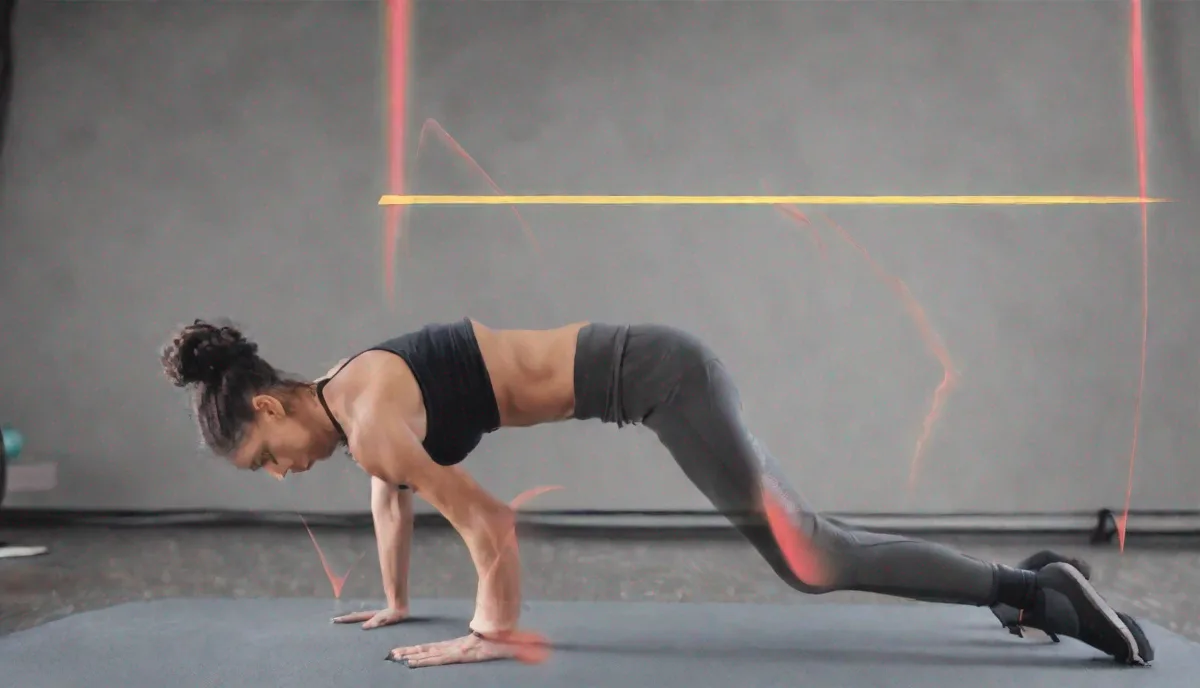
Building A Strong Core
Having a strong core provides a solid foundation for movement and stability. Core exercises not only tone the abdominal and back muscles, but also enhance posture, balance and prevent injury.
Benefits of Core Training
- Supports good posture and spinal alignment
- Improves balance and stability
- Protects against back pain and injury
- Boosts athletic performance
- Helps achieve a toned midsection
This 15 Minute Routine
This quick workout targets all areas of the core in just 15 minutes. It can be done anywhere with minimal equipment, making it easy to incorporate into your day.
Warm Up
Spend 5 minutes doing light cardio to get blood flowing to the muscles. Marching in place or doing some jumping jacks will prepare your body for the work ahead.
Core Exercises
- Plank – 3 sets of 30 seconds
- Bridge – 10 reps
- Bicycle crunches – 20 reps
- Superman with arm/leg lift – 10 reps each side
- Side plank – 20 seconds each side
How This Works Your Core
This combination of exercises targets all the muscles that stabilize your spine, pelvis and shoulders to build an overall strong center.
- Planks fire up your transverse abdominis – the deepest core muscles.
- Bridges tone your glutes and hamstrings while teaching core control.
- Bicycle crunches work the rectus abdominis and obliques, giving you defined abs.
- Supermans strengthen your lower back and challenge stability.
- Side planks target your obliques, slimming your waistline.
Modifications
Adjust intensity to suit your fitness level by holding planks on knees vs. toes, single leg bridges and easier crunches.
The Biomechanics of Pelvic Alignment and Postural Correction
To understand how a core workout transforms your posture, one must look at the relationship between the pelvis and the lumbar spine. Many individuals suffer from what is known as Anterior Pelvic Tilt (APT), where the pelvis rotates forward, causing the lower back to arch excessively and the abdomen to protrude. This is often the result of prolonged sitting, which shortens the hip flexors and weakens the glutes and deep abdominal wall. By engaging the transverse abdominis and the internal obliques, you create a posterior pull that re-levels the pelvis. This realignment acts as a natural ‘corset,’ elongating the spine and reducing the shear force on the intervertebral discs.
When performing the exercises mentioned previously, such as the bridge or the plank, the focus should be on the ‘pelvic tuck.’ Imagine pulling your belly button toward your spine and simultaneously tilting your pubic bone toward your chin. This subtle movement engages the lower fibers of the rectus abdominis and the pelvic floor, providing a stable base for the rest of the torso. For those with a desk-bound lifestyle, practicing this engagement while standing can immediately alleviate the ‘slumped’ shoulder look, as a stable base in the pelvis naturally allows the ribcage to stack properly over the hips, preventing the head from drifting forward into a ‘tech-neck’ position.
Neuromuscular Control: Linking Core Strength to the Vestibular System
Balance is not merely a product of muscular strength; it is a complex interaction between your visual system, your inner ear (vestibular system), and your proprioceptors—the sensory receptors in your muscles and joints. A strong core serves as the primary conduit for this information. When your core is weak, the communication between your lower extremities and your brain is delayed, leading to stumbles or a lack of coordination. By strengthening the deep stabilizers, you are essentially ‘sharpening’ the signal sent to the brain regarding your body’s position in space.
To enhance the balance benefits of your routine, consider introducing unstable surfaces or unilateral (one-sided) movements. For example, while the standard bridge is effective, transitioning to a single-leg bridge forces the deep rotators of the hip and the multifidus muscles along the spine to fire rapidly to prevent the hips from dipping. This rapid-fire muscular recruitment mimics the real-world scenarios where you might lose your footing on an uneven sidewalk. The faster these muscles can react, the more likely you are to recover your balance before a fall occurs. Edge cases, such as individuals recovering from ankle sprains, often find that core-focused balance work is more effective for long-term stability than local ankle exercises alone, as it addresses the ‘top-down’ control of the center of gravity.
The Role of Intra-Abdominal Pressure and the ‘Cylinder’ Concept
Effective core training involves more than just ‘tucking’ the stomach; it requires the management of intra-abdominal pressure (IAP). Think of your core as a pressurized cylinder: the diaphragm is the lid, the pelvic floor is the base, and the abdominal and back muscles are the walls. When you breathe shallowly into your upper chest, you lose the internal pressure that stabilizes the spine from the inside out. To maximize the posture-correcting benefits of your workout, you must master diaphragmatic breathing, often called ‘360-degree breathing.’
During a plank or a Superman hold, instead of holding your breath—which can spike blood pressure and create rigid, brittle tension—aim to expand your lower ribcage laterally with every inhale. On the exhale, maintain the tension in your abdominal wall. This creates a ‘stiffening’ effect that protects the spine during movement. This technique is particularly vital when lifting heavy objects in daily life. By creating IAP before you lift a heavy grocery bag or a child, you distribute the weight through the entire ‘cylinder’ of your torso rather than placing the entire load on the small muscles of the lower back. This functional application turns a gym exercise into a lifelong habit of spinal protection.
Advanced Anti-Rotation and Anti-Extension Techniques
While traditional crunches focus on flexion (bending forward), the most critical roles of the core are actually ‘anti-movements’—the ability to resist external forces that try to pull the spine out of alignment. Posture is essentially an exercise in anti-gravity and anti-slump. To progress your routine, incorporate ‘anti-rotation’ drills. A classic example is the Pallof Press, which can be done with a resistance band. By holding a band at chest height and pushing it straight out while the band tries to pull your torso toward the anchor point, you force your obliques and transverse abdominis to work as stabilizers rather than movers.
Similarly, ‘anti-extension’ is the core’s ability to prevent the lower back from arching when the arms or legs move away from the center. This is the primary challenge of the ‘Dead Bug’ exercise or an advanced plank. If you feel your lower back ‘peeling’ away from the floor during bicycle crunches, you have reached your limit of anti-extension. The goal is to keep the small of the back pressed firmly against the ground (or in a neutral, non-arching position during planks). Mastering these anti-movements ensures that when you reach for something on a high shelf or twist to look behind you while driving, your spine remains supported and your balance remains centered.
Functional Integration: Core Engagement in Daily Movement Patterns
The true test of a core workout is how it translates to your behavior outside of the 15-minute session. Good posture is dynamic, not static. One of the most common errors is ‘bracing’ too hard during everyday tasks, which can lead to muscle fatigue and a restricted gait. Instead, aim for ‘low-level activation.’ This is the 10-20% engagement of the deep abdominals that should be present while walking, standing in line, or even sitting at a computer. This consistent, low-grade tension keeps the spine in a neutral ‘S’ curve rather than a ‘C’ curve.
Consider the ‘hinge’ movement, which is fundamental to picking items up from the floor. Without a strong core, people often round their backs (spinal flexion) to reach down, which is a leading cause of herniated discs. By applying the principles of the bridge and the plank, you can learn to hinge at the hips while keeping the core ‘set.’ This keeps the spine straight and transfers the load to the powerful glutes and hamstrings. Practicing these transitions—moving from a seated to a standing position without using your hands, or balancing on one leg while putting on a sock—integrates the core workout into the fabric of your day, making balance and posture second nature.
Correcting Compensatory Patterns and Common Form Pitfalls
As you increase the intensity of your core routine, it is common for the body to seek the path of least resistance, leading to ‘compensatory patterns.’ One of the most frequent mistakes in core training is ‘shrugging’ the shoulders toward the ears during planks or side planks. This indicates that the serratus anterior and lower trapezius are not firing, which shifts the work to the neck and upper back, actually worsening posture. To fix this, focus on ‘pushing the floor away’ and widening the space between your shoulder blades, which stabilizes the scapula and integrates the upper core with the mid-section.
Another pitfall occurs during leg-heavy core moves like bicycle crunches: the over-reliance on the hip flexors. If you feel a pinching sensation in the front of your hips or a ‘clunking’ sound, your psoas muscles are likely doing the work instead of your abdominals. To correct this, decrease the range of motion of your legs and focus on the ‘hollow body’ position, ensuring the lower abs are doing the heavy lifting. In the Superman exercise, many people try to lift their head too high, straining the cervical spine. Instead, keep your gaze toward the floor, maintaining a long, straight line from your tailbone to the crown of your head. This reinforces the ‘long spine’ habit that is essential for tall, confident posture.
The Synergy of the Posterior Chain and Core Suppleness
A common misconception is that a strong core must always be a ‘tight’ core. However, for optimal posture and balance, the muscles must also be supple and capable of a full range of motion. If the abdominal wall is chronically tight without corresponding strength in the posterior chain (the muscles of the back, glutes, and hamstrings), it can actually pull the body forward into a hunched position. This is why the Superman and bridge exercises are vital; they balance the ‘front-loading’ nature of many traditional ab workouts by strengthening the spinal erectors and the posterior stabilizers.
FAQ
What muscles does this workout target?
This routine targets all the major core muscles including the rectus abdominis, transverse abdominis, obliques, erector spinae, glutes, and hip stabilizers.
How often should it be done?
Aim for 3-5 times per week on non-consecutive days. Listen to your body and take a rest day as needed.
What should I feel during the exercises?
You may feel your abs burning or hamstrings shaking. As long as there is no sharp pain, this is normal with core strengthening moves.
Can I do this workout every day?
It’s best to take rest days for your muscles to recover and strengthen. Try alternating between cardio, strength or yoga on off days.
How can I make this workout more challenging?
Try holding planks with only one leg down, add weight to bridges, or use a stability ball for crunches to increase difficulty.
Related posts:
 J.Lo’s Glider Plank Technique
 Reverse Plank Power: The Backwards Move That’s Forward-Thinking Fitness
 15-Minute No-Equipment HIIT
 PHA Bodyweight Workout: Efficient Fitness Anywhere, Anytime
 5-Minute Core Blast Workout
 The Safe Ab Exercises Every Pregnant Woman Should Know
 Spider Planks: The Ultimate Core-Strengthening Exercise
 Planks and Core Exercises: Building a Strong Foundation