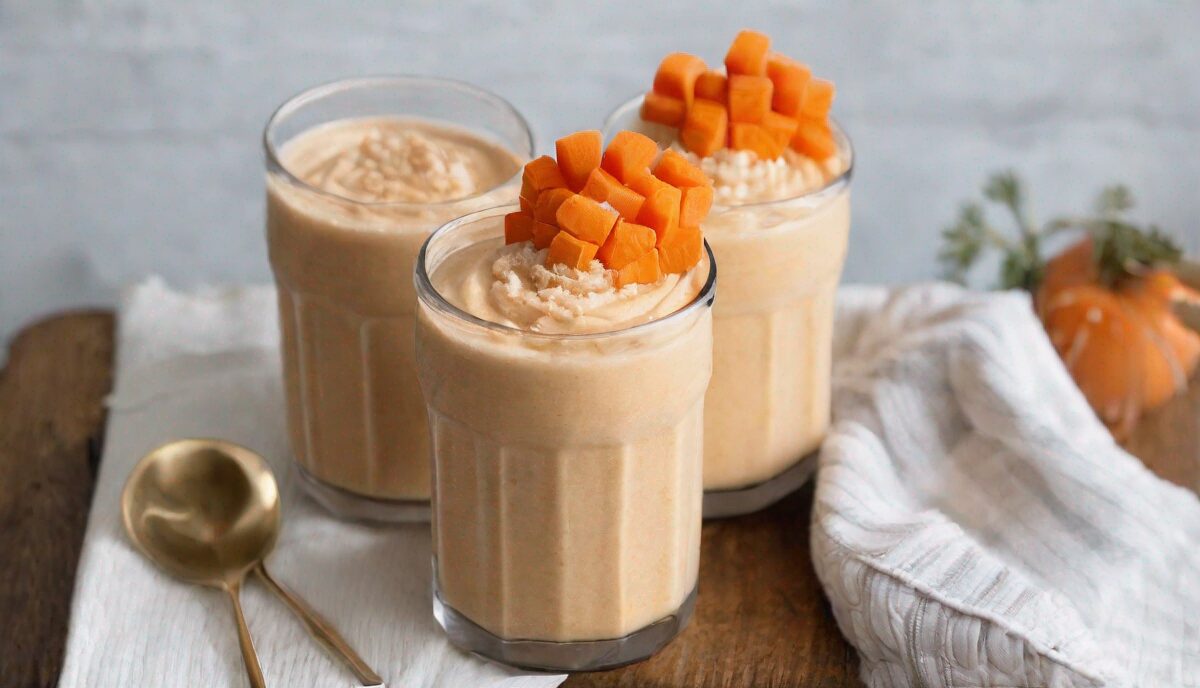
A healthful take on a classic flavor
This frothy carrot cake smoothie makes for a delightful breakfast or snack. Packed with nutritious ingredients like carrots, Greek yogurt, oats and cinnamon, it captures the essence of carrot cake in a glass.
Ingredients
- 1 cup carrots, chopped
- 1 banana
- 1 cup Greek yogurt
- 1/2 cup milk of choice
- 1/4 cup old fashioned oats
- 1 tsp ground cinnamon
- 1 tsp vanilla extract
- 2-4 ice cubes
Instructions
- Add all ingredients to a high powered blender.
- Blend until smooth and frothy, about 30 seconds.
- Pour into a glass and top with additional cinnamon if desired.
Benefits
This smoothie provides fiber, protein and essential vitamins and minerals. Carrots are loaded with vitamin A, which benefits eye and skin health. Bananas provide potassium, which supports heart health and muscle function. Greek yogurt contributes protein to keep you satisfied as well as probiotics for gut health and digestion. Overall, this smoothie makes for a balanced breakfast or snack.
Possible modifications
- Use milk substitute such as almond milk, soy milk or coconut milk.
- Replace banana with 1/2 an avocado for a creamier texture.
- Add nut butter for extra protein and healthy fats.
- Use quick oats instead of old fashioned.
- Top with nuts, chia seeds or shredded coconut.
Storing and freezing
This smoothie is best when fresh but can be stored in an airtight container in the refrigerator for up to 24 hours. It can also be portioned into freezer bags or ice cube trays and frozen for up to 3 months.
Optimizing carrot preparation for maximum texture
The texture of your carrot cake smoothie hinges entirely on how you process the carrots. While a high-powered blender can pulverize raw chunks, the resulting texture can sometimes be gritty if the carrots are too fibrous. For a silky, professional-grade consistency, consider blanching your carrots first. Boiling chopped carrots for 3-4 minutes until just tender, then shocking them in an ice bath, softens the cell walls, allowing them to blend into a velvet-like puree. If you prefer a raw approach, use a microplane or the finest setting on a box grater to create carrot shavings. This increases the surface area significantly, ensuring that even a standard blender can incorporate the vegetable without leaving large, crunchy bits. Additionally, if you find the raw carrot flavor too “earthy,” roasting the carrots with a touch of maple syrup and cinnamon before freezing them creates a deep, caramelized sweetness that mimics the flavor profile of a baked cake far more effectively than raw ingredients.
Strategic spice blending for authentic bakery notes
A true carrot cake relies on a complex bouquet of spices that goes beyond basic cinnamon. To elevate your smoothie from a simple vegetable drink to a dessert-inspired breakfast, experiment with a “carrot cake spice blend” that you can keep pre-mixed in your pantry. Combine one tablespoon of ground cinnamon with a half-teaspoon of ground ginger, a quarter-teaspoon of freshly grated nutmeg, and a tiny pinch of ground cloves or allspice. The ginger provides a necessary sharpness that cuts through the creaminess of the yogurt, while the nutmeg and cloves mimic the aromatic depth found in traditional cream cheese-frosted cakes. For an extra layer of sophistication, add a pinch of sea salt; salt is an essential flavor enhancer that makes the natural sweetness of the banana and carrots pop, preventing the smoothie from tasting flat or one-dimensional.
Building a nutrient-dense base with hidden superfoods
While the base recipe is nutritionally sound, you can transform this smoothie into a complete meal replacement by incorporating functional superfoods. To boost your omega-3 fatty acid intake, add one tablespoon of ground flaxseeds or hemp hearts. These seeds add a subtle nuttiness that pairs beautifully with the carrot-cinnamon profile without altering the texture. If you are looking for an antioxidant boost, a tablespoon of goji berries or even a handful of frozen raspberries can add a tart contrast to the sweetness. For those who train early in the morning, adding a scoop of collagen peptides is an excellent way to support joint and skin health without changing the flavor or thickness of the smoothie. Unlike whey protein, which can sometimes leave a chalky aftertaste, collagen dissolves completely, ensuring your smoothie remains frothy and light.
Achieving the perfect “frosting” consistency
The hallmark of a great carrot cake is the cream cheese frosting. To replicate this decadence in a smoothie format, you can add a tablespoon of softened cream cheese or a dairy-free cashew-based cream cheese alternative directly into the blender. This provides a tangy, rich mouthfeel that mimics the authentic dessert experience. If you prefer a lighter “frosting” effect, try substituting half of the Greek yogurt with coconut cream. The high fat content in coconut cream creates a luxurious, whipped texture that mimics the aeration of buttercream. Furthermore, if you want a thicker, spoonable smoothie bowl consistency, add a tablespoon of sunflower seed butter or cashew butter. These nut butters are more neutral in flavor than peanut butter, allowing the carrot and spice profile to remain the primary focus while adding significant satiety.
Managing fiber density and digestive comfort
Increasing your fiber intake is a major benefit of this smoothie, but it can be a shock to the digestive system if your body isn’t accustomed to high-fiber breakfasts. Old-fashioned oats provide a soluble fiber boost, but they can be difficult to digest if they haven’t been properly hydrated. To make this smoothie easier on the stomach, try “overnighting” your oats in the milk before blending. By soaking the oats for at least an hour or overnight, you break down some of the phytic acid, making the nutrients more bioavailable and the texture significantly smoother. If you find that the raw carrots cause bloating, consider swapping them for a high-quality, organic carrot juice concentrate. This provides the concentrated vitamin A and flavor profile of the vegetable without the heavy fiber load, making it an ideal option for those with sensitive digestive tracts.
Flavor variations for seasonal rotation
This recipe is highly adaptable to the changing seasons. During the autumn months, add a quarter-cup of canned pumpkin puree to the mix to create a “carrot-pumpkin hybrid” that tastes like a harvest celebration. In the summer, add a handful of frozen pineapple chunks to bring a tropical brightness to the earthy carrot base. If you prefer a more decadent, dessert-like experience, add a teaspoon of cacao nibs after blending; the crunch of the nibs mimics the texture of chopped walnuts commonly found in carrot cake. For a “carrot cake latte” version, replace half the milk with cold-brew coffee or a strong chilled espresso shot. The bitterness of the coffee grounds the sweetness of the banana and carrots, creating a sophisticated morning beverage that provides both a nutritional boost and a caffeine kick.
FAQ
Is Greek yogurt necessary or can I use regular yogurt?
You can use regular yogurt, but Greek yogurt is thicker, creamier and has more protein, making it the best choice for smoothies. If using regular yogurt, you may want to use less milk for a thicker texture.
Can I use fresh carrots instead of chopped carrots?
Yes, you can use freshly grated carrots instead of pre-chopped carrots. Just adjust the amount to equal 1 cup.
What kind of milk works best?
The milk you choose depends on your tastes and dietary needs. Dairy milk has a classic taste while plant-based milks provide variety. Feel free to experiment with different types.
Can I use a regular blender instead of a high powered one?
You can use a regular blender but you may need to blend the smoothie in smaller batches and scrape down the sides as you blend to ensure it blends thoroughly.
Is this smoothie vegetarian/vegan/gluten-free?
As written this recipe is vegetarian, and can easily be made vegan by using plant-based milk and yogurt. It is also naturally gluten-free.
Related posts:
 Health Benefits of Carrots
 Healthy Carrot Cake Breakfast Ideas
 The Overnight Oats Recipe That Changed Everything for the Lactose Intolerant
 Carrot Cake Baked Oats Recipe
 Nina Agdal’s Green Smoothie Recipe That Tastes Like Paradise
 Is Starbucks Almond Milk Healthy?
 Red Velvet Cake So Good You’ll Never Miss the Original
 Sweet Smoothies Without the Sugar Crash