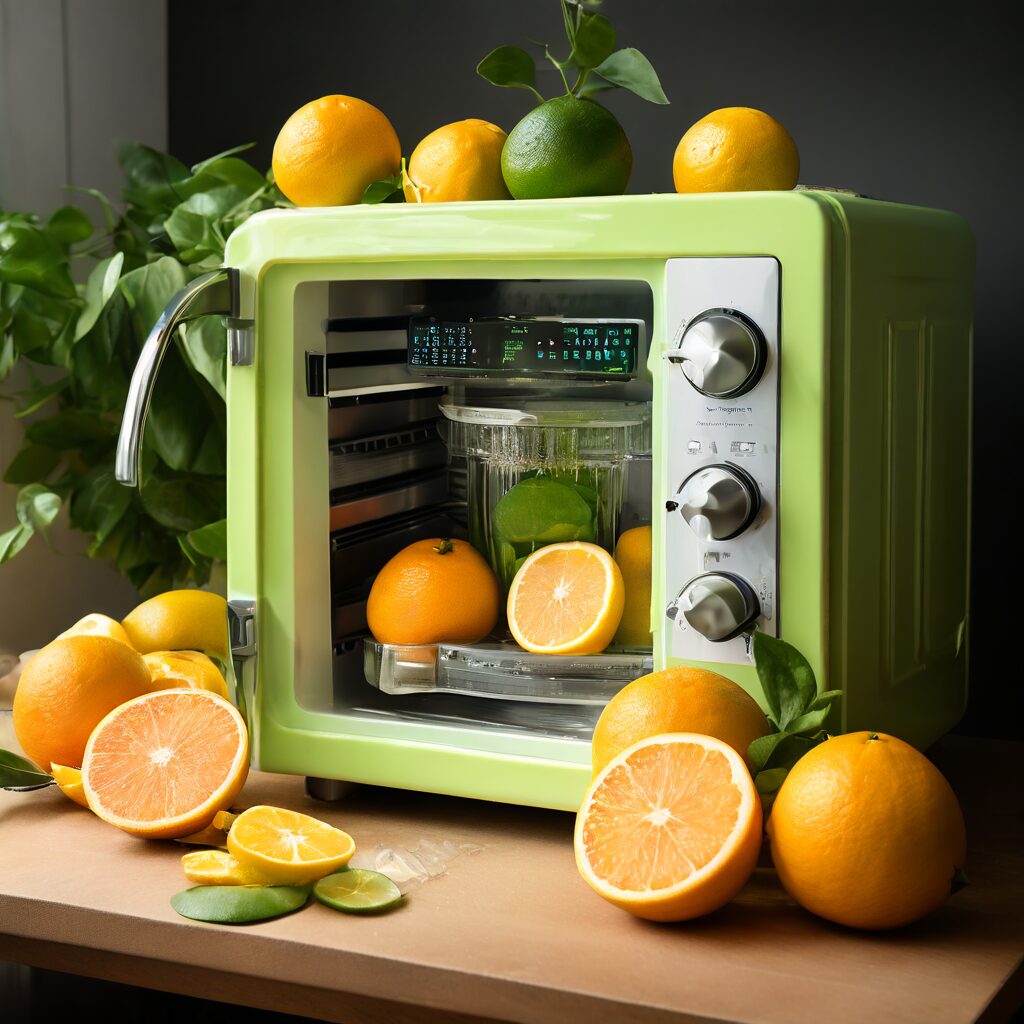
Imagine enjoying fresh citrus juice in seconds without breaking a sweat. This simple microwave hack will change the way you extract juice from lemons, limes, and oranges, saving you time and effort.
Why Fresh Citrus Juice?
Freshly squeezed citrus juice is packed with vitamins and antioxidants that can boost your immune system, improve digestion, and add a zesty flavor to your dishes. However, getting every last drop of juice can be challenging. That’s where this microwave hack comes in handy.
The Microwave Hack Explained
This hack involves microwaving your citrus fruits for a few seconds before juicing them. The heat helps to break down the cell walls inside the fruit, making it easier to extract the juice. Follow these simple steps:
- Choose your citrus fruit (lemon, lime, or orange).
- Place the fruit in the microwave for 10-20 seconds.
- Remove the fruit and let it cool for a few seconds.
- Roll the fruit on the countertop with gentle pressure.
- Cut the fruit in half and juice it as usual.
This method ensures you get more juice with less effort.
Benefits of the Microwave Hack
Using this microwave hack offers several benefits:
- Increased Juice Yield: You can extract more juice compared to traditional methods.
- Time-Saving: The process takes only a few seconds, making it perfect for busy mornings.
- Easy and Convenient: No need for complicated tools or techniques.
Overall, this hack can make your life a lot easier, especially if you regularly use fresh citrus juice in your cooking or beverages.
Other Tips for Juicing Citrus Fruits
To maximize your juice yield, consider these additional tips:
- Room Temperature Fruits: Juicing fruits at room temperature can yield more juice than cold fruits.
- Use a Reamer or Juicer: These tools can help you extract more juice efficiently.
- Squeeze with a Cloth: Using a cloth to squeeze the fruit can help you get the last drops.
Combining these tips with the microwave hack can ensure you never waste a drop of precious citrus juice.
The Structural Anatomy of Citrus and the Role of Thermal Expansion
To truly appreciate why a few seconds in the microwave transforms a stubborn lemon into a juice fountain, one must look at the internal architecture of citrus fruits. Citrus is composed of three main layers: the flavedo (the colorful outer zest), the albedo (the bitter white pith), and the endocarp (the juicy segments). Within those segments are thousands of tiny, teardrop-shaped juice sacs called vesicles. These vesicles are encapsulated by thin but resilient membranes made of cellulose and pectin. When a fruit is cold or even at room temperature, these membranes remain rigid, tightly holding the juice captive even under significant manual pressure.
Microwaving introduces electromagnetic waves that specifically target the water molecules inside these vesicles. As the water molecules vibrate and heat up, they expand. This internal thermal expansion creates outward pressure against the vesicle walls. Simultaneously, the heat softens the pectin—the natural “glue” that holds the plant cells together. By the time you remove the fruit from the microwave, the internal structure is already compromised. The membranes are no longer snapping shut; they are stretched to their limit and primed to burst. This is why you often notice the fruit feels significantly softer and more pliable even before you begin the rolling process. This scientific shift ensures that when you finally cut the fruit, the juice flows freely from the ruptured sacs rather than remaining trapped in the discarded pulp.
Calibrating Microwave Duration for Diverse Citrus Cultivars
While a general rule of 10 to 20 seconds works for standard supermarket lemons, the diversity of citrus species requires a more nuanced approach to timing. Not all citrus fruits are created equal in terms of water content, skin thickness, or density. For instance, Key limes and Mexican limes are much smaller and have thinner rinds than Persian limes. Putting a tiny Key lime in the microwave for a full 20 seconds might cause it to overheat or even burst, leading to a localized mess. For these smaller specimens, a brief 5 to 8-second burst is often sufficient to achieve the desired membrane breakdown.
On the opposite end of the spectrum, large Navel oranges or thick-skinned Valencia oranges may require closer to 25 or 30 seconds, especially if they have been stored in a cold refrigerator. The most significant challenge arises with grapefruits and pomelos. Because of their sheer volume and the thickness of their albedo, 15 seconds will barely penetrate the surface. For a large grapefruit, you may need 30 to 45 seconds, ideally flipping the fruit halfway through to ensure even heat distribution. A helpful indicator is the “give” of the rind; you want the fruit to feel slightly warm to the touch and noticeably more squishy, but never hot enough to emit steam or develop soft, discolored spots which indicate localized overcooking.
Pre-Heating Preparation: The Essential Zesting Sequence
A common mistake when using the microwave hack is forgetting to harvest the zest before the fruit enters the microwave. If your recipe calls for both juice and zest, the order of operations is critical. Once a citrus fruit has been microwaved and rolled, the rind becomes soft, oily, and somewhat damp. Attempting to run a microplane or zester over a warm, softened lemon is frustrating and often ineffective; the teeth of the zester will tend to tear the softened flavedo rather than cleanly shaving it, and the fruit may collapse under the pressure of the tool.
For the best results, always zest your fruit while it is still cold and firm. The cold temperature keeps the essential oils within the zest stable, and the firm structure provides the necessary resistance for the zester to work efficiently. After you have removed the zest, you can then proceed with the microwave hack. Interestingly, removing the zest first actually aids the microwave process slightly. By thinning the outer layer, the microwave energy can penetrate the internal vesicles even more efficiently. Just be mindful that a zested fruit will lose moisture faster, so move directly from zesting to microwaving to juicing without leaving the “naked” fruit on the counter for too long.
Beyond the Roll: Advanced Mechanical Extraction Techniques
The rolling step mentioned in the basic hack is vital, but there are ways to optimize this movement to ensure every single vesicle is ruptured. Instead of just a light roll, use the heel of your hand to apply firm, downward pressure while moving the fruit back and forth on a hard surface like a wooden cutting board. You should actually hear and feel the internal structures “crunching” or popping. This sound is the physical evidence of the juice sacs breaking open. For particularly stubborn or thick-skinned oranges, you can even use a small heavy skillet to roll the fruit, providing more uniform pressure than your hand alone.
Once the fruit is rolled and sliced, the tool you choose for the final extraction matters. While the microwave hack makes hand-squeezing much easier, using a wooden reamer or a hinge-press juicer in conjunction with the heat will yield nearly 20-30% more juice than hand-squeezing alone. The heat-softened membranes offer almost no resistance to the sharp ridges of a reamer. If you are using a hinge-style press, you will find that you need significantly less grip strength to bottom out the press, making this an excellent modification for those with arthritis or limited hand strength. The goal is to leave the discarded halves looking like empty shells, with virtually no visible pulp remaining intact.
Impact of Microwave Heating on Flavor Profiles and Culinary Chemistry
There is a common concern that heating citrus juice might alter its bright, acidic flavor profile. However, the short duration of the microwave hack—usually under 20 seconds—is not enough to “cook” the juice or create the “cooked” flavor associated with pasteurized bottled juices. In fact, for certain applications, slightly warm juice can be a culinary advantage. For example, if you are making a vinaigrette or a marinade, warm juice emulsifies much more readily with oils. The heat decreases the surface tension of the liquid, allowing it to blend into a stable emulsion with olive oil or mustard more quickly than ice-cold juice would.
Furthermore, if you are using the juice to create a simple syrup or to dissolve sugar for lemonade, starting with warm juice speeds up the dissolution process significantly. From a chemical perspective, the brief heat can also help to volatileize the aromatic compounds in the juice, making the scent of the citrus more pronounced as you work with it. The only edge case to consider is when using the juice in delicate raw fish preparations like ceviche. In this instance, you may want to let the juice sit for a minute to return to room temperature, as hot juice could theoretically begin to “cook” the exterior of the fish prematurely through thermal heat rather than the intended acid-driven denaturation of proteins.
Navigating Safety Concerns and Avoiding the Over-Extraction Trap
While the microwave hack is overwhelmingly safe, there are specific “edge cases” to avoid to ensure both safety and juice quality. The most important rule is never to microwave a citrus fruit for more than 60 seconds. Beyond this point, the internal pressure can build up to a level where the fruit might burst inside the microwave, or worse, explode when you pierce the skin with a knife. If the fruit feels painfully hot to the touch, you have gone too far. Let it sit undisturbed for at least two minutes before attempting to cut it, as the internal steam can cause a localized burn upon release.
Another nuance involves the extraction of bitter compounds. The white pith (albedo) of citrus contains limonoids, which can be quite bitter. When you microwave the fruit and then apply heavy pressure during the rolling and squeezing phases, there is a slight risk of expressing more of these bitter oils into your juice. To prevent this, avoid “over-squeezing” the fruit to the point where you are scraping the white pith into the bowl. The microwave hack is designed to make the juice flow easily; if you find yourself having to grind the peel into your juicer to get results, you are likely extracting bitterness rather than flavor. Stick to a firm but smooth extraction for the cleanest taste.
Integrating Warm Juice into Professional-Grade Recipes
Professional bakers often prefer ingredients at room temperature to ensure proper aeration and chemical reactions in batters and doughs. The microwave hack perfectly aligns with this requirement. If you are making a lemon tart or a citrus-infused sponge cake, using juice that is slightly above room temperature ensures that you don’t seize the fats (like butter or coconut oil) in your recipe. Cold juice can cause melted butter to clump, leading to an uneven crumb; warm, microwave-extracted juice integrates seamlessly, maintaining the silkiness of the batter.
FAQ
1. Does microwaving citrus fruits affect their nutritional value?
Microwaving citrus fruits for a short period does not significantly affect their nutritional value. The vitamins and antioxidants remain largely intact.
2. Can I use this hack on other fruits?
This hack is primarily effective for citrus fruits like lemons, limes, and oranges. It may not have the same effect on other types of fruits.
3. How long should I microwave the fruit?
Microwaving the fruit for 10-20 seconds is usually sufficient. Be cautious not to overheat it, as this can make the fruit too hot to handle.
4. Do I need to poke holes in the fruit before microwaving?
No, you do not need to poke holes in the fruit. Simply place it in the microwave as it is.
5. Is this hack safe?
Yes, this hack is safe as long as you handle the fruit carefully after microwaving. Ensure it has cooled slightly before juicing to avoid burns.
Related posts:
 The Best Cold Brew Coffee Makers for a Refreshing Drink
 Dry January Mocktail Guide
 Perfect Citrus Juicing Guide
 What is Zest and Why is it Important? Definition and Examples
 Mastering the Art of Microwaving: Tips for Perfectly Heated Meals
 Liquid Gold: The Surprising Health Benefits of Drinking Aloe Vera Juice
 This Microwave Cleaning Hack Will Blow Your Mind
 The Safe Way to Thaw Frozen Food Without Getting Sick