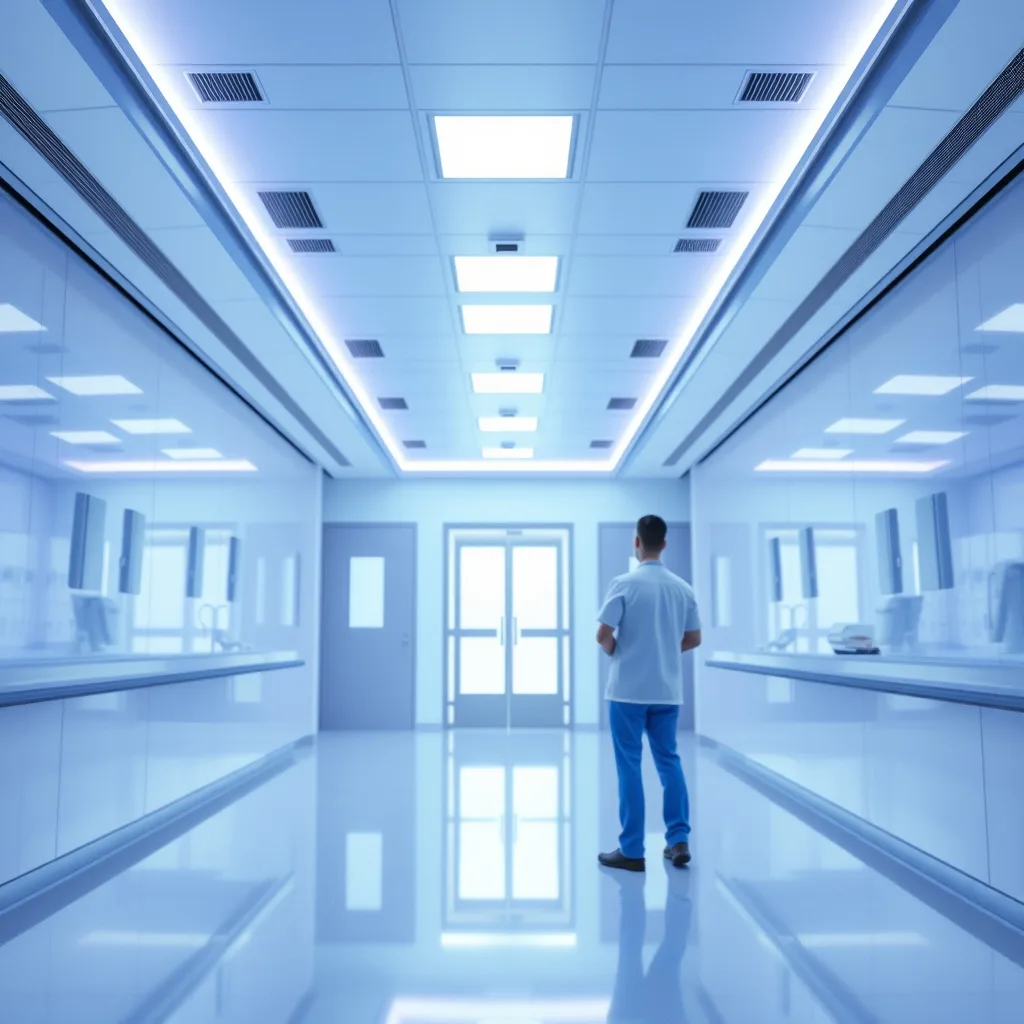
For generations, the arrival of autumn has signaled the start of the dreaded flu season. We have grown accustomed to the annual cycle of vaccines, hand sanitizers, and staying home when we feel the first tickle of a sore throat. However, a revolutionary development in photobiology—specifically the use of Far-UVC light—is challenging the inevitability of seasonal viral transmission. By targeting the fundamental physical structure of pathogens without harming human skin, this technology offers a glimpse into a future where indoor spaces are self-sanitizing and the flu is no longer a public health crisis.
Key takeaways
- Far-UVC light at 222 nanometers neutralizes pathogens in the air, unlike traditional UV-C which can damage human cells.
- The technology acts as a continuous, invisible shield that destroys viruses in real-time within indoor spaces.
- Proper installation and certified, filtered lamps are essential to ensure safety and prevent exposure to harmful wavelengths.
- Integrating Far-UVC into ceiling fixtures and HVAC systems could significantly reduce the transmission of influenza and other airborne illnesses.
Understanding the Science of Far-UVC Light
To understand why Far-UVC is being called a game-changer, we must distinguish it from the ultraviolet light we encounter in tanning beds or standard germicidal lamps. Traditional UV-C light, typically at a wavelength of 254 nanometers, is highly effective at killing bacteria and viruses but is dangerous to humans. It causes DNA damage, leading to skin burns and potential eye injuries. Far-UVC, however, operates at a wavelength of approximately 222 nanometers.
At this specific wavelength, the light possesses a unique physical property: it lacks the penetration power to pass through the thin layer of dead skin cells on the surface of human skin or the tear layer of the human eye. Because it cannot reach the living cells underneath, it is considered safe for continuous human exposure. Yet, because viruses and bacteria are significantly smaller than human cells, the light penetrates their structure easily, breaking their molecular bonds and rendering them unable to replicate.
How Far-UVC Neutralizes Airborne Pathogens
The primary way influenza and other respiratory viruses spread is through aerosols—tiny droplets exhaled by infected individuals. In a typical room, these droplets can linger in the air for hours, waiting for a new host. Far-UVC acts as a continuous, invisible shield. As air circulates through a room equipped with these overhead lamps, the light inactivates the viruses within seconds.
Unlike chemical disinfectants that require surfaces to be wiped down or air purifiers that rely on filters, Far-UVC works in real-time. It doesn’t just catch particles; it destroys the genetic material of the virus while it is still suspended in the air. This effectively lowers the viral load in any given environment, making it statistically much harder for an infection to jump from one person to another.
The Evolution of Indoor Air Quality
Historically, we have addressed indoor air quality through ventilation—opening windows or upgrading HVAC filtration systems. While these methods are essential, they are often insufficient in crowded spaces like schools, airports, and public transit. Far-UVC provides a third pillar of defense: direct inactivation. By installing these lamps in ceiling fixtures, building managers can create “sanitized zones” that operate 24/7.
This technology is particularly transformative for high-density environments. In a classroom, for example, the air is often shared among thirty students for several hours. If the ceiling lights are equipped with Far-UVC modules, the air is constantly scrubbed of viral particles before they can settle or be inhaled by others. This creates a passive form of protection that does not require individual behavioral changes, such as mask-wearing or social distancing.
Clinical Research and Safety Milestones
The safety profile of 222-nanometer light has been the subject of intensive academic study over the last decade. Researchers at institutions like Columbia University Irving Medical Center have conducted long-term studies on mice and human skin models to confirm that Far-UVC does not induce DNA damage or inflammation. These studies are critical because they provide the regulatory framework needed to move the technology from a lab setting into the public sphere.
Current standards set by the American Conference of Governmental Industrial Hygienists (ACGIH) have begun to evolve, acknowledging the safety of Far-UVC within specific dosage limits. As more peer-reviewed data becomes available, we are seeing a shift in how public health officials view ultraviolet technology. The focus is moving away from “clean surfaces” toward “clean air,” with Far-UVC leading the charge as the most viable long-term solution for indoor air safety.
Integrating Technology into Everyday Life
The integration of Far-UVC into our daily lives is already beginning in subtle ways. Some hospitals have started pilot programs using these lamps in waiting rooms, and certain high-end office buildings are incorporating them into their lighting designs. The goal is to make the technology as ubiquitous as the common LED bulb.
For the average consumer, this means that in the near future, you may see small, decorative fixtures in public spaces that provide a soft, barely visible glow. These units are designed to be unobtrusive while providing maximum coverage. As the manufacturing process scales, the cost of these units is expected to drop, making them accessible for private homes, small businesses, and community centers.
Challenges and Considerations
Despite the promise, there are legitimate considerations regarding the mass rollout of Far-UVC. One of the most significant is consumer education. Because the light is invisible or appears as a faint purple hue, people may be skeptical of its efficacy. There is also the challenge of proper installation; for the technology to be effective, the lamps must be placed at specific heights and angles to ensure consistent coverage without creating “shadow zones” where viruses could hide.
Furthermore, the industry must ensure rigorous quality control. Not all UV lamps are created equal. It is vital that products meant for human-occupied spaces are specifically calibrated to the 222-nanometer range. Purchasing non-certified, cheaper alternatives could result in the emission of harmful 254-nanometer light, which poses a genuine health risk. Standardization and government certification will be the benchmarks of a successful rollout.
The Potential Impact on Public Health
If we successfully implement Far-UVC technology on a global scale, the impact on public health could be profound. Flu season is not just an inconvenience; it is a period of immense economic strain and personal hardship. It results in millions of missed work days, billions of dollars in healthcare costs, and, most tragically, thousands of preventable deaths every year among the vulnerable.
By fundamentally altering the environment in which we breathe, we can shift the burden of disease prevention away from the individual and onto the infrastructure. If the air in our grocery stores, offices, and schools is consistently sanitized, the transmission rate of the flu—and potentially other airborne illnesses—could plummet. This would represent a paradigm shift in how we manage infectious diseases, moving from reactive measures to proactive, environmental safety.
Optimizing Spatial Coverage and Flux Density
The efficacy of Far-UVC is not merely a product of the light source itself, but of the calculated distribution of photon flux across a three-dimensional volume. Unlike traditional lighting, which is designed for human visual comfort, Far-UVC systems must be engineered for ‘pathogen-neutralization coverage.’ This requires a nuanced understanding of the Inverse Square Law, which dictates that the intensity of light diminishes significantly as distance from the source increases. Engineers must therefore map out ‘fluence rates’—the amount of energy delivered to a specific area—to ensure that even the corners of a room or areas beneath furniture receive sufficient exposure to neutralize airborne droplets.
Advanced installation strategies now involve computational fluid dynamics (CFD) modeling. By simulating how air currents move through a space, technicians can position lamps to target areas of high ‘air residence time,’ such as stagnant corners or near HVAC return vents. This prevents the formation of ‘dead zones’ where viral aerosols might bypass the light field. Furthermore, the use of specialized optical lenses and beam-shaping diffusers allows for a wider, more uniform dispersal of 222-nanometer photons, effectively turning the entire ceiling of a room into a high-intensity sterilization plane without creating discomforting glare or localized hotspots.
The Role of Material Science in Optical Filtering
A critical component of Far-UVC safety is the optical filter, typically composed of specialized materials like excimer lamp envelopes or filtered glass. Because standard xenon-chloride (XeCl) excimer lamps can occasionally leak unwanted wavelengths—specifically those above 230 nanometers that could potentially reach living tissue—the integrity of the filter is the primary safety barrier. Innovations in thin-film deposition and ion-assisted coating have led to filters that are exceptionally precise, blocking all harmful spectral components while allowing the germicidal 222-nanometer light to pass through with minimal attenuation.
Durability of these filters is a major focus for long-term maintenance. Over time, high-intensity ultraviolet exposure can cause ‘solarization,’ a process where the glass darkens or loses its transmission efficiency. Research into synthetic quartz and doped glasses is ongoing, aiming to create filters that maintain 99.9% spectral purity over thousands of hours of operation. As these materials become more cost-effective, they are enabling the development of smaller, more compact lamp modules that can be integrated into existing light fixtures or even portable desk lamps without sacrificing safety.
Synergistic Effects with HVAC Systems
While Far-UVC functions as a standalone deterrent, its true potential is realized when integrated into existing building management systems (BMS). Rather than replacing HVAC infrastructure, Far-UVC acts as a force multiplier. Traditional HVAC filters, even MERV-13 or HEPA-rated ones, can only clean air that is physically pulled into the ductwork. By installing Far-UVC modules directly inside the air handling units (AHUs), building managers can sanitize the air supply before it is recirculated, while simultaneously treating the air within the occupied room.
This dual-action approach creates a ‘defense-in-depth’ strategy. The AHU treatment handles the bulk circulation, while the room-level overhead lamps address the immediate, localized transmission between individuals. This synergy allows for lower fan speeds in HVAC systems, which saves energy and reduces noise, while still maintaining superior air quality. Furthermore, the combination of ultraviolet technology and humidity control can be optimized; because some viruses survive better in specific humidity ranges, keeping the air environment within a ‘sweet spot’ for humidity while blasting it with Far-UVC creates a hostile environment for pathogens that is difficult for them to overcome.
Addressing the ‘Shadowing’ Phenomenon
One of the most persistent engineering challenges in ultraviolet disinfection is the issue of shadowing. Because light travels in straight lines, any obstacle—such as a hanging light fixture, a tall bookshelf, or even a person standing directly under a lamp—can cast a shadow where the pathogen-killing light cannot reach. To solve this, manufacturers are moving toward ‘distributed lighting’ models. Instead of relying on a single high-intensity lamp, designers are utilizing arrays of lower-intensity modules spaced evenly across the ceiling.
By creating an overlapping grid of light, the system ensures that every cubic inch of air is illuminated from multiple angles. Even if a viral aerosol is momentarily shielded by an object, the turbulence of the room’s natural airflow will eventually push that aerosol into a ‘lit’ zone. This strategy of spatial redundancy is key to achieving high-level log-reduction of viruses in complex, furnished environments. It effectively mitigates the risk of viruses ‘hiding’ in the nooks and crannies of a room, ensuring that the light field is as pervasive as the air itself.
Monitoring and Real-Time Dosimetry
For Far-UVC to be widely adopted in public policy, there must be a way to verify its performance in real-time. This has led to the development of ‘smart’ Far-UVC systems equipped with integrated sensors. These sensors monitor both the lamp’s output and the ambient air quality, adjusting the intensity of the light based on occupancy levels. If a room is empty, the system can ramp up to maximum sterilization power; when the room is occupied, it can modulate the output to ensure it remains well within the safety thresholds set by the ACGIH.
These monitoring systems provide a digital audit trail, which is particularly valuable for compliance in healthcare and educational facilities. Facility managers can view data dashboards that confirm the room is being treated to the required standards, offering peace of mind to occupants. In the future, these systems could communicate directly with building automation software to trigger alerts if a lamp fails or if the filter integrity is compromised, ensuring that the ‘invisible shield’ never goes down unexpectedly.
Lifecycle Costs and Sustainability
The economic transition toward Far-UVC is driven by the total cost of ownership (TCO), which compares favorably to the recurring costs of chemical cleaning, manual labor, and the energy required for high-volume air exchange. While the initial capital expenditure for high-quality, filtered Far-UVC lamps is higher than standard LED lighting, the operational savings are significant. By reducing the reliance on aggressive ventilation (which requires heating or cooling massive amounts of outside air), buildings can significantly lower their energy bills.
Furthermore, the environmental impact of chemical disinfectants—which are often volatile organic compounds (VOCs) that degrade indoor air quality—is eliminated. The transition to Far-UVC represents a shift toward a ‘cleaner’ method of sanitation that leaves no residue and requires no chemical disposal. As mass-manufacturing processes continue to refine the production of the XeCl excimer lamps, we are approaching an ‘inflection point’ where the price of these units will reach parity with premium smart-lighting solutions, making them a standard feature in the next generation of healthy, green-certified buildings.
Regulatory Harmonization and Global Standards
As the technology moves from the laboratory to the hardware store, the need for international regulatory harmonization becomes critical. Different countries currently have varying standards for UV exposure, which can stifle innovation and create confusion for global manufacturers. Organizations like the International Commission on Non-Ionizing Radiation Protection (ICNIRP) are currently working to refine the safety guidelines for 222-nanometer light, providing a clear path for certification that will protect consumers while fostering a competitive marketplace.
Frequently Asked Questions
Is Far-UVC light harmful to my eyes or skin?
Current research indicates that 222-nanometer Far-UVC light is safe for human exposure because it cannot penetrate the outer layer of dead skin cells or the tear layer of the eye. However, it is essential to use certified equipment that is specifically engineered for this wavelength to avoid the dangers of traditional, high-energy UV-C light.
How is this different from a standard air purifier?
Standard air purifiers use HEPA filters to trap particles, which requires air to pass through the device. Far-UVC acts as a disinfectant that destroys viruses in the air instantly, regardless of whether they have been pulled into a filter. It works in the entire room simultaneously rather than only treating the air that flows through a machine.
Will this technology eliminate the need for vaccines?
No. Far-UVC is a tool to reduce environmental transmission, but it does not replace the importance of vaccines. Vaccines train your immune system to fight a virus if you are exposed, while Far-UVC works to minimize the chances of that exposure happening in the first place. They are complementary strategies for public health.
How long do these lamps last?
Like most lighting technologies, the lifespan of a Far-UVC lamp depends on the manufacturer. Most current commercial-grade units are designed for thousands of hours of use. As the technology matures, we expect to see even longer-lasting bulbs that require minimal maintenance, similar to modern LED lighting.
Can I install these in my home right now?
While technology is becoming more available, it is currently targeted primarily at commercial and institutional settings. It is recommended to wait for consumer-grade products that carry clear safety certifications from recognized health and safety organizations to ensure the equipment is safe for domestic use.
Related posts:
 Using SAD Lamps for Better Mood
 The Climate Crisis Is a Public Health Emergency
 Airplane Vent Germ Prevention
 Simple Tips for Better Indoor Air Quality
 Natural Light Lamps for Winter Wellness
 Proper Use of Exfoliating Mitts
 Your Dirty Air Conditioner Could Be Sabotaging Your Lung Health
 CDC Releases Updated Holiday Guidelines for Safe Celebrations