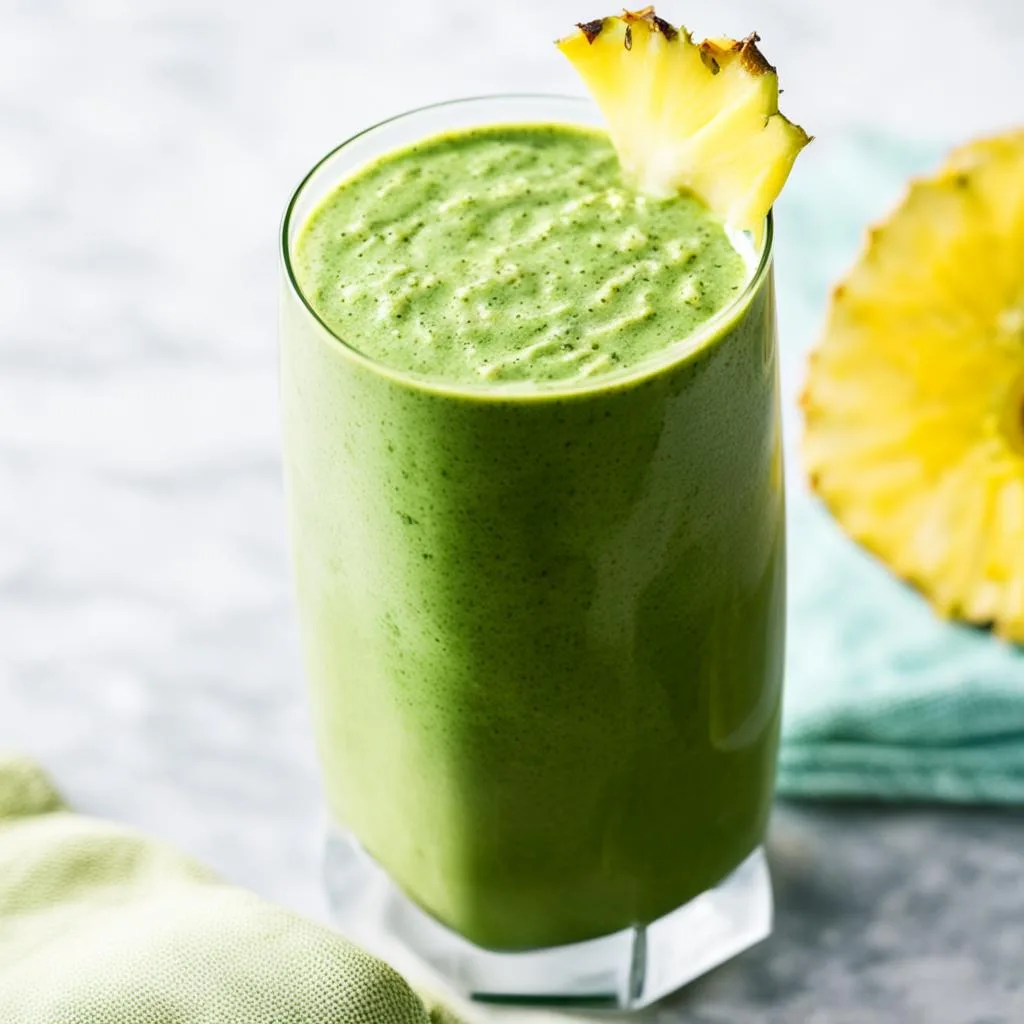
Some smoothies look so vibrant and complex that it feels like you’d need a culinary degree just to make them at home. But while this Pineapple Green Dream Smoothie may look high-maintenance, it turns out it’s a breeze to whip up!
What’s in the Pineapple Green Dream Smoothie?
Despite its fancy appearance, the ingredients are simple:
- Pineapple – Loaded with vitamin C and bromelain, an enzyme with anti-inflammatory properties
- Banana – Provides a creamy texture plus potassium
- Spinach – Packed with antioxidants like vitamin A, vitamin K, and lutein
- Green apple – Adds a touch of sweetness
- Lemon juice – Brightens up the flavor
- Ice – Cools it down into an ideal texture for sipping
Benefits of Pineapple Green Dream Smoothie Ingredients
Individually, each ingredient provides its own set of benefits. But blended together, they make for an nutrient-dense elixir that’s perfect for glowing skin, supporting immunity, reducing inflammation, and boosting energy.
The greens and fruit provide a hefty dose of antioxidants to counter free radicals and oxidative stress. The pineapple and lemon offer anti-inflammatory protection. And the banana lends potassium for proper muscle and nerve function.
How to Make the Pineapple Green Dream Smoothie
Here’s the simple smoothie-making process:
- Add the spinach, pineapple, banana, green apple, and lemon juice to your blender
- Pour in some non-dairy milk like almond or oat milk to help it blend more easily (optional)
- Add several ice cubes
- Blend on high until thick and creamy!
Customizing Your Pineapple Green Dream Smoothie
While the original recipe keeps things straightforward, feel free to personalize your smoothie if you want to get creative. Here are some easy add-in ideas:
- Vegan protein powder – For extra staying power
- Ground flax or chia seeds – For anti-inflammatory omega-3s
- Matcha powder – For metabolism-boosting caffeine
- Cocoa powder or cacao nibs – For antioxidants and richness
- Nut or seed butter – For healthy fats and creaminess
Selecting the Ultimate Produce: A Deep Dive into Ripeness and Variety
To achieve that signature vibrant hue and balanced flavor profile, the quality of your raw materials is paramount. While the Pineapple Green Dream Smoothie is forgiving, understanding the nuances of your fruit can elevate it from a standard breakfast drink to a culinary experience. When sourcing your pineapple, look for the “Golden” or “MD2” variety, which is known for its lower acidity and higher sugar content compared to traditional varieties. To test for ripeness at the market, don’t just look at the color of the skin—which can remain green even when the fruit is sweet—but instead, smell the base. A ripe pineapple will emit a fragrant, tropical aroma. If it smells fermented or vinegary, it is overripe; if it has no scent at all, it was likely picked too early and will lack the bromelain-rich sweetness needed to balance the spinach.
The choice of apple also dictates the smoothie’s final character. While the original recipe suggests a green apple—typically the Granny Smith—this is chosen specifically for its high malic acid content. This acidity provides a sharp counterpoint to the creamy banana. However, if you find Granny Smiths too tart, consider a Pink Lady or a Braeburn. These varieties offer a “snappy” texture and a floral sweetness that bridges the gap between the tropical pineapple and the earthy greens. Avoid mealy varieties like Red Delicious, as they can result in a grainy texture that disrupts the “Dream” consistency. For the spinach, prioritize organic baby spinach. The younger leaves contain less oxalic acid than mature, thick-stemmed spinach, resulting in a milder flavor that won’t overwhelm the fruit. If you are forced to use mature spinach, take the extra thirty seconds to de-stem the leaves; the fibrous stems are difficult for standard blenders to pulverize and can leave unpleasant “strings” in your drink.
The Physics of the Perfect Pour: Blending Techniques for Professional Texture
Achieving a high-maintenance look requires understanding the sequence of ingredients, often referred to as the “layering logic.” Most people make the mistake of tossing everything into the blender at once, which can lead to air pockets (cavitation) where the blades spin fruitlessly. To ensure a silky, homogenous blend, always place your liquid and softest ingredients at the bottom, closest to the blades. Start with the lemon juice and your optional non-dairy milk, followed by the spinach. By blending the greens with the liquid first—a technique known as “pre-greening”—you ensure that every leaf is completely liquefied before the heavier frozen components are added. This prevents those tiny green flecks that often get stuck in teeth.
Once the greens and liquid are a uniform emerald fluid, add the banana and apple. The banana acts as a natural emulsifier; its starch and pectin content help to bind the water-based juices with the fiber of the apple. Finally, add the pineapple and ice. If you are using a high-powered blender, start on the lowest speed to break up the large chunks, then quickly ramp up to the highest setting. This creates a powerful vortex that pulls the ingredients down into the blades. Watch for the “four-leaf clover” shape to form at the top of the mixture—this is the visual cue that a perfect emulsion has been achieved. If the mixture is too thick to move, resist the urge to add more liquid immediately. Instead, use the tamper tool to push the ingredients toward the blades, or stop the blender and stir to release trapped air. This maintains the thick, spoonable luxury of the smoothie without diluting the flavor.
Nutritional Alchemy: Understanding Synergy and Bioavailability
The Pineapple Green Dream Smoothie is more than just a collection of healthy foods; it is a masterclass in nutritional synergy. One of the most significant interactions in this blend is between the spinach and the citrus elements (pineapple and lemon). Spinach is a powerhouse of non-heme iron, which is notoriously difficult for the human body to absorb on its own. However, Vitamin C (ascorbic acid) significantly enhances the bioavailability of this iron by converting it into a form that is more easily absorbed in the small intestine. By pairing the iron-rich greens with the high-Vitamin C content of the pineapple and lemon, you are essentially “unlocking” the mineral potential of the spinach.
Furthermore, the bromelain found in the pineapple core and flesh is a proteolytic enzyme, meaning it aids in the breakdown of proteins. If you are adding a scoop of vegan protein powder as suggested in the customizations, the bromelain helps your digestive system process that protein more efficiently. To maximize this benefit, try to include a bit of the pineapple’s core in the blender. While the core is too tough to eat raw, a high-speed blender can easily incorporate it into the smoothie, providing a concentrated dose of bromelain and extra insoluble fiber. Additionally, the inclusion of the green apple skin provides quercetin, a flavonoid that works in tandem with the Vitamin C to support respiratory health and reduce the histamine response, making this an excellent choice during allergy season.
Beyond the Recipe: Creative Substitutions for Every Season
While the classic recipe is a staple, seasonal fluctuations can affect the availability of fresh produce. If pineapples are out of season or lack sweetness, you can substitute them with frozen mango or papaya. Both fruits maintain the tropical vibe and provide a similar enzymatic profile (papaya contains papain, which is similar to bromelain). If you find yourself out of spinach, do not immediately reach for kale unless you are prepared for a much more aggressive flavor. Instead, try Swiss chard (with the stems removed) or even mild microgreens. For a lower-sugar version that still maintains the “Dream” texture, you can swap half of the banana for a quarter of a frozen avocado. This adds a dose of monounsaturated fats, which makes the smoothie even creamier while slowing the absorption of the natural sugars from the fruit.
In the winter months, when fresh green apples might be less crisp, consider using a firm pear like a Bosc or Anjou. Pears offer a subtle, earthy sweetness that pairs beautifully with the lemon juice. Another expert-level substitution for those looking to boost the “green” factor without adding bitterness is the use of frozen zucchini or steamed-then-frozen cauliflower. These vegetables are virtually tasteless when blended with pineapple and lemon but add significant volume and nutrients without the sugar load of extra fruit. This is particularly useful for those monitoring their glycemic index who still want a large, satisfying glass of smoothie.
The Art of the Garnish: Elevating Visual Appeal Without the Effort
To truly live up to its “high-maintenance” appearance, the presentation of the Pineapple Green Dream Smoothie can be elevated with a few simple tricks that take less than a minute. The contrast of the bright green liquid against a well-chosen garnish creates a cafe-quality aesthetic. Start with the glass: a chilled tall glass or a wide-mouthed mason jar works best. For a “pro” touch, take a slice of lemon and run it around the rim of the glass, then dip the rim into a mixture of shredded coconut and a pinch of sea salt. This provides a flavor-enhancing “crust” that makes every sip more dynamic.
When pouring, leave about an inch of space at the top. This allows you to add “floating” garnishes. A few thin slices of green apple fanned out on top, a sprinkle of hemp hearts, or a single mint leaf can transform the look. If you want to get truly fancy, save a small amount of the coconut milk or almond milk and use a spoon to swirl it into the top of the green mixture, creating a marbleized effect. For an added textural element, sprinkle a few cacao nibs or a dusting of cinnamon. These don’t just look good; they provide a crunch and a scent profile that hits the senses before you even take a sip. Remember, we eat with our eyes first, and these small touches reinforce the feeling of luxury that this smoothie is designed to provide.
Solving the “Green Smoothie” Dilemma: Troubleshooting Taste and Consistency
Even with the best intentions, occasionally a smoothie doesn’t turn out quite right. One common issue is a “grassy” or overly bitter taste, which usually happens if the spinach was a bit older or the lemon was particularly pithy. To fix this, do not add more sugar. Instead, add a tiny pinch of sea salt. Salt suppresses the perception of bitterness and enhances the natural sweetness of the pineapple and banana. Another trick is to add a small slice of fresh ginger; its heat masks the “green” flavor and adds a refreshing zing that complements the lemon.
If your smoothie is too foamy, this is often due to the high pectin content in the apple and the air incorporated during high-speed blending. To settle the foam, you can stir the smoothie vigorously with a long spoon for thirty seconds after blending, or add a few drops of a healthy oil (like MCT oil or flax oil), which acts as a natural defoamer. If the texture is too watery, the culprit is usually too much ice or a watery apple. You can thicken it instantly by adding a tablespoon of chia seeds or ground flaxseeds and letting it sit for two minutes; these seeds absorb excess liquid and create a gel-like consistency. Conversely, if it’s too thick to drink through a straw, add a splash of coconut water rather than plain water. Coconut water adds electrolytes and a subtle sweetness that won’t dilute the complex flavor profile you’ve built.
Functional Optimization: Tailoring the Dream for Specific Wellness Goals
Depending on the time of day or your specific health goals, the Pineapple Green Dream Smoothie can be tweaked for functional benefits. For a pre-workout boost, the natural nitrates in the spinach can help improve blood flow and oxygen delivery to muscles. To lean into this, add a teaspoon of beetroot powder; while it will change the color from vibrant green to a deep earthy purple, the performance benefits are significant. If you are using this as a post-workout recovery drink, ensure you are adding the protein powder and a pinch of turmeric. The bromelain in the pineapple and the curcumin in turmeric work synergistically to manage exercise-induced inflammation, helping your muscles recover faster.
For those using the smoothie as a beauty-boosting elixir, consider adding a scoop of collagen peptides. Collagen is flavorless and dissolves completely, supporting skin elasticity and hair health. The Vitamin C in the base recipe is already a necessary co-factor for collagen synthesis in the body, making this an ideal delivery system. If you’re looking for a sustained energy boost without a caffeine crash, skip the matcha and instead add a teaspoon of maca powder. Maca has an earthy, nutty flavor that pairs surprisingly well with the banana and pineapple, and it is known for supporting endocrine health and stamina. By understanding these functional add-ins, you can transform your daily smoothie into a targeted tool for your personal wellness journey, all while enjoying the refreshing, tropical taste of the Green Dream.
Frequently Asked Questions
What kind of milk should I use?
Any unsweetened non-dairy milk works great, like almond, oat, soy, coconut, etc. Dairy milk can also be used if not vegan.
Can I use frozen fruit instead of ice?
Yes, using frozen banana and pineapple chunks means you don’t need to add ice.
Is this smoothie okay for kids?
Absolutely! Just avoid adding extras like matcha powder or cocoa powder, which contain caffeine. The fruit and greens make this perfectly kid-friendly.
Can I prepare this smoothie ahead of time?
It’s best to enjoy this smoothie freshly blended. The greens will get unappetizingly brown if it sits for too long. Meal prep the dry ingredients together, then add wet ingredients and blend to order.
What kind of blender works best?
A high-powered blender like Vitamix or Blendtec works great, but a standard blender or even an immersion blender can also whip up this smoothie just fine.
Related posts:
 Nina Agdal’s Green Smoothie Recipe That Tastes Like Paradise
 Sleep-Boosting Bedtime Smoothie Recipe
 Apple-Based Breakfast Ideas
 Sweet Smoothies Without the Sugar Crash
 Creamy Homemade Macadamia Milk in Under 10 Minutes
 Healthy Frozen Banana Desserts
 Green Tea Pineapple Smoothie
 Instant Pot Apple Butter Recipe