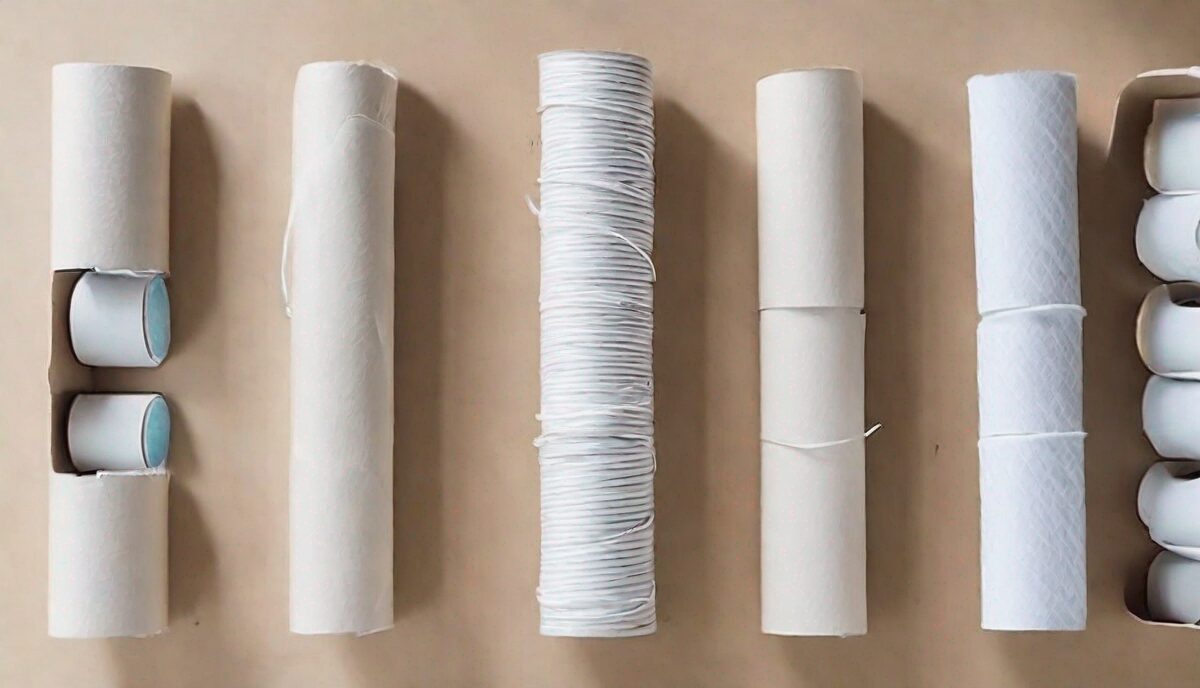
Are you tired of untangling your cables every time you need to use one? If so, you’re not alone. Cable management can be a frustrating and time-consuming task, but thanks to a viral hack that’s been making the rounds on social media, there’s a simple and eco-friendly solution at your fingertips: toilet paper rolls.
Why Use Toilet Paper Rolls?
Toilet paper rolls are the perfect size for most cables and cords, and they’re an excellent way to repurpose something that would otherwise end up in the trash. Plus, this method of cable organization is not only effective but also cost-efficient and environmentally friendly.
How to Organize Your Cables with Toilet Paper Rolls
Here’s a step-by-step guide to getting your cables under control:
- Gather Your Supplies: Start by collecting empty toilet paper rolls. You might need several depending on the number of cables you have.
- Prepare the Rolls: If you wish, you can decorate the rolls with wrapping paper, paint, or markers to add a personal touch to your cable organizers.
- Sort Your Cables: Separate your cables by type and length, which will make it easier to find what you need later.
- Coil and Store: Coil each cable loosely to avoid damaging the wires, then slip it into a toilet paper roll. For extra organization, label each roll with the type of cable it contains.
- Arrange Your Organizers: Store your newly organized cables in a box or drawer, keeping them tidy and easy to access.
Benefits of Using This Cable Organization Hack
This simple DIY solution not only helps you declutter your space but also has several other benefits:
- Eco-Friendly: Repurposing toilet paper rolls is a great way to reduce waste.
- Cost-Effective: No need to spend money on expensive cable management systems.
- Customizable: You can decorate and label the rolls to match your space and preferences.
- Easy to Use: This hack requires minimal effort and can be implemented immediately.
Additional Tips for Cable Management
While toilet paper rolls are a great start, here are a few more tips to keep your cables in check:
- Use binder clips to secure cables to the edge of your desk.
- Invest in cable ties or Velcro straps for larger bundles of wires.
- Consider a cable box to hide power strips and excess cords.
Structural Reinforcement for Heavy-Duty Cables
While standard toilet paper rolls are perfect for lightweight USB-A or lightning cables, heavier power bricks and thick extension cords can cause the cardboard to buckle under pressure. To reinforce your rolls, consider a double-layering technique. Take two rolls of the same diameter; cut a vertical slit down the length of one, compress it slightly, and insert it into the center of the second roll. This creates a dense, multi-ply cardboard cylinder that maintains its structural integrity even when housing thicker gauge wiring. For added durability, wrap the exterior in duct tape or heavy-duty washi tape; this not only provides a rigid shell but also prevents the cardboard from tearing if your storage bin is frequently moved or jostled.
The Vertical Orientation Strategy for Deep Drawers
Horizontal storage is often the default, but it can lead to a “tangled mess” aesthetic if the drawer isn’t perfectly sized. To maximize efficiency, transition to vertical storage. Place your toilet paper rolls standing upright inside a shallow bin or a repurposed shoe box. By creating a “honeycomb” of rolls, you can store cables like files in a cabinet. This method allows you to see every connector head at once, eliminating the need to pull out every cord to find the one you need. If your drawer is deeper than the rolls, you can stack them, but be sure to create a cardboard shelf divider to ensure the bottom layer remains accessible without removing the top layer entirely.
Creating a Color-Coded Identification System
Beyond simple labels, color-coding provides a visual shortcut for high-traffic workstations. Dedicate specific colors or patterns of contact paper or decorative tape to certain cable types. For instance, use blue tape for all data-transfer cables, red for power delivery, and green for audio-visual connections. This visual language is particularly helpful in high-stress environments like recording studios or gaming setups where identifying a faulty cable in the dark or under a desk needs to happen in seconds. You can also color-code the actual cable ends with small bits of electrical tape to match the roll, ensuring that every wire finds its way back to its designated “home” after use.
Managing Extra Length with Tension Loops
One common issue with this hack is the “floppy cable” syndrome, where the cable slides out of the roll if it isn’t coiled precisely. To solve this, incorporate a tension loop. Once the cable is coiled, take a small rubber band or a piece of twist-tie and secure the coil before sliding it into the roll. Alternatively, create a small notch at the top and bottom of the cardboard roll. By threading the cable end through the notch, you create a locking mechanism that keeps the cord from unspooling inside the cylinder. This is especially useful for long charging cables that tend to expand and push the roll apart over time.
Optimizing for Travel and Portability
When packing for travel, the biggest challenge is preventing cables from becoming a single, tangled ball in your carry-on. Toilet paper rolls are ideal for this because they act as a protective barrier against sharp objects in your bag. To take this further, cut the rolls to specific lengths based on your most-used cords. For a laptop charger, use two rolls joined together with clear tape to create a longer, sturdy sleeve. To keep the items clean, place the filled rolls inside a Ziploc bag; this creates a moisture-proof environment that prevents your cables from picking up dust or lint while inside your luggage, ensuring they are pristine when you reach your destination.
Managing the “Cable Graveyard” with Seasonal Rotation
We all have those cables we use only once or twice a year—holiday light connectors, legacy camera sync cables, or specialized printer cords. Instead of letting these occupy prime real estate in your daily storage, move them to a “seasonal rotation” box. Use the toilet paper roll method to keep these categorized, but store them in a secondary container tucked away in a closet. When you need a specific niche cable, you can pull the entire roll out of its storage bin without having to sort through your primary desk cables. This keeps your daily workspace lean and ensures that your occasional-use cables remain in perfect condition, free from the kinks and bends that usually plague long-term storage.
Maintaining Hygiene and Longevity
Cardboard is a porous material, which can be a concern in humid environments like basements or damp garages. To make this hack more permanent, treat your rolls with a quick spray of matte clear-coat sealant or a layer of decoupage glue. This prevents the cardboard from softening over time and adds a professional, finished look to your organization system. Furthermore, ensure that all cables are completely dry before inserting them into the rolls; storing damp cables in cardboard can lead to mold growth in humid climates. If you are worried about dust accumulation, store your rolls inside a lidded container, which effectively turns your cardboard tubes into a modular, protective filing system for your entire electronic inventory.
FAQ Section
Can this method be used for all types of cables?
Yes, toilet paper rolls can be used to organize most types of cables, from USB cords to power cables. However, for very thick or long cables, you might need a larger solution, like a paper towel roll.
How can I customize my cable organizers?
You can decorate the outside of the toilet paper rolls with wrapping paper, paint, or washi tape. Adding labels is also a helpful way to identify the cables at a glance.
Is this method suitable for long-term cable storage?
Yes, as long as the rolls are stored in a dry place, they can be used for long-term cable storage.
Can I use this hack to organize cables in my travel bag?
Absolutely! It’s a lightweight and compact way to keep your cables organized on the go.
What other items can I repurpose to organize my cables?
Other household items like binder clips, bread bag ties, and even cardboard tubes from wrapping paper can be repurposed for cable management.
Conclusion
Organizing cables doesn’t have to be a chore. With this viral toilet paper roll hack, you can easily keep your cables neat and tidy while doing your part for the environment. Give it a try and say goodbye to cable chaos!
Related posts:
 Guilt-Free Cinnamon Roll Recipe
 The Surprising Health Perks of Switching to a Bidet (Thanks, Tushy!)
 Summer Spring Rolls: A Fresh and Healthy Recipe
 Choosing the Right Toilet Stool
 The 7 best eco-friendly toilet paper brands for your bum and the planet
 Healthy Summer Roll Recipes
 The Quest for the Best: Finding the Perfect Toilet Paper
 Meghan Markle’s High Heel Hack