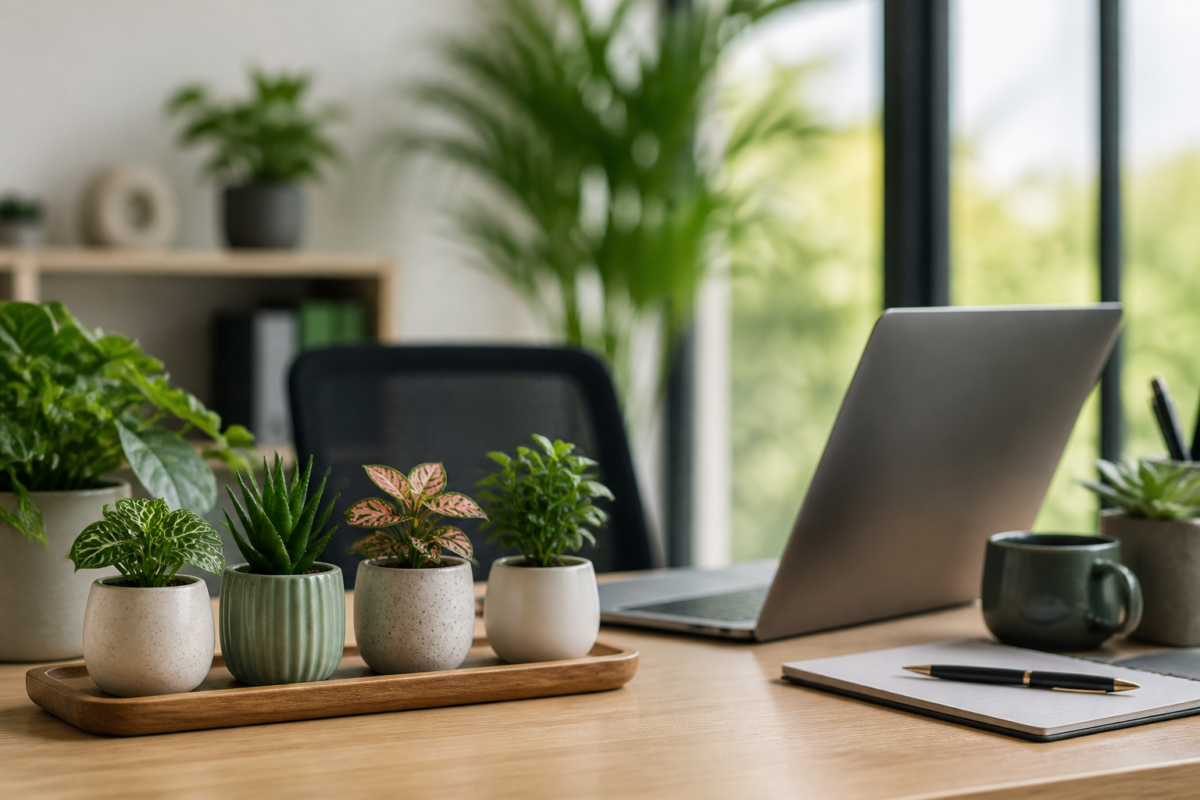
In the modern era of glass-and-steel architecture and minimalist cubicles, the human psyche often feels a profound disconnect from the natural world. This phenomenon, known as the “nature deficit,” is particularly acute in professional environments where productivity is prioritized over sensory well-being. However, a quiet revolution is taking place on the corners of mahogany desks and beside shimmering computer monitors. It is the rise of “Tiny Green Therapy”—the strategic use of mini plants to reclaim our biological heritage and transform sterile workspaces into thriving ecosystems of calm and creativity.
Miniature plants, ranging from the architectural precision of succulents to the ethereal float of air plants, are more than mere decorations. They are living anchors in a digital storm. As we navigate the complexities of remote work, hybrid schedules, and high-pressure deadlines, these small botanical companions offer a grounding presence. This article explores the profound impact of mini plants on our mental health, the science behind biophilic design, and practical strategies for curating your own desktop sanctuary.
The Science of Biophilia: Why Tiny Plants Make a Big Difference
The term “biophilia” was popularized by biologist E.O. Wilson in the 1980s, suggesting that humans possess an innate, genetic tendency to seek connections with nature and other forms of life. In a workspace, this connection is often severed. When we introduce even a single, small plant into our line of sight, we are satisfying an evolutionary craving. Research in environmental psychology has consistently shown that the presence of greenery can lower heart rates, reduce blood pressure, and decrease levels of cortisol, the body’s primary stress hormone.
Why do “mini” plants work so well? The answer lies in the concept of micro-environments. You do not need a sprawling garden to experience the benefits of nature. A small *Haworthia* or a tiny terrarium creates a focal point for what researchers call “soft fascination.” Unlike the “hard fascination” required to focus on a spreadsheet or a complex email, soft fascination allows the mind to wander effortlessly. This effortless attention gives the prefrontal cortex—the part of the brain responsible for executive function—a much-needed break, leading to what is known as Attention Restoration Theory (ART). By glancing at a mini plant for just forty seconds, you can effectively “reset” your cognitive focus, making you more efficient when you return to your tasks.
Choosing Your Tiny Companions: The Best Mini Plants for Your Desk
Selecting the right plant for a workspace requires balancing aesthetic preference with the realities of office lighting and maintenance. Not every plant is suited for the micro-life. Here are several varieties that excel in small-scale environments:
- Succulents (Haworthia and Gasteria): Unlike the light-hungry Echeveria, these varieties are more tolerant of the indirect light found in many offices. They grow slowly, meaning they won’t outgrow their desk-friendly pots for years. Their thick, fleshy leaves store water, making them resilient to the occasional forgotten weekend.
- Air Plants (Tillandsia): These are the ultimate workspace plants because they require no soil. They absorb moisture and nutrients through their leaves. A simple misting once or twice a week and a monthly soak are usually sufficient. Their alien-like shapes add a modern, sculptural element to any desk.
- Micro-Ferns: Varieties like the Lemon Button Fern stay compact and thrive in the higher humidity often found in closed terrariums. They provide a lush, forest-like texture that contrasts beautifully with hard office equipment.
- Marimo Moss Balls: Technically a rare form of spherical algae, these live in small glass jars of water. They are incredibly low-maintenance and have a whimsical, calming presence. They represent the “zen” of aquatic gardening on a miniature scale.
- Pilea Peperomioides (Baby offsets): Also known as the Chinese Money Plant, the small “pups” can live in tiny jars for quite some time. Their round, coin-shaped leaves are widely considered symbols of prosperity and good luck.
Psychological Benefits: Stress Reduction and Enhanced Focus
The psychological impact of mini plants extends beyond simple stress relief. In a workspace, plants serve as a “buffer” against the stressors of the digital environment. A study conducted by the University of Exeter found that employees were 15% more productive when “lean” workspaces were filled with just a few houseplants. The reason isn’t just aesthetic; it’s about the sense of control and nurturing.
Caring for a living thing, even one as small as a two-inch cactus, provides a sense of agency. In a job where you might feel like a cog in a machine, the survival and growth of a plant depend entirely on you. This small responsibility can boost self-esteem and provide a sense of routine. Furthermore, the color green itself is psychologically associated with growth, safety, and tranquility. In color psychology, green sits in the middle of the visible spectrum, requiring the least amount of effort for the human eye to process. This creates a visual “rest” every time your eyes stray from your blue-light-emitting screen to your desk plant.
Aesthetic and Functional Design: Styling Your Desk Jungle
Integrating plants into a workspace requires a thoughtful approach to design. You want to enhance your environment without cluttering it. The key is proportion. A massive Fiddle Leaf Fig might overwhelm a small desk, but a collection of three varied mini plants in coordinated pots creates a curated, intentional look.
Consider the “Rule of Three” in design: grouping objects in odd numbers tends to be more visually appealing and memorable. You might pair a spikey succulent with a soft, trailing plant and a smooth stone or crystal. Container choice is equally important. For a professional look, choose matte ceramics, concrete, or high-quality glass. Ensure that your containers have drainage holes if you are planting directly in them, or use the “cachepot” method, where the plant stays in its plastic nursery pot inside a decorative outer container. This makes watering much easier and prevents water damage to your desk surface.
Low-Maintenance Care for Busy Professionals
The most common fear regarding workspace plants is the “black thumb” syndrome. However, most mini plants die from over-care rather than neglect. To maintain a thriving desk garden, follow these professional tips:
- The Finger Test: Before watering, stick your finger an inch into the soil. If it feels damp, wait. Most mini plants, especially succulents, prefer to dry out almost completely between waterings.
- Light Assessment: Most “low-light” plants still need some natural light. If your desk is in a windowless basement, consider a small LED grow light that clips onto your monitor or shelf. These have become incredibly affordable and can mimic the full spectrum of sunlight.
- Watering Technique: Avoid splashing water on the leaves of succulents, as this can lead to rot. Use a small squeeze bottle or a long-necked watering can to deliver water directly to the soil.
- Dusting: Office environments can be surprisingly dusty. Every few weeks, gently wipe the leaves of your plants with a damp cloth. This allows them to photosynthesize more efficiently and keeps them looking vibrant.
The Air Quality Myth vs. Reality
It is a common marketing claim that houseplants “purify” the air by removing toxins like formaldehyde and benzene. While the 1989 NASA Clean Air Study did prove that plants can filter volatile organic compounds (VOCs) in a laboratory setting, the reality in a standard office is more nuanced. To significantly purify the air in a typical room, you would need hundreds of plants per square foot.
However, mini plants still contribute to air quality in a micro-sense. They undergo transpiration, releasing small amounts of moisture into the air, which can slightly increase humidity in dry, air-conditioned offices. More importantly, the *perceived* air quality is often higher in green spaces. People report feeling that the air is fresher and cleaner when plants are present, which has a positive psychosomatic effect on comfort and breathing. Instead of viewing them as industrial air filters, view them as biological humidifiers and psychological refresheners.
Creating a Mindful Ritual: The Act of Caring for Tiny Life
One of the most transformative aspects of Tiny Green Therapy is the opportunity for mindfulness. In the middle of a frantic workday, taking five minutes to check the soil moisture of your plants or to prune a yellowing leaf can serve as a powerful grounding ritual. This is a form of “active meditation.”
By focusing entirely on the needs of the plant, you break the cycle of ruminative thoughts about work. Observe the subtle changes: a new leaf unfurling, a change in color, or the way the light hits the foliage. This practice encourages a “slow” mindset in a “fast” world. It reminds us that growth takes time and that even the smallest life forms require consistent, gentle attention. Integrating this into your daily routine—perhaps right after your morning coffee or during a mid-afternoon energy slump—can significantly improve your emotional resilience.
Overcoming Common Challenges: Pests, Light, and Limited Space
Even the most dedicated plant parent will face challenges. In an office setting, the most common issues are fungus gnats and light deprivation. Fungus gnats thrive in overwatered soil. If you see tiny black flies, the first step is to let the soil dry out completely. You can also use “sticky traps” or a thin layer of sand on top of the soil to prevent them from laying eggs.
If space is at a premium, look upward. Vertical space is often underutilized in offices. Floating shelves, wall-mounted planters, or even “living walls” made of felt pockets can house dozens of mini plants without taking up a single inch of desk space. For those who travel frequently for work, choose “indestructible” varieties like the ZZ plant (Zamioculcas zamiifolia) or the Snake Plant (Sansevieria). These can survive for weeks without water and thrive in almost any lighting condition, making them the perfect companions for the nomadic professional.
The Social Root System: Plant Swapping and Workplace Culture
Beyond the individual psychological benefits, mini plants function as powerful catalysts for social cohesion in professional environments. In an era where digital communication often strips away personal nuance, the physical presence of a “desk jungle” provides a non-threatening icebreaker. This is particularly evident in the growing trend of office plant-swapping. Many popular mini plants, such as the Pilea peperomioides or various types of Crassula, are prolific producers of “pups” or offsets. When a professional nurtures a plant to the point of reproduction, the act of gifting a small cutting to a colleague creates a tangible, living connection that transcends departmental hierarchies.
These “botatnical handshakes” foster a culture of generosity and shared knowledge. It is not uncommon for a Slack channel or a physical bulletin board to be dedicated to “Plant Parent” tips, where employees exchange advice on the best potting mixes for the office’s specific light levels or troubleshoot a collective outbreak of spider mites. This shared responsibility creates a micro-community. For example, if a team member is away on a business trip, the “plant-sitting” duties assumed by a neighbor strengthen interpersonal trust. These interactions are vital for combating the isolation often felt in hybrid work models, where the physical office must offer more than just a desk to justify the commute.
Furthermore, the aesthetic of a green workspace signals a company’s commitment to employee well-being. When visitors or prospective hires walk through an office filled with thriving mini plants, the visual data suggests a culture that values life, growth, and patience. It shifts the perception of the office from a sterile processing center to a living, breathing ecosystem. For managers looking to improve retention, encouraging a “bring your own plant” policy or providing a small stipend for desk greenery is a low-cost, high-impact strategy that yields dividends in morale and cultural identity.
Navigating the Micro-Climates of Corporate Infrastructure
While we often view an office as a single, temperature-controlled environment, it is actually a patchwork of distinct micro-climates that can be treacherous for small plants. Understanding these invisible forces is essential for long-term botanical success. The primary antagonist in the office environment is the HVAC system. Air conditioning vents act as dehumidifiers, stripping moisture from the air and creating localized “wind tunnels” that can cause thin-leaved plants like micro-ferns to crisp up within hours. Conversely, proximity to a server room or a high-end workstation can create a “heat island” effect, where the ambient temperature is several degrees higher than the rest of the room, causing succulents to enter a state of forced dormancy or rapid dehydration.
Another critical factor is the “weekend blackout.” Many commercial buildings significantly reduce or entirely shut off climate control systems during the weekend to save energy. This can lead to dramatic temperature swings—plunging to 50°F in the winter or soaring to 90°F in the summer—while the office is empty. To mitigate this, professionals should avoid placing mini plants directly on windowsills where glass acts as a thermal conductor, or directly under ceiling vents. Using a heavy ceramic pot can provide a layer of thermal mass that helps insulate the roots against these fluctuations.
Light quality also varies wildly based on the glass used in modern architecture. Most high-rise windows are treated with UV-filtering films to reduce solar heat gain. While this is great for energy efficiency, it effectively starves plants of the specific blue and red light wavelengths they need for photosynthesis. If your desk is more than ten feet from a window, even one that looks “bright” to the human eye, your plant is likely in the equivalent of deep shade. Observing the “stretch” or etiolation of your plant—where it grows thin and pale toward the light source—is a clear signal that it needs a more favorable micro-climate or supplemental assistance.
Engineering Miniature Worlds: The Art of Desk-Sized Terrariums
For those working in particularly dry or dusty environments, a closed terrarium offers a self-sustaining solution that functions as a miniature biosphere. The engineering of a successful desk terrarium requires more than just shoving a plant into a jar; it involves creating a functional water cycle. The base layer must consist of drainage material—typically pea gravel or expanded clay pebbles—to prevent root rot. Above this, a thin layer of activated charcoal is essential. The charcoal acts as a chemical filter, absorbing odors and preventing the buildup of anaerobic bacteria that can thrive in a sealed environment.
The choice of flora for these glass-enclosed worlds is specific. High-humidity lovers like Fittonia (Nerve Plants) or Selaginella (Spikemoss) are ideal because they thrive on the condensation that naturally forms on the glass walls. Once established, a closed terrarium requires almost no watering. The plants transpire moisture, which condenses on the glass and rains back down into the soil, creating a perpetual loop. This makes them the perfect choice for the professional who travels frequently or whose schedule is too erratic for traditional plant care.
Maintaining these systems involves a delicate balance of light and ventilation. If the glass is constantly fogged, it indicates too much moisture, which can lead to mold; the lid should be removed for a few hours to allow for gas exchange. If the plants look limp and no condensation is visible, a few sprays of distilled water are needed. For an added layer of biological sophistication, some enthusiasts introduce “springtails”—microscopic, wingless insects that act as a clean-up crew, eating mold and decaying organic matter. This transforms a simple desk ornament into a fully functioning, self-regulating ecosystem that provides a fascinating, slow-moving distraction during high-stress calls.
Precision Lighting: Science-Backed Growth in Windowless Spaces
The rise of “grow-light” technology has democratized Tiny Green Therapy, allowing even those in windowless cubicles or basement offices to maintain lush greenery. However, not all light is created equal. To the human eye, a standard cool-white LED office light looks bright, but it often lacks the Photosynthetically Active Radiation (PAR) necessary for a plant to generate energy. When selecting a supplemental light for a desk plant, one must look at the Kelvin rating and the Color Rendering Index (CRI). A light in the 5000K to 6500K range mimics the spectrum of natural daylight and is most effective for promoting compact, healthy growth.
The placement of these lights is a matter of physics. Light intensity follows the inverse-square law: if you double the distance between the light and the plant, the plant receives only one-quarter of the energy. For mini succulents, which are high-light plants, a small LED grow light should be positioned no more than 6 to 10 inches above the foliage. For low-light plants like a tiny Sansevieria, a distance of 18 to 24 inches is sufficient. Modern USB-powered grow lights often come with built-in timers, which are crucial for maintaining the plant’s circadian rhythm. Plants need a period of darkness to complete the respiration phase of their metabolic cycle; leaving an office light on 24/7 can actually stress the plant and lead to stunted growth.
Edge cases in lighting involve the “burn” factor. Some high-powered LEDs can emit enough thermal energy to scorch the delicate leaves of air plants or moss. If you notice brown, crispy spots on the side of the plant facing the light, it is a sign of light toxicity or heat stress. Adjusting the angle or using a sheer piece of vellum to diffuse the light can create the “dappled sun” effect that many forest-floor species crave. By treating light as a measurable nutrient rather than a vague aesthetic quality, a professional can ensure their desk sanctuary thrives regardless of the building’s architectural limitations.
Soil-Free Sophistication: Semi-Hydroponics for the Minimalist Desk
One of the primary objections to office plants is the mess associated with soil—spills, water stains on documents, and the presence of soil-borne pests like fungus gnats. Semi-hydroponics, or the “passive hydro” method, offers a sterile, elegant alternative. This system replaces traditional potting soil with an inorganic medium, most commonly LECA (Lightweight Expanded Clay Aggregate). These clay pebbles are porous, wicking water up to the roots through capillary action while providing massive amounts of oxygen to the root zone.
Transitioning a mini plant to semi-hydroponics involves thoroughly washing all soil from the roots and placing the plant in a glass vessel filled with LECA. A small reservoir of water mixed with a diluted hydroponic nutrient solution is maintained at the bottom third of the container. This setup is visually striking, as the clean lines of the clay pebbles and the visible water level fit perfectly into a minimalist or high-tech office aesthetic. Because there is no decomposing organic matter (soil), the primary cause of office plant pests is eliminated.
The practical advantage for the busy professional is the “visual fuel gauge.” Instead of guessing the moisture level by sticking a finger in the dirt, you can see exactly how much water is left in the reservoir. This reduces the cognitive load of plant care to a simple periodic glance. However, there is a learning curve: the water’s pH must be monitored, as office tap water is often highly alkaline, which can block nutrient uptake. Using filtered water or a drop of pH-down solution ensures the plant doesn’t suffer from mineral deficiencies. For those who prioritize a clean, bug-free workspace but still crave the presence of living green, semi-hydroponics represents the pinnacle of modern desk gardening.
Sensory Ergonomics: Texture, Fragrance, and Tactile Relief
While the visual impact of plants is well-documented, the “therapy” in Tiny Green Therapy is most effective when it engages multiple senses. In a workspace dominated by the hard textures of plastic, metal, and glass, the tactile variety of plants provides a vital sensory “reset.” This is known as sensory ergonomics. Incorporating plants with diverse textures—such as the soft, felt-like leaves of a Kalanchoe tomentosa (Panda Plant) or the cool, smooth surface of a Lithops (Living Stone)—allows for brief moments of haptic grounding. Touching a soft leaf for a few seconds can lower sympathetic nervous system activity, providing a physical anchor during a difficult conversation.
Scent is another underutilized tool in the workspace. While strong floral scents can be polarizing or even trigger allergies in a shared office, many mini plants offer subtle, localized fragrances that only the person at the desk can enjoy. Dwarf varieties of scented geraniums can smell of lemon, mint, or chocolate when their leaves are lightly brushed. This provides a form of “micro-aromatherapy” that can boost alertness or provide a sense of calm without affecting colleagues. Even the earthy smell of damp moss in a small jar can trigger a nostalgic, calming response, reminding the brain of forest environments and reducing the “synthetic” feel of the office.
The auditory element of mini plants is subtle but present. The sound of a fine-mist sprayer or the gentle bubbling of a tiny, USB-powered water feature integrated with a plant can provide a form of “green noise.” This low-frequency, consistent sound helps mask the distracting chatter of an open-plan office or the hum of a printer. By curating a desk garden that appeals to sight, touch, and smell, the professional creates a multi-dimensional sanctuary that buffers them against the sterile, mono-sensory nature of digital work.
Identifying and Mitigating Invisible Office Toxins
While the previous article debunked the idea of plants as industrial-scale air purifiers, they do exist within a complex chemical environment that affects their own health. Offices are often high-VOC (Volatile Organic Compound) environments due to off-gassing from new carpets, particle-board furniture, and the ozone produced by laser printers and photocopiers. While these levels are usually safe for humans, they can accumulate on the surface of small plants, clogging their stomata (the microscopic pores used for breathing).
A specific and often overlooked toxin in the office is ethylene gas. If your desk is near a communal kitchen or a fruit bowl, ripening fruits like apples and bananas release ethylene, which acts as a ripening hormone. For mini plants, especially flowering varieties or those with delicate foliage, even trace amounts of ethylene can cause premature leaf drop or yellowing. This is why a plant that seems perfectly healthy on Friday might look “aged” by Monday morning if it was sitting next to a weekend-ripening fruit basket.
Frequently Asked Questions
Q: Are mini plants safe to have around office pets or if I work from home with curious cats?
A: It depends on the variety. Many popular mini plants, like certain succulents (Jade) or Lilies, can be toxic to pets if ingested. However, there are many pet-safe options such as the Spider Plant (Chlorophytum comosum), Haworthia, and most ferns. Always check the ASPCA toxic plant list before bringing a new species into a home office with pets.
Q: I have no windows in my office. Can any mini plant survive?
A: While all plants need some light to survive, some can tolerate very low levels. The ZZ plant and Snake Plant are famous for their ability to live in windowless rooms, though they will grow very slowly. Alternatively, you can supplement with a small, full-spectrum LED grow light, which will allow you to grow almost any mini plant regardless of natural light availability.
Q: How often should I fertilize my mini plants?
A: Mini plants generally need very little fertilizer because you often want to keep them small. Fertilizing once in the spring and once in the summer with a balanced, water-soluble fertilizer diluted to half-strength is usually more than enough. Avoid fertilizing in the winter when the plant’s growth naturally slows down.
Q: Why are the leaves on my mini succulent turning yellow and mushy?
A: This is the classic sign of overwatering. When the roots sit in water for too long, they begin to rot, and the plant cannot transport nutrients. Stop watering immediately, ensure the pot has drainage, and let the soil dry out completely. If the stem is still firm, the plant may recover. If the stem is mushy, you may need to take a healthy leaf cutting to propagate a new plant.
Q: Can I grow mini herbs on my desk?
A: You can, but herbs like basil, rosemary, and mint typically require much more light (6-8 hours of direct sun) than the average office provides. They also tend to grow quickly and may lose their “mini” status fast. If you want a functional mini plant, consider a small aloe vera, which is easy to care for and provides a soothing gel for minor burns or dry skin.
Related posts:
 How to Propagate Succulents
 Bring Nature Indoors with These Stunning Hanging Plants
 The Best Indoor Herb Garden Kits for Fresh Flavors Year-Round
 Transform Your Bathroom Into a Tropical Oasis: The Complete Guide to Thriving Plants
 Signs You’re Under-Watering Your Plants and How to Fix It
 Urban Outfitters’ Faux Plant Collection
 Beginner’s Guide to Composting
 Mini Indoor Trees for Your Home