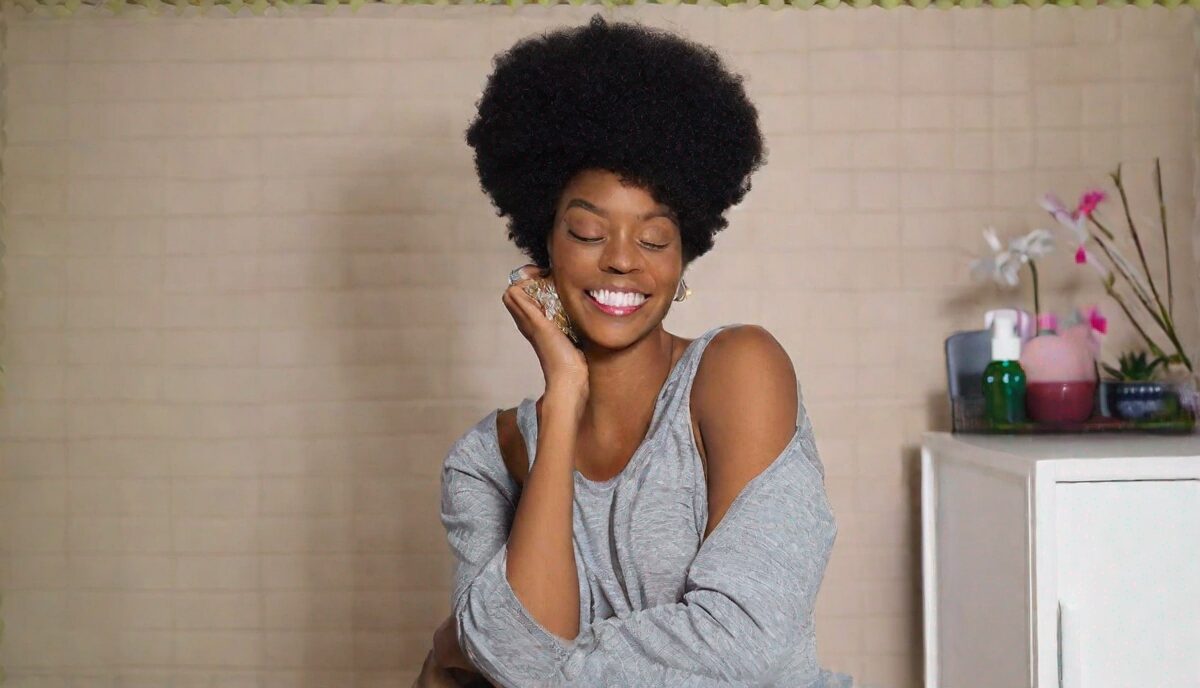
Embrace Your Natural Texture
Afro-textured hair is beautiful in its natural state. Avoid damaging heat styling and harsh chemicals. Learn to embrace your curls, coils or waves.
Use Gentle, Moisturizing Products
Look for shampoos without sulfates and conditioners packed with moisturizing ingredients like shea butter and coconut oil. Keep hair hydrated.
Protect Hair at Night
Use a silk pillowcase or bonnet at night. This reduces friction and keeps moisture locked in.
Detangle Gently and Patiently
Always detangle gently with lots of conditioner, starting at the ends and working up. Be patient and take your time to avoid breakage.
Trim Regularly
Get a small trim every 8-12 weeks to prevent split ends and keep hair healthy.
FAQ
What products are best for afro-textured hair?
Look for sulfate-free shampoos and silicone-free conditioners with natural moisturizers like shea butter, coconut oil and avocado oil. Avoid products with harsh chemicals.
How often should I wash afro-textured hair?
Wash 1-2 times per week at most. Overwashing strips the natural oils. Co-wash (cleanse with conditioner only) in between shampoos.
Is heat styling bad for afro-textured hair?
Excessive heat styling can definitely damage and dry out afro-textured hair. Limit use of hot tools and always protect hair with a heat protectant first.
What causes breakage in afro-textured hair?
Friction from rough handling, harsh styling and lack of moisture causes breakage. Always detangle gently with lots of slip, keep hair moisturized and avoid damaging styling techniques.
How often should I trim my afro-textured hair?
Get a small trim to dust split ends every 8-12 weeks. Regular trims keep hair healthy and prevent breakage.
Mastering the Science of Hair Porosity
While curl pattern is the most visible aspect of afro-textured hair, porosity is arguably the most important factor in determining how your hair reacts to products. Porosity refers to your hair’s ability to absorb and retain moisture, which is governed by the state of the cuticle—the outermost layer of the hair shaft. Understanding whether you have low, medium, or high porosity will fundamentally change your regimen.
Low porosity hair has tightly bound cuticles that lay flat, making it difficult for water and oils to penetrate. If you find that products often sit on top of your hair or that it takes a long time for your hair to get fully saturated in the shower, you likely have low porosity. To care for this type, use heat to your advantage. Warm water or a hooded dryer during conditioning helps lift the cuticles to allow moisture in. Opt for lightweight oils like grapeseed, argan, or sweet almond oil, as heavy butters like shea may cause excessive buildup and weigh the hair down. Avoid protein-heavy products, as low porosity hair is often protein-sensitive, which can lead to a stiff, straw-like texture.
High porosity hair, conversely, has gaps and holes in the cuticle. While it absorbs moisture easily, it loses it just as quickly. This is often the result of chemical processing, heat damage, or environmental stressors, though it can also be genetic. For high porosity hair, the goal is to “plug” those gaps. Use heavier creams and oils like castor oil or olive oil to seal the cuticle. Incorporating regular protein treatments is essential here, as the protein fills in the gaps in the hair shaft, providing structural integrity. Cold water rinses at the end of your wash cycle can also help flatten the cuticle and lock in the moisture you just added.
Medium porosity hair is the easiest to maintain, with a cuticle that is just open enough to let moisture in but closed enough to keep it there. If you have medium porosity, focus on maintaining a consistent balance of moisture and protein. Be wary of over-processing or excessive heat, which can shift your hair into the high porosity category over time.
The LOC and LCO Layering Methods for Maximum Retention
Because afro-textured hair is naturally prone to dryness due to the scalp’s oils struggling to travel down the coiled shaft, simply applying a moisturizer isn’t enough. You must layer products in a specific sequence to create a barrier that prevents evaporation. The two most effective frameworks for this are the LOC (Liquid, Oil, Cream) and LCO (Liquid, Cream, Oil) methods.
The “Liquid” step should always be water or a water-based leave-in conditioner. This provides the actual hydration. Without this first step, you are simply greasing dry hair, which leads to brittleness. The “Oil” step acts as a sealant. For the LOC method, you apply a thin layer of oil to lock in the water. Finally, the “Cream” step—usually a thick styling cream or butter—provides a secondary seal and adds definition and hold. This method is often preferred by those with high porosity hair who need multiple layers of protection to keep moisture from escaping.
The LCO method flips the last two steps and is frequently favored by those with low porosity hair. By applying the cream before the oil, you give the hair a better chance to absorb the moisture from the cream before the final oil layer seals everything shut. When choosing your oils for these methods, consider their molecular weight. Penetrating oils like coconut or avocado oil can reach the cortex, while sealing oils like jojoba or Jamaican Black Castor Oil (JBCO) sit on the surface to provide a protective shield. Experimenting with both sequences for two weeks at a time will help you identify which one keeps your coils soft and pliable for longer periods.
Scalp Health and the Microbiome
A healthy afro-textured hair journey begins at the root. The scalp is an extension of your skin and requires specific care to maintain its microbiome—the ecosystem of bacteria and fungi that keep the skin healthy. Neglecting the scalp can lead to issues like seborrheic dermatitis, folliculitis, or stunted growth due to clogged follicles. One common mistake is “greasing” the scalp with heavy petroleums or mineral oils. While this was a traditional practice, modern trichology suggests that these heavy substances can block pores and trap bacteria.
Instead, focus on scalp stimulation and exfoliation. Once a month, use a clarifying shampoo or a DIY apple cider vinegar (ACV) rinse to remove product buildup and hard water minerals. If you suffer from a dry, itchy scalp, look for products containing tea tree oil or peppermint oil, which have natural antifungal and anti-inflammatory properties. Scalp massages are another powerful tool; using your fingertips (not nails) to massage the scalp for five minutes daily can increase blood flow to the follicles, delivering the nutrients necessary for hair growth.
Be mindful of the difference between a dry scalp and dandruff. A dry scalp needs moisture and gentle oils, whereas dandruff is often caused by an overgrowth of yeast and requires medicated treatments or antimicrobial ingredients. If you see small, white flakes, it’s likely dryness. If the flakes are larger, yellowish, and oily, it’s likely dandruff. Adjusting your wash frequency to ensure the scalp is clean without being stripped is a delicate balance that usually settles around a 7-to-10-day cycle for most afro-textured individuals.
Strategic Protective Styling and Tension Management
Protective styling—such as braids, twists, weaves, and wigs—is a cornerstone of length retention because it minimizes daily manipulation and protects the ends of the hair. However, if done incorrectly, these styles can cause more harm than good, leading to a condition known as traction alopecia (permanent hair loss caused by repetitive tension).
When getting braids or installs, the golden rule is that it should never hurt. If you feel pain or see small bumps along your hairline, the style is too tight and must be loosened immediately. Your “edges” (the fine hairs around the perimeter of your head) are particularly fragile and should be handled with extreme care. Avoid styles that pull these hairs taut. Furthermore, protective styles are not “set it and forget it” solutions. You must still hydrate your hair while it is tucked away. Use a spray bottle with water and a light leave-in conditioner to mist your braids or the hair under your wig every few days.
The duration of a protective style is also critical. Generally, you should not leave a style in for longer than 6 to 8 weeks. Beyond this point, the hair at the root can begin to mat and tangle, leading to significant breakage during the take-down process. Speaking of take-downs, this is the most vulnerable time for your hair. Use a detangling spray or an oil to provide “slip” as you remove braids or twists, and never rush the process. It is normal to see a lot of shed hair during a take-down—remember that we naturally lose about 50-100 hairs a day, and those hairs have been trapped in the style for weeks. Do not panic; just ensure you are detangling thoroughly before you apply water to avoid “locking” the shed hair into knots.
The Protein-Moisture Balance and Deep Conditioning
Afro-textured hair thrives on a delicate equilibrium between protein and moisture. Moisture provides elasticity, allowing the hair to stretch without snapping, while protein provides strength and structure. If your hair feels mushy, overly soft, or loses its curl pattern when wet, you likely have a moisture overdose (hygral fatigue) and need a protein treatment. If your hair is brittle, snaps easily when pulled, and feels like sandpaper, you are likely suffering from protein overload and need an intensive moisture treatment.
Deep conditioning should be a non-negotiable weekly or bi-weekly ritual. To make the most of your deep conditioner, look for ingredients like hydrolyzed silk, keratin, or collagen if you need strength, and honey, aloe vera, or glycerin if you need moisture. For maximum penetration, use a thermal heat cap or a steamer. The moist heat opens the hair cuticle, allowing the treatment to reach the inner cortex rather than just coating the surface. If you don’t have a steamer, applying your conditioner, putting on a plastic shower cap, and wrapping a hot towel around it for 20 minutes works effectively as a DIY alternative.
For those with very damaged hair, consider “pre-pooing.” This involves applying an oil or a light conditioner to your hair before you wash it. This creates a buffer that protects the hair from the stripping effects of surfactants in shampoo, ensuring that even after a thorough cleaning, your strands retain a baseline level of lubrication.
Environmental Shielding and Seasonal Adjustments
Your hair’s needs will change drastically with the seasons and your environment. In high-humidity environments, afro-textured hair tends to swell as it pulls moisture from the air, which can lead to frizz and tangling. In these conditions, using anti-humectants like beeswax or certain silicones can help create a seal that prevents excess atmospheric moisture from entering the hair shaft. Conversely, in dry, cold winter climates, humectants like glycerin can actually work against you. If the air is drier than your hair, glycerin may pull moisture *out* of your hair and into the air, leaving your coils parched. In winter, switch to heavier butters and creamy leave-ins that don’t rely heavily on simple humectants.
UV protection is another often-overlooked aspect of hair care. The sun’s rays can degrade the proteins in your hair and fade color, leading to dryness and weakened strands. If you’re spending a day outdoors, consider a hat or a hair-specific UV-protection spray. Similarly, if you are a swimmer, the chlorine in pools or the salt in the ocean can be devastating to afro-textured hair. Always saturate your hair with fresh water and a bit of conditioner before entering the pool; this fills the hair’s capacity so it absorbs less of the chlorinated water. Immediately after swimming, use a neutralizing or chelating shampoo to remove chemical deposits, followed by a deep conditioning treatment.
Hard water is another environmental factor that can cause mysterious breakage and dullness. If you live in an area with high mineral content in the water (calcium and magnesium), these minerals can create a film on your hair that prevents moisture from entering. Installing a filtered showerhead can be a game-changer for the softness and manageability of your hair, often resolving “dryness” issues that products alone couldn’t fix.
Advanced Detangling: Tools and Techniques
While the existing advice to detangle gently is vital, the specific tools and techniques you use can make or break your length retention goals. Finger detangling is the gold standard for preserving the integrity of afro-textured hair. By using your fingers, you can feel exactly where a knot is and gently teased it apart without the blunt force of a comb. This is time-consuming but results in significantly less breakage.
If you prefer using tools, the choice of comb or brush is paramount. A wide-tooth comb is a classic, but many in the natural hair community have found success with specialized detangling brushes that have flexible bristles. These bristles are designed to give way when they hit a knot rather than ripping through it. Never use a fine-tooth comb or a brush with small balls on the ends of the bristles, as these can snag on the coils and cause split ends. Always detangle in sections—usually four to eight—and secure the sections you aren’t working on with clips. This prevents you from becoming overwhelmed and ensures every strand is accounted for.
Another advanced technique is the “vertical detangling” method. Instead of holding your comb horizontally, hold it vertically. This allows the teeth to move through the coils more naturally, following the shape of the curl rather than cutting across it. Always ensure the hair is soaking wet and saturated with a product that provides “slip”—this is the slippery feeling provided by ingredients like marshmallow root, slippery elm, or certain fatty alcohols. If the comb doesn’t glide, add more water or product; never force it. This meticulous approach to detangling ensures that you are only losing shed hair and not breaking healthy strands from the middle of the shaft.
Related posts:
 Hair Slugging Beauty Trend Guide
 Best Scalp Scrubs Review
 Perfect Curly Hair Routine
 Living Proof Scalp Treatment Review
 Zoe Kravitz’s Coconut Oil Hair Care Secret
 Blow Drying Hair Without Damage: Expert Tips
 Should You Wash Your Hair After Every Gym Session?
 Ariana Grande’s Hair Savior: Why Lavender Coconut Oil Is Her Secret Weapon