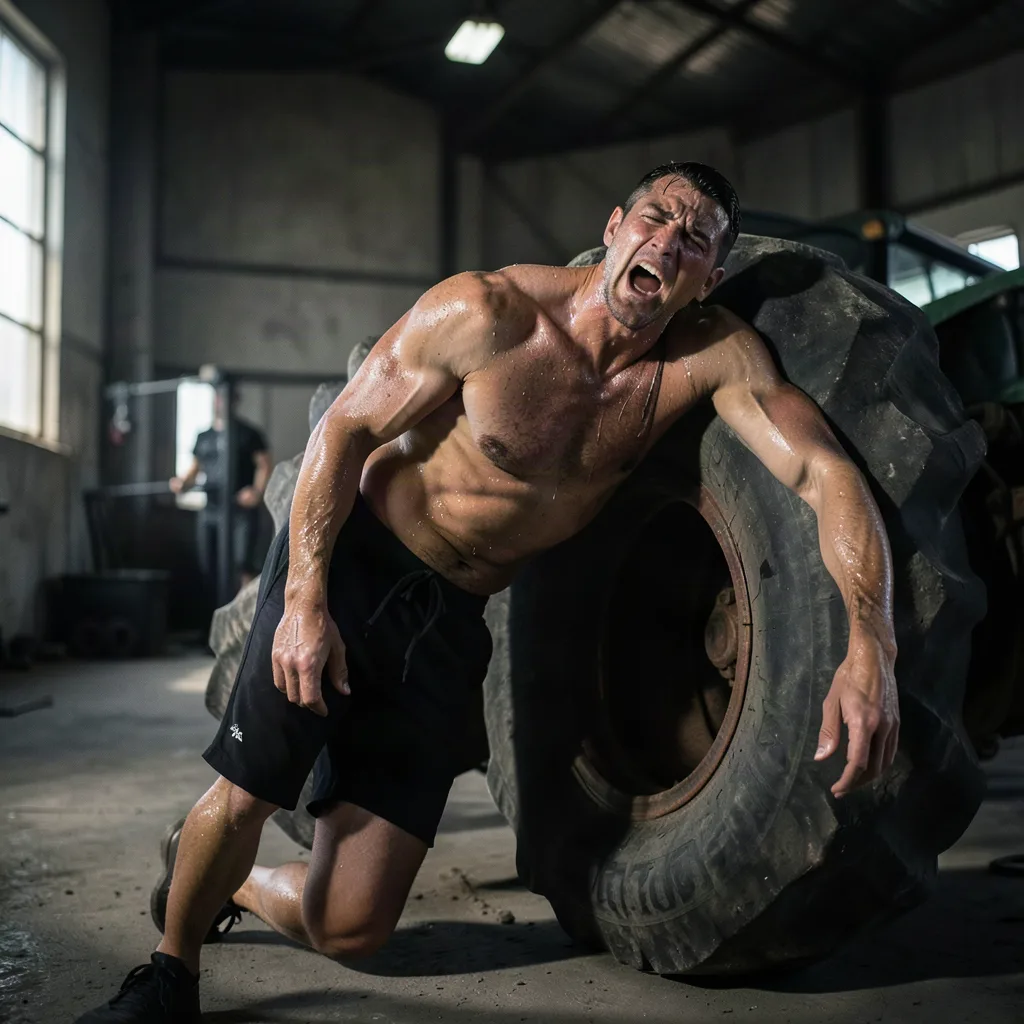
When we talk about the toughest workouts ever conceived, we are looking beyond the standard hour-long gym session. We are entering a realm where physical limits are tested, mental fortitude is forged, and the line between peak performance and total exhaustion becomes razor-thin. These workouts are not designed for the faint of heart; they are benchmarks of human capability, used by elite athletes, Special Forces operators, and ultra-endurance enthusiasts to find their breaking points. However, understanding these challenges isn’t just about the spectacle of suffering. It is about learning what the human body is capable of and how we can apply principles of resilience and discipline to our own fitness journeys, regardless of our current level.
Key takeaways
- Scale extreme workouts like Murph by removing weighted vests or reducing repetitions to match your current fitness level.
- The Smolov Squat Protocol uses high volume and frequency to significantly increase back squat strength over a 13-week period.
- Build cardiovascular resilience and posterior chain strength by incorporating steep hill sprints or weighted stair climbing into your routine.
- True Tabata training involves ultra-high-intensity intervals at 170% VO2 max to maximize both anaerobic and aerobic fitness levels.
- Practice heavy sandbag carries or farmer’s walks to develop functional core stability and full-body strength under constant tension.
In this exploration of extreme fitness, we will dissect the most grueling protocols ever documented. From the high-volume intensity of CrossFit Hero WODs to the soul-crushing endurance of the Barkley Marathons, these routines share a common thread: they require a level of commitment that transcends the physical. Before attempting any of these, it is crucial to remember that safety, proper form, and a solid foundation of baseline fitness are non-negotiable. These are the peaks of the fitness world; you don’t climb Everest without training on smaller hills first.
1. The CrossFit Hero WOD: “Murph”
Named after Navy Lieutenant Michael P. Murphy, who was killed in action in Afghanistan, “Murph” is perhaps the most famous and widely feared workout in the functional fitness world. While the movements themselves are simple bodyweight exercises, the sheer volume and the requirement of a 20-pound weighted vest (14 pounds for women) turn it into a grueling test of aerobic capacity and muscular endurance.
The workout consists of a one-mile run, followed by 100 pull-ups, 200 push-ups, and 300 air squats, concluding with another one-mile run. For the elite, the goal is to complete this “unpartitioned”—meaning all pull-ups must be finished before moving to push-ups, and so on. However, even when partitioned into smaller rounds (such as 20 rounds of 5 pull-ups, 10 push-ups, and 15 squats), the cumulative fatigue is immense. The final mile run is often described as a “zombie crawl,” where the legs feel like lead and the weighted vest feels like it’s crushing the ribcage.
To approach Murph safely, athletes must have a high level of proficiency in pull-ups and push-ups. Scaling is common and encouraged; many start without the vest or perform half-reps. The psychological challenge of Murph lies in the middle of the bodyweight movements; when you are 100 push-ups in with 100 more to go, your mind begins to look for an exit. Overcoming that mental hurdle is what makes Murph a true rite of passage.
2. The Navy SEAL “Grinder” PT
Military conditioning is designed to build “tactical fitness,” which prioritizes the ability to move heavy loads, cover long distances, and maintain cognitive function under extreme stress. The Navy SEAL “Grinder” PT (Physical Training) is the cornerstone of Basic Underwater Demolition/SEAL (BUD/S) training. It is performed on a concrete courtyard—the Grinder—where instructors lead candidates through hours of calisthenics.
A typical Grinder session involves endless repetitions of “eight-count body builders,” mountain climbers, flutter kicks, and overhead presses with heavy logs or boats. What makes it one of the toughest workouts ever isn’t just the movement; it’s the environment. Candidates are often wet, sandy, and sleep-deprived. The exercises are performed in a rhythmic, repetitive fashion that grinds down the joints and the spirit.
For those looking to incorporate this style of training, the lesson is in “greasing the groove” and high-repetition calisthenics. It builds a specific type of “hardiness.” You can simulate this by performing long-duration circuits (60–90 minutes) of basic movements without rest, focusing on maintaining perfect form even as the heart rate soars and the muscles burn.
3. The Smolov Squat Protocol
In the world of strength sports, the Smolov Squat Protocol is legendary for its brutality. Named after its creator, Sergey Smolov, this 13-week Russian program is designed for one thing: adding massive amounts of weight to your back squat. It is widely considered the most difficult strength program in existence because of its insane volume and frequency.
The program is divided into several phases, including a “Base Cycle” where the athlete squats four times a week at very high percentages of their one-rep max (1RM). For example, one day might call for 4 sets of 9 reps at 70%, while another calls for 10 sets of 3 reps at 85%. The sheer load on the central nervous system (CNS) is staggering. Many lifters report feeling a “Smolov flu,” a state of total systemic fatigue where the body struggles to recover from the constant heavy loading.
Smolov is not for the casual lifter. It requires meticulous attention to nutrition, sleep, and mobility. It also carries a high risk of injury if the lifter’s technique isn’t flawless. However, for those who survive it, gains of 40 to 60 pounds on a squat in just a few months are not uncommon. It stands as a testament to the fact that the body can adapt to incredible stress if pushed systematically.
4. The Barkley Marathons: Frozen Head State Park
While not a “workout” in the traditional gym sense, the Barkley Marathons is arguably the toughest physical challenge ever devised. Held in Tennessee, this ultramarathon consists of five 20-mile loops through dense, trail-less woods with a total elevation gain of 60,000 feet—twice the height of Mount Everest. Since its inception in 1986, fewer than 20 people have finished the full five loops within the 60-hour time limit.
The toughness of the Barkley comes from the combination of extreme vertical climbing, unpredictable weather, and the mental tax of navigation. Runners must find hidden books along the course and tear out pages corresponding to their bib number to prove they completed the loop. Sleep deprivation becomes a major factor; by loop four, many runners experience hallucinations.
The takeaway for the average fitness enthusiast is the power of “vertical gain.” Incorporating steep hill sprints or weighted stair climbing into your routine can build a level of posterior chain strength and cardiovascular resilience that flat-ground running simply cannot match. It also teaches the importance of environmental adaptability.
5. The Tabata Protocol (The Original Version)
Most people have heard of “Tabata,” but few have actually performed the original protocol as designed by Dr. Izumi Tabata. In his 1996 study, Olympic speed skaters performed 20 seconds of ultra-high-intensity work followed by 10 seconds of rest, repeated eight times. The catch? The intensity was 170% of their VO2 max.
In a commercial gym setting, people often do “Tabata-style” workouts with burpees or mountain climbers at a moderate pace. The true Tabata protocol is performed on a stationary bike or a sprint track and is so intense that by the fifth or sixth round, the athlete is usually physically unable to maintain the required cadence. It is a four-minute descent into anaerobic hell that leaves the lungs burning and the legs feeling like they’ve been injected with acid.
The true Tabata is one of the toughest workouts because it forces the body to operate at its absolute maximum capacity for a sustained period. It is an incredible tool for boosting both aerobic and anaerobic fitness, but it should only be performed once or twice a week due to the extreme stress it places on the heart and metabolic systems.
6. The “Death by…” EMOM Format
The “Every Minute on the Minute” (EMOM) format is a staple in many training programs, but the “Death by…” variation is a psychological and physical gauntlet. The premise is simple: in the first minute, you do one rep of an exercise (like a burpee or a thruster). In the second minute, you do two reps. In the third, three. You continue until you can no longer complete the required number of reps within the minute.
The first 10 minutes feel like a warm-up. However, as the reps increase, the rest period decreases. By minute 15 or 20, you are sprinting to finish the reps, catching only a few seconds of breath before the next minute starts. This workout is a masterclass in pacing and lactic acid management. It becomes a race against the clock where your own efficiency is your only ally.
This format is effective because it scales to any fitness level, but for the elite, it becomes a marathon of high-intensity movement. It’s a perfect example of how simple rules can create an exponentially difficult challenge.
7. Strongman Training: The Husafell Stone Carry
Strongman training introduces “odd object” lifting, which is inherently more difficult than lifting a balanced barbell. One of the most legendary tests in this sport is the Husafell Stone carry. The original stone in Iceland weighs about 410 pounds, and the goal is to carry it around a sheep pen for a full circuit.
Carrying a heavy, awkward weight against your chest (a “front carry”) compresses the diaphragm, making breathing extremely difficult. It requires immense core stability, grip strength, and leg drive. Unlike a deadlift, which is over in seconds, a distance carry for max time or distance creates a unique type of full-body fatigue. Every muscle from your calves to your traps is under constant isometric tension.
To train like a strongman, you don’t need a 400-pound stone. Sandbag carries or heavy farmer’s walks (carrying heavy dumbbells or kettlebells at your sides) provide similar benefits. These movements build “functional” strength that translates into real-world durability, teaching you how to move under load while managing your breath.
8. The “Shark Tank” Combat Conditioning
Combat athletes—boxers, wrestlers, and MMA fighters—are often cited as the fittest athletes on the planet. One of their toughest training drills is the “Shark Tank.” In this scenario, a single fighter stays in the ring or on the mats while fresh opponents are rotated in every 60 to 90 seconds. The “shark” must defend and attack without rest for 15 to 30 minutes.
The difficulty here is the unpredictability. A fresh opponent can push the pace, and the “shark” cannot rely on a predictable rhythm. It forces the athlete to maintain technical proficiency while under extreme cardiovascular distress. It is as much a mental drill as a physical one; when you are exhausted and a fresh, energized person is trying to tackle you, the urge to quit is overwhelming.
While you may not be a fighter, you can mimic this intensity through “partner intervals” where one person works while the other rests, but the work-to-rest ratio is heavily skewed against the worker. This builds the ability to recover quickly and stay calm under pressure.
9. The Psychology of the Extreme: Why We Push
Why would anyone subject themselves to the toughest workouts ever? The answer lies in the concept of “voluntary hardship.” In a modern world where physical comfort is the norm, seeking out these challenges provides a sense of perspective and an upgrade to our internal “operating system.” When you know you can survive a 20-minute EMOM of thrusters or a 10-mile weighted hike, the daily stresses of life—work deadlines, traffic, interpersonal conflict—seem much more manageable.
Physiologically, these workouts trigger a massive release of endorphins and dopamine, often referred to as the “runner’s high,” but intensified. They also stimulate mitochondrial biogenesis and improve the body’s ability to clear metabolic waste. However, the most significant gain is the development of “grit.” This is the ability to persist toward a long-term goal despite setbacks and discomfort. By safely pushing your limits, you are not just building a stronger body; you are building a more resilient mind.
To incorporate these elements into your life, start small. Choose one “challenge” workout per month. Ensure you have a recovery plan that includes high-quality protein, anti-inflammatory foods (like tart cherry juice or turmeric), and at least 8 hours of sleep. Listen to your body; there is a difference between the “good” pain of muscle fatigue and the “bad” pain of an impending injury. Respect the process, and the process will reward you.
1. The 2,000-Meter Rowing Ergometer Test
In the world of competitive rowing, the 2,000-meter test on a Concept2 ergometer is the universal yardstick of suffering. Unlike a run where you can slightly alter your gait to compensate for fatigue, the rowing machine is a closed-loop system that provides immediate, brutal feedback on every stroke. It is widely considered one of the most physiologically demanding tests in existence because it requires the simultaneous recruitment of almost every major muscle group—legs, back, and arms—while operating at a heart rate that frequently exceeds 95% of its maximum.
The workout typically lasts between six and eight minutes for most fit individuals, placing it directly in the “lactate threshold hell” zone. By the 1,000-meter mark, the body’s aerobic system can no longer keep up with the demand, and the anaerobic system takes over, flooding the bloodstream with hydrogen ions. This leads to the infamous “erg lung,” a burning sensation in the chest caused by the inhalation of dry air at high volumes, and a level of leg fatigue that makes standing up nearly impossible once the timer hits zero. The psychological battle occurs in the third 500-meter split, often called the “black hole,” where the initial adrenaline has evaporated, and the finish line still feels impossibly distant.
To master the 2k, athletes must develop a “rhythm of pain.” This involves maintaining a consistent stroke rate (usually 28–32 strokes per minute) and a precise “split time.” Edge cases in rowing involve the “flywheel effect”: if you pull too hard too early, the resistance increases exponentially, effectively “blowing up” your muscles before the halfway point. Training for this requires long, low-rate sessions (30–60 minutes at 18–20 strokes per minute) to build the structural integrity of the heart and back before attempting the full-throttle 2,000-meter sprint.
2. The “Kalsu” WOD: A Descent into Thruster Hell
While the existing article mentions “Murph” as a CrossFit benchmark, many elite athletes consider “Kalsu” to be the most mentally taxing workout in the functional fitness canon. Named after Robert Kalsu, an NFL player and soldier killed in the Vietnam War, this workout is a relentless pressure cooker. The objective is to complete 100 thrusters (a combination of a front squat and an overhead press) with a 135-pound barbell for men and 95 pounds for women. The catch? At the start of every minute, you must stop and perform five burpees.
The genius—and the cruelty—of Kalsu lies in the penalty. In a standard EMOM, the work is fixed. In Kalsu, the burpees are the tax you pay for the time it takes to finish the thrusters. If you move slowly or rest too long, you end up doing more burpees, which further exhausts your capacity to perform thrusters. It is a race against a clock that never stops. For many, the workout becomes a “death spiral” where they can only manage one or two thrusters per minute before the burpees begin again, leading to sessions that can last 40 minutes or more of pure anaerobic distress.
The physiological demand on the shoulders and quads is immense, but the real challenge is the metabolic shift. Transitioning from the horizontal movement of a burpee to the vertical drive of a heavy thruster causes massive fluctuations in blood pressure and heart rate. To survive Kalsu, one must learn the art of “pacing under fire.” The most successful strategy is often to pick a sustainable number of thrusters (e.g., 5 per minute) and stick to it religiously, rather than trying to sprint early and redlining the central nervous system.
3. Girevoy Sport: The 10-Minute Kettlebell Marathon
Kettlebell training is often used for high-intensity intervals, but Girevoy Sport (Kettlebell Sport) takes it to an extreme of endurance. The standard competition involves the “Long Cycle” (clean and jerk) or the “Snatch” for a continuous 10-minute set without ever putting the bells down on the floor. If the bells touch the ground, the set is over. This isn’t just a test of strength; it is a test of “strength-endurance” and the ability to find rest within movement.
In the Long Cycle, an athlete handles two 32kg (70lb) kettlebells. They must clean them to the “rack” position, jerk them overhead, and return them to the rack. The rack position—where the bells rest on the forearms and the elbows are tucked into the hips—is the only place to catch a breath. However, as the minutes tick by, the weight of the bells compresses the chest, making every breath shallow and labored. By minute seven, the grip begins to fail, and the forearms feel like they are being crushed by the iron handles. The mental fortitude required to keep moving when your hands are blistering and your lungs are screaming is what separates Girevoy practitioners from standard gym-goers.
The technical nuances are vital. Athletes use a “pendulum” swing to conserve energy, utilizing momentum rather than raw muscular force. This teaches a unique lesson in efficiency: how to be as relaxed as possible while performing a violent, explosive movement. Training for this involves “intervals of misery,” such as 2-minute work periods with 1-minute rest, gradually increasing the work duration until the 10-minute barrier is broken. It builds a specific type of “leathery” toughness in the connective tissues that barbell training rarely touches.
4. The Alpinist’s Burden: Weighted Vertical Gain
Building on the endurance themes of the Barkley Marathons, the training protocols for high-altitude mountaineering—specifically those popularized by Steve House and Scott Johnston—represent a unique form of physical attrition. The core of this training is the “Weighted Step-Up” or “Hill Climb.” Athletes will often carry 50 to 80 pounds in a backpack and ascend thousands of vertical feet, or spend hours stepping onto a 12-inch box in a gym.
This is not a high-speed workout. It is a slow, grinding tax on the posterior chain and the cardiovascular system. The goal is to build a massive “aerobic base” while simultaneously conditioning the legs for the eccentric load of downhill travel and the concentric load of climbing. Unlike a flat-ground run, the muscular tension is constant. There is no “flight phase” in a weighted step-up where the muscles can relax; you are either pushing up or controlling the descent. This creates a state of chronic muscular fatigue that mimics the conditions of a multi-day summit push on peaks like Denali or K2.
The edge case here is the “Death Zone” simulation. Some athletes perform these sessions in hypoxic masks or at high altitudes to train the body to utilize oxygen more efficiently. However, even at sea level, a 3-hour session of weighted step-ups is a psychological gauntlet. It is monotonous, grueling, and requires a specific type of “quiet mind” to endure. It teaches the athlete how to maintain a steady, unbreakable pace—a skill that is life-saving in the mountains but equally valuable for any endurance sport.
5. Gymnastic Isometrics: The Structural Toll of the Iron Cross
While most tough workouts focus on moving heavy weights or running long distances, the world of elite gymnastics offers a different kind of brutality: isometric holds. The “Iron Cross” on the rings is perhaps the most iconic and physically devastating of these. It requires the athlete to hold their body in a “T” shape, suspended only by their arms, with the rings attempting to tear the shoulders out of their sockets.
The difficulty of the Iron Cross is not just in the muscle strength of the lats and chest, but in the structural integrity of the tendons and ligaments. Because the arms are locked straight, the mechanical disadvantage is extreme. The tension placed on the bicep tendons is so high that it takes years of progressive conditioning just to attempt the move without a catastrophic tear. Training for this involves “prehab” that is as painful as the move itself, including straight-arm pull-downs and Maltese presses that stretch the fascia to its absolute limit.
Beyond the physical risk, the neurological demand of a maximum-effort isometric hold is staggering. The body’s natural protective mechanisms (the Golgi Tendon Organs) try to shut the muscles down to prevent injury. To hold an Iron Cross, the athlete must consciously override their own survival instincts. This creates a unique form of central nervous system fatigue that can leave a person feeling “wired but tired” for days. It is a masterclass in tension and the ability to generate force from a position of extreme vulnerability.
6. The Hour Record: A Sixty-Minute Battle with the Lactate Threshold
In the sport of cycling, the “Hour Record” is the ultimate test of a rider’s ability to suffer. The goal is simple: see how far you can cycle on a velodrome track in exactly 60 minutes. It is a pure, unadulterated measurement of a human being’s functional threshold power (FTP). Legendary cyclist Eddy Merckx, after breaking the record in 1972, famously said it was the “hardest ride of my life” and that he would never attempt it again.
The toughness of the Hour Record stems from the lack of variability. On a road race, you have descents, corners, and the ability to draft behind other riders. On the track, there is no coasting. You are locked in an aerodynamic “tuck” that is notoriously uncomfortable, putting immense strain on the neck, lower back, and hamstrings. The rider must maintain a power output that is right at the edge of their “redline”—the point where the body produces more lactic acid than it can clear. If they push 1% too hard, they will “blow up” and lose their rhythm; if they push 1% too little, they fail the record.
This workout is a lesson in precision and sensory deprivation. The constant circling of the velodrome, the wind whistling past the helmet, and the burning in the quadriceps create a trance-like state of agony. For the average enthusiast, a “20-minute FTP test” is a common way to simulate this, but the full 60-minute version is a different beast entirely. It requires a level of aerobic conditioning that takes decades to build and a level of focus that few can maintain under such physical distress.
7. Water-Based Attrition: The “Over-Under” and Treading Drills
Water adds a layer of difficulty that land-based workouts cannot replicate: the restriction of oxygen and the constant threat of the environment. In Special Operations conditioning, “water confidence” drills are often the breaking point for candidates. One of the toughest is the “Over-Under” circuit. This involves swimming 25 meters underwater (hypoxic), followed by a 25-meter sprint on the surface, repeated for 10 to 20 rounds with minimal rest.
The physiological challenge here is “hypercapnia”—the buildup of carbon dioxide in the blood. The urge to breathe is triggered not by a lack of oxygen, but by an excess of CO2. By forcing the body to work while holding its breath, you are training the brain to remain calm in a state of perceived suffocation. This is coupled with treading water drills where the athlete must keep their hands out of the water, sometimes while holding a heavy object like a 10-pound brick or a rubber rifle. The “eggbeater” kick required to stay afloat is an incredible hip and core workout, but the mental tax of being unable to touch the ground or rest is what makes it truly grueling.
Frequently Asked Questions
Q: Are these tough workouts safe for everyone?
A: No. These specific protocols are designed for advanced athletes with a high baseline of fitness and no underlying health conditions. If you are a beginner, it is essential to scale the movements, reduce the volume, and consult with a fitness professional or doctor before attempting extreme challenges. The goal is to stimulate the body, not break it.
Q: How often should I perform an “extreme” workout?
A: Very sparingly. Most elite athletes only perform their most taxing workouts once a week or even once a month during a specific training cycle. Overtraining can lead to burnout, hormonal imbalances, and injury. Your body makes progress during the recovery phase, not the workout itself. Treat these as occasional benchmarks rather than daily routines.
Q: What is the best way to recover after a grueling session?
A: Immediate recovery should focus on rehydration and replenishing glycogen stores with complex carbohydrates and protein. In the 48 hours following the workout, prioritize active recovery (like light walking or swimming), foam rolling, and adequate sleep. Contrast showers (alternating hot and cold water) can also help with circulation and muscle soreness.
Q: Do I need special equipment for these workouts?
A: It depends on the workout. “Murph” requires a pull-up bar and a weighted vest, while Smolov requires a squat rack and heavy weights. However, many tough workouts—like the “Death by…” burpee challenge—require nothing but a timer and space to move. You can always adapt the principles of high intensity and high volume to the equipment you have available.
Q: Can these workouts help with weight loss?
A: While these workouts burn a significant number of calories and increase your metabolic rate (the “afterburn effect”), they are not the most efficient way to lose weight if you cannot perform them consistently. Sustainable weight loss is better achieved through a consistent, moderate-intensity routine combined with a proper diet. These extreme workouts are more about performance, mental toughness, and elite conditioning than simple fat loss.
Related posts:
 Quick Cardio Fix: Tracy Anderson’s 7-Minute Heart-Pumping Workout Video
 PHA Bodyweight Workout: Efficient Fitness Anywhere, Anytime
 Get Stronger with Charlee Atkins
 Infinity Rope: Weighted Jump Rope Review
 How to Change Your Fitness Routine to Avoid Plateau
 Understanding Gym Equipment
 Kate Hudson’s Latest Obsession: The High-Energy Workout Called PloyoJam
 15-Minute No-Equipment HIIT