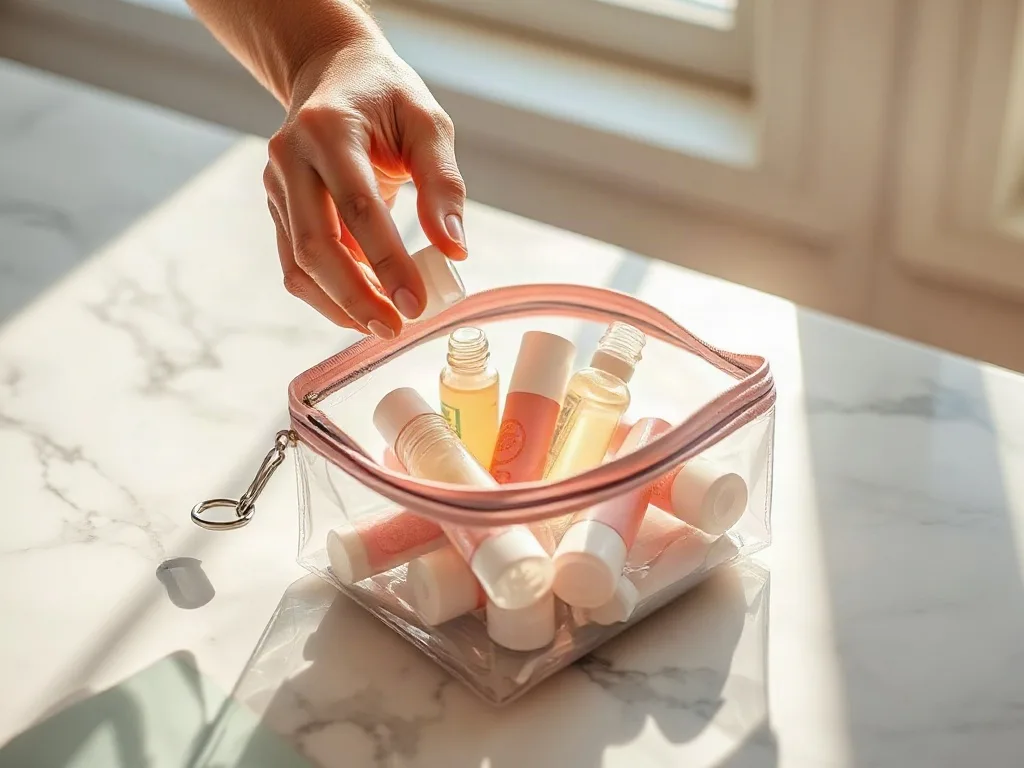
Navigating airport security is often the most stressful part of any travel experience. Between long lines and the rigid 3-1-1 rule, packing your skincare and makeup routine can feel like a logistical puzzle. However, you do not have to sacrifice your glow or your self-care rituals just because you are limited to carry-on luggage. By selecting multipurpose, solid, or travel-sized beauty products, you can maintain your standard of grooming without the risk of having your favorite items confiscated at the checkpoint.
Understanding the TSA 3-1-1 Liquid Rule
The Transportation Security Administration (TSA) enforces the 3-1-1 rule for all carry-on liquids, gels, aerosols, creams, and pastes. Each traveler is allowed one quart-sized, clear, resealable plastic bag. Every individual container inside this bag must hold 3.4 ounces (100 milliliters) or less. It is important to remember that this applies to everything from foundation and mascara to toothpaste and hair gel. If a container is larger than 3.4 ounces, even if it is mostly empty, it will likely be discarded at security. The key to successful packing is to audit your routine and prioritize items that provide the most utility for their size.
The Power of Solid Beauty Alternatives
One of the most effective strategies for bypassing the liquid rule is to switch to solid formulations. Solid beauty products do not count toward your 3-1-1 allowance, effectively freeing up space for items that must remain liquid. Today, the market is flooded with high-quality solid cleansers, toners, and even perfumes. Solid shampoo and conditioner bars are particularly revolutionary; one bar can often replace two or three standard-sized plastic bottles, lasting for months of travel. Look for solid serums or moisturizing sticks that can be applied directly to the skin. These not only save space but also eliminate the risk of leaks in your luggage, ensuring your clothes remain pristine throughout your journey.
Multipurpose Products to Simplify Your Routine
Minimalism is your best friend when traveling. Instead of packing a ten-step skincare routine, invest in multipurpose products that serve two or more functions. For example, a high-quality tinted moisturizer with SPF acts as your foundation, hydrating base, and sun protection all in one. Lip and cheek stains are another excellent way to reduce volume, providing a pop of color for both your face and lips without needing separate palettes or compacts. By combining steps, you drastically reduce the number of containers you need to carry, making it easier to fit everything into your single quart-sized bag.
Optimizing Your Toiletry Bag Organization
Organization is not just about aesthetics; it is about efficiency. Invest in a high-quality, clear toiletry bag that meets the dimensions required by airport security. Many travelers prefer clear bags with reinforced seams and sturdy zippers to prevent accidental tears. When packing, place your most frequently used items near the top of the bag so you can easily access them during the flight or at your destination. If you are traveling with a partner, consider splitting your liquids into two separate quart-sized bags to maximize your total allowance. Always keep your bag at the very top of your carry-on or in an exterior pocket so you can easily remove it for inspection if requested.
Travel-Sized Refillables vs. Single-Use Minis
While buying travel-sized versions of your favorite products at the drugstore is convenient, it can quickly become expensive and environmentally unfriendly. A more sustainable and cost-effective approach is to purchase a set of high-quality, leak-proof silicone travel bottles. These allow you to decant your own shampoos, lotions, and serums from your full-sized home products. Look for bottles with wide openings for easy filling and cleaning. Before you travel, test your containers by filling them with water and squeezing them tightly to ensure they do not leak under pressure. Remember to label each container clearly with a waterproof marker or adhesive label so you do not confuse your facial moisturizer with your hair styling cream.
Skincare Essentials for Dry Airplane Air
Airplanes are notorious for their low humidity, which can wreak havoc on your skin, leaving it feeling tight, dry, and dull. To combat this, focus your carry-on beauty kit on intense hydration. A hydrating face mist is a great way to refresh your complexion mid-flight without needing to wash your face. Pack a thick, occlusive lip balm to prevent chapping, and consider a small, travel-friendly eye cream to reduce the appearance of puffiness caused by travel fatigue. If you are on a long-haul flight, a sheet mask can be a game-changer; while it might seem bold to apply one in your seat, your skin will thank you upon arrival.
Makeup Strategies for the Minimalist Traveler
When you are limited by space, choose makeup products that are versatile and durable. A neutral eyeshadow palette that includes a shade suitable for filling in your brows is a space-saver. Opt for cream-based products rather than powders, as they are less likely to crack or shatter during transit. A long-wear mascara and a versatile concealer are often all you need to look polished after a long day of travel. If you have specific makeup brushes, choose a travel set with retractable heads or a single dual-ended brush that can handle multiple tasks, such as blending concealer and applying shadow.
Final Tips for Stress-Free Airport Security
To ensure a seamless experience, always check the latest TSA guidelines before you head to the airport, as rules can occasionally change. If you are ever in doubt about whether an item is considered a liquid, treat it as one to avoid any trouble at the checkpoint. Avoid packing aerosol cans if possible, as they are often more bulky and subject to strict safety regulations. Finally, if you are traveling with expensive skincare or makeup, consider keeping it in your carry-on rather than checking it; not only does this protect your investment from theft or loss, but it also ensures you have your essentials should your checked luggage be delayed.
The Science of Pressure and Packaging Integrity
It is a common frustration for frequent flyers to open their toiletry bag upon landing only to find a sticky, leaked mess inside. This occurs because cabin pressure changes during flight can force air—and the product along with it—out of containers. Beyond simply choosing leak-proof bottles, you must master the art of the seal. Before capping your refillable silicone tubes, push out any excess air from the container so the product is flush against the opening. For extra security, place a small square of plastic wrap over the bottle opening before screwing on the cap. This creates an airtight gasket that prevents leakage even if the bottle experiences significant expansion. Furthermore, avoid overfilling containers; leaving a 10% headspace at the top allows for pressure fluctuations without forcing the contents to breach the seal.
Navigating International TSA Equivalents
While the TSA 3-1-1 rule is the gold standard for U.S. domestic travel, international airports often have their own variations, or in some cases, more stringent security protocols. In the European Union, for example, the 100ml limit is standard, but security scanners at newer, high-tech airports may allow you to keep liquids inside your carry-on without removing them. Conversely, some smaller regional airports in Asia or South America may lack the advanced screening technology that allows for these liquid variances, leading to manual bag checks. Always research the specific airport authority of your destination. If you are traveling through multiple countries, assume the most restrictive rules apply to your entire journey to avoid being forced to discard items during a layover in a country with stricter liquid policies.
The “Dry-First” Packing Strategy
To maximize your 3-1-1 bag, adopt a “dry-first” methodology. This involves auditing your entire hygiene routine to see which liquid items can be replaced by non-liquid versions before you even consider decanting. For instance, instead of a liquid face wash, use a cleansing powder that activates with water. These powders are technically dry products and don’t count toward your liquid allowance. Similarly, transition from liquid mouthwash to dissolvable mouthwash tablets, which offer the same germ-killing properties without the weight or volume of a bottle. By shifting as many products as possible into the “solid” or “powder” category, you reserve your precious quart-sized bag space for items that simply cannot be replaced, such as prescription topicals or specialized serums.
Strategic Layering for In-Flight Grooming
Airport security is only half the battle; the other half is maintaining your routine in the cramped quarters of an airplane lavatory. When packing, group your items by the order of operations rather than by type. Place your “pre-flight” items—such as hand sanitizer and a travel-sized moisturizer—at the very top of your bag. Keep your “arrival” items, like mascara and foundation, beneath them. This prevents you from having to dig through your entire kit while standing in a narrow aisle. Additionally, consider using a hanging toiletry bag with clear, detachable pouches. By detaching only the pouch containing your essentials, you can take a small, manageable kit into the lavatory rather than hauling your entire liquid allowance, which reduces the chance of dropping items on the floor.
Managing Temperature-Sensitive Beauty Products
Many high-end skincare products contain active ingredients—such as Vitamin C, retinoids, or probiotics—that are sensitive to temperature shifts. The cargo hold of an airplane can reach extreme temperatures, and even the cabin can fluctuate significantly. If you are traveling with luxury skincare, keep these items in your carry-on, but also consider using an insulated makeup bag or a small thermal pouch. This provides a buffer against the rapid temperature swings that occur during tarmac delays or altitude changes. If your product label suggests storing it in a “cool, dark place,” try to keep your bag away from the airplane windows where direct sunlight might hit your containers, as this can degrade the efficacy of your active ingredients over a long-haul flight.
The Ethics and Logistics of Sampling
Many travelers rely on “samples” or “deluxe minis” given out by beauty counters to save space. While these are convenient, they present a unique logistical challenge: they are rarely resealable. Once opened, a sample foil packet is prone to drying out or leaking into your bag. If you choose to use samples, bring a small roll of clear tape or a few tiny, empty, screw-top cosmetic jars. Transfer the contents of the sample packet into these jars immediately upon arrival or before you leave. This ensures you have a secure, resealable vessel for the duration of your trip, preventing waste and keeping your luggage clean. Moreover, always label these small jars, as it is incredibly easy to mistake a sample of night cream for a sample of eye cream once the original packaging is discarded.
Frequently Asked Questions
Q: Can I bring full-sized makeup compacts like powders or bronzers through security? A: Yes, solid makeup items such as powder eyeshadows, bronzers, blushes, and pressed powders are not restricted by the 3-1-1 liquid rule. You can pack these in your carry-on without placing them in your quart-sized bag. Q: Are stick deodorants considered liquids? A: No, solid stick deodorants are not considered liquids or gels and do not need to be placed in your clear bag. However, gel or aerosol deodorants must adhere to the 3.4-ounce limit and must be placed in your quart-sized bag. Q: What should I do if my favorite product only comes in a container larger than 3.4 ounces? A: The best solution is to decant the product into a smaller, TSA-approved container. High-quality silicone squeeze tubes are excellent for this purpose and are designed to prevent leaks during air travel. Q: Does toothpaste count as a liquid? A: Yes, toothpaste is considered a paste and falls under the 3-1-1 rule. If you are bringing toothpaste in your carry-on, it must be in a container of 3.4 ounces or less and placed in your quart-sized bag. Q: Can I bring tweezers or small scissors for grooming? A: TSA allows tweezers in carry-on bags. Small scissors are also permitted as long as the blades are shorter than four inches from the pivot point. However, always double-check local airport regulations if you are flying internationally, as some countries have stricter rules regarding sharp objects.
Related posts:
 Biggest Suitcases Review
 Tote Bag Rescue: How to Clean Your Canvas Favorites Without Ruining Them
 The Best Liquid Eyeshadows That Stay Put All Day Long
 Cate Blanchett’s Travel Beauty Secrets
 How to Fly Safely After Lifted Mask Mandate
 Grounded: Why Smart Luggage Got Banned and What Travelers Need to Know
 Solid Skincare Revolution: Why Your Beauty Routine Needs to Go Zero-Waste
 TSA Travel Tips for Lightning-Fast Security