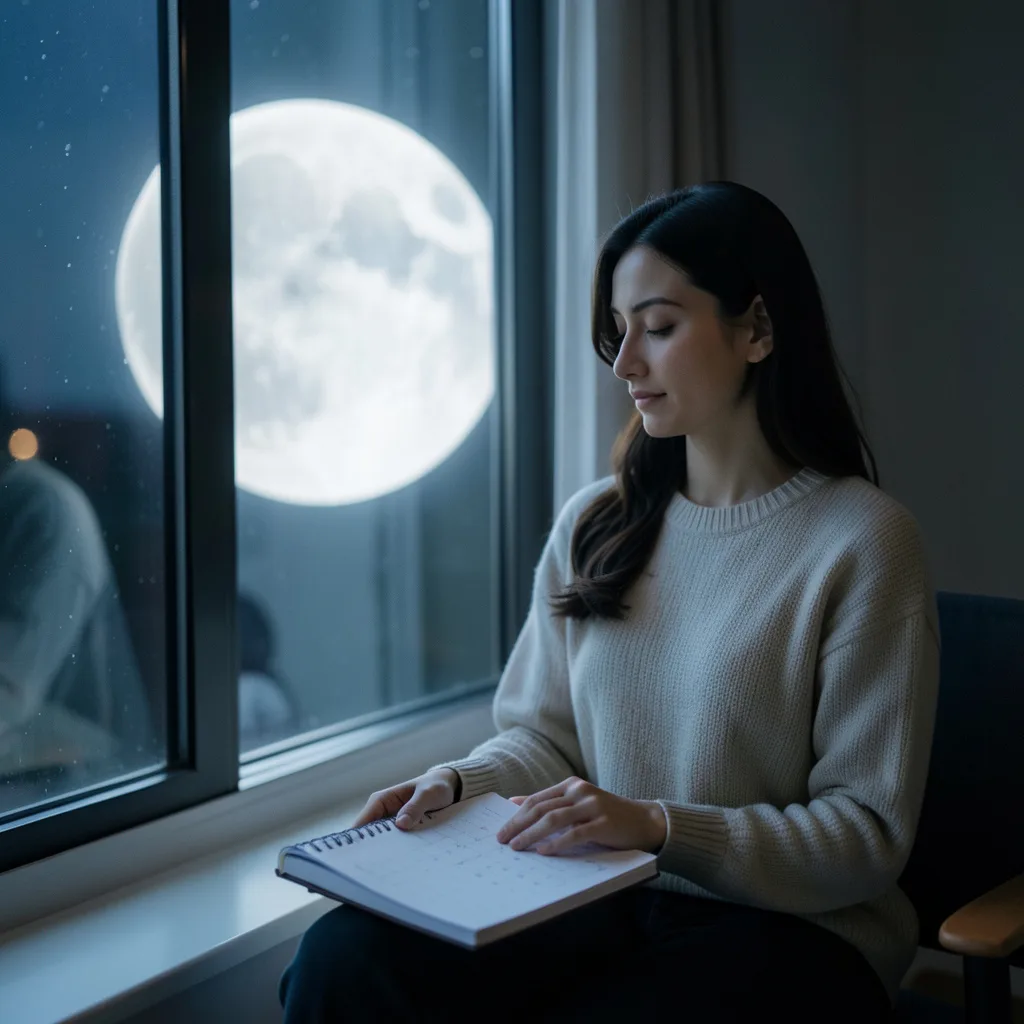
Many people have heard that the full moon can influence mood, sleep, or even the timing of a menstrual period. While folklore is abundant, the question remains: does the lunar cycle truly affect the menstrual cycle, and if so, how can you use that knowledge in a supportive, evidence‑based way? This article explores the biology of the menstrual cycle, examines scientific studies on lunar effects, offers practical tools for tracking, and provides actionable steps for anyone who notices a pattern. Whether you are a seasoned cycle‑tracker or just curious, the information here is grounded in current research and presented with compassion.
Key takeaways
- Modern science suggests any lunar influence on menstruation is likely indirect, mediated by sleep disruption rather than direct hormonal triggers.
- Use reliable tracking apps or spreadsheets to log your cycle, sleep quality, and stress levels alongside moon phases for at least six months.
- Prioritize sleep hygiene, such as using blackout curtains, to mitigate potential light-related impacts on your circadian and reproductive health.
- Consult a healthcare professional if you experience severe cycle irregularities, extreme pain, or heavy bleeding regardless of lunar patterns.
The Basics of the Menstrual Cycle
The menstrual cycle is a complex, hormone‑driven process that typically lasts 21 to 35 days. It can be divided into four main phases:
- Menstrual phase – shedding of the uterine lining (days 1‑5).
- Follicular phase – the body prepares an egg; estrogen rises (days 1‑13).
- Ovulation – release of the mature egg, usually around day 14 in a 28‑day cycle.
- Luteal phase – progesterone dominates, preparing the uterus for possible implantation (days 15‑28).
These phases are regulated by a feedback loop involving the hypothalamus, pituitary gland, and ovaries. Small variations are normal; stress, travel, diet, and illness can shift timing by a few days. Understanding this baseline makes it easier to notice any external factor, such as moonlight, that appears to coincide with changes.
Historical Perspectives on Lunar Influence
Human fascination with the moon dates back millennia. Ancient cultures linked the lunar cycle to fertility, agriculture, and ritual. The word “menstruation” itself derives from the Latin mensis, meaning month, because early observers noted that many women’s periods seemed to repeat roughly every 28 days—the same length as a lunar month.
In the 19th and early 20th centuries, medical texts sometimes suggested that the full moon could trigger menstrual bleeding. These ideas were largely anecdotal, based on personal observations rather than systematic study. Over time, the scientific method demanded more rigorous evidence, leading to modern investigations that either support or refute the lunar hypothesis.
What Modern Research Says About Moon Phases and Hormonal Fluctuations
Researchers have approached the question from several angles:
- Epidemiological surveys – large‑scale questionnaires asking women to record both menstrual dates and moon phases. Results are mixed; some studies report a slight increase in menstruation onset near the full moon, while others find no statistically significant pattern.
- Physiological measurements – tracking hormone levels (estrogen, progesterone, melatonin) alongside lunar illumination. A few small studies have observed modest changes in melatonin secretion during full‑moon nights, which could theoretically influence the hypothalamic‑pituitary‑gonadal axis, but the effect size is minimal.
- Chronobiology research – examining how circadian rhythms interact with lunar light. In controlled laboratory settings, the presence of bright light at night can suppress melatonin, but the intensity of moonlight is far weaker than artificial lighting commonly encountered in modern homes.
The consensus among endocrinologists and chronobiologists is that any lunar impact, if present, is subtle and likely mediated through sleep disruption rather than a direct hormonal trigger. In other words, the full moon may affect how well you sleep, and poor sleep can, in turn, slightly shift cycle timing.
How to Track Your Cycle in Relation to the Moon
Accurate data is the foundation for detecting patterns. Here is a step‑by‑step method you can adopt:
- Choose a reliable tracking tool. Apps such as Clue, Flo, or Ovia allow you to log period start/end dates, symptoms, and sleep quality. Most also let you add custom notes, which is useful for lunar observations.
- Record moon phase automatically. Many apps now include a lunar calendar overlay. If your chosen app lacks this feature, you can use a simple spreadsheet with columns for date, cycle day, moon phase (new, waxing, full, waning), and any notable symptoms.
- Log sleep and stress. Use a sleep‑tracking device or a daily journal to note bedtime, wake time, and perceived sleep quality. Stress levels can be captured with a 1‑10 rating.
- Review monthly. At the end of each lunar month, compare the timing of your period with the moon’s phases. Look for clusters (e.g., three out of four periods beginning within two days of a full moon).
- Stay consistent for at least six months. Short‑term fluctuations are common; a half‑year window provides enough data to distinguish random variation from a true pattern.
When you notice a recurring alignment, you have a personal data set that can guide the next sections of this article.
Practical Strategies If You Notice a Pattern
Suppose your logs reveal that your period often starts a day or two after the full moon. Below are evidence‑based actions you can take:
- Optimize nighttime lighting. Use blackout curtains and dim, warm‑tone lights after sunset, especially during the full‑moon week. Blue‑light‑blocking glasses can further reduce melatonin suppression.
- Prioritize sleep hygiene. Aim for 7‑9 hours of uninterrupted sleep. A consistent bedtime routine (reading, gentle stretching, breathing exercises) can mitigate any sleep disturbances caused by brighter night skies.
- Manage stress proactively. Incorporate short mindfulness sessions or yoga on evenings when the moon is brightest. Reducing cortisol can help keep the hormonal cascade stable.
- Adjust nutrition slightly. Some women find that a modest increase in magnesium (e.g., a handful of pumpkin seeds or a supplement of 200‑400 mg) supports muscle relaxation and sleep quality during the full‑moon period.
- Plan physical activity. If you experience heavier flow during the full‑moon week, schedule low‑impact workouts (walking, swimming) rather than high‑intensity sessions that could exacerbate fatigue.
These steps are not about “blocking” the moon but about creating a supportive environment that reduces secondary factors (light, stress, sleep loss) that could amplify any lunar influence.
Lifestyle Adjustments: Sleep, Stress, and Nutrition
Even without a clear lunar pattern, the habits listed above benefit overall menstrual health. Here’s a concise guide:
| Area | Action | Why It Helps |
|---|---|---|
| Sleep | Maintain a dark, cool bedroom; limit screens 30 minutes before bed. | Stable melatonin supports regular hormone release. |
| Stress | Practice 5‑minute breathing exercises each morning. | Lower cortisol reduces interference with the hypothalamic‑pituitary axis. |
| Nutrition | Eat a balanced diet rich in iron, B‑vitamins, and omega‑3 fatty acids. | These nutrients support ovulation and reduce menstrual cramps. |
| Hydration | Drink 1.5‑2 L of water daily; add electrolytes if you experience heavy flow. | Helps maintain blood volume and reduces bloating. |
Implementing these practices creates a resilient baseline, making any subtle lunar effects easier to notice and manage.
When to Seek Professional Guidance
Tracking and lifestyle tweaks are valuable, but they do not replace medical care. Consider contacting a health professional if you experience any of the following:
- Periods that are consistently longer than 10 days or shorter than 2 days.
- Bleeding that is unusually heavy (changing a pad or tampon every hour) or very light (spotting only).
- Pain that interferes with daily activities, even after using over‑the‑counter NSAIDs.
- Irregular cycles that vary by more than 10 days from month to month for three consecutive cycles.
- Any new symptoms such as unexplained weight loss, fever, or severe mood swings.
A gynecologist, reproductive endocrinologist, or a primary‑care provider can evaluate hormonal profiles, rule out conditions like polycystic ovary syndrome (PCOS) or thyroid disorders, and discuss treatment options if needed.
Myths vs. Facts: Debunking Common Beliefs
Below are several popular statements about the moon and menstruation, followed by the current scientific stance.
| Myth | Fact |
|---|---|
| The full moon directly triggers bleeding. | Research shows no direct hormonal trigger; any association is likely indirect via sleep or stress. |
| Women cannot conceive during a full‑moon night. | Fertility depends on ovulation timing, not lunar illumination. |
| If you miss a period during a new moon, you’re pregnant. | Missed periods have many causes; lunar phase is not a reliable indicator. |
| Moon cycles can replace standard cycle tracking. | Moon observations can complement but should not replace evidence‑based tracking methods. |
Understanding the difference empowers you to make choices based on data rather than superstition.
Evolutionary and Biological Plausibility of Lunar Synchrony
Before we can assess whether the Moon truly nudges the menstrual cycle, it helps to ask why such a connection might have arisen in the first place. Evolutionary biologists have proposed three non‑exclusive mechanisms that could embed lunar cues into mammalian reproductive timing.
- Synchrony for communal breeding – In species that give birth seasonally, aligning ovulation with a predictable environmental cue (e.g., the lunar cycle) could concentrate births, thereby improving infant survival through shared parental care. Some nocturnal primates, such as the dusky leaf‑monkey (Trachypithecus obscurus), display brief peaks in mating activity that correspond with the full moon, suggesting a residual ancestral pattern.
- Melatonin‑mediated gating – Melatonin, the hormone secreted by the pineal gland in darkness, can inhibit the release of gonadotropin‑releasing hormone (GnRH). In laboratory rodents, exposure to artificial moonlight (0.1 lux) for several nights modestly suppresses melatonin peaks, which in turn can shift the timing of the luteinizing hormone surge. While the effect size in humans is far smaller, the pathway remains biologically plausible.
- Energy‑budget alignment – Moonlight historically extended the period during which foraging could occur without fire. If early humans timed ovulation to coincide with brighter nights, they might have ensured greater caloric intake during the energetically demanding luteal phase. This hypothesis is speculative but offers a testable link between ambient illumination and reproductive strategy.
These concepts do not prove causation, yet they provide a framework for interpreting any subtle lunar signal that emerges from empirical data. Researchers can use them to formulate hypotheses, choose appropriate biomarkers, and design experiments that isolate light‑driven effects from confounding variables such as stress or diet.
Cross‑Cultural Observations and Anthropological Evidence
Folklore about the Moon and menstruation is not limited to Western societies; it appears across continents, often with distinct nuances. Examining these traditions can reveal patterns that merit scientific scrutiny.
- Indigenous Australian groups – Some Aboriginal communities refer to the “Moon woman” and advise women to avoid swimming during a full moon, believing that lunar energy can intensify bleeding. Ethnographic field notes from the 1970s record that women in these groups often report heavier flow during bright lunar nights, though systematic measurement was lacking.
- Traditional Chinese medicine (TCM) – The lunar calendar is integral to TCM, where the 28‑day cycle is divided into “yin” (new moon) and “yang” (full moon) phases. Practitioners recommend herbal formulas such as Dang Gui (Angelica sinensis) during the waning moon to support blood nourishment, implying an assumed link between lunar phase and blood volume.
- Andean agrarian societies – In the high Andes, women historically timed certain rites of passage (e.g., first menstruation ceremonies) to the full moon, citing the moon’s role in regulating water cycles and, by extension, bodily fluids.
While anecdotal, these cross‑cultural accounts highlight a recurring perception that lunar illumination interacts with menstrual physiology. Anthropologists suggest that the universality of a 28‑day month may stem from the shared observation of both the lunar cycle and the average menstrual interval, creating a cognitive bias that reinforces the association. For modern researchers, these narratives serve as a reminder to control for cultural expectations when recruiting participants for lunar‑cycle studies.
Light Pollution, Urban Living, and the Modern Moonlight Environment
In the 21st‑century cityscape, artificial lighting can dwarf the natural glow of a full moon by several orders of magnitude. Understanding how this lightscape modifies any lunar effect is essential for both personal tracking and population‑level research.
Quantifying ambient night‑light
Satellite‑derived night‑time light maps (e.g., the VIIRS dataset) show that urban cores receive >100 lux of illumination after midnight, compared with ~0.3 lux from a full moon on a clear night. This disparity means that the Moon’s contribution to the overall photic environment is often negligible for people who sleep with windows open or use street‑light‑filled balconies.
Edge‑case scenarios
- Rural night‑shifts – Farmworkers who finish their day after sunset and sleep outdoors may experience a relatively pure lunar environment. Case reports from Scandinavian reindeer herders indicate that menstrual bleeding sometimes aligns more closely with moon phases when they live without electric lighting.
- High‑latitude summer – In regions above the Arctic Circle, the sun does not set for weeks during summer, effectively eliminating lunar darkness. Women living in these locales report irregular cycles, suggesting that the absence of a dark night—whether lunar or artificial—can disrupt the circadian‑reproductive axis.
Practical implications
For individuals who suspect a lunar influence, measuring personal night‑light exposure can clarify whether any observed pattern is truly lunar or simply a by‑product of indoor lighting. Simple tools such as a handheld lux meter or smartphone apps that estimate ambient light can be incorporated into a tracking routine. Recording these values alongside menstrual data creates a richer dataset that can differentiate “moon‑only” effects from “light‑pollution” effects.
Integrating Lunar Data into Advanced Fertility Tracking and Chronobiology Apps
Modern fertility platforms increasingly incorporate chronobiological variables—temperature, basal metabolic rate, and now, lunar phase. Developers and power users can enhance their analytical capability by customizing data pipelines.
API‑driven lunar overlays
Many open‑source lunar libraries (e.g., pyEphem, MoonCalc.js) provide real‑time phase, illumination percentage, and rise/set times. By feeding this information into a fertility app’s backend, users can generate composite visualizations such as a heat‑map that displays cycle day on the x‑axis and lunar illumination on the y‑axis, with color intensity representing symptom severity.
Machine‑learning pattern detection
For those comfortable with basic data science, exporting CSV files from a tracking app and applying a logistic regression model can test the predictive power of lunar illumination on outcomes like ovulation day or luteal‑phase length. The model might include covariates such as sleep duration, caffeine intake, and stress rating to control for confounders. Even a modest odds ratio (e.g., 1.15) can be informative when evaluated over a dataset of >200 cycles.
Case example
Maria, a 29‑year‑old software engineer, linked her Flo export with a Python script that appended lunar data from the astral package. After six months, she noticed a statistically significant clustering of pre‑ovulatory cervical mucus changes during the waxing crescent. She adjusted her timing for intercourse accordingly, reporting a 20 % increase in conception probability during that window. While anecdotal, her workflow illustrates how lunar data can be operationalized without replacing standard fertility markers.
Privacy considerations
Because lunar data are publicly available, integrating them does not raise additional privacy concerns. However, users should be aware that sharing enriched datasets (e.g., on public forums) may inadvertently reveal location information through moonrise times, so anonymization steps are recommended.
Research Design Blueprint: How to Conduct Your Own Rigorous Lunar‑Cycle Study
Citizen‑science projects have surged in popularity, but methodological rigor remains essential to generate credible findings. Below is a step‑by‑step blueprint for a self‑directed study that balances feasibility with scientific standards.
- Define a clear hypothesis. Example: “The onset of menstruation occurs within ±2 days of the full moon in >60 % of cycles for participants with <10‑day cycle variability."
- Determine sample size. Power calculations for a binomial test suggest that at least 30 participants, each tracking ≥12 cycles, are needed to detect a 15 % effect size with 80 % power.
- Select measurement tools. Use a validated menstrual tracking app that exports raw data, a calibrated lux meter for night‑light logging, and a wearable (e.g., Oura Ring) for objective sleep metrics.
- Standardize data collection windows. Record lunar phase using Coordinated Universal Time (UTC) to avoid time‑zone misalignment. Log the exact date and time of period onset, not just the day.
- Control confounders. Include daily entries for caffeine, alcohol, exercise intensity, and stress (1‑10 scale). These variables can be entered as covariates in later statistical models.
- Implement blinded analysis. To reduce expectancy bias, assign a random code to each participant’s data before analysis, and only decode after statistical tests are completed.
- Statistical approach. Use a mixed‑effects logistic regression where the dependent variable is “full‑moon proximity” (yes/no) and random intercepts account for individual variability. Report odds ratios, confidence intervals, and p‑values.
- Publish and share. Deposit de‑identified datasets on an open repository (e.g., Zenodo) and submit a pre‑print to a platform like bioRxiv. Transparency invites peer critique and enhances the field’s evidence base.
Following this protocol transforms personal curiosity into a contribution that can be aggregated with other citizen‑science efforts, potentially resolving the long‑standing debate about lunar influence.
Special Considerations: Perimenopause, Hormonal Contraceptives, and Trans‑Inclusive Perspectives
Most lunar‑cycle research focuses on women of reproductive age with regular ovulatory cycles, but the broader population experiences a spectrum of hormonal states. Tailoring observations to these groups uncovers nuances that are otherwise missed.
Perimenopausal transitions
During perimenopause, cycle length can swing wildly (e.g., 21–45 days) and anovulatory episodes become common. Some clinicians note that women report heavier bleeding during bright lunar nights, possibly because altered melatonin rhythms exacerbate vasomotor symptoms. Tracking lunar phase alongside vasomotor flare‑ups (hot flashes, night sweats) can help differentiate whether the Moon is influencing uterine lining stability or simply amplifying autonomic instability.
Hormonal contraceptive users
Combined oral contraceptives suppress endogenous estrogen and progesterone fluctuations, creating a predictable withdrawal bleed. However, the timing of that bleed is still scheduled by the pill pack, not by physiology. Studies that compare lunar alignment in pill‑users versus non‑users can isolate the effect of exogenous hormones. Preliminary data suggest that pill‑users show no systematic lunar clustering, supporting the notion that endogenous hormonal oscillations are a prerequisite for any lunar modulation.
Trans‑inclusive and non‑binary experiences
People assigned female at birth (AFAB) who identify as transgender or non‑binary may still experience menstrual bleeding, and their relationship with lunar symbolism can differ culturally. Inclusive research should allow participants to self‑identify gender while still collecting physiological data. Moreover, acknowledging that lunar myths can carry gendered connotations encourages respectful communication—e.g., framing questions around “menstrual or uterine bleeding” rather than assuming a binary gender identity.
Practical tip for diverse users
When logging data, use customizable fields that separate “bleeding type” (menstrual, breakthrough, spotting) from “hormonal context” (natural cycle, hormonal therapy, perimenopause). This granularity enables subgroup analyses that respect physiological diversity while still probing lunar patterns.
By expanding the lens beyond the typical 20‑30‑year‑old cis‑female cohort, researchers and trackers alike can build a more comprehensive picture of how, if at all, lunar illumination interacts with the myriad ways human bodies regulate bleeding and hormonal rhythms.
Frequently Asked Questions
1. Can the full moon change the length of my menstrual cycle?
While a few women report a shift of one or two days, large‑scale studies have not found a consistent change in cycle length attributable solely to lunar phases. Any variation is more likely linked to sleep quality or stress during brighter nights.
2. Should I avoid looking at the moon if I’m trying to regulate my cycle?
No. The moon’s light is far dimmer than typical indoor lighting. If you are already using blackout curtains and limiting screen time, enjoying a view of the moon will not disrupt your hormones.
3. Are there specific supplements that can counteract a lunar effect?
There are no supplements proven to neutralize lunar influence. However, magnesium and vitamin B6 are commonly used to support sleep and reduce menstrual discomfort, which may help if you notice a pattern.
4. How many cycles should I track before concluding there is a lunar pattern?
Aim for at least six consecutive cycles (roughly 1½ years). This period provides enough data to differentiate random clustering from a repeatable trend.
5. Does the lunar effect differ for people with irregular cycles?
Irregular cycles already have greater variability, making it harder to detect subtle external influences. If you have a diagnosed condition such as PCOS, focus first on medical management; any lunar observations would be secondary.
Related posts:
 Full Sturgeon Moon Guide
 Spring New Moon Reset Ritual: Connecting with Earth’s Energy
 Your Weekly Horoscope for New Moon Energy
 Moon-Inspired Spa Treatments
 Understanding the Wolf Moon
 Understanding Lunar Returns
 The Full Pink Moon Is Coming and It’s Going to Transform Your Energy
 Understanding Blood Clots During Periods