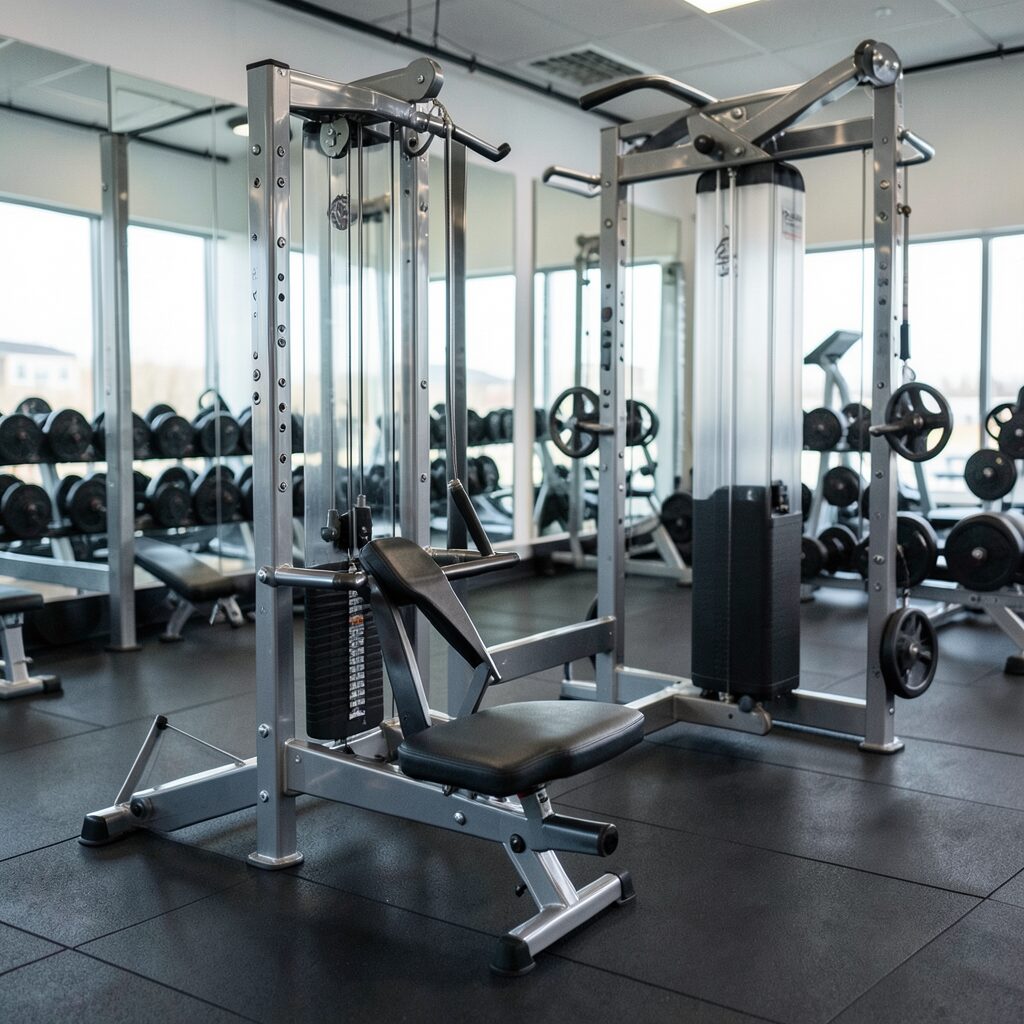
Stepping into a gym for the first time can feel overwhelming. Rows of machines, stacks of weights, and unfamiliar equipment can make even the most motivated person hesitate. Understanding gym equipment is the first step toward building confidence and creating an effective workout routine. Whether you’re aiming to build strength, improve endurance, or enhance flexibility, knowing how to use each piece of equipment safely and effectively will help you reach your goals faster.
This guide breaks down the most common types of gym equipment, explaining their purposes, proper usage, and the benefits they offer. You’ll also find practical tips to avoid common mistakes and maximize your time in the gym.
Cardio Machines: The Foundation of Endurance Training
Cardio machines are designed to elevate your heart rate, improve cardiovascular health, and burn calories. They’re often the first stop for many gym-goers, especially those focused on weight loss or endurance training.
Treadmills: Ideal for walking, jogging, or running, treadmills allow you to control speed and incline. Start with a warm-up at a moderate pace (3-4 mph) for 5 minutes, then increase intensity based on your fitness level. To avoid injury, maintain good posture—keep your head up, shoulders relaxed, and avoid holding onto the handrails, as this can reduce the effectiveness of your workout.
Elliptical Trainers: These low-impact machines simulate running or stair climbing without putting stress on your joints. They engage both your upper and lower body, making them great for a full-body workout. Use the moving handles to work your arms, and adjust the resistance to challenge yourself. A common mistake is leaning too far forward or backward; instead, keep your core engaged and stand upright.
Stationary Bikes: Available in upright, recumbent, and spin bike styles, stationary bikes are excellent for leg strength and cardiovascular health. Upright bikes mimic a traditional road bike and engage your core, while recumbent bikes offer back support and are easier on the lower back. For a high-intensity workout, try interval training: alternate between 1 minute of high resistance (sprinting) and 2 minutes of low resistance (recovery).
Rowing Machines: Often overlooked, rowing machines provide a full-body workout that targets your legs, core, and upper body. To use it properly, push through your legs first, then lean back slightly and pull the handle to your chest. Reverse the motion smoothly. Avoid using only your arms, as this can strain your shoulders. Aim for a stroke rate of 20-30 strokes per minute for a steady pace.
Strength Training Equipment: Building Muscle and Power
Strength training equipment helps you build muscle, increase strength, and improve overall body composition. These tools range from free weights to complex machines, each serving a unique purpose.
Dumbbells: Versatile and widely used, dumbbells allow for a full range of motion and can target specific muscle groups. They’re perfect for exercises like bicep curls, shoulder presses, and lunges. Start with a weight that challenges you but allows you to complete 8-12 reps with good form. For example, a beginner might start with 5-10 lb dumbbells for upper-body exercises and 10-15 lbs for lower-body exercises.
Barbells: Barbells are longer bars used for heavy lifting, such as squats, deadlifts, and bench presses. They require more stability and control than dumbbells, so it’s essential to learn proper form before loading them with weight. Beginners should start with an empty barbell (usually 45 lbs) to practice the movement. Always use a spotter or safety bars when performing exercises like the bench press to avoid injury.
Kettlebells: These cannonball-shaped weights with handles are excellent for dynamic movements like swings, snatches, and Turkish get-ups. Kettlebell exercises often combine strength and cardio, making them efficient for full-body workouts. A beginner-friendly move is the kettlebell deadlift: hinge at your hips, keep your back flat, and lift the kettlebell by driving through your heels.
Resistance Bands: Lightweight and portable, resistance bands are great for home workouts or adding variety to your gym routine. They provide constant tension throughout the movement, which can help improve muscle activation. Try using them for exercises like banded rows, lateral walks, or glute bridges. Anchoring the band to a sturdy post or door can expand your exercise options.
Weight Machines: Guided Strength Training
Weight machines are designed to isolate specific muscle groups and provide a controlled range of motion. They’re especially helpful for beginners who are still learning proper form.
Leg Press Machine: This machine allows you to lift heavy weights with your legs while reducing strain on your lower back. To use it, place your feet shoulder-width apart on the platform, press through your heels, and extend your legs without locking your knees. Avoid letting your knees cave inward, as this can stress your joints.
Lat Pulldown Machine: Targeting your back and biceps, the lat pulldown is a staple for building upper-body strength. Sit at the machine, grip the bar wider than shoulder-width, and pull it down to your chest while squeezing your shoulder blades together. Slowly release the bar back up without fully extending your arms. A common mistake is using momentum to pull the bar down; focus on controlled movements.
Chest Press Machine: Similar to a bench press, this machine guides your movement to target your chest, shoulders, and triceps. Adjust the seat so the handles are at chest level, then press forward until your arms are almost fully extended. Keep your feet flat on the ground and avoid arching your back.
Seated Row Machine: This machine strengthens your upper back and biceps. Sit with your feet on the footrests, grab the handles, and pull them toward your torso while keeping your elbows close to your body. Squeeze your shoulder blades together at the end of the movement, then slowly return to the starting position.
Functional Training Equipment: Moving Beyond Isolation
Functional training focuses on movements that mimic everyday activities, improving overall strength, balance, and coordination. This type of equipment often challenges your body in multiple planes of motion.
Cable Machines: Cable machines use adjustable pulleys and weights to create resistance in any direction. They’re incredibly versatile and can be used for exercises like cable rows, woodchoppers, and tricep pushdowns. For example, a cable chest fly mimics the motion of a dumbbell fly but provides constant tension, which can lead to greater muscle activation.
TRX Suspension Trainer: Using your body weight and gravity, the TRX system allows you to perform hundreds of exercises, from rows to lunges. It’s excellent for building core strength and stability. A beginner-friendly move is the TRX row: lean back, grab the handles, and pull your chest toward them while keeping your body straight.
Battle Ropes: These thick, heavy ropes are used for high-intensity interval training (HIIT) and can improve endurance, grip strength, and power. Common exercises include alternating waves, slams, and circles. Start with 30-second intervals and gradually increase the duration as your fitness improves.
Plyo Boxes: Used for box jumps, step-ups, and dips, plyo boxes are great for improving explosive power and agility. Start with a low box (12-18 inches) and focus on landing softly with your knees slightly bent to absorb the impact. Avoid jumping from a height that feels too challenging, as this can lead to injury.
Core and Stability Equipment: Strengthening Your Foundation
A strong core improves posture, reduces back pain, and enhances performance in almost every exercise. Core and stability equipment targets the muscles that support your spine and pelvis.
Ab Wheel: This simple but challenging tool is used for rollouts, which engage your entire core. Start on your knees, grab the handles, and slowly roll the wheel forward while keeping your back flat. Only go as far as you can without arching your back, then roll back to the starting position. Beginners may need to start with shorter rollouts and gradually increase the range.
Medicine Balls: Weighted balls (typically 4-25 lbs) are used for exercises like Russian twists, slams, and overhead throws. They’re great for adding resistance to core movements. For example, a medicine ball Russian twist involves sitting on the floor, holding the ball with both hands, and rotating your torso side to side.
BOSU Ball: A BOSU (Both Sides Up) ball is a half-sphere that can be used on either side to create an unstable surface. This instability forces your core to engage to maintain balance. Try standing on the flat side for squats or using the dome side for push-ups. Start with basic movements and progress to more advanced exercises as your stability improves.
Stability Ball: Also known as an exercise or Swiss ball, this inflatable ball is used for exercises like ball crunches, planks, and stability ball squats. It’s excellent for engaging your core during traditional movements. For example, a stability ball crunch involves sitting on the ball, walking your feet forward until your lower back is supported, and then performing a crunch.
Flexibility and Mobility Tools: Enhancing Range of Motion
Flexibility and mobility are often overlooked but are crucial for preventing injuries and improving performance. These tools help you stretch and loosen tight muscles.
Foam Rollers: Foam rolling, or self-myofascial release, helps relieve muscle tightness and improve blood flow. Focus on areas like your quads, hamstrings, glutes, and upper back. Roll slowly over each muscle group, pausing on any tight or tender spots for 20-30 seconds. Avoid rolling directly on joints or your lower back.
Yoga Mats: A good yoga mat provides cushioning and grip for floor exercises, stretching, and yoga. It’s essential for comfort during poses like downward dog, plank, or seated stretches. Look for a mat that’s at least 68 inches long and 1/4 inch thick for adequate support.
Resistance Stretch Bands: These elastic bands help deepen your stretches and improve flexibility. For example, loop a band around your foot and gently pull your leg toward you while lying on your back to stretch your hamstrings. They’re also useful for assisted pull-ups or adding resistance to bodyweight exercises.
Lacrosse Balls: Smaller and firmer than foam rollers, lacrosse balls are great for targeting specific trigger points. Use them to massage your feet, hands, or deep muscle knots. For example, roll a lacrosse ball under your foot to relieve plantar fasciitis or tightness in your arches.
Safety and Etiquette: Making the Most of Your Gym Experience
Using gym equipment safely and respectfully ensures a positive experience for everyone. Follow these guidelines to avoid injuries and maintain a welcoming environment.
Warm Up and Cool Down: Always start with a 5-10 minute warm-up to increase blood flow to your muscles. Dynamic stretches (like leg swings or arm circles) are ideal before a workout. After your session, cool down with static stretches (holding a stretch for 20-30 seconds) to improve flexibility and reduce soreness.
Use Proper Form: Poor form is a leading cause of gym injuries. If you’re unsure how to use a piece of equipment, ask a gym staff member or personal trainer for a demonstration. Start with lighter weights to master the movement before increasing resistance. Recording yourself can also help you check your form.
Rack Your Weights: Leaving weights on machines or bars is a safety hazard and makes the gym less enjoyable for others. Always return dumbbells, plates, and other equipment to their designated spots after use. If you’re using a weight machine, wipe it down with a disinfectant wipe to keep it clean for the next person.
Respect Others’ Space: Avoid hogging equipment, especially during peak hours. If someone is waiting to use a machine, offer to let them work in between your sets. Keep conversations brief and avoid loud or disruptive behavior. Remember, everyone is there to focus on their fitness goals.
Listen to Your Body: Pushing yourself is part of progress, but ignoring pain can lead to injury. Distinguish between muscle fatigue (a normal part of exercise) and sharp or persistent pain (a warning sign). If something doesn’t feel right, stop the exercise and consult a professional.
Creating a Balanced Workout Plan
Now that you’re familiar with the equipment, it’s time to put it all together. A balanced workout plan should include a mix of cardio, strength training, and flexibility work. Here’s a sample weekly plan for a beginner:
Monday: Full-Body Strength
- Warm-up: 5 minutes on the treadmill (brisk walk)
- Squats: 3 sets of 12 reps (bodyweight or dumbbells)
- Dumbbell Bench Press: 3 sets of 10 reps
- Lat Pulldown: 3 sets of 10 reps
- Seated Row: 3 sets of 10 reps
- Plank: 3 sets of 30 seconds
- Cool-down: 5 minutes of stretching
Tuesday: Cardio and Core
- Warm-up: 5 minutes on the elliptical
- Rowing Machine: 10 minutes at moderate intensity
- TRX Rows: 3 sets of 12 reps
- Medicine Ball Russian Twists: 3 sets of 15 reps (each side)
- Bicycle Crunches: 3 sets of 20 reps (each side)
- Cool-down: 5 minutes of foam rolling
Wednesday: Rest or Active Recovery
Take a day to rest or engage in light activity like walking, yoga, or stretching.
Thursday: Lower Body and Mobility
- Warm-up: 5 minutes on the stationary bike
- Leg Press: 3 sets of 12 reps
- Lunges: 3 sets of 10 reps (each leg)
- Glute Bridges: 3 sets of 15 reps
- Calf Raises: 3 sets of 15 reps
- Stability Ball Hamstring Curls: 3 sets of 12 reps
- Cool-down: 5 minutes of stretching
Friday: Upper Body and Cardio
- Warm-up: 5 minutes on the rowing machine
- Dumbbell Shoulder Press: 3 sets of 10 reps
- Chest Press Machine: 3 sets of 12 reps
- Bicep Curls: 3 sets of 12 reps
- Tricep Dips (using a bench or machine): 3 sets of 10 reps
- Treadmill Incline Walk: 10 minutes at 5% incline
- Cool-down: 5 minutes of stretching
Saturday: Functional Training
- Warm-up: 5 minutes of dynamic stretches
- Kettlebell Swings: 3 sets of 15 reps
- Battle Ropes: 3 sets of 30 seconds
- Box Jumps: 3 sets of 8 reps
- Cable Woodchoppers: 3 sets of 12 reps (each side)
- Cool-down: 5 minutes of foam rolling
Sunday: Rest or Light Activity
Use this day to recover, stretch, or enjoy a leisurely activity like swimming or hiking.
Common Mistakes to Avoid
Even with the best intentions, it’s easy to make mistakes in the gym. Being aware of these common pitfalls can help you stay safe and get the most out of your workouts.
Skipping the Warm-Up: Jumping into a workout without warming up can lead to injuries and reduce your performance. A proper warm-up increases blood flow to your muscles, making them more pliable and ready for exercise.
Lifting Too Heavy Too Soon: Ego lifting—using weights that are too heavy to maintain good form—is a recipe for injury. Focus on mastering the movement with lighter weights before progressing. Remember, consistency and proper form are more important than the amount of weight you lift.
Neglecting Your Core: A strong core is essential for almost every movement, from lifting weights to running. Incorporate core exercises into your routine at least 2-3 times per week. Planks, Russian twists, and leg raises are all effective options.
Ignoring Mobility Work: Tight muscles and limited range of motion can hinder your performance and increase your risk of injury. Dedicate time to stretching and mobility exercises, especially for areas like your hips, shoulders, and hamstrings.
Overtraining: More isn’t always better. Overtraining can lead to burnout, injuries, and stalled progress. Allow your body time to recover between workouts, and listen to its signals. If you’re constantly sore, fatigued, or struggling to complete your workouts, it may be a sign you need to dial it back.
Not Hydrating Properly: Dehydration can impair your performance, cause fatigue, and even lead to dizziness or cramps. Aim to drink at least 8-10 cups of water per day, and more if you’re sweating heavily during your workouts. Bring a water bottle to the gym and sip regularly.
Specialized Cardio Equipment: Expanding Your Endurance Toolkit
Beyond the staple cardio machines, many gyms offer specialized equipment designed to challenge your cardiovascular system in unique ways. These machines can add variety to your workouts, target specific muscle groups, or provide a low-impact alternative for those with joint concerns.
Stair Climbers (StepMills): These machines simulate climbing a rotating staircase, providing an intense lower-body workout while elevating your heart rate. They’re particularly effective for building endurance in your glutes, quads, and calves. To use it safely, avoid leaning heavily on the handrails—engage your core and maintain an upright posture. Start with a slow pace (40-50 steps per minute) and gradually increase as your fitness improves. A 20-minute session can burn between 200-400 calories, depending on your weight and intensity.
For a high-intensity interval (HIIT) approach, try the following: 30 seconds of fast climbing (70+ steps per minute) followed by 90 seconds of moderate pacing (50-60 steps per minute). Repeat for 10-15 minutes. This method not only boosts calorie burn but also improves your VO2 max, a key indicator of cardiovascular fitness.
Assault Bikes: Also known as fan bikes, these machines use air resistance to create a challenging cardio workout. The harder you pedal, the greater the resistance, making it ideal for interval training. Unlike traditional stationary bikes, Assault Bikes engage your upper body with moving handlebars, allowing for a full-body workout. A sample workout: pedal at a moderate pace for 2 minutes, then sprint all-out for 20 seconds. Repeat for 10 rounds. This type of training can torch calories (up to 80-100 per 10 minutes for an average adult) while improving both aerobic and anaerobic capacity.
Edge case: If you have knee issues, start with low resistance and focus on smooth, controlled movements. Avoid standing up on the pedals, as this can place excessive stress on your knees.
Jacob’s Ladder: This machine features a continuously moving ladder that you climb at your own pace. It’s a full-body cardio machine that engages your arms, shoulders, core, and legs simultaneously. The self-paced nature makes it suitable for all fitness levels—beginners can climb slowly, while advanced users can push for speed and endurance. A 10-minute session at a moderate pace can burn approximately 100-150 calories. To maximize efficiency, focus on using your legs to drive the movement rather than pulling with your arms.
VersaClimber: Combining the motions of climbing and stepping, the VersaClimber provides a vertical workout that targets your entire body. It’s often used by athletes for conditioning due to its ability to build both strength and endurance. Beginners should start with short sessions (5-10 minutes) at a slow, controlled pace. As you progress, incorporate intervals, such as 30 seconds of fast climbing followed by 30 seconds of rest. Proper form is critical: keep your back straight, engage your core, and avoid shrugging your shoulders.
Pro tip: If your gym has a VersaClimber, try the “10-20-30” challenge: 10 seconds fast, 20 seconds moderate, 30 seconds slow. Repeat for 5-10 minutes to build stamina.
SkiErg: Mimicking the motion of cross-country skiing, the SkiErg is a full-body cardio machine that emphasizes your arms, shoulders, and core. It’s a low-impact option that can be adjusted for intensity by changing your pull force and speed. To use it effectively, drive through your legs first (like a squat), then pull the handles down to your hips while leaning back slightly. Reverse the motion smoothly. A common mistake is using only your arms—focus on generating power from your legs and core.
For a pyramid workout: 1 minute easy, 1 minute moderate, 1 minute hard, 1 minute moderate, 1 minute easy. Repeat 3-5 times for a challenging 15-25 minute session.
—
Advanced Strength Equipment: Taking Your Training to the Next Level
Once you’ve mastered the basics, incorporating advanced strength equipment can help you break through plateaus and target muscles in new ways. These tools often require more technique and control but offer significant rewards in terms of strength and muscle growth.
Olympic Lifting Platforms and Bars: Designed for movements like the clean and jerk or snatch, Olympic bars are more flexible than standard barbells, allowing for explosive lifts. The platforms provide a stable, non-slip surface and often include rubber mats to absorb the impact of dropped weights. If you’re new to Olympic lifting, work with a coach to learn proper form—these lifts are highly technical and require precise timing, hip drive, and bar path. Start with a PVC pipe or empty barbell to practice the movements before adding weight.
Example progression for the clean: 1) Deadlift the bar to your hips, 2) Shrug and pull the bar to chest height (clean pull), 3) Drop under the bar into a front rack position (front squat). Master each step before combining them into a full clean.
Power Racks: A power rack is a versatile piece of equipment that allows you to perform squats, bench presses, pull-ups, and more with safety bars to catch the weight if you fail a rep. This makes it ideal for heavy lifting or solo workouts. To use it for squats: set the safety bars at a height just below your lowest squat depth. Load the barbell, step under it, and position it across your upper traps (for back squats) or front rack (for front squats). Always test the safety bars with an empty barbell before adding weight.
Edge case: If you’re tall or have limited mobility, ensure the rack’s pull-up bar is high enough to accommodate your full range of motion. Some racks have adjustable pull-up bars for this purpose.
Landmine Attachment: A landmine attachment is a metal sleeve that holds one end of a barbell in place, allowing the other end to move freely. This setup enables unique exercises like landmine presses, rows, and rotational movements. For example, a landmine press targets your shoulders and core: hold the free end of the barbell at shoulder height, press it upward at a 45-degree angle, and control the descent. The landmine’s arc motion reduces shoulder strain compared to traditional overhead presses, making it a great option for those with shoulder mobility issues.
Smith Machine: A Smith Machine is a weighted barbell guided by vertical rails, allowing for controlled movement in a fixed plane. While it’s often criticized for limiting natural bar path, it’s useful for beginners learning squats or bench presses, as well as for advanced lifters performing exercises like Smith Machine Bulgarian split squats. To use it safely, ensure the safety catches are set at the appropriate height and avoid locking your joints at the top of the movement.
Pro tip: Use the Smith Machine for inverted rows by setting the bar at waist height, lying underneath it, and pulling your chest up to the bar. This is a great bodyweight exercise for your back and biceps.
Strongman Equipment: Some gyms offer strongman tools like atlas stones, yoke walks, or farmer’s carry handles. These implement functional strength and grip endurance. For example, a farmer’s carry involves walking while holding heavy weights in each hand, which strengthens your core, shoulders, and grip. Start with a manageable weight (e.g., 25-50 lbs per hand) and walk for 30-60 seconds. Increase the weight or duration as you progress.
—
Rehabilitation and Prehab Equipment: Preventing Injuries Before They Happen
Injury prevention (prehab) and rehabilitation (rehab) equipment are often overlooked but are critical for longevity in your fitness journey. These tools help address muscle imbalances, improve joint stability, and aid recovery from injuries.
Bands for Rotator Cuff Exercises: The rotator cuff is a group of muscles and tendons that stabilize the shoulder joint, and it’s prone to injuries, especially in overhead athletes or those who perform frequent pressing movements. Use light resistance bands for exercises like external rotations (tie the band to a post at elbow height, hold the other end with your elbow bent at 90 degrees, and rotate your forearm outward) and internal rotations (reverse the motion). Perform 2-3 sets of 15 reps per arm, 2-3 times per week to maintain shoulder health.
Balance Boards and Wobble Boards: These unstable platforms challenge your proprioception (your body’s ability to sense movement and position) and strengthen stabilizing muscles in your ankles, knees, and hips. They’re particularly useful for rehabbing ankle sprains or improving balance for athletes. Start with simple exercises like standing on the board with both feet, then progress to single-leg stands or squats. For a greater challenge, try performing upper-body movements like bicep curls while balancing.
Example progression: 1) Double-leg stance for 30 seconds, 2) Single-leg stance for 20 seconds per leg, 3) Squats on the board for 10 reps.
Mini Bands for Hip Activation: Weak or underactive glute muscles can lead to knee, hip, or lower back pain. Mini bands (loop resistance bands) are perfect for activating your glutes before workouts or as part of a rehab program. Place the band around your thighs (just above the knees) and perform lateral band walks: take small steps sideways, keeping tension on the band to engage your glutes. Other effective exercises include clamshells (lying on your side with the band around your thighs, lift your top knee while keeping your feet together) and glute bridges with the band above your knees.
Foam Rollers with Vibration: Vibrating foam rollers combine the benefits of traditional foam rolling with percussion therapy to enhance muscle recovery. The vibration helps increase blood flow and reduce muscle soreness more effectively than static rolling alone. Use it on large muscle groups like your quads, hamstrings, and back, spending 30-60 seconds per area. Avoid using it on joints, the lower back, or areas with sharp pain.
Edge case: If you have neuropathy or circulatory issues, consult a healthcare provider before using vibrating tools, as they may not be suitable for everyone.
Pulley Systems for Rehab: Many gyms have adjustable pulley systems designed for rehab exercises. These allow for controlled, low-resistance movements to target specific muscles or joints. For example, a shoulder flexion pulley can help restore range of motion after a shoulder injury: set the pulley at a low height, grab the handle, and slowly lift your arm overhead, keeping your elbow straight. Perform 2-3 sets of 10-12 reps per arm.
—
Group Training Equipment: Enhancing Community and Motivation
Group training equipment is designed to facilitate classes, partner workouts, or team-based challenges. These tools can add a social and competitive element to your routine, making workouts more engaging and motivating.
Battle Ropes (Advanced Techniques): While battle ropes are often used individually, they can also be incorporated into group workouts. Try partner waves: stand facing your partner with a rope in each hand, and alternate creating waves while your partner mirrors your movements. This requires coordination and teamwork while providing a full-body workout. Another group exercise is rope slams in unison, where multiple participants slam their ropes down simultaneously, creating a rhythmic and high-energy dynamic.
Sleds and Prowlers: These pieces of equipment are staples in group training and athletic conditioning. A prowler is a weighted sled that you push or pull across a surface, engaging your legs, core, and upper body. To use it, load the sled with weight plates, grip the handles, and drive through your legs to push it forward. For a group challenge, set up a relay race where teams take turns pushing the sled a set distance. Variants include farmer’s carry sled drags (attach straps to the sled and pull it while carrying weights) or backward sled drags (facing the sled and pulling it toward you).
Pro tip: Use a prowler for finisher workouts. After a strength session, have each participant push the sled 20-30 feet for 3-5 rounds. This builds mental toughness and endothelial conditioning.
Tire Flips: A classic strongman and group training exercise, tire flips involve flipping a large, heavy tire end over end. This movement engages your entire body, with a focus on your legs, core, and grip strength. To flip a tire safely, squat low, grip the bottom of the tire with both hands, drive through your heels, and use your legs to lift the tire while pulling with your arms. Once the tire is vertical, push it forward to complete the flip. For a group workout, time each participant as they flip the tire for a set number of reps or distance.
Edge case: Always ensure the tire is on a soft surface (like grass or rubber flooring) to prevent damage to the gym floor or the tire itself. Avoid flipping tires if you have lower back issues or limited mobility.
Medicine Ball Slams and Throws (Partner Drills): Medicine balls can be used for dynamic partner exercises that improve power, coordination, and reaction time. Try overhead slams into a wall: stand a few feet away from a sturdy wall, lift the ball overhead, and slam it against the wall as hard as you can. Catch the rebound and repeat. For a partner drill, try chest passes: stand facing your partner, hold the ball at chest height, and throw it to them using a chest pass motion. They catch and return the pass. Perform 3 sets of 10-15 reps each.
Team Rowing Challenges: Rowing machines can be linked together for team-based workouts, where participants row in sync to achieve a common goal, such as covering a set distance or burning a certain number of calories. This not only builds teamwork but also adds a fun, competitive element to cardio training. For example, a 500-meter team row can be divided among 4-5 participants, with each person rowing 100-125 meters as fast as possible. The team’s total time is recorded, and they can aim to beat it in future sessions.
—
Home Gym Essentials: Building a Functional Space on a Budget
Creating a home gym doesn’t require a massive budget or space. With a few key pieces of equipment, you can replicate many gym exercises and maintain a consistent workout routine at home.
Adjustable Dumbbells: These space-saving dumbbells allow you to change the weight with a simple adjustment mechanism, eliminating the need for multiple sets of fixed-weight dumbbells. Brands like Bowflex or PowerBlock offer adjustable dumbbells that range from 5 to 50+ lbs per hand. While they can be expensive upfront, they’re a cost-effective long-term investment. Example workout: perform a dumbbell complex (a series of exercises back-to-back with the same weight), such as 10 reps of goblet squats, 10 reps of Romanian deadlifts, 10 reps of shoulder presses, and 10 reps of bent-over rows. Rest 60 seconds and repeat for 3-4 rounds.
Pull-Up Bar: A pull-up bar can be mounted on a doorway or wall and is one of the most effective tools for building upper-body strength. If you’re a beginner, use resistance bands to assist with pull-ups: loop the band over the bar, place one foot or knee in the band, and use the band’s tension to help you pull up. Aim for 3 sets of 5-10 reps. For variety, try different grips: wide grip (hands wider than shoulder-width) targets your lats, while a chin-up grip (palms facing you) emphasizes your biceps.
Edge case: If your doorway isn’t suitable for a pull-up bar, consider a freestanding pull-up rack or a bar that mounts to a wall stud.
Suspension Trainer (Home Alternative to TRX): Affordable suspension trainers like the Woss Enterprise or Lifeline Jungle Gym can be anchored to a door, beam, or tree, providing a versatile tool for bodyweight exercises. Use it for atomic push-ups (push-ups with your feet in the straps, then bring your knees to your chest), hamstring curls (lie on your back, place your heels in the straps, and lift your hips), or fallouts (kneel facing the anchor point, grab the handles, and slowly extend your arms forward while keeping your core engaged).
Kettlebell (Single Weight for Versatility): A single kettlebell (12-20 kg for women, 16-24 kg for men) can be used for a wide range of exercises, from swings and squats to presses and Turkish get-ups. For a full-body workout, try a kettlebell EMOM (Every Minute on the Minute): perform 10 swings at the start of each minute, then use the remaining time to rest. Continue for 10-15 minutes. As you progress, add more exercises (e.g., 5 squats, 5 presses) to each minute.
Resistance Tubes with Handles: These portable, inexpensive tools can replace cable machines for exercises like rows, chest presses, and lateral raises. Anchor the tube to a door, post, or your feet, and perform exercises with constant tension. For example, a seated row: sit on the floor with your legs extended, loop the tube around your feet, and pull the handles toward your torso while squeezing your shoulder blades together. Perform 3 sets of 12-15 reps.
Pro tip: Use resistance tubes for mimic exercises that replicate sports movements, such as a golf swing or baseball throw, to improve functional strength.
Jump Rope: A jump rope is one of the most underrated pieces of home gym equipment. It’s portable, affordable, and provides an intense cardio workout. Start with basic jumps (both feet together), then progress to alternate foot jumps, high knees, or double-unders (where the rope passes under your feet twice per jump). Aim for 3-5 rounds of 1-3 minutes, with 30-60 seconds of rest between rounds. To reduce impact, jump on a soft surface like a yoga mat or carpet.
—
Technology-Integrated Equipment: The Future of Fitness
Modern gym equipment often incorporates technology to enhance workouts, track progress, and provide personalized feedback. These innovations can make your training more efficient, engaging, and data-driven.
Smart Treadmills and Bikes: Brands like Peloton, NordicTrack, and Echelon offer treadmills and bikes with integrated touchscreens, live classes, and performance tracking. These machines sync with apps to provide real-time metrics like heart rate, power output, and calories burned. For example, a Peloton bike allows you to join live spinning classes, compete on a leaderboard, and track your progress over time. Some models even offer auto-adjust resistance, where the machine automatically changes resistance based on the class or your predetermined goals.
Pro tip: Use the FTP (Functional Threshold Power) test on smart bikes to determine your cycling power zones. This helps tailor workouts to your fitness level for optimal results.
Interactive Strength Machines: Companies like Tonal and Tempo have developed wall-mounted or freestanding strength training systems that use digital weights, AI-powered form feedback, and personalized coaching. These machines use electromagnetic resistance to adjust weight instantly and provide real-time corrections to your form via cameras and sensors. For example, Tonal’s system can guide you through a guided squat, analyzing your depth, knee alignment, and back position to ensure you’re performing the exercise correctly.
Heart Rate Variability (HRV) Monitors: HRV is a measure of the variation in time between heartbeats and is an indicator of your autonomic nervous system’s activity. Devices like the Whoop Strap, Oura Ring, or Polar H10 chest strap track HRV to assess your recovery, stress levels, and readiness to train. For example, a low HRV may indicate that your body is still recovering from a previous workout, suggesting you should opt for a lighter session or rest day. Integrate HRV data with your gym routine by adjusting intensity based on your daily readiness score.
Virtual Reality (VR) Fitness: VR fitness systems like Supernatural, Beat Saber, or BoxVR combine gaming with exercise to create immersive workouts. These platforms use VR headsets and motion controllers to track your movements, providing a fun and engaging way to burn calories. For example, Beat Saber involves slashing virtual blocks with lightsabers to the beat of music, which can burn 6-8 calories per minute. VR fitness can be a great addition to your routine for active recovery days or to break the monotony of traditional workouts.
Edge case: If you’re prone to motion sickness, start with shorter VR sessions (5-10 minutes) and gradually increase the duration as your body adapts.
AI-Powered Mirrors: Mirrors like Mirror (now owned by Lululemon) or Tempo Move combine a reflective surface with a built-in screen and cameras to provide live and on-demand fitness classes. These devices use AI to track your movements, count reps, and offer real-time feedback. For example, during a bodyweight squat, the mirror might display a message like “Knees tracking over toes—good job!” or “Go deeper for full range of motion.” Some models also integrate with heart rate monitors and other wearables to provide a comprehensive workout analysis.
—
Accessory Equipment: Small Tools with Big Impact
While they may not be the focal point of your workout, accessory equipment can enhance your performance, improve your comfort, and help you achieve better results. These small but mighty tools are often overlooked but can make a significant difference in your training.
Lifting Straps: Lifting straps are fabric loops that wrap around your wrists and the barbell to improve your grip during heavy pulls like deadlifts, rows, or pull-ups. They’re especially useful for high-rep sets or when your grip strength lags behind your back or leg strength. To use them, loop the strap around the bar, wrap the tail around your wrist, and tighten by twisting the excess fabric. Avoid relying on straps for every exercise—use them strategically to target specific muscles without grip being the limiting factor.
Example: Use straps for rack pulls (a deadlift variation where the bar starts at knee height) to focus on your upper back and traps without grip fatigue.
Lifting Belts: A lifting belt provides support to your lower back during heavy lifts like squats, deadlifts, or overhead presses. It works by increasing intra-abdominal pressure, which stabilizes your spine. To use it correctly, position the belt over your abs (not your lower back), take a deep breath into your belly, and brace your core as if preparing for a punch. Avoid wearing a belt for light weights or everyday activities, as this can weaken your core muscles over time.
Edge case: If you have high blood pressure, consult a doctor before using a lifting belt, as the increased intra-abdominal pressure can temporarily raise blood pressure.
Wrist Wraps and Knee Sleeves: Wrist wraps provide support during heavy pressing movements (e.g., bench press, overhead press) by stabilizing the wrist joint and reducing strain. Wrap them snugly around your wrist and the base of your palm, leaving your thumb free. Knee sleeves, on the other hand, provide compression and warmth to the knee joint, which can improve performance and reduce discomfort during squats or leg presses. Unlike knee wraps (which are elastic and used for powerlifting), knee sleeves are neoprene and offer consistent support without adding to the lift.
Gym Chalk: Chalk improves your grip by absorbing sweat and reducing slippage during lifts like deadlifts, pull-ups, or snatches. It’s available in liquid, powder, or block form. Apply a thin layer to your hands, focusing on your palms and fingers. Avoid over-chalking, as excess chalk can create a mess and may not improve grip further. Some gyms prohibit loose chalk due to the mess—opt for liquid chalk or chalk balls in these cases.
Pro tip: Store chalk in a small container or chalk bag to keep it contained and prevent spills.
Weightlifting Shoes: Unlike running shoes, weightlifting shoes have a flat, stable sole with a slight heel elevation (typically 0.5-1 inch) to improve mobility and form during lifts like squats, cleans, or snatches. The elevated heel allows for greater ankle dorsiflexion, which helps you maintain an upright torso during squats. Look for shoes with a non-compressible sole and a secure fit (e.g., Nike Romaleos, Reebok Legacy Lifters, or Adidas Adipower). Avoid using them for running or cardio, as the lack of cushioning can lead to discomfort.
Grip Pads: Grip pads are small, textured pads that attach to your palms to improve grip during exercises like pull-ups, rows, or deadlifts. They’re particularly useful if you’re unable to use chalk or prefer a cleaner option. Grip pads can also reduce callus formation and blisters. To use them, place the pad in your palm and wrap your fingers around the bar. Some grip pads include wrist straps for added support.
—
Niche Equipment for Sport-Specific Training
If you’re training for a specific sport or activity, incorporating niche equipment can help you improve performance, mimic sport-specific movements, and reduce injury risk. These tools are often found in specialized gyms or training facilities but may also be available in well-equipped commercial gyms.
Speed and Agility Ladders: These flat, portable ladders are laid on the ground to create a pattern for footwork drills. They’re commonly used by athletes in sports like soccer, basketball, and football to improve speed, agility, and coordination. Start with basic drills like the in-and-out (step in and out of each square with both feet) or lateral shuffle (shuffle sideways through the ladder). As you progress, incorporate more complex patterns, such as the icky shuffle (a combination of in-and-out and lateral movements). Perform drills for 20-30 seconds, rest for 30 seconds, and repeat for 5-10 rounds.
Plyometric Boxes (Advanced Uses): Beyond box jumps, plyo boxes can be used for a variety of sport-specific drills. For example, depth jumps involve stepping off the box, landing softly, and immediately jumping upward or forward. This exercise improves explosive power and reactive strength, which are critical for sports like basketball or volleyball. Start with a low box (12-18 inches) and focus on minimizing ground contact time between the landing and the jump. Perform 3-5 sets of 5-8 reps, with full recovery between sets.
BOSU Ball (Sport-Specific Drills): The BOSU ball’s unstable surface can be used to mimic the dynamic movements of sports. For example, single-leg squats on the BOSU can improve balance and stability for sports like tennis or skiing, where quick changes in direction are required. Another drill is BOSU ball lateral hops: stand on the flat side of the BOSU and hop side-to-side, landing softly each time. This improves lateral quickness and ankle stability.
Resistance Parachutes: These parachutes attach to a belt or harness and provide resistance as you run, forcing you to work harder to maintain speed. They’re commonly used by sprinters and football players to improve acceleration and power. To use one, attach the parachute to a belt around your waist and sprint for 10-20 yards. The parachute will open behind you, creating drag. Focus on driving your knees and pumping your arms to generate maximum power. Perform 5-8 sprints with 60-90 seconds of rest between sets.
Edge case: Use resistance parachutes on a track or open field to avoid entanglement with obstacles. Avoid using them in windy conditions, as the wind can affect the parachute’s resistance unpredictably.
Slide Boards: Slide boards are low-friction surfaces with sliding discs or boots that allow you to perform lateral movements with minimal friction. They’re popular among hockey players, skaters, and skiers for improving lateral quickness and endurance. A basic drill is the side-to-side slide: place one foot on each disc, bend your knees slightly, and push off with one foot to slide to the side, then push off with the other foot to return to the starting position. Perform 3 sets of 10-12 reps per side.
Golf-Specific Equipment: Golfers can benefit from equipment like weighted clubs, swing trainers, or putting mats to improve their game. A weighted club can help increase clubhead speed and strength, while a swing trainer (like the Orange Whip) promotes proper tempo and mechanics. For a gym-based golf workout, incorporate rotational exercises like cable woodchoppers or medicine ball rotational throws to mimic the golf swing’s torque and power generation.
Pro tip: Use a resistance band anchored to a stable post to practice your golf swing. The band’s resistance helps strengthen the muscles used during the swing and promotes a smooth, controlled motion.
FAQ: Your Gym Equipment Questions Answered
1. How do I know which weight to start with?
If you’re new to strength training, start with a weight that feels manageable for 12-15 reps with good form. For example, if you’re doing dumbbell bicep curls, try 5-10 lbs and see how it feels. If you can complete the reps easily, increase the weight slightly. If you’re struggling to finish the set, go lighter. It’s better to start too light than too heavy.
2. Are machines better than free weights for beginners?
Machines can be a great starting point for beginners because they guide your movement and reduce the risk of injury. However, free weights (like dumbbells and barbells) engage more stabilizing muscles and allow for a greater range of motion. Ideally, incorporate both into your routine. Start with machines to build confidence, then gradually add free weights as you become more comfortable.
3. How often should I change my workout routine?
To avoid plateaus and keep your body challenged, aim to change your workout routine every 6-8 weeks. This could mean switching up the exercises, increasing the weight, or trying a new type of training (e.g., switching from machines to free weights). However, consistency is key, so don’t change your routine too frequently—give your body time to adapt and progress.
4. What’s the best cardio machine for weight loss?
All cardio machines can contribute to weight loss by burning calories, but the “best” one depends on your preferences and any physical limitations. Running on a treadmill burns the most calories per minute, but it’s high-impact and may not be suitable for everyone. The elliptical and rowing machine provide a full-body, low-impact workout, while the stationary bike is great for those with joint issues. The key to weight loss is consistency and creating a calorie deficit through both exercise and diet.
5. How can I stay motivated to use the gym equipment regularly?
Staying motivated can be a challenge, but setting clear goals can help. Start with small, achievable targets, like working out 3 times a week or mastering a new piece of equipment. Track your progress in a journal or app, and celebrate your milestones. Finding a workout buddy or joining a class can also keep you accountable. Additionally, mix up your routine to prevent boredom—try new exercises, machines, or training styles to keep things interesting.
Related posts:
 Resistance Band Glute Workouts
 Gyms Are Actually Banning Sexy Workout Clothes and Here’s Why
 General Weight Training Program for Boxing
 5-Minute Core Blast Workout
 Benefits of Deload Week in Fitness
 This Full-Body Resistance Band Workout Will Transform Your Home Gym
 Rotational Core Exercises for Strength
 Transform Your Living Room Into a Booty-Building Powerhouse