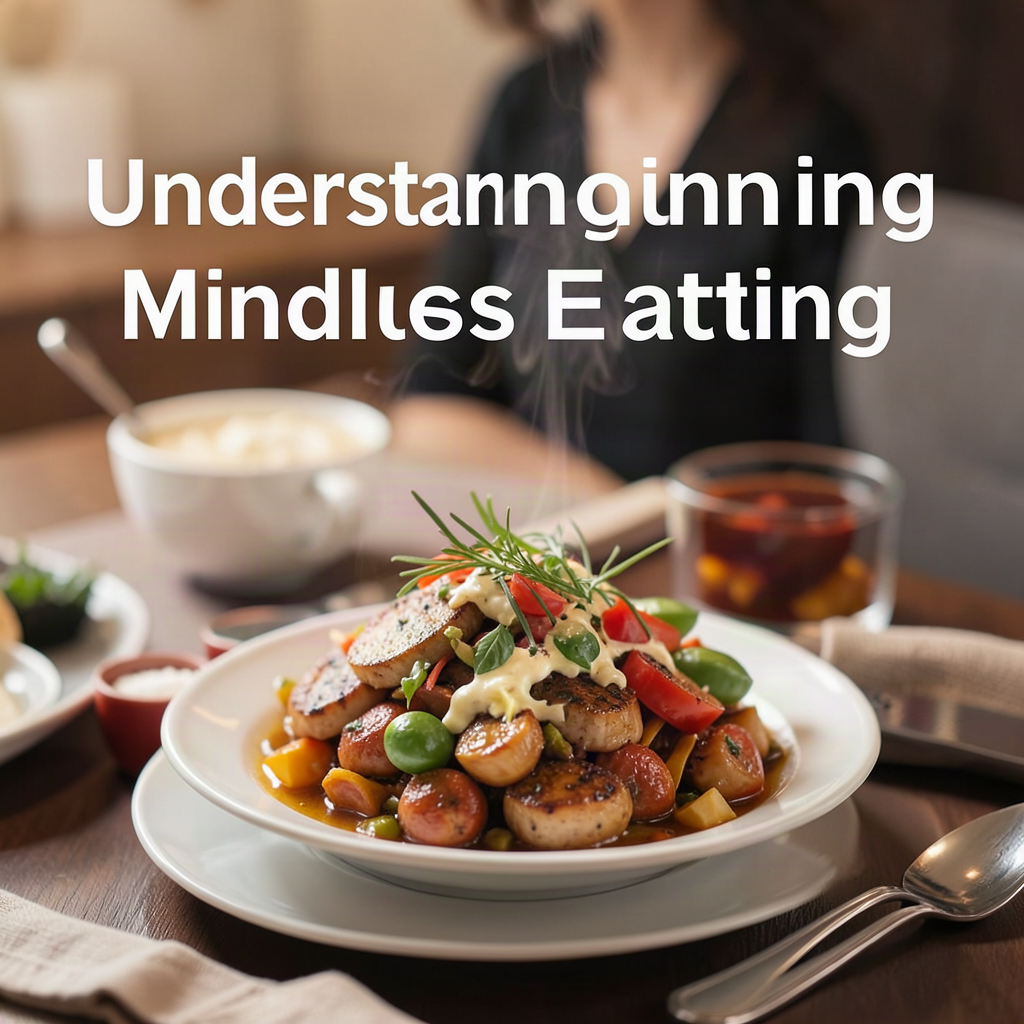
Have you ever sat down with a bowl of popcorn during a movie, only to realize ten minutes later that the bowl is empty and you cannot actually recall the taste of a single kernel? Or perhaps you have found yourself standing in the kitchen at 10:00 PM, snacking on something you didn’t even want, simply because you were scrolling through your phone? If so, you have experienced mindless eating. This phenomenon is not a failure of willpower or a lack of discipline; rather, it is a common cognitive state where the act of eating becomes disconnected from the conscious experience of nourishment.
Mindless eating occurs when we consume food without paying attention to the sensory experience, the taste, or the body’s internal signals of hunger and fullness. In a world designed for distraction, our brains often shift into “autopilot,” allowing external cues—like the sight of a candy jar or the sound of a commercial—to trigger eating behaviors that are unrelated to biological need. Understanding the mechanics of mindless eating is the first step toward reclaiming a mindful, compassionate relationship with food that prioritizes both physical health and mental well-being.
What Exactly is Mindless Eating?
At its core, mindless eating is the practice of consuming food without awareness. It is a psychological state where the cognitive process of eating is bypassed. Instead of a conscious decision based on hunger, the act of eating is triggered by environmental stimuli or emotional states. This is often referred to as “external eating,” where the cues for when to start and stop eating come from the outside world rather than from within the body.
When we eat mindlessly, we often ignore the satiety signals sent by the hypothalamus in the brain. Normally, as we eat, our bodies release hormones like cholecystokinin (CCK) and peptide YY (PYY), which signal to the brain that we are full. However, when the mind is preoccupied—whether by a television screen, a stressful work email, or an intense conversation—these signals are often drowned out. The result is that we may consume significantly more calories than our body requires because the “stop” signal never successfully reached our conscious awareness.
It is important to distinguish mindless eating from binge eating disorder, although they can overlap. Mindless eating is a general habit of inattention that affects almost everyone to some degree. It is characterized by a lack of presence rather than a loss of control accompanied by intense distress. By recognizing that mindless eating is a habit of the mind, we can approach the solution with curiosity and kindness rather than shame.
Common Triggers of Mindless Eating
To overcome mindless eating, we must first identify the catalysts that push us into autopilot. These triggers generally fall into three categories: environmental, emotional, and social.
Environmental Triggers
Our surroundings play a massive role in how we eat. The most prevalent environmental trigger in the modern era is the screen. Whether it is a smartphone, a laptop, or a television, screens create a state of “cognitive absorption.” When we are absorbed in a digital narrative, the brain prioritizes that information over the sensory input from the mouth and stomach. Other environmental triggers include the “visual cue”—such as a bowl of mints on a reception desk or an open bag of chips on the counter. When food is visible and accessible, the brain is more likely to trigger a desire to eat regardless of hunger levels.
Emotional Triggers
Emotional eating is a subset of mindless eating where we use food to soothe, reward, or distract ourselves from difficult feelings. Stress is a primary driver here; when the body is under chronic stress, cortisol levels rise, which can increase cravings for “hyper-palatable” foods—those high in sugar, salt, and fat. Boredom is another subtle but powerful trigger. When we lack stimulation, the act of eating provides a dopamine hit, making it a default activity to fill a void of inactivity.
Social Triggers
Humans are social creatures, and we often subconsciously mimic the behaviors of those around us. This is known as “social facilitation.” If you are dining with a group of people who eat quickly and in large portions, you are statistically more likely to do the same, even if you were not particularly hungry to begin with. Similarly, social pressure or the desire to be polite can lead us to finish a plate of food long after we have reached satiety.
The Physiological and Psychological Impact
The consequences of consistent mindless eating extend beyond simple caloric intake. There is a profound disconnect that occurs between the gut and the brain, which can lead to a distorted understanding of what the body actually needs.
Physiologically, mindless eating can lead to blood sugar instability. When we eat quickly and without awareness, we often consume more refined carbohydrates and sugars than we would if we were eating slowly. This causes a rapid spike in blood glucose, followed by a sharp insulin response and a subsequent “crash.” This crash often mimics the feeling of hunger, triggering another round of mindless eating and creating a vicious cycle of energy fluctuations throughout the day.
Psychologically, the impact is often rooted in guilt. Because mindless eating happens in a state of inattention, the “awakening” usually occurs after the food is gone. This leads to a moment of realization: “I didn’t even enjoy that,” or “Why did I eat all of that?” This realization often triggers a shame response. Shame is a counterproductive emotion in the context of health; it often leads to restrictive dieting or further emotional eating as a way to cope with the guilt, reinforcing the cycle of dysfunction.
Moreover, mindless eating robs us of the pleasure of eating. Food is not just fuel; it is a sensory experience. When we ignore the aroma, the texture, and the complex flavors of our meals, we fail to achieve psychological satisfaction. This lack of satisfaction means that even if we have consumed enough calories, we may still feel a “hunger for satisfaction,” leading us to seek out more food in search of that missing pleasure.
Identifying Your Own Mindless Patterns
The path to mindfulness begins with objective observation. You cannot change a behavior that you are not aware of. To identify your patterns, try a “Mindfulness Audit” for three to five days. The goal is not to track calories or restrict foods, but to track the *context* of your eating.
The Mindfulness Audit Method:
Whenever you eat or drink something other than water, take a moment to note the following:
- Hunger Level: On a scale of 1 to 10 (1 being starving, 10 being painfully full), where was I before I started?
- The Trigger: Was I hungry, bored, stressed, or did I see the food?
- The Environment: Was I watching TV, working, or talking?
- The Experience: Did I taste the food? Did I notice when I felt full?
By recording these data points, you will likely see patterns emerge. You might notice that you always eat mindlessly between 3:00 PM and 4:00 PM while answering emails, or that you consume the most unplanned calories while scrolling through social media in bed. Once these patterns are visible, they lose their power over you. You move from a state of “it just happens” to “I notice that I tend to do this when I feel X.” This shift in perspective is where the transformation begins.
Transitioning to Mindful Eating
Mindful eating is the antidote to mindless eating. It is the practice of bringing full, non-judgmental awareness to the present moment during the act of eating. This does not mean you must spend an hour eating a single raisin, although that is a common mindfulness exercise. Rather, it means integrating awareness into your regular meals.
The Five-Senses Engagement Technique:
To move from mindless to mindful, engage your senses sequentially before and during your meal:
- Sight: Look at the colors and textures of your food. Acknowledge the effort that went into preparing it.
- Smell: Take a deep breath and notice the aroma. This begins the cephalic phase of digestion, signaling your stomach to produce enzymes.
- Touch: Notice the temperature of the food and the feel of the utensils in your hand.
- Sound: Listen to the crunch of a vegetable or the sizzle of a pan.
- Taste: Notice the initial burst of flavor, how it changes as you chew, and the aftertaste.
Another core component of mindful eating is the “Pause.” Before you take the first bite, take three deep breaths. This simple act shifts your nervous system from the sympathetic state (fight or flight/stress) to the parasympathetic state (rest and digest). When your body is in a parasympathetic state, it can more accurately communicate hunger and fullness signals to the brain, making it much easier to stop eating when you are satisfied.
Practical Strategies for Everyday Life
Mindfulness is a skill that requires practice. While the ideal is to be mindful every time we eat, life is often chaotic. Implementing structural changes to your environment can help support your mindfulness goals.
Design Your Environment for Success:
One of the most effective ways to reduce mindless eating is to remove the visual cues. Instead of keeping a bowl of snacks on the counter, place them in an opaque container inside a cupboard. This adds a “friction point” between the impulse and the action, giving your conscious mind a few seconds to ask, “Am I actually hungry?”
The “Plate Only” Rule:
Avoid eating directly out of a large bag or box. When we eat from a container, we lose the visual cue of how much we have consumed. By portioning food onto a plate, you create a finite boundary. Once the plate is empty, it serves as a natural pause point to check in with your hunger levels before deciding if you truly need seconds.
Implement the 20-Minute Rule:
Because it takes approximately 20 minutes for the stomach to signal the brain that it is full, eating quickly is a primary driver of overconsumption. Try putting your fork down between every bite. Chew your food thoroughly—aiming for 20 to 30 chews per mouthful. This not only slows you down but also improves digestion by breaking down food more effectively in the mouth.
Create a “No-Screen Zone”:
Designate the dining table (or a specific chair) as a screen-free zone. By removing the primary distraction, you force your brain to focus on the sensory experience of the meal. If you find this too difficult at first, start with just one meal a day—perhaps breakfast—where the phone is left in another room.
Overcoming the Guilt Cycle
The biggest obstacle to mindful eating is often the emotional baggage we carry regarding food. Many people attempt to “fix” mindless eating by implementing strict diets or banning “bad” foods. However, restriction is the enemy of mindfulness. When we tell ourselves we cannot have something, we create a psychological scarcity that actually increases the likelihood of mindless bingeing when we finally give in.
Compassion is the essential ingredient for lasting change. If you find yourself in the middle of a mindless eating episode, the goal is not to punish yourself, but to “wake up” with curiosity. Instead of saying, “I can’t believe I just ate that whole bag of chips,” try saying, “I notice that I am eating these chips without tasting them. I wonder what I am feeling right now? Am I stressed? Am I tired?”
By shifting from judgment to curiosity, you break the guilt cycle. Guilt leads to stress, and stress leads to more mindless eating. Curiosity, on the other hand, leads to understanding. When you understand that you are eating because you are exhausted from a long work day, you can address the root cause—the need for rest—rather than focusing solely on the symptom—the snacking.
Incorporating Mindfulness into Different Meal Types
Mindfulness looks different depending on the occasion. Applying a one-size-fits-all approach can feel rigid and unsustainable. Instead, adapt your strategies to the context.
The Rushed Breakfast:
When you are short on time, you don’t need to spend 30 minutes in meditation. Instead, try “Micro-Mindfulness.” Spend just 30 seconds focusing entirely on the first three bites of your meal. Notice the temperature and the texture. This anchors you in the present moment and sets a mindful tone for the rest of your day.
The Social Dinner:
Socializing is a wonderful part of eating, and you don’t have to be silent to be mindful. Use the conversation as a natural pace-setter. Try to take a sip of water or a breath between speaking and eating. Pay attention to the feeling of satiety as the meal progresses, and give yourself permission to stop eating even if others are still going.
The Late-Night Snack:
This is often the most common time for mindless eating. Before you head to the kitchen, ask yourself: “Am I hungry in my stomach, or am I hungry in my head?” If it is a head-hunger (boredom or stress), try a non-food activity for ten minutes—like reading a book or taking a warm shower. If you are genuinely hungry, prepare your snack mindfully, plate it, and eat it away from the screen.
The Architecture of Hyper-Palatability and the “Bliss Point”
To fully understand why mindless eating occurs, we must look beyond our own psychology and examine the engineering of the food itself. Many modern processed foods are designed using a concept known as the “bliss point”—a precise ratio of salt, sugar, and fat that maximizes pleasure and overrides the body’s natural satiety signals. When we consume foods engineered for hyper-palatability, the struggle to remain mindful becomes an uphill battle against neurochemistry.
Hyper-palatable foods often utilize “vanishing caloric density.” This is a technical term for foods that melt in the mouth or dissolve quickly, such as cheese puffs or certain types of wafers. Because these foods disappear rapidly, the brain is tricked into believing that very little has been consumed, even if the caloric load is significant. This creates a sensory gap where the stomach is filling up, but the mouth and tongue are not receiving the sustained tactile feedback required to signal the brain that the meal is underway. This is why it is nearly impossible to eat a single potato chip mindfully; the food is designed to vanish, leaving the brain craving the next hit of flavor to maintain the dopamine loop.
An edge case occurs with “healthy” processed foods, such as low-fat granola bars or sweetened yogurt. While these may contain vitamins or fiber, they often use concentrated sweeteners to maintain the bliss point. Because they lack the complex textures of whole foods—like the crunch of a raw carrot or the chewiness of a dried apple—they can trigger the same autopilot response as candy. The lack of “sensory resistance” (the effort required to chew and break down the food) accelerates the pace of eating, making it easier to slide into a mindless state even when the nutritional profile seems positive.
The Liquid Trap: Mindless Consumption of Beverages
While much of the conversation around mindless eating focuses on solid food, mindless drinking is a pervasive and often invisible contributor to the autopilot cycle. Liquid calories are processed differently by the brain than solid calories. The act of chewing is a critical part of the satiety process; it stimulates the release of hormones and provides the brain with a physical marker of consumption. Beverages bypass this entire mechanism, allowing us to consume hundreds of calories without ever triggering the “fullness” response.
Consider the common habit of sipping a large, sweetened coffee or a soda while working. Because the consumption is spread over an hour, it doesn’t feel like a “meal,” and because there is no chewing involved, the brain doesn’t register it as nourishment. This is often exacerbated by the use of straws, which further disconnects the sensory experience of the liquid from the conscious mind. We may finish a 32-ounce beverage without a single conscious thought about its taste or its impact on our energy levels, only to experience a massive sugar crash shortly thereafter.
This phenomenon is particularly evident with alcohol. Alcohol not only provides liquid calories but also acts as a cognitive disinhibitor, effectively “turning off” the prefrontal cortex—the part of the brain responsible for executive function and decision-making. This creates a perfect storm for mindless eating: the alcohol reduces the ability to monitor hunger cues while simultaneously increasing the craving for salty, fatty appetizers. To combat this, one practical strategy is the “Water Bridge”: committing to drinking a full glass of water between every alcoholic beverage or sweetened drink. This introduces a physical pause and re-engages the sensory awareness of hydration versus caloric consumption.
The Sleep-Hunger Connection and Biological Autopilot
Mindless eating is not solely a product of habit or environment; it is deeply tied to our circadian rhythms and sleep quality. When we are sleep-deprived, the body undergoes a hormonal shift that makes mindfulness biologically difficult. Specifically, levels of leptin (the hormone that signals fullness) decrease, while levels of ghrelin (the hormone that stimulates hunger) increase. This imbalance creates a state of “biological urgency” where the brain aggressively seeks out high-energy, calorie-dense foods to compensate for the lack of sleep-derived energy.
More importantly, sleep deprivation impairs the function of the prefrontal cortex. This area of the brain is our “internal brake system,” allowing us to pause and ask, “Am I actually hungry?” When we are exhausted, this brake system fails, and the primitive, reward-seeking parts of the brain take over. This is why you might find yourself eating a bag of cookies at midnight after a poor night’s sleep; you aren’t lacking willpower, but rather the neurological hardware required to exercise it. In this state, the brain enters a hyper-responsive mode to external cues, making a bowl of candy on the counter almost impossible to ignore.
To address this, it is helpful to recognize the “Exhaustion Trigger.” If you have had less than six hours of sleep, acknowledge that your brain is currently operating on a limited capacity for mindfulness. Instead of fighting a losing battle against cravings, the most effective strategy is to remove the triggers entirely for that day. If the cookies are not in the house, the primitive brain cannot seek them out. By managing the environment during periods of sleep deprivation, you protect yourself from the biological autopilot that otherwise leads to mindless overconsumption.
Navigating Professional Environments and “Desk Dining”
The modern workplace is a minefield of mindless eating triggers. The culture of “performative busyness” often encourages employees to eat while working, leading to the phenomenon of desk dining. When we eat while typing, reading emails, or attending a virtual meeting, we are engaging in a high-level cognitive task that completely overrides the sensory input from our digestive system. The brain treats the meal as a background activity, meaning the satiety signals from the stomach are ignored in favor of the urgency of the workday.
Desk dining also creates a psychological association between stress and eating. If you consistently eat your lunch while answering stressful emails, your brain begins to link the act of eating with the feeling of anxiety. Over time, this can lead to a habit where you reach for snacks not because you are hungry, but as a subconscious attempt to soothe the stress associated with your workspace. This is a subtle form of emotional mindless eating that often goes unnoticed because it is framed as “efficiency.”
To break this cycle, implement the “Walking Transition.” Before eating, leave your desk and walk for just two to five minutes—even if it is just to the breakroom or around the office. This physical movement signals to the brain that you are shifting from “work mode” (sympathetic nervous system) to “nourishment mode” (parasympathetic nervous system). If leaving the desk is impossible, use a “Visual Anchor.” Place a specific object, like a small stone or a plant, on your desk. When it is time to eat, move that object to the side, symbolizing the boundary between your professional tasks and your meal. This simple ritual helps the brain switch gears and brings a layer of conscious intent to the act of eating.
The Parenting Paradox: Mindless Eating through Caregiving
For parents and caregivers, mindless eating often manifests as “scavenger eating”—the habit of consuming the leftover scraps of a child’s meal. This behavior is rarely driven by hunger; instead, it is often a combination of a desire to avoid waste and a subconscious search for a moment of sensory stimulation in a day filled with demanding tasks. Because these “scraps” are consumed in small amounts across multiple events, parents often fail to realize how many additional calories they are consuming.
Psychologically, scavenger eating can also be a manifestation of “invisible labor.” The mental load of managing a household can leave a parent feeling depleted. In these moments, the quick hit of sugar or salt from a child’s leftover snack provides a momentary dopamine spike, offering a brief escape from the stress of caregiving. Because the eating happens while cleaning up or multitasking, it is the epitome of mindless consumption; the parent is focusing on the task of cleaning, not the act of eating.
The solution for caregivers is to establish a “Dedicated Nourishment Window.” Rather than grazing on leftovers, set a specific time to prepare a small, mindful plate of food for yourself. If the urge to eat leftovers persists, try the “Transfer Method”: instead of eating directly from the child’s plate, put the desired portion on your own small plate. This simple act of transferring the food creates a conscious decision point. It forces the caregiver to move from the role of “cleaner” to the role of “consumer,” allowing them to check in with their actual hunger levels before taking a bite.
Moving from Mindful Eating to Intuitive Eating
While mindful eating focuses on the *how* of eating—the presence and awareness during the meal—intuitive eating is a broader philosophy that focuses on the *why* and the *what*. Transitioning from mindful eating to intuitive eating involves moving away from external rules (like the 20-minute rule or the plate-only rule) and moving toward a deep trust in the body’s internal wisdom. This is the ultimate goal of overcoming mindless eating: a state where the autopilot is replaced by an intuitive partnership between the mind and the body.
A key component of this transition is the mastery of the “Hunger-Fullness Scale.” Rather than seeing hunger as a binary (hungry or not hungry), intuitive eaters view it as a spectrum from 1 to 10. A 1 is painful hunger, a 5 is neutral/satisfied, and a 10 is painfully full. The goal is to start eating at a 3 (gentle hunger) and stop at a 6 or 7 (satisfied but not stuffed). Mindless eating usually happens when we wait until a 1 or 2 to eat, which triggers a biological panic that makes mindfulness nearly impossible, or when we eat until a 9 or 10 because we were distracted by a screen.
Frequently Asked Questions
Q: Does mindful eating mean I can never eat while watching TV again?
A: Not at all. The goal is awareness, not perfection. It is perfectly fine to enjoy a movie with snacks occasionally. The problem arises when *every* meal is eaten in a state of distraction. The aim is to build a toolkit of mindful habits so that you have the choice to be present, rather than being trapped in a permanent state of autopilot.
Q: I feel hungry all the time even when I eat a lot. Could this be mindless eating?
A: Yes, it is possible. When we eat mindlessly, we miss the psychological satisfaction of the meal. This can leave us feeling “unsatisfied,” which the brain often interprets as physical hunger. Additionally, mindless eating often involves high-sugar foods that cause blood sugar crashes, which trigger genuine hunger signals shortly after eating.
Q: How long does it take to break the habit of mindless eating?
A: Like any cognitive habit, it takes time and repetition. Most people begin to notice a difference in their relationship with food within two to four weeks of consistent practice. However, the goal is not to “finish” a process but to adopt a lifelong practice of awareness. There will be days when you slip back into autopilot, and that is a normal part of the journey.
Q: Can mindful eating help with emotional eating?
A: Yes, profoundly. Mindful eating creates a “gap” between the emotional trigger (e.g., feeling stressed) and the reaction (e.g., eating chocolate). By becoming aware of the emotion as it arises, you can acknowledge it without immediately acting on it. This allows you to choose a more helpful coping mechanism, such as a walk or a conversation, while still allowing yourself to enjoy food for pleasure when you are actually hungry.
Q: What should I do if I realize I’ve been eating mindlessly halfway through a meal?
A: The most important thing is to avoid the “what the hell” effect—the idea that since you’ve already “ruined” the meal, you might as well keep eating mindlessly. Instead, simply notice the moment you woke up. Take a deep breath, put your fork down, and spend the rest of the meal being as present as possible. The act of returning to awareness is where the most growth happens.
Related posts:
 The Hunger Games: Why You’re Always Starving and How to Fix It
 Understanding Your Hunger
 Intermittent Fasting for Complete Beginners
 Study Reveals Ed Sheeran’s Music Literally Makes You Crave Dessert
 Gratitude Practices for Food Appreciation
 Brain-Boosting Foods
 Portion vs Serving Size Guide
 Runner’s Hunger Explained