
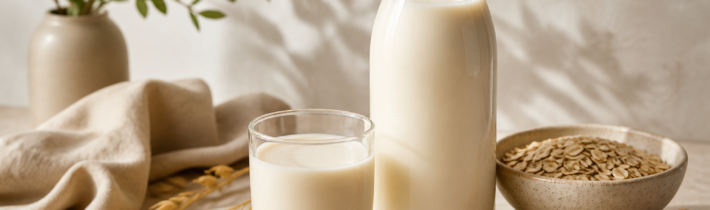
Oat milk has moved from a niche health‑food aisle staple to a mainstream refrigerator fixture in just a few years. Its creamy texture, mild sweetness, and versatile performance in coffee, cereal, and baking have made it a favorite among vegans, lactose‑intolerant drinkers, and curious omnivores alike. This guide walks through what oat milk really is, how it’s made, what nutrients it delivers, and how to pick and use the best product for your kitchen.
What Is Oat Milk
At its core, oat milk is a plant‑based beverage created by blending soaked oats with water and then straining out the solids. The result is a liquid that retains many of the soluble fibers, especially beta‑glucan, which gives oat milk its characteristic viscosity. Unlike almond or soy milk, oat milk naturally contains a modest amount of protein and a higher carbohydrate count, mostly from the starches that remain after straining.
Commercial versions often add oils, stabilizers, vitamins, and minerals to improve mouthfeel and nutritional parity with dairy. Homemade oat milk skips these additives, yielding a simpler ingredient list but a thinner consistency unless you blend in a small amount of oil or a natural thickener such as xanthan gum.
How Oat Milk Is Produced
Industrial production starts with whole oat grains that are cleaned, de‑hulled, and milled into a fine flour. The flour is mixed with water and heated to gelatinize the starches, a step that also reduces the raw‑grain flavor. Enzymes such as amylase are added to break down starch into simpler sugars, creating the subtle sweetness many people enjoy. The slurry is then centrifuged or filtered to separate the liquid from the fibrous residue, which can be repurposed as animal feed or upcycled into baked goods.
After separation, the liquid is typically pasteurized using ultra‑high‑temperature (UHT) treatment, which extends shelf life without refrigeration until opening. Some brands fortify the milk with calcium, vitamin D, vitamin B12, and riboflavin to mimic the micronutrient profile of cow’s milk. Finally, the product is packaged in aseptic cartons or refrigerated bottles, depending on the intended distribution channel.
Nutritional Profile
A typical 240 ml serving of unsweetened, fortified oat milk provides roughly 120 kcal, 3 g of protein, 5 g of fat (often from added rapeseed or sunflower oil), 16 g of carbohydrates, and 2 g of dietary fiber. The beta‑glucan content ranges from 0.5 g to 1 g per serving, a level that research links to modest cholesterol‑lowering effects when consumed regularly as part of a balanced diet.
Micronutrient fortification can bring calcium to 300 mg (30 % DV), vitamin D to 2.5 µg (12 % DV), and vitamin B12 to 1.2 µg (50 % DV). Unfortified or homemade versions lack these added nutrients, so label reading is essential if you rely on oat milk as a primary source of calcium or B12.
Health Considerations
Oat milk is naturally free of lactose, soy, and nuts, making it a safe alternative for multiple allergy groups. Its beta‑glucan fiber can support gut health by feeding beneficial bacteria and may help moderate post‑meal blood‑glucose spikes. However, the carbohydrate load is higher than that of almond or coconut milk, so individuals monitoring carbohydrate intake — such as those on ketogenic or low‑glycemic diets — should account for the 16 g per cup.
Some commercial products contain added sugars or flavored syrups, which can push the sugar content above 10 g per serving. Choosing unsweetened varieties and checking the ingredient list for cane sugar, agave, or brown rice syrup helps keep added sugars in check. People with celiac disease should verify that the oats are certified gluten‑free, as cross‑contamination can occur during processing.
Environmental Impact
Life‑cycle analyses consistently rank oat milk among the lowest‑impact plant milks. Oats require significantly less water than almonds — roughly 1 L of water per liter of oat milk versus 371 L for almond milk — and they generate fewer greenhouse‑gas emissions per liter than soy or rice milk. Oat crops also improve soil health through crop rotation and can be grown in cooler climates, reducing the need for long‑distance transport.
Packaging remains a factor: aseptic cartons are recyclable in many municipalities but not all. Opting for brands that use plant‑based or recycled packaging, or buying in bulk and transferring to reusable glass bottles, can further lower the carbon footprint.
Choosing the Right Oat Milk
When scanning the shelf, prioritize three criteria: ingredient simplicity, fortification, and intended use. A short ingredient list — oats, water, oil, salt, and perhaps vitamins — signals minimal processing. If you need a calcium or B12 boost, select a fortified version. For coffee, look for a “barista” label; these formulations contain extra oil and stabilizers that create stable microfoam.
Price varies widely. Store‑brand unsweetened oat milk often matches the nutrition of premium brands at a lower cost. If you enjoy experimenting, a small batch of homemade oat milk lets you control sweetness, thickness, and additive content, though it will lack the shelf stability of UHT products.
Cooking and Baking with Oat Milk
Oat milk’s neutral flavor and moderate fat content make it a reliable 1:1 substitute for dairy milk in most recipes. In pancakes, muffins, and quick breads, it yields a tender crumb and a slight natural sweetness that can reduce added sugar by a tablespoon or two. For custards or sauces that rely on protein coagulation, the lower protein level may produce a slightly thinner texture; adding a teaspoon of cornstarch per cup can compensate.
When making creamy soups or risottos, stir in oat milk at the end of cooking to avoid curdling — though oat milk is less prone to curdle than soy milk, high heat can still cause separation. In vegan ice cream bases, the beta‑glucan contributes body, reducing the need for additional stabilizers.
Barista Tips for Coffee
Achieving café‑quality foam with oat milk hinges on temperature and protein‑fat balance. Heat the milk to 55‑60 °C (130‑140 °F); overheating degrades the foam structure. Use a steam wand or a handheld frother, introducing air early in the steaming process to create microfoam, then submerge the wand to heat evenly. Barista‑formulated oat milks contain added dipotassium phosphate and higher oil content, which stabilize the foam and prevent the “dry” texture common with standard versions.
If you only have regular oat milk, blend in a teaspoon of neutral oil (such as canola) per 240 ml before steaming. This mimics the fat level of barista blends and improves latte art potential. Practice pouring slowly from a low height to integrate the foam with espresso for a smooth, glossy finish.
Historical Evolution and Global Adoption of Oat Milk
Oat milk’s rise began in the early 1990s when Swedish researcher Rickard Öste developed a process to enzymatically hydrolyze oat starch into a sweet, stable liquid. The first commercial brand, Oatly, launched in 1994 and remained a regional curiosity for more than a decade. By the mid‑2010s, a convergence of factors — growing vegan populations, heightened awareness of lactose intolerance, and a surge in specialty coffee culture — propelled oat milk onto supermarket shelves across Europe and North America. In Asia, particularly in Taiwan and South Korea, local manufacturers adapted the Swedish technology to regional taste preferences, producing lighter, less sweet versions that blend seamlessly with tea‑based beverages. Latin American markets have recently embraced oat milk as a base for traditional drinks such as horchata and atole, leveraging its neutral canvas to replace rice or almond bases. The global trajectory illustrates how a single scientific breakthrough can cascade through diverse culinary traditions, each reshaping the product to fit local flavor profiles and regulatory environments.
Market data from 2023 shows oat milk capturing roughly 12 percent of the plant‑milk category in the United States, up from 3 percent in 2018. In the United Kingdom, oat milk overtook soy as the leading dairy alternative in 2021. These shifts are reflected in retail shelf space: major chains now allocate dedicated oat‑milk sections, often featuring three to five brands ranging from budget private labels to premium barista lines. The competitive landscape has also spurred ingredient innovation — some brands now highlight single‑origin oats, while others emphasize carbon‑negative farming contracts. Understanding this history helps consumers and professionals anticipate future trends, such as the emergence of oat‑milk‑based yogurts, cheeses, and ready‑to‑drink protein shakes that extend the category beyond a simple beverage.
Advanced Home‑Production Techniques: Fermented, Flavored, and Concentrated Oat Milks
Beyond the basic soak‑blend‑strain method, home enthusiasts can explore fermentation to develop probiotic‑rich oat kefir. After the initial strain, inoculate the liquid with a small amount of water kefir grains or a commercial vegan kefir starter, then let it sit at 22‑24 °C for 12‑24 hours. The result is a tangy, slightly effervescent drink that retains beta‑glucan while adding live cultures. For flavored variants, infuse the soak water with whole spices — cinnamon sticks, cardamom pods, or vanilla beans — before blending. Remove the solids after straining to avoid gritty texture. Concentrated oat milk, useful for baking or as a coffee creamer, can be produced by reducing the strained liquid in a wide saucepan over low heat until volume drops by 40‑50 percent; stir constantly to prevent scorching. The concentrate stores up to two weeks refrigerated and re‑hydrates 1:1 with water. Edge cases include over‑fermentation, which yields excessive acidity and separation; a quick taste test at the 12‑hour mark prevents this. When reducing, watch for Maillard browning — if the liquid darkens, lower the heat and add a pinch of baking soda to neutralize acidity.
Oat Milk in Professional Food Service: Menu Development, Cost Control, and Equipment Considerations
Cafés and restaurants that integrate oat milk into standard menus must evaluate cost per serving, equipment compatibility, and staff training. A typical barista‑grade oat milk costs 1.8‑2.2 USD per liter, roughly 30 percent more than bulk soy milk but comparable to premium almond milk. To control expense, many operators negotiate volume contracts with regional distributors or adopt a house‑blend approach: mix a base oat milk with a small proportion of neutral oil and dipotassium phosphate on‑site, replicating barista formulations at lower cost. Equipment-wise, steam wands calibrated for dairy may over‑heat oat milk because its protein‑fat matrix stabilizes foam at lower temperatures. Technicians should adjust the steam pressure to 1.0‑1.2 bar and set the temperature probe to 58 °C. Staff training should emphasize the “air‑first” technique — introduce air for the first 3‑4 seconds, then submerge the wand — to achieve microfoam without the dry texture common in standard oat milks. For cold‑brew programs, pre‑portion oat milk in 200 ml bottles to speed service and reduce waste. Inventory tracking should treat oat milk as a perishable with a 7‑day open‑shelf life, rotating stock daily to avoid spoilage.
Nutritional Tailoring for Specific Populations: Athletes, Children, Older Adults, and Low‑FODMAP Diets
Athletes benefit from oat milk’s carbohydrate density — roughly 16 g per cup — which can serve as a quick glycogen replenishment when paired with a protein source such as pea protein powder. A post‑workout shake blending 250 ml oat milk, 20 g pea protein, a banana, and a teaspoon of chia delivers a 3:1 carb‑to‑protein ratio ideal for recovery. For children, fortified oat milk can supply calcium and vitamin D comparable to cow’s milk, but the lower protein (3 g vs 8 g) means it should not be the sole protein source; complement with legumes, eggs, or fortified cereals. Older adults often need higher vitamin B12 and calcium; selecting a brand fortified to 50 percent DV for B12 and 30 percent DV for calcium per serving helps meet those targets without excess sugar. Individuals following a low‑FODMAP diet should choose oat milks made from certified low‑FODMAP oats and avoid products with added inulin or high‑fructose corn syrup; a 100 ml portion typically stays within the safe threshold, but larger servings may trigger symptoms. Always verify the Monash University app or equivalent database for the specific brand’s FODMAP rating.
Innovations in Packaging, Supply‑Chain Transparency, and Certification Standards
Packaging evolution now includes plant‑based polyethylene cartons derived from sugarcane, which reduce fossil‑plastic content by up to 70 percent while maintaining aseptic barrier properties. Some brands adopt QR‑code traceability: scanning the code reveals farm‑level data — oat variety, irrigation method, and carbon‑footprint metrics — verified by third‑party auditors such as the Carbon Trust. Certification landscapes have expanded beyond organic and gluten‑free; the new “Regenerative Organic Certified” label guarantees soil‑health practices, biodiversity corridors, and fair‑labor standards. For food‑service buyers, the “Food Service Sustainability Scorecard” aggregates packaging recyclability, transport emissions, and water‑use intensity into a single metric, enabling side‑by‑side comparison. Edge cases arise when a brand claims “carbon negative” but only offsets emissions via distant reforestation projects; scrutinize the methodology — direct supply‑chain reductions carry more credibility. Bulk‑refill stations in grocery stores, using stainless‑steel dispensers, cut single‑use packaging entirely; however, they require strict cleaning protocols to prevent microbial growth, especially in high‑traffic locations.
Creative Culinary Applications Beyond Coffee: Savory Sauces, Vegan Cheeses, Frozen Desserts, and Cocktail Mixology
Oat milk’s mild sweetness and beta‑glucan body make it a versatile base for savory sauces. A classic béchamel can be reproduced by whisking 30 g flour into 30 g melted vegan butter, then gradually adding 500 ml oat milk while simmering; the result thickens without the need for additional starch. For vegan cheese, blend 200 ml concentrated oat milk with 100 g raw cashews (soaked 4 hours), 2 tbsp nutritional yeast, 1 tsp lactic acid, and 1 tsp kappa carrageenan; heat to 85 °C, pour into molds, and chill — yielding a sliceable, meltable cheese suitable for pizza. In frozen desserts, replace dairy cream with a 1:1 mix of oat milk and coconut cream; the beta‑glucan reduces ice‑crystal formation, producing a smoother texture without excessive stabilizers. Cocktail bartenders use oat milk in clarified milk punches: combine 150 ml oat milk, 100 ml bourbon, 30 ml lemon juice, 20 ml simple syrup, and a dash of bitters; let curdle at room temperature for 30 minutes, then filter through a coffee filter. The clarified liquid retains a silky mouthfeel and subtle oat aroma, pairing well with spiced rum or amaro. Edge cases include high‑acid cocktails that cause premature curdling; pre‑heat the oat milk to 60 °C before mixing to stabilize proteins.
Troubleshooting Common Home‑Made Oat Milk Issues: Texture, Separation, Off‑Flavors, and Shelf‑Life Extension
Home‑made oat milk often suffers from a slimy mouthfeel caused by excessive beta‑glucan release. To mitigate, rinse rolled oats under cold water for 30 seconds before soaking, and limit soak time to 15 minutes — longer soaks increase viscosity. Blend at high speed for no more than 30 seconds; over‑blending shears starch granules, creating gel. Strain through a fine‑mesh nut milk bag rather than cheesecloth to capture more solids, then gently press — do not squeeze — to avoid forcing mucilage into the liquid. Separation after refrigeration is normal; a quick shake restores homogeneity. For persistent separation, add 0.2 percent xanthan gum (0.5 g per liter) during blending; this stabilizes without altering flavor. Off‑flavors such as a raw‑grain note arise from insufficient enzymatic breakdown; a pinch of food‑grade amylase (available from brewing supply shops) added during the soak converts residual starch to maltose, sweetening naturally. To extend shelf life beyond 3‑4 days, pasteurize the finished milk at 72 °C for 15 seconds using a double‑boiler, then rapid‑cool in an ice bath before bottling in sterilized glass. This low‑temperature pasteurization preserves most nutrients while inhibiting spoilage organisms. Edge case: if the milk develops a sour smell before the expected window, discard — it indicates contamination despite pasteurization.
FAQ
- Is oat milk suitable for people with diabetes?
- Unsweetened oat milk has a moderate glycemic index due to its carbohydrate content. Portion control and pairing with protein or fat can blunt blood‑sugar spikes. Consult a dietitian for personalized advice.
- Can I freeze oat milk?
- Freezing is possible but may cause separation and a grainy texture after thawing. Shake well before use, and consider using thawed oat milk in cooked dishes rather than as a beverage.
- Does oat milk contain gluten?
- Oats are naturally gluten‑free, but cross‑contamination is common. Choose products labeled certified gluten‑free if you have celiac disease or a gluten sensitivity.
- How does oat milk compare to cow’s milk nutritionally?
- Oat milk typically provides less protein (3 g vs 8 g per cup) and more carbohydrates. Fortified versions can match calcium and vitamin D levels, but vitamin B12 is only present when added.
- What is the shelf life of opened oat milk?
- Once opened, refrigerated oat milk should be consumed within 7‑10 days. Shelf‑stable cartons remain safe until the printed date if unopened; after opening, treat them like refrigerated varieties.
Related posts:
 High-Protein Foods That Pack a Serious Nutritional Punch
 The Sweet Science: Why Honey in Your Coffee Is a Game-Changer
 The Ultimate Oat Milk Showdown: Which Creamy Alternative Reigns Supreme?
 Beta Glucan Benefits for Health
 The Benefits of Coffee
 Delicious Foods Made with Oat Milk for a Dairy-Free Treat
 Oat Milk vs Almond Milk Comparison
 Oat Milk Products Guide