The terms “vegan” and “plant-based” get used interchangeably so often that many people assume they mean the same thing. They don’t. While both approaches center on eating foods derived from plants, the philosophy, flexibility, and health outcomes can differ significantly. Understanding these distinctions matters if you’re trying to decide which path aligns with your health goals, ethical values, and practical lifestyle needs.
At its core, veganism is an ethical stance that rejects all forms of animal exploitation. A plant-based diet focuses primarily on health outcomes through eating whole, minimally processed plant foods. Both can be incredibly healthy when done well, and both can be nutritional disasters when approached poorly. Let’s explore what each approach actually entails and how to determine which might serve your needs better.
What Does Vegan Actually Mean?
Veganism emerged as a distinct philosophy in 1944 when Donald Watson founded the Vegan Society in England. The official definition describes veganism as “a philosophy and way of living which seeks to exclude—as far as is possible and practicable—all forms of exploitation of, and cruelty to, animals for food, clothing or any other purpose.” This ethical foundation shapes every aspect of vegan living, not just dietary choices.
Someone who identifies as vegan typically avoids all animal products: meat, dairy, eggs, honey, leather, wool, silk, and products tested on animals. The dietary component represents just one facet of a broader commitment to animal welfare. This means a strict vegan might eat processed foods like Oreo cookies, certain potato chips, or sugary sodas because they contain no animal-derived ingredients.
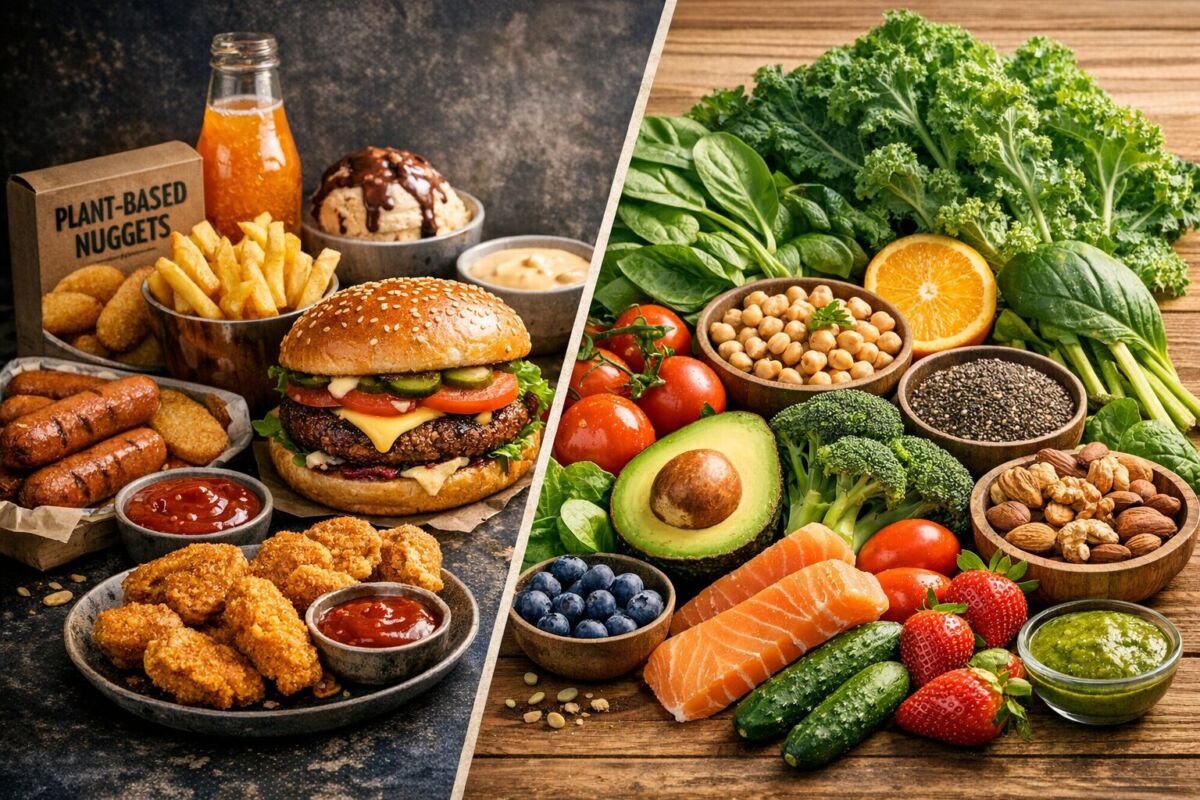
The health implications of veganism depend entirely on food choices within those ethical boundaries. A vegan diet built around whole grains, legumes, vegetables, fruits, nuts, and seeds can provide excellent nutrition. However, the growing market for vegan processed foods means it’s entirely possible to be a “junk food vegan” subsisting on frozen vegan pizzas, faux meats, and dairy-free ice creams. These products, while cruelty-free, often contain high levels of sodium, saturated fat from coconut and palm oils, and added sugars.
Research on vegan diets shows mixed but generally positive health outcomes. Studies consistently find that vegans tend to have lower rates of heart disease, type 2 diabetes, and certain cancers compared to the general population. However, these benefits likely stem from higher consumption of whole plant foods rather than the absence of animal products per se. Vegans also show lower rates of obesity and lower blood pressure on average.
What Defines a Plant-Based Diet?
The term “plant-based” gained prominence through the work of researchers like Dr. T. Colin Campbell, author of “The China Study,” and Dr. Caldwell Esselstyn, who championed plant-based nutrition for reversing heart disease. Unlike veganism’s ethical roots, plant-based eating emerged from nutritional science and medical research focused on disease prevention and treatment.
A plant-based diet emphasizes whole, minimally processed foods derived from plants: vegetables, fruits, whole grains, legumes, nuts, and seeds. The emphasis falls squarely on health optimization rather than animal welfare, though environmental and ethical concerns often motivate plant-based eaters as secondary benefits.
Here’s where it gets nuanced: interpretations of “plant-based” vary. Some proponents advocate for a strictly whole-foods approach with no animal products whatsoever. Others allow small amounts of animal products as condiments or occasional additions while keeping plants at the center of the plate. The Mediterranean diet, for instance, is largely plant-based but includes fish, poultry, eggs, and dairy in moderation.
The term “whole-food, plant-based” (WFPB) provides more specificity. This approach minimizes or eliminates refined grains, added oils, and processed foods, even when they’re technically plant-derived. A WFPB eater might avoid white pasta, sugary fruit juices, and coconut oil just as strictly as they avoid cheese or chicken.
Health research on whole-food, plant-based diets shows remarkable outcomes. Clinical trials have demonstrated reversal of coronary artery disease, significant improvements in type 2 diabetes management, and reduced inflammation markers. These benefits likely exceed those seen in general vegan populations because the whole-foods approach eliminates many processed foods that technically qualify as vegan but offer minimal nutritional value.
Key Differences in Philosophy and Practice
The distinction between vegan and plant-based becomes clearest when examining what each approach permits and restricts. A vegan might consume vegan butter made from palm oil, whereas a whole-food, plant-based eater would avoid both dairy butter and its vegan alternative in favor of using whole nuts, seeds, or avocado as fat sources.
Consider breakfast options. A vegan could eat a stack of pancakes made with white flour, vegetable oil, and a flax egg, topped with maple syrup and vegan butter. A plant-based eater might instead choose steel-cut oats with berries, ground flaxseed, and a splash of unsweetened plant milk. Both breakfasts contain zero animal products, but their nutritional profiles differ dramatically.
The philosophical difference extends beyond food. Vegans typically avoid leather shoes, wool sweaters, and cosmetics tested on animals. Plant-based eaters might make these choices too, but they’re not intrinsic to the dietary approach. Someone could eat a strictly whole-food, plant-based diet while wearing leather boots and using conventional shampoo without contradicting their stated dietary philosophy.
Practically speaking, veganism offers clearer boundaries. Either a food contains animal products or it doesn’t. Plant-based eating requires more nuanced decision-making about processing levels, oil content, and the degree to which animal products might occasionally appear. This flexibility can make plant-based eating more sustainable for some people but also creates confusion about what truly constitutes the diet.
Nutritional Comparison: What Does the Research Say?
Comparing health outcomes between vegan and plant-based diets presents methodological challenges because the research doesn’t always distinguish between them clearly. Most studies on vegan diets don’t control for whole-food versus processed-food consumption within the vegan group. However, some patterns emerge from available evidence.
Vegans generally show adequate to excellent intake of fiber, vitamin C, vitamin E, magnesium, and folate. They tend to consume more fruits, vegetables, and whole grains than the average population. However, vegans face higher risks of deficiency in vitamin B12, vitamin D, calcium, iron, zinc, and omega-3 fatty acids, particularly long-chain EPA and DHA found in fish.
Vitamin B12 deserves special attention. This essential nutrient exists only in animal products and fortified foods. Every reputable health organization recommends B12 supplementation for vegans. Deficiency can cause irreversible neurological damage, making this non-negotiable. Plant-based eaters who include some animal products may get adequate B12, but those eating entirely plant-based need supplementation too.
Whole-food, plant-based diets show superior outcomes in studies that examine them specifically. The fiber content tends to be higher than even general vegan diets because processed vegan foods often replace whole grains with refined alternatives. The lower sodium intake comes from avoiding processed meats, cheeses, and prepared foods. The absence of added oils significantly reduces calorie density, which supports weight management without requiring portion control.
A 2019 analysis in the Journal of Nutrition compared nutrient profiles of vegan, vegetarian, and omnivorous diets. Vegans had the highest fiber intake and lowest saturated fat intake but also the highest rates of inadequate calcium and iodine. The study highlighted that dietary quality matters more than dietary label: well-planned vegan diets outperformed poorly planned omnivorous diets, but the reverse could also be true.
Which Approach Supports Better Long-Term Health?
Determining which approach is “healthier” requires examining what health outcomes you’re prioritizing. For weight management, both approaches can work, but whole-food, plant-based diets may have an edge due to lower calorie density and higher fiber content promoting satiety. For cardiovascular health, whole-food, plant-based diets have demonstrated disease reversal in clinical settings, while general vegan diets show risk reduction but not necessarily reversal.
Type 2 diabetes management shows similar patterns. Vegans have significantly lower rates of diabetes, but studies specifically examining whole-food, plant-based interventions show remarkable results: reduced medication needs, improved insulin sensitivity, and in some cases, complete remission. The combination of high fiber, low saturated fat, and elimination of processed foods appears synergistic for metabolic health.
Cancer prevention evidence remains less definitive. Populations eating plant-based diets show lower rates of colorectal cancer, possibly due to higher fiber intake. Plant foods contain phytochemicals with anti-cancer properties. However, the research doesn’t clearly show whether strict veganism offers advantages over plant-based diets that include modest amounts of animal products. The World Health Organization classifies processed meats as Group 1 carcinogens and red meat as Group 2A, suggesting that avoiding these specific categories matters most.
Gut health presents an interesting consideration. Plant-based diets high in diverse fibers support beneficial gut bacteria. The microbiome thrives on variety: eating thirty different plant foods weekly appears more beneficial than eating the same ten plant foods daily. Both vegans and plant-based eaters can achieve this diversity, but whole-food approaches make it more likely.
Longevity data remains inconclusive. Blue Zones research shows that the world’s longest-lived populations eat predominantly plant-based diets, but not strictly vegan. Okinawans eat fish, Sardinians consume sheep milk cheese, and Seventh-day Adventists, who influenced much vegan research, include some eggs and dairy in their recommended diet. This suggests that a plant-centered approach with occasional animal products might optimize longevity.
Practical Considerations for Choosing Your Path
Beyond health outcomes, practical factors influence which approach works better for your life. Social situations often challenge vegans more intensely because the ethical stance can feel like a litmus test. Ordering a salad without cheese at a restaurant with colleagues might prompt questions and potential tension. Plant-based eaters can navigate these moments with more flexibility, perhaps eating around the cheese or choosing the least problematic option.
Family dynamics matter too. If your household includes people who aren’t interested in eliminating animal products, a plant-based approach that allows for compromise might reduce friction. You might cook plant-based meals at home while accepting that your partner or children will eat animal products elsewhere. Veganism’s clearer boundaries can actually help in some families by establishing non-negotiable house rules, but this only works when all household members agree.
Cost considerations favor plant-based eating done well. Dry beans, rice, seasonal vegetables, and whole grains cost significantly less than meat and cheese. However, vegan processed foods and specialty products like artisanal vegan cheeses can be expensive. A whole-food, plant-based approach based on pantry staples represents one of the most affordable ways to eat nutritiously.
Time investment varies. Cooking from scratch with whole plant foods takes more preparation than relying on convenience foods, whether those convenience foods are vegan or not. Meal prep strategies help: cooking large batches of grains and legumes, prepping vegetables in advance, and relying on simple preparations like sheet pan meals or one-pot stews.
Travel and dining out present different challenges. Many restaurants now offer vegan options, but these might be processed veggie burgers or pasta dishes lacking nutritional balance. A whole-food, plant-based eater might struggle more to find oil-free, whole-grain options, while a vegan can at least find something compliant on most menus. Both approaches benefit from planning ahead and carrying snacks.
Common Pitfalls and How to Avoid Them
Both vegan and plant-based approaches have potential failure modes. The most common vegan pitfall involves substituting animal products with highly processed alternatives without improving overall diet quality. Someone who replaces beef burgers with processed vegan patties, cheese with oil-based vegan cheese, and ice cream with coconut milk versions has eliminated animal products but hasn’t necessarily improved their health.
The plant-based pitfall often involves confusion about what constitutes “whole food.” Agave nectar, coconut sugar, and maple syrup are technically plant-based and less processed than white sugar, but they still represent concentrated sweeteners that should be limited. Similarly, products labeled “plant-based” in grocery stores might contain highly processed protein isolates and long ingredient lists.
Nutrient deficiencies can affect both groups. Vitamin B12 supplementation remains essential for anyone eating entirely plant-based, whether vegan or whole-food, plant-based. Iodine deficiency risk increases without seafood and dairy. Omega-3 fatty acids require attention: ground flaxseed, chia seeds, and walnuts provide ALA, but conversion to EPA and DHA is inefficient. Algal oil supplements offer a direct plant source of DHA and EPA.
Protein concerns are often overstated but worth addressing. Both diets can provide adequate protein through legumes, whole grains, nuts, and seeds. The key is variety: eating different protein sources throughout the day ensures you receive all essential amino acids. A cup of cooked lentils provides about 18 grams of protein, comparable to three ounces of chicken. Tofu, tempeh, and seitan offer concentrated plant proteins for those wanting higher intake.
Social isolation can undermine sustainability. Finding community through local meetups, online groups, or shared meals helps maintain motivation. Learning to navigate restaurants, family gatherings, and travel with grace and preparation prevents the frustration that leads people to abandon plant-focused eating entirely.
Making the Transition: A Practical Framework
Transitioning to either approach works best as a gradual process rather than an overnight switch. Start by adding plant foods before removing animal products. Add a daily green salad, swap one meat-based meal weekly for a bean-based version, or experiment with plant-based breakfasts while keeping lunch and dinner unchanged.
This additive approach builds skills and repertoire before creating feelings of deprivation. Learn to cook lentils, discover which whole grains you enjoy, experiment with vegetable preparation methods, and develop a collection of satisfying plant-based recipes you actually want to eat.
For those choosing veganism for ethical reasons, this gradual approach might feel morally inconsistent. In that case, transitioning more quickly might feel more authentic. Stock your kitchen with plant-based staples, research recipes, and perhaps use up or donate existing non-vegan products rather than throwing them away.
Both approaches benefit from learning to read labels carefully. For vegans, identifying hidden animal products like casein, whey, gelatin, and shellac matters. For plant-based eaters, recognizing highly processed ingredients helps maintain commitment to whole foods. Apps and websites can help identify vegan products, but learning to cook from scratch provides the most control over ingredients.
Consider working with a registered dietitian familiar with plant-based nutrition, especially if you have existing health conditions, take medications, or have a history of disordered eating. Professional guidance helps ensure you’re meeting nutritional needs during the transition period and establishing sustainable habits.
The Role of Processing: Why Ingredient Lists Matter More Than Labels
The distinction between vegan and plant-based becomes most consequential when examining food processing. A product can be both vegan and highly processed, containing ingredients that never existed in nature. Plant-based meat alternatives often contain protein isolates extracted through chemical processes, heme iron derived from fermented yeast, and texturizing agents that improve mouthfeel but contribute nothing nutritionally. These products succeed at replacing animal products but fail to deliver the health benefits associated with whole plant foods.
Consider the protein isolate question. To create a plant-based burger that bleeds like beef, manufacturers extract protein from soy or peas using hexane, a petroleum byproduct. The resulting isolate contains protein but lacks the fiber, phytonutrients, and cofactors present in whole soybeans or peas. Your body processes isolated protein differently than protein consumed within its original food matrix. Research suggests that protein isolates may not provide the same satiety signals as whole food proteins, potentially leading to increased calorie consumption.
The oil question reveals another processing dimension. Both vegan and plant-based eaters encounter added oils, but their approaches differ. A vegan might use coconut oil freely because it’s plant-derived. A whole-food, plant-based eater avoids extracted oils entirely, recognizing that oil represents the most calorie-dense food in existence: 120 calories per tablespoon with zero fiber. The standard American diet derives approximately 20% of its calories from added oils. Eliminating them dramatically reduces calorie density without requiring portion control or hunger.
Ultra-processed foods now dominate grocery store shelves, including in the natural foods section. A survey of vegan packaged foods found that 60% qualified as ultra-processed according to NOVA classification standards. These products often contain emulsifiers, stabilizers, flavor enhancers, and sweeteners that may disrupt gut bacteria and promote inflammation. The vegan label tells you nothing about processing level. Reading ingredient lists becomes essential for both approaches, but the plant-based eater has an advantage: they’re already primed to reject ingredients that don’t resemble whole foods.
Time-restricted eating patterns interact differently with each approach. A vegan eating processed foods experiences rapid glucose spikes from refined carbohydrates, potentially leading to energy crashes and increased hunger. A whole-food, plant-based eater consuming high-fiber meals maintains steadier blood sugar throughout the day. This metabolic stability supports consistent energy, better sleep quality, and reduced cravings. The processing question ultimately determines whether a vegan or plant-based diet promotes thriving or merely avoids animal products.
Nutrient Bioavailability: What Your Body Actually Absorbs
Nutrient content listed on a label doesn’t equal nutrient absorption in your body. Bioavailability—the proportion of a nutrient that your body can actually use—varies dramatically between plant and animal sources. This reality requires attention from anyone eating entirely plant-based, whether vegan or whole-food focused.
Iron presents the classic bioavailability challenge. Heme iron from animal sources absorbs at rates of 15-35%, while non-heme iron from plants absorbs at only 2-20%. This wide range reflects the profound impact of dietary context. Eating iron-rich plant foods like lentils, spinach, or tofu alongside vitamin C sources dramatically improves absorption. A lentil curry with tomatoes and bell peppers absorbs far better than the same lentils eaten alone. Conversely, tea, coffee, and wine contain tannins that inhibit iron absorption when consumed with meals.
Calcium bioavailability flips conventional wisdom. Dairy contains high calcium levels, but the absorption rate hovers around 30%. Certain plant sources offer superior bioavailability: calcium from bok choy, kale, and broccoli absorbs at rates of 50-60%. The lower calcium content per serving becomes less relevant when your body extracts more of it. Spinach contains calcium but also oxalates that bind it, reducing absorption to about 5%. This nuance matters for both vegans and plant-based eaters who need to choose calcium sources strategically.
Zinc absorption follows similar patterns. Phytates in whole grains and legumes bind minerals, potentially reducing zinc bioavailability by 15-50%. Soaking, sprouting, and fermenting grains and legumes reduces phytate content and improves zinc absorption. Traditional food preparation methods across cultures often include these steps naturally: fermented dosas, sprouted bean dishes, and soaked and cooked grains. Modern convenience shortcuts skip these steps, potentially undermining mineral status even in otherwise nutritious diets.
The omega-3 question demands attention. Plant sources provide ALA (alpha-linolenic acid), which the body must convert to EPA and DHA—the long-chain forms essential for brain and cardiovascular health. Conversion rates range from 5-10% for EPA and only 2-5% for DHA. Factors like genetics, age, and overall diet quality affect individual conversion capacity. Someone eating walnuts and flaxseed daily might still have suboptimal EPA and DHA status. Algal oil supplements provide a direct plant-based source, bypassing the conversion question entirely. This consideration applies equally to vegans and plant-based eaters who avoid fish.
Vitamin A illustrates another conversion requirement. Plant foods provide beta-carotene, which the body converts to retinol, the active form of vitamin A. Conversion efficiency varies significantly based on genetics—some people carry gene variants that reduce conversion by 50% or more. Fat consumption with meals improves beta-carotene absorption, as it’s fat-soluble. Cooking vegetables in whole-food fat sources like tahini sauce or eating carrots with hummus enhances the vitamin A benefit. Raw carrots eaten alone provide minimal vitamin A for some individuals.
Metabolic Flexibility and Individual Variation
The question of which approach is healthier cannot be answered universally because individual metabolic variation profoundly affects outcomes. Genetic differences influence nutrient requirements, absorption efficiency, and optimal macronutrient ratios. What constitutes an ideal diet differs between individuals, even within the same family.
APOE gene variants affect how individuals process dietary fat. Those with the APOE4 variant—approximately 25% of the population—show increased cardiovascular risk on high-saturated-fat diets. Coconut oil, widely embraced in some vegan circles as a healthy fat, poses greater risk for APOE4 carriers. A whole-food, plant-based approach that minimizes all extracted oils may serve these individuals better than a vegan diet that includes coconut products freely.
MTHFR gene variants affect folate metabolism and homocysteine regulation. These variants appear in 30-50% of the population depending on ethnicity. Individuals with these variants require more methylfolate and may struggle with elevated homocysteine, a cardiovascular risk factor. Plant-based diets high in natural folate support these individuals, but B12 status becomes critical. A vegan with an MTHFR variant who neglects B12 supplementation faces compounding risks: the variant impairs homocysteine metabolism, and B12 deficiency independently raises homocysteine levels.
Gut microbiome composition varies dramatically between individuals and affects how people respond to the same foods. Someone with abundant Prevotella bacteria thrives on high-fiber diets, showing improved glucose metabolism and reduced inflammation. Someone with dominant Bacteroides might struggle initially with dramatic fiber increases, experiencing bloating and discomfort that undermines adherence. Gradual transition allows microbiome adaptation over weeks to months. Rushing into either a vegan or plant-based diet without this adaptation period can create negative experiences that discourage continuation.
Insulin sensitivity and metabolic syndrome status affect optimal macronutrient distribution. People with insulin resistance often benefit from lower carbohydrate intake, even from whole sources. A plant-based diet emphasizing legumes and non-starchy vegetables over grains may serve them better than one built around rice, pasta, and bread. The plant-based framework allows this flexibility more readily than a vegan approach that might rely on refined grain products for convenience.
Age-related considerations matter too. Older adults require more protein to maintain muscle mass—approximately 1.2 grams per kilogram of body weight daily compared to 0.8 grams for younger adults. Meeting elevated protein needs on a plant-based diet requires intentional planning. Relying on vegetables and fruits alone proves insufficient; concentrated protein sources like tempeh, seitan, and legumes become essential. An elderly person new to plant-based eating might need protein supplementation initially while learning to prepare adequate plant proteins.
Athletic Performance on Vegan and Plant-Based Diets
Elite athletes have adopted both vegan and plant-based approaches, demonstrating that high-level performance doesn’t require animal products. However, optimal athletic performance requires attention to timing, protein distribution, and recovery nutrition that casual eaters might overlook. The margin for error narrows when training demands increase.
Protein timing affects muscle protein synthesis differently for plant-based athletes. Plant proteins generally contain less leucine—the amino acid most critical for triggering muscle growth—than animal proteins. This means plant-based athletes benefit from consuming more total protein per meal to reach the leucine threshold needed for muscle synthesis. Research suggests 30-40 grams of plant protein per meal optimizes muscle building, compared to 20-25 grams from animal sources. Spreading protein intake across 4-5 meals rather than 3 may improve utilization.
Recovery nutrition requires carbohydrates and protein within 30-60 minutes post-exercise. Plant-based athletes sometimes struggle to consume adequate calories quickly after training because whole plant foods have lower calorie density. A smoothie with silken tofu, berries, banana, and spinach provides easily consumable recovery nutrition. Athletes transitioning to plant-based eating often undereat initially, unaware that they need larger volumes of food to match previous calorie intake. This energy deficit impairs recovery and increases injury risk.
Endurance athletes face specific considerations. Iron requirements increase with the hemolysis that occurs during prolonged running. Plant-based endurance athletes need vigilant iron monitoring, as the combination of low bioavailability and increased losses creates deficiency risk. Training at altitude compounds this challenge. Routine ferritin testing becomes essential, with levels below 50 ng/mL warranting intervention even if technically within normal laboratory ranges.
Strength athletes report benefits from plant-based diets including reduced inflammation and faster recovery between sessions. The antioxidant content of plant foods may accelerate muscle repair. However, the lower leucine content of plant proteins requires strategic eating. Soy protein isolate contains sufficient leucine for muscle synthesis, as does a combination of rice and pea protein. Whole food eaters can combine beans with quinoa and hemp seeds to reach leucine thresholds naturally.
Hydration needs increase on high-fiber diets. Both vegans and plant-based eaters consuming abundant fiber require more water to prevent constipation and support digestive function. Athletes already monitoring hydration need to account for this additional requirement. Electrolyte balance also shifts: the high potassium content of plant foods reduces sodium needs for some people, while athletes losing substantial sodium through sweat may still require supplementation. Cramping during training sometimes signals sodium inadequacy rather than potassium deficiency.
Social Dynamics and Identity Considerations
How you identify your eating approach affects not just your own psychology but your relationships and social experiences. The label “vegan” carries identity weight that “plant-based” often doesn’t. This distinction proves relevant in ways beyond semantics, influencing everything from family dynamics to dating to professional interactions.
Vegan identity often includes moral conviction that can create tension in relationships. When someone perceives your dietary choices as judgment of their own choices, defensiveness emerges. A vegan attending a family barbecue might face hostility rooted in relatives’ guilt rather than genuine concern about the vegan’s diet. Plant-based eaters framing their choices around health rather than ethics often navigate these situations more smoothly. The statement “I’m focusing on vegetables and whole grains for my health” invites less conflict than “I don’t eat animals.”
Dating presents particular challenges. Vegans often prefer partners who share their values, and dating apps now allow filtering by diet type. However, rigid requirements can limit connection opportunities. Some vegans find that dating non-vegans creates opportunities for gentle education and that partners gradually adopt more plant-based eating. Others find the ethical gap too wide to bridge. Plant-based eaters approach dating with more flexibility; sharing a meal rarely requires negotiation when occasional animal products don’t violate your framework.
Professional settings involve unique considerations. Business dinners, client meetings, and workplace celebrations often center around food. A plant-based eater can navigate these situations with minimal disruption, perhaps eating the vegetables and starch from a catered meal while skipping the meat. A vegan might need to request special accommodations or decline certain events entirely. The energy spent managing these situations adds up. Some people find that plant-based flexibility preserves their professional relationships and energy for actual work, while others consider vegan visibility a form of advocacy worth the cost.
Parenting introduces another layer. Raising children vegan requires defending your choices to pediatricians, family members, and eventually your children themselves. The plant-based framework allows nuance: “We eat mostly plants at home, and you can make your own choices about other foods.” Some families find this approach reduces rebellion during teenage years, while others believe clear vegan boundaries provide helpful structure. Children raised with either approach can thrive nutritionally and psychologically when parents model positive relationships with food rather than anxiety or rigidity.
Community support sustains long-term adherence. Vegans have built extensive communities through social media, local meetups, and advocacy organizations. This infrastructure provides recipe sharing, restaurant recommendations, and emotional support during challenges. Plant-based eating has less established community infrastructure, though it’s growing. Someone choosing plant-based for health might find themselves without the built-in support network that ethical vegans often have. Creating or finding community becomes an independent task requiring intentional effort.
Environmental Impact Beyond the Plate
Environmental considerations increasingly influence dietary choices, and both vegan and plant-based approaches offer substantial benefits over standard Western diets. However, the environmental story contains nuances that complicate simple comparisons. Understanding these complexities allows for more informed decisions if sustainability ranks among your priorities.
Land use strongly favors plant-based diets. Producing one calorie of beef requires approximately 25 calories of plant feed, while pork requires 6 calories and chicken requires 4. This inefficiency translates directly to land requirements: animal agriculture occupies 77% of global agricultural land while providing only 18% of calories. Shifting to plant-based diets could return vast land areas to nature, supporting biodiversity and carbon sequestration. Both vegans and whole-food, plant-based eaters contribute to this land-use benefit equally when they avoid animal products.
Water usage varies significantly by plant food choice. Almonds require substantial water, making almond milk environmentally questionable in water-stressed regions. A vegan drinking almond milk lattes daily might have higher water footprint impact than a plant-based eater using oat milk. Soy and oat milk require significantly less water per liter produced. Rice also demands considerable water, suggesting that a plant-based diet built around diverse grains has lower water impact than one relying heavily on rice as a staple.
Food miles matter less than typically assumed. Transportation accounts for only 6% of food system emissions, while production accounts for 83%. What you eat matters far more than where it comes from. A local burger has higher environmental impact than an imported avocado. However, air-freighted foods represent an exception: asparagus flown from Peru in winter carries substantial emissions. Both vegans and plant-based eaters can reduce impact by choosing ocean-shipped or locally grown options when available.
Food waste affects total environmental impact regardless of diet type. Americans waste approximately 30-40% of food produced. A vegan who wastes food creates unnecessary demand for additional production. Whole-food, plant-based eaters might reduce waste by using vegetable scraps for broth, cooking with slightly wilted produce, and planning meals to use ingredients before spoilage. The environmental advantage of either approach diminishes significantly if substantial waste occurs.
Regenerative agriculture introduces complexity into the environmental conversation. Well-managed grazing can sequester carbon in soil, leading some to argue that carefully raised animal products belong in sustainable diets. This remains debated among scientists. What’s clearer is that industrial animal agriculture—producing over 99% of American meat—fails any sustainability standard. Someone eating plant-based with occasional pasture-raised eggs or meat might achieve comparable or better environmental outcomes than a vegan relying on industrially produced processed foods. The nuance matters for those seeking to optimize environmental impact rather than simply avoiding all animal products.
Soil health considerations extend beyond carbon. Monocropped soy and corn, even when grown for human consumption, degrade soil through synthetic fertilizer dependency and lack of biodiversity. Diverse crop rotation, cover cropping, and organic methods improve soil health regardless of whether the farm serves vegan or plant-based markets. Supporting farms with regenerative practices—through farmers markets, CSA subscriptions, or informed grocery choices—multiplies the environmental benefit of dietary choices.
Frequently Asked Questions
Can I get enough protein on a vegan or plant-based diet?
Yes, adequate protein is entirely achievable. Legumes provide substantial protein: lentils offer about 18 grams per cooked cup, black beans about 15 grams, and chickpeas about 14 grams. Tofu, tempeh, and seitan provide concentrated protein sources. Whole grains like quinoa, farro, and oats contribute additional protein. Eating a variety of these foods throughout the day ensures you receive all essential amino acids. Athletes or those seeking higher protein intake can include protein powders from pea, rice, or hemp sources.
Do I need supplements on a plant-based diet?
Vitamin B12 supplementation is essential for anyone eating entirely plant-based. This nutrient cannot be obtained reliably from plant sources, and deficiency causes serious neurological problems. Vitamin D supplementation benefits most people regardless of diet, especially those with limited sun exposure. Iodine may require attention if you don’t use iodized salt or eat seaweed. Omega-3 supplementation with algal oil provides EPA and DHA for those avoiding fish. Iron needs can usually be met through legumes, leafy greens, and fortified cereals, especially when consumed with vitamin C-rich foods that enhance absorption.
Which is better for weight loss: vegan or plant-based?
Both approaches can support weight loss, but whole-food, plant-based diets may offer advantages. The lower calorie density of whole plant foods means you can eat satisfying portions while maintaining a calorie deficit. High fiber content promotes satiety and stabilizes blood sugar, reducing cravings. Vegan diets can also support weight loss, but processed vegan foods like chips, cookies, and faux meats can undermine these benefits. Research shows that both approaches outperform typical Western diets for weight management when based on whole foods.
Can children eat vegan or plant-based diets safely?
Both the Academy of Nutrition and Dietetics and the American Academy of Pediatrics state that well-planned vegan diets can meet nutritional needs for all life stages, including infancy and childhood. However, “well-planned” requires attention. Children need adequate calories for growth, sufficient fat for brain development, and reliable sources of calcium, iron, zinc, vitamin D, and B12. Working with a pediatric dietitian is advisable. Plant-based diets that include some animal products may simplify meeting certain nutrient requirements, but families successfully raise healthy children on both approaches with proper planning.
Is it more expensive to eat vegan or plant-based?
Whole-food, plant-based eating ranks among the most affordable ways to eat nutritiously. Staple foods like dried beans, rice, oats, potatoes, seasonal vegetables, and frozen produce cost significantly less than meat, cheese, and processed foods. A pound of dried lentils costs under two dollars and yields about six cups cooked, providing substantial protein and fiber at a fraction of the cost of meat. However, specialty products like vegan cheeses, prepared meat alternatives, and organic produce can increase costs dramatically. The most budget-friendly approach focuses on pantry staples, seasonal produce, and home cooking.
Related posts:
 DASH Diet’s Impact on Depression
 Essential Nutrients for Vegetarians
 The 8 Vitamins Vegans May Be Missing Out On—and Where To Find Them
 Nordic vs Mediterranean Diet
 The Best Vegan Cookbooks to Transform Your Plant-Based Cooking
 Eliminating Processed Foods from Your Diet
 Wait, Are You Vegan—Or Are You Plant-Based? Learn the Difference…
 The Best-Tasting Vegan Protein Powders: Fueling Your Plant-Based Lifestyle