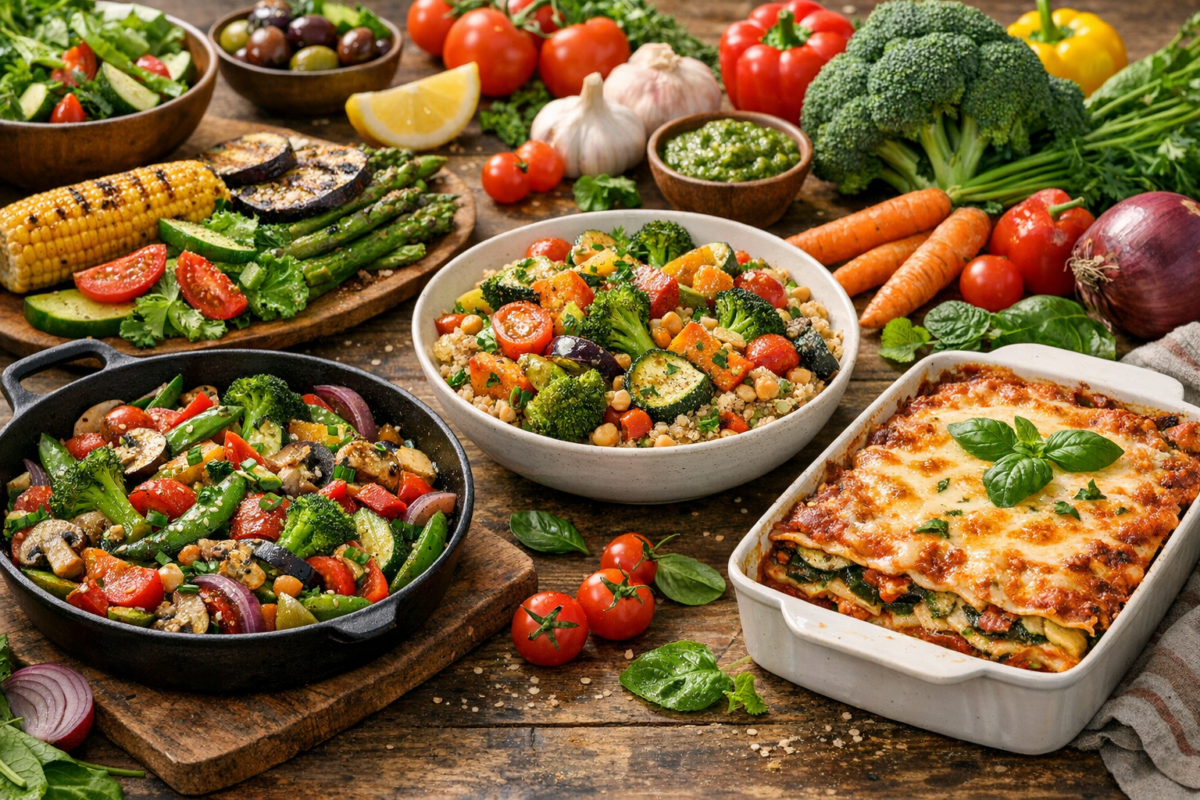
Let’s be honest: getting enough vegetables at dinner can feel like a chore. The thought of another steamed broccoli side can be enough to make anyone’s enthusiasm wilt. But what if dinner could be the most delicious, satisfying, and vegetable-packed meal of your day? It’s not only possible; it can become something you genuinely look forward to.
Moving beyond the side-dish mentality is key. Instead of treating vegetables as an afterthought, we can design meals where they are the vibrant, flavorful stars of the show. This approach transforms dinner from a nutritional checkbox into a celebration of color, texture, and taste. The benefits are profound: increased fiber for digestion, a broader spectrum of vitamins and minerals, and naturally lower-calorie, more satisfying meals that support overall wellness without feeling restrictive.
This guide is your blueprint for making that shift. We’ll explore simple strategies to seamlessly integrate more plants into your evening routine, followed by a collection of dinner ideas that are as practical as they are delicious. These are meals designed for real life—quick to assemble, family-friendly, and perfect for leftovers.
Why Your Dinner Plate Needs a Vegetable Revolution
For many of us, dinner follows a predictable pattern: a large portion of protein (chicken, fish, beef), a starchy carbohydrate (pasta, rice, potatoes), and a modest serving of vegetables occupying the remaining corner of the plate. This “meat-and-two-veg” model, while familiar, often relegates vegetables to a minor role. Flipping this script is the single most effective dietary upgrade you can make.
Scientifically, a vegetable-centric dinner plate delivers unmatched benefits. Vegetables are dense in nutrients but low in calories, meaning you can eat a larger volume of food while managing energy intake. The high fiber content promotes satiety, helping you feel full and satisfied long after the meal is over, which can naturally curb late-night snacking. Furthermore, the diverse phytonutrients and antioxidants found in differently colored vegetables act as the body’s maintenance crew, supporting cellular health and reducing inflammation.
From a practical standpoint, centering dinner around vegetables is also economical and flexible. Seasonal vegetables are often cheaper than prime cuts of meat, and plant-based meals can easily scale up for guests or down for solo dining. It’s a sustainable choice for both your wallet and the planet, with a significantly lower environmental footprint than meat-heavy diets.
Mastering the Method: Strategies for Vegetable-Rich Success
Success lies in strategy, not just willpower. Implementing a few simple techniques can make building vegetable-rich dinners feel effortless.
Embrace the “Veggie Half-Plate” Rule: Before you even start cooking, visualize your plate. Aim for at least half of it to be covered with non-starchy vegetables (think leafy greens, peppers, broccoli, carrots, zucchini, mushrooms). One quarter can be a lean protein, and the remaining quarter a whole-grain or starchy vegetable like sweet potato. This simple visual guide eliminates guesswork.
Prep Ahead for Weeknight Wins: The biggest hurdle on a busy Tuesday is time. Dedicate 30-60 minutes on the weekend to wash, chop, and store vegetables. Pre-cut bell pepper strips, diced onions, chopped carrots, and washed greens can be stored in airtight containers. Roast a large tray of mixed vegetables (cauliflower, broccoli, sweet potato) to have ready for quick grain bowls, salads, or pasta additions.
Learn to Love Your Sheet Pan and Skillet: These are the workhorses of vegetable-rich cooking. Sheet pan dinners allow you to roast protein and vegetables together with minimal cleanup. A large skillet or wok is perfect for quick stir-fries and sautés where vegetables stay crisp-tender.
Boost Flavor, Not Just Quantity: Vegetables become irresistible when seasoned well. Move beyond just salt and pepper. Utilize garlic, fresh herbs (basil, cilantro, dill), spices (cumin, smoked paprika, curry powder), citrus zest and juice, and flavorful fats like a good olive oil, tahini, or a sprinkle of toasted nuts or seeds. A quick drizzle of balsamic glaze or a dollop of pesto can transform simple roasted veggies.
Hearty Bowl Creations: The Ultimate Customizable Dinner
Bowls are the perfect vehicle for a vegetable-forward meal. They’re visually appealing, endlessly customizable, and combine different textures and flavors in one dish. The formula is simple: start with a base, add roasted or raw vegetables, include a protein, and finish with a delicious sauce.
The Build-Your-Own Formula:
1. Base (1/4 of bowl): Quinoa, brown rice, farro, whole-wheat couscous, or mixed greens.
2. Vegetables (1/2 of bowl): A mix of 2-3 types. Try roasted sweet potato and broccoli, sautéed kale and mushrooms, raw shredded carrots and cucumber.
3. Protein (1/4 of bowl): Baked tofu, chickpeas, lentils, black beans, grilled chicken, or flaked salmon.
4. Sauce & Toppings: Tahini-lemon sauce, peanut sauce, yogurt-herb drizzle, avocado cilantro dressing. Top with sesame seeds, chopped nuts, or fresh herbs.
Example: Mediterranean Power Bowl
Base: Lemon-herb quinoa.
Vegetables: Roasted cherry tomatoes and zucchini, a handful of baby spinach.
Protein: A scoop of lemon-herb chickpeas.
Toppings: Crumbled feta, kalamata olives, a big spoonful of tzatziki, and a sprinkle of dill.
One-Pan Wonders: Minimal Effort, Maximum Flavor
When cleanup is a major deterrent, one-pan meals are the answer. The oven or a single skillet does all the work, melding flavors together beautifully.
Sheet Pan Lemon Herb Chicken & Rainbow Vegetables: On a large sheet pan, toss bite-sized pieces of chicken breast with olive oil, minced garlic, lemon zest, dried oregano, salt, and pepper. In a separate bowl, toss chunks of bell peppers (red, yellow), red onion, zucchini, and cherry tomatoes with olive oil, salt, and pepper. Spread the chicken on one half of the pan and the vegetables on the other. Roast at 425°F (220°C) for 20-25 minutes, until chicken is cooked through and vegetables are tender and slightly charred. Serve with a squeeze of fresh lemon juice.
Skillet Sweet Potato & Black Bean Hash: In a large oven-safe skillet, sauté diced sweet potato in olive oil over medium heat until beginning to soften. Add a diced onion and bell pepper, cooking until fragrant. Stir in a can of drained black beans, cumin, chili powder, and a pinch of salt. Create small wells in the hash and crack eggs into them. Transfer the skillet to a 400°F (200°C) oven and bake for 8-10 minutes, until egg whites are set. Top with sliced avocado, cilantro, and hot sauce.
Pasta & Noodles Reimagined: Vegetable-Forward Comfort Food
Pasta night doesn’t have to be a carb-heavy affair. By using vegetables in three ways—as part of the sauce, as substantial mix-ins, and even as the “noodle” itself—you can create incredibly satisfying meals.
Creamy Roasted Red Pepper & Cauliflower Pasta: Roast red bell peppers and cauliflower florets with olive oil until very soft and caramelized. Blend them with a clove of garlic, a splash of vegetable broth, a tablespoon of nutritional yeast (or parmesan), and a handful of fresh basil until silky smooth. Toss the sauce with whole-wheat pasta and reserve some pasta water to thin if needed. The sauce is luxuriously creamy without any heavy cream.
Zucchini Noodle (Zoodle) Pad Thai: Use a spiralizer or julienne peeler to create zucchini noodles. For the sauce, whisk together lime juice, tamari or soy sauce, a touch of maple syrup, and a spoonful of peanut butter or tahini. In a large skillet or wok, quickly sauté the zoodles with shredded carrots, bean sprouts, and cubed tofu or shrimp for just 2-3 minutes—you want them tender-crisp. Toss with the sauce and garnish with crushed peanuts, cilantro, and lime wedges.
Global Inspirations: Borrowing from World Cuisines
Looking globally is a fantastic way to find inherently vegetable-rich culinary traditions. These cuisines have mastered the art of making plants the main event.
Simple Vegetable Curry: Sauté onions, ginger, and garlic in a pot. Add your favorite curry powder or paste and cook for a minute until fragrant. Add a can of coconut milk, a cup of vegetable broth, and a medley of chopped vegetables: cauliflower, potatoes, carrots, and green beans are a classic combination. Simmer until the vegetables are tender. Stir in a handful of spinach or peas at the end. Serve over brown rice with a squeeze of lime.
Loaded Veggie Fajitas: Slice bell peppers and onions into strips. Marinate portobello mushroom caps or strips of tofu in lime juice, cumin, and chili powder. Sauté the peppers and onions in a hot skillet until soft and charred at the edges. In a separate skillet, cook the mushrooms or tofu. Serve on warm whole-wheat tortillas with all the fixings: mashed avocado, salsa, shredded cabbage, and a dollop of Greek yogurt or cashew cream.
Soup & Stew Season: Comfort in a Bowl
When the weather turns cool, soups and stews are the perfect way to pack in vegetables. They’re make-ahead friendly, freezer-friendly, and deeply nourishing.
Hearty Lentil & Vegetable Stew: In a large pot, sauté diced carrots, celery, and onion (the “mirepoix”) until softened. Add minced garlic, dried thyme, and a bay leaf. Stir in a cup of brown or green lentils, a can of diced tomatoes, and 4-5 cups of vegetable broth. Bring to a boil, then reduce to a simmer for 25 minutes. Add chopped kale or Swiss chard and continue to simmer for another 10-15 minutes until the lentils are tender and the greens are wilted. Season with salt, pepper, and a splash of red wine vinegar to brighten the flavor.
Creamy Broccoli & White Bean Soup: Sauté a chopped onion and a few cloves of garlic. Add a head of chopped broccoli (florets and stems) and a can of drained white beans. Cover with vegetable broth and simmer until the broccoli is very tender. Carefully blend the soup until smooth using an immersion or stand blender. Stir in a splash of unsweetened almond milk or a spoonful of plain yogurt for extra creaminess. Finish with lemon zest, black pepper, and a drizzle of good olive oil.
Salads That Satisfy: Beyond Side-Dish Territory
A dinner salad must be substantial. This means incorporating cooked elements, hearty proteins, and healthy fats to make it a complete meal.
Warm Roasted Vegetable & Farro Salad: Toss cubed butternut squash, red onion, and Brussels sprouts with olive oil and roast until caramelized. Cook farro according to package directions. Let both cool slightly. Combine the grains and vegetables in a large bowl. Add a handful of arugula, crumbled goat cheese or feta, and toasted pecans. Dress with a simple vinaigrette made with apple cider vinegar, Dijon mustard, and olive oil.
Mexican Street Corn Salad with Black Beans: Grill or roast corn kernels until slightly charred. In a bowl, combine the corn with a can of rinsed black beans, diced avocado, cherry tomatoes, finely chopped red onion, and plenty of cilantro. For the dressing, mix lime juice, a little mayo or Greek yogurt, chili powder, and smoked paprika. Toss everything together. This salad is fantastic on its own, served in lettuce cups, or as a topping for baked potatoes.
The Art of the Flexible Frittata
A frittata is the ultimate clean-out-the-fridge, vegetable-packed dinner. It’s elegant enough for company, quick enough for a weeknight, and delicious hot or cold.
Basic Method: Preheat your broiler. In an oven-safe skillet (like cast iron), sauté any chopped vegetables you have on hand—onions, spinach, mushrooms, peppers, asparagus—until softened. In a bowl, whisk 6-8 eggs with a splash of milk or water, salt, and pepper. Pour the eggs over the vegetables in the skillet. Cook over medium-low heat, without stirring, until the edges are set but the center is still slightly wet. Sprinkle with cheese if desired. Transfer the skillet to the broiler for 2-4 minutes, just until the top is golden and puffed. Let cool for a few minutes before slicing.
Flavor Combination Idea: Sauté leeks and zucchini until soft, add a handful of fresh dill to the egg mixture, and top with crumbled feta before broiling.
Mastering Vegetable Cooking Techniques: Beyond Roasting and Steaming
While roasting and steaming are reliable staples, unlocking the full potential of vegetables requires a broader culinary toolkit. Each cooking method uniquely transforms texture, concentrates flavor, and can make even humble vegetables feel special. Understanding these techniques gives you the confidence to handle any vegetable that comes your way.
Dry-Searing for Concentrated Flavor: This technique, often used for mushrooms and hearty greens, involves cooking vegetables in a hot pan with little to no oil initially. The goal is to draw out moisture and create deep browning. For mushrooms, slice them and place in a dry, hot skillet. They’ll release liquid—let it evaporate completely, then add a touch of oil or butter. The result is meaty, caramelized pieces with none of the sogginess. Apply this to chopped Brussels sprouts or cabbage wedges for a nutty, concentrated taste that stands up to bold sauces.
Braising and Glazing for Tender-Sweet Results: Perfect for root vegetables like carrots, parsnips, and turnips, braising involves cooking them slowly in a small amount of flavorful liquid. Start by sautéing diced vegetables briefly to develop color. Add just enough broth, juice, or even water to come halfway up the vegetables. Cover and simmer until tender. For a glaze, remove the lid near the end and let the liquid reduce to a shiny, syrupy coating. A splash of orange juice, a spoonful of maple syrup, or a dash of balsamic vinegar in the braising liquid creates a restaurant-worthy side that can also be folded into grain bowls or served over polenta.
Grilling and Charring for Smoky Depth: The high, direct heat of a grill (or a grill pan indoors) imparts a smoky char that fundamentally changes a vegetable’s character. Sturdy vegetables are ideal: thick slices of zucchini, eggplant, romaine hearts, whole scallions, or wedges of radicchio. Brush lightly with oil and season well. The key is to get good grill marks without overcooking the interior to mush. Grilled vegetables are fantastic in salads, on flatbreads, or pureed into smoky spreads. Don’t discard those charred bits on the outside of bell peppers or onions—they’re packed with flavor.
Quick-Pickling for Brightness and Crunch: Not strictly a cooking method, but a transformative preparation that adds a vibrant, acidic counterpoint to rich dishes. Combine equal parts vinegar and water with a pinch of salt and sugar (and optional spices like peppercorns or chili flakes). Bring to a simmer, then pour over thinly sliced vegetables—red onions, radishes, carrots, or cucumbers—in a heatproof jar. In 30 minutes, they’re ready. Quick-pickled vegetables cut through the richness of a bean stew, top a grain bowl with zing, or turn a simple sandwich into something special.
The Art of Building Flavor Layers in Vegetable-Centric Dishes
When meat isn’t the central flavor anchor, vegetables must carry the dish through depth and complexity. This doesn’t mean simply adding more salt; it’s about building successive layers of taste that engage the palate from first bite to last. Mastering this makes plant-based cooking feel robust and deeply satisfying.
Starting with a Flavor Foundation (The Sofrito, Mirepoix, or Holy Trinity): Almost every global cuisine begins certain dishes with a slow-cooked aromatic base. In French cooking, it’s mirepoix (onions, carrots, celery). In Italian, it’s soffritto (onions, carrots, celery). In Cajun, the holy trinity (onions, bell peppers, celery). In Spanish, a sofrito of tomatoes, onions, and garlic. The principle is universal: finely chop these vegetables and cook them slowly in oil or butter until they soften, sweeten, and their flavors meld. This creates an invisible but essential flavor bed for soups, stews, sauces, and grain dishes. Don’t rush this step—15-20 minutes of gentle cooking is an investment that pays off tenfold in the final dish.
Harnessing Umami Powerhouses: Umami, the savory “fifth taste,” is crucial for creating satisfying, mouthwatering dishes. Vegetables have their own umami-rich champions. Incorporate these strategically:
• Mushrooms: Any variety, but especially shiitake, porcini, and cremini. Sauté them well or use dried mushrooms, soaking the liquid to add to broths.
• Tomatoes: Sun-dried tomatoes, tomato paste, and good-quality canned tomatoes. Cook tomato paste in the pan for a minute until it darkens slightly—this “toasting” deepens its flavor dramatically.
• Fermented Products: Miso paste (whisked into dressings or stews), soy sauce, or tamari.
• Toasted Nuts and Seeds: Blending toasted almonds, walnuts, or sesame seeds into sauces adds body and a round, savory note.
Finishing with Freshness and Texture: The final layer is what makes the dish sing. Add these elements just before serving:
• Fresh Herbs: A handful of torn basil, chopped cilantro, dill, or parsley.
• Acidity: A squeeze of lemon or lime juice, a drizzle of vinegar, or a sprinkle of sumac.
• Crunch: Toasted breadcrumbs, crushed nuts or seeds, or crispy roasted chickpeas.
• Richness: A dollop of pesto, a swirl of good olive oil, or a sprinkle of a flavorful cheese like feta or aged Parmesan.
Practical Application: A “Layer-Cake” Lentil Ragu: Start by slowly cooking a soffritto (onion, carrot, celery) until jammy. Add minced garlic and a tablespoon of tomato paste, cooking until brick-red. Stir in dried lentils and a splash of red wine, letting it reduce. Add crushed tomatoes and a piece of kombu (a sea vegetable that boosts umami). Simmer until lentils are tender. Finish with a splash of balsamic vinegar, fresh rosemary, and a grind of black pepper. Serve over polenta, finishing each bowl with a drizzle of garlic-infused oil. Every spoonful has depth.
Transforming Leftovers into New Vegetable-Forward Meals
Leftovers are not a compromise; they’re a secret weapon for fast, flavorful, and waste-free dinners. With a little creativity, last night’s roasted vegetables or grain-based dish can become the star of an entirely new meal. This strategy saves time, reduces food waste, and keeps your dinner rotation feeling fresh.
The Strategic Overcook: When preparing vegetables, intentionally make extra with repurposing in mind. Roast a double batch of cauliflower, sweet potatoes, and peppers. Cook an extra cup of quinoa or farro. These components become your “meal starters” for the next 2-3 days.
Repurposing Roadmap:
1. Roasted Vegetables →
• Hearty Frittata or Strata: Chop and fold into beaten eggs with cheese for a quick bake.
• Blended Soups: Puree with broth, a can of white beans, and a touch of cream or coconut milk.
• Grain Bowl Toppers: Reheat and serve over greens with a different protein and sauce than the original meal.
• Quesadilla or Taco Filling: Mix with black beans, cheese, and spices.
2. Cooked Grains (quinoa, rice, farro) →
• Fried “Rice”: Sauté with diced veggies, egg, and tamari.
• Veggie Burgers or Patties: Mash with beans, grated vegetables, an egg or flax “egg,” and breadcrumbs, then pan-fry.
• Warm Grain Salad: Toss with a new vinaigrette, fresh herbs, nuts, and seasonal raw vegetables.
• Stuffed Vegetables: Use as a filling for bell peppers, tomatoes, or portobello mushrooms.
3. Bean or Lentil Dishes →
• Dips or Spreads: Blend with lemon, tahini, and spices for a bean-based dip.
• Pasta Sauce: Thin with a little pasta water and toss with whole-wheat noodles.
• Enchilada Filling: Combine with sautéed greens and roll into tortillas.
The “Everything” Fritter Technique: This is the ultimate clean-out-the-container solution. Take about 2 cups of mixed leftover cooked vegetables and grains. Place in a bowl and mash roughly with a fork. Add one beaten egg (or a flax egg), ¼ cup flour or breadcrumbs, and seasonings. Form into small patties and pan-fry in a little oil until golden and crisp on both sides. Serve with a quick yogurt sauce. The combinations are endless: broccoli and quinoa, sweet potato and black bean, roasted beet and farro.
Seasonal Spotlight: Building Dinners Around the Harvest
Eating with the seasons is more than a trend; it’s a practical guide to peak flavor, nutrition, and affordability. When you center your dinner plans on what’s currently abundant, vegetables taste better, cost less, and inspire your cooking naturally. Here’s a quarterly guide to vegetable-rich dinner strategies.
Spring (Asparagus, Peas, Radishes, Artichokes, Leafy Greens): The flavors are bright, tender, and green. Cooking should be minimal to preserve delicacy.
• Strategy: Emphasize quick sautés, blanching, and raw preparations. Incorporate fresh herbs like mint, chives, and parsley liberally.
• Dinner Idea: Spring Vegetable Risotto. Use asparagus tips and fresh peas. Stir in lemon zest and mascarpone at the end. Serve with a side salad of shaved radishes and sugar snap peas in a lemony vinaigrette.
• Dinner Idea: Chilled Pea and Mint Soup. Sauté leeks, add vegetable broth and peas, simmer briefly, then puree with fresh mint. Swirl with Greek yogurt. The soup can be served warm or cold, making it perfect for unpredictable spring evenings.
Summer (Tomatoes, Zucchini, Eggplant, Corn, Bell Peppers, Green Beans): This is the season of abundance, color, and sun-ripened sweetness.
• Strategy: Embrace grilling, no-cook sauces, and big, composed salads. Keep cooking times short.
• Dinner Idea: Grilled Vegetable and White Bean Panzanella. Grill slices of zucchini, eggplant, and red onion. Toss with canned white beans, chunks of crusty bread, ripe tomatoes, basil, and a garlicky vinaigrette. Let it sit for 20 minutes so the bread soaks up the juices.
• Dinner Idea: Stuffed Summer Squash. Hollow out zucchini or pattypan squash. Fill with a mixture of cooked quinoa, corn, black beans, diced tomatoes, and cheese. Bake until the squash is tender and the filling is hot.
Autumn (Squash, Root Vegetables, Mushrooms, Kale, Cauliflower): Flavors deepen, turning earthy, sweet, and nutty. Heartier cooking methods come to the fore.
• Strategy: Focus on roasting, braising, and creamy soups. Warm spices like cinnamon, nutmeg, and smoked paprika are complementary.
• Dinner Idea: Mushroom and Lentil Shepherd’s Pie with Cauliflower Mash. A rich stew of lentils and mushrooms topped with a fluffy puree of roasted cauliflower and potatoes. It’s the epitome of cozy, vegetable-forward comfort food.
• Dinner Idea: Roasted Delicata Squash Rings with Spiced Chickpeas. No need to peel delicata squash. Slice into rings, roast until caramelized, and serve over kale massaged with lemon, topped with crispy, spice-roasted chickpeas and a tahini drizzle.
Winter (Potatoes, Brussels Sprouts, Cabbage, Leeks, Parsnips, Citrus): It’s the season for storage vegetables and bright citrus to cut through the richness.
• Strategy: Long, slow cooking, hearty stews, and fermentations like sauerkraut. Use citrus zest and juice generously to add vibrancy.
• Dinner Idea: Smoky Black Bean and Sweet Potato Chili. A thick, warming chili loaded with vegetables. Top with avocado, cilantro, and a squeeze of lime.
• Dinner Idea: Crispy Brussels Sprouts and Potato Hash. Shred Brussels sprouts and potatoes. Pan-fry in a cast-iron skillet until crispy. Create wells for eggs and bake until set. Serve with a dollop of lemony crème fraîche.
Addressing Common Cooking Challenges and Edge Cases
Even with great recipes, real-life cooking presents hurdles. Anticipating and solving these problems ensures your vegetable-rich dinners are successful every time, not just when conditions are perfect.
Challenge 1: “My roasted vegetables are soggy, not crispy.”
Solution: Crowding is the enemy. Vegetables steam instead of roast when placed too close together. Use two sheet pans if needed. Ensure pieces are dry before tossing in oil. Preheat your pan in the oven for extra crispness. Finally, don’t stir too often—let them sit and develop a crust. For extra-crispy potatoes or cauliflower, toss with a teaspoon of cornstarch along with the oil.
Challenge 2: “My leafy greens (like kale or Swiss chard) are tough and bitter.”
Solution: For kale destined for salads, remove the tough stems and “massage” the leaves with a little oil and salt for 2-3 minutes. This breaks down fibers, making them tender and sweeter. For cooking, understand that stems and leaves have different cook times. Slice stems thinly and start them in the pan a few minutes before adding the chopped leaves. A splash of acid (lemon juice, vinegar) at the end of cooking also helps balance bitterness.
Challenge 3: “My vegetable soup/stew is bland.”
Solution: Blandness often comes from underseasoning at the beginning and a lack of acidity at the end. Don’t be shy with salt early in the process—it draws out flavors. Sauté your aromatic base (onions, etc.) until deeply golden. Use a flavorful broth. Just before serving, taste and adjust. Almost always, a soup needs another pinch of salt and a splash of something acidic: lemon juice, vinegar, or even a dash of dry sherry. This “brightens” the entire pot.
Challenge 4: “My veggie burgers or fritters fall apart in the pan.”
Solution: The binder is key. If using beans, mash most but leave some chunks for texture. Eggs are the most reliable binder; for vegan versions, a “flax egg” (1 tbsp ground flax mixed with 3 tbsp water, left to gel) works well. Add enough dry ingredients like breadcrumbs, oat flour, or cornmeal to absorb excess moisture. Chill the mixture for 30 minutes before forming patties—this helps them hold together. Cook on medium heat until a good crust forms before flipping gently.
Challenge 5: “My dinner needs to cater to mixed dietary preferences (vegan, gluten-free, etc.).”
Solution: Build meals in a modular, “deconstructed” style. For example, make a base of roasted vegetables and a grain. Offer a variety of toppings and sauces on the side: a vegan tahini sauce, a yogurt-dill sauce, grilled chicken strips, baked tofu, toasted nuts, and crumbled cheese. This allows everyone to customize their bowl. Always check labels on pre-made sauces and broths for hidden gluten or dairy.
Elevating the Everyday: Simple Techniques for Restaurant-Quality Results at Home
You don’t need fancy equipment or obscure ingredients to make vegetable dinners feel exceptional. A few professional chef-inspired techniques, applied with intention, can elevate simple ingredients into memorable meals. These are small touches with a big impact.
1. The Power of Compound Butters and Herb Oils: These are flavor bombs waiting in your fridge or freezer. For compound butter, soften unsalted butter and mix in finely chopped herbs (like parsley, chives, tarragon), lemon zest, and a pinch of salt. Roll into a log in parchment paper and chill. Slice a coin to melt over steamed green beans, roasted carrots, or a veggie burger. For herb oil, blend a cup of fresh herbs (basil, cilantro) with ½ cup neutral oil until smooth. Strain for a clear oil, or keep it rustic. Drizzle over soups, grain bowls, or grilled vegetables just before serving.
2. Creating Textural Contrast: A dish that is all one texture (e.g., all soft) is less interesting. Intentionally combine contrasting textures in every meal. Top a creamy soup with spicy roasted chickpeas or garlicky croutons. Add raw, thinly sliced radishes or cucumber to a warm grain salad. Sprinkle toasted seeds or chopped nuts over a silky puree. The crunch keeps the palate engaged and makes the meal more satisfying.
3. Plating with Purpose: We eat with our eyes first. Simple plating tricks make a home-cooked meal feel special. Use a wide, shallow bowl instead of a deep one to show off colorful ingredients. Wipe the rim of the plate or bowl clean before serving. Group components intentionally rather than mixing them all together—place a scoop of quinoa, a neat pile of roasted broccoli, and a few slices of avocado side-by-side. Add a final “garnish” that is also a flavor component: a sprig of dill, a sprinkle of paprika, or a twist of citrus zest.
4. The “Two-Step” Cooking Method for Perfect Vegetables: For vegetables that benefit from both tenderness and caramelization (like Brussels sprouts, cauliflower, carrots), use a combination method. First, parcook them: steam, boil, or microwave until just shy of tender. Drain and pat very dry. Then, finish them in a hot skillet with oil or butter to get a beautiful, crispy sear. This guarantees perfect doneness and superior browning without the risk of burning.
5. Mastering the Simple Pan Sauce: After sautéing or roasting vegetables, don’t wash that pan! The browned bits (fond) left behind are pure flavor. Remove the cooked vegetables. Add a splash of wine, broth, or even water to the hot pan. Use a wooden spoon to scrape up all the bits. Let it reduce by half, then swirl in a pat of butter, a squeeze of lemon, or a spoonful of cream. Pour this simple, intensely flavored sauce over your vegetables. It’s a 2-minute step that ties the whole dish together.
Adopting just one or two of these techniques can transform your relationship with weeknight vegetables. It shifts the mindset from “I have to eat these” to “I get to enjoy this.” When vegetables are treated with this level of care and creativity, they effortlessly claim their rightful place at the center of the dinner plate.
Frequently Asked Questions
Q: I’m not a great cook. Where should I start?
A: Start with the simplest method: roasting. Chop almost any vegetable (broccoli, cauliflower, carrots, Brussels sprouts), toss with olive oil, salt, and pepper, and roast at 400°F (200°C) for 20-30 minutes. The high heat brings out natural sweetness. Pair these with a pre-cooked protein like rotisserie chicken or canned beans and a whole grain for an instant, foolproof meal.
Q: How can I get my family, especially kids, to eat more vegetables at dinner?
A: Involvement is key. Let kids help wash veggies or choose which ones go into a stir-fry or on a pizza. Often, familiar formats help—blend vegetables into sauces (like the roasted red pepper sauce), make “fun” shapes with spiralizers, or serve veggies with a favorite dip. Persistence and repeated exposure without pressure are also crucial; tastes change over time.
Q: Are frozen vegetables a good option for these dinners?
A: Absolutely. Frozen vegetables are often flash-frozen at peak ripeness, locking in nutrients. They are perfect for stir-fries, soups, stews, and quick side dishes. Having a variety of frozen peas, corn, spinach, and mixed vegetable blends in your freezer is a fantastic strategy for ensuring you always have vegetables on hand.
Q: I get bored with vegetables easily. How can I keep it interesting?
A: Challenge yourself to try one new vegetable each week. Explore your local farmer’s market for seasonal finds. Vary your cooking methods drastically—try roasting, steaming, grilling, sautéing, and eating raw. A completely different texture and flavor profile emerges from each method. Finally, play with global spices and sauces to keep your palate engaged.
Q: How do I ensure I’m getting enough protein in a vegetable-rich dinner?
A> It’s easier than you think. Focus on incorporating plant-based proteins that are naturally paired with vegetables: lentils, chickpeas, black beans, tofu, tempeh, and edamame. If you eat animal proteins, use them as an accent rather than the centerpiece—think a few slices of grilled chicken on a massive salad, or a sprinkle of feta cheese in a grain bowl. Eggs, Greek yogurt, and cottage cheese are also excellent protein-rich additions.
Transforming your dinners into vegetable-rich celebrations is a journey, not a destination. Start with one new recipe or strategy this week. Notice how you feel—more energized, more satisfied, perhaps even more creative in the kitchen. Let the vibrant colors and diverse flavors remind you that eating well is one of life’s simplest and most profound pleasures.
Related posts:
 Keto Mexican Night: Cauliflower Enchiladas That Actually Taste Amazing
 Quick Healthy Dinners for When You Have Zero Energy to Cook
 Delicious White Bean Sandwich Recipe
 Make-Ahead Vegan Savory Breakfast Jars
 Candice Kumai’s Healthy Turmeric Fried Rice Recipe
 Delicious Ground Chicken Recipes
 The Game-Changing 50 Percent Rule That Makes Eating Vegetables Effortless
 Beyond Breakfast: The Plant-Based Sausage That’s Changing the Morning Game