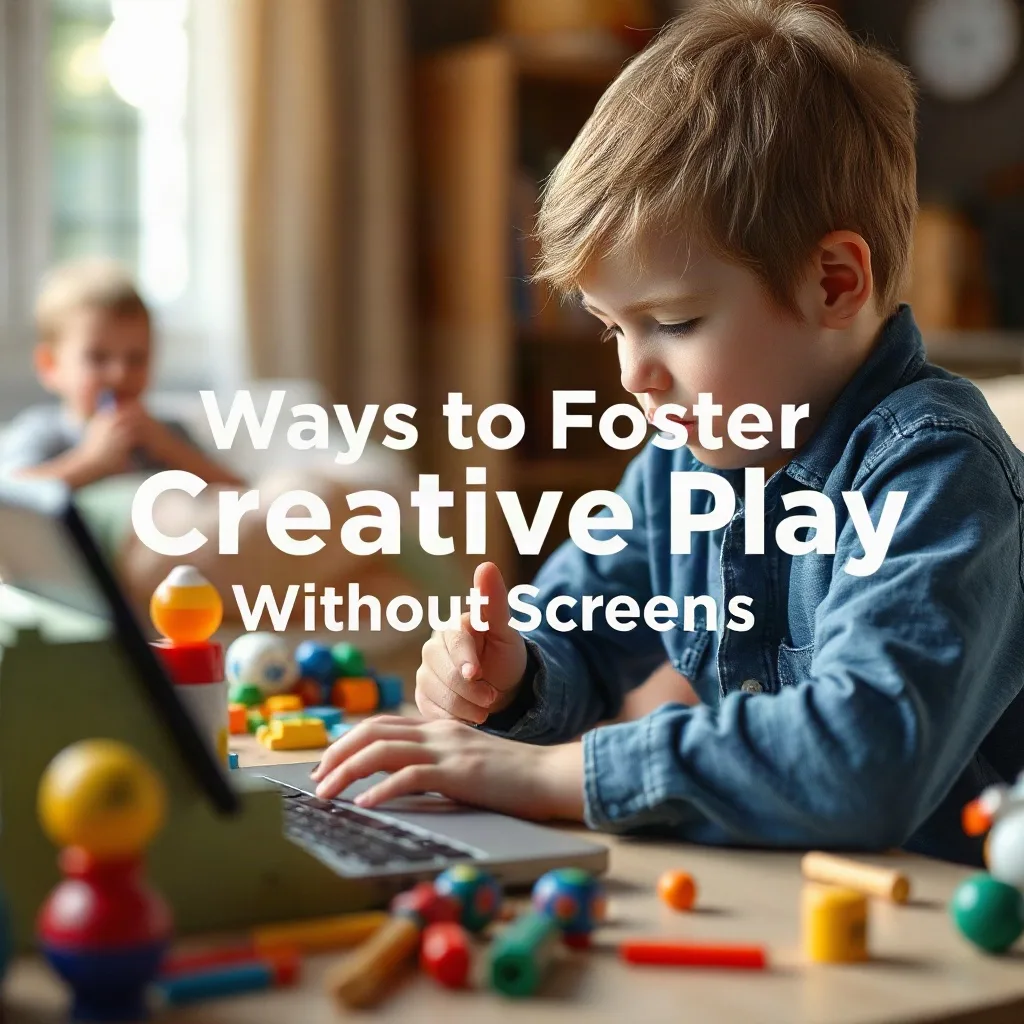
Creative play is the engine that drives a child’s cognitive, emotional, and social development. When families create dedicated play zones, choose versatile materials, and model curiosity, children naturally gravitate toward imaginative activities that foster growth and joy. The following eight sections outline concrete ideas, from arranging a screen‑free corner to turning everyday objects into imaginative props, ensuring that every day offers fresh opportunities for creative exploration. Each recommendation is grounded in developmental research and designed for easy implementation in homes, schools, or community settings, making creative play accessible to every family. By following these steps, you’ll see children become more confident, expressive, and eager to learn through play that feels like fun, not a chore, and enjoy the process together.
Understanding Creative Play
Creative play is any activity in which a child uses imagination to transform ordinary objects, ideas, or settings into something new and meaningful. It is unstructured, child‑directed, and often involves role‑taking, storytelling, building, or improvisation with simple materials such as blocks, fabric, or natural items. Unlike organized games that follow preset rules, creative play allows children to set their own goals, make decisions, and learn from trial and error, which strengthens executive functions such as planning, flexibility, and self‑control. Research in developmental psychology shows that regular engagement in creative play enhances language development, divergent thinking, and emotional regulation, all of which are essential foundations for lifelong learning. When screens dominate free time, children miss the tactile and sensory experiences that spark imagination, limiting opportunities to practice narrative construction, problem solving, and collaborative interaction. Recognizing the intrinsic value of creative play helps caregivers prioritize open‑ended activities that nurture curiosity and confidence rather than passive consumption. For example, a simple cardboard box can become a spaceship, a castle, or a secret laboratory, depending on the child’s narrative, illustrating how a single object can support multiple layers of imagination. By understanding these principles, parents and educators can create environments that intentionally invite creative exploration.
Setting Up a Screen‑Free Play Zone
Designate a specific area in your home where screens are not allowed, such as a corner of the living room, a spare bedroom, or a section of the backyard. This zone should be easily accessible to children, safe from hazards, and stocked with open‑ended materials that invite imagination. Low shelves or open bins work well for storing items like building blocks, fabric scraps, art supplies, and natural objects such as pine cones or smooth stones. Adding a soft rug, floor cushions, or a small tent creates a cozy atmosphere that signals play rather than work. Keep the space organized enough that children can locate tools quickly, but avoid clutter that may overwhelm or discourage use. Rotate the materials weekly to maintain novelty and keep the child engaged. Involve the child in the setup process so they feel ownership and are more likely to use the space regularly. A simple checklist — such as a rug, a few blocks, a set of crayons, and a basket of assorted items — can help parents quickly verify that the zone is ready for use each day. By clearly defining this area and populating it with versatile resources, you give children a reliable invitation to engage in creative exploration without the distraction of digital devices.
Using Everyday Materials for Imaginative Play
Everyday household items become the raw material for limitless imaginative play when children are encouraged to see beyond their conventional purpose. A cardboard box can transform into a spaceship, a castle, or a secret laboratory, depending on the child’s narrative, illustrating how a single object can support multiple layers of imagination. Fabric scraps serve as capes for heroic characters, river currents in a pretend landscape, or blankets for a cozy indoor fort. Recyclable items such as bottle caps, cardboard tubes, and cereal boxes invite construction projects like towers, vehicles, or miniature worlds. Provide children with simple prompts — such as “What can this tube become?” or “Create a character using only these items” — to spark curiosity without dictating outcomes. Encourage children to sort, stack, and combine materials in unexpected ways; for instance, pairing a tube with a piece of fabric can create a makeshift telescope, while stacking boxes can form a multi‑level fort. Provide a simple “materials menu” on a low table so children can choose what to use, fostering decision‑making and autonomy. The key is to supply open‑ended resources and then step back, allowing the child’s creativity to shape the play.
Outdoor Exploration and Nature‑Based Play
The natural world offers an abundant playground for creative play, eliminating the need for purchased toys. A backyard, park, or even a sidewalk can become a laboratory for discovery, where children collect leaves, stones, and twigs to build miniature habitats, create nature collages, or design imaginary creatures. Organize a nature scavenger hunt with a list of items such as a feather, a smooth rock, or a pine needle, encouraging observation and classification skills. Provide simple tools — magnifying glasses, small shovels, buckets, or a field guide — to enhance exploration and documentation. Climbing trees, digging in soil, or watching insects up close engages multiple senses and fuels curiosity. Set aside a regular “nature time” each week, such as a Saturday morning walk, where the focus is on exploring, collecting, and creating. Encourage children to keep a nature journal or draw what they find, reinforcing the connection between observation and imagination. Outdoor play also reduces the temptation to reach for a screen, as the environment itself becomes the source of entertainment and learning.
Role‑Playing and Storytelling Activities
Role‑playing allows children to step into different identities, experiment with social scenarios, and develop empathy by living out various perspectives. Provide dress‑up clothing, masks, or simple props such as cardboard swords, fabric crowns, or homemade costumes that can be mixed and matched. Encourage children to devise their own stories, or offer prompts like “You are a chef in a bustling restaurant – what do you serve?” or “Imagine you are a space explorer discovering a new planet.” Storytelling can be solitary, with a child narrating an adventure to a stuffed animal, or collaborative, such as a group puppet show using socks or paper bags. These activities strengthen language development, sequencing skills, and the ability to think from another’s point of view, all essential components of creative growth. Set up a simple “story corner” with a basket of props and a blanket, and let children choose a theme each week. Document the stories by recording audio or taking photos, then review them together to celebrate imagination and build confidence.
Craft and Construction Projects
Hands‑on building projects nurture spatial awareness, problem‑solving, and fine motor skills while providing a tangible outlet for creativity. Offer a variety of construction sets — wooden blocks, magnetic tiles, LEGO bricks, or interlocking straws — alongside open‑ended supplies such as cardboard, straws, tape, and glue. Challenge children to design a structure that meets a specific criterion, for example, supporting a certain weight, fitting within a limited footprint, or incorporating a particular color scheme. Craft activities like drawing, painting, collage making, or simple sewing also stimulate imagination; provide a “creative prompt” such as “Draw your favorite animal using only three colors” to guide exploration without restricting expression. Clear, open‑ended instructions empower children to experiment, make mistakes, and iterate, fostering resilience and inventive thinking. Create a “build‑it‑challenge” box with weekly prompts, such as “Construct a bridge that can hold a toy car” or “Make a sculpture that represents a feeling.” Rotate the challenges to keep interest high and allow children to experience a range of problem‑solving scenarios.
Games that Spark Imagination
Traditional games can be adapted to become creative workouts for the mind. Games like “Yes, and…” encourage participants to build on each other’s ideas, turning a simple statement into an evolving story. A picture‑based game such as “What’s the story?” prompts children to invent narratives around a single image, fostering divergent thinking. Simple board games that allow rule modification — like altering the movement rules of a classic game or adding new objectives — invite children to invent mechanics and test their ideas. Even a quiet game of “I Spy” can be expanded by asking children to describe objects in fantastical terms, turning a routine observation into a storytelling adventure. Incorporate a “creative rule‑maker” segment where children design their own game rules before playing, then test them with family members, reinforcing flexible thinking and leadership. These playful structures provide a framework that supports imagination while keeping the activity fun and engaging.
Encouraging Independence and Parental Support
While adult guidance is valuable, fostering independence is crucial for creative growth. Allow children to choose their own activities, set the rules, and decide how long they wish to engage, rather than imposing a rigid schedule. Offer gentle prompts — such as “What would happen if you added a new element?” — instead of direct instructions, and celebrate effort and process rather than the final product. Parents can model curiosity by exploring new materials alongside their children, asking open‑ended questions, and sharing in the excitement of discovery. Create a simple “play contract” with the child that outlines the time allocated for screen‑free play each day, and review it together weekly to adjust as needed, ensuring the routine remains enjoyable and sustainable. By balancing support with freedom, you help children develop confidence in their imaginative abilities and a lifelong love of learning through play.
What if my child resists playing without a screen? Offer a gradual transition by designating specific screen‑free periods, such as after dinner or during weekends, and fill those times with appealing activities. Show enthusiasm for the play zone and involve the child in setting it up, which increases ownership and willingness to engage. Start with short, fun sessions and gradually extend the duration as the child becomes comfortable. Celebrate small successes and keep the atmosphere light and inviting.
How many materials do I need to start creative play? A modest collection of versatile items — such as cardboard, fabric scraps, crayons, building blocks, and natural objects — is sufficient. The quality of interaction matters more than quantity; children can generate endless possibilities with a few well‑chosen resources. Begin with a small, curated set and expand as interests emerge, ensuring each item offers open‑ended potential for imagination.
Can creative play be integrated into daily routines? Absolutely. Incorporate short, purposeful play moments into routines like bath time (water play with toys), mealtime (setting a pretend restaurant), or bedtime (storytelling with soft toys). These bite‑sized experiences reinforce creativity without requiring large time blocks and help children transition smoothly between activities while keeping their imagination active throughout the day.
Is it safe to let children play outdoors unsupervised? Safety depends on the environment and the child’s age. For younger children, supervise play in secure areas like a fenced yard. For older children, establish clear boundaries, teach safety rules, and check in regularly. The goal is to provide freedom while ensuring a safe context for exploration, and occasional adult presence helps prevent accidents and offers guidance when needed.
How can I measure the benefits of screen‑free creative play? Observe changes in language richness, problem‑solving confidence, and emotional expression. You might notice longer attention spans, more elaborate stories, or increased willingness to try new tasks. Informal notes or simple checklists can help track progress over weeks, noting improvements in creativity, cooperation, and overall engagement.
Related posts:
 How to Help Children Grieve and Deal with Loss
 Child Therapy: 19 Counseling Techniques & Worksheets for Kids
 Creative Ideas for Eco Friendly Gift Wrapping
 Ways to Support Emotional Growth in Toddlers
 The Science Behind Having a Favorite Child
 How to Reduce Screen Time for Better Focus
 4 parenting tips to get me through the big milestones, from potty training to first days of school
 Practical Strategies for Managing Toddler Screen Time