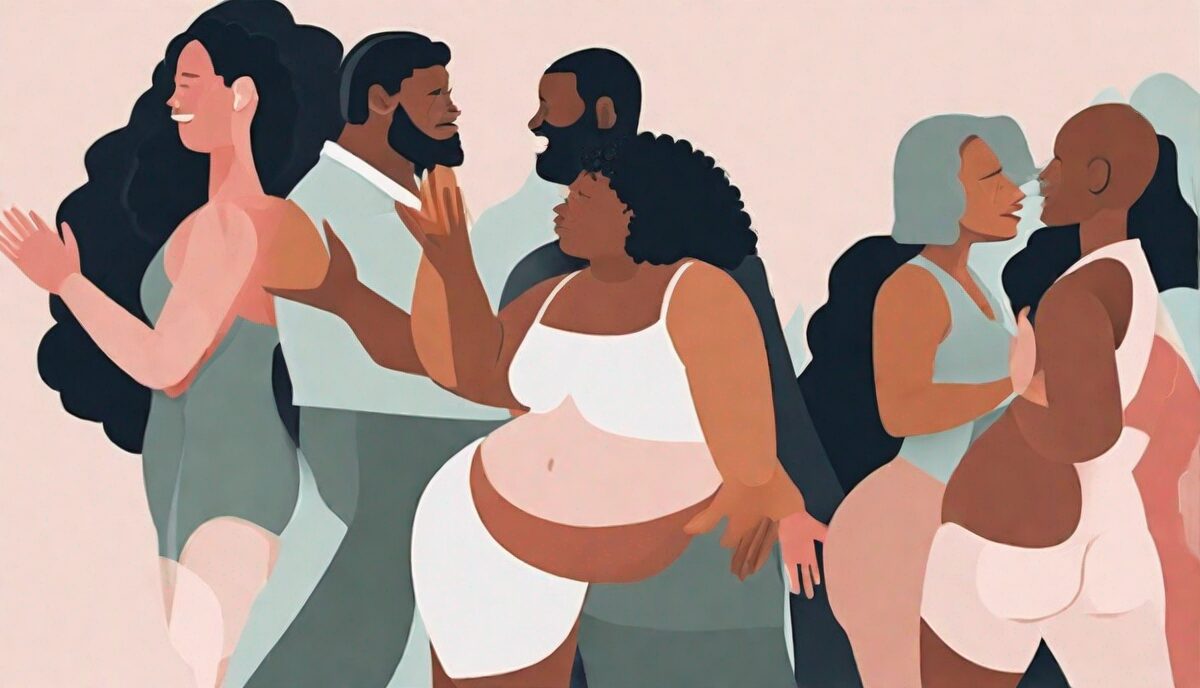
Our society is making strides towards embracing all body types. For too long, unrealistic beauty standards have led many to feel insecure about their appearance. But a body positive movement is shifting culture to be more inclusive and compassionate.
Key takeaways
- Adopt body neutrality by focusing on your body's functional capabilities rather than its physical appearance.
- Curate your social media feeds by unfollowing accounts that trigger insecurity and seeking diverse, unfiltered content.
- Prioritize weight-neutral healthcare by requesting diagnostic testing over weight-focused consultations when visiting medical providers.
- Practice joyful movement by choosing activities that improve mental and physical well-being rather than focusing on burning calories.
- Support inclusive fashion by choosing brands that provide detailed garment measurements instead of relying on inconsistent sizing.
Challenging traditional beauty ideals
Mainstream media has typically promoted thin bodies as the ideal. But all of us have unique body shapes and sizes that are beautiful in their own way. More people are calling out limiting beauty norms and advocating for appreciation of diverse appearances.
Promoting health at every size
Rather than focusing on reaching some arbitrary body type, the emphasis is moving towards adopting healthy lifestyle habits. People of all sizes deserve to feel good and be active. And physical health can be achieved at higher weights when good nutrition and movement principles are followed.
Embracing our authentic selves
Self-love and confidence start from within by honoring our body’s shape. Comparing ourselves to others is demoralizing. But tuning into our own needs and abilities enables us to feel comfortable in our skin. We each have gifts to offer no matter what we look like.
Frequently Asked Questions
What is body positivity?
Body positivity is an inclusive movement promoting the idea that all body shapes and sizes deserve respect and can be considered beautiful. It challenges restrictive mainstream beauty ideals.
How can I practice body acceptance?
Focus less on your appearance and more on appreciating what your body can do. Take care of yourself through balanced nutrition and movement. Surround yourself with media representations of diverse bodies. And limit comparison with unrealistic imagery.
Why does body representation matter?
When we only see one type of body portrayed positively in media, it alienates those with different body types. Representation encourages people to embrace their appearance rather than feel shame. It also combats discrimination.
What are signs of a negative body image?
Signs may include frequently putting yourself down about your looks, intense fear of gaining weight, feeling envy when seeing someone with an idealized body type, and avoidance of activities that expose your body.
How can parents promote body positivity?
Compliment your child’s efforts and character over appearance. Be a role model by avoiding negative body talk about yourself or others. Discuss diversity and representation issues. Push back against weight stigma or mistreatment they observe.
The Architecture of Inclusive Fashion and Apparel
For decades, the fashion industry operated under a narrow “sample size” paradigm that effectively excluded the majority of the population. Today, the shift toward inclusive sizing is no longer just a trend but a structural necessity. Brands are increasingly adopting extended size ranges that don’t merely scale up patterns but recalibrate them for different anatomical needs. This involves adjusting rise heights, sleeve circumferences, and bust proportions to ensure that style is not sacrificed for fit. Practical application for the consumer involves seeking out brands that utilize “fit models” across a spectrum of sizes rather than relying on digital grading software, which often fails to account for the way weight distributes differently on individual frames. When shopping, look for companies that provide detailed garment measurements—such as hip, waist, and thigh circumference—rather than relying solely on arbitrary numerical sizing, which varies wildly between manufacturers.
Navigating the Digital Landscape and Algorithmic Bias
Social media serves as both a catalyst for body liberation and a potential minefield for self-esteem. Algorithms are designed to maximize engagement, often by feeding users content that reinforces their existing insecurities or promotes “aspirational” imagery that is heavily filtered. To curate a digital environment that supports body diversity, users must actively train their feeds. This means unfollowing accounts that trigger feelings of inadequacy and intentionally seeking out creators who showcase unfiltered, diverse bodies in everyday contexts—such as cooking, working, or exercising. Furthermore, it is critical to recognize that a “perfect” feed is often a carefully constructed performance. By diversifying the content you consume, you disrupt the echo chamber that suggests there is only one way to exist in the world, effectively reclaiming your digital space as a tool for empowerment rather than a source of comparison.
The Intersectionality of Body Liberation
The body positivity movement gains its true strength when it acknowledges that discrimination based on physical appearance is often compounded by race, disability, and age. Body diversity is not a monolithic experience; for example, the biases faced by a fat person of color are substantively different and often more severe than those faced by their white counterparts. Promoting true diversity requires us to center the voices of those at the margins—such as people with chronic illnesses, visible disabilities, or those whose gender expression does not conform to binary standards. We must advocate for systemic changes that address these overlapping layers of marginalization, such as demanding better medical care that is free from weight stigma and ensuring that public spaces, from transit systems to professional workplaces, are designed with universal accessibility in mind.
Redefining Fitness Beyond Caloric Expenditure
The traditional fitness industry has long been tethered to the idea that movement is a form of penance for food consumed or a tool for aesthetic transformation. To move toward a more inclusive paradigm, we must decouple exercise from body size. This means embracing “joyful movement”—activities chosen for their ability to provide pleasure, mental clarity, or social connection rather than their ability to burn calories. Whether it is restorative yoga, adaptive sports, dancing, or neighborhood walking, the goal is to cultivate a positive relationship with movement that honors what the body can do in the present moment. By shifting the focus to functional strength, cardiovascular health, and nervous system regulation, we remove the pressure to “fix” our bodies and instead focus on nourishing our capacity to engage with the world.
Deconstructing Weight Stigma in Healthcare
One of the most persistent barriers to body diversity is the pervasive nature of weight stigma within clinical settings. Many individuals report that their health concerns are dismissed or misdiagnosed because practitioners prioritize weight loss as a “cure-all” for every ailment. To navigate this, patients can practice “weight-neutral” advocacy. This involves requesting that providers focus on diagnostic testing—such as blood panels, blood pressure checks, and symptom history—instead of focusing solely on the scale. If a provider insists on discussing weight in a way that feels shaming or irrelevant to the presenting issue, it is within the patient’s rights to ask for the focus to remain on their specific symptoms or to seek a second opinion from a practitioner who adheres to Health at Every Size (HAES) principles. Protecting one’s autonomy in the doctor’s office is a vital component of living authentically in a diverse body.
Cultivating Body Neutrality as a Sustainable Alternative
While body positivity encourages us to love our bodies, some find this goal difficult to achieve, especially during times of illness or significant life transitions. Body neutrality offers a sustainable, practical bridge. This philosophy posits that you do not have to love your body every day; instead, you can acknowledge it as the vessel that allows you to experience life. It is the practice of viewing your body as a tool rather than an ornament. For instance, instead of focusing on the appearance of your legs, focus on the fact that they allow you to walk, dance, or stand. This mindset alleviates the emotional burden of having to maintain a constant state of “positivity” and allows for a more realistic, balanced acceptance of the body’s changing nature throughout the human lifespan.
Related posts:
 PHA Bodyweight Workout: Efficient Fitness Anywhere, Anytime
 Asian Beauty: Celebrating Diversity and Rejecting Stereotypes
 The Body Positivity Problem with Trainers and Gyms
 The Body-Positive Art Movement Turning Stretch Marks Into Glittery Masterpieces
 The ThirdLove Ad That Just Threw Major Shade at Victoria’s Secret
 Chrissy Teigen’s Honest Take on Stretch Marks Is Everything We Needed
 TooD Beauty’s Nonbinary Approach
 Christina Aguilera Goes Makeup-Free