Compassion Under Pressure
The COVID-19 pandemic has placed extraordinary strain on healthcare workers around the world. Doctors and nurses have had to contend with surging patient volumes, risk of exposure, long work hours, and difficult medical decisions. Yet amid the intense challenges, many have found deep meaning in serving others during this crisis.
While dealing with the medical complexities of treating a new disease, doctors have had to carefully balance risks to their own health and that of their families. Tragically, hundreds of healthcare workers have lost their lives to COVID-19.
Helping Patients Through Loneliness
With hospitals restricting visitors, many COVID-19 patients have endured tremendous loneliness. Doctors and nurses have tried to bridge this gap through small acts of compassion – holding a patient’s hand, arranging video calls with loved ones, or being a comforting voice in the room.
Exhaustion and Burnout
The unrelenting demands of COVID-19 have left many doctors physically and emotionally drained. Some have struggled with insomnia, anxiety, and burnout. Yet amid their own suffering, they have continued working long hours to care for critically ill patients.
Finding Hope and Meaning
Despite the heavy emotional toll, many healthcare workers have found profound meaning in bringing comfort to patients in their most vulnerable moments. And as case numbers decline, there is a growing sense of optimism and community among those on the pandemic’s frontlines.
Navigating the Moral Injury of Resource Allocation
While the existing narrative often focuses on exhaustion, a deeper and more insidious challenge for physicians has been the concept of moral injury. Unlike burnout, which is a reaction to overwork and systemic inefficiency, moral injury occurs when a doctor is forced to make decisions that transgress their deeply held moral beliefs or professional oaths. During the height of the pandemic, this manifested most sharply in the triage of limited resources. Physicians who were trained to save every life suddenly found themselves staring at spreadsheets of SOFA (Sequential Organ Failure Assessment) scores to determine which patient would receive a ventilator and which would receive only palliative care.
This burden was not shared equally across the medical community. Intensivists and emergency medicine physicians bore the brunt of these decisions, often in consultation with ethics committees that were themselves overwhelmed. The psychological weight of these moments cannot be overstated. A doctor might spend twelve hours fighting for a patient’s life, only to realize that the lack of a specific dialysis machine or an ECMO circuit meant their efforts were mathematically destined to fail. These were not just clinical failures; they felt like personal betrayals of the patient-physician trust. The long-term impact of this moral injury is a quiet crisis within the profession, leading many to question their future in a system that could, under enough pressure, force such impossible choices.
Furthermore, the criteria for these decisions often felt arbitrary to those on the ground. When one hospital was at capacity and another twenty miles away had open beds, but transport was unavailable, the physician in the crowded facility had to operate under “crisis standards of care” while their colleagues elsewhere did not. This geographic lottery added a layer of guilt and frustration. Doctors had to reconcile the fact that a patient’s survival might depend more on the timing of their arrival or the zip code of the hospital than on the quality of the medical care provided. This reality shattered the illusion of a standardized healthcare system and left many practitioners feeling like they were practicing “battlefield medicine” in one of the wealthiest nations on earth.
The Sensory Reality and Physical Toll of the High-Acuity Zone
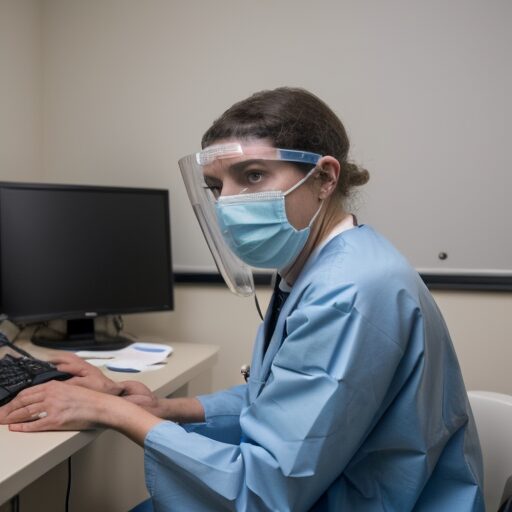
To understand what it has been like for a doctor during the pandemic, one must understand the sensory environment of a COVID-19 ward, often referred to as the “Red Zone.” The physical experience begins with the donning of Personal Protective Equipment (PPE). This is not a simple change of clothes; it is an airtight seal that alters every interaction. The N95 mask, often worn for twelve to sixteen hours at a time, creates a constant pressure on the bridge of the nose and behind the ears, frequently leading to skin breakdown and chronic headaches. The air inside the mask becomes hot and humid with every breath, making communication difficult and physical exertion exhausting.
The auditory landscape of the ward is dominated by the rhythmic, mechanical whoosh-click of ventilators and the persistent, high-pitched chirping of pulse oximeters. For a doctor, these sounds become a second language. A change in the pitch of an alarm can trigger an immediate adrenaline spike before the brain even consciously processes which patient is in distress. However, during the surges, the sheer volume of alarms led to “alarm fatigue,” a dangerous state where the brain begins to tune out the very signals meant to save lives. This sensory overload, combined with the muffled voices through masks and face shields, created a sense of isolation even when surrounded by colleagues.
Dehydration and physical neglect became a standard part of the workday. Many doctors avoided drinking water for hours to minimize the number of times they had to “doff” and “don” PPE, as each change carried a risk of self-contamination and consumed precious supplies. By the end of a shift, the physical toll was visible: deep indentations on the face from the masks, soaked scrubs from the heat trapped under plastic gowns, and a profound lethargy that made the drive home a safety hazard. This was the physical price of entry into the ward, a daily tax paid in sweat and skin that most patients and their families never saw.
Managing the Rapid Evolution of Clinical Protocols and Medical Uncertainty
In the early months of the pandemic, the medical community faced a terrifying reality: they were treating a disease they did not understand. For physicians accustomed to evidence-based medicine and established protocols, this period was characterized by a profound and unsettling uncertainty. Every day brought a new, often contradictory, set of guidelines. In March 2020, the standard of care was early intubation to protect the lungs and prevent the spread of aerosols. By May, the strategy had shifted toward delaying intubation as long as possible, using high-flow nasal oxygen and “proning”—turning patients onto their stomachs to improve oxygenation.
This shift was not just a change in paperwork; it was a fundamental re-learning of how to manage respiratory failure. Doctors had to become comfortable with “permissive hypoxia,” watching oxygen saturation levels dip to numbers that would have previously triggered an emergency response, all while hoping the patient’s physiology would stabilize. The emotional toll of this trial-and-error medicine was immense. Doctors often looked back at the patients they had treated just weeks prior with a sense of regret, wondering if the protocols they were following at the time had inadvertently caused more harm than good. This is the burden of practicing at the “bleeding edge” of a new pathogen.
The rapid-fire nature of medical literature during this time also created a chaotic information environment. Pre-print servers were flooded with studies that had not yet been peer-reviewed, and doctors found themselves debating the merits of various treatments—from hydroxychloroquine and ivermectin to convalescent plasma and remdesivir—in hospital hallways and on encrypted messaging apps. The traditional hierarchy of medical knowledge was flattened. A resident might find a new study from Italy or Wuhan that changed the entire team’s approach for the afternoon. This fluidity required a level of humility and intellectual flexibility that is rarely demanded in such a high-stakes environment, as physicians had to publicly admit that what they knew yesterday was no longer true today.
The Erosion of Trust: Confronting Misinformation and Public Hostility
One of the most painful transitions for doctors during the pandemic was the shift in public perception. In the early weeks, there were nightly cheers and posters calling healthcare workers “heroes.” However, as the pandemic became politicized, that adulation often turned into skepticism, or worse, open hostility. Physicians found themselves in the surreal position of having to argue with patients and their families about the very existence of the virus that was currently killing them. It became common for doctors to be accused of inflating death counts for financial gain or withholding “miracle cures” that had been debunked by every major medical body.
This hostility often followed doctors into their personal lives. Many stopped wearing scrubs in public to avoid being harassed or confronted by strangers. Online, physicians who shared evidence-based information were frequently targeted by coordinated harassment campaigns. This created a profound sense of betrayal. To spend all day risking one’s life to save members of a community, only to be told by that same community that you are a liar or a pawn of a conspiracy, is a specific type of psychological trauma. It led to a “bunker mentality” among medical staff, where they felt the only people who truly understood them or supported them were their colleagues within the hospital walls.
The impact on the patient-doctor relationship was devastating. Trust is the foundation of effective medical care, and when that trust is replaced by suspicion, the quality of care suffers. Doctors had to spend precious minutes of their day debunking social media rumors instead of discussing clinical outcomes. They had to navigate the legal and ethical minefields created by families demanding unproven treatments, sometimes even facing lawsuits while the patient was still in the ICU. This atmosphere of litigiousness and distrust added a layer of defensive medicine that further drained the emotional reserves of a workforce already at the breaking point.
Reshaping Medical Education: The Resident Experience in a Crisis
The pandemic fundamentally altered the trajectory of a generation of young doctors. Residents—doctors in training who have graduated from medical school but are specializing—found their education interrupted and refocused in ways no one could have predicted. In many hospitals, residents in specialties as diverse as dermatology, psychiatry, and orthopedics were “redeployed” to COVID wards and ICUs. An aspiring surgeon might have spent six months without picking up a scalpel, instead learning how to manage complex ventilator settings or proning patients.
While this provided an unprecedented education in critical care and disaster medicine, it created significant gaps in their primary training. The traditional “see one, do one, teach one” model of medical education was replaced by a “survival mode” where the priority was throughput rather than pedagogy. Many surgical residents lost hundreds of hours of operating room time, leading to concerns about their technical proficiency and the need for extended training. Beyond the technical skills, the emotional burden on residents was particularly heavy. These young doctors, often still in their 20s, were the ones spending the most time at the bedside, witnessing more death in a single month than most physicians see in a decade.
The lack of traditional mentorship was another casualty. Senior attending physicians were often spread too thin to provide the nuanced feedback and career guidance that is essential during residency. The “hidden curriculum” of medicine—the informal learning that happens during coffee breaks or while walking between rounds—evaporated as everyone retreated behind masks and social distancing protocols. This cohort of “COVID residents” has emerged with a unique set of skills: they are incredibly resilient, comfortable with ambiguity, and experts in crisis management. However, they also carry a disproportionate amount of the pandemic’s trauma, having come of age as physicians in an environment of constant loss and systemic failure.
The Digital Transition: Redefining the Physician-Patient Relationship via Telehealth
While the hospital-based experience was defined by physical intensity, the outpatient experience for many doctors was defined by a rapid and forced digital transition. Before 2020, telehealth was a niche service, often hampered by regulatory hurdles and reimbursement issues. Almost overnight, it became the primary way for millions of patients to access their doctors. For physicians, this was a massive shift in both workflow and clinical mindset. They had to learn how to perform “virtual physical exams,” teaching patients how to check their own pulses, press on their own abdomens, or hold their phone cameras up to their throats.
This shift revealed both the possibilities and the profound limitations of digital medicine. On one hand, it allowed for greater access for patients with mobility issues or those living in rural areas. It also provided a unique window into the patient’s home environment—seeing the medications on the nightstand or the safety hazards in the living room provided context that is often lost in a sterile exam room. However, doctors also struggled with the loss of the “human touch.” So much of medicine is communicated through non-verbal cues—the way a patient walks into the room, the slight tremor in their hand, or the smell of their breath. These diagnostic signals are lost over a 720p video connection.
Moreover, the digital divide became a glaring issue. Doctors found that their most vulnerable patients—the elderly, the impoverished, and those with language barriers—were the ones most likely to struggle with the technology. This created a new form of healthcare inequity, where those with high-speed internet and tech literacy received seamless care, while others were left with dropped calls and blurry images. The administrative burden also shifted; physicians found themselves acting as tech support, spending half of a fifteen-minute appointment helping a patient unmute their microphone. As the pandemic has waned, the challenge for the medical community has been determining which of these digital tools to keep and how to reintegrate the physical exam without losing the convenience that patients have come to expect.
The Long-Term Psychological Aftermath and the Concept of Post-Traumatic Growth
As the acute phases of the pandemic have transitioned into a more chronic management phase, the medical community is beginning to process the long-term psychological aftermath. Many doctors are experiencing symptoms of Post-Traumatic Stress Disorder (PTSD), including intrusive memories of the ICU, hypervigilance, and emotional numbing. The transition back to “normal” medicine—treating elective cases, managing chronic conditions like hypertension, or dealing with administrative bureaucracy—can feel jarring and even meaningless after the life-and-death intensity of the surges. This “re-entry syndrome” has led to a significant number of physicians leaving the workforce or seeking early retirement, contributing to a looming healthcare labor shortage.
However, alongside the trauma, there is also the phenomenon of post-traumatic growth. Many doctors report a renewed sense of purpose and a deeper appreciation for the fragility of life. The pandemic stripped away the fluff of medical practice, leaving only the core mission of healing and comfort. This has led to a grassroots movement within the profession to demand systemic changes, such as better staffing ratios, more robust mental health support for clinicians, and a move away from the “hero” narrative toward a model of sustainable professional respect. Physicians are increasingly vocal about the need for a healthcare system that prioritizes the well-being of the provider as a prerequisite for the well-being of the patient.
The legacy of the pandemic for doctors will likely be one of profound transformation. They have seen the best and worst of humanity, the limits of science, and the fragility of the systems they work within. While the scars remain—both the physical ones from the masks and the invisible ones from the moral weight of their choices—there is also a new sense of solidarity. The shared experience of the pandemic has forged bonds between specialties and across borders that did not exist before. As they move forward, the challenge for the medical profession is to ensure that the lessons learned in the crucible of the crisis are not forgotten, but instead used to build a more resilient and compassionate healthcare system for the future.
Related posts:
 India’s COVID-19 Crisis: How to Help and Show Support
 Moral Injury #MentalHealthMonday
 What Immunocompromised People Need to Know About COVID-19 Risk
 Cannabis and COVID-19
 The 3 Things They Don’t Teach You in Medical School
 Frontline COVID-19 Doctors’ Stories
 Meet the Doctor Who Prescribes Food Instead of Pills
 Why Feeling Selfish During a Pandemic Might Actually Be Normal