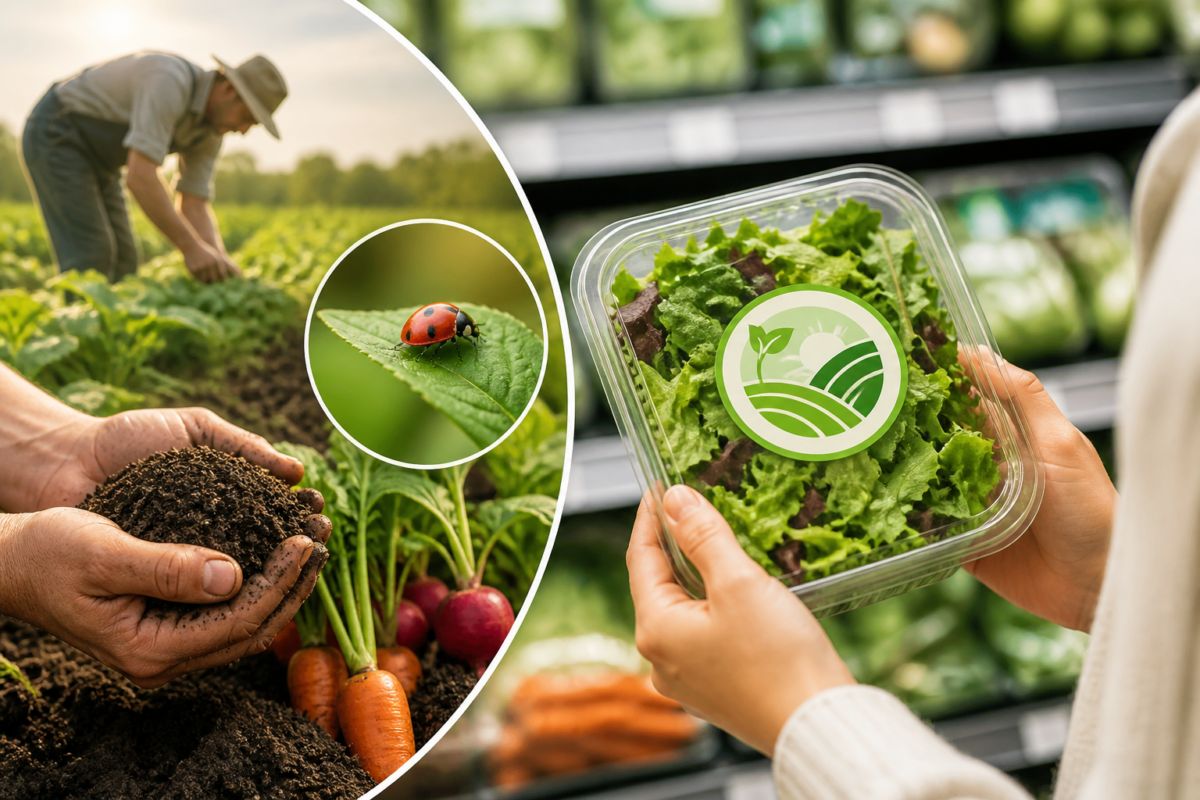
When you walk down the supermarket aisle, the word “organic” is everywhere. It is stamped on everything from cartons of eggs and bags of kale to processed snack foods and boxes of cereal. For many shoppers, the label serves as a shorthand for “healthier,” “safer,” or “better for the environment.” However, the reality of what that label signifies is far more nuanced than most consumers realize. Understanding the legal definitions, the limitations of certification, and the difference between marketing buzzwords and federal standards is essential for making informed choices about what you put on your dinner table.
Understanding the USDA Organic Certification Process
The term “organic” is not a subjective description; in the United States, it is a strictly regulated federal term managed by the U.S. Department of Agriculture (USDA). For a product to carry the official organic seal, it must be produced according to the National Organic Program (NOP) standards. This process involves rigorous documentation and third-party inspection. Farmers and manufacturers must demonstrate that they have managed their soil quality, controlled pests and weeds through mechanical or biological means rather than synthetic chemicals, and maintained the integrity of the product from farm to table. The certification is not a one-time event; it is an ongoing process that requires annual audits to ensure compliance.
The Four Tiers of Organic Labeling
Not all organic labels are created equal. The USDA mandates four distinct categories for organic labeling, each with its own set of rules. First, “100% Organic” means the product is made entirely of certified organic ingredients and processing aids. Second, products labeled “Organic” must contain at least 95% organic ingredients, with the remaining 5% consisting of substances approved on the National List. Third, products labeled “Made with Organic Ingredients” must contain at least 70% organic ingredients; these can list up to three specific ingredients on the front panel, but they cannot display the USDA organic seal. Finally, products with less than 70% organic ingredients can only mention organic ingredients in the information panel, not on the front of the package.
Synthetic Pesticides and the Myth of Zero Residue
One of the most common misconceptions about organic food is that it is entirely free of pesticides. In truth, organic farming does permit the use of certain pesticides. The key difference is that organic pesticides must be derived from natural sources rather than synthetic chemical laboratories. Common examples include neem oil, copper-based sprays, or spinosad. While these substances are generally considered less toxic to the environment, they are still pesticides designed to kill or repel organisms. Furthermore, organic crops can occasionally be exposed to synthetic pesticide residues through wind drift from neighboring conventional farms, meaning that “organic” does not necessarily guarantee a zero-pesticide status.
Animal Welfare Standards in Organic Livestock
For many consumers, the primary motivation for buying organic meat, dairy, and eggs is a desire for higher animal welfare standards. Organic regulations do require that livestock have access to the outdoors, including pasture for ruminants like cows and sheep. However, the definition of “access” has been a point of significant contention. In some cases, this may simply mean a small door leading to a concrete porch or a patch of dirt rather than the lush, grassy fields many shoppers envision. While organic standards prohibit the use of growth hormones and routine antibiotics, they do not always mandate the level of space or outdoor time that some animal welfare-focused certifications—such as Animal Welfare Approved or Certified Humane—require.
The Environmental Impact Beyond the Label
Organic agriculture is generally designed to work in harmony with natural ecosystems. By prohibiting synthetic fertilizers, organic farmers rely on crop rotation, composting, and cover crops to maintain soil fertility. This approach often leads to better soil structure and increased water retention, which can help mitigate the effects of drought. Additionally, because organic farms avoid synthetic herbicides, they tend to support higher levels of biodiversity, including pollinators like bees and butterflies. However, critics argue that because organic yields are often lower than conventional yields, more land may be required to produce the same amount of food, which could lead to habitat loss if not managed sustainably.
Distinguishing Organic from Natural and Non-GMO
Shoppers often conflate “organic” with other labels like “natural,” “non-GMO,” or “locally grown.” It is vital to understand that these terms are not interchangeable. “Natural” is a largely unregulated marketing term that implies little to nothing about how a food was grown or processed. “Non-GMO” (Genetically Modified Organism) means that the product does not contain genetically engineered ingredients, but it does not prohibit the use of synthetic fertilizers or pesticides. “Locally grown” emphasizes the distance the food traveled, which reduces the carbon footprint of transport, but a local farm might use conventional, synthetic-heavy farming practices. Organic is the only one of these labels that is backed by a comprehensive, federally enforced set of standards covering the entire lifecycle of the food.
Is Organic Worth the Price Premium?
The decision to buy organic often comes down to budget. Organic foods typically carry a higher price tag due to the labor-intensive nature of organic farming, the costs of certification, and the lower economies of scale. To make the most of your grocery budget, many experts suggest prioritizing organic for produce that is typically high in pesticide residue, often referred to as the “Dirty Dozen.” Conversely, for items with thick skins or peels—such as avocados, onions, and pineapples—the pesticide residue tends to be lower, making conventional options a budget-friendly choice. Ultimately, eating a diet rich in fruits and vegetables, regardless of whether they are organic or conventional, remains the most important factor for health.
The Complexity of Organic Supply Chains and Fraud Prevention
The integrity of the organic label relies on an unbroken chain of custody from the seed to the supermarket shelf. Because organic products command a premium, they are prime targets for economic fraud. Supply chain audits require that every handler—from the farmer to the processor, the storage facility, and the distributor—maintains detailed records of their organic transactions. These “audit trails” must track the volume of organic products entering and leaving a facility to ensure that conventional goods are not being “laundered” as organic. Despite these safeguards, high-profile cases of organic fraud have occurred, often involving imported grains or oils that lack sufficient documentation. In response, the USDA has implemented the Strengthening Organic Enforcement (SOE) rule, which increases oversight of importers, brokers, and traders who previously operated in the shadows of the supply chain, ensuring that the label remains a reliable indicator of authenticity.
Understanding the Role of “Allowed” Synthetic Substances
While the National Organic Program (NOP) is famously restrictive, it is not a prohibitionist system. The National List of Allowed and Prohibited Substances contains specific synthetic materials that are permitted in organic production because no viable natural alternative exists. For instance, certain alcohols are permitted for sanitizing equipment, and pheromones are allowed for disrupting the mating cycles of destructive insects. This list is subject to a “sunset process,” where every five years, these substances must be re-evaluated by the National Organic Standards Board (NOSB). This creates a dynamic tension between organic purists who want a completely chemical-free standard and pragmatic farmers who require specific tools to manage large-scale pest outbreaks or soil nutrient deficiencies. Understanding this list is crucial for shoppers who mistakenly believe that “organic” implies a total absence of synthetic intervention.
The Intersection of Organic and Regenerative Agriculture
In recent years, the conversation has shifted beyond just “no synthetic chemicals” to “soil health and carbon sequestration.” This is where the concept of regenerative agriculture enters the picture. While organic certification focuses primarily on inputs—what you put into the soil—regenerative practices focus on outcomes, such as increasing soil organic matter and biodiversity. An organic farm might still rely on frequent tilling to control weeds, which can disrupt soil structure and release carbon. Conversely, a regenerative farm might use limited, targeted chemical inputs to facilitate no-till planting, which protects the soil biome. Many consumers are now looking for labels like “Regenerative Organic Certified” (ROC), which builds on the USDA organic baseline by adding strict requirements for soil health, animal welfare, and social fairness for farmworkers, bridging the gap between simple organic farming and holistic ecological restoration.
Why Organic Processing Aids and Additives Matter
When you purchase a highly processed organic item, such as a box of crackers or a frozen dinner, the label refers not just to the primary ingredients but also to the processing aids. Under NOP rules, organic processors cannot use artificial preservatives, colors, or flavors. If a conventional cracker uses “artificial vanilla flavor,” an organic version must use “organic vanilla extract.” Furthermore, the use of irradiation, sewage sludge (biosolids), and genetically modified organisms is strictly prohibited in the processing phase. However, this creates a challenge for food scientists: without chemical preservatives, organic products may have a shorter shelf life and different textural qualities. Recognizing that an organic processed food is still a processed food—often containing organic sugar, salt, and fats—is essential for consumers who view the label as a health halo rather than a production standard.
The Socio-Economic Dimensions of Organic Certification
The organic certification process is not only a technical hurdle but also a financial one. Small-scale farmers often struggle with the paperwork and the annual fees associated with maintaining their certification, which can cost thousands of dollars depending on the operation’s size. This economic barrier has led to a “participatory guarantee system” in some regions, where local communities verify each other’s practices, though these do not carry the weight of the USDA seal. For the consumer, it is important to realize that the absence of a USDA seal on a farmer’s market product does not necessarily mean the food is “conventional.” Many small farmers follow organic principles but cannot afford the certification. In these instances, a direct conversation with the grower at a local market can provide more transparency than any label could, allowing shoppers to support sustainable practices even when they aren’t officially stamped by the federal government.
Managing Pesticide Drift and Cross-Contamination
A frequently misunderstood aspect of organic farming is the “buffer zone” requirement. Organic farmers are required to implement physical barriers or distance buffers between their crops and neighboring conventional fields to prevent the drift of prohibited pesticides or synthetic fertilizers. Despite these buffers, environmental factors like wind speed, temperature inversions, and spray equipment malfunctions can lead to accidental contamination. When a residue test reveals trace amounts of a synthetic pesticide on an organic product, it does not automatically mean the farmer cheated. The USDA investigates such cases to determine if the farmer took the necessary precautions. This creates a nuance in the “zero-residue” myth: the organic standard is a process-based certification, not a product-based chemical guarantee. The goal is the minimization of risk rather than the achievement of an impossible, perfectly sterile environment.
Frequently Asked Questions
Q: Does organic mean the food is more nutritious? A: Studies have shown some variations in nutrient density, such as higher levels of certain antioxidants in organic produce, but these differences are often small. The overall nutritional quality of your diet is determined more by the variety and quantity of whole foods you consume rather than the production method.
Q: If a product says “Made with Organic Ingredients,” is it healthy? A: Not necessarily. A cookie made with organic sugar and organic flour is still a cookie. The organic label indicates how the ingredients were grown, not the healthfulness or nutritional profile of the finished product. Always check the nutrition facts label for sugar, sodium, and fat content.
Q: Are organic eggs really better for the hens? A: Organic standards provide better protection than conventional industrial farming, requiring access to the outdoors and prohibiting cages. However, if animal welfare is your primary concern, look for additional third-party certifications like “Certified Humane” or “Animal Welfare Approved” which often have stricter requirements than the USDA organic label.
Q: Can I trust the organic label on imported foods? A: The USDA has established equivalency agreements with several countries, such as Canada, the European Union, and Japan. These agreements mean that products certified in those countries can be sold as organic in the U.S. as long as they meet the terms of the agreement. For other countries, importers must verify that the products meet the U.S. National Organic Program standards.
Q: Why do some organic items lack the USDA seal? A: If a manufacturer is not certified by a USDA-accredited certifying agent, they cannot legally use the USDA organic seal. Additionally, very small farms with annual organic sales of $5,000 or less are exempt from certification; they can sell their products as organic but cannot use the official seal or represent their products as USDA-certified.
Related posts:
 A Guide to Clean Wine at Thrive Market
 The 2018 Dirty Dozen List That Will Change How You Shop for Produce
 What Do Labels Like “Cage-Free” Actually Mean? Here’s Your Easy Guide
 Green Fashion Face-Off: H&M’s Fall Collection vs. Truly Eco-Friendly Brands
 Decoding Food Marketing Claims
 Understanding USDA Planting Zones for a Successful Garden
 Pegan Diet Explained: The Paleo-Vegan Hybrid Taking Over
 Vegan vs Plant-Based: Which is Healthier?