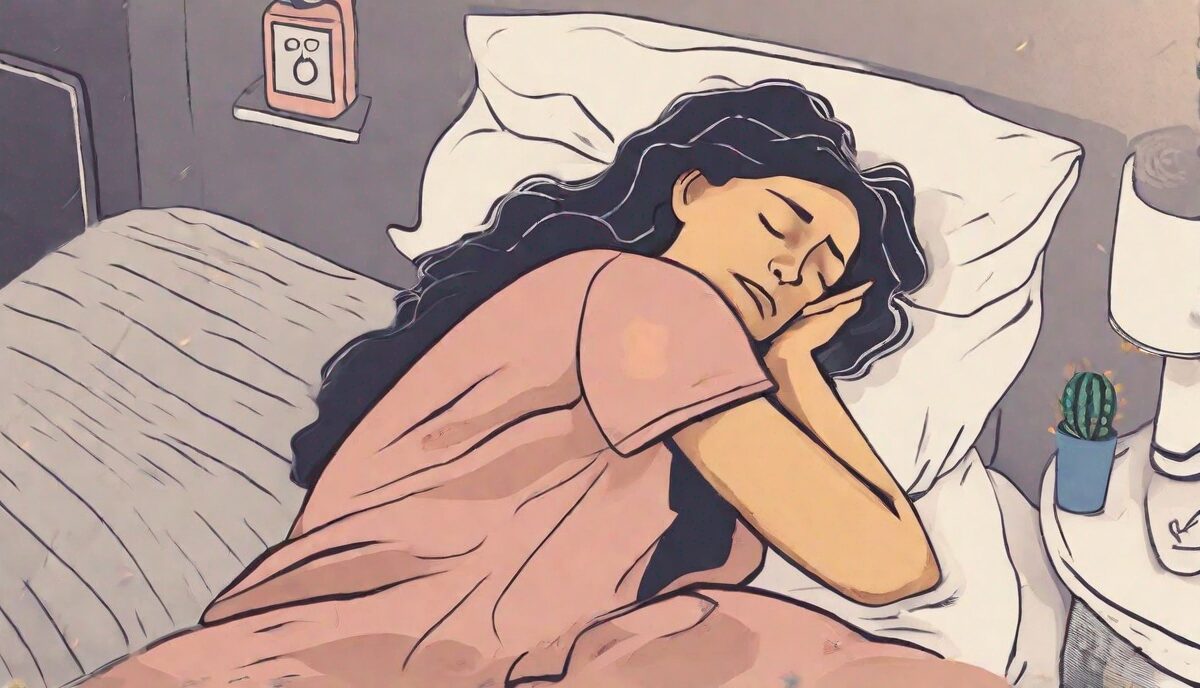
The Link Between Sleep and Mood
Getting enough high-quality sleep is crucial for both our physical and mental health. When we don’t get the rest we need, it can negatively impact our mood, leading to increased feelings of stress, anxiety, sadness, and irritability.
Why We Get Irritable When Tired
Research has shown that lack of sleep disrupts activity in areas of the brain responsible for regulating emotions. Sleep deprivation also causes changes in hormone levels, specifically increasing cortisol and decreasing serotonin. This chemical imbalance leaves us feeling on-edge and quick to anger.
Tips for Improving Sleep
- Follow a consistent sleep routine
- Make your bedroom comfortable and dark
- Limit screen time before bed
- Try relaxation techniques
- Exercise regularly but not before bedtime
Seeking Help
If you continue having sleep issues that affect your daily life, consult your healthcare provider. They can check for underlying conditions and provide personalized treatment options.
The Takeaway
Quality slumber plays a big role in emotional regulation and overall health. Make getting enough sleep a priority and utilize healthy sleep hygiene habits. Your mood and wellbeing will thank you.
The Amygdala and the Loss of Emotional Braking
While the basic chemical imbalance of cortisol and serotonin plays a role in our post-sleep-deprivation mood, the structural communication within the brain provides a more nuanced explanation for why we snap at loved ones or feel overwhelmed by minor inconveniences. Functional MRI (fMRI) scans of sleep-deprived individuals reveal a startling 60% increase in the reactivity of the amygdala, the brain’s emotional center responsible for the “fight or flight” response. Under normal conditions, the prefrontal cortex—the logical, rational part of the brain—acts as a set of brakes, modulating the amygdala’s impulses and helping us interpret situations calmly.
When we are sleep-deprived, this neural connection between the prefrontal cortex and the amygdala is significantly weakened. It is as if the logical “adult” in the brain has gone on vacation, leaving the impulsive “toddler” in charge of the controls. This decoupling explains why a minor traffic jam or a spilled cup of coffee, which would normally be a minor annoyance, suddenly feels like a personal catastrophe. Without the prefrontal cortex to provide context and regulation, every negative stimulus is amplified, leading to the heightened irritability and hair-trigger temper many people experience after a poor night’s rest.
Edge cases often involve individuals with pre-existing anxiety disorders or ADHD. For these populations, the “braking system” may already be under pressure; adding sleep deprivation to the mix doesn’t just increase irritability linearly—it can cause a complete emotional collapse. In these instances, the brain’s inability to filter out irrelevant emotional stimuli means that every sound, comment, or visual distraction becomes a potential source of anger.
REM Sleep as Emotional First Aid
Not all sleep is created equal when it comes to mood regulation. Rapid Eye Movement (REM) sleep, the stage where most dreaming occurs, serves as a form of “overnight therapy.” During REM sleep, the brain processes the emotional experiences of the day, stripping away the painful or agitating “sting” from memories while keeping the information intact. This process occurs in a neurochemically unique environment where noradrenaline—a stress-related chemical—is completely shut off.
If your sleep is cut short, particularly in the early morning hours when REM cycles are longest, you miss out on this essential emotional processing. Without the “smoothing out” effect of REM sleep, you wake up carrying the raw emotional baggage of the previous day into the next. This creates a cumulative effect where irritability builds up over several days of poor sleep. You aren’t just reacting to the morning’s stressors; you are reacting with the unprocessed frustration of everything that happened yesterday.
Consider the example of a high-stress workplace. A manager who misses their final two hours of sleep (heavy REM time) is statistically more likely to perceive a subordinate’s neutral question as a challenge to their authority. This isn’t just a personality flaw; it is a physiological failure to reset the emotional thermostat. The brain remains in a state of “affective reactivity,” where it is primed to find and react to negativity in the environment.
The Social Cost: Misreading Facial Expressions and Intent
Irritability isn’t just an internal feeling; it profoundly changes how we perceive the world around us, specifically our social interactions. Research indicates that sleep-deprived individuals lose the ability to accurately read subtle social cues and facial expressions. In a rested state, we can easily distinguish between a coworker’s tired face, a neutral face, and an angry face. However, when we are exhausted, our brains tend to default to a “threat-detection” bias.
Under the influence of sleep loss, we are significantly more likely to categorize neutral or even friendly expressions as threatening or hostile. This misinterpretation is a primary driver of interpersonal conflict. You might think your partner is being “short” with you or that a friend’s text message is passive-aggressive, when in reality, your brain simply lacks the cognitive resources to process the nuance of their communication. This creates a vicious cycle: you react irritably to a perceived slight, which causes the other person to respond with genuine frustration, thereby confirming your initial (though incorrect) suspicion that they were being difficult.
This phenomenon is particularly dangerous in high-stakes environments, such as healthcare or law enforcement, where the ability to read a person’s intent is critical. When sleep-deprived, the “empathy gap” widens. We become less capable of taking another person’s perspective, making us more self-centered and prone to defensive outbursts. The irritability, therefore, is not just a mood but a cognitive distortion of our social reality.
Sensory Overload and the Lowered Frustration Threshold
One of the less-discussed aspects of sleep-deprived irritability is the role of sensory processing. Sleep deprivation lowers our threshold for sensory input, meaning that sights, sounds, and even physical sensations become more intrusive and irritating. This is often referred to as “sensory gating” failure. Normally, the brain is excellent at filtering out the hum of a refrigerator, the ticking of a clock, or the distant sound of traffic. When we are tired, these filters fail.
This sensory bombardment contributes directly to a feeling of being “on edge.” If you have ever felt like the sound of someone chewing or the brightness of an overhead light was physically painful after a bad night’s sleep, you have experienced this. The irritability is a natural response to a brain that feels under siege by its environment. Because you cannot “turn off” the world, you lash out at the sources of the stimuli.
Practical examples of this can be found in parenting. A parent who hasn’t slept is not just “grumpy”; they are experiencing the noise of a crying baby or the clutter of toys as a much more intense neurological stimulus than they would if they were rested. Understanding that this irritability is a result of sensory overwhelm can help in managing it—for instance, by using noise-canceling headphones or reducing light levels to lower the total “load” on the brain during the day.
Metabolic Instability and the “Tired-Hangry” Connection
The relationship between sleep and irritability is also deeply tied to how our bodies manage energy. Sleep deprivation causes a significant disruption in glucose metabolism. Even a single night of poor sleep can induce a state of temporary insulin resistance, leading to fluctuations in blood sugar levels throughout the following day. These “crashes” in blood sugar are notoriously linked to irritability, often referred to as being “hangry.”
When you are sleep-deprived, your body also produces more ghrelin (the hunger hormone) and less leptin (the fullness hormone). This leads to cravings for high-sugar, high-carb foods as the brain desperately seeks a quick energy source to compensate for its exhaustion. The resulting spike and subsequent crash in blood glucose create a physiological roller coaster. During the troughs of these crashes, the brain triggers the release of adrenaline and cortisol to try and stabilize blood sugar, both of which are hormones that prime the body for aggression and irritability.
To mitigate this, individuals struggling with sleep-related mood swings should pay close attention to their diet during the day. Avoiding the “caffeine and sugar” trap is essential. While a donut and a large latte might provide a temporary mood boost, the inevitable crash two hours later will likely result in a profound spike in irritability and a total loss of patience. Opting for complex carbohydrates and proteins can help stabilize the metabolic side of the irritability equation.
The “Tired-Wired” Feedback Loop and Nighttime Rumination
A significant challenge in the relationship between sleep and mood is the feedback loop that develops over time. Irritability doesn’t just happen during the day; it often follows us into the bedroom. When we have had an irritable, high-stress day due to lack of sleep, our nervous system remains in a state of high arousal—often called being “wired but tired.” This state makes it even harder to fall asleep the following night, as the mind begins to ruminate on the day’s conflicts and stressors.
Rumination is a specific type of irritability directed inward or toward past events. You might lie awake replaying a conversation where you were short with a colleague, which triggers a stress response, which then prevents the onset of sleep. This creates a self-perpetuating cycle: poor sleep leads to irritability, irritability leads to social and internal stress, and that stress leads to further sleep disruption.
Breaking this cycle requires more than just “going to bed earlier.” It requires active “de-escalation” of the nervous system. Techniques like “worry time”—where you intentionally write down everything making you irritable earlier in the evening—can help offload the cognitive burden so it doesn’t interfere with sleep onset. Additionally, recognizing that your nighttime thoughts are being filtered through a sleep-deprived, irritable lens can help you dismiss them as “brain noise” rather than objective reality.
Chronotypes and the Conflict of Social Jetlag
Irritability is often exacerbated by a mismatch between an individual’s internal biological clock (chronotype) and their external schedule, a phenomenon known as “social jetlag.” For example, a natural “night owl” who is forced to wake up at 6:00 AM for a corporate job is in a state of chronic circadian misalignment. This is not just about the total number of hours slept; it is about *when* those hours occur.
When we sleep out of sync with our natural rhythms, the quality of that sleep is diminished, and the brain’s emotional regulation centers do not recover as effectively. This leads to a baseline level of irritability that becomes a personality trait over time, though it is actually a physiological symptom. These individuals often feel a sense of “fogginess” and frustration throughout the morning, only to feel alert and pleasant in the evening when the rest of the world is winding down.
FAQ
Does lack of sleep always cause irritability?
No, some people may experience other effects like fatigue or trouble concentrating. But irritability is a very common result of inadequate sleep.
Can getting more sleep improve my mood?
Yes, studies show that getting enough sleep on a regular basis can greatly improve overall mood and happiness levels.
How many hours of sleep do adults need?
Most adults require 7-9 hours of quality sleep per night. Individual needs can vary though based on factors like age, activity levels, etc.
What foods help promote sleep?
Some foods that may help improve sleep due to compounds like tryptophan include milk, nuts, seeds, turkey, bananas, and chamomile tea.
Are sleep issues always caused by lifestyle factors?
No, many health conditions like sleep apnea, restless leg syndrome, hormone imbalances, etc. can also interfere with getting quality sleep.
Related posts:
 How Snoring Can Damage Your Relationship
 Nap Revolution: NYC’s Sleep Café Is Making Rest Trendy Again
 Why Heat Waves Are Giving You Nightmares
 Just 10 Minutes of Weekly Exercise Boosts Happiness
 Three Scientific Reasons to Become a Morning Person
 Sleep Hypnosis: A Meditation Guide
 Weekend Sleep Recovery
 When Stress Steals Sleep: The Vicious Cycle Ruining Your Relationship and Rest