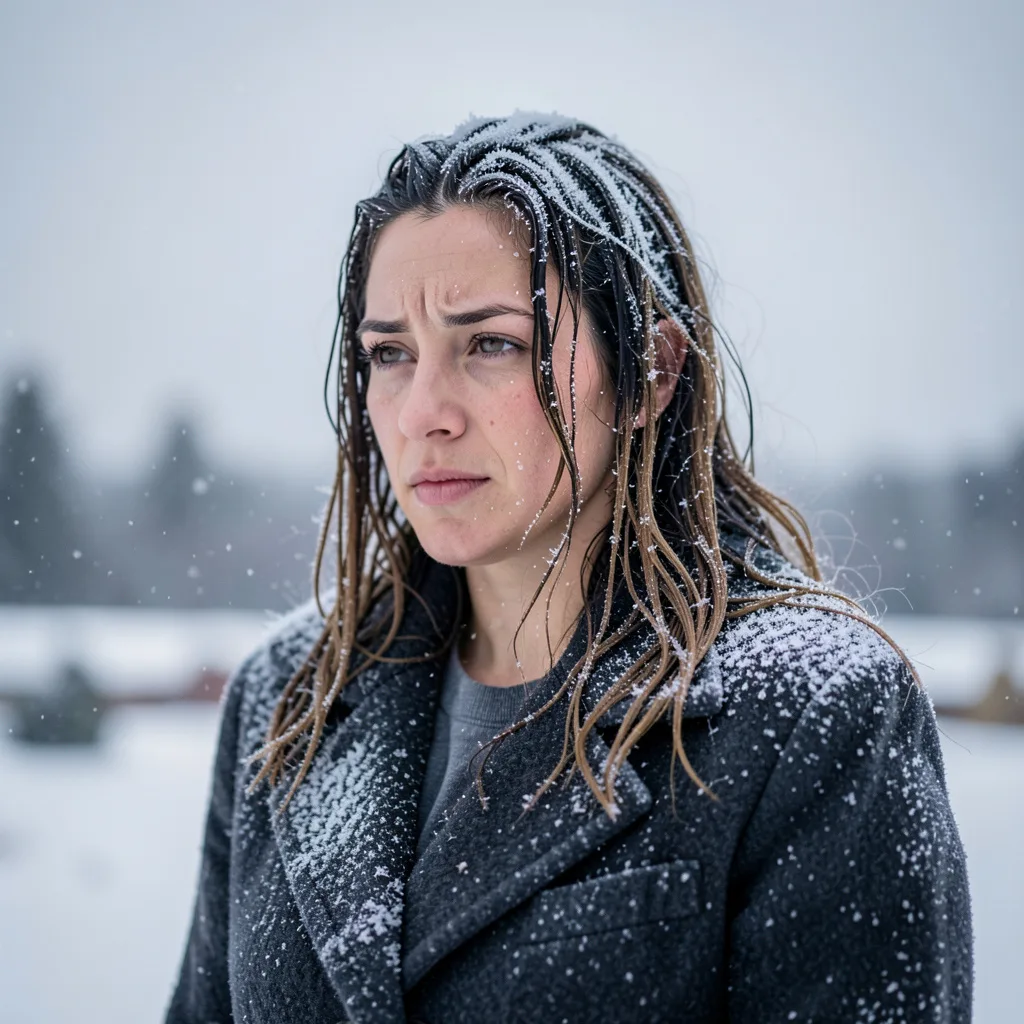
Stepping out of the shower with a towel-dried head on a frosty morning can feel like a daring experiment. While the chill may be invigorating, the combination of wet hair and cold air can have real consequences for comfort, scalp health, and the long‑term condition of your strands. This article unpacks the physics, biology, and everyday habits that shape what happens when moisture meets low temperature, and it offers clear, practical steps you can take to keep your hair healthy and your head cozy.
Key takeaways
- Use microfiber towels to blot moisture and leave-in conditioners to create a protective barrier against rapid evaporation.
- Wear breathable, moisture-wicking hats made of merino wool or synthetic blends rather than water-retaining cotton.
- Maintain indoor humidity between 40% and 50% to prevent scalp dehydration and hair brittleness caused by central heating.
- Protect curly hair from crystallization by using a low-heat diffuser to remove deep moisture before heading into freezing temperatures.
- Choose protective hairstyles like low buns or French twists to reduce surface area exposure to cold wind.
The Science of Heat Transfer
Heat moves from warm objects to cooler ones through three main mechanisms: conduction, convection, and radiation. When your hair is wet, water fills the tiny spaces between each strand, creating a continuous liquid bridge that conducts heat away from your scalp far more efficiently than dry hair alone. In cold weather, the surrounding air acts as a heat sink, pulling warmth from that water and accelerating the cooling process.
Conduction is the fastest pathway because water’s thermal conductivity (about 0.6 W/m·K) is roughly 25 times higher than that of dry hair (≈0.025 W/m·K). As a result, a wet strand can drain heat from the scalp in seconds, leading to a noticeable drop in skin temperature. Convection – the movement of cold air across the surface – compounds the effect, especially when wind is present. Even a gentle breeze can replace the thin layer of warm air that normally insulates the scalp, making the cooling sensation more intense.
How Water Conducts Cold
Water’s high specific heat capacity means it stores a lot of thermal energy. When you dry your hair with a towel, you remove only part of that stored heat. The remaining moisture continues to release energy as it equilibrates with the ambient temperature. In sub‑zero conditions, the water can freeze on the hair shaft, creating tiny ice crystals that not only feel uncomfortable but also increase the brittleness of the hair fiber.
Ice formation is a particular concern for people who regularly expose wet hair to temperatures below 0 °C (32 °F). As water expands when it freezes, it can cause micro‑fractures in the cuticle – the protective outer layer of each strand. Over time, repeated freeze‑thaw cycles can lead to split ends, reduced elasticity, and a dull, lifeless appearance.
Impact on Scalp and Hair Follicles
The scalp is rich in blood vessels that help regulate body temperature. When cold air contacts a wet scalp, the rapid loss of heat triggers vasoconstriction – the narrowing of blood vessels – which reduces blood flow to the skin. While this response protects the body’s core temperature, it also limits the delivery of nutrients and oxygen to hair follicles.
Reduced circulation can slow down the hair growth cycle, making it harder for new cells to mature and push older cells up the shaft. In extreme cases, prolonged exposure to cold and moisture can contribute to conditions such as seborrheic dermatitis, where the scalp becomes flaky and irritated. It’s important to note that these effects are typically temporary and reversible with proper care.
Common Myths About Cold Weather and Hair
Myth 1: Cold air alone makes hair fall out. The primary driver of hair loss is genetics, hormonal changes, and overall health. Cold air can exacerbate existing scalp conditions, but it does not directly cause follicles to die.
Myth 2: Wearing a hat will trap moisture and cause dandruff. A breathable, moisture‑wicking hat can actually protect the scalp by preventing rapid heat loss while allowing excess sweat to escape. The key is to choose materials like merino wool or synthetic blends rather than cotton, which retains water.
Myth 3: You must always dry hair completely before going outside. While fully drying reduces heat loss, a lightly damp hair surface (about 30 % moisture) is often sufficient if you layer with a protective head covering. The goal is to balance comfort with practicality.
Practical Tips for Staying Warm with Wet Hair
- Towel‑dry strategically. Press a microfiber towel against the hair for 2–3 minutes to absorb the majority of water before styling. Avoid vigorous rubbing, which can roughen the cuticle.
- Use a leave‑in conditioner. Modern leave‑ins contain silicone or light oils that create a barrier, slowing down water evaporation and reducing the chill.
- Choose the right headwear. Opt for a snug, breathable beanie or cap that covers the ears and the crown. Look for inner linings that wick moisture away from the scalp.
- Layer your outerwear. A wind‑proof jacket with a high collar shields the neck and upper back, preventing cold drafts from reaching the scalp.
- Warm up from the inside. A hot beverage or a brief indoor warm‑up before stepping out raises core temperature, giving the scalp a buffer against the cold.
Best Hairstyles for Cold Days
When the temperature drops, certain hairstyles naturally protect more of the scalp and reduce exposed surface area. Here are three low‑maintenance options:
- Low bun or chignon. Pull the hair back into a loose bun at the nape of the neck. This keeps most strands away from the wind while allowing the headwear to sit comfortably.
- French twist. A classic twist creates a sleek silhouette that works well under a beanie and reduces friction against the hat.
- Half‑up, half‑down. If you prefer some hair down, gather the top half and secure it with a soft elastic. This style protects the crown – the area most prone to heat loss – while still letting you enjoy a bit of flow.
Regardless of the style, avoid tight elastics that can snag the cuticle. Use fabric‑covered hair ties or spiraled bands that distribute pressure evenly.
When to Seek Professional Advice
Most people can manage wet‑hair‑cold interactions with simple home strategies, but there are scenarios where a dermatologist or trichologist should be consulted:
- If you notice persistent scalp itching, redness, or flaking that does not improve with gentle care.
- If hair breakage becomes frequent despite using conditioner and protective styling.
- If you experience unusual hair loss (more than 100 strands per day) after a cold spell.
- If you have an existing scalp condition (psoriasis, eczema) that worsens in winter.
Professional assessment can rule out underlying issues such as fungal infections or nutritional deficiencies that may be aggravated by cold exposure.
Protecting Your Hair Long‑Term
Beyond the immediate cold‑weather tactics, building a resilient hair care routine will pay dividends year after year. Consider these long‑term habits:
- Regular deep conditioning. A weekly mask with ingredients like hydrolyzed keratin, avocado oil, or honey restores moisture lost during winter.
- Balanced nutrition. Adequate protein, omega‑3 fatty acids, and vitamins A, C, D, and E support scalp health and hair strength.
- Minimize heat styling. When the air is already dry, excessive blow‑drying can exacerbate brittleness. Use a diffuser on low heat or let hair air‑dry whenever possible.
- Protect from indoor heating. Central heating can strip humidity from hair. A humidifier in your bedroom helps maintain a healthier moisture balance.
By integrating these practices, you reduce the cumulative stress that cold, wet conditions can place on your hair, keeping it vibrant through every season.
Adapting Cold‑Weather Care to Different Hair Types and Textures
Not all hair reacts to low temperatures in the same way. Curly, coily, fine, or thick strands each have a unique relationship with moisture, heat loss, and mechanical stress. Understanding those nuances lets you fine‑tune your routine without relying on generic advice that may leave a particular hair type vulnerable.
Curly and Coily Hair – The natural coil creates air pockets that act as tiny insulators, but the same structure also traps water longer than straight hair. When the ambient temperature drops, the retained moisture can freeze in the inner curls, leading to a phenomenon known as “hair crystallisation.” To prevent this, many curl‑care specialists recommend a two‑step drying method: first, use a high‑absorption microfiber turban to blot the scalp, then employ a low‑heat diffuser set on a cool‑air setting for 5–7 minutes. This approach removes surface water while allowing the inner curl pattern to release moisture gradually, avoiding sudden temperature shocks.
Fine or Thin Hair – Because each strand carries less mass, heat dissipates more rapidly. A wet scalp under fine hair can feel icy within seconds. Lightweight, volumising sprays that contain hydrolysed proteins can create a micro‑foam barrier, reducing the direct contact between water droplets and the scalp. Pair this with a breathable, fitted cap made from merino wool that has a silicone‑grip interior; the cap stays in place without compressing the delicate strands.
Thick or Coarse Hair – The larger diameter of each strand means more surface area for heat exchange, but the dense hair mass can also act as a windbreak. However, thick hair often requires longer drying times, which can leave residual moisture deep in the shaft. A practical trick is to section the hair into three zones and apply a light mist of diluted leave‑in conditioner (1 part product to 4 parts water) to each zone. The added humectants draw water out of the cortex via osmosis, speeding up the drying process without the need for high heat.
Edge cases such as chemically treated hair (relaxed, perm‑ed, or bleached) deserve special attention. The altered cuticle is more porous, so water penetrates faster and can cause accelerated protein loss when exposed to freezing temperatures. For these hair types, a protein‑rich rinse (e.g., a short soak in a diluted hydrolysed wheat protein solution) after towel‑drying creates a temporary “seal” that limits further moisture loss until the hair is fully dry.
Transitioning between hair‑type‑specific steps can be seamless: start with the universal principle of removing excess water, then layer on the texture‑targeted technique. This modular approach ensures you’re not over‑complicating your routine while still addressing the unique challenges each hair type faces in the cold.
Balancing Moisture: The Role of Indoor Humidity, Central Heating, and Scalp Hydration
Winter indoor environments often swing between two extremes: bone‑dry air from central heating and overly humid conditions in poorly ventilated homes. Both extremes can destabilise the scalp’s natural moisture equilibrium, making hair more prone to brittleness or excess oiliness.
Low‑Humidity Dilemma – When indoor relative humidity drops below 30 %, the scalp loses transepidermal water loss (TEWL) at an accelerated rate. This can cause the cuticle to lift, exposing the cortex to mechanical friction from hats or scarves. A practical countermeasure is to place a hygrometer in the main living area and aim for a target humidity of 40–50 %. If the reading is low, a small ultrasonic humidifier set to emit a fine mist every 15 minutes can replenish ambient moisture without creating condensation on windows.
High‑Humidity Pitfalls – In homes where humidity spikes above 70 % (often due to indoor drying of laundry), the scalp can become a breeding ground for Malassezia yeast, exacerbating conditions like dandruff or seborrheic dermatitis. To mitigate this, install a bathroom exhaust fan with a humidity sensor that activates automatically. Additionally, use a lightweight, silicone‑free scalp serum containing zinc pyrithione; it controls yeast growth while maintaining a breathable barrier.
Scalp‑Specific Hydration Strategies – The scalp’s stratum corneum behaves like any skin on the body, requiring a balanced lipid‑protein matrix. Applying a scalp‑focused oil blend (e.g., 2 % jojoba oil mixed with 1 % vitamin E) after showering creates a semi‑occlusive layer that slows TEWL without clogging pores. For individuals who experience itching after prolonged indoor heating, a short, cool‑water scalp rinse followed by a light spritz of aloe‑veraproduct can soothe inflammation and restore pH balance.
Edge cases include people who wear respirators or protective masks for occupational reasons. The micro‑climate inside the mask can become overly humid, leading to a paradoxical “wet‑scalp‑dry‑air” situation. In such scenarios, a breathable, anti‑bacterial headband made from bamboo fibre can wick moisture away while still allowing the mask to seal properly.
By monitoring indoor humidity and tailoring scalp treatments to the observed conditions, you create a dynamic environment that supports hair health regardless of the external temperature.
Advanced Protective Gear: Heated Caps, Thermal Liners, and Smart Fabrics
Traditional wool or fleece hats are excellent for retaining heat, but technology now offers gear that actively regulates temperature, reduces moisture buildup, and even tracks scalp conditions.
Battery‑Powered Heated Caps – Modern heated headwear incorporates thin carbon‑fiber heating elements woven into a moisture‑wicking liner. When set to a low temperature (around 30 °C/86 °F), the cap gently raises scalp temperature, preventing the rapid cooling that occurs with wet hair. Users should aim for a 10‑minute pre‑outdoor session: place the cap on a dry head, activate the heat for 5 minutes, then remove it before stepping out. This brief warming phase reduces the thermal gradient without causing sweat accumulation.
Thermal Liners with Phase‑Change Materials (PCMs) – PCMs absorb excess heat when the scalp is warm and release it slowly as the ambient temperature drops. A liner made from a blend of micro‑encapsulated paraffin and breathable polyester can maintain a near‑constant micro‑climate around the hair. These liners are especially useful for outdoor workers who alternate between indoor heating and sub‑zero wind chill.
Smart Fabrics with Integrated Sensors – Some premium beanies now feature tiny, flexible sensors that monitor scalp temperature and humidity in real time. Paired with a smartphone app, the data triggers haptic alerts when the scalp reaches a predefined “cold threshold” (e.g., 33 °C/91 °F). Users can then decide whether to add an extra layer or seek indoor warmth. The sensors are typically powered by kinetic energy generated from head movements, eliminating the need for batteries.
Edge Cases and Maintenance – For individuals with metal allergies, verify that heating elements are insulated with a hypoallergenic coating. Heated caps should be cleaned according to the manufacturer’s instructions—usually a gentle hand wash without submerging the electronic components. PCMs can lose efficacy after repeated wash cycles; a recommended lifespan is 150–200 washes, after which the material should be replaced.
Integrating these advanced tools into your winter routine can dramatically reduce the discomfort associated with wet hair, while also providing data‑driven insights that help you refine your overall hair‑care strategy.
Seasonal Scalp Treatments: DIY Masks, Oils, and Nutrient Boosts
While commercial products are convenient, many winter‑specific scalp concerns can be addressed with simple, kitchen‑based ingredients that deliver targeted nutrients and protective lipids.
Hydrating Avocado‑Honey Mask – Blend one ripe avocado with two teaspoons of raw honey and a splash of rose water. Apply the mixture to a towel‑dry scalp, massaging gently for two minutes to stimulate circulation. Leave on for 20 minutes, then rinse with lukewarm water. Avocado supplies monounsaturated fats that reinforce the lipid barrier, while honey’s natural humectant draws moisture back into the stratum corneum.
Omega‑3 Rich Flaxseed Oil Scalp Serum – Mix 1 ml of cold‑pressed flaxseed oil with 4 drops of tea‑tree essential oil (for its antifungal properties). Using a dropper, apply the serum directly to the crown and temples, focusing on areas that feel tight after exposure to cold wind. The omega‑3 fatty acids in flaxseed oil help maintain cell membrane flexibility, reducing the brittleness that often follows freeze‑thaw cycles.
Protein‑Boosting Egg‑Yogurt Rinse – Whisk together one whole egg, two tablespoons of plain Greek yogurt, and a pinch of sea salt. After shampooing, pour the mixture over the hair, allowing it to sit for 10 minutes before rinsing with cool water. The high‑quality protein from the egg repairs micro‑fractures in the cuticle, while the lactic acid in yogurt gently balances scalp pH.
Edge Cases: Sensitive Scalps – Individuals with eczema or psoriasis should avoid acidic ingredients like lemon juice, which can exacerbate irritation. Instead, a soothing oat‑infused spray (made by steeping colloidal oatmeal in boiled water, cooling, and transferring to a spray bottle) can calm inflammation without adding excess moisture.
For those who travel frequently, pre‑measured sachets of these DIY formulas can be stored in a waterproof pouch, ensuring that seasonal scalp care remains consistent even when hotel shampoos are sub‑par.
Travel and Outdoor Activities: Keeping Hair Safe on the Move
Winter adventures—whether a ski trip, a snowy hike, or a city commute—introduce variables that a static home routine cannot anticipate. Planning ahead with portable solutions can prevent the cumulative damage that results from repeated exposure.
Compact Drying Tools – A fold‑able, battery‑operated hair dryer with a ceramic ion‑technology nozzle can reduce drying time to under five minutes without excessive heat. When packing, place the dryer in a protective sleeve to avoid damage from snow or moisture.
Travel‑Size Protective Caps – Look for caps that compress into a small pouch (often marketed as “travel beanies”). These caps usually feature a removable, moisture‑wicking liner that can be washed separately. The outer shell is made from wind‑proof ripstop nylon, offering both insulation and durability.
Layered Outfit Strategy – For outdoor activities, layer a lightweight, moisture‑wicking balaclava beneath a wind‑proof hood. The balaclava protects the ears and the back of the neck—areas that are often neglected but can radiate heat away from the scalp. Pair this with a breathable, insulated jacket that has a high collar to limit cold drafts.
Emergency Scalp Warmers – Small, disposable heat packs (often used for hands) can be tucked into the inner lining of a hat. They release heat for 6–8 hours and are safe for short‑term use. Ensure the pack is wrapped in a thin cloth to prevent direct skin contact, which could cause burns if the pack overheats.
Edge Cases: High‑Altitude Environments – At elevations above 2,500 m, the air is thinner and the wind chill factor increases dramatically. In these settings, a double‑layer head covering (thermal liner + insulated outer beanie) is essential. Additionally, the lower oxygen levels can reduce blood flow to the scalp, so a brief, vigorous neck‑stretch routine every 30 minutes helps maintain circulation.
By incorporating these travel‑focused tactics, you can enjoy winter activities without sacrificing hair health, turning potential setbacks into manageable steps.
Special Populations: Children, Seniors, and Athletes Facing Winter Hair Challenges
While the general advice applies broadly, certain groups experience amplified risks when wet hair meets cold weather. Tailoring strategies to their specific physiological and lifestyle needs maximises protection.
Children – Kids have a higher surface‑area‑to‑body‑mass ratio, meaning they lose heat faster than adults. Moreover, their scalp skin is more delicate, and they often resist wearing hats. A parent‑friendly solution is a soft, elastic headband made from bamboo viscose that stays in place without feeling restrictive. Pair this with a quick‑dry, silicone‑free spray that adds a light protective film, reducing the chill without making the hair greasy.
Seniors – Age‑related thinning reduces the natural insulation provided by hair volume. Seniors also tend to have slower circulation, which can exacerbate the vasoconstriction response to cold. A daily scalp massage using a warm, almond‑oil blend for 3–5 minutes before bedtime can stimulate micro‑circulation. Additionally, a lightweight, insulated cap with an inner fleece lining offers warmth without the bulk that can be uncomfortable for older necks.
Athletes – Winter sports athletes (skiers, snowboarders, cross‑country runners) experience rapid temperature fluctuations and high sweat rates. A moisture‑wicking base layer (e.g., a merino‑blend skull cap) beneath a wind‑proof helmet liner creates a two‑stage barrier: the base draws sweat away, while the outer layer shields against wind chill. For post‑exercise recovery, a protein‑rich post‑workout shake that includes biotin, zinc, and vitamin D supports hair‑follicle repair that may be stressed by intense training in cold environments.
Edge Cases: Pregnant Women – Hormonal changes during pregnancy can increase scalp oil production, making the hair feel greasy when combined with a winter hat. Using a light, oil‑absorbing powder (such as a rice‑starch based dry shampoo) inside the hat’s inner lining can keep the scalp fresh without stripping natural moisture.
By recognizing the distinct challenges each group faces and providing actionable, low‑maintenance solutions, you ensure that the winter‑hair narrative stays inclusive and practical for everyone.
FAQ
Q1: Does wearing a hat with wet hair increase the risk of a cold or flu?
A1: No direct causal link exists between a wet scalp and viral infections. Colds and flu are caused by viruses, not temperature. However, feeling cold can lower immune response slightly, so staying comfortable and dry helps you feel better while your body fights off pathogens.
Q2: Can I use a hair dryer on a low setting to speed up drying before going outside?
A2: Yes, a low‑heat setting can reduce moisture without causing heat damage. Keep the dryer at least six inches away and move it continuously to avoid concentrating heat on one spot.
Q3: Are silicone‑based leave‑in conditioners safe for daily use in winter?
A3: Modern silicones are lightweight and do not build up when used as directed. They create a protective film that slows evaporation, making them suitable for daily winter use. Rinse thoroughly once a week to prevent any long‑term buildup.
Q4: How long can hair stay damp before it becomes harmful?
A4: Ideally, aim to reduce moisture to below 30 % within 30–45 minutes. Prolonged dampness beyond two hours in freezing temperatures can lead to cuticle stress and scalp discomfort.
Q5: Should I avoid certain hair products in cold weather?
A5: Heavy, oil‑rich products can feel greasy under a hat and may trap moisture against the scalp, increasing the chance of irritation. Opt for lightweight, water‑based formulas that moisturize without weighing hair down.
Related posts:
 Zoe Kravitz’s Coconut Oil Hair Care Secret
 Should You Wash Your Hair After Every Gym Session?
 Best Scalp Scrubs Review
 Ancient Beauty Secrets: The Ayurvedic Hair Mask Recipe That Delivers Results
 Living Proof Scalp Treatment Review
 Perfect Curly Hair Routine
 Blow Drying Hair Without Damage: Expert Tips
 Hair Accessory Hygiene: The Gross Truth About Dirty Hair Ties