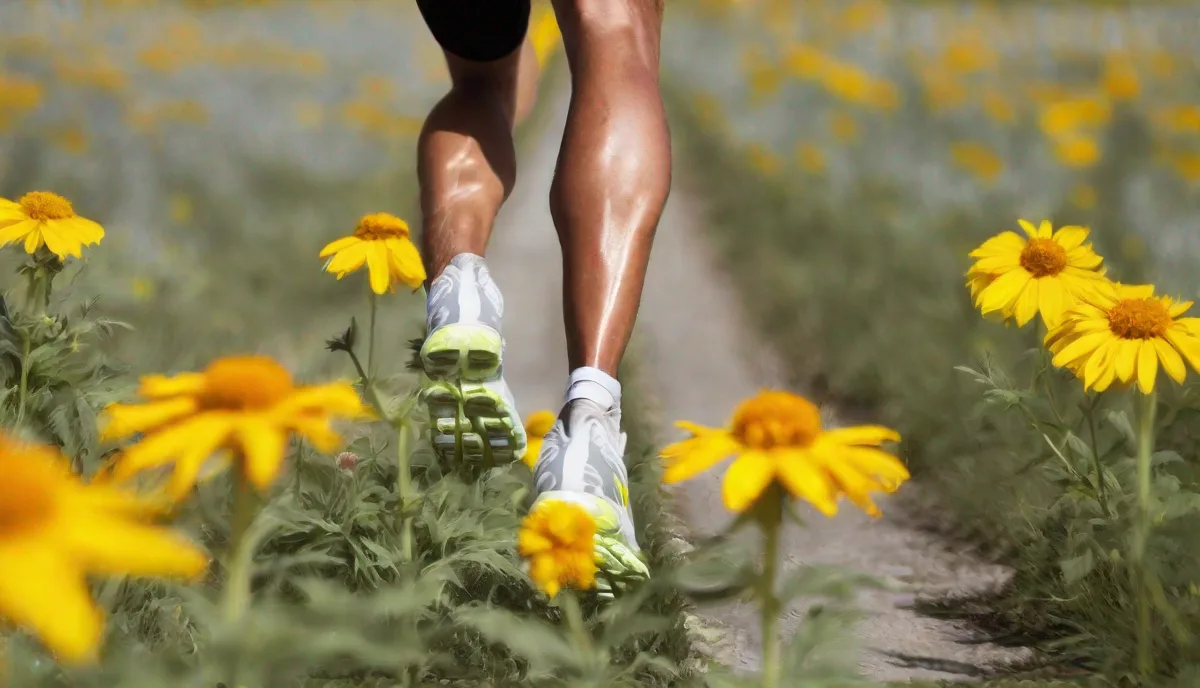
The Joys and Pains of Running
Running is a wonderful form of exercise and stress relief that comes with many benefits. However, it can also take a toll on our bodies, especially our joints. Many runners face common injuries like runner’s knee, shin splints, ankle sprains, and muscle strains.
Arnica to the Rescue
This is where arnica comes in. Arnica is an herbal remedy that comes from the Arnica montana plant in the sunflower family. It has been used for centuries to treat bruises, sprains, and swelling. Researchers have found that arnica has anti-inflammatory and analgesic properties that can help with the aches and pains of running.
Natural Pain Relief
Here are some key ways that arnica can help runners:
- Reduces inflammation from overuse injuries
- Soothes sore, tight muscles
- Eases joint pain and stiffness
- Speeds up recovery between runs
- Relieves bruising and swelling
Available Options
You can find arnica in several forms:
- Oral tablets – Should be taken in small doses. Consult your doctor before use.
- Topical gels/creams – For direct application to problem areas.
- Homeopathic dilutions – Extremely diluted concentrations. Taken orally.
Use Safely and Wisely
While arnica has many benefits, it’s important to use it properly. Don’t apply it to broken skin or take it orally for more than 2-3 weeks at a time without consulting your healthcare provider.
Strategic Pre-Run Application: The Concept of Pre-covery
While most runners view arnica as a reactive tool to be used after the damage is done, there is a growing movement toward “pre-covery”—the practice of preparing the musculoskeletal system for the impending stress of a workout. Applying a thin layer of arnica gel or oil to your primary movers—the calves, quadriceps, and hamstrings—approximately 30 minutes before a run can prime the tissues. This isn’t about masking pain to push through an injury, which is a dangerous practice, but rather about utilizing arnica’s ability to stimulate local blood flow. By encouraging micro-circulation in the capillaries before you even lace up your shoes, you ensure that the muscles are better oxygenated and that the lymphatic system is ready to begin the process of clearing metabolic waste the moment it starts to accumulate.
For those preparing for high-intensity interval training (HIIT) or hill repeats, the eccentric loading on the descent can cause significant microscopic tears in the muscle fibers. Pre-applying arnica can help modulate the initial inflammatory response. It acts as a prophylactic measure that may dampen the severity of Delayed Onset Muscle Soreness (DOMS) that typically peaks 24 to 48 hours after the effort. When applying arnica pre-run, it is essential to choose a non-greasy, fast-absorbing gel formulation. An oil-based product can interfere with the breathability of technical running fabrics or cause your socks to slip inside your shoes, potentially leading to blisters. Focus your application on the “insertion points” where tendons meet bone, such as the area just below the kneecap or the back of the heel, as these areas often bear the brunt of the initial mechanical shock.
Targeted Relief for Common Running Pathologies: IT Band and Plantar Fasciitis
General application is helpful, but runners dealing with specific pathologies require a more nuanced approach. Take Iliotibial (IT) Band Syndrome, for example. The pain is often felt at the lateral aspect of the knee, but the root of the tension frequently lies higher up in the Tensor Fasciae Latae (TFL) and the gluteus medius. When using arnica for IT band issues, you should start the application at the hip bone and work the cream or oil down the outer thigh using firm, sweeping strokes. This “flushing” motion helps to address the entire length of the connective tissue. For an added benefit, use a knuckle or a massage tool to work the arnica into the lateral quadriceps muscle, which can often become adhered to the IT band, causing friction and pain.
Plantar fasciitis presents another unique challenge where arnica can be a game-changer. The thick band of tissue on the bottom of the foot is notoriously difficult to penetrate with topical treatments due to the thickness of the skin on the sole. To maximize effectiveness, try an “arnica soak” or a targeted massage after a warm shower when the pores are open. Use an arnica-infused balm and perform deep cross-friction massage across the arch of the foot. A particularly effective edge case for runners is the “frozen arnica massage.” Fill a small paper cup with water and a tablespoon of arnica tincture, freeze it, and then peel back the top of the cup to rub the ice directly onto the inflamed fascia. This provides the dual benefit of cryotherapy to constrict blood vessels and the medicinal properties of arnica to treat the underlying inflammation once the tissue begins to re-warm.
Decoding Potency: Distinguishing Between Herbal Extracts and Homeopathic Dilutions
One of the most confusing aspects of adding arnica to your running kit is the wide variance in product labeling. You will likely encounter two distinct types: herbal (or phytotherapeutic) arnica and homeopathic arnica. Understanding the difference is crucial for managing expectations and safety. Herbal arnica products, often labeled as “Arnica 10%” or “Arnica Montana Extract,” contain a measurable amount of the plant’s active sesquiterpene lactones, primarily helenalin. Helenalin is the compound responsible for the potent anti-inflammatory effects, as it inhibits the activation of transcription factor NF-κB, which plays a central role in the inflammatory process. These products are generally more powerful for acute localized trauma but carry a higher risk of skin irritation if used excessively.
On the other hand, homeopathic arnica uses a system of extreme dilution, denoted by numbers like 6C, 30C, or 200C. In these preparations, the original plant matter is diluted to the point where perhaps only a “energetic signature” remains. While skeptics point to the lack of molecular presence, many ultra-marathoners swear by 30C pellets taken sublingually every few hours during a 100-mile race to manage systemic fatigue and “whole-body bruising.” If you are dealing with a localized bruise or a specific tendon issue, a high-concentration herbal gel is typically the better choice. If you are looking for a systemic recovery aid after an exhausting race that has left your entire body feeling battered, the homeopathic pellets offer a way to address the trauma without the risk of gastric upset often associated with NSAIDs.
Synergistic Recovery: Combining Arnica with Magnesium and Essential Oils
Arnica is a powerhouse on its own, but its efficacy can be significantly amplified when paired with other recovery agents. Many advanced recovery balms now combine arnica with magnesium oil. Magnesium is a vital mineral for muscle relaxation and nerve function, and most runners are chronically deficient due to the amount lost through sweat. When arnica and magnesium are applied together, the arnica helps to reduce the inflammatory barrier, potentially allowing for better absorption of the magnesium into the muscle tissue. This combination is particularly effective for runners prone to nocturnal leg cramps or “restless legs” after long Sunday runs.
Another powerful synergy involves essential oils like peppermint, wintergreen, or helichrysum. Peppermint oil contains menthol, which provides an immediate cooling sensation by stimulating cold-sensitive receptors in the skin. This provides instant sensory relief while the slower-acting arnica compounds begin their work on the underlying tissue. Helichrysum, often called “Immortelle,” is another botanical that, like arnica, is prized for its ability to clear bruises and strengthen blood vessel walls. For runners who suffer from “leaky” capillaries or frequent bruising from trail obstacles, a blend of arnica and helichrysum can accelerate the reabsorption of blood into the tissues, turning a dark purple bruise into a faint yellow mark in half the usual time. When creating your own blends, always use a carrier oil like jojoba or fractionated coconut oil to prevent skin sensitization.
The Post-Race Protocol: Maximizing the 48-Hour Recovery Window
The hours immediately following a race are a critical window for recovery, often referred to as the “Golden Hour.” During this time, your body is in a state of high metabolic turnover and acute inflammation. A structured arnica protocol can significantly shorten your downtime. Within 30 minutes of finishing, apply a cooling arnica gel to the major muscle groups. This helps to jumpstart the removal of metabolic byproducts like lactate and hydrogen ions. However, the real work happens in the 24 to 48 hours that follow. This is when the secondary inflammatory response peaks, leading to the stiffness that makes walking down stairs a challenge for marathoners.
For an intensive post-race treatment, consider the “Arnica Wrap.” Apply a generous layer of arnica oil to your legs, then wrap them loosely in plastic wrap or specialized recovery sleeves for 20 minutes. This creates a semi-occlusive environment that increases skin temperature and enhances the penetration of the arnica’s active compounds. After removing the wrap, elevate your legs against a wall (the “legs-up-the-wall” yoga pose) for 10 minutes. This combination of topical arnica, occlusion, and gravity-assisted lymphatic drainage is one of the most effective ways to flush the legs. Repeat this process the morning after the race to address the stiffness that sets in overnight. By maintaining a consistent application schedule every 4-6 hours during this 48-hour window, you can often return to light “shakeout” runs much sooner than if you relied on rest alone.
Trail Running and Ultra-Endurance: Managing Impact Trauma and Acute Swelling
Trail runners face a different set of physical demands than road runners. The uneven terrain requires constant lateral stabilization, which puts immense strain on the peroneal muscles and the ligaments of the ankle. Furthermore, trail running often involves “trail bite”—the inevitable scrapes, bumps, and deep tissue bruises from tripping over roots or catching a rock. In these scenarios, arnica’s role shifts from managing overuse to managing acute impact trauma. Carrying a small arnica stick in your hydration vest allows for immediate application to a rolled ankle or a bruised shin. Immediate application is key; by addressing the trauma within minutes, you can often limit the amount of internal bleeding and subsequent swelling that would otherwise end your run.
In ultra-endurance events, where athletes are on their feet for 12, 24, or even 48 hours, systemic inflammation becomes a major hurdle. The feet often swell significantly due to the constant pounding and the effects of gravity, a condition sometimes called “canker ankles.” While compression socks are the standard defense, applying arnica to the feet and lower legs before pulling on those socks can prevent the skin from becoming overly sensitive to the pressure. It’s important to note an edge case here: do not use arnica on “trail rash” or open wounds. If you take a tumble and skin your knee, apply arnica only to the *surrounding* bruised area, never the broken skin itself. The helenalin compound can be toxic if it enters the bloodstream directly through an open wound, and it can cause painful skin eruptions in some individuals when applied to raw dermis.
Integrating Arnica into Myofascial Release and Manual Therapy
To get the most out of arnica, it should be integrated into your existing mechanical recovery routine rather than used as a standalone treatment. If you use a foam roller, lacrosse ball, or massage gun, arnica can serve as the perfect medium. For foam rolling, apply arnica oil to the target muscle first. The rolling action acts like a mechanical pump, pushing the topical treatment deeper into the fascial layers while simultaneously breaking up adhesions. The heat generated by the friction of the roller also increases the permeability of the skin, making the arnica more effective.
For those who use Instrument Assisted Soft Tissue Mobilization (IASTM) or “scraping” (Gua Sha), arnica oil provides the necessary glide to prevent skin trauma while the tool works on the deeper connective tissue. The scraping motion intentionally creates micro-trauma to stimulate a healing response; following this up with arnica helps to manage that controlled inflammation so it doesn’t become excessive. Even if you don’t use tools, a five-minute self-massage with arnica after every run can have a cumulative effect. Focus on the “nodes” of the lymphatic system—the back of the knees and the groin area—using very light, rhythmic strokes toward the heart. This helps the arnica-assisted lymphatic drainage process. By turning the application of arnica into a mindful ritual of self-assessment, you become more in tune with your body’s signals, allowing you to catch potential injuries before they become season-ending setbacks.
FAQs
What is arnica used for?
Arnica is commonly used to treat pain, swelling, and bruising caused by injuries, overexertion, strains, sprains, and arthritic conditions. It’s especially helpful for runners and athletes.
Is arnica safe?
When used appropriately, arnica is generally safe. However, it can cause side effects if taken orally for extended periods or applied to broken skin. Those who are pregnant or breastfeeding should talk to their doctor before using.
How quickly does arnica work?
You may start to feel some pain relief within a few hours of taking oral homeopathic arnica. However, it may take a few days of consistent use to experience the full effects. Topical arnica creams can provide more immediate localized relief.
Can I use arnica everyday?
It’s best not to use oral arnica treatment for more than 2-3 weeks continuously without consulting your doctor. Topical arnica creams and gels can be applied daily to areas that need relief as needed.
Is arnica better than ibuprofen?
Arnica and ibuprofen work in different ways to relieve pain and inflammation. Ibuprofen treats general aches and pains very effectively. Arnica specifically targets muscle, joints, bruising and swelling caused by injuries. Using both together can provide more complete relief.
Related posts:
 Funny Running Stories About Runners’ Diarrhea
 Omega-3 Benefits for Skin Health
 Post-Run Nutrition Guide
 Mind-Skin Connection: Psychodermatology Insights
 The Slow Beauty Movement’s Secret Hydration Recipes
 Daily Anti-Inflammatory Tips
 Zoe Kravitz’s Coconut Oil Hair Care Secret
 Mandy Moore’s CBD Oil Secret for High Heels