Winter can be a challenging time for maintaining flexibility and muscle health. The cold weather often leads to muscle stiffness, but incorporating specific stretches into your routine can mitigate these effects. This article will guide you through essential winter stretches to keep your muscles limber and healthy.
Why Stretching is Important in Winter
During the winter months, the drop in temperature can cause muscles to contract and tighten. This can lead to decreased flexibility, discomfort, and increased risk of injury. Stretching helps counteract these effects by promoting blood flow, enhancing muscle elasticity, and improving overall mobility.
Top Winter Stretches for Stiff Muscles
1. Neck Stretches
Neck stretches are crucial for relieving tension caused by cold weather. To perform a neck stretch:
- Stand or sit upright with your shoulders relaxed.
- Gently tilt your head to one side, bringing your ear towards your shoulder.
- Hold for 15-30 seconds and repeat on the other side.
2. Shoulder Shrugs
Shoulder shrugs help loosen up the shoulder muscles, which often become tight during cold weather. Follow these steps:
- Stand with your feet shoulder-width apart.
- Lift your shoulders towards your ears, hold for a few seconds, and then release.
- Repeat 10-15 times.
3. Cat-Cow Stretch
The Cat-Cow stretch is excellent for maintaining spinal flexibility. Here’s how to do it:
- Start on all fours with your hands directly under your shoulders and your knees under your hips.
- Inhale, arch your back, and lift your head and tailbone towards the ceiling (Cow pose).
- Exhale, round your spine, and tuck your chin to your chest (Cat pose).
- Repeat for 1-2 minutes.
4. Hamstring Stretch
Hamstrings can become particularly tight in winter. To stretch your hamstrings:
- Sit on the floor with one leg extended and the other bent, foot against the inner thigh of the extended leg.
- Reach towards your toes while keeping your back straight.
- Hold for 20-30 seconds and switch legs.
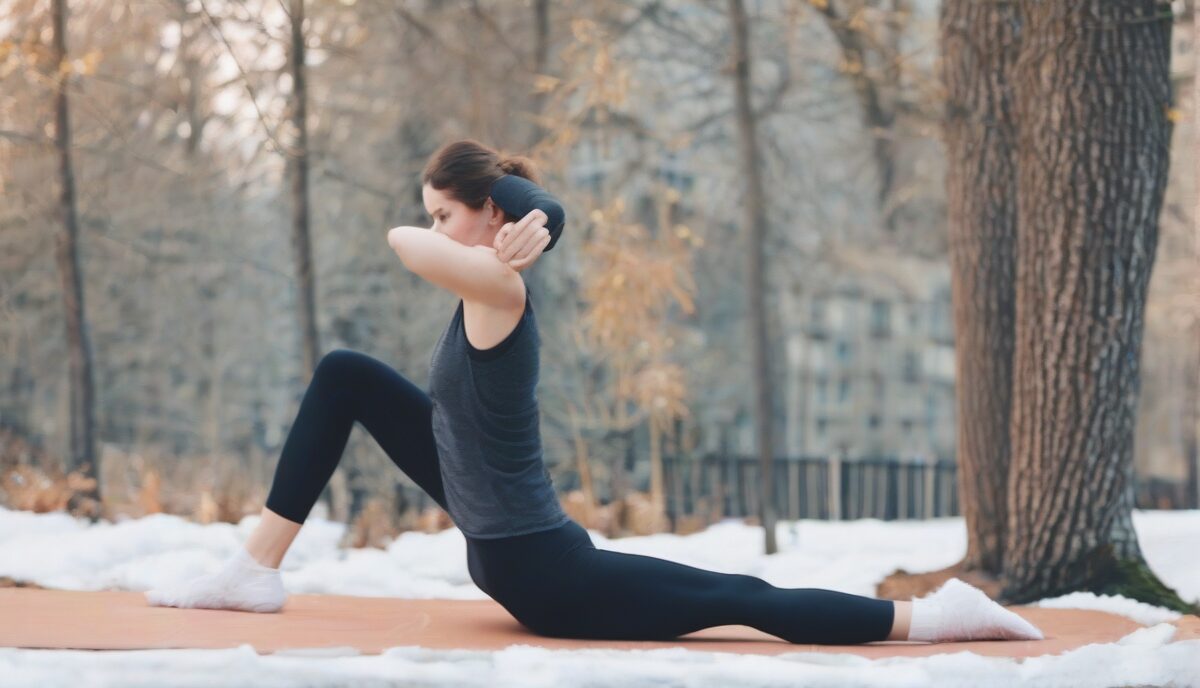
5. Hip Flexor Stretch
Hip flexors can also get stiff in the cold. To stretch them:
- Kneel on the floor with one leg forward, creating a 90-degree angle at the knee.
- Push your hips forward gently until you feel a stretch in the front of your hip.
- Hold for 20-30 seconds and switch legs.
Tips for Effective Stretching
To get the most out of your stretching routine, keep these tips in mind:
- Warm up before stretching to increase blood flow to your muscles.
- Stretch slowly and avoid bouncing, as it can cause injury.
- Breathe deeply to enhance relaxation and effectiveness.
- Stretch regularly, ideally every day, to maintain flexibility.
Understanding the Physiology of Cold-Induced Muscle Contraction
To effectively combat winter stiffness, it is essential to understand why our bodies react so dramatically to a drop in temperature. When the skin is exposed to cold, the nervous system triggers a process called vasoconstriction. This is a survival mechanism where blood vessels near the surface of the skin narrow to shunt warm blood toward the internal organs. While this protects your core temperature, it leaves peripheral muscles—those in your arms, legs, and back—with significantly less oxygenated blood and warmth. This lack of circulation causes the muscle fibers to lose their elasticity, making them feel like a piece of cold leather rather than a flexible rubber band.
Furthermore, the cold affects the thixotropic properties of our connective tissues. Synovial fluid, which lubricates our joints, and the ground substance within our fascia become more viscous (thicker) in lower temperatures. This creates a literal internal resistance to movement. When you try to move a stiff joint in the winter, you are fighting against thickened fluid and shortened fibers. This is why a simple static stretch without a thermal transition can sometimes lead to micro-tears. To mitigate this, your winter routine must account for this “viscosity factor” by prioritizing gradual heat generation within the muscle before attempting deeper ranges of motion.
Another physiological factor is the shivering reflex. Even subtle, low-grade shivering involves rapid, involuntary muscle contractions designed to generate heat. Over several hours of being “chilled,” these micro-contractions lead to isometric fatigue. Your muscles are essentially performing a low-intensity workout just to stay warm, leading to that characteristic “winter ache” in the upper back and neck. Recognizing that your muscles are already under tension from the cold is the first step in choosing stretches that soothe rather than strain.
The “Winter Hunch”: Opening the Thoracic Spine and Pectorals
In cold weather, most people adopt a protective posture: shoulders shrugged toward the ears, chin tucked, and chest collapsed inward. This is a natural instinct to reduce the surface area exposed to the wind and to trap heat near the chest. However, maintaining this “winter hunch” for months leads to chronic shortening of the pectoralis minor and a stiffening of the thoracic spine (the middle back). This can cause secondary issues like tension headaches and restricted breathing.
To counteract this, focus on the Doorway Pectoral Stretch with Thoracic Rotation. Stand in a doorway, placing your forearms on the doorframe with your elbows at a 90-degree angle. Step one foot forward until you feel a gentle pull across the front of your chest. Unlike a standard chest stretch, add a subtle rotation by looking over the opposite shoulder of the side you are emphasizing. This engages the fascia connecting the chest to the neck, which is often the tightest point during the winter. Hold this for 45 seconds, focusing on expanding the ribcage with each inhale.
Another effective variation is the Wall Slide for Scapular Mobilization. Stand with your back flat against a wall, including your heels, glutes, and head. Raise your arms to a “goalpost” position, keeping your elbows and the backs of your hands in contact with the wall. Slowly slide your arms upward as far as you can without losing contact or arching your lower back, then pull them back down, tucking your elbows into your ribs. This forces the muscles responsible for upright posture—which are often dormant during the winter—to engage and reset your alignment. Perform 15 slow repetitions to generate internal heat in the upper back.
Lower Body Resilience: Releasing the Glutes and Piriformis
Winter often brings a more sedentary lifestyle as we spend more time indoors, leading to “gluteal amnesia” and tightness in the deep rotators of the hip, such as the piriformis. When these muscles stiffen, they can compress the sciatic nerve, leading to radiating pain that feels worse in the cold. Additionally, wearing heavy winter boots changes your gait, often causing the glutes to work in inefficient ways to maintain stability on slippery surfaces.
The Seated Figure-Four Stretch is a foundational winter move that can be done anywhere, from an office chair to a park bench. Sit at the edge of your seat with your feet flat. Cross your right ankle over your left knee. Ensure your right foot is flexed to protect the knee joint. Gently press down on the right knee while leaning forward with a flat back. The key here is the “flat back”; rounding the spine bypasses the hip stretch and puts unnecessary pressure on the lumbar discs. You should feel a deep release in the outer hip and glute. This is particularly beneficial after a long commute in a cold car where your hips have been locked in a seated position.
For a more advanced release, try the 90/90 Hip Switch. Sit on the floor with your right leg bent at a 90-degree angle in front of you and your left leg bent at a 90-degree angle to your side. Your torso should be upright. This position targets both internal and external rotation of the hips—two movements that are frequently restricted by heavy winter clothing and stiff joints. Hold the position for 30 seconds, then slowly pivot on your heels to switch the orientation of your legs. This dynamic transition helps “floss” the hip joint, encouraging the thick synovial fluid to thin out and flow more freely.
Ankle and Foot Mobility for Icy Terrain
One of the most overlooked aspects of winter physical health is ankle mobility. Walking on snow, slush, or ice requires constant, micro-adjustments in the feet and ankles to maintain balance. If your ankles are stiff—which often happens because heavy boots act like a cast, restricting movement—your body will compensate by overworking the knees and lower back. This increases the risk of slips and falls.
To prepare your lower extremities, practice the Weighted Ankle Dorsiflexion Stretch. Kneel on one knee (half-kneeling position). Keeping your front heel firmly planted on the floor, lean your weight forward onto your front thigh, pushing your knee out over your toes. You can use your hands to apply gentle pressure to the thigh. You should feel a stretch in the Achilles tendon and the lower calf (the soleus). Unlike the upper calf, the soleus requires a bent knee to be effectively targeted. Hold for 30 seconds. This increased range of motion allows your foot to react more quickly if you step on an uneven patch of ice.
Don’t forget the soles of the feet. The plantar fascia can become incredibly tight in winter due to the lack of “barefoot” movement and the rigidity of winter footwear. Use a Tennis Ball or Lacrosse Ball Roll. While sitting or standing, place the ball under the arch of your foot and apply moderate pressure. Roll the ball from the base of the toes to the heel for 2 minutes per foot. This not only stretches the fascia but also stimulates blood flow to the extremities, which are often the coldest parts of the body. Improved circulation in the feet can actually help the rest of your legs feel warmer and more mobile.
The “Shovel-Ready” Protocol: Dynamic Preparation
Shoveling snow is one of the most physically demanding tasks of the season, and doing it with “cold” muscles is a recipe for acute back strain. Static stretching (holding a position) is actually less effective before shoveling than dynamic stretching, which mimics the movement and raises the core temperature. Before you pick up the shovel, spend five minutes on a specific movement protocol.
Start with Torso Twists with Arm Swings. Stand with feet wider than shoulder-width. Swing your arms loosely from side to side, letting your torso rotate and your trailing heel lift off the ground. This prepares the oblique muscles and the thoracic spine for the rotational load of throwing snow. Follow this with Bodyweight Good Mornings. Place your hands behind your head, keep a slight bend in your knees, and hinge at the hips while keeping your back perfectly straight. This “wakes up” the hamstrings and the erector spinae muscles of the lower back, teaching them to support your spine before you add the weight of the snow.
Finally, perform Lateral Lunges. Step wide to the right, bending your right knee while keeping the left leg straight, then push back to center and repeat on the left. Shoveling often requires lateral stability and power. By stretching the adductors (inner thighs) dynamically, you ensure that if you lose your footing while lifting, your muscles can stretch and recover without tearing. This protocol transitions your body from a state of “winter rest” to “functional exertion,” significantly lowering the risk of a Monday morning back spasm after a Sunday snowstorm.
Proprioceptive Drills: Stretching the Nervous System
Stretching isn’t just about the muscles; it’s also about the nervous system’s ability to sense where your body is in space (proprioception). In winter, our proprioception is often dampened by bulky clothing and reduced sensory input from cold skin. Improving this can prevent the “stiffening” response that occurs when we feel unstable on slippery ground.
Try the Single-Leg Balance with Reach. Stand on one leg with a slight bend in the knee. Reach forward with the opposite hand as if you are trying to touch a point on the wall in front of you, then reach to the side, and then behind you. While this feels like a balance exercise, it is actually a functional stretch for the stabilizing muscles of the ankle, hip, and core. As you reach, these muscles undergo “eccentric loading,” where they stretch while under tension. This is the exact type of movement that occurs when you nearly slip on ice but catch yourself.
Another excellent drill is the Wall-Supported Dead Bug. Lie on your back with your feet pressed against a wall at a 90-degree angle. Press your lower back firmly into the floor. Extend one arm overhead while maintaining the pressure of your back against the floor. This “stretches” the neural pathways of the core, reminding the body how to stabilize the spine while the limbs are moving. In winter, we often lose this core-limb coordination because we are so bundled up and tense. Re-establishing this connection indoors makes every outdoor movement safer and more fluid.
Thermal Optimization: Enhancing Stretches with External Heat
While the existing advice to warm up is vital, you can significantly enhance your winter stretching by utilizing “passive warming” tools. Stretching a muscle that is externally warmed allows for a deeper reach with less risk of injury. This is particularly useful for those with chronic conditions like arthritis, which often flares up in cold, damp weather.
Consider using a Heating Pad or Warm Compress on the lower back or neck for 10 minutes prior to starting your routine. This localized heat increases the local metabolic rate and relaxes the superficial fascia. Once the area feels warm to the touch, perform your stretches. You will find that the range of motion is achieved much more comfortably. Alternatively, the best time for a deep stretching session in winter is immediately following a warm bath or shower. The ambient steam and increased core temperature make the collagen fibers in your tendons more pliable.
For those who exercise outdoors, the transition back to the indoors is a critical window. Do not immediately sit down on the couch after coming in from the cold. Your muscles will “set” in their shortened, cold state. Instead, keep your winter layers on for 10-15 minutes once inside. Use this “thaw period” to perform gentle, rhythmic movements like high knees or arm circles. Once you feel your internal temperature has stabilized and you’ve stopped shivering, then proceed to your static stretches. This gradual cooling prevents the sudden stiffening that often follows winter outdoor activity, ensuring your muscles remain limber for the rest of the day.
FAQ
1. How often should I stretch in winter?
It’s recommended to stretch daily, especially during the winter months, to maintain flexibility and prevent stiffness.
2. Can stretching help with winter-related muscle pain?
Yes, regular stretching can help alleviate muscle pain caused by cold weather by improving blood circulation and muscle elasticity.
3. Is it necessary to warm up before stretching?
Yes, warming up is crucial as it prepares your muscles for stretching and reduces the risk of injury.
4. What should I do if I feel pain while stretching?
If you experience pain while stretching, stop immediately. Pain can be a sign of overstretching or injury.
5. Can I stretch multiple times a day?
Yes, you can stretch multiple times a day, especially if you feel tight or stiff. Just ensure you don’t overdo it to avoid muscle strain.