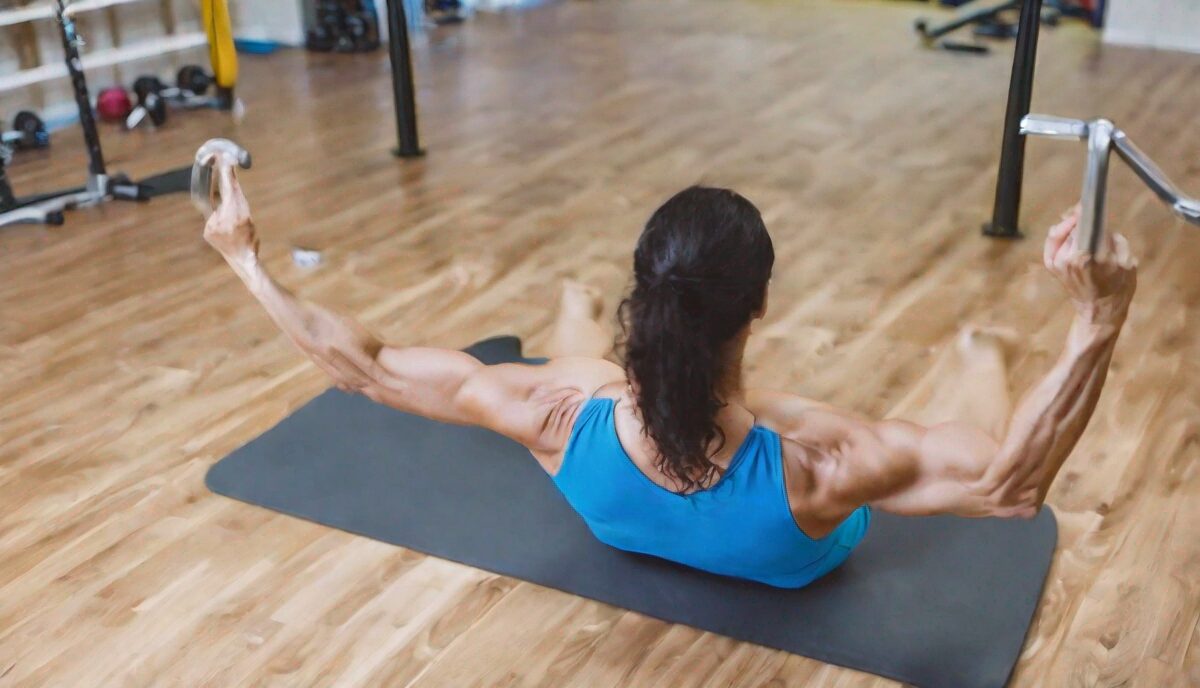
Improving mobility and flexibility has incredible benefits for both physical and mental health. When our bodies feel free to bend, twist, and move through space, we experience less pain, more energy, and greater ease.
Why Mobility and Flexibility Matter
Flexibility allows our joints to move through their full range of motion and our muscles to lengthen without tightness or strain. As we age, it’s common for our flexibility to decrease, which can make everyday movements more difficult.
Including mobility and flexibility training in your workout routine can help counteract those effects. It may also help prevent injury, enhance physical performance, reduce muscle soreness, decrease stress levels, and simply make you feel better in your body.
Best Exercises to Improve Mobility and Flexibility
1. Dynamic Stretches
Dynamic stretches gently take your joints through controlled motions to warm up your body. Some good options include leg swings, walking lunges, and arm circles.
2. Foam Rolling
Using a foam roller to massage sore muscles can help improve circulation and loosen tight spots. Slowly roll out each muscle group for 30-90 seconds.
3. Yoga
Yoga incorporates both static stretching and movement to increase range of motion. Try beginner-friendly poses like cat-cow, downward-facing dog, and forward folds.
4. Pilates
The controlled movements of Pilates lengthen muscles and build strength in tandem. The Hundred, shoulder bridge, and spinal rotation are great for flexibility.
5. Tai Chi
Tai chi flows link gentle motions together to limber up the whole body. Over time, regular practice can significantly improve mobility.
Tips for Improving Mobility and Flexibility
- Warm up first with light cardio or dynamic stretches
- Move slowly and gently to avoid injury
- Hold static stretches for 30-60 seconds
- Aim for a feeling of tension, not pain
- Breathe slowly and deeply as you stretch
The Role of Fascia and Myofascial Release
While stretching targets muscle fibers, many people overlook the importance of the fascia—the connective tissue web that wraps around muscles, bones, and organs. When fascia becomes dehydrated or congested, it creates “adhesions” that restrict movement even if your muscles are technically flexible. To address this, incorporate myofascial release beyond just standard foam rolling. Using a lacrosse ball or a massage ball on trigger points in the glutes, feet, and pectorals can release these stubborn knots. For example, standing with a tennis ball under the arch of your foot and applying gentle, rhythmic pressure can alleviate tightness that travels all the way up the posterior chain to your hamstrings and lower back. Focus on finding “tender” spots rather than “painful” ones; if you find a spot that elicits a flinch response, pause and breathe for 30 seconds until the tissue yields.
Integrating Mobility into Strength Training
One of the most effective ways to improve mobility is to move through a full range of motion during your actual lifting sessions. Many trainees suffer from “shortened” movement patterns, such as shallow squats or half-reps on overhead presses. To fix this, adopt “pause reps” or “eccentric-focused” training. By slowing down the lowering phase of a squat to a four-second count and pausing at the very bottom, you force the joints to adapt to the end-range position under tension. This is called active mobility. Another technique is the “loaded stretch,” such as performing a dumbbell chest fly with a deep stretch at the bottom or using a deficit deadlift to increase the stretch on the hamstrings. When you combine strength with length, you teach your nervous system that it is safe to be in those deeper positions, which is the key to lasting, functional mobility.
The Importance of Joint-Specific Articulations
Mobility is often limited by the health of the joint capsule itself. CARs (Controlled Articular Rotations) are a specific type of training designed to maintain joint health by moving each joint through its maximum available range of motion in a circular, controlled manner. For instance, a shoulder CAR involves standing tall, arm straight, and drawing the largest possible circle with your arm while keeping the rest of your body completely still. This process lubricates the joint with synovial fluid and provides the brain with updated feedback on where the limb is in space. By performing five slow, deliberate rotations for the hips, ankles, shoulders, and spine each morning, you can actively combat the “stiffness” that accumulates from long periods of sitting. Think of this as “flossing” your joints to keep the cartilage healthy and the movement pathways clear.
Breathing Techniques to Unlock Range of Motion
The nervous system acts as the gatekeeper to your flexibility. If your body senses danger—often triggered by shallow, rapid breathing—it will tighten muscles to protect your joints, effectively locking you into a limited range of motion. To bypass this, utilize diaphragmatic breathing during your stretching routines. When you exhale fully, you shift your nervous system from a sympathetic (fight-or-flight) state to a parasympathetic (rest-and-digest) state. As you move into a stretch, inhale deeply through your nose, and as you exhale, attempt to sink slightly deeper into the position. The relaxation response triggered by the exhale allows the Golgi tendon organs in your muscles to release their tension, effectively allowing you to reach further than you could while holding your breath. This “breathe-into-the-stretch” method is essential for overcoming those final degrees of tightness in the hips and shoulders.
Address Asymmetries and Compensatory Patterns
Most individuals have significant left-to-right asymmetries caused by repetitive daily habits, such as carrying a bag on one shoulder or sitting with crossed legs. If you ignore these, you will likely develop compensatory patterns where one side of your body overworks while the other weakens. To correct this, perform unilateral (single-limb) exercises exclusively for a period. Instead of a barbell back squat, switch to Bulgarian split squats or single-leg Romanian deadlifts. These exercises force your stabilizing muscles to fire, exposing which side is tighter or weaker. If you notice your right hip is tighter than your left, dedicate an extra two minutes of focused mobility work to that specific side before your workout. By correcting these imbalances, you prevent the kinetic chain from breaking down, which is often the silent cause of chronic aches that don’t respond to general stretching.
The Impact of Hydration and Nutrition on Tissue Elasticity
Flexibility is not just a mechanical issue; it is a chemical one. Fascia and muscle fibers require adequate hydration to maintain their elasticity. If you are chronically dehydrated, your connective tissues lose their lubricated, “gel-like” quality and become more like dried-out sponges, making them brittle and prone to micro-tearing. Beyond water intake, consider the role of collagen-rich foods or supplements, which provide the building blocks for tendons and ligaments. Magnesium is another critical factor; it acts as a muscle relaxant, helping to prevent the involuntary spasms and tightness that often limit range of motion. If you find that your muscles feel “tight” regardless of how much you stretch, it may be a sign that your cellular hydration or mineral balance is off, rather than a lack of effort in your stretching routine.
FAQ
What is the difference between mobility and flexibility?
Mobility refers to your ability to move joints through a normal range of motion. Flexibility involves stretching and lengthening muscles.
How often should I stretch?
Aim to stretch 3-5 times per week after warming up. Stretch gently after workouts when muscles are warm.
Will stretching make me more flexible overnight?
Improving flexibility takes time and consistency. Be patient and keep stretching regularly to see gradual progress.
Can I be too flexible?
Hypermobility may increase injury risk if not balanced with strength training. Work on mobility and stability together.
What if stretching is painful?
Sharp pain is a sign to back off. Ease up your stretch and focus on gentle movements instead. Consult a physical therapist if you have chronic pain or difficulty moving.
Related posts:
 Hand Stretches for Relief
 Anabolic Stretching Claims to Build Muscle While You Stretch
 Essential Bedtime Stretches
 Desk Yoga for Back Pain Relief
 Dangers of Over-Stretching
 PHA Bodyweight Workout: Efficient Fitness Anywhere, Anytime
 Stretches to Relieve Foot Pain
 How to Stretch Safely Without Going Too Far