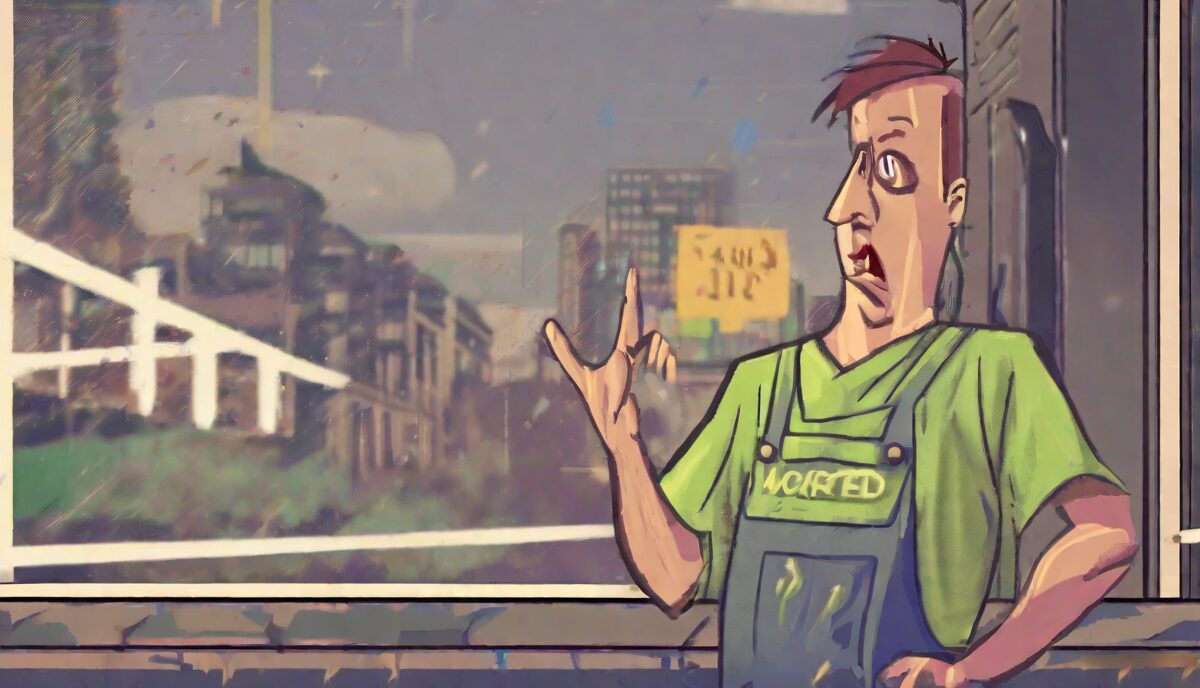
It’s understandable to feel worried about the future. So much feels uncertain and out of our control. But there are healthy ways to manage anxiety without getting lost in cycles of panic and dread.
Focus on What You Can Control
Make plans where possible, while accepting there are limits to our control. Break big worries into smaller actionable steps. Build resilience through self-care.
Connect With Community
You’re not alone. Support groups and talking to trusted friends can ease anxiety. Look out for each other with compassion.
Practice Mindfulness
Ground yourself in the present when worries spiral. Try meditation, yoga, walking in nature. Breathe deeply and redirect your thoughts constructively.
Prioritize Self Care
Make time for healthy habits. Move your body, eat nutritious foods, get good sleep, and do activities you enjoy. Taking care of yourself will help you better weather life’s storms.
Have Hope
This too shall pass. Humans have endured pandemics, wars, depressions. With solidarity, science and conscience, we can overcome current and future challenges.
FAQ
Is it normal to worry about things like climate change?
Yes, it’s understandable to worry about serious issues that affect our future. The key is to balance awareness with productive action grounded in hope.
How can I worry less when things feel beyond my control?
Focus on what you can control, like your daily habits and being engaged in your local community. Accept that certain things are beyond your control without letting worry overtake you.
Why is too much worrying unhealthy?
Chronic worrying increases inflammation in your body and puts strain on critical body systems implicated in health issues over time. It also impacts your daily functioning and wellbeing.
What are some quick ways to reduce anxiety when it strikes?
Breathe deeply, go for a walk in nature, listen to calming music, meditate or pray, call a friend, write your worries in a journal, do light stretches/yoga, or visualize your happy place.
How can I talk to my friends and family when I’m worried without spreading more anxiety?
Frame your concerns constructively by focusing the conversation on solutions rather than just sharing worries. Provide emotional support to each other and convey hope.
Deconstructing the Anatomy of Catastrophizing
When we worry about the future, we often fall into a cognitive trap known as catastrophizing. This is the mental process where we take a single unfavorable data point and extrapolate it into a series of increasingly dire events, ending in total ruin. To manage this, it is essential to understand the difference between possibility and probability. While it is possible that an economic downturn could lead to a total societal collapse, the probability of that specific outcome is statistically low. By identifying this pattern, you can begin to label the thought as a “cognitive distortion” rather than an objective fact.
One effective technique for deconstructing these spirals is the “Decatastrophizing Worksheet” approach. When a worry arises, write down the worst-case scenario in vivid detail. Then, write down the best-case scenario—no matter how unlikely it feels. Finally, identify the most likely middle-ground scenario. Usually, our anxiety lives in the extreme worst-case, while reality tends to settle in the middle. By forcing your brain to visualize the middle and best-case outcomes, you break the neurological monopoly that fear has on your imagination. This doesn’t mean ignoring threats; it means contextualizing them so they don’t paralyze your ability to function in the present.
Consider the edge case of “productive worry.” Some individuals feel that if they stop worrying, they are somehow less prepared or that they are tempting fate. This is a superstitious belief that worry acts as a shield. In reality, chronic worry consumes the cognitive resources you need for actual problem-solving. Practice setting a “worry window”—fifteen minutes a day where you are allowed to fret as much as you want. When the timer goes off, you must pivot to a physical activity or a complex task. This trains your brain to recognize that while worry is a natural signal, it is not a permanent state of being.
Establishing Digital Boundaries in an Age of Permacrisis
The modern world presents us with a unique challenge: the 24-hour news cycle and the algorithmic amplification of crisis. Our brains are biologically wired to prioritize negative information because, in our ancestral past, ignoring a threat (like a predator) was far more dangerous than ignoring a benefit (like a patch of berries). Today, tech platforms exploit this “negativity bias” to keep us engaged. To protect your mental health, you must treat your digital consumption with the same intentionality as your physical diet. “Doomscrolling”—the act of continuously scrolling through bad news—creates a feedback loop of cortisol and adrenaline that makes the future seem much bleaker than it is.
Start by auditing your notifications. Most breaking news alerts are designed to trigger urgency, not to provide utility. Turn off all non-essential alerts and choose specific times of the day to check the news, preferably not immediately after waking up or right before bed. When you do consume information, seek out “slow journalism”—long-form analysis that provides context and historical perspective rather than reactionary snippets. This helps move your perspective from the “micro-crisis” of the hour to the “macro-trends” of the decade, which are often more nuanced and less terrifying.
Furthermore, consider the physical environment of your digital life. Use browser extensions that hide “trending” sidebars or comment sections, which are often hotbeds of unverified rumors and emotional volatility. If you find yourself unable to step away, try the “grayscale” trick: setting your phone screen to black and white. This removes the dopamine-inducing visual cues of colorful icons and red notification badges, making the device a tool rather than an addictive source of anxiety. By reclaiming your attention, you reduce the constant background noise of global dread, allowing you to focus on the tangible world immediately around you.
Professional and Economic Resilience Through Skill Diversification
Much of our future-related anxiety is rooted in financial insecurity and the changing nature of work. With the rise of automation, AI, and shifting global markets, the fear of becoming obsolete is a heavy burden. Instead of viewing your career as a linear path, try to view it as a portfolio of skills. Economic resilience comes from “anti-fragility”—the ability to not just survive shocks, but to grow because of them. This involves identifying your “transferable skills”—abilities like critical thinking, complex communication, and emotional intelligence—that remain valuable regardless of technological shifts.
Take a proactive approach by dedicating a small portion of your week to “future-proofing.” This might involve learning a new software, understanding the basics of a growing industry, or even developing a secondary income stream or hobby that could be monetized if necessary. The goal isn’t to become a master of everything, but to prove to yourself that you are capable of learning and adapting. This sense of agency is the most potent antidote to the feeling of being a victim of economic forces. When you know you can pivot, the prospect of change becomes a challenge to meet rather than a catastrophe to fear.
In addition to skill-building, look at your financial “margin.” Anxiety thrives in tight spots. Even if you can only save a very small amount, the act of building an emergency fund provides a psychological buffer. It represents a tangible piece of the future that you have secured. If traditional career paths feel unstable, look into the “gig economy” or freelance opportunities not as a replacement for your job, but as a way to broaden your network. The more connections you have across different sectors, the more “nodes” of safety you have in your professional life. Resilience is built in the quiet times, so that when the storm hits, your foundation is already reinforced.
The Psychology of Uncertainty and Radical Acceptance
One of the hardest things for the human mind to grasp is the concept of “Intolerance of Uncertainty” (IU). Many people who struggle with future-anxiety have a high IU; they feel that they must know what is going to happen to feel safe. However, certainty is an illusion. The key to peace isn’t finding out what will happen, but building the internal capacity to handle whatever does. This is where the concept of “Radical Acceptance” comes in. Borrowed from Dialectical Behavior Therapy (DBT), radical acceptance is the practice of acknowledging reality as it is, without judgment or attempts to fight it mentally.
Radical acceptance does not mean you like what is happening, nor does it mean you are giving up. It means you stop wasting energy on the thought, “This shouldn’t be happening.” When we fight reality, we create “unnecessary suffering” on top of the “natural pain” of life. For example, if you are worried about an upcoming election or a policy change, you can accept that the situation is occurring. Once you stop the internal protest, you free up the emotional energy required to actually respond effectively—whether that’s through advocacy, community organizing, or personal preparation.
Try practicing this in small ways. If you’re stuck in traffic and worrying about being late, practice saying, “I am stuck in traffic. I cannot change this. I will deal with the consequences when I arrive.” This micro-level acceptance builds the “muscle memory” needed for larger life uncertainties. By letting go of the need to control the uncontrollable, you actually gain a higher level of self-control. You become the observer of the storm rather than a leaf caught in the wind. This shift in perspective is subtle but transformative, moving you from a state of constant high-alert to one of calm readiness.
Somatic Grounding and the Vagus Nerve
Anxiety about the future isn’t just in your head; it’s in your nervous system. When we worry, our body enters a “fight, flight, or freeze” state. The sympathetic nervous system ramps up, increasing heart rate and shallowing the breath. If this state becomes chronic, it’s difficult to “think” your way out of worry because your brain is receiving constant signals of danger from your body. To break this cycle, you can use somatic (body-based) techniques to manually trigger the parasympathetic nervous system—the “rest and digest” response—primarily through the vagus nerve.
The vagus nerve is the longest cranial nerve in the body and acts as a two-way street between the brain and the organs. You can stimulate it through specific physical actions. For instance, “box breathing” (inhale for 4, hold for 4, exhale for 4, hold for 4) or “physiological sighs” (two quick inhales followed by a long, slow exhale) send a biological signal to the brain that the immediate environment is safe. Another effective method is cold exposure, such as splashing ice-cold water on your face or the back of your neck. This triggers the “mammalian dive reflex,” which immediately slows the heart rate and resets the nervous system.
Beyond immediate fixes, consider the “proprioceptive” input of your environment. Weighted blankets, gentle resistance exercises, or even the act of humming or chanting can soothe a frazzled nervous system. These aren’t just “relaxation techniques”; they are biological overrides for the fear response. When your body feels safe, your prefrontal cortex—the part of the brain responsible for logical planning and optimism—comes back online. This allows you to look at the future through a lens of capability rather than one of vulnerability. Integrating these physical checks into your daily routine ensures that your body isn’t working against your mind’s attempts to stay calm.
Cultivating Active Hope Through Tangible Contribution
There is a significant difference between “passive optimism” (the belief that things will just get better) and “active hope” (the practice of becoming a participant in creating a better future). Passive optimism can actually increase anxiety because it relies on external factors we can’t control. Active hope, however, is a choice. It begins with identifying what you value most and then taking small, tangible steps to protect or promote those values in your immediate surroundings. This moves you from the role of a spectator of global events to a protagonist in your own community.
If you are worried about the environment, for example, the scale of the problem can feel paralyzing. But joining a local reforestation project, reducing your personal waste, or supporting sustainable local businesses provides a sense of “moral agency.” This doesn’t solve the global crisis single-handedly, but it solves the crisis of hopelessness within you. When we act in alignment with our values, our brain rewards us with a sense of purpose. This purpose acts as a psychological anchor, preventing us from being swept away by the currents of general dread. It turns “What if?” into “What can I do?”
Consider the concept of “localism.” While we are bombarded with global problems, our greatest impact is often within a ten-mile radius of our homes. Strengthening local food systems, participating in neighborhood watches, or volunteering at a nearby school creates a “micro-future” that is more stable and connected. These small wins build a sense of efficacy. You begin to see that while the world at large is complex and unpredictable, your corner of it can be nurtured and improved. This groundedness provides a powerful counter-narrative to the idea that the future is an inevitable decline.
Managing Intergenerational Anxiety and Family Dynamics
Worry about the future often ripples through families, creating a shared atmosphere of tension. Parents may worry about the world their children will inherit, while younger generations may feel a sense of “eco-anxiety” or economic despair that their elders struggle to understand. Managing these dynamics requires clear boundaries and compassionate communication. It is important to realize that anxiety is often “contagious.” If one family member is constantly sharing doomsday articles or expressing hopelessness, it can trigger the stress responses of everyone else in the household.
To address this, establish “news-free zones” or times, such as during dinner or on weekend outings, where the focus remains strictly on the present moment and the people involved. If a family member is prone to “doom-talking,” you can gently redirect the conversation by saying, “I understand that’s a serious concern, but right now I’d like to focus on our time together. Can we talk about something else?” This isn’t about being dismissive; it’s about preserving the emotional sanctuary of the home. For children, it’s vital to model “resilient coping.” Show them that while there are problems in the world, there are also people working to fix them, and that your family is a team that handles challenges together.
In cases where different generations have vastly different views on the future, focus on shared values rather than conflicting predictions. You might both value security, health, and kindness, even if you disagree on the path the world is taking. By anchoring your relationships in these shared human elements, you create a support network that can withstand external uncertainty. The future is less frightening when you know you have a cohesive, supportive group to face it with. Building this relational capital is perhaps the most practical form of future-planning any of us can do, as it provides the emotional safety net that no amount of individual worrying could ever create.
Related posts:
 Anxiety’s Link to Better Memory
 Why Family Traditions Matter More Than You Think
 Brain-Boosting Foods
 PHA Bodyweight Workout: Efficient Fitness Anywhere, Anytime
 Love’s Anxiety Trap: When Your Relationship Becomes Your Biggest Trigger
 Hope Therapy: Cultivating Optimism in Clients
 The Mental Health Benefits of Journaling That Science Confirms
 Life Time Fitness Bans Cable News