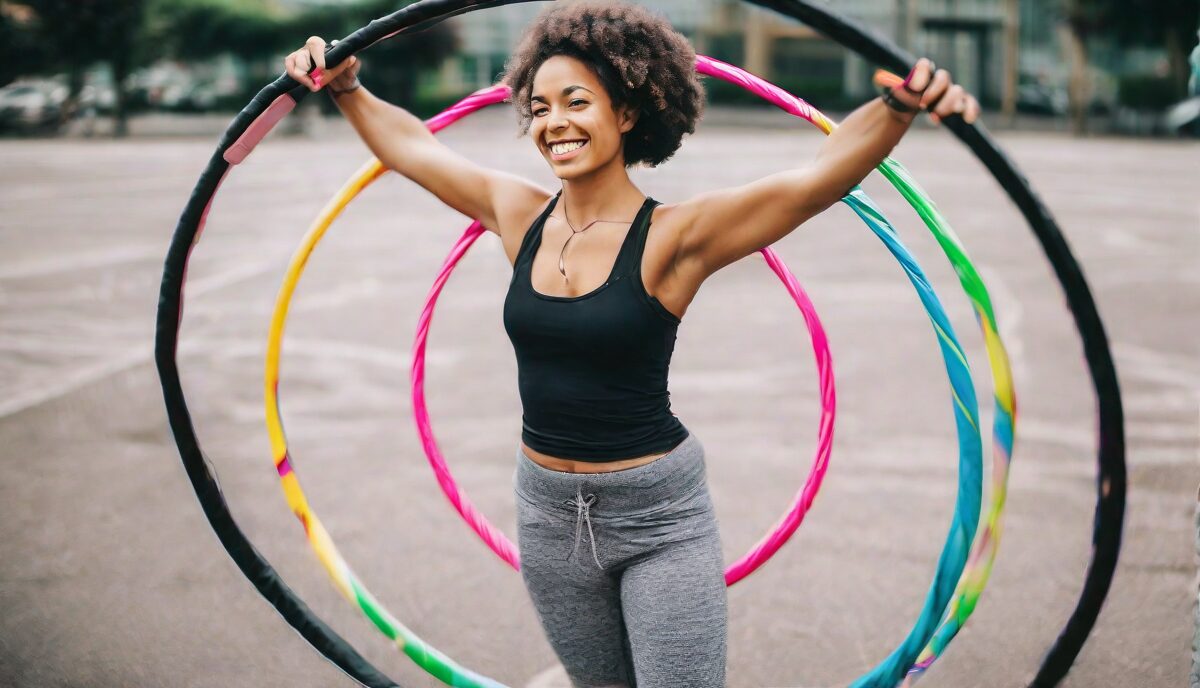
The Joyful Art of Hula Hooping
Hula hooping is making a comeback as a fun way to get moving and connect more joyfully with your body. As an easy exercise you can do at home or take outside, it engages your core muscles while helping you destress.
A Mind-Body Practice That Uplifts
Beyond the physical benefits, hula hooping can be a moving meditation that lifts your spirits. The playfulness and self-expression bring out your inner child. As you learn new moves, it builds your confidence and creativity.
Building a Supportive Community
Hula hoopers form welcoming communities where people support each other. Instead of competition, the focus is on each person’s journey toward greater body acceptance, personal growth and feeling more at home in their skin.
Accessible and Fun For All Ages
Hula hooping is enjoyable at any age or fitness level. With lightweight hoops available in many sizes, you can find the right fit for your body. And tutorials abound online to guide you as you build skill.
Selecting the Perfect Hoop: Beyond the Toy Aisle
The most common barrier for beginners is attempting to learn with a lightweight, small-diameter hoop intended for children. These are difficult to keep in motion because they require high-speed hip rotation that is physically taxing and often frustrating. For adult fitness, you need a weighted “fitness hoop” or a “dance hoop.” A general rule of thumb for sizing is to stand the hoop upright in front of you; the top of the hoop should reach somewhere between your navel and your chest. A larger diameter means the hoop rotates more slowly, giving you more time to react and adjust your body rhythm. When selecting weight, aim for 1 to 2 pounds. Anything heavier, particularly those with internal ridges or magnets, can cause bruising if used for extended periods before your body has adapted to the impact.
Mastering the Fundamental Stance and Weight Shift
Successful hooping is not about frantic hip swiveling; it is about linear weight distribution. Instead of standing with your feet together, place one foot slightly in front of the other in a staggered stance. This creates a front-to-back plane that allows you to push the hoop forward and backward rather than side-to-side. As the hoop makes contact with your front hip, shift your weight forward; as it hits your back hip, shift your weight backward. Keep your knees soft and your spine neutral. If you find the hoop constantly dropping, you are likely trying to move your hips in a circular motion. Focus instead on the “rocking” motion of the pelvis, which provides the necessary torque to keep the momentum alive without exhausting your lower back.
Advanced Core Engagement and Postural Alignment
Once you have mastered keeping the hoop aloft, you can transition from a passive activity to a high-intensity core workout. To maximize the benefit, engage your transverse abdominis—the deep core muscles that act as a natural corset. Pull your belly button toward your spine without holding your breath. By maintaining this tension, you protect your lumbar spine while forcing your internal obliques to stabilize your torso against the centrifugal force of the hoop. Try experimenting with your arm positions: keeping your hands above your head or extended to the sides significantly increases the challenge to your stabilizer muscles, turning a simple hoop session into a comprehensive balance and posture training routine.
Troubleshooting Common Plateaus and “Hoop Fatigue”
It is perfectly normal to experience “hoop fatigue” or bruising during your first two weeks. Your body is adjusting to a new type of rhythmic impact. If you notice tenderness, take two days off to allow your tissues to recover, or wear a thicker layer of clothing like a sweatshirt to cushion the contact point. If the hoop keeps falling to the floor, do not increase the intensity of your movements. Often, the error is “over-hooping,” where you are moving too fast for the hoop to track. Slow down your rhythm. If the hoop drops, observe where it hits the ground—usually, it falls because your hips have stopped moving or your posture has collapsed. Reset, take a breath, and focus on the consistent “push” of the hoop against your lower back.
Integrating Hoop Flow into Cross-Training
Hooping is an excellent low-impact supplement to high-intensity interval training or weightlifting. Because it is a unilateral movement that requires constant micro-adjustments, it improves proprioception—your body’s ability to sense its position in space. Consider using the hoop as a “dynamic recovery” tool. After a heavy leg day, 10 to 15 minutes of light, rhythmic hooping can help increase blood flow to the core and hips, reducing stiffness. Furthermore, because hooping requires bilateral coordination, it encourages neural cross-talk between the left and right hemispheres of the brain, a benefit rarely found in linear cardio like running or cycling.
Designing Your Personal Hoop Flow Practice
To keep your practice sustainable, treat your hoop session like a dance session rather than a chore. Create a “hoop playlist” with a steady, moderate tempo (around 100-110 BPM), which matches the natural cadence of an adult-sized hoop. Start with five minutes of warm-up movement, followed by ten minutes of “hooping on the waist,” and finish with “hoop stretching”—using the hoop as a prop for overhead reaches, chest openers, and hamstring stretches. By rotating your focus between waist-hooping, hand-hooping (isolations), and using the hoop as a stretching tool, you prevent repetitive strain and keep your brain engaged with new motor patterns, ensuring that the movement remains a source of joy rather than a repetitive task.
FAQ
What are the benefits of hula hooping?
Hula hooping works your core muscles, improves coordination and balance, lifts your mood, and builds a sense of community.
How do I get started with hula hooping?
Look online to find hoops designed for adult beginners. Start with short sessions and simple moves, watching tutorials for guidance. Most of all, relax and have fun with it!
Where can I hula hoop in my community?
Parks, beaches, community gardens and recreation centers often welcome respectful hula hooping. You may also find groups of hoopers who gather regularly to play together.
What if I struggle to keep the hoop up?
Don’t get discouraged! It takes practice to get the rhythm. Make sure your hoop fits properly, start slow, and focus on having fun rather than judging your progress.
Can hula hooping help me lose weight?
While hula hooping can burn calories as part of an active lifestyle, the emphasis is better placed on self-care, personal growth and feeling comfortable in your own skin.
Related posts:
 The Top Weighted Hula Hoops for Fun and Effective Workouts
 PHA Bodyweight Workout: Efficient Fitness Anywhere, Anytime
 Chelsea Handler’s Ab Workout
 Fitness Trainers Say This Move Beats Squats Every Time
 10 Non-Traditional Fitness Classes to Try
 Managing Hip Pain from Sitting
 Perfect Your Squat Form
 If You Fail This Test, You Need to Work on Improving Hip Mobility