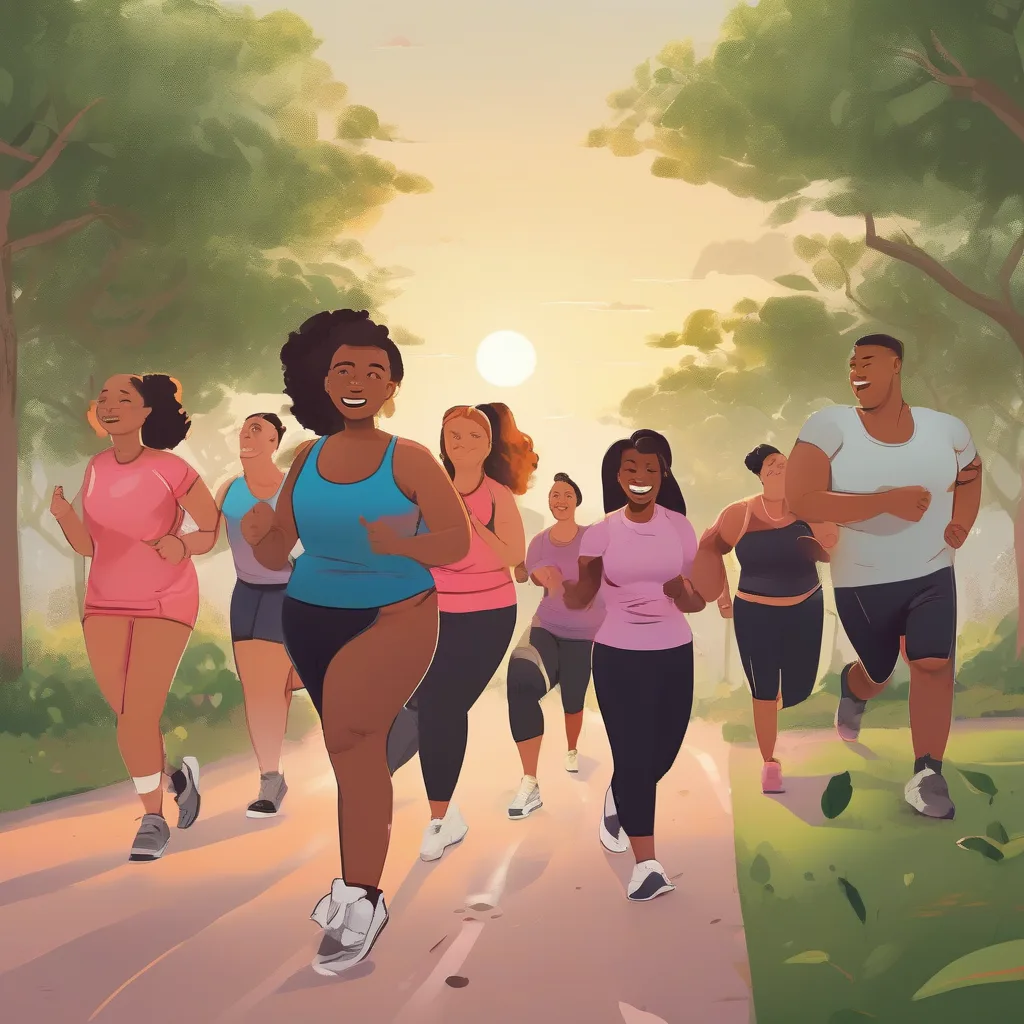
In today’s digital age, social media platforms like Instagram have become a showcase for ‘ideal’ body types, often leaving people feeling inadequate about their own fitness journeys. However, it’s crucial to understand that being fit is not synonymous with looking like an Instagram model. Let’s explore why fitness transcends the images we see online and how you can embrace a healthier lifestyle without the pressure of unrealistic standards.
The Myth of the Perfect Body
The concept of a ‘perfect body’ is a myth, perpetuated by a combination of photo editing, lighting, and angles that create an illusion of flawlessness. It’s important to remember that these images often don’t reflect reality and can set unattainable standards for the average person.
Fitness is Personal
Fitness is a highly individual journey. What works for one person may not work for another. It’s about finding what exercise and nutrition habits make you feel your best and fit your lifestyle, rather than conforming to a specific look or trend.
Health Benefits of Being Fit
Being fit is about more than just appearance. Regular exercise and a balanced diet offer numerous health benefits, including improved cardiovascular health, stronger muscles, better mental health, and a reduced risk of chronic diseases.
Setting Realistic Goals
When setting fitness goals, it’s crucial to be realistic and focus on achievable milestones. Celebrate your progress, no matter how small, and understand that fitness is a marathon, not a sprint.
Embracing Body Positivity
Body positivity is about loving and accepting your body as it is while working towards your health and fitness goals. It’s okay to aspire to improve, but not at the cost of your self-esteem.
The Biomechanics of Body Diversity: Why One Size Never Fits All
To understand why the Instagram aesthetic is an unreliable benchmark for fitness, we must first look at the hard science of human anatomy. Every individual possesses a unique skeletal structure that dictates how muscle and fat are distributed across the frame. For instance, the width of your pelvic bone or the length of your clavicles is genetically predetermined. A person with a wider pelvic structure may never achieve the ‘thigh gap’ often glorified on social media, regardless of how low their body fat percentage drops. Similarly, individuals with longer limb lengths (long levers) may find that their muscles appear leaner and less ‘bulky’ than someone with shorter limbs, even if they possess the same amount of muscle mass.
Muscle insertions also play a pivotal role in how your physique looks. The points where your tendons attach to your bones determine the shape and ‘peak’ of a muscle. You cannot change these attachment points through training. An Instagram model might have high bicep insertions that create a sharp peak, while your insertions might be lower, creating a fuller but flatter appearance. Neither is ‘more fit’ than the other; they are simply different biological blueprints. Understanding this helps shift the focus from trying to reshape your skeleton to optimizing the functional capabilities of your specific body type.
Furthermore, we must consider the role of somatotypes—ectomorphs, mesomorphs, and endomorphs. While most people are a blend of these types, your dominant somatotype influences how your body responds to stimuli. An endomorph might gain strength rapidly and possess incredible power but naturally carry more subcutaneous fat, which provides a protective layer for joints and organs. In contrast, an ectomorph might struggle to put on weight but excel in endurance activities. Both can be at the peak of physical fitness, yet they will never look the same in a mirror. True fitness involves working with your genetic predispositions rather than fighting an uphill battle against your own DNA to mimic a stranger’s silhouette.
Redefining Progress: Beyond the Scale and the Mirror
If looking like a model isn’t the goal, how do we measure success? We must pivot toward internal metrics and ‘Non-Scale Victories’ (NSVs) that offer a more accurate reflection of physiological health. One of the most significant indicators of fitness is Resting Heart Rate (RHR). As your cardiovascular system becomes more efficient, your heart doesn’t have to work as hard to pump blood at rest. A lower RHR is often a much better indicator of heart health and longevity than the visibility of abdominal muscles, which can often be achieved through dangerous levels of dehydration or caloric restriction.
Another critical metric is Heart Rate Variability (HRV). This measures the variation in time between each heartbeat and is a powerful indicator of your nervous system’s health and your body’s ability to recover from stress. A high HRV suggests that your body is resilient and well-adapted to its training load. On the practical side, consider tracking your ‘recovery time’—how quickly your breathing returns to normal after a set of heavy squats or a sprint. This functional efficiency is a hallmark of a fit body, regardless of whether that body fits into a size small or a size extra-large.
We should also celebrate improvements in mobility and flexibility. Can you squat deep enough to pick up a heavy box without straining your back? Can you reach behind your shoulders with ease? These markers of ‘functional range of motion’ ensure that you remain independent and injury-free as you age. When you stop chasing a specific aesthetic, you gain the mental bandwidth to appreciate the fact that you can now carry all your groceries in one trip or that you no longer feel winded after climbing three flights of stairs. These are the victories that actually improve your quality of life.
Functional Strength: Fitness for the Real World
The fitness industry often prioritizes ‘hypertrophy’—training for muscle size—because it is visually striking. However, functional strength focuses on the nervous system’s ability to recruit muscle fibers effectively. You can be incredibly strong without having massive, bulging muscles. This is known as neural adaptation. When you train for function, you are teaching your brain to communicate more efficiently with your muscles, leading to power, balance, and coordination that translate to real-world activities.
Consider the ‘Farmer’s Carry’ or the ‘Deadlift.’ These exercises mimic the act of carrying heavy suitcases or lifting a child off the floor. A fit person is someone who has the core stability to protect their spine under load and the grip strength to hold onto objects securely. In fact, numerous longitudinal studies have shown that grip strength is a significant predictor of all-cause mortality in older adults. It is a better indicator of your body’s overall vitality than the circumference of your waist. By shifting your training toward compound movements—those that involve multiple joints and muscle groups—you build a body that is robust and ‘hard to kill,’ rather than one that is merely ‘good to look at.’
Edge cases in fitness often include athletes in sports like powerlifting or shot put. These individuals are among the strongest people on the planet, yet they often carry higher body fat percentages to leverage better mechanical advantages and maintain hormonal health. If we used the Instagram model standard, these elite athletes would be deemed ‘unfit,’ which is a logical fallacy. Their bodies are finely tuned machines optimized for performance. When you train for a specific skill—whether it’s a pull-up, a 5k run, or a yoga pose—your body will naturally move toward its most efficient shape for that task, which may or may not include a six-pack.
The Dark Side of Aesthetic Perfection: The Cost of the “Look”
It is rarely discussed, but the ‘shredded’ look frequently showcased online often comes at a significant physiological cost. To maintain extremely low body fat levels (typically below 10-12% for men and 18-20% for women for extended periods), the body often enters a state of perceived starvation. This can lead to Relative Energy Deficiency in Sport (RED-S), a syndrome that affects metabolic rate, menstrual function, bone health, and immunity. For many women, achieving the ‘fitness model’ look results in amenorrhea (the loss of a period), which can lead to early-onset osteoporosis due to low estrogen levels.
Furthermore, the mental health toll of maintaining an ‘ideal’ physique is substantial. It often requires a level of neuroticism regarding food and exercise that borders on disordered eating. Social isolation is common, as individuals may avoid eating out with friends or traveling because they cannot control their exact caloric intake. The ‘fitness’ portrayed on social media is often a snapshot of a person at their most depleted and vulnerable state—perhaps right before a competition or a photo shoot—rather than a sustainable, year-round lifestyle. Many models use ‘peak week’ strategies involving sodium manipulation and extreme dehydration to make their muscles pop for the camera, a state that is physically dangerous and impossible to maintain for more than a few hours.
By understanding that the ‘look’ is often a temporary and unhealthy state, we can release the guilt of not achieving it. A truly fit body is one that is hormonally balanced, has a robust metabolism, and possesses enough energy to enjoy life. If your fitness routine leaves you constantly exhausted, irritable, and obsessed with your next meal, it is no longer serving your health; it is serving your vanity at the expense of your well-being.
Fueling for Vitality vs. Depriving for Definition
Nutrition is the most misrepresented aspect of the fitness industry. The ‘Instagram model’ diet is often portrayed as a series of aesthetic salads and green juices, but the reality for many is a cycle of extreme restriction followed by bingeing. To be truly fit, your nutrition should focus on ‘metabolic flexibility’—the ability of your body to efficiently switch between burning carbohydrates and fats for fuel. This requires a balanced intake of macronutrients and, more importantly, a high density of micronutrients (vitamins and minerals).
Instead of focusing on ‘cutting’ calories to reveal muscle, consider the ‘Thermic Effect of Food’ (TEF) and the importance of protein for muscle protein synthesis. Eating enough protein is not just for bodybuilders; it is essential for maintaining lean tissue, which in turn supports a healthy metabolism as you age. Moreover, fiber is a critical but often overlooked component of a fit person’s diet. A healthy gut microbiome, supported by a variety of plant-based foods, influences everything from your mood to your immune system. You cannot see a healthy microbiome in a mirror, but you can certainly feel its effects in your energy levels and digestion.
Practical nutrition for fitness involves ‘fueling for the work required.’ If you have a heavy lifting session or a long run planned, your body needs carbohydrates to perform. Depriving yourself of these nutrients in an attempt to stay ‘lean’ will eventually lead to poor performance and muscle wasting. A fit person understands that food is information for the cells and fuel for the engine. When you stop viewing food as an enemy to be minimized and start viewing it as a tool to be utilized, your relationship with your body undergoes a radical, positive transformation.
The Psychological Shift: From Punishment to Empowerment
One of the most damaging narratives in modern fitness is the idea that exercise is a punishment for what you ate. This ‘burn it to earn it’ mentality creates a toxic relationship with movement and food. True fitness is rooted in empowerment and the joy of what your body can achieve. When you shift your mindset from ‘I have to go to the gym to lose weight’ to ‘I am going to the gym to see how strong I can become,’ you create a sustainable habit that can last a lifetime.
Exercise has profound effects on brain health that have nothing to do with aesthetics. It stimulates the release of Brain-Derived Neurotrophic Factor (BDNF), often described as ‘Miracle-Gro for the brain,’ which supports the growth of new neurons and improves cognitive function. It is a powerful tool for managing anxiety and depression, providing a natural outlet for the ‘fight or flight’ response. A fit person recognizes when their body needs a high-intensity workout to blow off steam and when it needs a gentle walk or yoga session to lower cortisol levels. This ‘intuitive movement’ is a sophisticated form of self-care that requires listening to your body’s signals rather than following a rigid, one-size-fits-all program found online.
Moreover, the confidence gained from physical fitness often spills over into other areas of life. When you realize you can tackle a difficult hike or master a new skill in the gym, that resilience translates to your professional and personal challenges. This ‘mental toughness’ is a core component of fitness that no photograph can ever capture. It is the quiet confidence of knowing your body is capable, reliable, and strong, regardless of the tag on your clothing.
Deconstructing the Digital Illusion: Behind the Scenes of the “Perfect” Shot
To fully detach from the pressure of looking like an Instagram model, we must understand the professional techniques used to create those images. It begins with lighting. Photographers use ‘Rembrandt lighting’ or harsh overhead shadows to accentuate muscle definition that is barely visible in natural, flat light. They often use ‘the pump’—performing a high-repetition workout immediately before the photo to engorge the muscles with blood, making them appear larger and more vascular for a few minutes.
Then there is the art of posing. Models are trained to tilt their pelvis, hold their breath, and twist their torsos in ways that create the illusion of a narrower waist and larger glutes. These poses are often uncomfortable and unsustainable for more than a few seconds. Additionally, many ‘fitfluencers’ use specific clothing, such as ‘scrunch’ leggings or high-waisted compression gear, designed to lift, tuck, and contour the body into a specific shape. This is essentially the modern equivalent of a corset, creating a silhouette that does not exist when the clothes come off.
Finally, we must acknowledge the role of digital alteration. Beyond simple filters, apps now allow for the subtle stretching of limbs, the narrowing of waists, and the smoothing of skin textures—all while maintaining a ‘natural’ look. Even ‘candid’ shots are often one of five hundred photos taken in a single session. When you compare your reflection in the harsh gym mirror—after a long day of work, while you’re bloated or tired—to a curated, edited, and posed image, you are comparing a real human experience to a manufactured product. Fitness is the reality of the sweat, the effort, and the health you build every day; it is not the two-dimensional illusion captured in a screen.
FAQ
Do I need to be a certain size to be considered fit?
No, fitness is not determined by size. It’s about how you feel, your energy levels, and your overall health.
How can I avoid comparing myself to others on social media?
Focus on your journey and progress. If necessary, take a break from social media or follow accounts that promote a healthy, realistic approach to fitness.
What are some realistic fitness goals I can set?
Start with goals like improving your endurance, gaining strength, or incorporating more whole foods into your diet. These are tangible and beneficial to your overall health.
How can I stay motivated in my fitness journey?
Find an activity you enjoy, track your progress, and seek support from friends or a fitness community. Celebrate your achievements, regardless of how small they may seem.
Is it possible to be fit and have body fat?
Yes, body fat is a natural and essential part of the human body. Being fit means having a balance of muscle mass and body fat that is healthy for you.
Related posts:
 Understanding Body Fat Percentage
 The Scary Way Instagram Might Know You’re Depressed Before You Do
 Instagram as Therapy
 Anne Hathaway’s Positive Take on Weight Gain from Strength Training
 Why Loose-Fit Jeans Are Back
 Chelsea Handler’s Ab Workout
 Jessica Biel’s Instagram Audience Revelation Will Blow Your Mind
 PHA Bodyweight Workout: Efficient Fitness Anywhere, Anytime