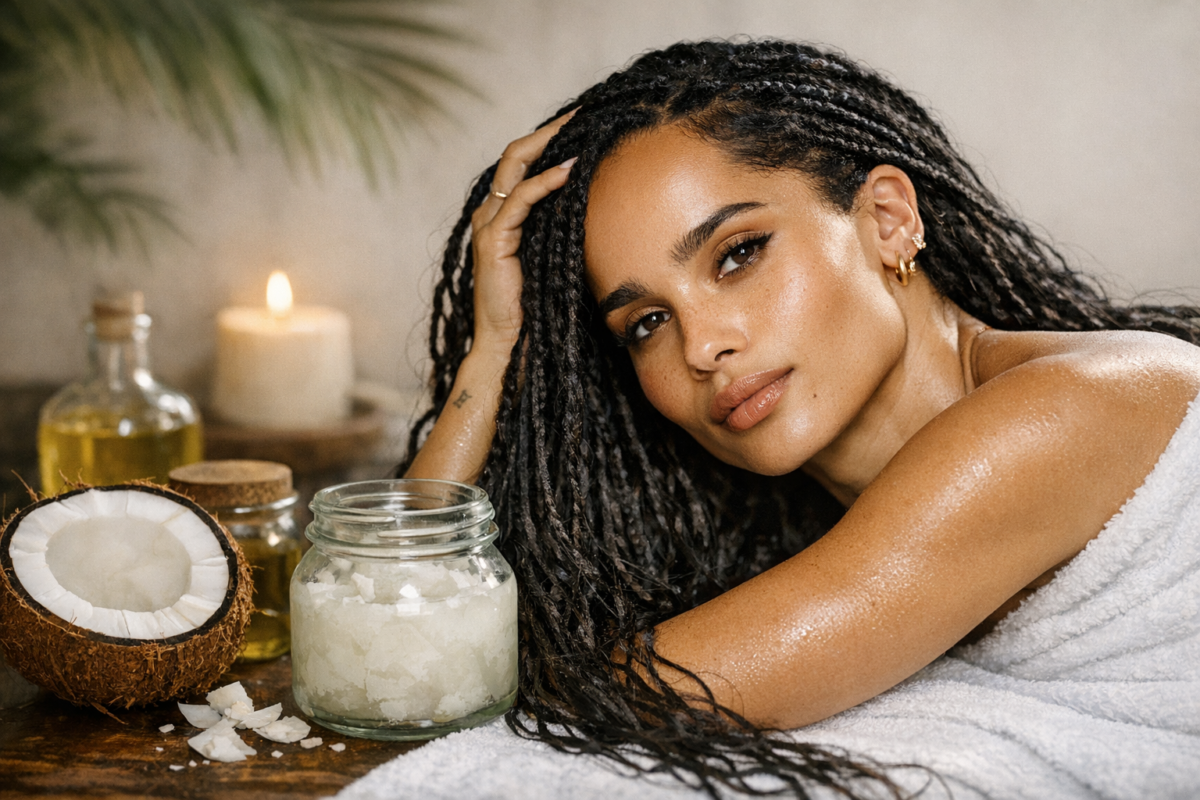
Zoe Kravitz has long been admired for her effortlessly cool style, from her edgy red carpet looks to her signature pixie cuts and braided styles. But beyond the fashion headlines, the actor and musician has shared a simple, accessible hair care secret that has resonated with fans worldwide: coconut oil. This natural ingredient, used for centuries in tropical cultures, has become a cornerstone of her hair maintenance routine, helping her maintain healthy, moisturized strands despite the demands of styling, coloring, and environmental exposure.
Why Coconut Oil Works for Hair Health
Coconut oil has gained significant attention in the beauty world, and the science backs up the enthusiasm. Unlike many commercial conditioners that primarily coat the hair surface, coconut oil has a unique molecular structure that allows it to penetrate the hair shaft. The oil is rich in lauric acid, a medium-chain fatty acid with a low molecular weight and a straight-chain structure. This combination enables it to enter the hair cortex rather than sitting on top of the cuticle.
When coconut oil penetrates the hair, it helps reduce protein loss. Hair is primarily made of keratin, a structural protein that can become damaged through washing, brushing, heat styling, and chemical treatments. A study published in the Journal of Cosmetic Science found that coconut oil applied before and after washing significantly reduced protein loss compared to other oils like sunflower or mineral oil, which primarily remain on the surface.
The oil also provides lubrication along the hair shaft, which can reduce friction and minimize mechanical damage during combing or brushing. For individuals with textured, curly, or coily hair—hair types that are naturally more prone to dryness and breakage—this lubricating effect can be particularly beneficial. Coconut oil helps seal moisture inside the hair strand, creating a protective barrier against environmental stressors like humidity, wind, and pollution.
Zoe Kravitz’s Approach to Natural Hair Care
Zoe Kravitz has spoken candidly about her relationship with her hair throughout her career. As a multiracial woman with Black, Jewish, and Bahamian heritage, she has navigated the complexities of caring for textured hair in an industry that has historically lacked understanding of diverse hair needs. In interviews, she has described the journey of learning to embrace her natural texture after years of relaxing, straightening, and altering her hair to fit conventional beauty standards.
Her advocacy for coconut oil emerged as part of a broader shift toward embracing natural ingredients and simplified routines. Kravitz has mentioned using coconut oil as a deep conditioning treatment, applying it liberally to her hair and allowing it to penetrate before washing it out. This approach aligns with traditional practices in many Caribbean, South Asian, and African cultures, where coconut oil has been used for generations as a hair treatment.
What makes Kravitz’s endorsement compelling is its accessibility. While she certainly has access to high-end salon treatments and luxury products, she has highlighted an ingredient that costs a few dollars at any grocery store. This democratizes hair care advice, suggesting that effective maintenance does not require expensive interventions.
How to Use Coconut Oil as a Pre-Wash Treatment
One of the most effective ways to incorporate coconut oil into a hair care routine is as a pre-wash treatment, often called a pre-poo in natural hair communities. This method aligns with how Zoe Kravitz has described using the oil. The goal is to apply the oil before shampooing so that it can protect the hair during the washing process, which can be harsh and stripping.
Start with unrefined, virgin coconut oil, which retains more of its natural antioxidants and nutrients compared to refined versions. The oil is solid at room temperature but melts quickly when warmed in your hands. Take a generous amount—enough to coat your hair thoroughly—and work it through dry hair from mid-lengths to ends. Focus on the oldest and most damaged portions of your hair, as these benefit most from the treatment.
For those with scalp issues like dryness or flakiness, you can gently massage a small amount into the scalp. However, individuals with oily scalps or acne-prone skin should use caution, as coconut oil can be comedogenic and may clog pores around the hairline. Sectioning the hair can help ensure even distribution, especially for those with thick or dense hair.
Leave the oil on for at least thirty minutes, though leaving it overnight can provide deeper conditioning. Some people cover their hair with a shower cap or satin bonnet to prevent transfer to pillowcases. When ready to wash, shampoo thoroughly—usually requiring two lathers—to remove the oil. Follow with your regular conditioner. You will likely notice that your hair feels softer and more manageable even before styling.
Using Coconut Oil as a Leave-In and Styling Aid
Beyond deep conditioning, coconut oil can serve as a light leave-in treatment or styling product. This application requires a lighter touch to avoid weighing the hair down or creating a greasy appearance. For those with very dry, coarse, or curly hair, a small amount of coconut oil applied to the ends can help seal moisture after washing while the hair is still damp.
To use as a leave-in, start with a pea-sized amount of coconut oil. Warm it between your palms until it liquefies, then scrunch or smooth it through the mid-lengths and ends of damp hair. Avoid the roots unless you have extremely dry scalp conditions. This technique works well for defining curls, reducing frizz, and adding a subtle sheen without the stiffness of some styling gels or mousses.
For protective styles like braids, twists, or buns, coconut oil can help smooth the hair and reduce friction that leads to breakage. A light application before styling makes the hair more pliable and easier to manipulate. This is particularly relevant for those who, like Kravitz, frequently wear braided styles or have shorter hair that requires regular styling.
It is important to note that coconut oil may not work as a leave-in for all hair types. Those with fine, straight hair might find it too heavy, leading to a weighed-down, oily appearance. In these cases, lighter oils like argan or jojoba might be more appropriate. The best approach is experimentation: try a small amount on a section of hair and observe how your hair responds.
Choosing the Right Type of Coconut Oil
Not all coconut oils are created equal, and the type you choose can affect your results. The most significant distinction is between refined and unrefined (often labeled virgin or extra virgin) coconut oil. Unrefined coconut oil is extracted from fresh coconut meat without chemical processing or high heat. It retains the natural coconut aroma and flavor, as well as more of the beneficial compounds like antioxidants and medium-chain triglycerides.
Refined coconut oil, on the other hand, is made from dried coconut meat that has been treated to remove impurities and neutralize the scent. While it still contains lauric acid and can penetrate the hair shaft, some of the additional nutrients are lost during processing. For hair care, unrefined virgin coconut oil is generally recommended because it provides the most benefit. However, if you dislike the smell of coconut or find it overwhelming, refined oil is an acceptable alternative.
Another consideration is the oil’s texture. Coconut oil melts at approximately 76 degrees Fahrenheit (24 degrees Celsius). In cooler weather, it will be solid and require warming before application. Some brands offer fractionated coconut oil, which remains liquid at all temperatures. This form has had the long-chain fatty acids removed, making it lighter and less greasy. It can be a good option for those who find regular coconut oil too heavy, though it may not penetrate as deeply.
When shopping, look for cold-pressed or expeller-pressed oils, which indicate mechanical extraction without chemical solvents. Organic certification ensures the coconuts were grown without synthetic pesticides, though this is more relevant for dietary use than topical application. Store coconut oil in a cool, dry place away from direct sunlight. Properly stored, it has a long shelf life of up to two years.
Understanding Hair Porosity and Coconut Oil Compatibility
Hair porosity refers to the hair’s ability to absorb and retain moisture, and it plays a significant role in how well coconut oil works for any given individual. Porosity is determined by the condition of the hair cuticle—the outermost layer of the hair shaft. Low porosity hair has a tightly bound cuticle layer that resists moisture absorption. High porosity hair has a more open cuticle, often due to damage from heat, chemicals, or environmental factors, which allows moisture to enter easily but also escape quickly.
Coconut oil tends to work best for medium to high porosity hair. Because high porosity hair has gaps and openings in the cuticle, the oil can penetrate effectively and help fill those gaps, reducing moisture loss. Those with low porosity hair might find that coconut oil sits on top of their hair without absorbing, leaving a film that can feel sticky or look greasy.
If you are unsure about your hair porosity, a simple test can help. Take a clean strand of hair—shed hair from a brush works fine—and drop it into a glass of water. If it sinks quickly, you likely have high porosity hair. If it floats even after several minutes, your hair is low porosity. If it slowly sinks to the middle of the glass, you have medium porosity. This knowledge can guide your hair care choices beyond just coconut oil, influencing which products and ingredients work best for you.
For those with low porosity hair who still want to try coconut oil, applying it with heat can help. Using a warm towel, sitting under a hooded dryer, or using a thermal cap while the oil is on your hair can help lift the cuticle slightly and allow better penetration. Alternatively, mixing coconut oil with lighter oils or aloe vera gel can reduce its heaviness.
Addressing Common Concerns and Misconceptions
Despite its popularity, coconut oil is not a miracle cure, and it does not work for everyone. Some people report that coconut oil makes their hair feel brittle, dry, or straw-like, an effect sometimes called “protein overload.” Because coconut oil helps reduce protein loss, it can inadvertently highlight existing protein imbalances. Hair that already has adequate protein might feel stiff when coconut oil is applied. In these cases, balancing protein with moisture—using humectants like glycerin or honey alongside oils—can help.
Another concern is build-up. Coconut oil can accumulate on the hair over time, especially if not thoroughly washed out. This build-up can attract dirt and dust, making hair look dull and feel heavy. Clarifying shampoos, which contain stronger surfactants, can remove build-up, but they should be used sparingly to avoid stripping the hair. Alternatively, a rinse with diluted apple cider vinegar can help dissolve oil residue.
There is also the question of whether coconut oil promotes hair growth. While coconut oil can improve the condition of existing hair and reduce breakage, there is no scientific evidence that it directly stimulates new growth. Claims that it can prevent baldness or regrow hair are not supported by research. What it can do is create a healthier environment for hair by reducing damage and keeping strands strong, which may indirectly support length retention over time.
Finally, individuals with nut allergies should exercise caution. While coconut is botanically classified as a drupe rather than a true nut, the FDA classifies it as a tree nut for labeling purposes. Most people with tree nut allergies can safely use coconut products, but allergic reactions are possible. If you have a known nut allergy, consult with a medical professional before using coconut oil topically, and perform a patch test on your inner arm before applying it to your scalp.
Integrating Coconut Oil Into a Holistic Hair Care Routine
Zoe Kravitz’s hair care philosophy emphasizes simplicity and self-acceptance, and coconut oil fits well into a minimalist approach. However, effective hair care involves more than any single ingredient. A holistic routine considers cleansing, conditioning, protection, and internal health.
Gentle cleansing is essential. Harsh sulfates in some shampoos can strip natural oils and leave hair vulnerable. Switching to sulfate-free formulas or co-washing—using conditioner to cleanse—can help maintain moisture balance, especially for curly and textured hair types. When using coconut oil treatments, ensure you are cleansing thoroughly enough to remove excess oil without over-washing.
Protection extends beyond products. Heat styling tools like flat irons, curling wands, and blow dryers can cause significant damage. Air drying when possible, using heat protectants when heat is necessary, and keeping tools at the lowest effective temperature all help preserve hair integrity. Protective hairstyles that tuck away the ends of the hair can reduce mechanical damage and moisture loss.
Internal factors matter as well. Hair health reflects overall health to some degree. Adequate hydration, a balanced diet rich in protein, healthy fats, and vitamins, and stress management all contribute to hair condition. Deficiencies in nutrients like iron, biotin, or vitamin D can manifest as hair thinning or shedding. While coconut oil can address external concerns, addressing internal needs is equally important.
Consistency is key. One coconut oil treatment will not transform your hair overnight. Regular use over weeks and months, combined with gentle handling and protective practices, leads to gradual improvement. Track your routine and note how your hair responds. Adjust frequency and application methods based on your hair’s needs, which may change with seasons, hormonal fluctuations, and styling demands.
The Cultural Heritage Behind Coconut Oil Hair Traditions
Zoe Kravitz’s embrace of coconut oil connects her to beauty practices that span continents and centuries. In the Philippines, coconut oil has been used for hair care for generations, often referred to locally as “coco oil” or by its Tagalog name, “niyog.” Filipino women traditionally massaged the oil into their scalps and hair before long sun exposure, believing it protected against UV damage while promoting thickness and shine. This practice was not merely cosmetic but deeply woven into cultural identity, with coconut trees often called the “tree of life” for their myriad uses.
In Kerala, India, coconut oil hair treatments are nearly universal. South Indian women have long practiced weekly oiling rituals, sometimes called “taila abhyanga” in Ayurvedic tradition, where warm coconut oil is massaged into the scalp with circular motions. This serves dual purposes: the oil conditions the hair while the massage stimulates blood flow to the scalp. Many families have their own variations, adding ingredients like curry leaves, hibiscus flowers, or fenugreek seeds to infuse the oil with additional benefits. Kravitz’s reported approach of applying oil and allowing it to penetrate echoes these time-tested methods.
Caribbean hair care traditions similarly center coconut oil, particularly in Jamaica, Trinidad, and Haiti where coconut palms grow abundantly. For women of African descent in these regions, coconut oil addressed the unique needs of textured hair that tends toward dryness due to its spiral structure. The oil’s ability to reduce friction between hair strands made it invaluable for detangling and styling. When Kravitz speaks about her connection to this ingredient, she is acknowledging a lineage of Black women who maintained their hair’s health using what was locally available and effective, long before mainstream beauty brands recognized these practices.
The globalization of coconut oil as a beauty staple represents both appreciation and appropriation. While it is positive that more people are discovering the benefits of this natural ingredient, the commercialization often erases its cultural origins. Products now market coconut oil as a trendy discovery rather than honoring its roots in Indigenous and tropical cultures. Understanding this context adds depth to Kravitz’s advocacy, positioning her not as discovering a new secret but as participating in and validating traditions passed down through generations of women of color.
Maximizing Benefits Through Layering Techniques
While Zoe Kravitz has praised coconut oil as a standalone treatment, advanced practitioners have developed sophisticated layering methods that amplify its effects. The principle behind layering is that different ingredients penetrate hair at different rates and depths, creating a more comprehensive treatment than any single product could achieve alone. This approach requires understanding which ingredients complement coconut oil and in what order to apply them.
The most common layering technique begins with a water-based moisturizer applied to damp hair before the oil. Hair is like a sponge; it absorbs water first, and the coconut oil subsequently seals that moisture inside. This differs from applying oil to dry hair, which primarily coats the surface. After washing, misting hair with plain water or a diluted aloe vera juice, then applying coconut oil, creates this sealing effect. Aloe vera gel is particularly complementary because it contains enzymes that promote scalp health while providing lightweight moisture that does not interfere with the oil’s penetration.
Another effective combination pairs coconut oil with honey in a two-to-one ratio. Honey acts as a humectant, drawing moisture from the air into the hair shaft. However, honey alone can be sticky and difficult to rinse. Mixing it with coconut oil creates an emulsion that applies smoothly and rinses cleanly while delivering both humectant and sealing benefits. This combination works exceptionally well for high porosity hair that struggles to retain moisture, as the honey attracts water while the oil creates the barrier that prevents its escape.
For those seeking protein-moisture balance, layering coconut oil over a yogurt or mayonnaise treatment addresses multiple concerns simultaneously. Dairy-based treatments provide protein and lactic acid that can strengthen hair cuticles, while the subsequent coconut oil application seals and softens. This sequence prevents the brittleness sometimes associated with protein treatments alone. Apply the yogurt mixture first, let it sit for twenty minutes, rinse partially, then apply coconut oil before a final gentle cleanse. The result is hair that feels strong yet supple rather than rigid and prone to snapping.
Advanced users also experiment with warming coconut oil before application to enhance penetration. Gently heating the oil—never to scalding temperatures, just warm to the touch—helps it spread more easily and may improve absorption. Some combine this with thermal caps or hooded dryers for thirty minutes, essentially creating a hot oil treatment at home. The heat slightly lifts the hair cuticle, allowing the warm oil to penetrate more deeply than it would at room temperature. This method is particularly beneficial for low porosity hair that typically resists product absorption.
Seasonal Adjustments for Year-Round Hair Health
Zoe Kravitz’s hair, frequently photographed in various climates and seasons, likely requires adjusted care throughout the year, and coconut oil use should adapt similarly. Seasonal changes affect hair in ways that many people overlook, and a routine that works perfectly in summer may prove counterproductive when temperatures drop. Understanding these shifts helps maintain consistent hair health regardless of weather.
Summer presents unique challenges: increased UV exposure, higher humidity in many regions, and frequent swimming in chlorinated pools or salt water. During this season, coconut oil serves as an excellent pre-swim treatment. Applying it before entering the water creates a barrier that prevents chlorine and salt from penetrating the hair shaft as aggressively. For those who swim regularly, this practice can significantly reduce the greenish tint sometimes seen on lightened hair and the brittleness that salt water causes. The oil essentially saturates the hair so there is less room for damaging substances to enter.
Humidity presents a different challenge, particularly for those with frizz-prone hair. Coconut oil’s occlusive properties can help, but the approach must change. In humid conditions, a lighter application is crucial. Heavy oil applications can actually attract moisture from the air in an uncontrolled way, leading to expanded, frizzy curls. Instead, a thin layer applied to the ends while hair is still damp from washing, followed by a gel or mousse to set the style, provides better humidity protection. The oil seals moisture inside while the styling product creates an external barrier against atmospheric water vapor.
Winter demands nearly opposite tactics. Cold air holds less moisture, and indoor heating further dehydrates both hair and scalp. This is the season for generous coconut oil applications, including overnight treatments that would be too heavy in humid summer months. The scalp may also need attention, as winter dryness can lead to flaking and itchiness. Gently massaging coconut oil into the scalp before washing can help maintain skin barrier function. However, those prone to seborrheic dermatitis should consult a dermatologist first, as oils can sometimes exacerbate this condition by feeding the yeast that causes it.
Transitional seasons, spring and autumn, offer opportunities to rebuild hair health after summer damage or prepare it for winter stress. These are ideal times for intensive treatment series: applying coconut oil treatments twice weekly for a month to address any accumulated damage. Hair often sheds more during autumn, a biological response related to daylight changes. Strengthening the hair that remains through consistent oil treatments can help maximize length retention during this natural shedding phase. Monitoring how your hair responds to seasonal changes and adjusting your coconut oil routine accordingly transforms it from a static practice into a dynamic, responsive element of your hair care strategy.
Coconut Oil for Protective Styles and Transitioning Hair
Zoe Kravitz has worn numerous protective styles throughout her career, from intricate braids to sleek buns, and coconut oil plays a strategic role in maintaining hair health while it is styled in these ways. Protective styles, designed to tuck away the ends of the hair and minimize manipulation, can be double-edged swords: they protect hair from daily damage but can also cause stress at the roots and dryness from lack of direct moisturizing. Integrating coconut oil into a protective style routine addresses these risks.
Before installing braids, twists, or weaves, a thorough coconut oil treatment prepares the hair. The oil provides lubrication that makes the hair more pliable and less prone to snapping during the styling process. Braiding hair that has been treated with coconut oil tends to result in less breakage at the tension points where the style is secured. Apply the oil liberally the night before, cover with a satin bonnet, and wash in the morning before styling. This ensures the hair is saturated with moisture but not so oily that it attracts dirt during the weeks the style is worn.
While protective styles are in place, direct access to the hair is limited, but maintenance remains necessary. A light coconut oil spray—either purchased or homemade by mixing fractionated coconut oil with water and a small amount of conditioner—can be misted over the style every few days. This provides moisture without disturbing the style or causing frizz. Focus on the ends of the hair, which are tucked away and most vulnerable to dryness, and the edges, where tension can cause breakage if the hair becomes brittle.
When removing protective styles, coconut oil assists in the takedown process. Applying oil along the length of braids before unraveling them reduces friction and makes removal less damaging. The hair has been compressed for weeks and may be tangled at the roots. Coconut oil provides slip that makes detangling gentler, reducing the temptation to pull or rip through knots. After removal, a deep conditioning treatment with coconut oil helps restore moisture balance before the next styling cycle.
For those transitioning from chemically relaxed hair to natural texture—a journey Kravitz has discussed in interviews—coconut oil is invaluable. The line of demarcation where relaxed hair meets natural growth is the weakest point, prone to breakage during the transition period. Regular coconut oil treatments strengthen this vulnerable zone by reducing protein loss. Applying oil specifically to this junction, where the hair structure changes abruptly, helps maintain integrity while the natural hair grows in. Many transitioning individuals find that consistent oil treatments allow them to retain more length throughout the process, shortening the time needed to achieve their desired natural length.
Troubleshooting When Coconut Oil Does Not Work as Expected
Despite coconut oil’s popularity and Zoe Kravitz’s positive experience, some individuals find that it simply does not work for their hair. Troubleshooting these situations requires systematic analysis rather than abandoning the ingredient entirely. The most common issues fall into several categories: hair that feels drier after use, scalp reactions, build-up problems, and incompatibility with other products.
When coconut oil makes hair feel drier or straw-like, the culprit is often protein imbalance rather than the oil itself. Coconut oil’s protein-sparing effect can reveal underlying issues. Hair that is already protein-rich, either from genetics or from frequent use of protein treatments, may become stiff when coconut oil is applied. The solution involves balancing with moisture-only treatments: applying a humectant-rich conditioner without protein before the oil, or switching to oils that do not affect protein, such as jojoba or sunflower oil, for several weeks. After restoring moisture balance, reintroduce coconut oil gradually to see if the reaction persists.
Scalp reactions to coconut oil range from mild itchiness to acne breakouts along the hairline. Coconut oil is comedogenic, meaning it can clog pores, and some individuals are sensitive to it even if they are not technically allergic. If this occurs, the first adjustment is keeping the oil strictly on the hair lengths and avoiding the scalp entirely. Applying the oil starting two inches from the roots usually prevents migration to the scalp while still treating the hair. For those who want scalp benefits without direct oil application, alternatives like scalp massage with lightweight oils or using coconut oil only on the hair while choosing a different scalp treatment can work. Patch testing behind the ear for 48 hours before full application can identify sensitivities before they become problematic.
Build-up manifests as hair that looks dull, feels heavy despite washing, or seems to repel water rather than absorb it. This occurs when coconut oil is not thoroughly removed during cleansing. The solution is not to abandon the oil but to adjust the washing routine. Clarifying shampoos, used once every two weeks, strip accumulated oil without damaging hair when followed by a moisturizing conditioner. Between clarifying sessions, double-washing with regular shampoo—lathering, rinsing, and repeating—ensures thorough removal. Some people find that warm water rinses before shampooing help emulsify the oil, making it easier to wash out.
Product incompatibility sometimes occurs when coconut oil interacts poorly with other elements of a hair care routine. Silicones, commonly found in conditioners and styling products, can create barriers that prevent oil penetration. Similarly, some protein-based products react with coconut oil in ways that cause flaking or residue. If problems arise after introducing coconut oil to an established routine, examine the ingredient lists of other products. Using coconut oil on its own for a period, then gradually reintroducing other products one at a time, can identify conflicts. This methodical approach reveals whether the issue is the oil itself or an interaction with another product.
Sustainable and Ethical Considerations in Coconut Oil Sourcing
Zoe Kravitz’s commitment to natural ingredients aligns with growing consumer interest in the environmental and ethical dimensions of beauty products. Coconut oil’s popularity has implications beyond personal hair care, affecting farming communities, ecosystems, and global supply chains. Making informed choices about which coconut oil to purchase transforms a personal beauty practice into a decision with broader impact.
The coconut industry faces sustainability challenges that mirror those of other tropical commodities. Monoculture coconut plantations can displace diverse ecosystems, and the demand for coconut products has led to expansion in some regions at the expense of native forests. However, coconut palms are less environmentally destructive than many alternative oil crops, requiring less water and fewer pesticides than palms grown for palm oil. Supporting brands that source from diversified farms rather than industrial monocultures helps maintain biodiversity and supports traditional farming practices.
Fair trade certification has become increasingly important in the coconut oil market. Coconut farmers, primarily in Southeast Asia, the Pacific Islands, and the Caribbean, often receive low prices for their harvests despite the premium prices consumers pay for finished coconut oil products. Fair trade certification ensures that farmers receive a minimum price for their coconuts and that additional premiums fund community development projects. Several brands now offer fair trade virgin coconut oil specifically marketed for beauty use, though culinary-grade fair trade oil serves the same purpose at a lower price point.
The processing method affects both the quality of the oil and its environmental footprint. Cold-pressed, centrifuge-extracted, and expeller-pressed methods use mechanical force without chemical solvents, resulting in higher quality oil with minimal environmental contamination. Some cheaper coconut oils are extracted using hexane, a petroleum derivative that leaves trace residues and poses environmental risks during production. Cold-pressed virgin coconut oil avoids these concerns entirely, aligning with the natural, minimal-intervention philosophy that Kravitz’s approach represents.
Packaging considerations matter for those committed to reducing waste. Coconut oil in glass jars is widely recyclable, while plastic containers contribute to the growing problem of petroleum-based waste. Some zero-waste and bulk stores offer coconut oil in refillable containers, allowing consumers to reuse their own packaging. Because coconut oil is shelf-stable for extended periods, buying larger quantities in single containers reduces packaging waste over time. For those committed to sustainability, these choices complement the natural hair care benefits that make coconut oil appealing in the first place.
Scientific Advances in Understanding Oil-Hair Interactions
While traditional use and anecdotal evidence have long supported coconut oil for hair care, recent scientific research has deepened our understanding of exactly how and why it works. This research validates practices like Zoe Kravitz’s while revealing nuances that can optimize results. For those who appreciate understanding the mechanisms behind beauty practices, the science of oil-hair interactions offers fascinating insights.
The foundational study on coconut oil and protein loss, published in the Journal of Cosmetic Science in 2003, demonstrated that coconut oil applied before washing reduced protein loss significantly more than sunflower or mineral oils. Subsequent research has expanded on these findings using advanced imaging techniques. Electron microscopy studies show that coconut oil penetrates the hair cortex within hours of application, while heavier oils remain clustered on the cuticle surface. This penetration explains why coconut oil provides lasting benefits rather than temporary cosmetic improvement.
Research on the crystallization behavior of coconut oil on hair reveals additional complexity. Coconut oil’s fatty acid composition causes it to crystallize in specific patterns when it cools after application. These crystals can either strengthen hair structure or cause rigidity depending on the rate of cooling. Slow cooling—allowing the oil to set at room temperature—produces a more flexible crystalline structure that enhances hair elasticity. Rapid cooling, such as rinsing with cold water immediately after hot oil application, may create a more brittle structure. This suggests that the temperature management during application and rinsing affects outcomes beyond simple comfort.
Studies comparing coconut oil to other natural oils have identified why it performs uniquely for certain hair types. The molecular weight and structure of lauric acid, coconut oil’s primary fatty acid, allow it to penetrate hair more effectively than the larger molecules found in olive oil or the branched chains in some nut oils. However, coconut oil also has a relatively high solidification point, meaning it can crystallize and feel waxy on hair in cool conditions. This explains why some people report better results with liquid-at-all-temperatures oils during winter months. The science confirms what observant users have noted: coconut oil is highly effective but performs best within certain temperature ranges and application methods.
Emerging research explores the interaction between coconut oil and the hair microbiome. The scalp hosts a complex ecosystem of microorganisms that influence skin health and potentially hair growth. Coconut oil’s antimicrobial properties, primarily attributed to lauric acid and its derivative monolaurin, can affect this microbiome. For most people, this effect is beneficial, reducing populations of fungi and bacteria that cause dandruff and folliculitis. However, overuse can potentially disrupt the microbiome balance, suggesting that moderation and periodic breaks from coconut oil use may optimize scalp health. This developing area of research may explain why some individuals who initially respond well to coconut oil later develop sensitivities or diminished results after prolonged uninterrupted use.
Frequently Asked Questions About Coconut Oil Hair Care
How often should I use coconut oil on my hair?
For most people, using coconut oil as a deep conditioning treatment once every one to two weeks provides benefits without causing build-up. Those with very dry or damaged hair might benefit from weekly applications, while those with oilier hair or scalps might limit treatments to twice a month. Pay attention to how your hair responds and adjust accordingly. If your hair starts feeling heavy or looks greasy, reduce frequency or use less product.
Can I leave coconut oil in my hair overnight?
Yes, leaving coconut oil on your hair overnight allows more time for penetration, which can be particularly beneficial for dry or damaged hair. Apply the oil, cover your hair with a shower cap or silk bonnet to protect your bedding, and wash it out in the morning. If you find overnight application too heavy, try leaving it on for a few hours instead. Some people experience breakouts or scalp irritation from prolonged contact, so monitor your skin’s reaction.
Will coconut oil make my hair look greasy?
Coconut oil can make hair look greasy if too much is applied, if it is not thoroughly washed out, or if your hair type does not respond well to it. To avoid this, start with a small amount and focus on the mid-lengths and ends rather than the roots. When washing out a treatment, use enough shampoo to create a rich lather and repeat if necessary. For fine hair, consider lighter oils like argan or grapeseed instead of coconut oil.
Is coconut oil suitable for all hair types?
Coconut oil works best for medium to high porosity hair and for hair types that tend toward dryness, such as curly, coily, or textured hair. Those with low porosity or fine, straight hair might find it too heavy and difficult to absorb. However, individual results vary, and some people with fine hair successfully use small amounts on their ends. Experimentation is the best way to determine if it works for you.
Can I use coconut oil on color-treated hair?
Generally, yes. Coconut oil is gentle and free of harsh chemicals that could strip color. In fact, because it helps reduce protein loss, it may help preserve the integrity of color-treated hair, which is often more fragile due to chemical processing. However, some anecdotal reports suggest that coconut oil might slightly fade semi-permanent or vibrant colors. If you have bright or fashion colors, test the oil on a small section first or wait until your next touch-up to assess effects.
Related posts:
 Hair Slugging Beauty Trend Guide
 What “Low Porosity” Means for Curly Hair—and How to Care for It
 Should You Wash Your Hair After Every Gym Session?
 Ariana Grande’s Hair Savior: Why Lavender Coconut Oil Is Her Secret Weapon
 Removing Scalp Buildup
 Living Proof Scalp Treatment Review
 Best Scalp Scrubs Review
 The Bowl Method for Curly Hair